29 Results for "

electron acceptor

" in MedChemExpress (MCE) Product Catalog:
Products (29)

29 Results for "electron acceptor" in MCE Product Catalog:

4
4 Cited Publications
Cat. No.: HY-D1373
CAS No.: 156840-13-0
Synonyms: HBC 530
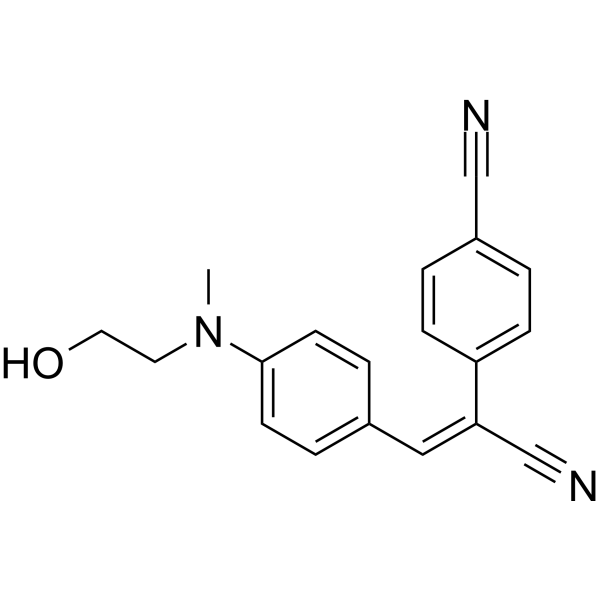
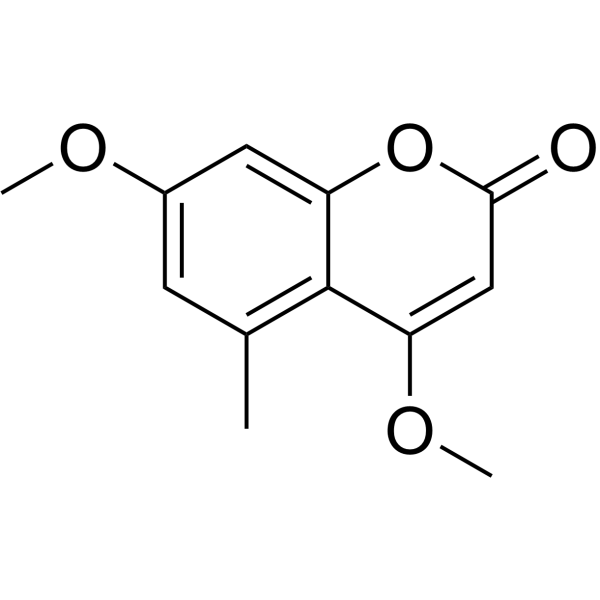
HBC (HBC 530) is a GFP fluorophore-like synthetic dye, with a structurally rigid electron acceptor and a strong electron donor. HBC has a low fluorescence background, and when combined with Pepper (RNA aptamer), HBC forms a tight complex and activates and emits bright fluorescence (Kd of ~3.5 nM). HBC emission peaks vary in different complexes and covers the spectrum from cyan to red. HBC can be used in the live cell imaging of RNA (Em/Ex = 530/485 nm) .
loading...
    loading...
1
1 Cited Publications
Cat. No.: HY-D0852A
CAS No.: 13718-26-8
Synonyms: Sodium vanadate(V), 99%
Sodium metavanadate, 99% (Sodium vanadate (V), 99%) is an orally active phosphate structural analog and protein tyrosine phosphatase (PTPases) inhibitor. Sodium metavanadate, 99% mimics phosphate to interfere with phosphoprotein reactions, inhibits GAPDH, Na +/K +-ATPase and microbial membrane ATPase, and acts as a terminal electron acceptor for anaerobic respiration. Sodium metavanadate, 99% induces ROS production, G2/M phase arrest, mitochondrial membrane potential loss and apoptosis in breast cancer cells, and reduces tumor volume in tumor-bearing mice. Sodium metavanadate, 99% also exhibits oral insulin-sensitizing and metabolic regulatory activities, and reduces plasmodium parasitemia levels. Sodium metavanadate, 99% can be used in studies related to cadmium exposure-induced metabolic syndrome, plasmodium infection, breast cancer and type 1 diabetes .
loading...
    loading...
Cat. No.: HY-W015816
CAS No.: 527-61-7
Synonyms: 2,6-DMBQ
Target:  

Photosystem II

Research Areas:  

Others

2,6-Dimethylbenzoquinone (2,6-DMBQ) is a benzoquinone derivative. 2,6-Dimethylbenzoquinone promotes Photosystem II-mediated photoelectrochemical water oxidation via electron transfer between spinach chloroplast Photosystem II membranes and carbon paste electrodes, and accepts electrons from Photosystem II during oxygen evolution assays. 2,6-Dimethylbenzoquinone undergoes direct photolysis in aqueous solution under 365 nm conditions, producing 2,6-dimethylhydroquinone and 3-hydroxy-2,6-dimethylbenzoquinone .
loading...
    loading...
Cat. No.: HY-107869
CAS No.: 476-34-6
Purity:  99.12%
Target:  

Fluorescent Dye

Research Areas:  

Cancer

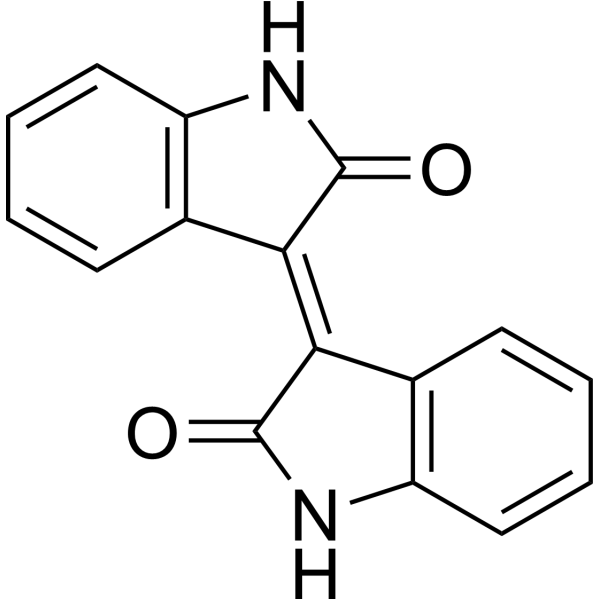
Isoindigo acts as the acceptor unit in donor-acceptor (D-A) conjugated polymers and belongs to the indigo dye family. Isoindigo contains two lactam rings and exhibits strong electron-withdrawing properties. Isoindigo can be used in dyeing and pigment preparation. Isoindigo shows high mobility and excellent environmental stability in field-effect transistors (FETs). Isoindigo possesses the activity to inhibit tumor cell proliferation and has certain anti-tumor activity .
loading...
    loading...
Cat. No.: HY-D1509
CAS No.: 10510-77-7
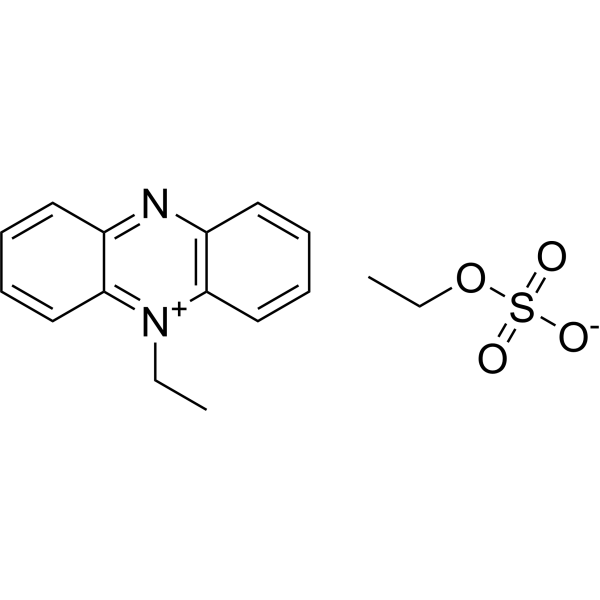
Phenazine ethosulfate is a cationic dye (Ex=390 nm, Em=530 nm) and electron acceptor that can be used in dye-linked enzyme assays . Phenazine ethosulfate exhibits weak, pH-dependent fluorescence properties and serves as an oxidative substrate. Phenazine ethosulfate promotes the reduction of equine heart metmyoglobin to ferrohemoglobin. As an intermediate, Phenazine ethosulfate can be used in combination with ascorbic acid for the detection of nitric oxide reductase activity .
loading...
    loading...
Cat. No.: HY-129242
CAS No.: 2896-70-0
Purity:  97.01%
Synonyms: 4-Oxo-Tempo
Research Areas:  

Metabolic Disease Cancer

Tempone (4-Oxo-Tempo) is a nitroxide radical spin label and ROS scavenger. Tempone induces cytotoxicity in lymphoma cells. Tempone serves as a substrate for intracellular reduction to hydroxylamine, rapidly equilibrates between intracellular and extracellular compartments, reduces nitroxide radical spin labels at the ubiquinol site of the respiratory chain, and acts as an alternative terminal electron acceptor when electron flow to oxygen is blocked. Tempone serves as a superoxide sensor, a T2-weighted MRI contrast agent, and a dynamic nuclear polarization polarizing agent for 13C. Tempone inhibits superoxide and peroxynitrite, hydroxyl radical generation, nitrotyrosine formation, and poly (ADP-ribose) formation, and alleviates renal dysfunction and injury in ischemia/reperfusion and hydrogen peroxide-induced injury. Tempone can be used for research on ischemia-reperfusion injury, acute renal failure, and lymphoma .
loading...
    loading...
Cat. No.: HY-W002651
CAS No.: 15155-41-6
Research Areas:  

Others

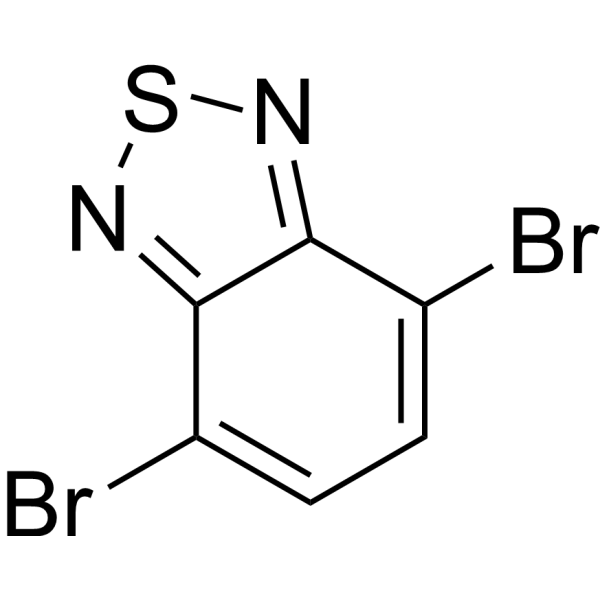
4,7‑Dibromo‑2,1,3‑benzothiadiazole is a benzothiadiazole monomer with electron-accepting capacity, which serves as an intermediate for research related to donor polymers in organic polymer solar cells .
loading...
    loading...
Cat. No.: HY-W725574
CAS No.: 3295-78-1
Synonyms: BAS 29095
Target:  

Photosystem II

Research Areas:  

Others

Dimidazon (BAS 29095) is a weak electron transport inhibitor targeting photosystem II (PSII). Dimidazon inhibits electron transfer from the primary electron acceptor Q in PSII to photosystem I. Dimidazon is promising for research of photosynthesis regulation and weed control .
loading...
    loading...
Cat. No.: HY-N11913
CAS No.: 53377-54-1
Siderin is a selective Photosystem II (PSII) inhibitor. Siderin inhibits ATP synthesis by blocking electron transport at the donor and acceptor sides of PSII Siderin can be used in the study of plant photosynthesis .
loading...
    loading...
Cat. No.: HY-129242S
CAS No.: 80404-14-4
Synonyms: 4-Oxo-Tempo-15N,d16
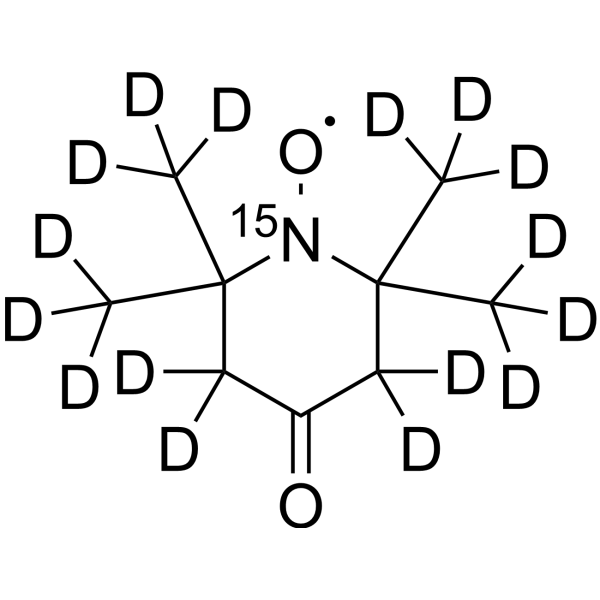
Tempone- 15N,d16 (4-Oxo-Tempo 15N,D16) is the deuterated, 15N-labeled Tempone (HY-129242). Tempone (4-Oxo-Tempo) is a nitroxide radical spin label and ROS scavenger. Tempone induces cytotoxicity in lymphoma cells. Tempone serves as a substrate for intracellular reduction to hydroxylamine, rapidly equilibrates between intracellular and extracellular compartments, reduces nitroxide radical spin labels at the ubiquinol site of the respiratory chain, and acts as an alternative terminal electron acceptor when electron flow to oxygen is blocked. Tempone serves as a superoxide sensor, a T2-weighted MRI contrast agent, and a dynamic nuclear polarization polarizing agent for 13C. Tempone inhibits superoxide and peroxynitrite, hydroxyl radical generation, nitrotyrosine formation, and poly (ADP-ribose) formation, and alleviates renal dysfunction and injury in ischemia/reperfusion and hydrogen peroxide-induced injury. Tempone can be used for research on ischemia-reperfusion injury, acute renal failure, and lymphoma .
loading...
    loading...
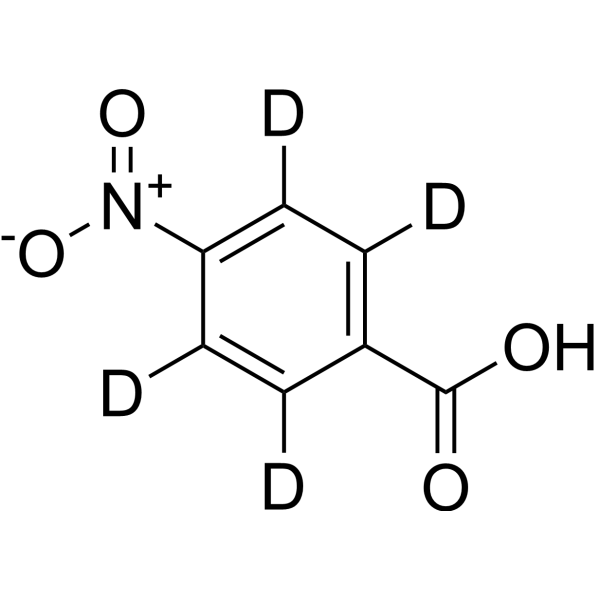
Cat. No.: HY-Y0607S1
CAS No.: 117868-95-8
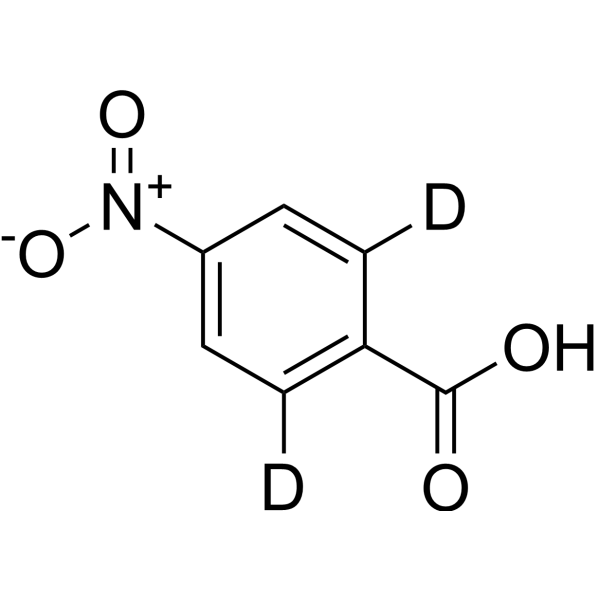
4-Nitrobenzoic acid-d2 is the deuterium labeled 4-Nitrobenzoic acid (HY-Y0607). 4-Nitrobenzoic acid acts as a redox mediator and electron transfer promoter. 4-Nitrobenzoic acid accepts electrons from reduced glucose oxidase and transfers them to the electrode to facilitate the glucose oxidation reaction, while minimizing the formation of protonated amino groups .
loading...
    loading...
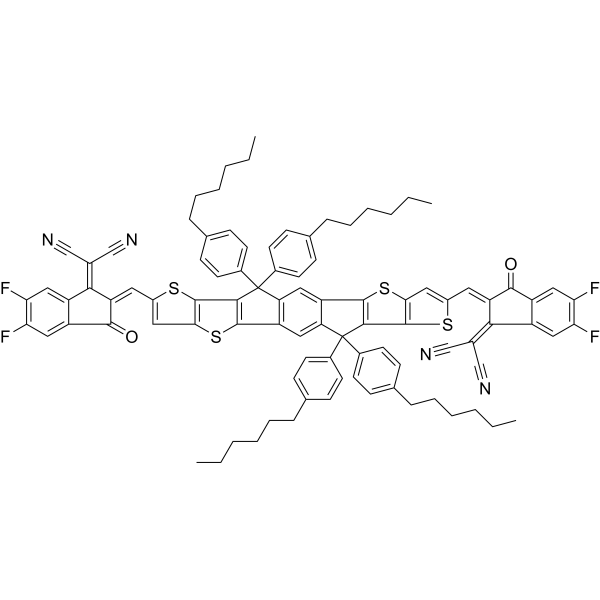
Cat. No.: HY-137294
CAS No.: 2304444-49-1
Synonyms: Y6
Target:  

Endogenous Metabolite

Research Areas:  

Others

BTPTT-4F (Y6) is a non-fullerene acceptor-donor-acceptor (A-D-A) type small molecular acceptor (SMA) characterized by its flexible alkyl chains and centrally fused ring structure. Featuring a ladder-type electron-deficient core, BTPTT-4F can be effectively blended with PM6, showcasing significant potential for enhancing the performance of organic photovoltaic applications. Its tailored optical properties and adjustable electronic energy levels contribute to improved thermal and photochemical stability, making it a promising candidate for next-generation high-performance organic solar cells.
loading...
    loading...
Cat. No.: HY-114856
CAS No.: 165190-76-1
Purity:  99.77%
Research Areas:  

Others

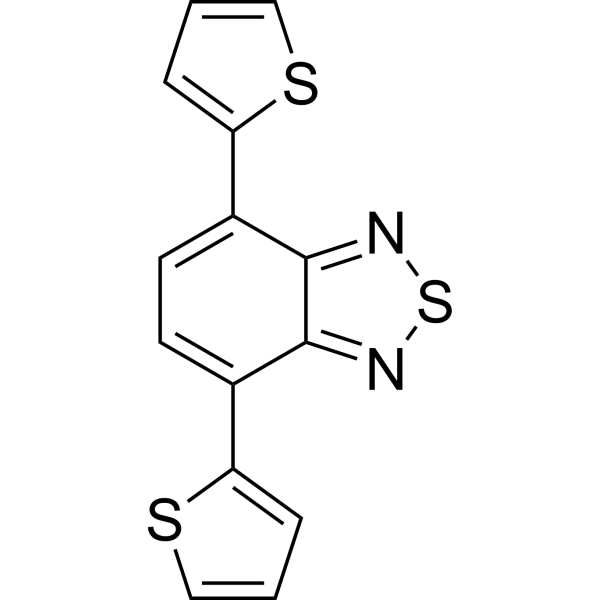
DTBT is a six-membered heterocyclic ring that is commonly used in the preparation of organic electronic devices, such as P-type organic semiconductors (OFETs) and P-type organic photodiodes (OLEDs). DTBT has good performance in electron transmission and photoelectric conversion. DTBT polymerizes to form donor-acceptor polymers, which are used to prepare solar cells .
loading...
    loading...
Cat. No.: HY-W004606
CAS No.: 6267-02-3
Synonyms: DM-AD
Research Areas:  

Others

9,9-Dimethyl-9,10-dihydroacridine (DM-AD) is an electron-donating group with hole transport mobility, which serves as a building block for the synthesis of organic semiconductors and light-emitting emitters. 9,9-Dimethyl-9,10-dihydroacridine can form donor-acceptor-donor type thermally activated delayed fluorescence emitters. 9,9-Dimethyl-9,10-dihydroacridine undergoes oxidation to form radical cations, which further participate in dimerization or oligomerization reactions .
loading...
    loading...
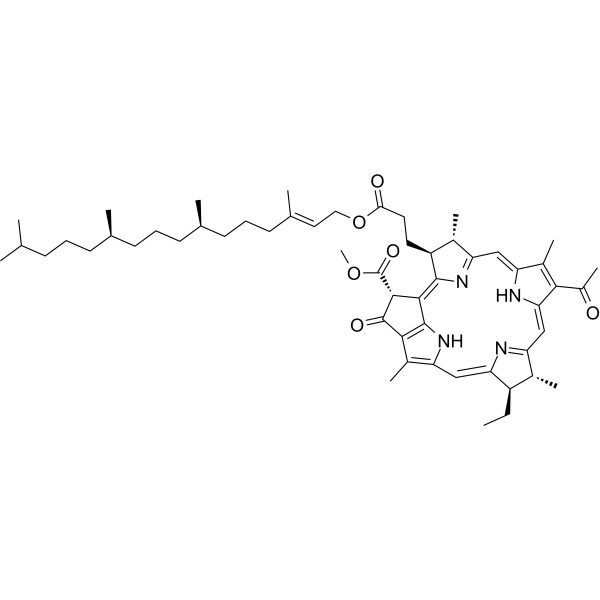
Cat. No.: HY-N10516
CAS No.: 17453-58-6
Bacteriopheophytin, a photosynthetic pigment, is a bacterial demagnetised chlorophyll composed of bacterial chlorophyll in which two hydrogen atoms replace the magnesium center. Bacteriopheophytin acts as an electron acceptor in the purple bacterial reaction center (RC) and is involved in electron transfer .
loading...
    loading...
Cat. No.: HY-125830
CAS No.: 1664293-06-4
Research Areas:  

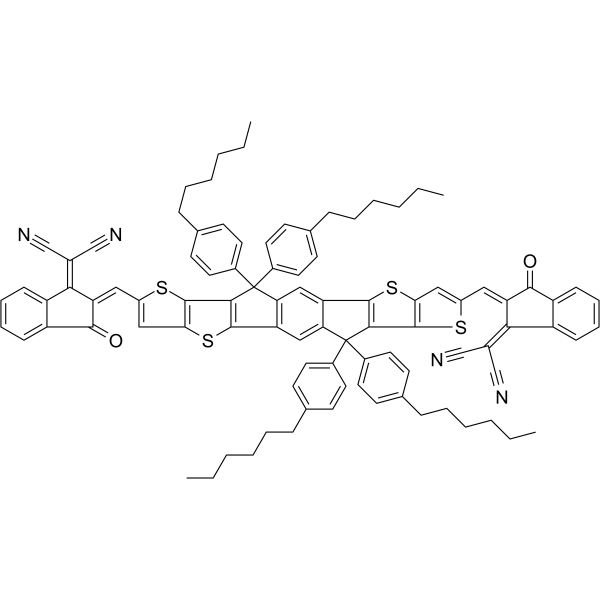
Others

ITIC, non-fullerene acceptor, is an indacenodithienothiophene-based postfullerene electron acceptor, crystallizes in a profoundly different way as compared to fullerenes. ITIC has a superior thermal stability and undergoes a glass-crystal transition considerably below its high Tg of 180 °C.
loading...
    loading...
Cat. No.: HY-Y0607S
CAS No.: 171777-66-5
4-Nitrobenzoic acid-d4 is the deuterium labeled 4-Nitrobenzoic acid (HY-Y0607). 4-Nitrobenzoic acid is an oxidoreduction mediator and an electron transfer promoter. 4-Nitrobenzoic acid accepts electrons from the reduced glucose oxidase and transfers them to the electrode to promote the glucose oxidation reaction, while minimizing the formation of protonated amine groups .
loading...
    loading...
Cat. No.: HY-Y0607R
CAS No.: 62-23-7
Research Areas:  

Others

4-Nitrobenzoic acid (Standard) is the analytical standard of 4-Nitrobenzoic acid (HY-Y0607). This product is intended for research and analytical applications. 4-Nitrobenzoic acid is an oxidoreduction mediator and an electron transfer promoter. 4-Nitrobenzoic acid accepts electrons from the reduced glucose oxidase and transfers them to the electrode to promote the glucose oxidation reaction, while minimizing the formation of protonated amine groups .
loading...
    loading...
Cat. No.: HY-125831
CAS No.: 2097998-59-7
Purity:  ≥98.0%
Research Areas:  

Others

ITIC-4F is an indacenodithienothiophene (IDTT)-based postfullerene electron acceptor. ITIC-4F has broad applicability in high-efficiency binary and ternary single-junction as well as tandem polymer solar cells (PSCs) .
loading...
    loading...
Cat. No.: HY-149203
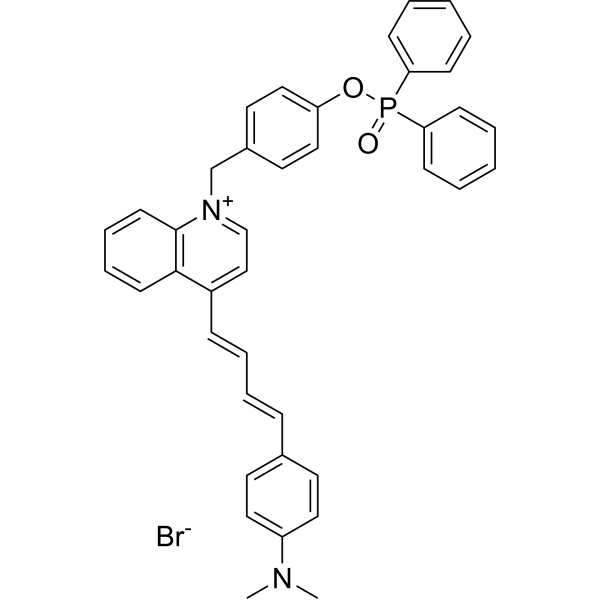
MQA-P is a multifunctional near-infrared (NIR) fluorescent probe for simultaneously detecting ONOO -, viscosity, and polarity within mitochondria. MQA-P exhibits a remarkable turn-on response to ONOO - (λem=645 nm) and is highly sensitive to viscosity/polarity in the NIR channel with λem>704 nm. MQA-P exhibits excited-state intramolecular charge transfer (ESICT) feature that is highly polarity-sensitive by engineering N,N-dimethylamino as the electron donor and a quinoline cationic unit as the electron acceptor. MQA-P is used for ferroptosis or cancer diagnosis in vitro and in vivo via dual-channel images .
loading...
    loading...

