2419 Results for "

decrease

" in MedChemExpress (MCE) Product Catalog:
Products (2419)

2419 Results for "decrease" in MCE Product Catalog:

Cat. No.: HY-W099504S2
CAS No.: 38007-42-0
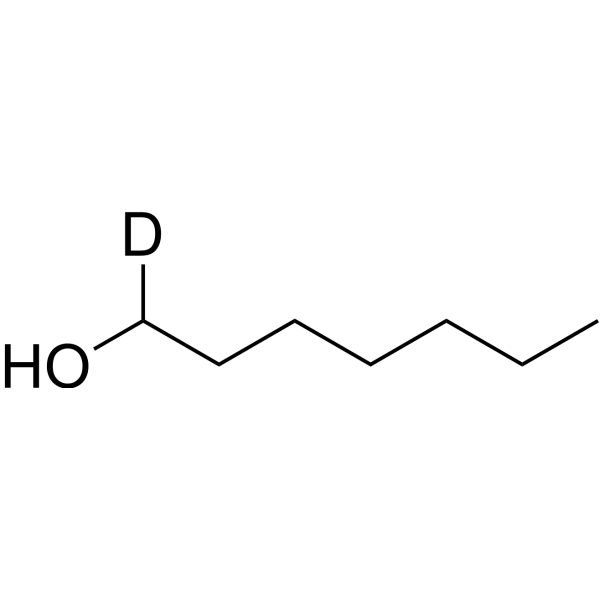
Synonyms: n-Heptyl alcohol-d1
1-Heptanol-d1 is the deuterium labeled 1-Heptanol. 1-Heptanol (n-Heptyl alcohol) is a linear primary fatty alcohol. 1-Heptanol selectively inhibits the activating phosphorylation of SAPK/JNK and reduces the phosphorylation level of IκB-α. 1-Heptanol increases plasma membrane fluidity, decreases membrane thermal stability, alters the coupling kinetics of STIM1-ORAI1, inhibits the production of ROS and LTC4, and induces the expression of HSP70. 1-Heptanol is used in the fragrance industry due to its pleasant odor .
loading...
    loading...
Cat. No.: HY-W107464R
CAS No.: 2457232-14-1
G6PDi-1 (Standard) is the analytical standard of G6PDi-1 (HY-W107464). This product is intended for research and analytical applications. G6PDi-1 is a reversible and non-competitive glucose-6-phosphate dehydrogenase (G6PD) inhibitor with an IC50 of 0.07 μM for human G6PD. G6PDi-1 depletes NADPH most strongly in lymphocytes. G6PDi-1 markedly decreases inflammatory cytoKine production in T cells .
loading...
    loading...
Cat. No.: HY-W111692
CAS No.: 68915-31-1
Sodium polyphosphate, crystal,+200 mesh, 96% is an inorganic polyphosphate that also serves as a stabilizer, dispersant, chelating agent, and coacervate-forming agent. Sodium polyphosphate provides electrostatic stabilization for mineral and material suspensions, but its dispersing efficacy decreases under acidic pH, high temperature, high calcium concentration, or a combination of these conditions. Sodium polyphosphate can chelate alkaline earth metals, reduce solution pH, and alter the rate of pH decline at a divalent cation/phosphorus molar ratio of 0.18. Sodium polyphosphate forms coacervates with smaller divalent cations and precipitates with larger divalent cations, where the functional requirements of cations depend on polyphosphate concentration, average degree of polymerization, and cation type .
loading...
    loading...
Cat. No.: HY-W1133231
CAS No.: 1879038-73-9
CE-103 is a selective, blood-brain barrier-permeable dopamine transporter (DAT) inhibitor with an IC50 of 14.73 μM. CE-103 blocks DAT-mediated dopamine reuptake and exhibits antagonistic activity against 5-HT1A. CE-103 reduces working memory errors in the radial arm maze test of rats, decreases the levels of complexes containing phosphorylated DAT (pDAT) and D1R in the hippocampus of rats, and increases the levels of complexes containing D2R and D3R simultaneously. CE-103 can be used in studies related to dopaminergic neurotransmission, working memory and cognitive function .
loading...
    loading...
Cat. No.: HY-W142456
CAS No.: 7535-59-3
Synonyms: N-Benzyl-L-pyroglutamic acid
Target:  

Na+/K+ ATPase

Research Areas:  

Inflammation/Immunology

(S)-1-Benzyl-5-carboxy-2-pyrrolidinone (N-Benzyl-L-pyroglutamic acid) is an orally active H +/K +-ATPase inhibitor. (S)-1-Benzyl-5-carboxy-2-pyrrolidinone reduces free acidity and total acidity in gastric juice. (S)-1-Benzyl-5-carboxy-2-pyrrolidinone decreases ulcer formation in pylorus-ligated rats. (S)-1-Benzyl-5-carboxy-2-pyrrolidinone can be used for the research of peptic ulcers .
loading...
    loading...
Cat. No.: HY-W145695
CAS No.: 68232-35-9
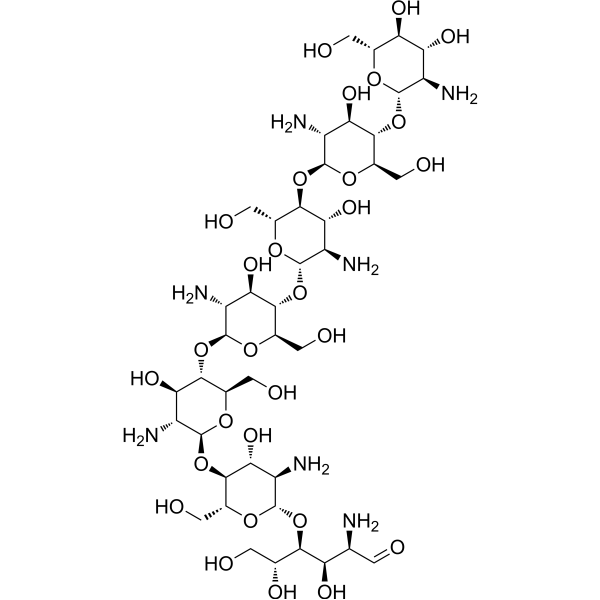
Chitoheptaose is an orally active chitooligosaccharide (degree of polymerization = 7). Chitoheptaose can be extracted from the exoskeletons of crustaceans, such as the shells of crabs, shrimps and lobsters. Chitoheptaose reduces pro-inflammatory cytokines while increasing the levels of anti-inflammatory cytokines (decreasing the levels of pro-inflammatory cytokines IL-1β, IL-17A and IFN-γ, and increasing the level of the anti-inflammatory cytokine IL-10). Chitoheptaose possesses antioxidant, anti-inflammatory and anti-Apoptotic activities. Chitoheptaose improves cardiac parameters, alleviates myocarditis injury, and exerts cardioprotective effects in a rat model of myocarditis. Chitoheptaose can be used in studies related to myocarditis .
loading...
    loading...
Cat. No.: HY-W710827
N,N'-Methylenebisacrylamide-d6 is the deuterium labeled N,N'-Methylenebisacrylamide (HY-D0848). N,N'-Methylenebisacrylamide (Bisacrylamide) is an orally active acrylamide dimer and crosslinker. N,N'-Methylenebisacrylamide increases CYP2E1, P53, cleaved caspase-3. N,N'-Methylenebisacrylamide promotes hepatic cancer. N,N'-Methylenebisacrylamide changes sperm abnormality rate and sperm count. N,N'-Methylenebisacrylamide decreases the number of various cells in the blood as well as induces liver and testicular damage. N,N'-Methylenebisacrylamide is used to prepare polyacrylamide gel .
loading...
    loading...
Cat. No.: HY-W724326
Tebuconazole-d4 is the deuterium labeled Tebuconazole (HY-B0852). Tebuconazole is an orally active agricultural azole fungicide which can also inhibit CYP51 with IC50s of 0.9 and 1.3 μM for Candida albicans CYP51 (CaCYP51) and truncated Homo sapiens CYP51 (Δ60HsCYP51), respectively. Tebuconazole induces lipid accumulation and oxidative stress in HepG2 Cells. Tebuconazole decreases MAC-T cells viability and proliferation, induces ER-stress-mediated apoptosis and increases oxidative stress levels in MAC-T cells .
loading...
    loading...
Cat. No.: HY-Y1881A
CAS No.: 7758-99-8
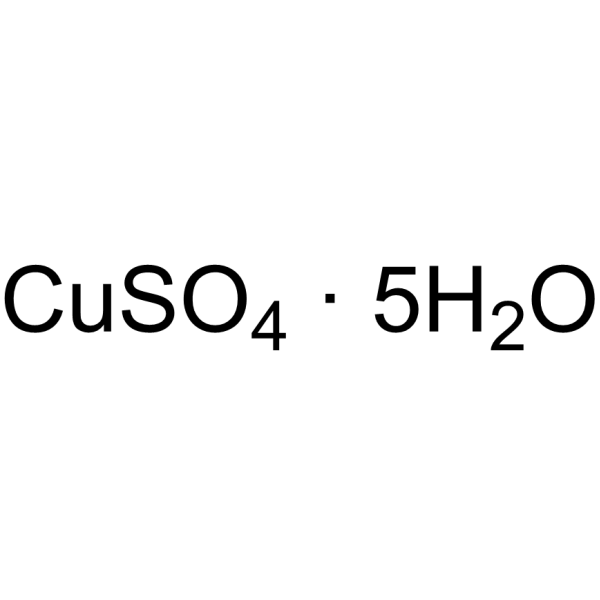
Copper sulfate pentahydrate, 99% is a biochemical reagent. Copper sulfate pentahydrate, 99% reduces the production of ROS and the expression levels of MyD88 as well as c-Rel genes. Copper sulfate pentahydrate, 99% decreases the activities of T-SOD, CAT, and GSH, increases the activities of caspase-3, caspase-8, and caspase-9. Copper sulfate pentahydrate, 99% is cytotoxic to various cells. Copper sulfate pentahydrate, 99% has antioxidant activity. Copper sulfate pentahydrate, 99% can be used in the research of diabetes, Parkinson's disease and DMBA (HY-W011845)-induced tumors .
loading...
    loading...
Cat. No.: HY-104040R
CAS No.: 1338934-59-0
Synonyms: Orin1001 (Standard)
Research Areas:  

Cancer

MKC8866 (Standard) is the analytical standard of MKC8866 (HY-104040). This product is intended for research and analytical applications. MKC8866, a salicylaldehyde analog, is a potent, selective IRE1 RNase inhibitor with an IC50 of 0.29 μM in human vitro. MKC8866 strongly inhibits Dithiothreitol-induced X-box-binding protein 1-spliced (XBP1s) expression with an EC50 of 0.52 μM and unstresses RPMI 8226 cells with an IC50 of 0.14 μM . MKC8866 inhibits IRE1 RNase in breast cancer cells leading to the decreased production of pro-tumorigenic factors and it can inhibits prostate cancer (PCa) tumor growth .
loading...
    loading...
Cat. No.: HY-105064DR
CAS No.: 863406-85-3
Synonyms: CP-597396 hydrochloride hydrate (Standard)
Zoniporide hydrochloride hydrate (Standard) (CP-597396 hydrochloride hydrate (Standard)) is the analytical standard of Zoniporide hydrochloride hydrate (HY-105064D). This product is intended for research and analytical applications. Zoniporide hydrochloride hydrate (CP-597396 hydrochloride hydrate) is a selective Na +/H + exchanger subtype 1 (NHE1) inhibitor with cardioprotective activity, with IC50 values of 67 nM and 73 nM against rat NHE1. Zoniporide hydrochloride hydrate reduces intracellular Na + and Ca 2+ overload, preserves mitochondrial integrity, activates pro-survival ERK1/2 and STAT3 signaling pathways, reduces necrosis and apoptosis, and decreases neutrophil aggregation. Zoniporide hydrochloride hydrate is applicable to research related to myocardial ischemia-reperfusion injury and heart graft ischemia-reperfusion injury .
loading...
    loading...
Cat. No.: HY-105064R
CAS No.: 241800-98-6
Synonyms: CP-597396 (Standard)
Zoniporide (Standard) (CP-597396 (Standard)) is the analytical standard of Zoniporide (HY-105064). This product is intended for research and analytical applications. Zoniporide (CP-597396) is a selective Na +/H + exchanger subtype 1 (NHE1) inhibitor with cardioprotective activity, with IC50 values of 67 nM and 73 nM against rat NHE1. Zoniporide reduces intracellular Na + and Ca 2+ overload, preserves mitochondrial integrity, activates pro-survival ERK1/2 and STAT3 signaling pathways, reduces necrosis and apoptosis, and decreases neutrophil aggregation. Zoniporide is applicable to research related to myocardial ischemia-reperfusion injury and heart graft ischemia-reperfusion injury .
loading...
    loading...
Cat. No.: HY-111648
CAS No.: 7803-88-5
Purity:  99.65%
Research Areas:  

Others

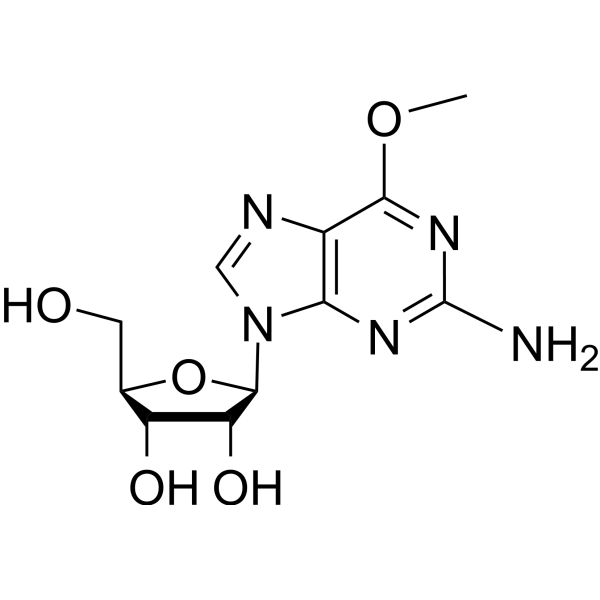
6-O-Methyl Guanosine is a Ribonucleoside. Replacement of the conserved G5, G8 or G12 residues in hammerhead ribozymes with 6-O-Methyl Guanosine reduces kcat without altering Km. 6-O-Methyl Guanosine exerts position-dependent regulatory effects on ribosomal velocity and fidelity. When 6-O-Methyl Guanosine is located at the first or third position of a codon, it decreases the accuracy of tRNA selection. When 6-O-Methyl Guanosine is located at the second position of a codon, it slows down the peptide bond formation rate of cognate aminoacyl-tRNA but does not change the reaction rate of near-cognate aminoacyl-tRNA .
loading...
    loading...
Cat. No.: HY-114911R
CAS No.: 30748-29-9
Synonyms: DA2370 (Standard); Prenazone (Standard); Zepelin (Standard)
Feprazone (Standard) is the analytical standard of Feprazone. This product is intended for research and analytical applications. Feprazone (DA2370; Prenazone), an analogue of Phenylbutazone (HY-B0230), is a nonsteroidal anti-inflammatory agent with analgesic and antipyretic activities. Feprazone acts by inhibiting the activity of cyclooxygenase (COX)-2. Feprazone ameliorates free fatty acid (FFA)-induced oxidative stress by reducing the production of mitochondrial reactive oxygen species (ROS). Feprazone can decrease the expression of MMP-2 and MMP-9. Besides, Feprazone can suppress adipogenesis and increase lipolysis in differentiating 3 T3-L1 cells. Feprazone also can be used to research atherosclerosis and obesity .
loading...
    loading...
Cat. No.: HY-123814
CAS No.: 29553-70-6
Purity:  99.64%
4-CPPC is a selective MIF-2 inhibitor with a Ki of 33 µM. 4-CPPC inhibits the COX2/PGE2 pathway, reduces the levels of COX2 and mPGES-1, and decreases the production of PGE2. 4-CPPC attenuates the formation of early atherosclerotic lesions in hyperlipidemic mice, and lowers the levels of circulating inflammatory cytokines and chemokines. 4-CPPC inhibits MIF-2-triggered cell migration. 4-CPPC improves hindlimb motor function in rats with contusion-induced spinal cord injury. 4-CPPC can be used in studies related to atherosclerosis and spinal cord injury .
loading...
    loading...
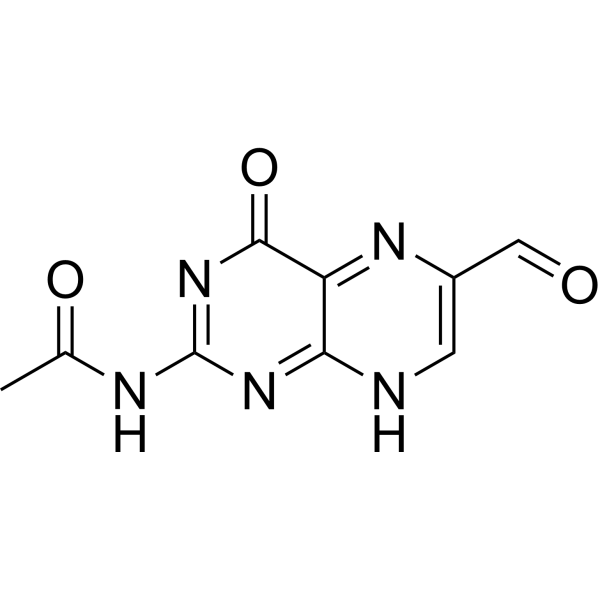
Cat. No.: HY-124004
CAS No.: 29769-49-1
Purity:  ≥95.0%
Synonyms: Ac-6-FP
Research Areas:  

Inflammation/Immunology

Acetyl-6-formylpterin (Ac-6-FP) is a hapten that stabilizes MR1 on antigen-presenting cells, forming an MR1:A6FP complex that fails to activate MAIT cell TCR, thereby acting as a competitive inhibitor of MAIT cell activation. Acetyl-6-formylpterin exacerbates house dust mite-induced airway hyperresponsiveness and elevates circulating IgE levels. Acetyl-6-formylpterin reduces systemic MAIT cell activity and decreases the frequency of IL-17A + and IFNγ + MAIT cells in the spleen. Acetyl-6-formylpterin is useful for the study of allergic asthma .
loading...
    loading...
Cat. No.: HY-128888B
CAS No.: 1816272-18-0
Purity:  98.62%
Research Areas:  

Cancer

(S,R)-GSK321 is the (S,R)-enantiomer of GSK321 (HY-18948). GSK321 is a potent, selective mutant IDH1 inhibitor with IC50 values of 2.9, 3.8, 4.6 and 46 nM for R132G, R132C, R132H and WT IDH1, respectively, and >100-fold selectivity over IDH2. GSK321 induces decrease in intracellular 2-HG, abrogation of the myeloid differentiation block and induction of granulocytic differentiation at the level of leukemic blasts and more immature stem-like cells. GSK321can be used for research of acute myeloid leukemia (AML) and other cancers .
loading...
    loading...
Cat. No.: HY-13287A
CAS No.: 1173928-26-1
SGI-1776 is an orally active Pim kinase and FLT3 inhibitor with IC50 values of 7 nM, 363 nM, 69 nM, and 44 nM for Pim-1, Pim-2, Pim-3, and FLT3, respectively. SGI-1776 downregulates C/EBP-α, PPAR-γ, FAS, Leptin, and RANTES, and decreases STAT-3 phosphorylation. SGI-1776 induces Apoptosis, cell cycle arrest, mitochondrial depolarization, and reduces RNA synthesis, protein synthesis, and Mcl-1. SGI-1776 inhibits adipogenesis and lipid accumulation. SGI-1776 has anticancer activity against leukemia .
loading...
    loading...
Cat. No.: HY-133079
CAS No.: 183476-82-6
Purity:  ≥98.0%
Synonyms: tetra-isopalmitoyl Ascorbic acid; IPAA; Tetrahexyldecyl Ascorbate
Research Areas:  

Endocrinology

Ascorbyl tetra-2-hexyldecanoate (tetra-isopalmitoyl Ascorbic acid; IPAA) is a lipophilic derivative of vitamin C (L-ascorbic acid). Ascorbyl tetra-2-hexyldecanoate (100 μM ) can prevent the decrease in viability of HaCaT keratinocytes induced by UVB, hydrogen peroxide, or tert-butyl hydroperoxide, and reduce the production of IL-1α and prostaglandin E2 (PGE2). Topical application of ascorbyl tetra-2-hexyldecanoate (1%) increases epidermal viability thickness, stratum corneum water content, and skin smoothness, and reduces skin roughness in hairless mice. Ascorbyl tetra-2-hexyldecanoate can be used to develop skin whitening agents in the beauty industry.
loading...
    loading...
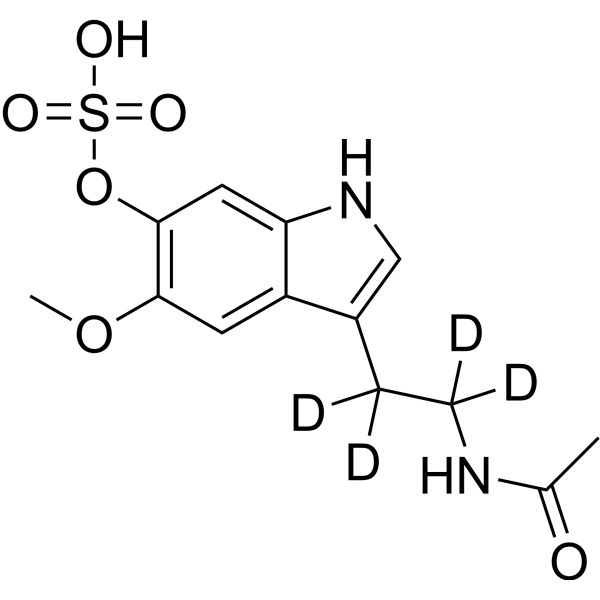
Cat. No.: HY-142117S1
CAS No.: 1309935-98-5
6-Sulfatoxymelatonin-d4 is the deuterated-labeled 6-Sulfatoxymelatonin. 6-Sulfatoxymelatonin is a metabolite of Melatonin (HY-B0075) and serves as a detection marker for Melatonin. 6-Sulfatoxymelatonin shows a decreasing trend with increasing age, and its urinary excretion is closely correlated with plasma Melatonin levels, which can reflect changes in the secretion phase of melatonin. 6-Sulfatoxymelatonin is associated with reduced risks of diabetic retinopathy and coronary heart disease, and can act as a biomarker for microvascular and macrovascular complications of type 2 diabetes mellitus. 6-Sulfatoxymelatonin can be used in studies related to type 2 diabetes mellitus and coronary heart disease .
loading...
    loading...

