



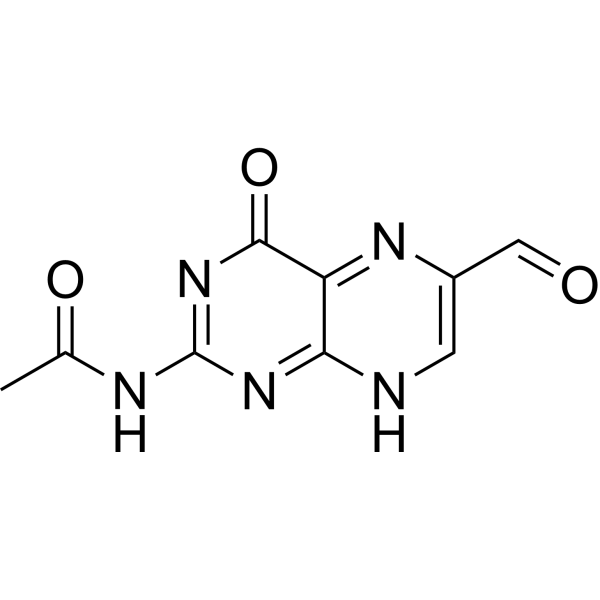
Acetyl-6-formylpterin

Based on 1 Customer Validation
Acetyl-6-formylpterin (Ac-6-FP) is a hapten that stabilizes MR1 on antigen-presenting cells, forming an MR1:A6FP complex that fails to activate MAIT cell TCR, thereby acting as a competitive inhibitor of MAIT cell activation. Acetyl-6-formylpterin exacerbates house dust mite-induced airway hyperresponsiveness and elevates circulating IgE levels. Acetyl-6-formylpterin reduces systemic MAIT cell activity and decreases the frequency of IL-17A+ and IFNγ+ MAIT cells in the spleen. Acetyl-6-formylpterin is useful for the study of allergic asthma.
For research use only. We do not sell to patients.
- Purity : 97.06%
- CAS No.: 29769-49-1
- Formula: C9H7N5O3
- Molecular Weight:233.18
-
Storage:Powder -20°C, 3 years ; In solvent -80°C, 6 months , -20°C, 1 month

To place orders, for customer services and technical support, please contact: MedChemExpress USA
Tel: 609-228-6898 E-mail: [email protected] [email protected]


-
 Biological Activity
-
Chemical Information
-
Solvent & Solubility
- Protocols
- Purity & Documentation
- References
-
 Help & FAQs


-
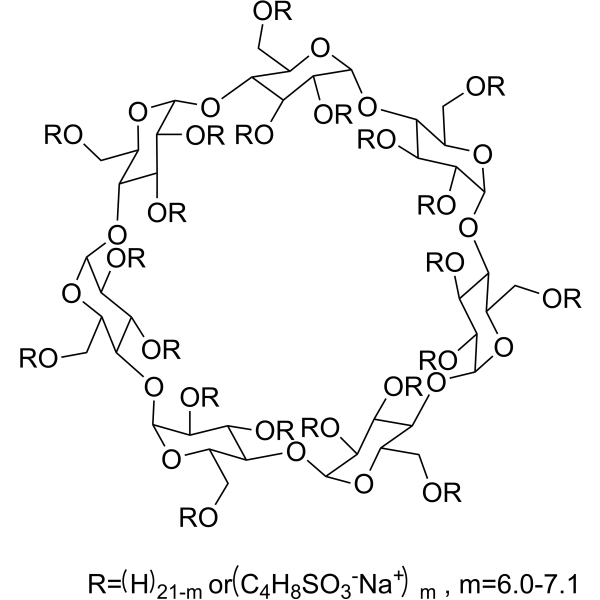
HY-17031
SBE-β-CDExcipient -
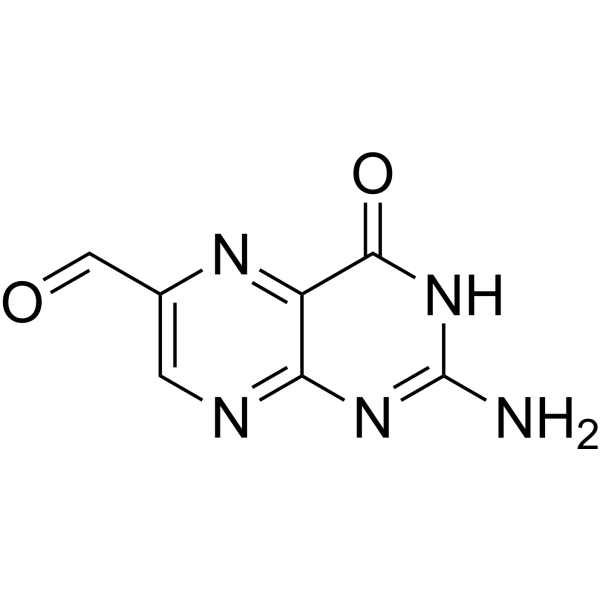
HY-113978
6-FormylpterinXanthine Oxidase Inhibitor -
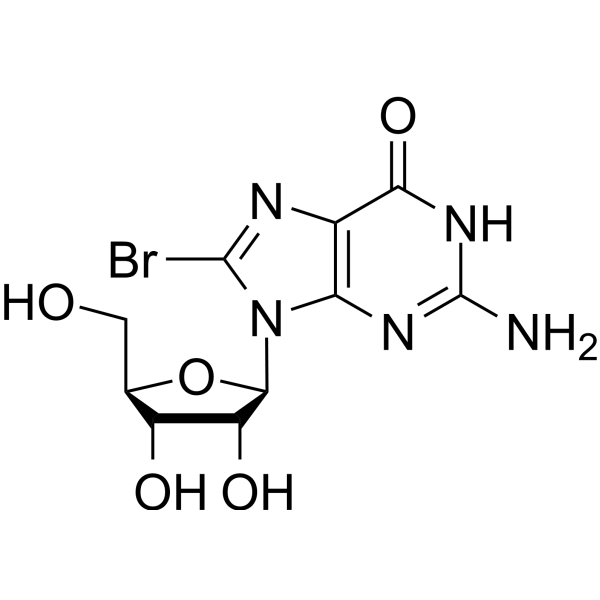
HY-W019033
8-BromoguanosinePurine Nucleoside -

HY-125587
25-Desacetyl rifampicinMetabolite of Rifampin -
![1,1′-Ethylidenebis[L-tryptophan]](https://file.medchemexpress.com/product_pic/hy-w585843.gif)
HY-W585843
1,1′-Ethylidenebis[L-tryptophan]Amino Acid Analog -
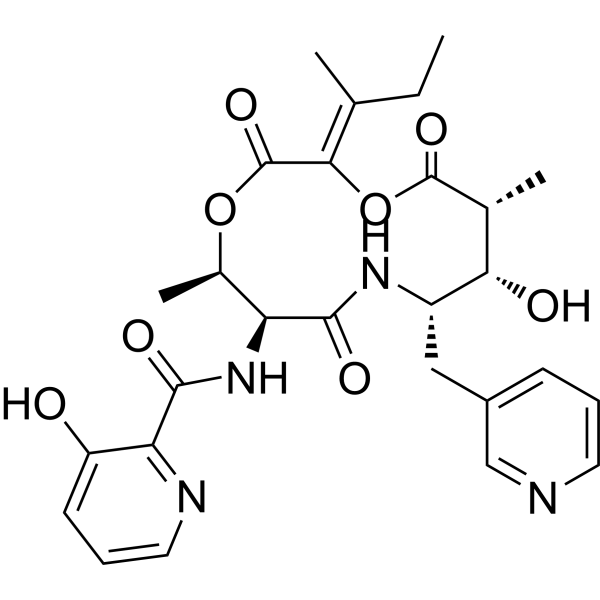
HY-111402
PyridomycinInhA Inhibitor/Antibiotic -

HY-169478
Lipid N2-3LCationic Liposome -

HY-N12258
Aranciamycin AAnthracyclic Antibiotic -
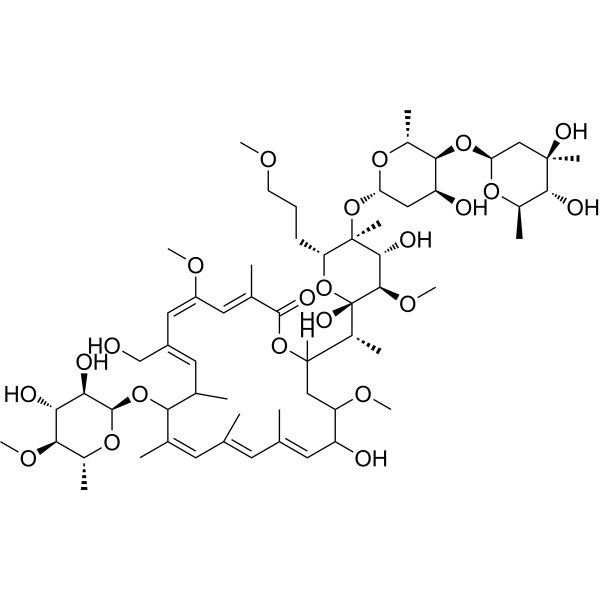
HY-N11048
Amycolatopsin AAntimycobacterial Agent


Biological Activity
Description
IC50 & Target
[1]|
MHC I |
IL-17A |
Cellular Effect
|
Cell Line

|
Type | Value | Description | References |
|---|---|---|---|---|
| HeLa | EC50 |
0.153 μM
Compound: Ac-6-FP
|
Induction of cell surface translocation of MR1 in human HeLa overexpressing MR1 assessed as increase in MR1 cell surface levels incubated for 8 hrs followed by labeling with PE-conjugated anti-hMR1 antibody by flow cytometry analysis
Induction of cell surface translocation of MR1 in human HeLa overexpressing MR1 assessed as increase in MR1 cell surface levels incubated for 8 hrs followed by labeling with PE-conjugated anti-hMR1 antibody by flow cytometry analysis
|
[PMID: 37638616] |
In Vivo
MedChemExpress (MCE) has not independently confirmed the accuracy of these methods. They are for reference only.
-
Animal Model:C57BL/6 (female, 8-12 weeks old, HDM-induced allergic airway inflammation)[1]
-
Dosage:50 nM
-
Administration:i.t. (with each HDM exposure); i.p. (days 3, 6, 9, 13, 15, 18, 20, 22, and 23)
-
Result:Enhanced HDM-induced airway hyperresponsiveness compared to HDM alone.
Significantly reduced the frequency and number of IL-17A+ MAIT cells.
Reduced IFNγ+ and IL-22+ MAIT cells (non-significant).
Did not alter HDM-induced pulmonary inflammation, granulocyte or lymphocyte counts, cytokine production by non-T cells or conventional T cells, or mucus production.
Further increased HDM-induced serum IgE levels without affecting IgA, IgM, or IgG1 levels.
Did not aggravate HDM-induced AHR in IgE-deficient mice.
Failed to increase AHR in B cell-deficient μMT mice.
Decreased the frequency of total MAIT cells in the spleen, as well as the frequency of MAIT cells producing IL-17A or IFNγ.


Chemical Information
-
CAS No. 29769-49-1
-
Appearance Solid
-
Molecular Weight 233.18
-
Formula C9H7N5O3
-
Color White to yellow
-
SMILES
O=CC1=CNC2=NC(NC(C)=O)=NC(C2=N1)=O
-
Synonyms
Ac-6-FP
-
Shipping
Room temperature in continental US; may vary elsewhere.
-
Storage
Powder -20°C 3 years In solvent -80°C 6 months -20°C 1 month


Solvent & Solubility
In Vitro:
DMSO : 100 mg/mL (428.85 mM; Need ultrasonic; Hygroscopic DMSO has a significant impact on the solubility of product, please use newly opened DMSO)
DMF : 50 mg/mL (214.43 mM; Need ultrasonic and warming)
Ethanol : 1 mg/mL (4.29 mM; Need ultrasonic and warming)
Please refer to the solubility information to select the appropriate solvent. Once prepared, please aliquot and store the solution to prevent product inactivation from repeated freeze-thaw cycles.
Storage method and period of stock solution: -80°C, 6 months; -20°C, 1 month. When stored at -80°C, please use it within 6 months. When stored at -20°C, please use it within 1 month.
Please refer to the solubility information to select the appropriate solvent. Once prepared, please aliquot and store the solution to prevent product inactivation from repeated freeze-thaw cycles.
Storage method and period of stock solution: -80°C, 6 months; -20°C, 1 month. When stored at -80°C, please use it within 6 months. When stored at -20°C, please use it within 1 month.
Concentration (start) × Volume (start) = Concentration (final) × Volume (final)
In Vivo:
Select the appropriate dissolution method based on your experimental animal and administration route.
- For the following dissolution methods, please ensure to first prepare a clear stock solution using an In Vitro approach and then sequentially add co-solvents:
- To ensure reliable experimental results, the clarified stock solution can be appropriately stored based on storage conditions. As for the working solution for In Vivo experiments, it is recommended to prepare freshly and use it on the same day.
- The percentages shown for the solvents indicate their volumetric ratio in the final prepared solution. If precipitation or phase separation occurs during preparation, heat and/or sonication can be used to aid dissolution.
Add each solvent one by one: 10% DMSO 90% (20% SBE-β-CD in Saline)
Solubility: ≥ 2.5 mg/mL (10.72 mM); Clear solution
This protocol yields a clear solution of ≥ 2.5 mg/mL (saturation unknown).
Taking 1 mL working solution as an example, add 100 μL DMSO stock solution (25.0 mg/mL) to 900 μL 20% SBE-β-CD in Saline, and mix evenly.
Preparation of 20% SBE-β-CD in Saline (4°C, storage for one week): 2 g SBE-β-CD powder is dissolved in 10 mL Saline, completely dissolve until clear.
In Vivo Dissolution Calculator
Please enter the basic information of animal experiments:
-
-
-
-
Recommended: Prepare an additional quantity of animals to account for potential losses during experiments.
Please enter your animal formula composition:
-
%DMSO +
Recommended: Keep the proportion of DMSO in working solution below 2% if your animal is weak.
-
%+
-
+%Tween-80 + +
-
%Saline +
The co-solvents required include: DMSO, . All of co-solvents are available by MedChemExpress (MCE). , Tween 80. All of co-solvents are available by MedChemExpress (MCE).
Working solution concentration: 0.22 mg/mL
Method for preparing stock solution: mg drug dissolved in μL DMSO. Stock solution concentration: mg/mL.
1. Take μL DMSO stock solution;
2. Add μL .
μL , mix evenly;
3. Then add μL Tween 80, mix evenly;
4. Then add μL
Please ensure that the stock solution in the first step is dissolved to a clear state, and add co-solvents in sequence. You can use ultrasonic heating (ultrasonic cleaner, recommended frequency 20-40 kHz), vortexing, etc. to assist dissolution.


Purity & Documentation
-
Data Sheet (273 KB)
-
SDS (254 KB)
- English - EN (254 KB)
- Français - FR (254 KB)
- Deutsch - DE (254 KB)
- Norwegian - NO (254 KB)
- Español - ES (254 KB)
- Swedish - SV (254 KB)
- Italian - IT (254 KB)
- Korean - KR (254 KB)
- Portuguese - PT (254 KB)
-
Handling Instructions (2659 KB)
References


Complete Stock Solution Preparation Table
Please refer to the solubility information to select the appropriate solvent. Once prepared, please aliquot and store the solution to prevent product inactivation from repeated freeze-thaw cycles.
Storage method and period of stock solution: -80°C, 6 months; -20°C, 1 month. When stored at -80°C, please use it within 6 months. When stored at -20°C, please use it within 1 month.
| Optional Solvent | Concentration Solvent Mass | 1 mg | 5 mg | 10 mg | 25 mg |
|---|---|---|---|---|---|
| Ethanol / DMF / DMSO | 1 mM | 4.2885 mL | 21.4427 mL | 42.8853 mL | 107.2133 mL |
| DMF / DMSO | 5 mM | 0.8577 mL | 4.2885 mL | 8.5771 mL | 21.4427 mL |
| 10 mM | 0.4289 mL | 2.1443 mL | 4.2885 mL | 10.7213 mL | |
| 15 mM | 0.2859 mL | 1.4295 mL | 2.8590 mL | 7.1476 mL | |
| 20 mM | 0.2144 mL | 1.0721 mL | 2.1443 mL | 5.3607 mL | |
| 25 mM | 0.1715 mL | 0.8577 mL | 1.7154 mL | 4.2885 mL | |
| 30 mM | 0.1430 mL | 0.7148 mL | 1.4295 mL | 3.5738 mL | |
| 40 mM | 0.1072 mL | 0.5361 mL | 1.0721 mL | 2.6803 mL | |
| 50 mM | 0.0858 mL | 0.4289 mL | 0.8577 mL | 2.1443 mL | |
| 60 mM | 0.0715 mL | 0.3574 mL | 0.7148 mL | 1.7869 mL | |
| 80 mM | 0.0536 mL | 0.2680 mL | 0.5361 mL | 1.3402 mL | |
| 100 mM | 0.0429 mL | 0.2144 mL | 0.4289 mL | 1.0721 mL |


Acetyl-6-formylpterin Related Classifications
HY-124004 Related Classifications
 Powered by Bioz