
219 Results for "

active ingredient

" in MedChemExpress (MCE) Product Catalog:
Products (219)

219 Results for "active ingredient" in MCE Product Catalog:

Cat. No.: HY-N1501R
CAS No.: 5273-86-9
Beta-asarone (Standard) is the analytical standard of Beta-asarone. This product is intended for research and analytical applications. Beta-asarone is an orally active and BBB-penetrable anti-inflammatory agent and neuroprotective agent, which is the major ingredient of Acorus tatarinowii Schott. Beta-asarone can protect nerve cells from apoptosis and autophagy, inhibit expression of α-synuclein, as well as myocardial protection. Beta-asarone can be used in the study of neurological and cardiovascular diseases .
loading...
    loading...
Cat. No.: HY-N6070
CAS No.: 141-22-0
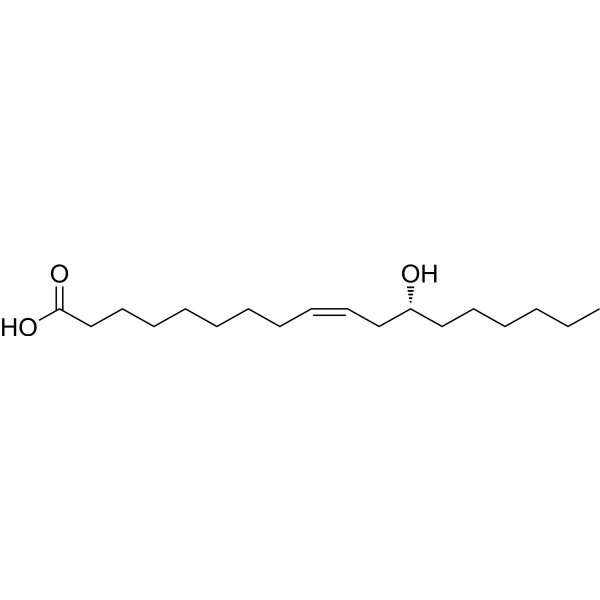
Ricinoleic acid (purity≥85%), a hydroxy fatty acid, is an attractive feedstock for the production of high-performance lubricants, cosmetics, polymers, surfactants, and coatings. Ricinoleic acid is the main active ingredient of Castor oil (HY-107799). Ricinoleic acid is the agonist for prostaglandin EP3 receptor (EP3 receptor) (EC50 in MEG-01 is 0.5 μM), that causes laxative effects and uterine contraction. Ricinoleic acid exhibits antianxiety-like, anti-inflammatory and pro-inflammatory properties .
loading...
    loading...
Cat. No.: HY-N6070A
CAS No.: 141-22-0
Ricinoleic acid (purity≥99%), a hydroxy fatty acid, is an attractive feedstock for the production of high-performance lubricants, cosmetics, polymers, surfactants, and coatings. Ricinoleic acid is the main active ingredient of Castor oil (HY-107799). Ricinoleic acid is the agonist for prostaglandin EP3 receptor (EP3 receptor) (EC50 in MEG-01 is 0.5 μM), that causes laxative effects and uterine contraction. Ricinoleic acid exhibits antianxiety-like, anti-inflammatory and pro-inflammatory properties .
loading...
    loading...
Cat. No.: HY-W814315
CAS No.: 1256577-71-5
Synonyms: CH5424802 analog; RO5424802 analog; RG7853 analog
Research Areas:  

Cancer

Alectinib analog (CH5424802 analog) is a selective ALK inhibitor with activity in blocking resistance gating mutations. The synthetic optimization of alectinib analog allows it to be combined with specific peptides to improve the ability to target cancer cells. Alectinib analog exhibits low micromolar IC50 values in antiproliferation and shows good cytotoxic effects. The inhibitory activity of alectinib analog is closely related to its stability and release of active ingredients. Alectinib analog demonstrated the ability to inhibit vascular septal length or width in an in vivo zebrafish model .
loading...
    loading...
Cat. No.: HY-W051271
CAS No.: 13463-67-7
Synonyms: Titanium dioxide
Titanium(IV) oxide is a photosensitizer and photocatalyst. Titanium(IV) oxide can be used as a pharmaceutical excipient such as a flow aid, coating agent, sunscreen, colorant, etc. Pharmaceutical excipients or pharmaceutical excipients refer to other chemical substances used in the pharmaceutical process other than the drug ingredients. Pharmaceutical excipients generally refer to inactive ingredients in pharmaceutical preparations that can improve the stability, solubility and processability of pharmaceutical preparations. Pharmaceutical excipients also affect the absorption, distribution, metabolism and elimination (ADME) process of co-administered drugs. Titanium(IV) oxide can use light energy to generate electron-hole pairs to degrade pollutants. Photons excite electrons in TiO2 to generate active oxygen species (such as ·OH and ·O2 -), thereby oxidizing and mineralizing pollutants such as organic compounds and heavy metals. TiO2 can be used in the research of environmental remediation fields such as water treatment, air purification and self-cleaning materials .
loading...
    loading...
Cat. No.: HY-N6070AR
CAS No.: 141-22-0
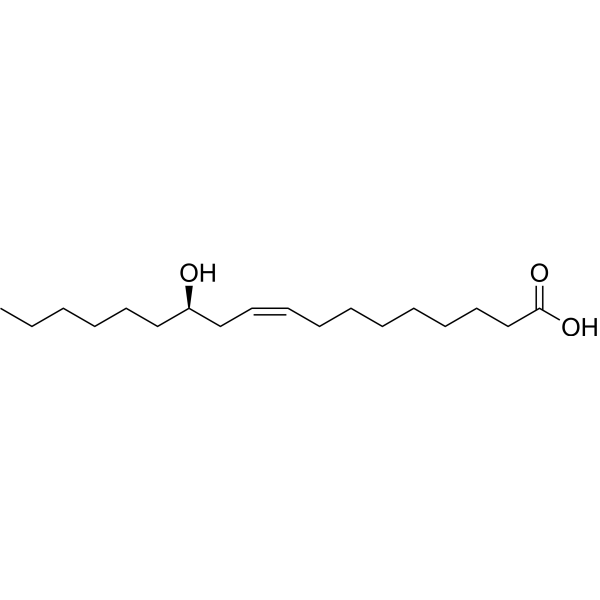
Ricinoleic acid (Standard) is the analytical standard of Ricinoleic acid. This product is intended for research and analytical applications. Ricinoleic acid, a hydroxy fatty acid, is an attractive feedstock for the production of high-performance lubricants, cosmetics, polymers, surfactants, and coatings. Ricinoleic acid is the main active ingredient of Castor oil (HY-107799). Ricinoleic acid is the agonist for prostaglandin EP3 receptor (EP3 receptor) (EC50 in MEG-01 is 0.5 μM), that causes laxative effects and uterine contraction. Ricinoleic acid exhibits antianxiety-like, anti-inflammatory and pro-inflammatory properties .
loading...
    loading...
Cat. No.: HY-Y0335R
CAS No.: 96-26-4
Synonyms: Dihydroxyacetone (Standard)
1,3-Dihydroxyacetone (Standard) is the analytical standard of 1,3-Dihydroxyacetone. This product is intended for research and analytical applications. 1,3-Dihydroxyacetone (DHA), the main active ingredient in sunless tanning skin-care preparations and an important precursor for the synthesis of various fine chemicals, is produced on an industrial scale by microbial fermentation of glycerol (HY-B1659) in Gluconobacter oxydans. 1,3-Dihydroxyacetone is also used for synthesis of new biodegradable polymers by combining with lactic acid (HY-B2227) .
loading...
    loading...
Cat. No.: HY-W414697
CAS No.: 40289-37-0
Synonyms: D-Ribo-phytosphingosine (C17 base)
Target:  

Bacterial

Research Areas:  

Others

4-Hydroxysphinganine C17 base (D-Ribo-phytosphingosine C17 base), also known as D-ribo-phytosphingosine or PHS, is a crucial compound present in the membranes of fungi, plants, bacteria, marine organisms, and mammalian tissues. It plays a vital role in preserving the structural integrity of membranes, regulating cellular growth, and mediating the heat stress response in yeast. Additionally, PHS serves as a precursor for the synthesis of important lipid mediators such as PHS 1-phosphate, inositol phosphorylceramide, and KRN7000 (the α-anomer of galactosylceramide). Furthermore, this phospholipid promotes keratinocyte differentiation, making it a valuable active ingredient in cosmetic formulations.
loading...
    loading...
Cat. No.: HY-100557B
CAS No.: 9004-64-2
Synonyms: Hydroxypropyl Cellulose, Viscosity(1%):150-400mPa.s
Research Areas:  

Others

HPC, Viscosity (1%): 150-400 mPa.s (Hydroxypropyl Cellulose, Viscosity (1%): 150-400 mPa.s) is a non-ionic, biocompatible cellulose derivative. HPC, Viscosity (1%): 150-400 mPa.s serves as a thickener or gelling agent, lubricant, and emulsion stabilizer, and is also used in the preparation of capsules and films .
loading...
    loading...
Cat. No.: HY-100557C
CAS No.: 9004-64-2
Synonyms: Hydroxypropyl Cellulose, Viscosity(1%):4000-6500mPa.s
Research Areas:  

Others

HPC, Viscosity(1%):4000-6500mPa.s (Hydroxypropyl Cellulose, Viscosity (1%): 150-400 mPa.s) is a non-ionic, biocompatible cellulose derivative. HPC, Viscosity(1%):4000-6500mPa.s serves as a thickener or gelling agent, lubricant, and emulsion stabilizer, and is also used in the preparation of capsules and films .
loading...
    loading...
Cat. No.: HY-129692R
CAS No.: 27570-38-3
Withanone (Standard) is the analytical standard of Withanone (HY-129692). This product is intended for research and analytical applications. Withanone is an active ingredient from the roots of Withania somnifera and a GRP75 inhibitor. Withanone has multifunctional neuroprotective effects in alleviating cognitive dysfunction. In neuron-like cells, Withanone can inhibit NMDA-induced excitotoxicity. Withanone can inhibit white adipose tissue browning by blocking the formation of the GRP75-ANT2-UCP1 complex, thereby alleviating cancer-related cachexia. Withanone can be used in the research of tumors and nervous system diseases .
loading...
    loading...
Cat. No.: HY-N0500
CAS No.: 130567-83-8
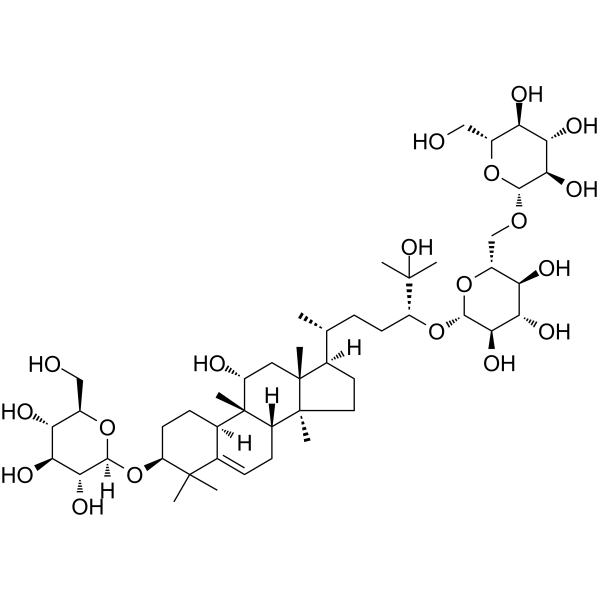
Mogroside III is a triterpenoid glycoside. Mogroside III exhibits maltase inhibitory effect with an IC50 value of 1.6 mM. Mogroside III enhances oocyte developmental potential by promoting autophagy in cumulus cells. Mogroside III, as the active ingredient of the low-polarity glycoside component (L-SGgly), L-SGgly can increase serum GLP-1 levels, improve insulin resistance, and reduce IL-6 levels, and has hypoglycemic, lipid-regulating and anti-inflammatory effects. Mogroside III can be used for the studies of type 2 diabetes mellitus (T2DM) and assisted reproductive technology .
loading...
    loading...
Cat. No.: HY-W021016
CAS No.: 824395-67-7
Synonyms: (S,S)-Ph-BPE
Research Areas:  

Others

(+)-1,2-Bis ((2S,5S)-2,5-diphenylphospholano)ethane ((S,S)-Ph-BPE) is a chiral bisphosphine ligand and catalyst. (+)-1,2-Bis ((2S,5S)-2,5-diphenylphospholano)ethane acts as a chiral ligand in rhodium-catalyzed reductive hydroformylation of alkenyl boronic esters, enabling enantiodivergent synthesis of chiral γ-boryl alcohols. (+)-1,2-Bis ((2S,5S)-2,5-diphenylphospholano)ethane forms chiral nickel-phosphine complexes to mediate asymmetric hydrogenation of aliphatic γ- and δ-keto acids; protons promote substrate C=O bond activation and stereoselectivity control via hydrogen bonding. (+)-1,2-Bis ((2S,5S)-2,5-diphenylphospholano)ethane forms a monodentate nickel complex, which serves as the active species for asymmetric hydrogenation of aliphatic keto acids .
loading...
    loading...
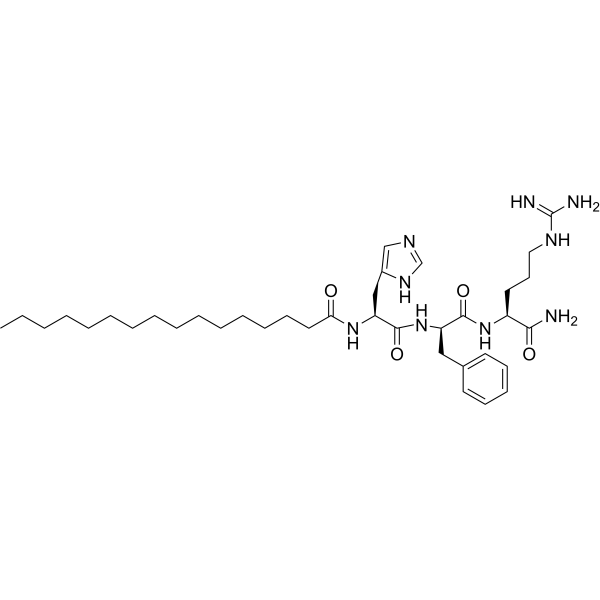
Cat. No.: HY-P5226
CAS No.: 936544-53-5
Palmitoyl tripeptide-8 is an immunomodulatory peptide and neurotransmitter inhibitory peptide. Palmitoyl tripeptide-8 inhibits the activation of the NF-κB pathway and the production of pro-inflammatory cytokines (IL-8, IL-6, and TNF-α). Palmitoyl tripeptide-8 activates the cutaneous opioid system and reduces CGRP release. Palmitoyl tripeptide-8 decreases the number of dilated capillaries, the size of dilated vessels, and the degree of edema in skin explants treated with Substance P (HY-P0201). Palmitoyl tripeptide-8 is used as an active ingredient in cosmetics for sensitive skin. Palmitoyl tripeptide-8 is utilized in research related to sensitive skin .
loading...
    loading...
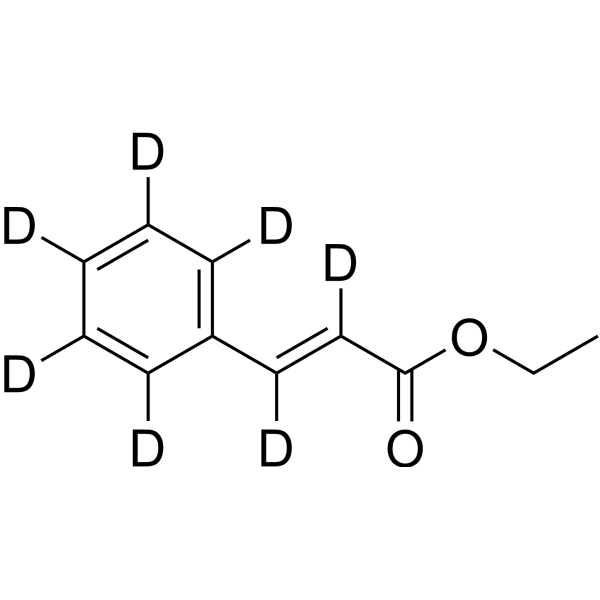
Cat. No.: HY-Y0121S1
CAS No.: 1336882-58-6
Ethyl cinnamate-d7 is deuterated labeled Ethyl cinnamate (HY-Y0121). Ethyl cinnamate, an orally active chemical constituent of the rhizome of Kaempferia galanga, exhibits anti-cancer, nematocidal, sedative and vasorelaxant activities. Ethyl cinnamate is a fragrance ingredient used as a food flavor and additive for cosmetic products. Ethyl cinnamate is also an excellent clearing reagent for mammalian tissues. Ethyl cinnamate suppresses tumor growth through anti-angiogenesis by attenuating VEGFR2 signal pathway in colorectal cancer. Ethyl cinnamate inhibits the tonic contractions induced by high K+ and phenylephrine (PE) with respective IC50 values of 0.30 mM and 0.38 mM in rat aorta .
loading...
    loading...
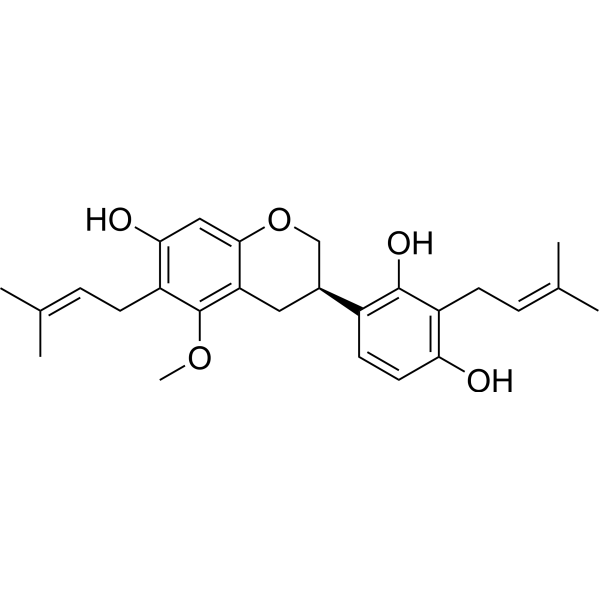
Cat. No.: HY-N3387
CAS No.: 30508-27-1
Licoricidin (LCD) is isolated from Glycyrrhiza uralensis Fisch, possesses anti-cancer activities. Licoricidin (LCD) inhibit SW480 cells (IC50=7.2 μM) by inducing cycle arrest, apoptosis and autophagy, and is a potential chemopreventive or chemotherapeutic agent against colorectal cancer . Licoricidin (LCD) inhibits Lung Metastasis by inhibition of tumor angiogenesis and lymphangiogenesis as well as changes in the local microenvironment of tumor tissues the anticarcinogenic effect . Licoricidin enhanced gemcitabine-induced cytotoxicity in Osteosarcoma (OS) cells by inactivation of the Akt and NF-κB pathways in vitro and in vivo . Licoricidin blocks UVA-induced photoaging via ROS scavenging, limits the activity of MMP-1, it can be considered as an active ingredient in new topically applied anti-ageing formulations .
loading...
    loading...
Cat. No.: HY-W013035R
CAS No.: 556-82-1
Synonyms: MBO321 (Standard)
3-Methyl-2-buten-1-ol (Standard) is the analytical standard of 3-Methyl-2-buten-1-ol. This product is intended for research and analytical applications. 3-Methyl-2-buten-1-ol (MBO321) is an orally active endogenous metabolite found in pine trees and is used as a fragrance ingredient in cosmetics and detergents. 3-Methyl-2-buten-1-ol passes cell barrier. 3-Methyl-2-buten-1-ol reduces body weight in rats[1][2][3].
loading...
    loading...
Cat. No.: HY-W739770
CAS No.: 53439-16-0
3-Methyl-2-buten-1-ol-d6 is the deuterium labeled 3-Methyl-2-buten-1-ol (HY-W013035). 3-Methyl-2-buten-1-ol (MBO321) is an orally active endogenous metabolite found in pine trees and is used as a fragrance ingredient in cosmetics and detergents. 3-Methyl-2-buten-1-ol passes cell barrier. 3-Methyl-2-buten-1-ol reduces body weight in rats .
loading...
    loading...
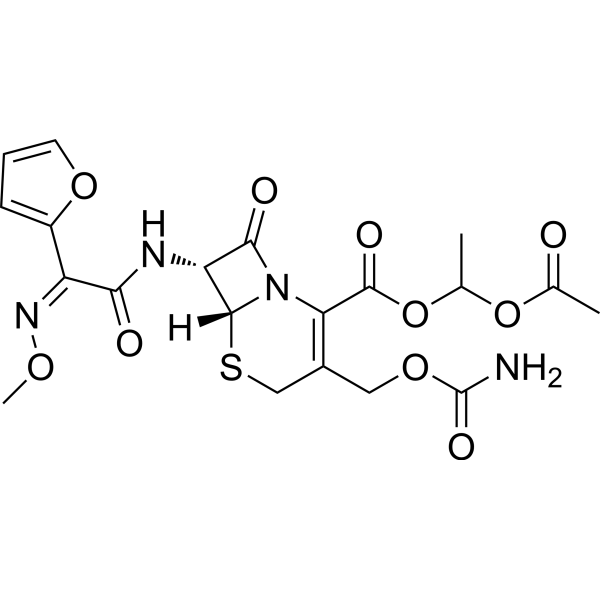
Cat. No.: HY-B1325
CAS No.: 64544-07-6
Target:  

Bacterial Antibiotic

Research Areas:  

Infection Inflammation/Immunology

Cefuroxime axetil is an orally effective broad-spectrum β-lactam antibiotic that targets bacterial penicillin-binding proteins (PBPs, such as PBP3 and PBP1). Cefuroxime axetil inhibits cell wall synthesis, leading to bacterial lysis and death, with a minimum inhibitory concentration (MIC) of 0.12-4 mg/L for non-typeable Haemophilus influenzae (NTHi). Cefuroxime axetil is hydrolyzed by esterase to the active ingredient Cefuroxime (HY-B1256A) after oral absorption. Topical administration of Cefuroxime via bioadhesive nanoparticles (BNPs) can prolong the drug's retention time in the middle ear (≥7 days). Cefuroxime axetil can be used in the study of otitis media (especially NTHi infection). Cefuroxime axetil can achieve precise antibacterial effects through oral or topical nano-delivery systems, reducing systemic exposure and the risk of antibiotic resistance .
loading...
    loading...

