2479 Results for "

Acinetobacter strain T5

" in MedChemExpress (MCE) Product Catalog:
Products (2479)

2479 Results for "Acinetobacter strain T5" in MCE Product Catalog:

Cat. No.: HY-103249
CAS No.: 303957-69-9
Purity:  98.08%
Synonyms: Reutericycline
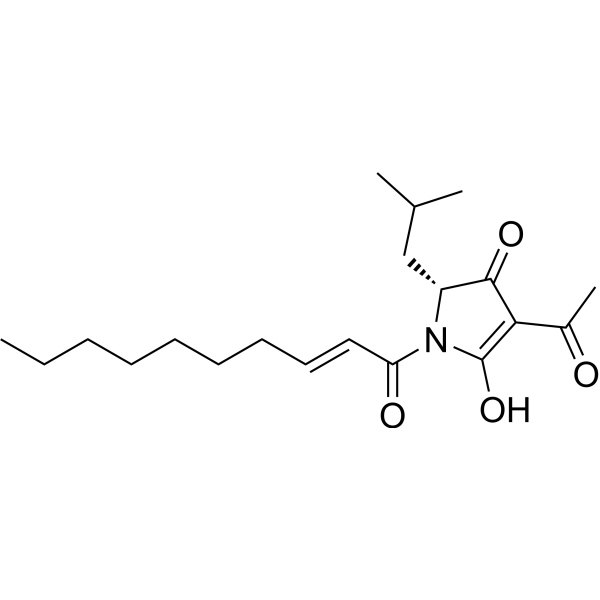
Reutericyclin (Reutericycline) is an orally active antibacterial and anti-obesity agent that selectively inhibits Gram-positive bacteria. By selectively dissipating transmembrane potential, Reutericyclin exerts non-lytic bactericidal or bacteriostatic activity against pathogens such as Clostridium difficile and Staphylococcus aureus, and rapidly kills vegetative cells and spores of Clostridium difficile. Reutericyclin possesses favorable properties including resistance to enzymatic hydrolysis, iron-chelating function, and poor absorption by colonic epithelium. Reutericyclin not only eradicates staphylococcal biofilms and inhibits drug-resistant strains, but also counteracts Risperidone (HY-11018)-induced weight gain by inducing changes in gut microbiota composition and restoring energy utilization efficiency. Reutericyclin can be used in research related to Clostridium difficile infection, Risperidone-induced weight gain, and staphylococcal superficial skin infections .
loading...
    loading...
Cat. No.: HY-108374R
CAS No.: 88192-20-5
Research Areas:  

Cancer

4-Azidobutylamine (Standard) is the analytical standard of 4-Azidobutylamine (HY-108374). This product is intended for research and analytical applications. 4-Azidobutylamine is a PROTAC linker, which refers to the alkyl chain composition. 4-Azidobutylamine can be used in the synthesis of a series of PROTACs. PROTACs contain two different ligands connected by a linker; one is a ligand for an E3 ubiquitin ligase and the other is for the target protein. PROTACs exploit the intracellular ubiquitin-proteasome system to selectively degrade target proteins . 4-Azidobutylamine is a click chemistry reagent, it contains an Azide group and can undergo copper-catalyzed azide-alkyne cycloaddition reaction (CuAAc) with molecules containing Alkyne groups. It can also undergo strain-promoted alkyne-azide cycloaddition (SPAAC) reactions with molecules containing DBCO or BCN groups.
loading...
    loading...
Cat. No.: HY-118962
CAS No.: 342394-93-8
Target:  

CCR HIV

Research Areas:  

Infection

E913 is a CCR5 antagonist that competes with the binding of antibodies to CCR5 which recognize the C-terminal half of the second extracellular loop (ECL2B) of CCR5. E913 can specifically block the binding of macrophage inflammatory protein-1alpha (MIP-1alpha) to CCR5 (IC50 = 0.002 μM) and MIP-1alpha-elicited cellular Ca 2+ mobilization (IC50 = 0.02 μM). E913 inhibits the replication of laboratory and primary R5 HIV-1 strains as well as various multidrug-resistant monocyte/macrophage tropic (R5) HIV-1 (IC50 = 0.03-0.06 μM). E913 can be used for the research of infection, such as HIV-1 infection .
loading...
    loading...
Cat. No.: HY-130178
CAS No.: 1210501-46-4
Target:  

Endogenous Metabolite

Research Areas:  

Infection

CL-385319 is an N-substituted piperidine compound with inhibitory activity against H5N1 avian influenza A virus infection. CL-385319 exhibited an IC50 of 27.03±2.54 μM against infection of highly pathogenic H5N1 virus in Madin-Darby canine kidney cells (MDCK). CL-385319 had low cytotoxicity with a CC50 of 1.48 mM and was able to inhibit the entry of pseudoviruses carrying H5N1 strains from different sources, but had no inhibitory effect on the entry of VSV-G pseudotyped particles. Pseudoviruses with the M24A mutation in HA1 or the F110S mutation in HA2 were resistant to CL-385319, indicating that these two residues in the cavity region may be critical for the binding of CL-385319 .
loading...
    loading...
Cat. No.: HY-130194
CAS No.: 217180-81-9
Purity:  99.60%
Research Areas:  

Cancer

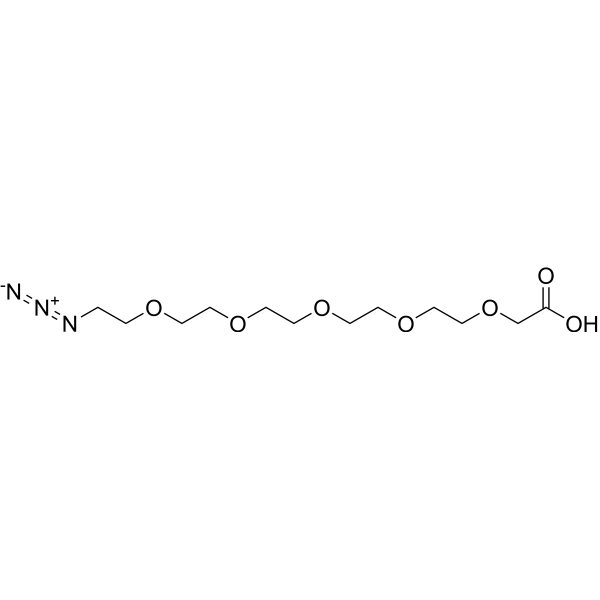
Azido-PEG5-CH2CO2H is a cleavable 5 unit PEG ADC linker used in the synthesis of antibody-drug conjugates (ADCs). Azido-PEG5-CH2CO2H is also a PEG-based PROTAC linker that can be used in the synthesis of PROTACs . Azido-PEG5-CH2CO2H is a click chemistry reagent, it contains an Azide group and can undergo copper-catalyzed azide-alkyne cycloaddition reaction (CuAAc) with molecules containing Alkyne groups. It can also undergo strain-promoted alkyne-azide cycloaddition (SPAAC) reactions with molecules containing DBCO or BCN groups.
loading...
    loading...
Cat. No.: HY-130652
CAS No.: 2271036-46-3
Research Areas:  

Cancer

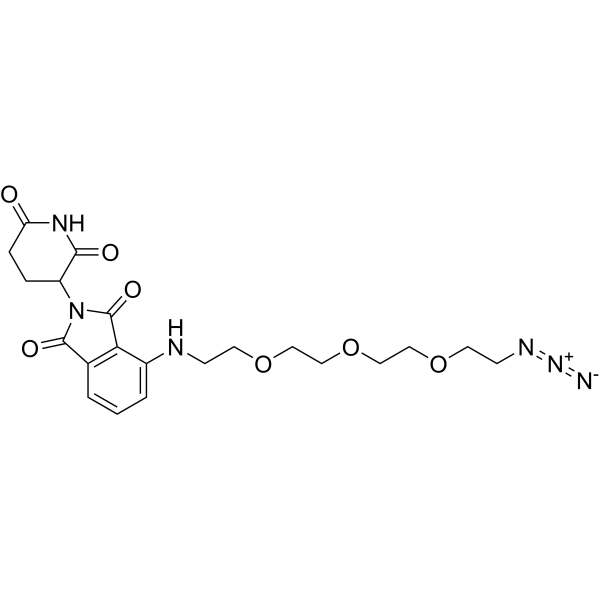
Pomalidomide 4'-PEG3-azide is a synthesized E3 ligase ligand-linker conjugate that incorporates the Pomalidomide-based cereblon ligand and a linker. Pomalidomide 4'-PEG3-azide can be used for the synthesis of iRucaparib-TP3 (Compound 3). iRucaparib-TP3 is a highly efficient PARP1?degrader based on Rucaparib by using the PROTAC approach . Pomalidomide 4'-PEG3-azide is a click chemistry reagent, it contains an Azide group and can undergo copper-catalyzed azide-alkyne cycloaddition reaction (CuAAc) with molecules containing Alkyne groups. It can also undergo strain-promoted alkyne-azide cycloaddition (SPAAC) reactions with molecules containing DBCO or BCN groups.
loading...
    loading...
Cat. No.: HY-131088A
Research Areas:  

Cancer

N3-PEG8-Phe-Lys-PABC-Gefitinib TFA is a agent-linker conjugate for ADC with potent antitumor activity by using the anti-tumor agent, Gefitinib (HY-50895) (orally active EGFR tyrosine kinase inhibitor), linked via the cleavable linker N3-PEG8-Phe-Lys-PABC. N3-PEG8-Phe-Lys-PABC-Gefitinib TFA is a click chemistry reagent, it contains an Azide group and can undergo copper-catalyzed azide-alkyne cycloaddition reaction (CuAAc) with molecules containing Alkyne groups. It can also undergo strain-promoted alkyne-azide cycloaddition (SPAAC) reactions with molecules containing DBCO or BCN groups.
loading...
    loading...
Cat. No.: HY-131455A
Purity:  ≥98.0%
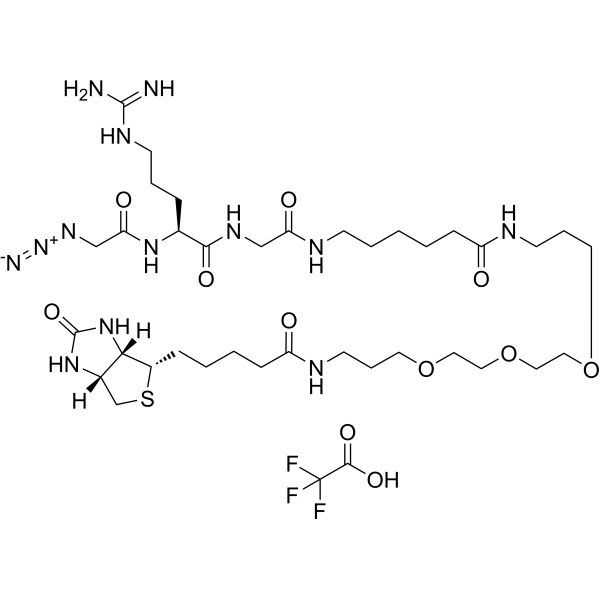
Biotin-C1-PEG3-C3-amido-C5-Gly-Arg-Gly-N3 TFA is used for detection of modification site for N-myristoylated and GPI-anchored proteins in blood-stage P. falciparum . Biotin-C1-PEG3-C3-amido-C5-Gly-Arg-Gly-N3 (TFA) is a click chemistry reagent, it contains an Azide group and can undergo copper-catalyzed azide-alkyne cycloaddition reaction (CuAAc) with molecules containing Alkyne groups. It can also undergo strain-promoted alkyne-azide cycloaddition (SPAAC) reactions with molecules containing DBCO or BCN groups.
loading...
    loading...
Cat. No.: HY-137985
CAS No.: 149598-70-9
Synonyms: Stachybotrydial; F 1839M; Stachybotrydial
Target:  

HSV Virus Protease

Research Areas:  

Infection

Mer-NF5003F (Stachybotrydial; F 1839M), a sesquiterpene isolated from Stachybotrys, inhibits avian medulloblastoma virus (AMV) protease (IC50=7.8 μM). Mer-NF5003F inhibits sialyltransferase 6N (ST6N), ST3O, and ST3N (IC50=0.61, 6.7, and 10 μg/mL, respectively), and fucosyltransferase (IC50=11.3 μg/mL). Mer-NF5003F has in vitro activity against herpes simplex virus HSV-1 (IC50=4.32 μg/mL) and multidrug-resistant Plasmodium falciparum K1 strain (IC50=0.85 μg/mL).
loading...
    loading...
Cat. No.: HY-141068
CAS No.: 2107273-58-3
Target:  

PROTAC Linkers

Research Areas:  

Cancer

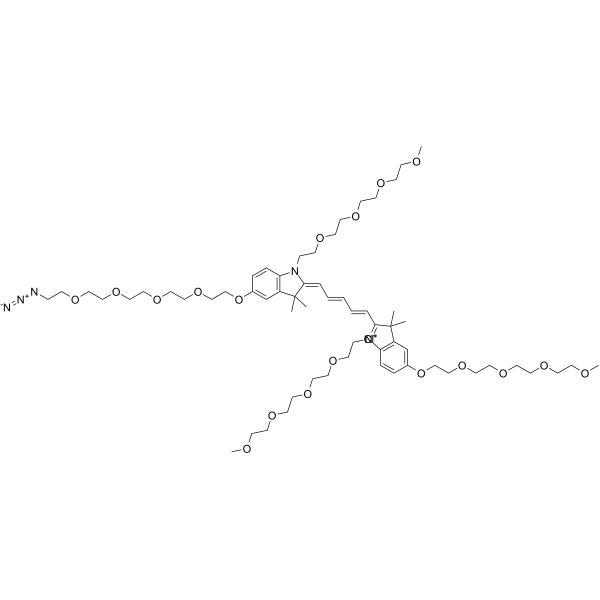
N-(m-PEG4)-N'-(m-PEG4)-O-(m-PEG4)-O'-(azide-PEG4)-Cy5 is a PEG-based PROTAC linker that can be used in the synthesis of PROTACs . N-(m-PEG4)-N'-(m-PEG4)-O-(m-PEG4)-O'-(azide-PEG4)-Cy5 is a click chemistry reagent, it contains an Azide group and can undergo copper-catalyzed azide-alkyne cycloaddition reaction (CuAAc) with molecules containing Alkyne groups. It can also undergo strain-promoted alkyne-azide cycloaddition (SPAAC) reactions with molecules containing DBCO or BCN groups.
loading...
    loading...
Cat. No.: HY-151852
CAS No.: 76487-51-9
Purity:  ≥95.0%
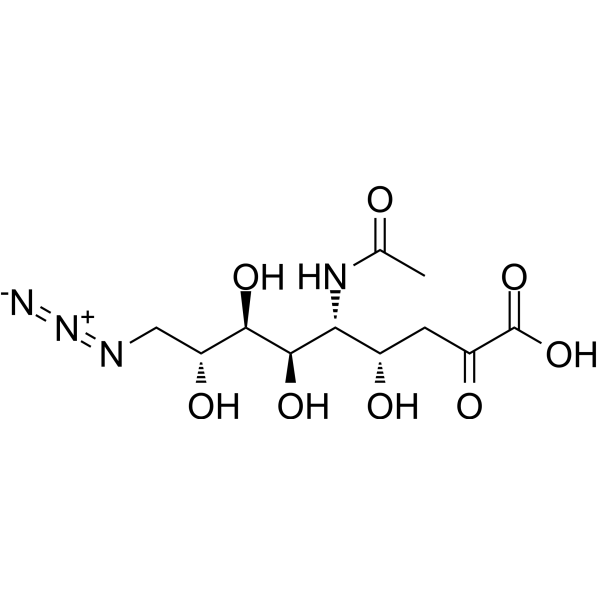
9AzNue5Ac, 9-azido-9-deoxy-N-acetylneuraminic acid, is a click chemistry reagent and a Neu5Ac analogue with the substitution of 9-hydroxyl group with an azide. 9AzNue5Ac could be metabolized and incorporated into sialoglycans in living cells and mice. Click chemistry has great potential for use in binding between nucleic acids, lipids, proteins, and other molecules, and has been used in many research fields because of its beneficial characteristics, including high yield, high specificity, and simplicity . It contains an azide group and can undergo copper-catalyzed azide-alkyne cycloaddition (CuAAc) with molecules containing alkyne groups. It can also undergo ring strain-promoted alkyne-azide cycloaddition (SPAAC) with molecules containing DBCO or BCN groups.
loading...
    loading...
Cat. No.: HY-154146
CAS No.: 2072145-26-5
Research Areas:  

Cancer

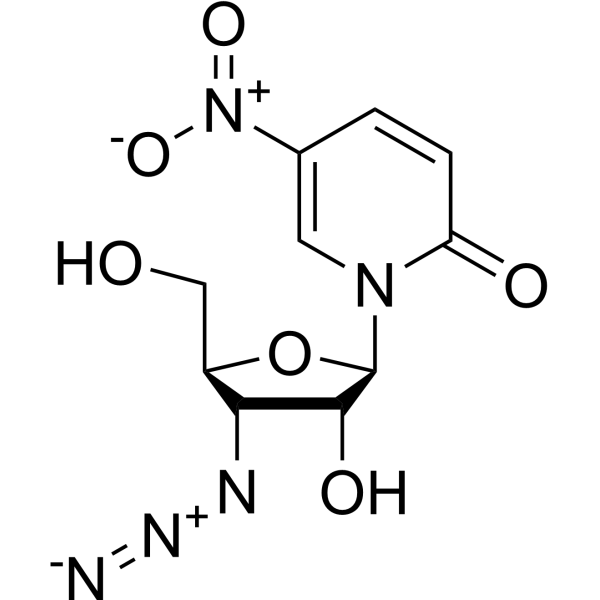
5-Nitro-1-(3-azido-3-deoxy-β-D-ribofuranosyl)-2(1H)-pyridinone is a purine nucleoside analog. Purine nucleoside analogs have broad antitumor activity targeting indolent lymphoid malignancies. Anticancer mechanisms in this process rely on inhibition of DNA synthesis, induction of apoptosis, etc . 5-Nitro-1-(3-azido-3-deoxy-β-D-ribofuranosyl)-2(1H)-pyridinone is a click chemistry reagent, it contains an Azide group and can undergo copper-catalyzed azide-alkyne cycloaddition reaction (CuAAc) with molecules containing Alkyne groups. It can also undergo strain-promoted alkyne-azide cycloaddition (SPAAC) reactions with molecules containing DBCO or BCN groups.
loading...
    loading...
Cat. No.: HY-154334
CAS No.: 256485-42-4
Research Areas:  

Cancer

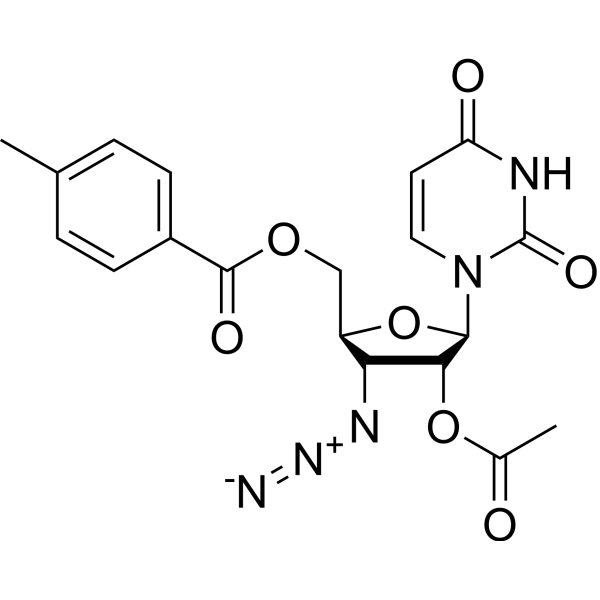
2’-O-Acetyl-3’-azido-5’-O-(4-methylbenzoyl)-3’-deoxyuridine is a purine nucleoside analog. Purine nucleoside analogs have broad antitumor activity targeting indolent lymphoid malignancies. Anticancer mechanisms in this process rely on inhibition of DNA synthesis, induction of apoptosis, etc . 2’-O-Acetyl-3’-azido-5’-O-(4-methylbenzoyl)-3’-deoxyuridine is a click chemistry reagent, it contains an Azide group and can undergo copper-catalyzed azide-alkyne cycloaddition reaction (CuAAc) with molecules containing Alkyne groups. It can also undergo strain-promoted alkyne-azide cycloaddition (SPAAC) reactions with molecules containing DBCO or BCN groups.
loading...
    loading...
Cat. No.: HY-154386
CAS No.: 2095417-42-6
Research Areas:  

Cancer

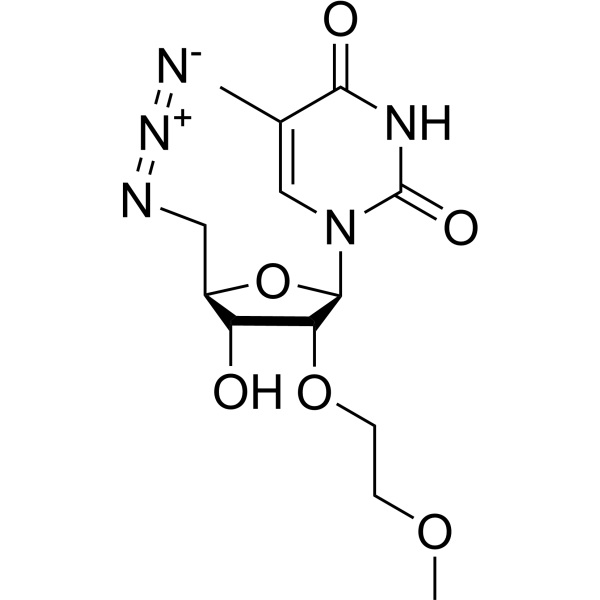
5’-Azido-5’-deoxy-2’-O-(2-methoxyethyl)-5-methyluridine is a purine nucleoside analog. Purine nucleoside analogs have broad antitumor activity targeting indolent lymphoid malignancies. Anticancer mechanisms in this process rely on inhibition of DNA synthesis, induction of apoptosis, etc . 5’-Azido-5’-deoxy-2’-O-(2-methoxyethyl)-5-methyluridine is a click chemistry reagent, it contains an Azide group and can undergo copper-catalyzed azide-alkyne cycloaddition reaction (CuAAc) with molecules containing Alkyne groups. It can also undergo strain-promoted alkyne-azide cycloaddition (SPAAC) reactions with molecules containing DBCO or BCN groups.
loading...
    loading...
Cat. No.: HY-155046
CAS No.: 3027827-02-4
Target:  

FGFR

Research Areas:  

Cancer

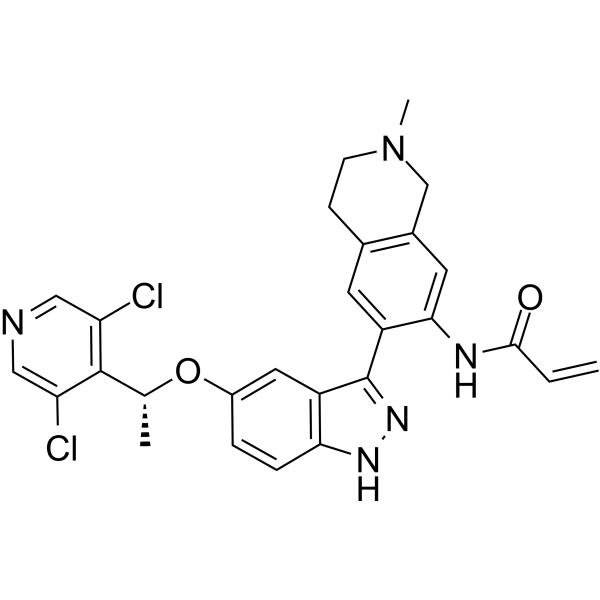
FGFR4-IN-14 (Compound 27i) is a FGFR4 inhibitor (IC50: 2.4 nM. FGFR4-IN-14 inhibits the proliferation of V550L and N535K mutant strains, with IC50s of 21 nM, 2.5 nM, 171 nM against huh7, BaF3/ETV6-FGFR4-V550L and BaF3/ETV6-FGFR4-N535K cells respectively. FGFR4-IN-14 has potent antitumor efficacy in the Huh7 xenograft model. FGFR4-IN-14 can be used for research of hepatocellular carcinoma (HCC) .
loading...
    loading...
Cat. No.: HY-15843
CAS No.: 1311982-88-3
Purity:  99.57%
Target:  

MicroRNA Apoptosis

Research Areas:  

Cancer

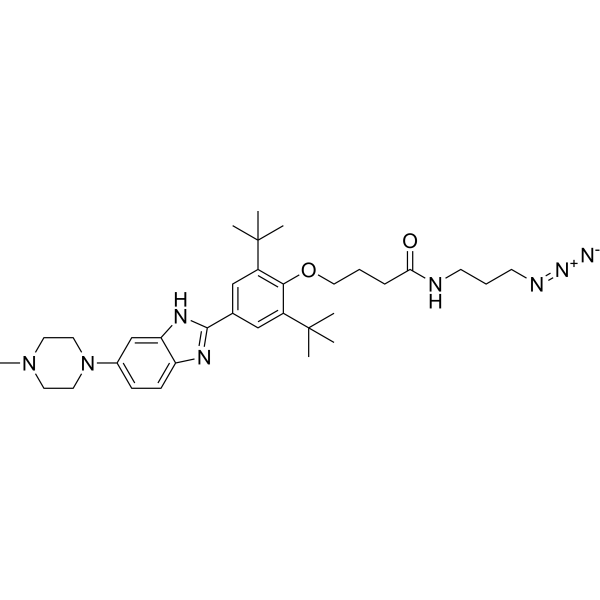
MIR96-IN-1 targets the Drosha site in the miR-96 (miRNA-96, microRNA-96) hairpin precursor, inhibiting its biogenesis, derepressing downstream targets, and triggering apoptosis in breast cancer cells. MIR96-IN-1 binds to RNAs with Kds of 1.3, 9.4, 3.4, 1.3 and 7.4 μM for RNA1, RNA2, RNA3, RNA4 and RNA5, respectively . MIR96-IN-1 is a click chemistry reagent, it contains an Azide group and can undergo copper-catalyzed azide-alkyne cycloaddition reaction (CuAAc) with molecules containing Alkyne groups. It can also undergo strain-promoted alkyne-azide cycloaddition (SPAAC) reactions with molecules containing DBCO or BCN groups.
loading...
    loading...
Cat. No.: HY-175808
Target:  

Influenza Virus

Research Areas:  

Infection

VF-57a (Compound 23) is an Influenza A virus (IAV) fusion inhibitor. VF-57 has potent antiviral activities against authentic A/H1N1 virus with EC50s of 0.92 and 0.31 μM for the A/H1N1 PR8 and A/H1N1 Virg09 strains, respectively. VF-57 significantly inhibits HA-mediated cell entry of A/H1N1- and A/H5N1-pseudoviruses, prevents the HA refolding at pH 5.2. VF-57a can be used for IAV infections research .
loading...
    loading...
Cat. No.: HY-178949
Research Areas:  

Infection

MRSA antibiotic 3 (Compound C8) is a small-molecule antibiotic active against Methicillin (HY-121544)-resistant Staphylococcus aureus (MRSA), showing a MIC of 0.5 μg/mL against the standard S. aureus strain (ATCC 29213). MRSA antibiotic 3 potently inhibits the ATPase activity of S. aureus DNA gyrase with an IC50 of 0.32 μM. MRSA antibiotic 3 exhibits strong inhibitory activity against five clinical MRSA isolates, with MIC values ranging from 0.5 to 1 μg/mL. MRSA antibiotic 3 demonstrates negligible cytotoxicity at effective antibacterial concentrations and causes no hemolysis in erythrocytes even at extremely high concentrations. MRSA antibiotic 3 shows significant protective effects in both Galleria mellonella infection and murine sepsis models .
loading...
    loading...
Cat. No.: HY-178952
Target:  

Bacterial

Research Areas:  

Infection

Anti-infective agent 12 (Compound A09) is a competitive inhibitor of type I signal peptidease (SPase I), with an IC50 of 4.475 μM and a Kd of 16.3 μM. Anti-infective agent 12 has the ability to disrupt bacterial membranes and remove biofilms. Anti-infective agent 12 exhibits potent bactericidal activity against Gram-positive bacteria, with MIC values of 4, 4, 8, and 8 μg/mL for Staphylococcus aureus, Enterococcus faecalis, Enterococcus faecium, and Streptococcus suis, respectively. Anti-infective agent 12 remains effective against multi-drug resistant strains, but has weaker activity against Gram-negative bacteria (such as Escherichia coli and Salmonella), with MIC values > 64 μg/mL. Anti-infective agent 12 has low hemolytic activity and shows significant efficacy in mouse skin infection models .
loading...
    loading...
Cat. No.: HY-179634
ASF-006 sodium, a tetrapodal tryptophan derivative, is a potent viral invasion inhibitor. ASF-006 sodium shows potent antiviral activity against different SARS-CoV-2 Omicron variants but not against the ancestral SARS-CoV.2 strain (Wuhan-Hu-1). ASF-006 sodium competitively inhibits receptor-binding domain (RBD)-ACE2 binding via an allosteric mechanism. ASF-006 sodium inhibits Omicron BA.1, Omicron XBB.1.5, respiratory syncytial virus (RSV) and Ebola virus infection with IC50s of 0.02 μM, 0.3 μM, 1.52 μM and 0.2 μM, respectively. ASF-006 sodium inhibits cell entry of both HIV and enterovirus A71[1].
loading...
    loading...

