2567 Results for "

azides

" in MedChemExpress (MCE) Product Catalog:
Products (2567)

2567 Results for "azides" in MCE Product Catalog:

Cat. No.: HY-151821
CAS No.: 2566404-75-7
Target:  

ADC Linkers

Research Areas:  

Others

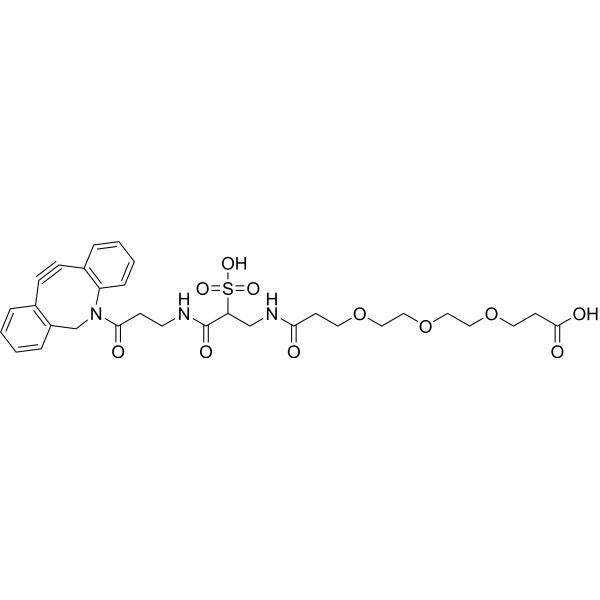
Sulfo DBCO-PEG3-acid is a click chemistry reagent containing an azide group. Sulfo DBCO-PEG3-acid is an analog of DBCO-Acid with PEG linker and a DBCO group. The DBCO groups is commonly used for copper-free Click Chemistry reactions due to its strain promoted high energy. The hydrophilic PEG chain and sulfo group increase water solubility. The terminal carboxylic acid can react with primary amine groups in the presence of activators (e.g. EDC, or HATU) to form a stable amide bond. Reagent grade, for research use only .
loading...
    loading...
Cat. No.: HY-155685
CAS No.: 3058085-77-8
Research Areas:  

Cancer

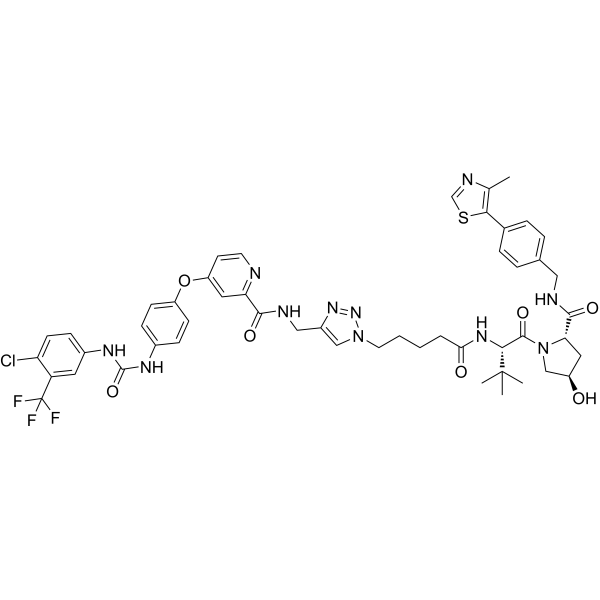
SA-VA is a heterobifunctional PROTAC molecule generated in situ via click chemistry, and acts as a degrader for VEGFR-2 and EphB4. SA-VA is self-assembled from the alkynyl precursor SA and the azide precursor VA through a copper ion-mediated intracellular click chemistry reaction, recruits the E3 ubiquitin ligase VHL to mediate the ubiquitination of target proteins, and triggers degradation via the proteasome pathway. SA-VA induces cell cycle arrest and apoptosis in U87 glioma cells. SA-VA can be used in cancer-related research .
loading...
    loading...
Cat. No.: HY-158067
CAS No.: 2359695-48-8
Purity:  89.40%
Synonyms: DFO-DBCO
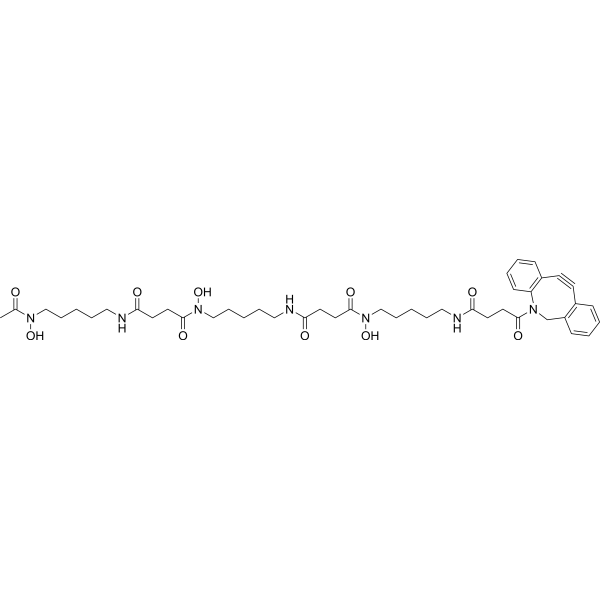
Deferoxamine-DBCO (DFO-DBCO) is a bifunctional small-molecule synthetic building block obtained by covalent conjugation of the DFO metal-chelating group with DBCO, and is a bifunctional chelator. Deferoxamine-DBCO efficiently chelates radioactive metals (such as 89Zr) through the DFO moiety to achieve radiolabeling. Deferoxamine-DBCO undergoes a metal-free Huisgen cycloaddition reaction with azide-containing biomolecules (such as siRNA and monoclonal antibodies) through the DBCO moiety under bioorthogonal conditions to accomplish targeted conjugation. Deferoxamine-DBCO is applicable to research related to bioconjugation chemistry and the preparation of PET radiotracer probes .
loading...
    loading...
Cat. No.: HY-189205
Target:  

Kallikrein

Research Areas:  

Cancer

DKFZ-938 is a kallikrein-related peptidase 6 (KLK6) inhibitor, with an IC50 of 0.09 μM against human KLK6. DKFZ-938 binds to the catalytic serine residue in the active-site pocket of KLK6 and mimics the natural KLK6 substrate to inhibit the enzymatic activity of KLK6. DKFZ-938 can be conjugated to the non-canonical amino acid propargyllysine via copper-catalyzed azide-alkyne cycloaddition click chemistry. DKFZ-938 is used in research related to colorectal cancer and pancreatic cancer .
loading...
    loading...
Cat. No.: HY-131384
CAS No.: 34262-64-1
Synonyms: 8,11,14-Icosatriynoic acid
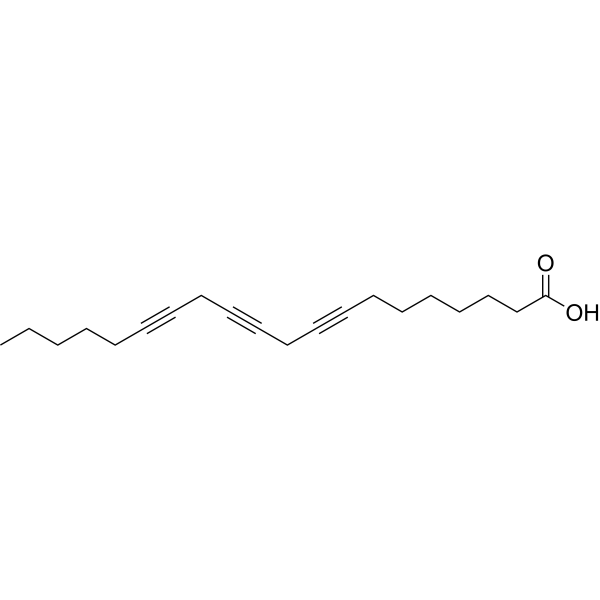
8,11,14-Eicosatriynoic Acid, as an inhibitor of prostaglandin, leukotriene biosynthesis, and arachidonic acid-induced platelet aggregation, blocks human 12-lipoxygenase (12-LO), cyclooxygenase (COX)and 5-lipoxygenase (5-LO) with IC50 values of 0.46 μM, 14 μMand 25 μM, respectively. In addition, 8,11,14-Eicosatriynoic Acid inhibits the action of slow-reacting substances of allergic reactions, with IC50 value of 10 μM. Lipoxygenase is widely found in fungi, plants and animals. 12-LO involves in many important disease states and may play a role in oxidative glutamate toxicity. COX enzymes play complex roles in human physiology and pathology involving the neuronal, immune, renal, cardiovascular, gastrointestinal and reproductive systems. COX enzymes are blocked by aspirin and a variety of other NSAIDs, which makes them clinically important. 5-LO involves in cancer pathology. It is expressed by a variety of cancer cells, including colon, lung, breast, and prostate cancers, and promotes cancer cell growth and neovascularization . 8,11,14-Eicosatriynoic acid is a click chemistry reagent, it contains an Alkyne group and can undergo copper-catalyzed azide-alkyne cycloaddition (CuAAc) with molecules containing Azide groups.
loading...
    loading...
Cat. No.: HY-148840
Research Areas:  

Others

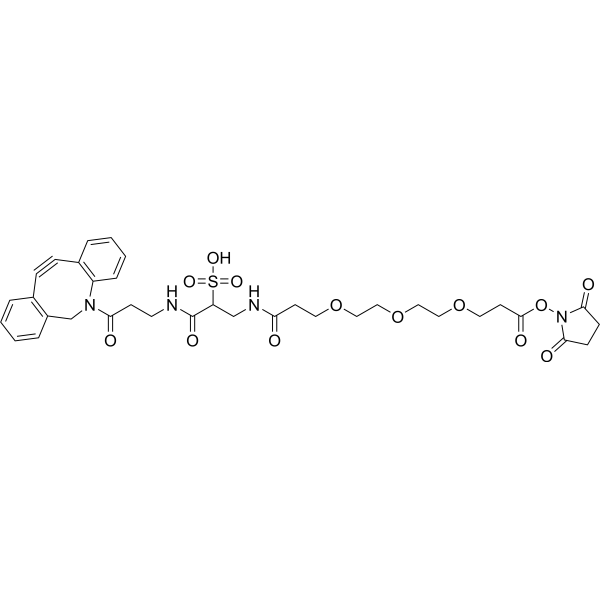
Sulfo DBCO-PEG3-NHS ester is a click chemistry reagent containing an azide group. Sulfo DBCO-PEG3-NHS ester is an analog of DBCO-Acid with PEG linker and a DBCO group. The DBCO group is commonly used for copper-free Click Chemistry reactions due to its strain promoted high energy. The hydrophilic PEG chain and sulfo group increase water solubility. The terminal carboxylic acid can react with primary amine groups in the presence of activators (e.g. EDC, or HATU) to form a stable amide bond. Reagent grade, for research use only .
loading...
    loading...
Cat. No.: HY-148840A
Research Areas:  

Others

Sulfo DBCO-PEG3-NHS ester TEA is a click chemistry reagent containing an azide group. Sulfo DBCO-PEG3-NHS ester (TEA) is an analog of DBCO-Acid with PEG linker and a DBCO group. The DBCO group is commonly used for copper-free Click Chemistry reactions due to its strain promoted high energy. The hydrophilic PEG chain and sulfo group increase water solubility. The terminal carboxylic acid can react with primary amine groups in the presence of activators (e.g. EDC, or HATU) to form a stable amide bond. Reagent grade, for research use only .
loading...
    loading...
Cat. No.: HY-D1861
CAS No.: 2144762-62-7
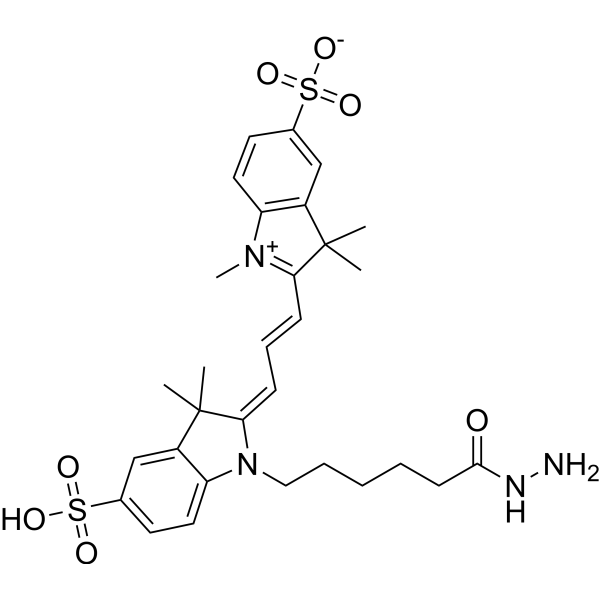
Sulfo-Cy3 hydrazide is a Cyanine 3 (Cy3) (HY-D0822) dye derivative with hydrazine functionality. The sulfonate ion increases the water solubility of the compound, making it suitable for use in aqueous solutions. Cy3 is a fluorescent dye with a fluorescence spectrum typically in the green to orange wavelength range. The hydrazide group of Sulfo-Cy3 hydrazide can form hydrazinone coupling with molecules containing aldehydes or ketones to form covalent bonds. Therefore, Cy3 azide plus can bind to biomolecules such as proteins and antibodies to track their location and dynamic changes in biological samples.
loading...
    loading...
Cat. No.: HY-D1862
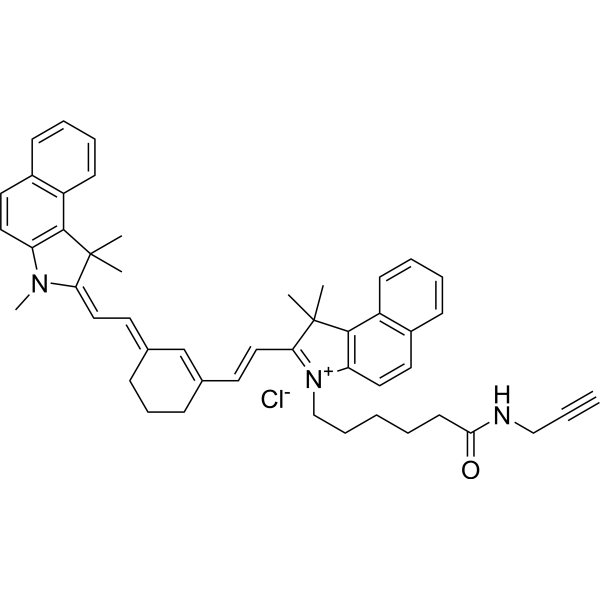
Cy7.5 alkyne chloride is a dye derivative of Cyanine 7.5 (Cy7.5) (HY-D0926) containing a sulfonate ion and an alkyne functional group. Cy7.5 is a near-infrared fluorescent dye commonly used for biolabeling and cell imaging. The alkyne functional group of Cy7.5 alkyne chloride can react with molecules containing the azide functional group to form covalent bonds. Cy7.5 alkyne chloride can bind to biological molecules such as proteins and antibodies to track their location and dynamic changes in biological samples.
loading...
    loading...
Cat. No.: HY-W800699
CAS No.: 2644752-85-0
BP Fluor 430 DBCO reacts with azides via a copper-free click chemistry reaction to form a stable triazole and does not require a Cu-catalyst or elevated temperatures. In applications where the presence of copper is a concern, BP Fluor 430 DBCO is an ideal alternative to copper requiring fluorescent alkynes. BP Fluor 430 is a bright, photostable, green-fluorescent probe optimally excited near its absorption maximum at 432 nm. Its emission peak at 539 nm is pH independent over a wide pH range. BP Fluor DBCO reagent is not suitable for staining intracellular components of fixed and permeabilized cells due to high backgrounds.
loading...
    loading...
Cat. No.: HY-151827
CAS No.: 2585653-12-7
Purity:  ≥98.0%
Target:  

ADC Linkers

Research Areas:  

Others

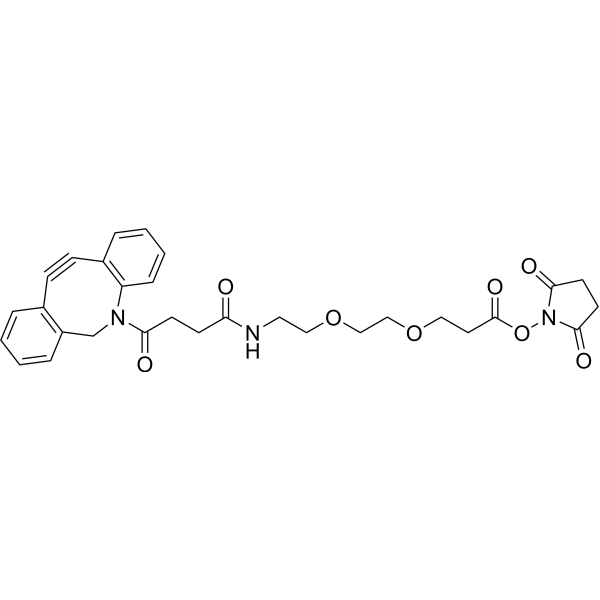
DBCO-PEG2-NHS ester is a click chemistry reagent containing an azide group. DBCO-PEG2-NHS ester is a click chemistry PEG reagent containing NHS ester that is able to react specifically and efficiently with primary amines (e.g. the side chain of lysine residues or aminosilane-coated surfaces) at neutral or slightly basic condition to form a covalent bond. The hydrophilic PEG spacer arm improves water solubility and provides a long and flexible connection that minimizes steric hindrance involved with ligation. DBCO is commonly used for copper-free Click Chemistry reactions. Reagent grade, for research use only .
loading...
    loading...
Cat. No.: HY-183649
CAS No.: 2270844-08-9
Research Areas:  

Cardiovascular Disease

BCN-PEG6-OH is a neutralizing agent and anticoagulant inhibitor containing strained alkyne. BCN-PEG6-OH undergoes strain-promoted alkyne-azide cycloaddition (SPAAC) click reaction with azido-Warfarin to generate an inactive product that can be rapidly cleared via the kidneys. In mice, BCN-PEG6-OH effectively reduces the anticoagulant activity of azido-Warfarin in a dose-dependent manner, normalizes prothrombin time, and exhibits no inherent anticoagulant or procoagulant effects when administered alone. BCN-PEG6-OH can be used for the research of drug-induced coagulopathy .
loading...
    loading...
Cat. No.: HY-D2802
Target:  

Fluorescent Dye

Research Areas:  

Cancer

FITC-PEG400-N3 is a fluorescent agent conjugated with FITC and an azide group, which can be used to synthesize fluorescent probes via click chemistry reactions. FITC-PEG400-N3 and its related probe molecules can be applied to targeted imaging, tissue distribution and drug delivery studies of prostate cancer (including castration-resistant prostate cancer), such as serving as a subcellular localization tool for GnRH-II binding proteins. Among them, the excitation wavelength of FITC-N3 is approximately 494 nm, and its emission wavelength is approximately 520 nm .
loading...
    loading...
Cat. No.: HY-E70289
Synonyms: Bovin B4GALT1 (Y289L)
Target:  

Glycosyltransferase

Research Areas:  

Cancer

Bovin beta-1,4-galactosyltransferase 1 (Y289L) (Bovin B4GALT1 (Y289L)) is a mutated form of bovine-derived galactosyltransferase with a mutation at the Y289L genetic site. Bovin beta-1,4-galactosyltransferase 1 can label O-GlcNAcylated proteins with an N-azidoacetylgalactosamine (GalNAz) group. This labeling method allows for the specific, unbiased, and global labeling of O-GlcNAcylated proteins. After labeling, the appended azide group can react with a wide variety of alkyne-modified chemical probes, facilitating multiple downstream analyses .
loading...
    loading...
Cat. No.: HY-P11428
CAS No.: 2425606-55-7
Research Areas:  

Others

DBCO-cyclo (RGDfK) is a clickable DBCO-modified cyclic RGD peptide, and also a DBCO derivative of cyclo (RGDfK) (HY-P0023). DBCO-cyclo (RGDfK) is synthesized via an amide coupling reaction between DBCO-NHS ester and cyclo (RGDfK). DBCO-cyclo (RGDfK) can react with azide groups through copper-free click chemistry (SPAAC) to immobilize RGD peptides onto biomaterials or hydrogels. The RGD sequence in DBCO-cyclo (RGDfK) is recognizable by cellular integrins and promotes cell adhesion. DBCO-cyclo (RGDfK) can be used in studies related to tissue engineering, 3D cell culture, and surface functionalization of biomaterials .
loading...
    loading...
Cat. No.: HY-W999557
CAS No.: 2766352-74-1
Research Areas:  

Cancer

(R,S,S)-VH032-PEG5-N3 is an E3 ligase ligand-linker conjugate comprising a VHL ligand based on VH032 and a 5-unit PEG linker. (R,S,S)-VH032-PEG5-N3 is a click chemistry reagent. It contains an azide group and can undergo copper-catalyzed azido-azynylene cycloaddition (CuAAc) with molecules containing an alkyne group. It can also undergo ring-strain-driven alkyne-azido cycloaddition (SPAAC) with molecules containing DBCO or BCN groups.
loading...
    loading...
Cat. No.: HY-173390
CAS No.: 2059099-03-3
Research Areas:  

Others

BCN-E-BCN is a strained cycloalkyne-based probe designed for detecting protein sulfenylation, the primary intermediate in protein oxidation. This structurally constrained cycloalkyne compound specifically recognizes sulfenic acid groups formed during thiol oxidation, while remaining completely unreactive toward other oxidative states (such as free thiols, sulfinic, or sulfonic acid groups). Researchers can leverage its efficient conjugation with azide-bearing tags through copper-free click chemistry to amplify detection signals. Compared to conventional detection methods, BCN-E-BCN demonstrates superior reaction kinetics and enhanced sensitivity. With these advantages, BCN-E-BCN shows great promise as an effective tool for protein oxidation research .
loading...
    loading...
Cat. No.: HY-D1859
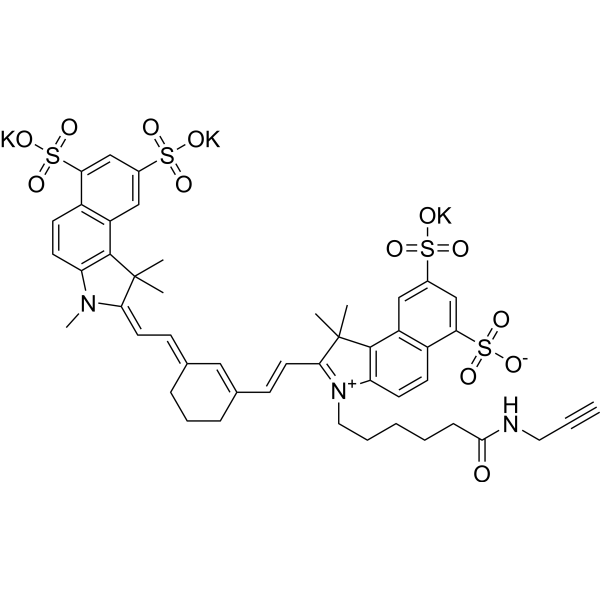
Sulfo-Cy7.5 alkyne is a dye derivative of Cyanine 7.5 (Cy7.5) (HY-D0926) containing a sulfonate ion and an alkyne functional group. The sulfonate ion increases the water solubility of the compound, making it suitable for use in aqueous solutions. Cy7.5 is a near-infrared fluorescent dye commonly used for biolabeling and cell imaging. The alkyne functionality of Sulfo-Cy7.5 alkyne can react with molecules containing the azide functionality to form covalent bonds. Sulfo-Cy7.5 alkyne can bind to biomolecules such as proteins and antibodies to track their location and dynamic changes in biological samples.
loading...
    loading...
Cat. No.: HY-151769
CAS No.: 2353409-48-8
Target:  

ADC Linkers

Research Areas:  

Others

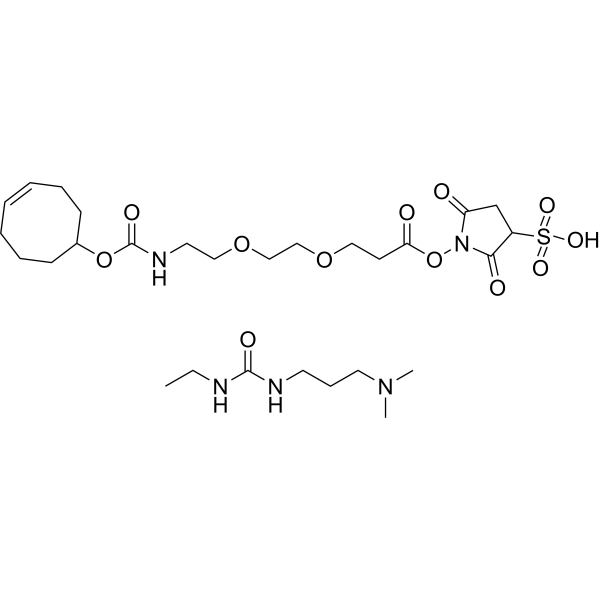
TCO-PEG2-Sulfo-NHS ester-EDC Urea is a click chemistry reagent containing an azide group. TCO-PEG2-Sulfo-NHS ester is a PEG linker containing a TCO moiety and a sulfo-NHS ester moiety. The sulfo group makes this molecule soluble in waqueous buffer. This reagent can be used to label antibodies, proteins and other primary amine-containing macromolecules with TCO moiety. Reagent grade, for research use only . TCO-PEG2-Sulfo-NHS ester-EDC Urea is a click chemistry reagent, it contains a TCO group that can undergo an inverse electron demand Diels-Alder reaction (iEDDA) with molecules containing Tetrazine groups.
loading...
    loading...
Cat. No.: HY-183038
CAS No.: 1356409-07-8
Research Areas:  

Others

2-Phenyl-1-octen-7-yn-1-one is an alkyne-functionalized enone with site-selective reactivity toward the N-terminal α-amino group of peptides and proteins. 2-Phenyl-1-octen-7-yn-1-one can undergo click chemistry with azides via its alkyne moiety to enable further protein functionalization. 2-Phenyl-1-octen-7-yn-1-one modifies unprotected peptide libraries as well as proteins including insulin, lysozyme, RNaseA and BCArg .
loading...
    loading...

