280 Results for "

membrane-permeable

" in MedChemExpress (MCE) Product Catalog:
Products (280)

280 Results for "membrane-permeable" in MCE Product Catalog:

Cat. No.: HY-B1248R
CAS No.: 55-56-1
Chlorhexidine (Standard) is the analytical standard of Chlorhexidine (HY-B1248). This product is intended for research and analytical applications. Chlorhexidine is a orally active cationic antimicrobial agent that targets microbial cell membranes. Chlorhexidine binds to cell membrane phospholipids non-specifically, destroys membrane structure and induces leakage of cell contents. Chlorhexidine has broad-spectrum bactericidal activity against both Gram-positive and Gram-negative bacteria. Chlorhexidine can interfere with membrane permeability, cause protein precipitation and energy metabolism disorders, such as rapid inhibition of microbial growth and induction of cell death (necrosis or apoptosis) .
loading...
    loading...
Cat. No.: HY-P10233
Target:  

Bacterial

Research Areas:  

Infection

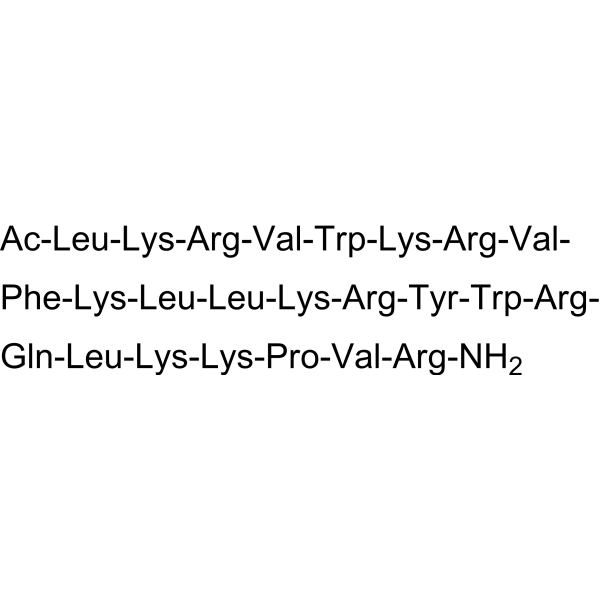
SAAP 148 is a synthetic antimicrobial peptide (bacteria) that interacts with and disrupts the lipid bilayer of bacterial cytoplasmic membranes, thereby inducing changes in membrane permeability and bacterial death. SAAP 148 kills drug-resistant, multidrug-resistant and persister bacterial strains, inhibits biofilm formation, eliminates established biofilms, and blocks bacterial colonization on implant surfaces. SAAP 148 retains its activity after modification or immobilization, exhibits variable cytotoxicity in different human cell models, and shows reduced efficacy in protein-rich environments. SAAP 148 can be used in infection-related research .
loading...
    loading...
Cat. No.: HY-W013699R
CAS No.: 56-95-1
Chlorhexidine diacetate (Standard) is the analytical standard of Chlorhexidine diacetate (HY-W013699). This product is intended for research and analytical applications. Chlorhexidine diacetate is a orally active cationic antimicrobial agent that targets microbial cell membranes. Chlorhexidine diacetate binds to cell membrane phospholipids non-specifically, destroys membrane structure and induces leakage of cell contents. Chlorhexidine diacetate has broad-spectrum bactericidal activity against both Gram-positive and Gram-negative bacteria. Chlorhexidine diacetate can interfere with membrane permeability, cause protein precipitation and energy metabolism disorders, such as rapid inhibition of microbial growth and induction of cell death (necrosis or apoptosis) .
loading...
    loading...
Cat. No.: HY-W016758
CAS No.: 79917-90-1
Synonyms: 1-Butyl-3-methylimidazolium chloride
Target:  

Bacterial

Research Areas:  

Infection

[BMIM]Cl (1-butyl-3-methylimidazolium chloride) is an alkyl-imidazolium chloride compound and a persistent aquatic pollutant. [BMIM]Cl exhibits antimicrobial activity against S. aureus (MIC = 25 mM), E. coli (MIC = 50 mM), and P. aeruginosa (MIC = 100 mM). It possesses moderate membrane permeability and cytotoxicity, directly affecting microorganisms and mammalian cells at high concentrations, but can inhibit the function of complex ecosystems (e.g., anaerobic digestion) even at environmentally relevant low concentrations by disrupting microbial community structures. [BMIM]Cl can be used in research related to bacterial infections .
loading...
    loading...
Cat. No.: HY-W738281
CAS No.: 1246816-96-5
Chlorhexidine-d8 is deuterium-labeled Chlorhexidine (HY-B1248) . Chlorhexidine is a orally active cationic antimicrobial agent that targets microbial cell membranes. Chlorhexidine binds to cell membrane phospholipids non-specifically, destroys membrane structure and induces leakage of cell contents. Chlorhexidine has broad-spectrum bactericidal activity against both Gram-positive and Gram-negative bacteria. Chlorhexidine can interfere with membrane permeability, cause protein precipitation and energy metabolism disorders, such as rapid inhibition of microbial growth and induction of cell death (necrosis or apoptosis) .
loading...
    loading...
Cat. No.: HY-144255
Research Areas:  

Infection

Antibacterial agent 70 is an antibacterial agent that interacts with DNA, with a MIC value of 0.5 μg/mL against K. pneumonia and A. baumanii. Antibacterial agent 70 exhibits rapid bactericidal activity, low cytotoxicity to mammalian cells, and low tendency to induce drug resistance. Antibacterial agent 70 intercalates into DNA, disrupts bacterial membrane integrity, increases intracellular ROS production, reduces GSH activity, regulates membrane depolarization, enhances outer membrane permeability, and induces inner membrane damage. Antibacterial agent 70 can be used in studies related to multidrug-resistant bacterial infections and infections caused by drug-resistant Gram-negative pathogens .
loading...
    loading...
Cat. No.: HY-172804
Research Areas:  

Infection

SDH-IN-26 (Compound C3) is a succinate dehydrogenase (SDH) inhibitor. SDH-IN-26 exhibits significant inhibitory activity against multiple phytopathogenic fungi, such as Rhizoctonia solani and Botrytis cinerea, with an EC50 value of 0.270 μg/mL against Rhizoctonia solani. SDH-IN-26 damages the integrity of the fungal cell membrane, increases membrane permeability, disrupts cell structure, and reduces the number of mitochondria, thus affecting the normal growth of mycelia. SDH-IN-26 leads to a decrease in mitochondrial membrane potential, and induces cell apoptosis. SDH-IN-26 is promising for research of plant diseases caused by fungi .
loading...
    loading...
Cat. No.: HY-174367
CAS No.: 923865-06-9
Target:  

RUNX Apoptosis

Research Areas:  

Cancer

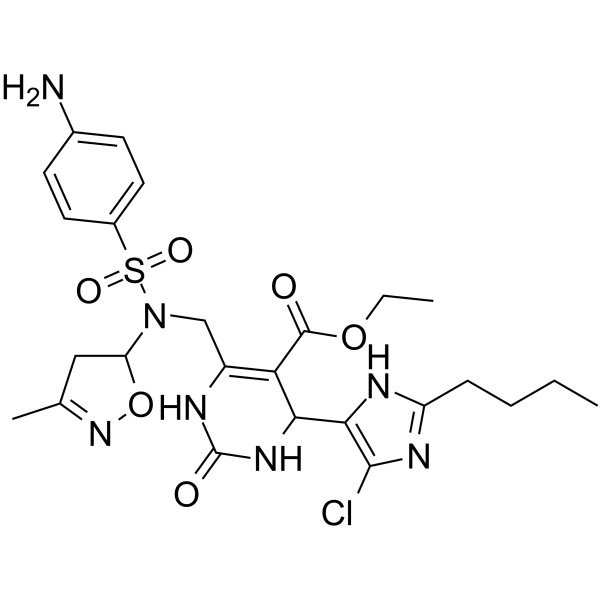
RUNX1/ETO-IN-1 is a RUNX1-ETO oncogenic fusion protein inhibitor that specifically targets the NHR2 oligomerization domain. RUNX1/ETO-IN-1 directly interacts with the NHR2 (KD,app = 39 μM). RUNX1/ETO-IN-1 exhibits anti-leukemic activity by inducing apoptosis and promoting differentiation in RUNX1/ETO-translocated AML cells. RUNX1/ETO-IN-1 remains essentially uncharged at physiological pH, demonstrating superior membrane permeability.
loading...
    loading...
Cat. No.: HY-P10233A
Target:  

Bacterial

Research Areas:  

Infection

SAAP 148 TFA is a synthetic antimicrobial peptide (bacteria) that interacts with and disrupts the lipid bilayer of bacterial cytoplasmic membranes, thereby inducing changes in membrane permeability and bacterial death. SAAP 148 TFA kills drug-resistant, multidrug-resistant and persister bacterial strains, inhibits biofilm formation, eliminates established biofilms, and blocks bacterial colonization on implant surfaces. SAAP 148 TFA retains its activity after modification or immobilization, exhibits variable cytotoxicity in different human cell models, and shows reduced efficacy in protein-rich environments. SAAP 148 TFA can be used in infection-related research .
loading...
    loading...
Cat. No.: HY-P11165
CAS No.: 2173394-02-8
Target:  

Bacterial

Research Areas:  

Infection

DRGN-1 is an antimicrobial peptide. DRGN-1 exhibits potent antimicrobial and anti-biofilm activities, inhibiting both Gram-negative and Gram-positive bacteria, with an EC50 range of 0.50-4.62 μM. DRGN-1 exerts its antimicrobial effect by disrupting bacterial membrane permeability and slightly depolarizing the membrane potential. DRGN-1 inhibits the formation of biofilms of single bacterial species and mixed species of Pseudomonas aeruginosa and Staphylococcus aureus. DRGN-1 can significantly promote the healing of uninfected and mixed biofilm-infected mouse wounds. DRGN-1 can be used for the study of infections .
loading...
    loading...
Cat. No.: HY-125217
CAS No.: 2286261-72-9
Target:  

PARP

Research Areas:  

Cancer

PARP10-IN-1 is a PARP10 inhibitor with an IC50 of 1.8 μM, 2.7 μM, and >10-fold selectivity over most PARP family members, excluding PARP7 and PARP16.PARP10-IN-1 inhibits PARP10-mediated mono-ADP-ribosylation, including auto-MARylation of PARP10 and MARylation of its protein targets.PARP10-IN-1 is membrane permeable and inhibits PARP10-dependent MARylation in human embryonic kidney cells.PARP10-IN-1 can be used for the research of cancer .
loading...
    loading...
Cat. No.: HY-181943
CAS No.: 2035011-97-1
Target:  

Acyltransferase

Research Areas:  

Cancer

SPT-IN-2 is an orally active serine palmitoyltransferase (SPT) inhibitor (with an IC50 of 0.71 nM against human SPT2). SPT-IN-2 inhibits ceramide synthesis, suppresses cancer cell growth, and exhibits in vivo anti-tumor activity, favorable metabolic stability and cell membrane permeability in xenograft mouse models. SPT-IN-2 blocks the de novo sphingolipid synthesis pathway, significantly reducing intracellular ceramide levels and the levels of 3-ketodihydrosphingosine (3-KDS), the immediate downstream product of SPT. SPT-IN-2 can be used in research related to lung adenocarcinoma, acute promyelocytic leukemia and breast cancer .
loading...
    loading...
Cat. No.: HY-W014118R
CAS No.: 101-86-0
α-Hexylcinnamaldehyde (Standard) is the analytical standard of α-Hexylcinnamaldehyde. This product is intended for research and analytical applications. α-Hexylcinnamaldehyde is an O-acetyltransferase (OAT) inhibitor. α-Hexylcinnamaldehyde inhibits OAT-mediated bioactivation of nitroarene mutagens, exerts antimutagenic activity through demutagenic and bioantimutagenic mechanisms, and interferes with ATP-binding cassette (ABC) transporter function to reduce substrate efflux. α-Hexylcinnamaldehyde alters membrane permeability, fluidizes phospholipid membranes, exerts antioxidant effects, and enhances the antiproliferative effect of Doxorubicin on human cancer cells. α-Hexylcinnamaldehyde can be used in the research of colorectal adenocarcinoma, T-cell leukemia, and multidrug-resistant cancers .
loading...
    loading...
Cat. No.: HY-103658R
CAS No.: 15809-19-5
Synonyms: Miramistin (Standard)
Myramistin (Miramistin) (Standard) is the analytical standard of Myramistin (HY-103658). This product is intended for research and analytical applications. Myramistin is a cationic surfactant and disinfectant preservative. Myramistin exhibits high bactericidal activity against Staphylococcus aureus and Escherichia coli, shows lower activity against yeasts and fungi, and is active against HIV, measles virus, mumps virus, as well as influenza viruses of the H3N2 and H5N1 subtypes. Myramistin adsorbs to the negatively charged microbial cell membrane, leading to increased membrane permeability and disruption of membrane integrity, which ultimately results in leakage of intracellular contents, enzyme inactivation, and the death of bacteria/fungi/enveloped viruses .
loading...
    loading...
Cat. No.: HY-168066
Target:  

Fungal

Research Areas:  

Infection

Antifungal agent 117 is a bis-pyrazole carboxamide derivative with antifungal activity, exhibiting an EC50 value of 11.58 mg/L against Sclerotinia sclerotiorum. Antifungal agent 117 increases cell membrane permeability, causing an imbalance in osmotic pressure inside and outside the cell, and induces the accumulation of reactive oxygen species (ROS), leading to oxidative damage to the cell membrane, resulting in leakage of cellular contents and eventually cell death. RNA sequencing analysis reveals that Antifungal agent 117 downregulates catalase genes and upregulates neutral ceramidase genes, disrupting cell membrane structure, accelerating sphingolipid metabolism, and promoting cell death. Antifungal agent 117 shows great potential in the fields of plant protection and antifungal infection .
loading...
    loading...
Cat. No.: HY-189372
CAS No.: 3117572-66-1
Target:  

Drug Derivative Fungal

Research Areas:  

Infection

Antifungal agent 180 is a pyrazole-oxadiazole-linked 1,2,4-triazole derivative and a broad-spectrum antifungal agent. Antifungal agent 180 disrupts fungal cellular homeostasis through multiple pathways, damaging the integrity of fungal hyphal cell membranes, increasing membrane permeability, and causing leakage of intracellular nucleic acids and proteins; it induces hyphal shrinkage, collapse, and organelle disintegration; and it causes widespread dysregulation of sterol/lipid metabolism, carbohydrate utilization, mitochondrial respiration, and stress response pathways at both the transcriptomic and proteomic levels. Antifungal agent 180 exhibits protective and curative efficacy against rice blast in vivo. Antifungal agent 180 can be used in research on rice blast and gray mold .
loading...
    loading...
Cat. No.: HY-L0115V
10,091 compounds

ASINEX has elaborated a library of diverse macrocycles using an effective tool box of synthetic methods. The resulting scaffolds are novel, tremendously diverse, medchem-relevant, macrocyclic frameworks.

Macrocyles tend to be larger than traditional screening molecules which make them perfect discovery tools for targets with shallow or extended binding sites. At the same time, their unique character based on restricted flexibility and ability to form intra-molecular hydrogen bonds allows for design approaches effectively optimizing properties such asaqueous solubility and membrane permeability. Many of these macrocycles have been tested for aqueous and DMSO solubility with cut-offs applied at 10 mM in DMSO and 50 µM in PBS (pH 7.4) followed by PAMPA permeability assay.

Cat. No.: HY-135835
CAS No.: 412319-45-0
Purity:  98.05%
Target:  

Fluorescent Dye

Research Areas:  

Others

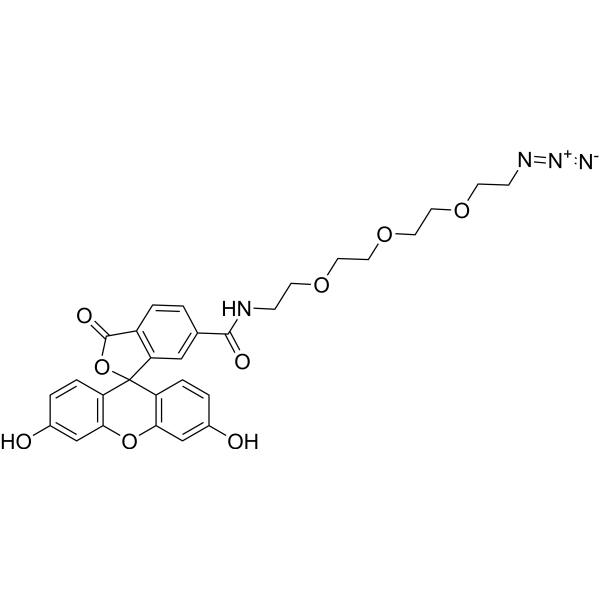
6-FAM-PEG3-Azide is a PEG-modified azide-functionalized fluorescein derivative that is used for labeling oligonucleotides. 6-FAM-PEG3-Azide is also a click chemistry reagent. It contains an Azide group and can undergo a copper-catalyzed azide-alkyne cycloaddition reaction (CuAAc) with molecules containing an Alkyne group. When 6-FAM-PEG3-Azide is co-incubated with boron clusters in a non-covalent manner, it enhances the cellular uptake and membrane permeability of 6-FAM (HY-66021). 6-FAM-PEG3-azide is applicable for fluorescence bioconjugation and probe development-related research .
loading...
    loading...
Cat. No.: HY-146201
CAS No.: 2511632-25-8
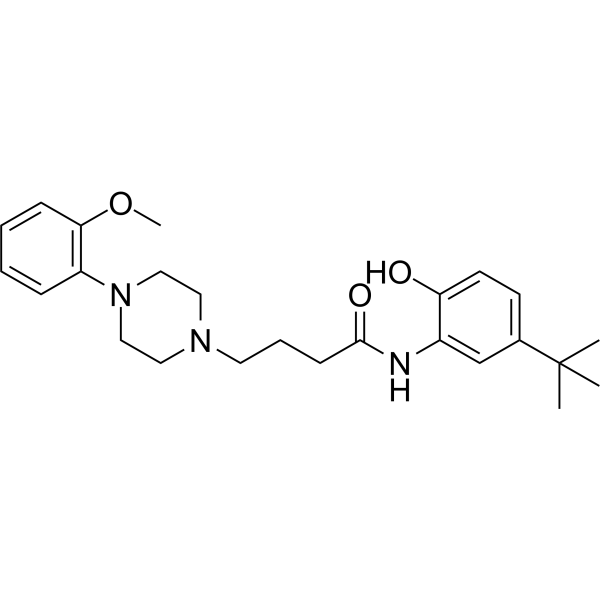
PDE4B/7A-IN-1 is a dual PDE4B/PDE7A inhibitor. PDE4B/7A-IN-1 shows IC50 values of 69.0 μM for PDE4B and 57.0 μM for PDE7A, as well as Ki values of 539 nM for 5-HT1A and 328 nM for 5-HT7. PDE4B/7A-IN-1 shows favorable membrane permeability. PDE4B/7A-IN-1 can be used for the study of cognitive impairment and depression .
loading...
    loading...
Cat. No.: HY-182042
Target:  

Dengue Virus

Research Areas:  

Infection

DENV-IN-15 is a sulfonyl anthranilic acid derivative and a pan-serotype anti-dengue virus (DENV) inhibitor with broad-spectrum anti-RNA virus activity. The EC50 value of DENV-IN-15 against DENV-2 in Huh-7 cells is 0.7 μM. DENV-IN-15 selectively regulates the translation of mRNAs encoding translation-related proteins and containing a 5'-oligopyrimidine tract. DENV-IN-15 reduces the expression of specific ribosomal proteins, thereby inhibiting viral replication. DENV-IN-15 exhibits enhanced membrane permeability, human plasma stability and human liver microsomal metabolic stability. DENV-IN-15 is applicable to research related to dengue virus infection .
loading...
    loading...