335 Results for "

cell tracking

" in MedChemExpress (MCE) Product Catalog:
Products (335)

335 Results for "cell tracking" in MCE Product Catalog:

Cat. No.: HY-164188
Target:  

DNA/RNA Synthesis

Research Areas:  

Others

m7(3'Ma-Cy5)Gppp(2'OMe)ApG ammonium is a Cy5-labled cap analogue that can be used for mRNA synthesis. The efficiency of mRNA delivery can be determined by the detection of Cy5 by flow cytometry, which can be used to track mRNA in cells and in living animals and to screen delivery lipid ratios.
loading...
    loading...
Cat. No.: HY-164189
Target:  

DNA/RNA Synthesis

Research Areas:  

Others

m7(3'Ma-Cy3)Gppp(2'OMe)ApG ammonium is a Cy3-labled cap analogue that can be used for mRNA synthesis. The efficiency of mRNA delivery can be determined by the detection of Cy3 by flow cytometry, which can be used to track mRNA in cells and in living animals and to screen delivery lipid ratios.
loading...
    loading...
Cat. No.: HY-W1061291
CAS No.: 3101697-53-1
Research Areas:  

Others

Quasar670 Phosphoramidite is a modified phosphoramidite monomer that can be used for oligonucleotide synthesis and fluorescent in situ hybridization probe synthesis. Oligonucleotide probes synthesized with Quasar670 Phosphoramidite can be used to detect eGFP mRNA in fixed cells; they can target the 26S rRNA D1/D2 region of Hanseniaspora uvarum to enable tracking and detection of this yeast strain .
loading...
    loading...
Cat. No.: HY-D2188
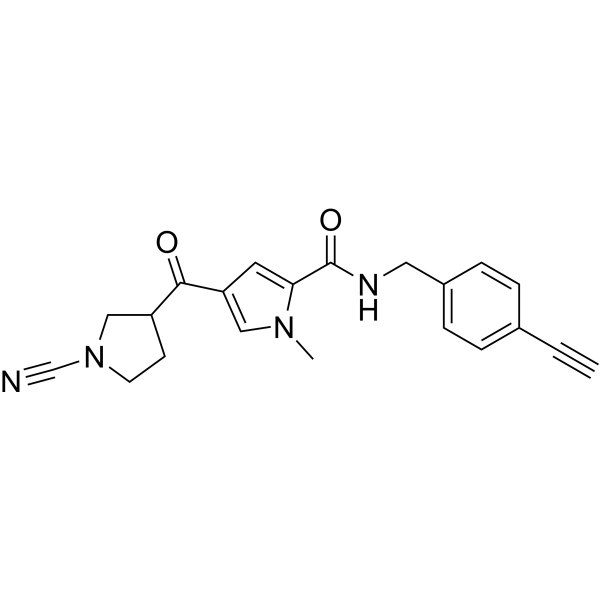
IMP-2373 is a low-toxicity activity-based probe targeting covalent pan-deubiquitinase (DUB), which modulates and monitors DUB activity via covalent binding to the catalytic cysteine and active site of DUB. IMP-2373 enables real-time tracking of dynamic intracellular DUB activity in physiologically relevant living cell systems, and quantitative analysis of activity changes induced by pharmacological inhibition or MYC dysregulation. IMP-2373 can be used for research on related diseases such as B-cell lymphoma .
loading...
    loading...
Cat. No.: HY-143702
CAS No.: 1010076-97-7
Purity:  95.20%
Synonyms: NBD-DOTAP
Research Areas:  

Inflammation/Immunology Cancer

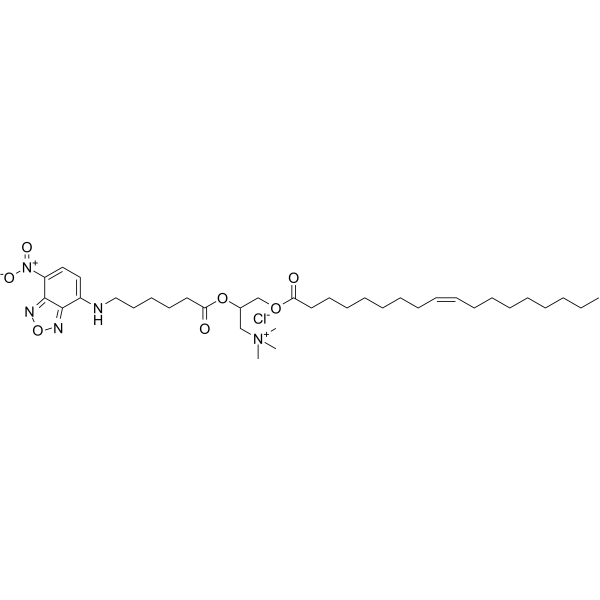
Fluorescent DOTAP (NBD-DOTAP) is a cationic lipid which can be used for nucleic acid and protein delivery. Fluorescent DOTAP is labeled with a fluorophore NBD (maximum excitation/emission wavelength ∼463/536 nm). Fluorescent DOTAP can be used for gene delivery systems, drug delivery, as well as cell imaging and nanocarrier tracking. Fluorescent DOTAP is an ideal candidate for both biological and pharmaceutical formulation (e.g. co-delivery of vaccines) research .
loading...
    loading...
Cat. No.: HY-152429
Research Areas:  

Cancer

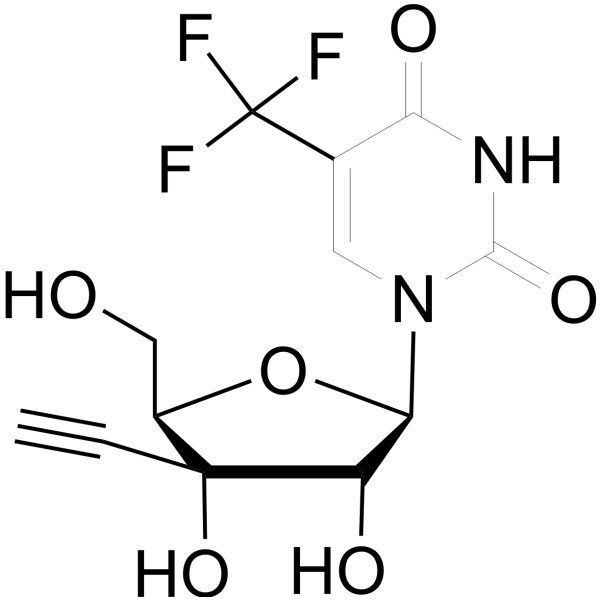
3’-Beta-C-ethynyl-5-trifluoromethyluridine is a thymidine analog. Analogs of this series have insertional activity towards replicated DNA. They can be used to label cells and track DNA synthesis . 3’-Beta-C-ethynyl-5-trifluoromethyluridine is a click chemistry reagent, it contains an Alkyne group and can undergo copper-catalyzed azide-alkyne cycloaddition (CuAAc) with molecules containing Azide groups.
loading...
    loading...
Cat. No.: HY-D1865
CAS No.: 25470-94-4
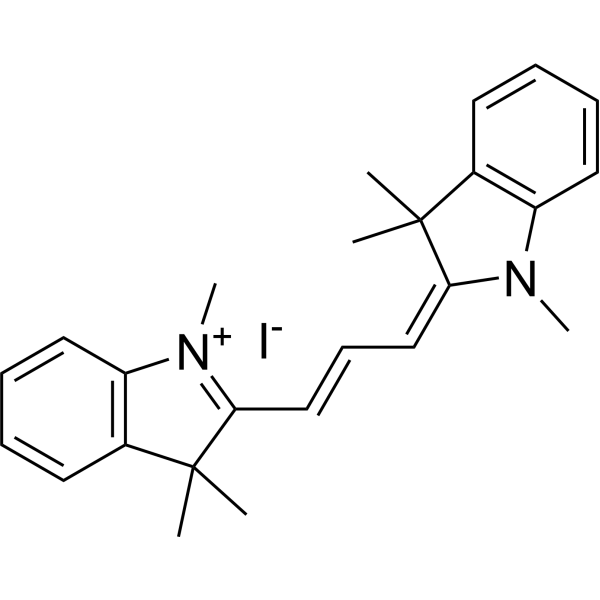
Cy3 dimethyl iodide is a dye derivative of Cyanine 3 (Cy3) (HY-D0822) with a dimethyl group in the iodide salt form. The iodide salt form increases the water solubility of the compound, making it suitable for use in aqueous solutions. Cy3 is a near-infrared fluorescent dye commonly used in biolabeling and cell imaging. Cy3 dimethyl iodide binds to biomolecules such as proteins and antibodies to track their location and dynamic changes in biological samples.
loading...
    loading...
Cat. No.: HY-DY1103
CAS No.: 60842-46-8
FITC-Dextran (MW 70000) (solution) is a compound belonging to the class of fluorescent dyes. It is commonly used in biomedical research as a tracer molecule to label and track cells or other biological matter. FITC-Dextran consists of fluorescein isothiocyanate (FITC) and dextran, a complex carbohydrate derived from starch. The combination of the two creates a stable fluorescent tracer that can be viewed under a microscope or quantified using specialized detection instruments.
Solvent and concentration: ddH2O: 1 mM
loading...
    loading...
Cat. No.: HY-W100234
CAS No.: 55486-09-4
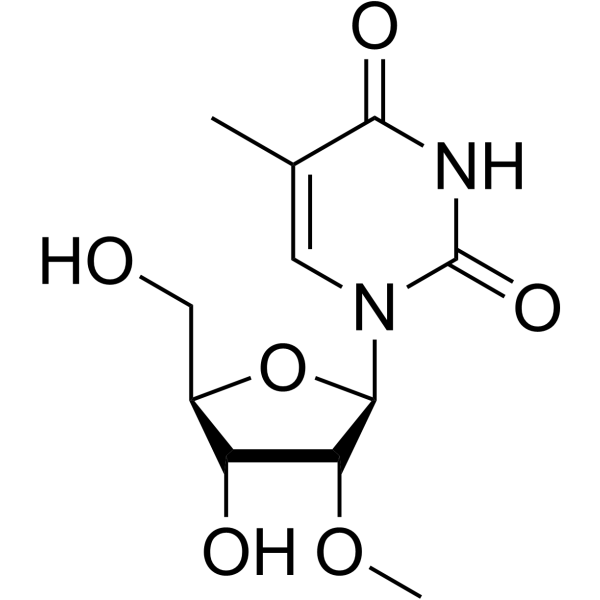
Synonyms: 2'-O-Methyl-5-methyluridine
Research Areas:  

Cancer

5-Methyl-2’-O-methyl-uridine (2'-O-methyl-5-methyluridine) is a thymidine analog. Analogs of this series have insertional activity towards replicated DNA. They can be used to label cells and track DNA synthesis. 5-Methyl-2’-O-methyl-uridine is a modified nucleoside that can be found in tRNA isolated from rabbit liver .
loading...
    loading...
Cat. No.: HY-D3160
Target:  

Fluorescent Dye

Research Areas:  

Others

Golgi-hNR is a cell membrane-permeable Golgi-targeted fluorescent probe containing a sulfonamide group. Golgi-hNR selectively accumulates in the Golgi apparatus of living cells, enabling real-time tracking and homeostasis assessment of reversible pH changes in the Golgi apparatus. Golgi-hNR exhibits a pH-dependent "off-on" fluorescence response mechanism within the pH 7.4-3.0 range, and its red fluorescence intensity decreases with increasing pH. The Ex/Em of Golgi-hNR is 560/664 nm and 580/664 nm, with the maximum emission peak located at 615 nm .
loading...
    loading...
Cat. No.: HY-D0065
CAS No.: 88404-26-6
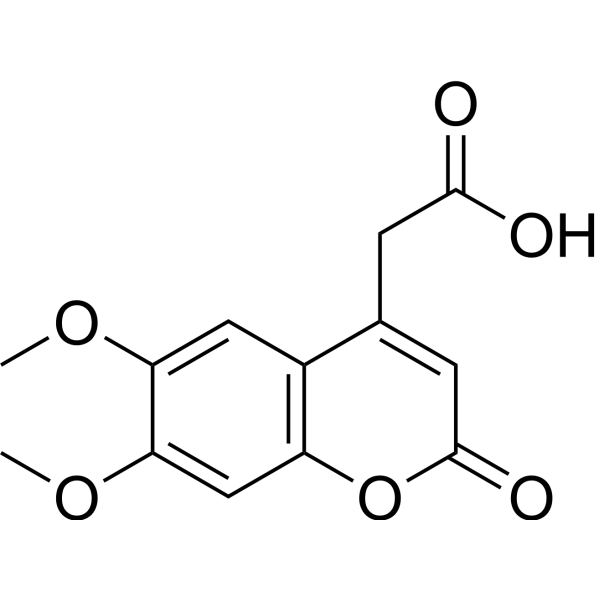
Synonyms: 2-(6,7-Dimethoxy-2-oxo-2H-chromen-4-yl)acetic acid
6,7-Dimethoxy-4-coumarinylacetic acid (2-(6,7-Dimethoxy-2-oxo-2H-chromen-4-yl)acetic acid) is a multifunctional dye. Dyes are important tools in biological experiments. They can help researchers observe and analyze cell structures, track biomolecules, evaluate cell functions, distinguish cell types, detect biomolecules, study tissue pathology and monitor microorganisms. Their applications range from basic scientific research to clinical A wide range of diagnostics. Dyes are also widely used in traditional fields such as textile dyeing, as well as in emerging fields such as functional textile processing, food pigments and dye-sensitized solar cells.
loading...
    loading...
Cat. No.: HY-D0072
CAS No.: 3224-36-0
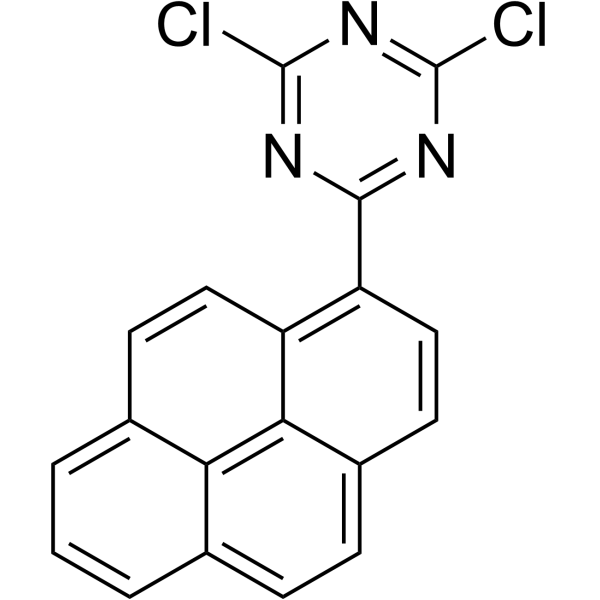
Synonyms: 1-(4,6-Dichloro-1,3,5-triazin-2-yl)pyrene
1-(Dichloro-1,3,5-triazinyl)-pyrene (1-(4,6-Dichloro-1,3,5-triazin-2-yl)pyrene) is a multifunctional dye. Dyes are important tools in biological experiments. They can help researchers observe and analyze cell structures, track biomolecules, evaluate cell functions, distinguish cell types, detect biomolecules, study tissue pathology and monitor microorganisms. Their applications range from basic scientific research to clinical A wide range of diagnostics. Dyes are also widely used in traditional fields such as textile dyeing, as well as in emerging fields such as functional textile processing, food pigments and dye-sensitized solar cells.
loading...
    loading...
Cat. No.: HY-152488
CAS No.: 180300-52-1
Research Areas:  

Cancer

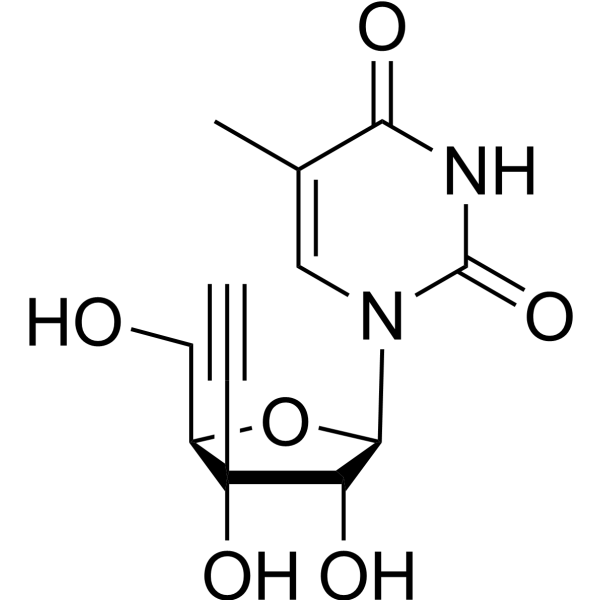
3’-β-C-Ethynyl-5-methyl uridine is a thymidine analog. Analogs of this series have insertional activity towards replicated DNA. They can be used to label cells and track DNA synthesis . 3’-β-C-Ethynyl-5-methyl uridine is a click chemistry reagent, it contains an Alkyne group and can undergo copper-catalyzed azide-alkyne cycloaddition (CuAAc) with molecules containing Azide groups.
loading...
    loading...
Cat. No.: HY-D1317
CAS No.: 1803099-44-6
Target:  

Fluorescent Dye

Research Areas:  

Others

Cyanine7.5 carboxylic acid chloride is a dye derivative of Cyanine 7.5 (Cy7.5) (HY-D0926) with carboxylic acid functional groups. Cy7.5 is a near-infrared fluorescent dye commonly used in biomedical research areas such as biomarkers and cell imaging. Cyanine7.5 carboxylic acid chloride can be covalently bound to some biological molecules (especially antibodies, proteins, etc.) to track their location and dynamic changes in biological samples.
loading...
    loading...
Cat. No.: HY-D1317A
CAS No.: 1686147-68-1
Cyanine7.5 carboxylic is a dye derivative of Cyanine 7.5 (Cy7.5) (HY-D0926) with carboxylic acid functional groups. Cy7.5 is a near-infrared fluorescent dye commonly used in biomedical research areas such as biomarkers and cell imaging. Cyanine7.5 carboxylic can be covalently bound to some biological molecules (especially antibodies, proteins, etc.) to track their location and dynamic changes in biological samples.
loading...
    loading...
Cat. No.: HY-D2930
Synonyms: SNAP-SS-SulfoCy5
BG-SS-SulfoCy5 (SNAP-SS-SulfoCy5) is a SulfoCy5-labeled SNAP tag fluorescent probe, linked by a disulfide bond. BG-SS-SulfoCy5 combines the specific recognition of SNAP-tag, the cleavability of disulfide bond, and the excellent optical properties of SulfoCy5. BG-SS-SulfoCy5 can be used for tracking the internalization of cell surface proteins and multiple labeling experiments .
loading...
    loading...
Cat. No.: HY-P990905
CAS No.: 2871775-98-1
Synonyms: SAR-443579

Target:  

Interleukin Related

Research Areas:  

Cancer

Bexatamig (SAR-443579) is a trifunctional natural killer cell engager targeting IL-3R α/CD123, NKp46/NCR1/CD335 and Fc gamma RIIIA/CD16a. Bexatamig forms a cytolytic synapse between natural killer cells and CD123-positive tumor cells. By activating natural killer cells to induce tumor cell death, Bexatamig effectively reduces the burden of CD123-positive acute myeloid leukemia (AML) blasts. Bexatamig has been granted FDA Fast Track designation, and is primarily investigated for relapsed or refractory acute myeloid leukemia, B-cell acute lymphoblastic leukemia, and high-risk myelodysplastic syndromes .
loading...
    loading...
Cat. No.: HY-D1291
CAS No.: 2255329-06-5
Photoacoustic contrast agent-1 (Compound F-1) is a photo/sono-sensitizer that can produce a significant cell killing effect under illuminated conditions. Photoacoustic contrast agent-1 can be used in the research of tumor diagnosis and treatment. Photoacoustic contrast agent-1 is a multifunctional dye. Dyes are important tools in biological experiments. They can help researchers observe and analyze cell structures, track biomolecules, evaluate cell functions, distinguish cell types, detect biomolecules, study tissue pathology and monitor microorganisms. Their applications range from basic scientific research to clinical A wide range of diagnostics. Dyes are also widely used in traditional fields such as textile dyeing, as well as in emerging fields such as functional textile processing, food pigments and dye-sensitized solar cells .
loading...
    loading...
Cat. No.: HY-D1291A
CAS No.: 2255329-07-6
Photoacoustic contrast agent-1 perchlorate (Compound F-1) is a photo/sono-sensitizer that can produce a significant cell killing effect under illuminated conditions. Photoacoustic contrast agent-1 perchlorate can be used in the research of tumor diagnosis and treatment. Photoacoustic contrast agent-1 perchlorate is a multifunctional dye. Dyes are important tools in biological experiments. They can help researchers observe and analyze cell structures, track biomolecules, evaluate cell functions, distinguish cell types, detect biomolecules, study tissue pathology and monitor microorganisms. Their applications range from basic scientific research to clinical A wide range of diagnostics. Dyes are also widely used in traditional fields such as textile dyeing, as well as in emerging fields such as functional textile processing, food pigments and dye-sensitized solar cells .
loading...
    loading...
Cat. No.: HY-149837
Target:  

Fluorescent Dye

Research Areas:  

Inflammation/Immunology

PRO-F is a photoactivable H2S donor with ROS scavenging ability. PRO-F can be activated by light to produce fluorescent signal, for real-time tracking of released H2S. PRO-F activation doesn’t consume endogenous substances. deliver H2S in an intracellular environment to protect cells from excessive reactive oxygen species (ROS) induced damage. PRO-F shows enhancement on chronic wound healing, researched in diabetic models as well .
loading...
    loading...

