333 Results for "

specific substrate

" in MedChemExpress (MCE) Product Catalog:
Products (333)

333 Results for "specific substrate" in MCE Product Catalog:

Cat. No.: HY-141466A
Purity:  97.85%
Crotonyl-CoA tetrasodium, a high-energy acyl donor, is an intermediate in the fermentation of butyric acid, and in the metabolism of lysine and tryptophan. Crotonyl-CoA tetrasodium is important in the metabolism of fatty acids and amino acids. Crotonyl-CoA tetrasodium acts as a substrate for p300’s histone crotonyltransferase activity, competing with acetyl-CoA for p300-mediated histone acylation reactions. Crotonyl-CoA tetrasodium regulates global and gene-specific histone crotonylation levels in cells, with cellular concentration changes altering histone crotonylation at regulatory elements of activated genes. Crotonyl-CoA tetrasodium serves as the substrate for crotonyl-CoA reductase/carboxylase (CCRC)-catalyzed NADPH-mediated reduction and carbon dioxide trapping to form unusual alkylmalonyl-CoA polyketide synthase extender units. Crotonyl-CoA tetrasodium can be used for the research of LPS-induced inflammatory response .
loading...
    loading...
Cat. No.: HY-166309
CAS No.: 116912-55-1
Crotonyl-CoA tetralithium, a high-energy acyl donor, is an intermediate in the fermentation of butyric acid, and in the metabolism of lysine and tryptophan. Crotonyl-CoA tetralithium is important in the metabolism of fatty acids and amino acids. Crotonyl-CoA tetralithium acts as a substrate for p300’s histone crotonyltransferase activity, competing with acetyl-CoA for p300-mediated histone acylation reactions. Crotonyl-CoA tetralithium regulates global and gene-specific histone crotonylation levels in cells, with cellular concentration changes altering histone crotonylation at regulatory elements of activated genes. Crotonyl-CoA tetralithium serves as the substrate for crotonyl-CoA reductase/carboxylase (CCRC)-catalyzed NADPH-mediated reduction and carbon dioxide trapping to form unusual alkylmalonyl-CoA polyketide synthase extender units. Crotonyl-CoA tetralithium can be used for the research of LPS-induced inflammatory response .
loading...
    loading...
Cat. No.: HY-131023
Synonyms: JF549, Maleimide TFA
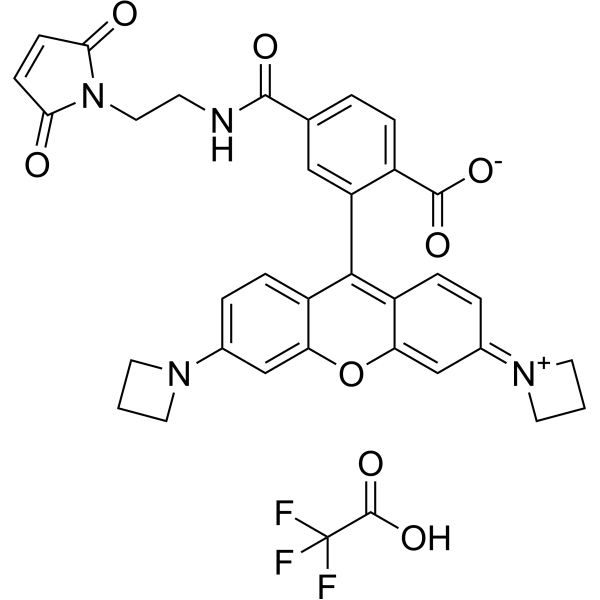
Janelia Fluor 549, Maleimide TFA (JF549, Maleimide TFA) is a fluorescent dye with the absorption maximum (λab (max)) of 549 nm and emission maximum (λem (max)) of 571 nm . Janelia Fluor fluorescent dyes can be chemically conjugated to the specific HaloTag substrate (a chloroalkane ligand) to form a fluorescent ligand, rather than binding directly to the HaloTag protein itself. Janelia Fluor products are licensed under U.S. Pat. Nos. 9,933,417, 10,018,624 and 10,161,932 and other patents from Howard Hughes Medical Institute.
loading...
    loading...
Cat. No.: HY-137779
CAS No.: 15548-60-4
Purity:  99.11%
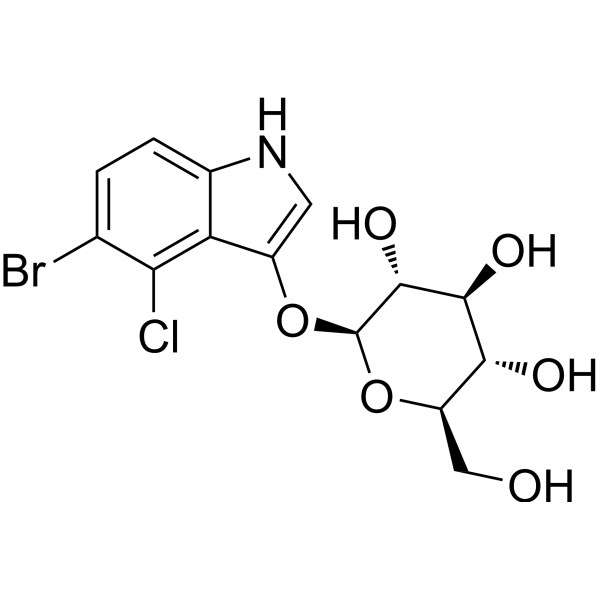
5-Bromo-4-chloro-3-indolyl β-D-glucopyranoside, a chromogenic substrate for the detection of β-galactosidase activity. It is commonly used in molecular biology techniques such as gene expression analysis and reporter gene analysis. When β-galactosidase cleaves X-Gluc, a blue precipitate is produced, which can be observed by microscopy or other detection methods. X-Gluc has high sensitivity and specificity for the detection of β-galactosidase activity, making it a widely used tool in molecular biology research.
loading...
    loading...
Cat. No.: HY-P10316
CAS No.: 205598-38-5
Synonyms: Calmodulin-Dependent Protein Kinase I (299-320) Binding Domain
Target:  

CaMK

Research Areas:  

Others

CaMKI (299-320) refers to a peptide consisting of residues 299-320 of Calcium/calmodulin-dependent protein kinase I (CaMKI). CaMKI (299-320), as a protein kinase, has a high affinity interaction with Ca 2+-CAM (Kd≤1 nM≤1 nM), which can phosphorylate specific substrate proteins, thereby regulating their activity. CaMKI (299-320) contains the CAM-binding domain and the self-inhibition domain, and CaMKI (299-320) can be used to study cell physiological processes, including cell proliferation, differentiation, and apoptosis .
loading...
    loading...
Cat. No.: HY-W928283
CAS No.: 1135372-06-3
L-Hydroxyproline 7-amido-4-methylcoumarin hydrochloride is a fluorescent substrate with biological activity for enzyme activity detection. L-Hydroxyproline 7-amido-4-methylcoumarin hydrochloride is often used in biochemical research to detect reactions associated with specific enzymes. L-Hydroxyproline 7-amido-4-methylcoumarin hydrochloride helps scientists monitor the progress of reactions through its fluorescent properties. L-Hydroxyproline 7-amido-4-methylcoumarin hydrochloride has important application value in compound development and basic biological research.
loading...
    loading...
Cat. No.: HY-131029
Purity:  ≥95.0%
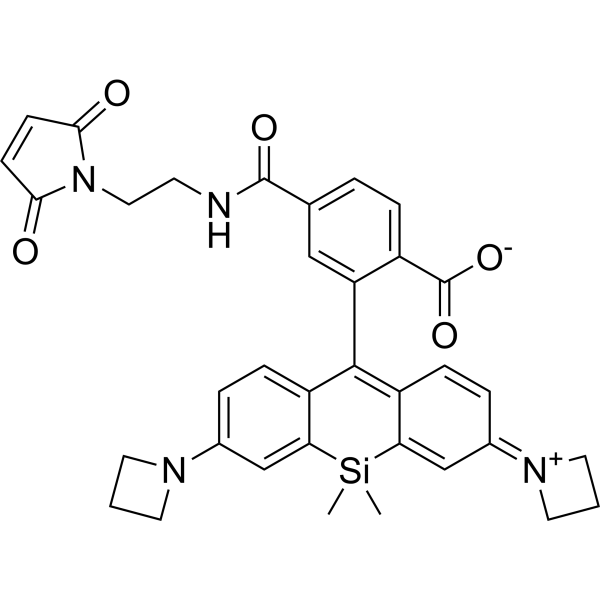
Synonyms: JF646, Maleimide
Janelia Fluor 646, Maleimide (JF646, Maleimide) is a red fluorescent dye that contains a maleimide group. JF646, Maleimide can be used in cellular imaging . Janelia Fluor fluorescent dyes can be chemically conjugated to the specific HaloTag substrate (a chloroalkane ligand) to form a fluorescent ligand, rather than binding directly to the HaloTag protein itself. Janelia Fluor products are licensed under U.S. Pat. Nos. 9,933,417, 10,018,624 and 10,161,932 and other patents from Howard Hughes Medical Institute (Ex/Em = 646/664 nm).
loading...
    loading...
Cat. No.: HY-178683
CAS No.: 2438125-72-3
Target:  

BCL6

Research Areas:  

Cancer

ALV-05-077-01 is a BCL6/BCL6B degrader. ALV-05-077-01 binds to CRBN and recruits specific zinc finger proteins as neo-substrates for ubiquitination and proteasomal degradation. ALV-05-077-01 induces the degradation of full-length endogenous BCL6 zinc finger protein. ALV-05-077-01 induces the degradation of full-length endogenous BCL6B zinc finger protein. ALV-05-077-01 can be used in the research of hematological malignancies .
loading...
    loading...
Cat. No.: HY-N12962
CAS No.: 123931-40-8
11S(12R)-EET is a dominant enantiomer of epoxytrienoic acid (EET) that is metabolized at a higher rate in rat organs. It shows enantiomeric-dependent reaction selectivity in hydration, especially in the case of 11,12-EET, where water addition is non-regioselective, while in 8,9-EET, water addition occurs mainly at the C9 position. In addition, 11S(12R)-EET generates diol products with specific stereochemistry through enzymatic hydration reactions, which are affected by the selective recognition of epoxidases, reaction conversion rates, and substrate binding parameters .
loading...
    loading...
Cat. No.: HY-W103773
CAS No.: 132-27-4
Research Areas:  

Infection

2-Phenylphenol sodium is a phenolic disinfectant and toxic agent with bactericidal, fungicidal and growth-inhibiting activities. 2-Phenylphenol sodium serves as a post-harvest agricultural fungicide and food preservative. At specific concentrations, 2-Phenylphenol sodium inhibits the growth of E. coli strains, while at high concentrations, 2-Phenylphenol sodium completely blocks their proliferation. 2-Phenylphenol sodium acts as a substrate for biocatalytic conversion, and is converted to 3-phenylcatechol by 2-hydroxybiphenyl 3-monooxygenase in recombinant E. coli. 2-Phenylphenol sodium also undergoes electrochemical oxidation in phosphate buffer solution .
loading...
    loading...
Cat. No.: HY-131026
Synonyms: JF635, SE; JF635, NHS
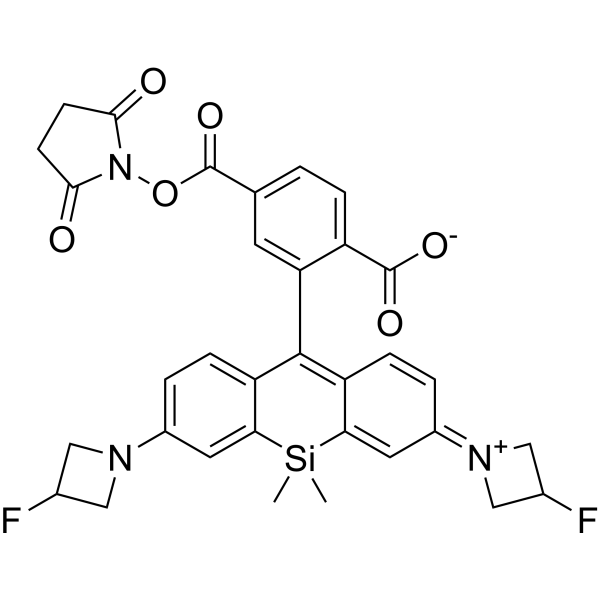
Janelia Fluor 635, SE (JF635, SE) is a red fluorogenic fluorescent dye containing an NHS ester that can be conjugated with primary amine groups. JF635, SE can be used for live cell imaging . Janelia Fluor fluorescent dyes can be chemically conjugated to the specific HaloTag substrate (a chloroalkane ligand) to form a fluorescent ligand, rather than binding directly to the HaloTag protein itself. Janelia Fluor products are licensed under U.S. Pat. Nos. 9,933,417, 10,018,624 and 10,161,932 and other patents from Howard Hughes Medical Institute (Ex/Em = 635/652 nm).
loading...
    loading...
Cat. No.: HY-154835
CAS No.: 1513855-74-7
Research Areas:  

Others

N6-[[(4-Azidophenyl)methoxy]carbonyl]-L-lysine is an unnatural lysine analog and a substrate of the PABKRS mutant PylRS. N6-[[(4-Azidophenyl)methoxy]carbonyl]-L-lysine enables site-specific genetic integration into proteins via amber stop codon suppression; it undergoes Staudinger reduction with phosphine compounds, followed by a self-elimination reaction to release native lysine. N6-[[(4-Azidophenyl)methoxy]carbonyl]-L-lysine serves as a genetically encoded element for the temporal chemical control of protein SUMOylation and nuclear translocation in living mammalian cells, and also acts as a bioorthogonal reaction handle for bioconjugation reactions .
loading...
    loading...
Cat. No.: HY-W205529
CAS No.: 87235-61-8
Target:  

Fluorescent Dye

Research Areas:  

Neurological Disease

RO 16-6491 Free base is a selective, reversible inhibitor of monoamine oxidase type B (MAO-B), exhibiting high affinity and specificity for binding sites in human frontal cortex mitochondria and platelet membranes. RO 16-6491 demonstrates a fast dissociation of bound radioactivity at 20 degrees C, indicating its dynamic binding properties. RO 16-6491 also acts as a substrate for MAO-B, suggesting that its oxidation may produce a stable intermediate responsible for its potent inhibitory effects. RO 16-6491 serves as an excellent radioligand probe for investigating the regional tissue distribution of MAO-B in various physiological and pathological states.
loading...
    loading...
Cat. No.: HY-130736
CAS No.: 1811539-32-8
Synonyms: JF549, SE; JF549, NHS
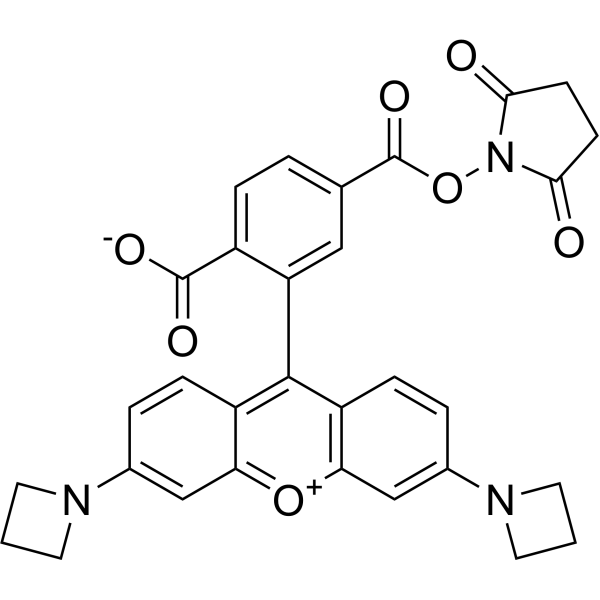
Janelia Fluor? 549, SE (JF549, SE) is a cell-permeable fluorescent dye with an NHS ester (succinimidyl ester (SE)) reactive group. NHS esters react with primary amines and are commonly used to conjugate dyes to proteins, antibodies, amine-modified oligonucleotides, and other molecules. Janelia Fluor fluorescent dyes can be chemically conjugated to the specific HaloTag substrate (a chloroalkane ligand) to form a fluorescent ligand, rather than binding directly to the HaloTag protein itself. Janelia Fluor? 549, SE also acts as a ligand for self-labeling tags such as HaloTag and SNAP-tag, and can be used in live-cell imaging studies (Ex/Em = 549 nm/571 nm) .
loading...
    loading...
Cat. No.: HY-131028
Purity:  ≥95.0%
Synonyms: JF646 TFA
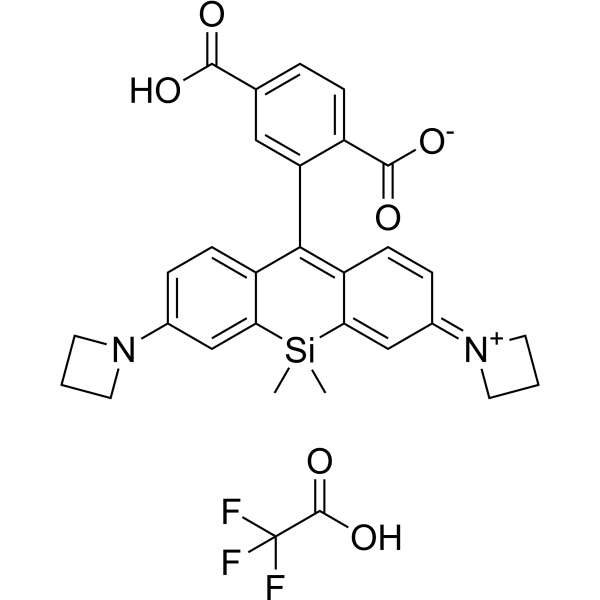
Janelia Fluor 646 TFA (JF646 TFA), a red fluorogenic fluorescent dye, can be used in the synthesis of Janelia Fluor 646 HaloTag and SNAP-Tag ligands. JF646 TFA is used in live cell imaging experiments . Janelia Fluor fluorescent dyes can be chemically conjugated to the specific HaloTag substrate (a chloroalkane ligand) to form a fluorescent ligand, rather than binding directly to the HaloTag protein itself. Janelia Fluor products are licensed under U.S. Pat. Nos. 9,933,417, 10,018,624 and 10,161,932 and other patents from Howard Hughes Medical Institute (Ex/Em = 646/664 nm).
loading...
    loading...
Cat. No.: HY-131030
CAS No.: 2127150-20-1
Synonyms: JF669, SE; JF669, NHS
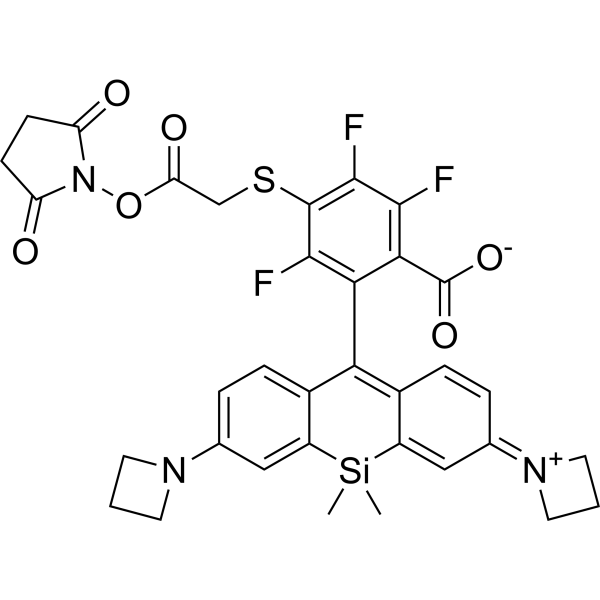
Janelia Fluor 669, SE (JF669, SE), a red fluorescent dye, can be directly reacted with the available thiol-containing HaloTag ligand under mild conditions (DIEA, DMF) to afford a JF669HaloTag ligand in a single step (Ex = 669 nm; Em = 682 nm) . Janelia Fluor fluorescent dyes can be chemically conjugated to the specific HaloTag substrate (a chloroalkane ligand) to form a fluorescent ligand, rather than binding directly to the HaloTag protein itself. Janelia Fluor products are licensed under U.S. Pat. Nos. 9,933,417, 10,018,624 and 10,161,932 and other patents from Howard Hughes Medical Institute.
loading...
    loading...
Cat. No.: HY-151761
CAS No.: 2084913-49-3
Purity:  99.69%
Research Areas:  

Others

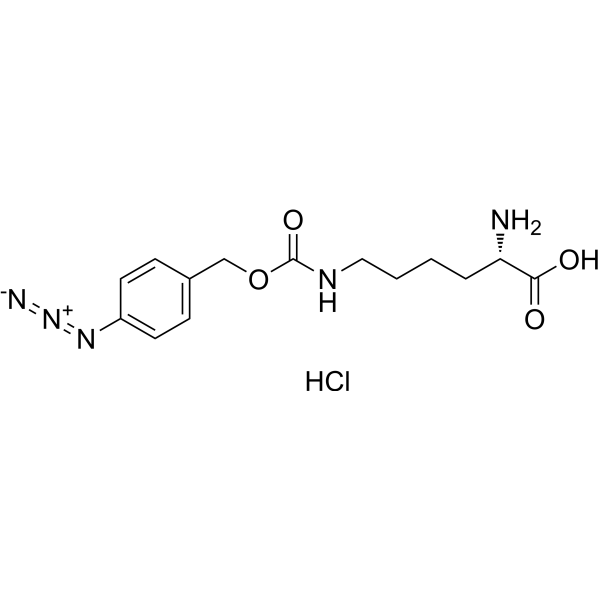
H-L-Lys (4-N3-Z)-OH hydrochloride is an unnatural lysine analog and a substrate of the PABKRS mutant PylRS. H-L-Lys (4-N3-Z)-OH hydrochloride enables site-specific genetic integration into proteins via amber stop codon suppression; it undergoes Staudinger reduction with phosphine compounds, followed by a self-elimination reaction to release native lysine. H-L-Lys (4-N3-Z)-OH hydrochloride serves as a genetically encoded element for the temporal chemical control of protein SUMOylation and nuclear translocation in living mammalian cells, and also acts as a bioorthogonal reaction handle for bioconjugation reactions .
loading...
    loading...
Cat. No.: HY-158224
Synonyms: FibMA
Silk Fibroin Methacryloyl (FibMA) is methacrylated silk fibroin with excellent biocompatibility, stable mechanical properties and good processing properties, and was selected as the substrate for multifunctional microneedle (MN) patches. . MN patches made of Silk Fibroin Methacryloyl exhibit excellent biocompatibility, sustained drug release, pro-angiogenic, antioxidant and antibacterial properties depending on the specific drug encapsulated . Silk Fibroin Methacryloyl needs to self-assemble into fibrous hydrogel under the action of photoinitiator LAP (HY-44076), and target bioactive adhesion sites, play an inherent supporting role for tissue cells and biodegradable activity.
Application: cell culture, biological 3D printing, tissue engineering, etc.
loading...
    loading...
Cat. No.: HY-Y1771R
CAS No.: 119-67-5
Synonyms: Phthalaldehydic acid (Standard)
2-Carboxybenzaldehyde (Standard) (Phthalaldehydic acid (Standard)) is the analytical standard of 2-Carboxybenzaldehyde (HY-Y1771). This product is intended for research and analytical applications. 2-Carboxybenzaldehyde (Phthalaldehydic acid) is a key intermediate metabolite in the biodegradation process of polycyclic aromatic hydrocarbons, and also a specific substrate for CBA reductase and NAD-dependent 2-carboxybenzaldehyde dehydrogenase. 2-Carboxybenzaldehyde undergoes regioselective reduction via CBA reductase in mammalian tissues to produce 2-hydroxymethylbenzoic acid. 2-Carboxybenzaldehyde is converted to phthalic acid by NAD-dependent dehydrogenase during bacterial degradation. 2-Carboxybenzaldehyde can be used in relevant research in fields such as organic synthesis .
loading...
    loading...
Cat. No.: HY-133535
CAS No.: 2093120-32-0
Synonyms: PA-JF646-NHS
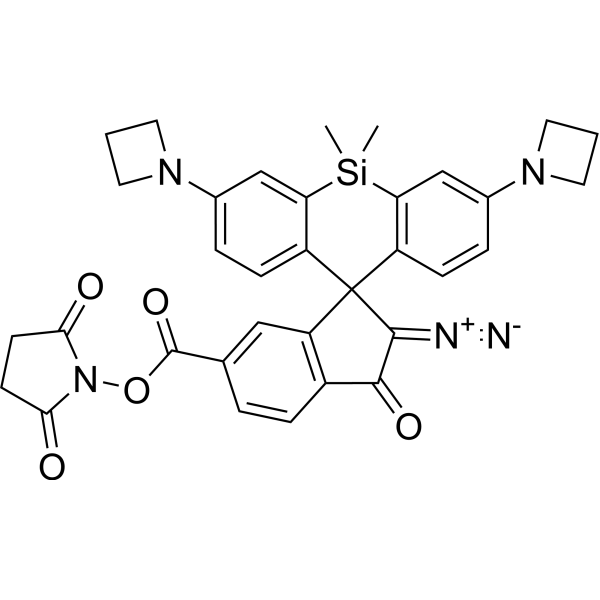
PA Janelia Fluor 646, SE (PA-JF646-NHS) is a photo-activatable fluorescent dye. PA Janelia Fluor 646, SE is a far-red light-excited, 405 nm-activated NHS ester-based dye. Janelia Fluor fluorescent dyes can be chemically conjugated to the specific HaloTag substrate (a chloroalkane ligand) to form a fluorescent ligand, rather than binding directly to the HaloTag protein itself. PA Janelia Fluor 646, SE can achieve extremely low background and single-molecule-level ultra-high-resolution imaging through photo-controlled switching, making it a powerful tool for live cell super-resolution microscopy technology (Ex/Em = 646/664 nm).
loading...
    loading...