346 Results for "

low affinity

" in MedChemExpress (MCE) Product Catalog:
Products (346)

346 Results for "low affinity" in MCE Product Catalog:

Cat. No.: HY-167151
CAS No.: 2107327-36-4
PaPE-1 is a pathway-preferential estrogen receptor (ER) agonist that preferentially activates ER non-nuclear-initiated signaling while minimally activating nuclear-initiated signaling. PaPE-1 exhibits Ki values of 10 μM and 25 μM for human ERα and ERβ, respectively. The relatively low ER affinity and rapid receptor dissociation of PaPE-1 facilitate the triggering of non-nuclear mTOR/MAPK/AKT signaling, while reducing the recruitment of ERα to chromatin and sustained nuclear ER-dependent transcription. PaPE-1 is suitable for research related to non-nuclear ER signaling, metabolic disorders, ischemic brain injury, Alzheimer's disease, and ER-positive breast cancer .
loading...
    loading...
Cat. No.: HY-173408
CAS No.: 2899254-71-6
Nur77 agonist-1 (Compound 8f) is an orally active Nur77 agonist. Nur77 agonist-1 induces ferroptosis by upregulating Nur77 protein expression, increasing reactive oxygen species (ROS) and lipid peroxidation levels, and decreasing GPX4 protein expression. Nur77 agonist-1 has binding affinity to the ligand binding domain (LBD) of Nur77 (KD: 13.80 μM). Nur77 agonist-1 exhibits significant antiproliferative activity against a variety of breast cancer cells (IC50: 2.15-3.26 μM) and has low toxicity to normal cells. Nur77 agonist-1 can be used in breast cancer research .
loading...
    loading...
Cat. No.: HY-P11246
CAS No.: 3057097-31-8
Target:  

RXFP Receptor

Research Areas:  

Metabolic Disease

A13:B7-24-GG is an engineered analogue of insulin-like peptide 5 (INSL5), a selective RXFP4 agonist with a Ki value of 2.29 nM. A13:B7-24-GG has an extremely low binding affinity for RXFP3 (Ki = 602.56 nM) and an inhibitory effect on cAMP (EC50) of 1.17 nM. Activation of RXFP4 by A13:B7-24-GG leads to the recruitment of β-Arrestin2, with an EC50 of 22.39 nM. A13:B7-24-GG can be used for research on chronic constipation .
loading...
    loading...
Cat. No.: HY-P990291

Target:  

Fc Receptor (FcR)

Research Areas:  

Inflammation/Immunology Cancer

Anti-Mouse CD16.2 Antibody (9E9) is a Armenian hamster-derived IgG type antibody inhibitor, targeting to mouse CD16.2. Anti-Mouse CD16.2 Antibody (9E9) reacts with mouse CD16.2, also known as FcγRIV (Fc receptor, IgG, low affinity IV). Anti-Mouse CD16.2 Antibody (9E9) inhibits cellular CD16.2 expression and signaling and blocks FcγRIV. Anti-Mouse CD16.2 Antibody (9E9) can be used for the researches of cancer, inflammation and immunology, such as CT26 tumor and lung inflammation .
loading...
    loading...
Cat. No.: HY-U00050S
Synonyms: E-10-OH-NT-d3
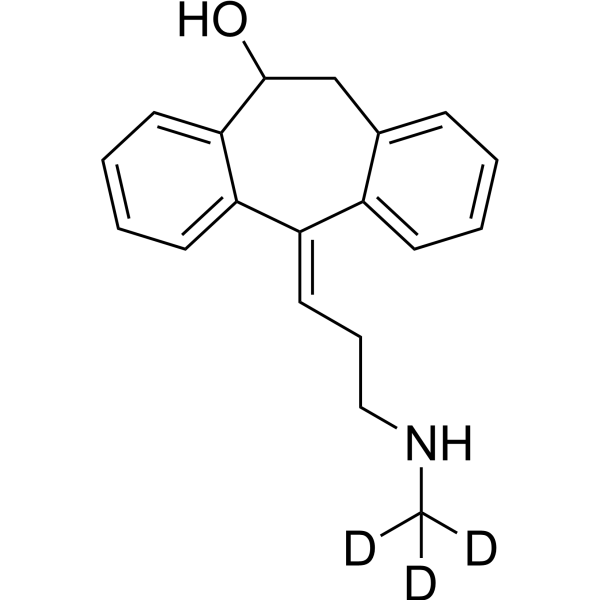
(E)-10-Hydroxynortriptyline-d3 (E-10-OH-NT-d3) is the deuterated-labeled (E)-10-Hydroxynortriptyline (HY-U00050). (E)-10-Hydroxynortriptyline (E-10-OH-NT) is a blood-brain barrier-permeable norepinephrine uptake inhibitor. (E)-10-Hydroxynortriptyline effectively promotes central norepinephrine neuronal transmission, with little interindividual variation in in vivo potency. (E)-10-Hydroxynortriptyline has low affinity for muscarinic receptors, exhibits only extremely weak anticholinergic activity, and does not inhibit salivary secretion. (E)-10-Hydroxynortriptyline can be used in studies related to depression .
loading...
    loading...
Cat. No.: HY-P84960
Synonyms: IL-3R common β chain; CDw131; Beta-C antibody; CD131 antibody; CDw131 antibody; Colony stimulating factor 2 receptor beta antibody; Colony stimulating factor 2 receptor beta low affinity; granulocyte macrophage; antibody; Common beta chain antibody; Csf2rb antibody; Cytokine receptor common beta chain antibody; Cytokine receptor common beta chain precursor; CDw131 antigen; antibody; Cytokine receptor common subunit beta antibody; GM CSF/IL 3/IL 5 receptor common beta chain antibody; GM-CSF/IL-3/IL-5 receptor common beta subunit antibody; granulocyte-macrophage colony-stimulating factor receptor; beta antibody; IL3RB antibody; IL3RB_HUMAN antibody; IL5RB antibody; Interleukin 3 receptor; beta antibody; Interleukin 3 receptor/granulocyte macrophage colony stimulating factor 3 receptor beta; high affinity; antibody; Interleukin 5 receptor; beta antibody; SMDP5 antibody; stimulating factor 3 receptor; beta; high affinity; antibody;
loading...
    loading...
Cat. No.: HY-100966S
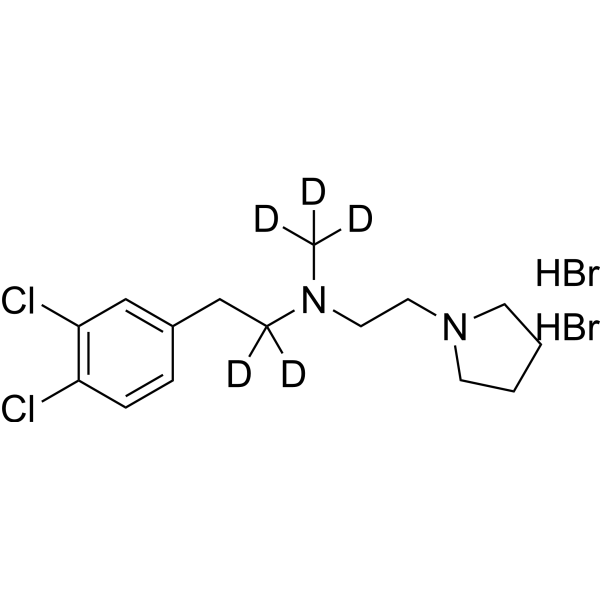
BD-1008-d5 dihydrobromide is the deuterium labeled BD-1008 dihydrobromide (HY-100966). BD-1008 dihydrobromide is a nonselective σ receptor antagonist with Kis against σ1 receptor and σ2 receptor of 2 nM and 8 nM. The BD-1008 dihydrobromide has an extremely low affinity for the D2 receptor (Ki = 1112 nM) and dopamine transporter (DAT) (Ki > 10,000 nM). BD-1008 dihydrobromide significantly antagonizes dopamine release in the shell region of the nucleus accumbens via the σ₂ receptor. BD-1008 dihydrobromide blocks the self-administration behavior of σ agonists.BD-1008 dihydrobromide can be used for the study of addiction therapy that target the σ receptor .
loading...
    loading...
Cat. No.: HY-165459
CAS No.: 401907-57-1
Synonyms: MK-056
Target:  

TRP Channel

Research Areas:  

Infection Inflammation/Immunology

KJM429 (MK-056) is a high-affinity ligand for the rat vanilloid receptor rTRPV1 (Ki=30-63 nM) with a unique dual regulatory function. KJM429 acts as a competitive antagonist to inhibit TRPV1 receptor activation induced by Capsaicin (HY-10448), resiniferatoxin, thermal stimulation and weak acid (pH 6.0), and switches to a TRPV1 agonist under strong acid conditions (pH<5.5). KJM429 effectively blocks calcium influx induced by Capsaicin and partial thermal stimulation, and triggers calcium uptake under low pH conditions, with minimal effects on non-TRPV1-mediated calcium signaling. KJM429 can be used for research on the mechanisms of pain-related diseases such as postherpetic neuralgia, diabetic neuropathy, cluster headache, osteoarthritis and pruritus .
loading...
    loading...
Cat. No.: HY-16950AR
CAS No.: 68392-35-8
Synonyms: Afimoxifene (Standard); 4-OHT (Standard)
(E/Z)-4-Hydroxytamoxifen (Standard) is the analytical standard of (E/Z)-4-Hydroxytamoxifen. This product is intended for research and analytical applications. (E/Z)-4-Hydroxytamoxifen (Afimoxifene) is a racemic compound of (Z)-4-Hydroxytamoxifen and (E)-4-Hydroxytamoxifen isomers. (E/Z)-4-Hydroxytamoxifen is a selective estrogen receptor modulator with mixed estrogenic and antiestrogenic activity, which is also an active metabolite of Tamoxifen (HY-13757A). (E/Z)-4-Hydroxytamoxifen is an agonist of the G protein-coupled estrogen receptor (GPER) with relatively low affinity (100-1000 nM). (E/Z)-4-Hydroxytamoxifen is promising for research of cyclical mastalgia, such as breast pain, tenderness, and nodularity .
loading...
    loading...
Cat. No.: HY-178945
KOR agonist 7 (Compound 29) is a highly selective κ-opioid receptor (KOR) agonist with a Ki of 138 nM. KOR agonist 7 shows no activity at μ- and δ-opioid receptors or σ1 receptor, and exhibits extremely low affinity for σ2 receptor (Ki = 2.8 μM). KOR agonist 7 significantly reduces the secretion of pro-inflammatory cytokines such as IL-6, TNF-α, and IFN-γ, while increasing the production of the anti-inflammatory cytokine IL-10. KOR agonist 7 downregulates the expression of the pro-inflammatory M1 macrophage marker CD80 and upregulates the anti-inflammatory M2 macrophage marker CD163. KOR agonist 7 holds potential for applications in analgesia and immune modulation .
loading...
    loading...
Cat. No.: HY-L110
100 compounds

Cyclic peptides are polypeptide chains taking cyclic ring structure, which exhibit diverse biological activities, such as antibacterial activity, immunosuppressive activity and anti-tumor activity. Cyclic peptides, with the features of good binding affinity, target selectivity and low toxicity, show great success as therapeutics. Multiple cyclic peptides are currently in clinical use, for examples, gramicidin and tyrocidine with bactericidal activity, cyclosporin A with immunosuppressive activity, and vancomycin with antibacterial activity. Furthermore, cyclic peptides usually have the sufficient size and a balanced conformational flexibility/rigidity for binding to flat protein-protein interaction (PPI) interfaces, which have potential to develop PPI drugs.

MCE offers a unique collection of 100 cyclic peptides, all of which have good bioactivities. MCE Cyclic Peptide Library is a powerful tool for drug discovery and PPI inhibitor screening.

Cat. No.: HY-10861
CAS No.: 898532-85-9
Purity:  99.75%
Research Areas:  

Neurological Disease

D3/5-HT receptor modulator-1 (compound 5i) is a selective dopamine D3 receptor and 5-HT2A receptor antagonist and a partial 5-HT1A receptor agonist. D3/5-HT receptor modulator-1 shows Ki values of 4.5 nM, 11.9 nM, and 15.3 nM for dopamine D3, 5-HT2A, and 5-HT2A receptors. D3/5-HT receptor modulator-1 has a low affinity for dopamine D2 receptors, 5-HT2C receptors, and hERG channels. D3/5-HT receptor modulator-1 has an atypical antipsychotic profile .
loading...
    loading...
Cat. No.: HY-115702S
CAS No.: 211106-54-6
Synonyms: (Rac)-PAF (C16)-d4
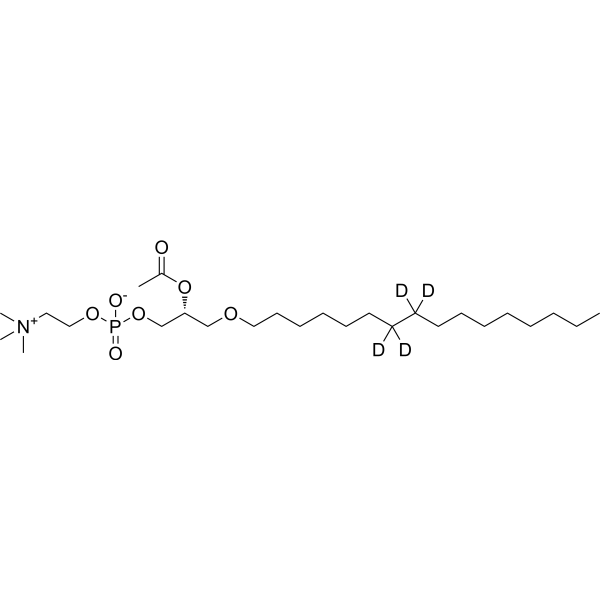
1-Palmityl-2-O-acetyl-3-glyceryl phosphorylcholine-d4 ((Rac)-PAF (C16)-d4) is the deuterium labeled 1-Palmityl-2-O-acetyl-3-glyceryl phosphorylcholine. 1-Palmityl-2-O-acetyl-3-glyceryl phosphorylcholine is an endogenous inflammatory lipid mediator. 1-Palmityl-2-O-acetyl-3-glyceryl phosphorylcholine acts as a high-affinity agonist for PAFR (GPCR), inducing platelet aggregation, vascular permeability, and leukocyte chemotaxis at extremely low concentrations. 1-Palmityl-2-O-acetyl-3-glyceryl phosphorylcholine exerts its effects via cell surface receptors to regulate inflammation .
loading...
    loading...
Cat. No.: HY-120247
CAS No.: 1520893-08-6
Research Areas:  

Others

TASP0434299 (Compound 10) is a labeled ligand for the vasopressin V1b receptor. TASP0434299 exhibits high binding affinity for human and murine V1B receptors, with IC50 values of 0.526 nM and 0.641 nM, respectively, and shows potent antagonistic activity against the human V1B receptor with an IC50 of 0.639 nM. TASP0434299 is a substrate for human and rhesus monkey P-glycoprotein, resulting in low brain uptake in rhesus monkeys. TASP0434299 binds to V1B receptors in rat and monkey pituitary tissues in a saturable and specific manner both in vitro and in vivo. When radiolabeled with tritium or 11C, TASP0434299 serves as a prototype V1B receptor radiotracer to visualize V1B receptor in the pituitary gland of anesthetized monkeys via positron emission tomography .
loading...
    loading...
Cat. No.: HY-156807
CAS No.: 210751-39-6
Research Areas:  

Neurological Disease

LY 367265 is a 5-hydroxytryptamine transporter (SERT) inhibitor (IC₅₀ = 3.1 nM) and a 5-HT₂A receptor antagonist (Kᵢ = 0.81 nM). LY 367265 has the inhibitory activity on the norepinephrine transporter (NET) of extremely weak (IC₅₀ > 1000 nM); it has low affinity for subtypes such as 5-HT₁B (Kᵢ = 490 nM) and 5-HT₁D (Kᵢ = 81 nM), showing high selectivity. LY 367265 concentration-dependently enhances of [³H]5-HT efflux (EC₅₀ = 250 nM). LY 367265 antagonizes the contraction response of Sumatriptan (HY-B0121B), indicating its functional antagonistic activity on 5-HT₁D-like receptors. LY 367265 can be used for the study of diseases such as anxiety disorders and post-traumatic stress disorder .
loading...
    loading...
Cat. No.: HY-175532
CAS No.: 3062458-27-6
Target:  

mAChR

Research Areas:  

Neurological Disease

M4 mAChR Modulator-2 is an orally active, selective, brain-penetrant positive allosteric modulator (PAM) of the M4 muscarinic acetylcholine receptor (M4 mAChR) (EC50 = 513 nM). M4 mAChR Modulator-2 exhibits high target selectivity, showing negligible affinity and low inhibition rates for non-target receptors (D1R/D2R/D3R, 5-HT subtypes, κ/δ/μ opioid receptors, H1, M1/M2) while specifically binding to M4 mAChR with a Ki of 377 nM and an inhibition rate of 62.8%. M4 mAChR Modulator-2 reverses Dizocilpine (MK-801) (HY-15084B)-induced hyperlocomotion in mice. M4 mAChR Modulator-2 can be used for the study of schizophrenia
loading...
    loading...
Cat. No.: HY-D1056B1
Synonyms: LPS, from bacterial (Proteus vulgaris)
Lipopolysaccharides, from Proteus vulgaris are lipopolysaccharide endotoxins and TLR-4 activators derived from Proteus vulgaris, classified as S-type LPS, which can activate pathogen-associated molecular patterns (PAMP) of the immune system and induce cellular secretion of migrasomes. Lipopolysaccharides, from Proteus vulgaris exhibit a typical three-part structure: O-antigen, core oligosaccharide, and lipid A. Lipopolysaccharides, from Proteus vulgaris possess a unique molecular structure and chitosan affinity (Kb=2.72 μM), surpassing that of Yersinia pseudotuberculosis (Kb=6.06 μM) and Escherichia coli (Kb=79.50 μM) .
It is recommended to prepare a solution with concentration ≥2 mg/mL. Vortex thoroughly for more than 10 minutes. Due to the adsorption characteristics of LPS, silanized container or low adsorption centrifuge tubes should be used for aliquoting and storage, and mix thoroughly before use.
loading...
    loading...
Cat. No.: HY-P991525
CAS No.: 2923542-55-4

Target:  

Fc Receptor (FcR)

Research Areas:  

Cancer

2141-V11 is an Fc-engineered agonistic antibody against human CD40 with selectively enhanced binding affinity for human FcγRIIB. 2141-V11 drives CD40 multimerization and agonistic signal transduction, activates dendritic cells, promotes antigen cross-presentation and CD8 + T cell priming, induces tertiary lymphoid structure formation, increases leukocyte infiltration, and mediates local and abscopal anti-tumor effects, systemic immune activation and immune memory. 2141-V11 exhibits extremely low systemic toxicity upon intratumoral or intravesical administration, with no dose-limiting toxicity observed at the tested intratumoral doses, whereas high-dose systemic administration induces thrombocytopenia and elevated transaminases. 2141-V11 can be used in research related to breast cancer, melanoma, BCG-unresponsive non-muscle invasive bladder cancer, and recurrent malignant glioma .
loading...
    loading...
Cat. No.: HY-W043748
CAS No.: 38862-24-7
Synonyms: N-Succinimidyl acrylate
Research Areas:  

Others

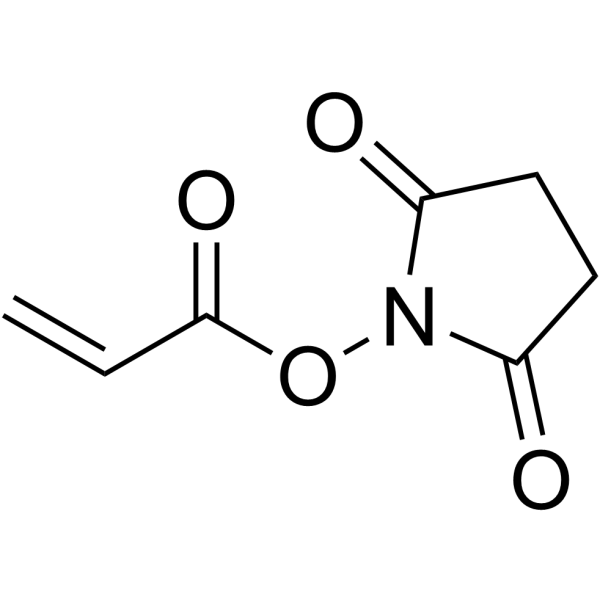
2,5-Dioxopyrrolidin-1-yl acrylate (N-Succinimidyl acrylate) is a lysine residue modifier and coupling monomer. 2,5-Dioxopyrrolidin-1-yl acrylate covalently modifies the primary amines of lysine residues on monoclonal anti-horseradish peroxidase IgG antibodies, neutralizes positive charges and replaces them with low-affinity acrylate groups. 2,5-Dioxopyrrolidin-1-yl acrylate inhibits the formation of rapid hard coronas on citrate-coated gold nanoparticles, induces antibody unfolding and loss of antigen-binding function, but does not affect the antigen-binding function of antibodies in free solution. 2,5-Dioxopyrrolidin-1-yl acrylate reacts with the ε-amino groups on lysine residues of L-asparaginase, introduces vinyl groups and generates N-hydroxysuccinimide. 2,5-Dioxopyrrolidin-1-yl acrylate regulates the activity of L-asparaginase .
loading...
    loading...
Cat. No.: HY-160062
Target:  

Mucin

Research Areas:  

Cancer

S2.2 aptamer sodium is a nucleic acid-based MUC1-binding aptamer with high affinity and low toxicity. Upon binding to its target, S2.2 aptamer sodium undergoes a conformational switch and restores fluorescence signal, serving as a targeted imaging agent for MUC1-positive cancer cells. S2.2 aptamer sodium enables targeted delivery to breast cancer cells with overexpressed MUC1. When formulated as the S2.2-PEG-MZF molecular probe, S2.2 aptamer sodium possesses the functions of T2 signal inhibition, magnetic field-induced hyperthermia and targeted magnetic resonance molecular imaging. In the S2.2-PEG-MZF/DOX nanoliposome, S2.2 aptamer sodium supports targeted thermochemotherapy, effectively inhibiting cancer cell proliferation and invasion as well as inducing apoptosis, and is widely used in studies related to breast cancer .
loading...
    loading...

