4012 Results for "

NO Production

" in MedChemExpress (MCE) Product Catalog:
Products (4012)

4012 Results for "NO Production" in MCE Product Catalog:

Cat. No.: HY-W008806S1
Synonyms: OHHL-d2; N-(3-OxohexaNOyl)homoserine lactone-d2
N-(3-Oxohexanoyl)-L-homoserine lactone-d2 (OHHL-d2) is the deuterated-labeled N-(3-Oxohexanoyl)-L-homoserine lactone (HY-W008806). N-(3-Oxohexanoyl)-L-homoserine lactone (OHHL; N-(3-Oxohexanoyl)homoserine lactone) is a specific agonist of LuxR-type transcription factor CarR with a Kd of 1.8 μM. N-(3-Oxohexanoyl)-L-homoserine lactone activates CarR by inducing protein multimerization, promoting its binding to target DNA sequences in the carR-carA intergenic region, thereby upregulating the transcription of carbapenem biosynthesis genes. N-(3-Oxohexanoyl)-L-homoserine lactone acts as a quorum sensing signal molecule, enabling bacteria to coordinate the production of carbapenem antibiotics in a cell density-dependent manner. N-(3-Oxohexanoyl)-L-homoserine lactone is used to study bacterial quorum sensing mechanisms, especially the secondary metabolism and virulence factor regulatory pathways of Erwinia carotovora and Yersinia enterocolitica .
loading...
    loading...
Cat. No.: HY-W027592R
CAS No.: 61-82-5
1H-1,2,4-Triazol-3-amine (Standard) is the analytical standard of 1H-1,2,4-Triazol-3-amine. This product is intended for research and analytical applications. 1H-1,2,4-Triazol-3-amine consists of a triazole ring system and an amino group attached to carbon atom 3. The compound has potential applications in various fields such as medicinal chemistry, agrochemicals and material science. In medicinal chemistry, 1H-1,2,4-Triazol-3-amine is used as a starting material for the synthesis of pharmaceutical compounds such as antifungal agents, anticancer agents, and enzyme inhibitors associated with cardiovascular disease. In agrochemicals, it can be used as a raw material for the synthesis of herbicides, fungicides and insecticides. Furthermore, 1H-1,2,4-Triazol-3-amine is used as a ligand in coordination chemistry and as a precursor for the production of new functional materials such as polymers and metal-organic frameworks.
loading...
    loading...
Cat. No.: HY-W154247
CAS No.: 103313-38-8
Target:  

Bacterial

Research Areas:  

Infection

IP6C is a specific inhibitor and phage sensitizer targeting type II Thoeris systems. IP6C competitively binds to histidine in the catalytic pocket of ThsB, blocks the production of the His-ADPR alarm signal and inhibits ThsA activation, thereby relieving bacterial stasis of phage replication. IP6C selectively resensitizes drug-resistant bacteria carrying type II Thoeris systems (such as Pseudomonas aeruginosa) to phage lysis, without affecting other bacteria, and shows no toxicity to mice and human cell lines. IP6C significantly improves the survival rate of infected mice, and can be used to overcome bacterial phage defense mechanisms and study Pseudomonas aeruginosa infections .
Thoeris system: (named after the Egyptian goddess of fertility and protection), is a widespread anti-phage immune defense system in bacteria and archaea. Thoeris system belongs to the "Abortion Infection (Abi)" mechanism of bacteria: when an individual bacterium detects phage invasion, it initiates a suicide program and dies, thereby blocking phage replication and spread, and protecting the surrounding bacterial population from infection.
loading...
    loading...
Cat. No.: HY-Y0148R
CAS No.: 1679-53-4
Synonyms: NSC 15139 (Standard); 10-HDAA (Standard)
10-Hydroxydecanoic acid (Standard) is the analytical standard of 10-Hydroxydecanoic acid. This product is intended for research and analytical applications. 10-Hydroxydecanoic acid (10-HDAA) is a saturated fatty acid derived from 10-hydroxy-trans-2-decenoic acid, which can be isolated from royal jelly. 10-Hydroxydecanoic acid exhibits various biological activities, including anti-inflammatory, insecticidal, anti-malarial, and anti-Leishmania properties, as well as enhancing antigen-specific immune responses. The anti-inflammatory effects of 10-Hydroxydecanoic acid are primarily mediated by inhibiting the activation of NF-κB and the translation of interferon regulatory factor 1 (IRF-1), which reduces the production of interleukin 6 (IL-6) and nitric oxide (NO) in inflammatory cells. Additionally, 10-Hydroxydecanoic acid alleviates neuroinflammatory responses through the p53-autophagy pathway and the p53-NLRP3 pathway. Finally, 10-Hydroxydecanoic acid enhances antigen-specific immune responses by promoting the effective uptake of antigens by microfold cells[1][2][3][4][5].
loading...
    loading...
Cat. No.: HY-L105S
867 compounds

Peptides, composed of amino acids, serve as crucial building blocks for proteins and have gained significant attention in drug development over the past decade. The advancements in production, modification, and analytical technologies have led to a surge in the potential applications of peptides in medicine. Peptides offer a number of advantages over small molecule drugs, including: greater target specificity and efficacy, more predictable metabolic profiles, easier delivery to where they are needed in the body, and fewer side effects. Peptides are increasingly appearing in all branches of medicine as components of innovative drugs, imaging agents, diagnostic agents, and other complex drugs such as peptide-drug conjugates. To date, more than 80 peptide drugs have been approved to treat a variety of diseases, including microbial infections, obesity, anti-diabetes, and cancer, as well as to develop cell targeting platforms and improve cell penetration properties.

MCE designs a unique collection of 867 peptide compounds. HY-L105S is a peptide compound library that can be provided with solution form based on HY-L105, and can be applied to peptides-based drug development.

Cat. No.: HY-L242
495 compounds

Flavors and fragrances serve as indispensable enhancing elements in modern industries, playing multidimensional roles in the fields of food, cosmetics, and pharmaceutical development. In the food industry, flavors and fragrances are not only used to compensate for flavor loss during processing but also to create novel sensory experiences and enhance product appeal. Natural flavors such as vanilla and citrus oils impart rich, layered aromas to foods, while synthetic flavors can precisely replicate specific tastes, meeting the demands of standardized production and extending the flavor stability of food products. In the cosmetics sector, flavors and fragrances are key to emotional design. They enhance product recognition and elevate the pleasure of use through pleasant scents. In pharmaceutical development, the application of flavors and fragrances focuses on improving compliance. Especially in formulations such as oral liquids and chewable tablets, the addition of mint, fruit, and other flavoring components effectively masks the bitter or irritating taste of medications, increasing patient acceptance. Additionally, some natural flavors may themselves possess auxiliary therapeutic benefits.

MCE contains 495 kinds of flavors and fragrances, which can be used in fields such as food, cosmetics and drug development.

Cat. No.: HY-116115
CAS No.: 1233715-33-7
Synonyms: 17-Oxo-DPA; 17-Oxo-7(Z),10(Z),13(Z),15(E),19(Z)-DPA
Target:  

NF-κB PPAR

Research Areas:  

Inflammation/Immunology

17-Oxo-7(Z),10(Z),13(Z),15(E),19(Z)-docosapentaenoic acid (17-Oxo-DPA; 17-Oxo-7(Z),10(Z),13(Z),15(E),19(Z)-DPA) is an electrophilic oxo-derivative (EFOX) of the docosahexaenoic acid (DHA) (HY-B2167). 17-Oxo-7(Z),10(Z),13(Z),15(E),19(Z)-docosapentaenoic acid is generated during inflammation by COX-2-catalyzed mechanism in activated macrophages. 17-Oxo-7(Z),10(Z),13(Z),15(E),19(Z)-docosapentaenoic acid acts as an agonist for PPARγ and a modulator for NF-κB signaling pathway, inhibits the production of pro-inflammatory cytokines and nitric oxide, and exhibits anti-inflammatory efficacy .
loading...
    loading...
Cat. No.: HY-13443S
Synonyms: Exenatide (Leu-13C6,15N) TFA
Exendin-4 (Leu- 13C6, 15N) TFA (Exenatide (Leu- 13C6, 15N) TFA) is the 13C, 15N-labeled Exendin-4 (HY-13443). Exendin‑4 (Exenatide) is an orally active, blood-brain barrier-permeable glucagon-like peptide-1 receptor (GLP‑1 receptor) agonist that resists degradation mediated by dipeptidyl peptidase IV. Exendin‑4 mediates multiple glucose-regulating effects, including stimulation of glucose-dependent insulin secretion, inhibition of glucagon production, increase in β-cell mass, delay of gastric emptying, reduction of food intake, improvement of peripheral insulin sensitivity, and restoration of normal islet structure. Exendin‑4 inhibits oxidative stress, alleviates inflammatory responses, and reduces neuronal apoptosis. Exendin‑4 reduces the aggregation level of mutant huntingtin, improves motor function, prolongs survival time, and regulates the expression levels of leptin and ghrelin. Exendin‑4 can be used in research related to type 2 diabetes, acute ischemic stroke, and Huntington's disease .
loading...
    loading...
Cat. No.: HY-135319
CAS No.: 517-46-4
Purity:  97.15%
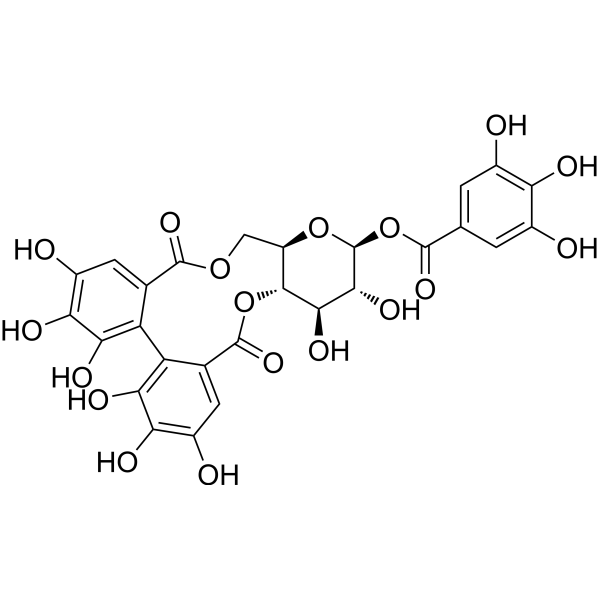
Strictinin is an orally active phenolic compound. Strictinin reduces xanthine oxidase activity, uric acid production, and the activation of ERK1/2, JNK, NF-κB, and NLRP3 inflammasome components in hepatocytes treated with Xanthine (HY-W017389). Strictinin decreases elevated serum uric acid levels and enhanced xanthine oxidase activity in mice treated with potassium oxonate. Strictinin acts as a ROR1 inhibitor and exhibits anticancer activity against highly aggressive non-androgen-dependent prostate cancer. Strictinin induces cancer cell apoptosis (apoptosis), arrests cell cycle, and inhibits cancer cell migration, invasion, and epithelial-mesenchymal transition. Strictinin modulates gut microbiota, inhibits bacterial growth and biofilm formation, accelerates small intestinal transit, and blocks viral entry and replication. Strictinin can be used in research related to hyperuricemia, androgen receptor-negative non-androgen-dependent prostate cancer, triple-negative breast cancer, bacterial infections, constipation, coronavirus infections, dental caries, and infections caused by influenza A, influenza B, and human parainfluenza virus type 1 .
loading...
    loading...
Cat. No.: HY-173044
Research Areas:  

Neurological Disease

5-HT1AR/5-HT6R ligand-1 (Compound PP13) is the ligand for 5-HT receptor that exhibits good affinity to 5-HT1AR, 5-HT6R and 5-HT7R (Ki of 19, 69 and 198 nM, respectively), thereby inhibiting the cAMP production in HEK293 cell with EC50 of 1535, 488 and 53 nM, respectively. 5-HT1AR/5-HT6R ligand-1 exhibits anti-proliferative activity against a variety of cancer cells (IC50 for 1321N1, U87MG, MCF7, and AsPC-1 is 9.6, 13.6, 19.3 and 14.6 μM, respectively). 5-HT1AR/5-HT6R ligand-1 also exhibits antagonist activity for dopamine receptor D2R with Ki of 1903 nM .
loading...
    loading...
Cat. No.: HY-179041
CAS No.: 924851-91-2
SZ0232 is a selective mPGES-2 inhibitor. SZ0232 binds to the active site of mPGES-2 via hydrogen bonds and π-π stacking, reduces the production of prostaglandin E2 (PGE2) and blocks the PGE2-EP3 pathway. SZ0232 regulates Ferroptosis by activating the heme-dependent p53/SLC7A11/GPX4 axis, inhibits lipid peroxidation, and protects renal tubules. SZ0232 enhances glucose-stimulated insulin secretion, inhibits β-cell senescence, and improves glucose homeostasis. SZ0232 reduces renal lipid accumulation, alleviates fibrosis, and ameliorates renal dysfunction in diabetic mice. SZ0232 inhibits renal cyst growth in polycystic kidney disease models. SZ0232 exhibits an insulinotropic effect that strengthens with the increase of animal age. SZ0232 can be used in studies related to type 2 diabetes, acute kidney injury, diabetic kidney disease, and autosomal dominant polycystic kidney disease .
loading...
    loading...
Cat. No.: HY-179528
CAS No.: 2595179-74-9
DIM-3,5-Cl2 is an inverse NR4A1/NR4A2 agonist with KD values of 7.7 μM and 12.0 μM for NR4A1 and NR4A2, respectively. DIM-3,5-Cl2 acts as an inverse agonist to downregulate pro-oncogenic and proendometriotic gene products, and as an agonist to enhance NR4A1/2/Sp1/Sp4-mediated CD71 transactivation. DIM-3,5-Cl2 induces ferroptosis via ROS formation, lipoperoxidation, MDA production, and reduced GPX4, SLC7A11 expression. DIM-3,5-Cl2 induces apoptosis via PARP and caspase-3 cleavage, reduced BCL-2 expression, and inhibits cancer cell viability. DIM-3,5-Cl2 can be used for the research of triple negative breast cancer, endometriosis, and colorectal cancer .
loading...
    loading...
Cat. No.: HY-18719H
CAS No.: 1032008-71-1
Endoxifen Z-isomer methanesulfonate is an orally active selective PKCβ1 inhibitor with an IC50 of 360 nM against human PKCβ1. It also acts as an estrogen receptor modulator and antiestrogen. Endoxifen Z-isomer methanesulfonate binds to and blocks ERα, ERβ and PKCβ1, inhibits estrogen and PI3K/AKT/mTORC1 signaling pathways, suppresses the expression of genes associated with cell cycle, cell proliferation and extracellular matrix remodeling, and induces apoptosis, reactive oxygen species (ROS) production and hypoxic features. Endoxifen Z-isomer methanesulfonate inhibits tumor growth in breast tumor and glioblastoma models, reduces bone turnover and blood lipid levels, and does not require metabolism via CYP2D6. It can be used in research related to ER + breast cancer, invasive breast cancer, glioblastoma multiforme, type I bipolar disorder, desmoid tumor, gynecological malignancies, melanoma and hormone receptor-positive solid tumors .
loading...
    loading...
Cat. No.: HY-N0819R
CAS No.: 89412-79-3
Raddeanin A (Standard) is the analytical standard of Raddeanin A (HY-N0819). This product is intended for research and analytical applications. Raddeanin A is an oleanane-type triterpenoid saponin with oral activity. Raddeanin A inhibits SRC, mTOR, JNK, VEGFR2, NLRP3 inflammasome, Wnt/β-catenin, Wee1, PI3K/AKT signaling pathway, MAPK/ERK signaling pathway, AR-FL, AR-Vs, and downregulates the expression of p-PI3K and p-AKT. Raddeanin A inhibits osteoclast formation, bone resorption, osteolysis, cancer cell invasion, migration, proliferation, angiogenesis and epithelial-mesenchymal transition, while induces apoptosis, cell cycle arrest, ROS production, immunogenic cell death and dendritic cell maturation. Raddeanin A improves blood-retinal barrier function, alleviates inflammation, regulates the tumor microenvironment, and enhances the activity of anti-PD-1 antibody. Raddeanin A is applicable to the research of breast cancer-associated osteolysis, human osteosarcoma, colorectal cancer, glioblastoma, Alzheimer's disease, cholangiocarcinoma, melanoma, non-small cell lung cancer, castration-resistant prostate cancer and multiple myeloma.
loading...
    loading...
Cat. No.: HY-N1746
CAS No.: 270249-38-2
Synonyms: 2'-O-MethylkurariNOne
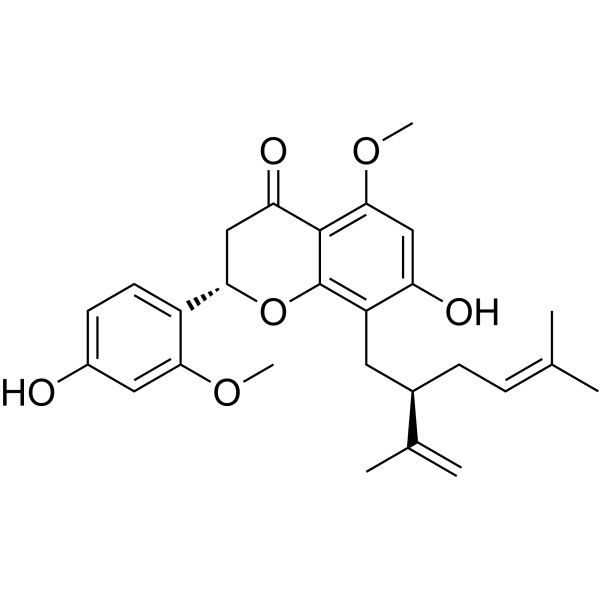
(2S)-2'-Methoxykurarinone (2'-O-Methylkurarinone) is a flavanone natural product found in the roots of Sophora flavescens, possessing anti-sepsis, inhibitory effects on osteoclast differentiation and bone resorption, anti-inflammatory, and anti-Plasmodium activities. (2S)-2'-Methoxykurarinone exhibits an EC50 = 2.4 μM against the FCR-3 strain of Plasmodium falciparum. In sepsis models, (2S)-2'-Methoxykurarinone modulates immune cell function and inhibits inflammation and oxidative stress. In bone-related models, (2S)-2'-Methoxykurarinone blocks osteoclast differentiation and bone resorption, and inhibits RANKL-mediated Akt, p38, and JNK signaling pathways. In skin inflammation models, (2S)-2'-Methoxykurarinone inhibits NF-κB pathway activation, upregulates HO-1 expression, and suppresses CCL27 chemokine production in HaCaT cells. (2S)-2'-Methoxykurarinone is useful for research on osteoporosis, sepsis, inflammatory skin diseases (such as atopic dermatitis and allergic contact dermatitis), and malaria .
loading...
    loading...
Cat. No.: HY-N7695
CAS No.: 23133-56-4
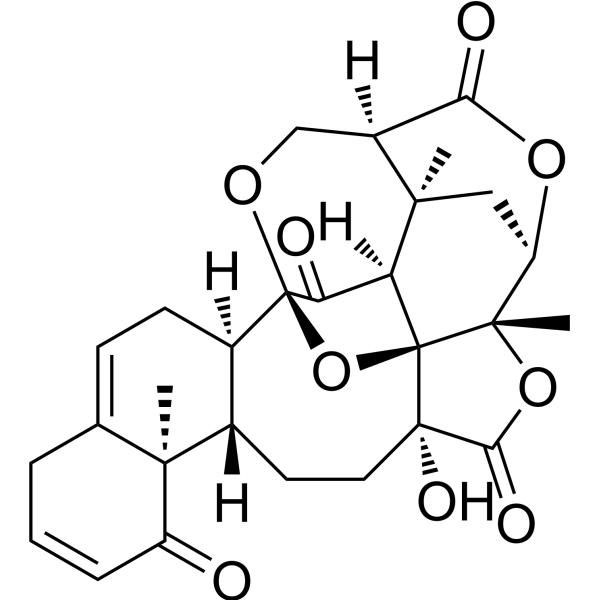
Physalin B is an orally active anti-inflammatory and anticancer agent. Physalin B can be isolated from Physalis alkekengi L. var. Franchetii. Physalin B inhibits the activation of the NF-κB, NLRP3 inflammasome, STAT3, PI3K/Akt and Hedgehog signaling pathways, regulates the phosphorylation levels of GSK-3β, p38 MAPK, ERK1/2 and JNK, and promotes the nuclear translocation of NRF2. Physalin B reduces the levels of pro-inflammatory cytokines and factors, induces mitochondrial reactive oxygen species (mito-ROS) production, Apoptosis, G2/M cell cycle arrest and incomplete Autophagy, alters cytoskeleton structure and alleviates oxidative stress. Physalin B reduces cancer cell viability, ameliorates liver and lung tissue damage and alleviates liver fibrosis. Physalin B can be used in research related to ulcerative colitis, breast cancer, acute lung injury, colon cancer, non-alcoholic steatohepatitis, liver fibrosis, lung cancer, pancreatic cancer, lymphoma, ovarian cancer, sarcoma and leukemia .
loading...
    loading...
Cat. No.: HY-P11242
Cm-CATH2 is an antimicrobial peptide discovered from Chelonia mydas. Cm-CATH2 has a potent, broad-spectrum and rapid bactericidal ability by rapidly destroying the integrity of bacterial cell membranes. It shows strong activity against Gram-positive bacteria (such as VREF, Staphylococcus aureus), Gram-negative bacteria (such as Escherichia coli, Klebsiella pneumoniae), and fungi (such as Candida albicans) with MICs ranges from 1.17 to 18.75 μg/mL. Cm-CATH2 is also effective against various aquatic pathogenic bacteria. Cm-CATH2 not only inhibits biofilm formation but can also remove the formed biofilms. Cm-CATH2 has immunomodulatory functions and chemotactic effects on immune cells, and can inhibit the production of pro-inflammatory cytokines by macrophages stimulated by LPS (HY-D1056). Cm-CATH2 prevents the activation of NF-κB by inhibiting the degradation of IκBα, and also inhibits the phosphorylation of MAPK signaling pathways (p38, JNK, ERK). Cm-CATH2 demonstrates strong anti-infective ability in mouse peritonitis models and pneumonia models .
loading...
    loading...
Cat. No.: HY-W016480R
CAS No.: 943-80-6
Synonyms: H-Phe(4-NH2)-OH (Standard)
4-Amino-L-phenylalanine (Standard) (H-Phe(4-NH2)-OH (Standard)) is the analytical standard of 4-Amino-L-phenylalanine (HY-W016480). This product is intended for research and analytical applications. 4-Amino-L-phenylalanine (H-Phe(4-NH2)-OH) is a metabolic intermediate and an α-carbonic anhydrase (TcCA) activator with a Ka value of 0.75 μM. 4-Amino-L-phenylalanine acts through active site cavity entrance binding and a proton shuttle mechanism to enhance the catalytic rate of CO2 hydration. 4-Amino-L-phenylalanine serves as a diamine monomer for bio-based polymer synthesis and is produced in Escherichia coli via the shikimate pathway. 4-Amino-L-phenylalanine constitutes a structural component of haptens used in immunoassay development. 4-Amino-L-phenylalanine is used for the production of Chloramphenicol (HY-B0239) and Pristinamycin I in Streptomyces venezuelae and S. pristinaespiralis, respectively. 4-Amino-L-phenylalanine is used in research related to Trypanosoma cruzi infection .
loading...
    loading...
Cat. No.: HY-W923189
CAS No.: 106-26-3
Neral is a plant-derived anti-inflammatory, antioxidant and anticancer agent. Neral inhibits the phosphorylation of ERK1/2, p38 MAPK and IκB in macrophages induced by LPS (HY-D1056), suppresses the secretion of TNF-α and IL-6, as well as the expression of pro-IL-1β, iNOS and COX-2 in cells, and reduces the production of ROS in cells. Neral inhibits the activation of the NLRP3 inflammasome, and decreases the activation of caspase-1 and the secretion of IL-1β in mouse macrophages. Neral induces autophagy, and exhibits antiproliferative activity both in in vitro breast cancer cell models and mouse xenograft models. Neral regulates brassinosteroid, jasmonic acid and ethylene signaling pathways, and induces the expression of AP2/ERF-ERF and bHLH family genes in rice roots. Neral acts as a herbicide safener, alleviates the damage induced by Fenoxaprop-P-ethyl (HY-B2013), and promotes the elongation of rice roots. Neral can be used in research related to breast cancer, inflammatory and immune system diseases, and herbicide safeners .
loading...
    loading...
Cat. No.: HY-L204
582 compounds

Lactic acid metabolism is one of the key metabolic pathways within living organisms. It plays a crucial role not only in cellular energy conversion but is also closely related to a variety of physiological and pathological processes. The production and clearance of lactic acid are important indicators of cellular metabolic balance, and its abnormal regulation may lead to conditions such as lactic acidosis, muscle fatigue, and hereditary metabolic diseases. Moreover, lactic acid is closely related to the malignancy of tumors and is considered a biomarker for malignant tumors and poor prognosis. Lactic acid can serve as a metabolic substrate to support the metabolic needs of tumor cells under hypoxic conditions, and it can also cause acidification of the tumor microenvironment, suppress immune cell function to promote immune evasion, and induce drug resistance in tumor cells. Currently, targeting lactic acid-lactylation and its related metabolic pathways has become a new research avenue for cancer treatment. In-depth exploration of the molecular mechanisms of lactic acid metabolism can help in screening lead compounds that regulate the lactic acid metabolism.

MCE contains 582 small molecule compounds targeting enzymes involved in lactic acid metabolism. This library is of significant value for researching the role of lactate metabolism in the mechanisms of diseases.

