1356 Results for "

PI-3

" in MedChemExpress (MCE) Product Catalog:
Products (1356)

1356 Results for "PI-3" in MCE Product Catalog:

67
67 Cited Publications
Cat. No.: HY-12016
CAS No.: 587871-26-9
Purity:  99.92%
Target:  

ATM/ATR Autophagy

Research Areas:  

Cancer

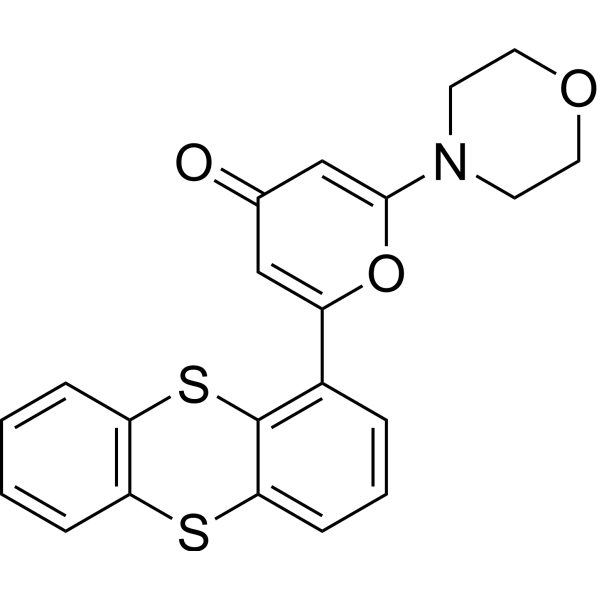
KU-55933 is a potent ATM inhibitor with an IC50 and Ki of 12.9 and 2.2 nM, respectively, and is highly selective for ATM as compared to DNA-PK, PI3K/PI4K, ATR and mTOR.
loading...
    loading...
67
67 Cited Publications
Cat. No.: HY-50673A
CAS No.: 2319647-83-9
Synonyms: BEZ235 hydrochloride; NVP-BEZ235 hydrochloride
Target:  

PI3K mTOR Autophagy

Research Areas:  

Cancer

Dactolisib (BEZ235) hydrochloride is an orally active, dual pan-class I PI3K and mTOR inhibitor for p110α/γ/δ/β and mTOR with IC50 of 4 nM/5 nM/7 nM/75 nM and 20.7 nM, respectively. Dactolisib hydrochloride (BEZ235) inhibits mTORC1 and mTORC2 .
loading...
    loading...
57
57 Cited Publications
Cat. No.: HY-13026
CAS No.: 870281-82-6
Purity:  99.69%
Synonyms: CAL-101; GS-1101
Target:  

PI3K Autophagy

Research Areas:  

Cancer

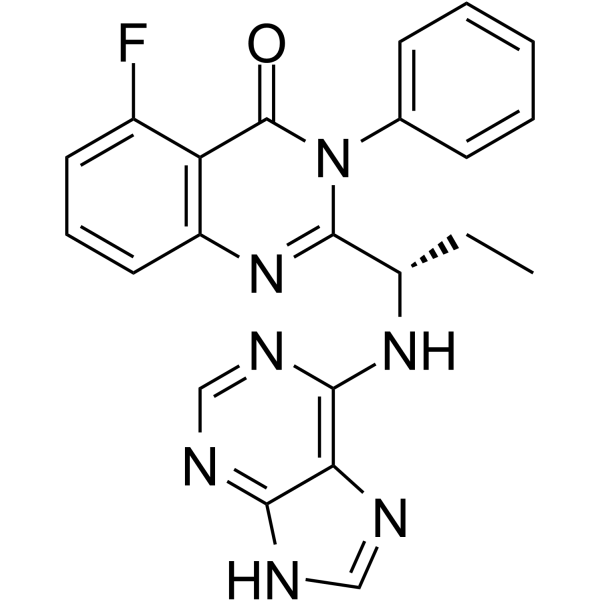
Idelalisib (CAL-101; GS-1101) is a highly selective and orally bioavailable p110δ inhibitor with an IC50 of 2.5 nM, showing 40- to 300-fold selectivity for p110δ over other PI3K class I enzymes.
loading...
    loading...
48
48 Cited Publications
Cat. No.: HY-11006
CAS No.: 503468-95-9
Purity:  99.95%
Synonyms: NU7441
Target:  

DNA-PK

Research Areas:  

Cancer

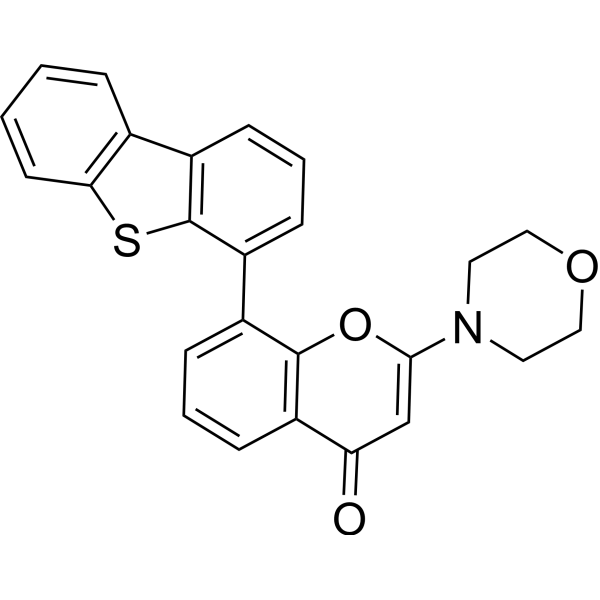
KU-57788 (NU7441) is a highly potent and selective DNA-PK inhibitor with an IC50 of 14 nM. KU-57788 is an NHEJ pathway inhibitor. KU-57788 also inhibits PI3K and mTOR with IC50s of 5.0 and 1.7 μM, respectively .
loading...
    loading...
45
45 Cited Publications
Cat. No.: HY-101625
CAS No.: 334969-03-8
Purity:  99.94%
Synonyms: ON 01210
Target:  

Akt PI3K

Research Areas:  

Cancer

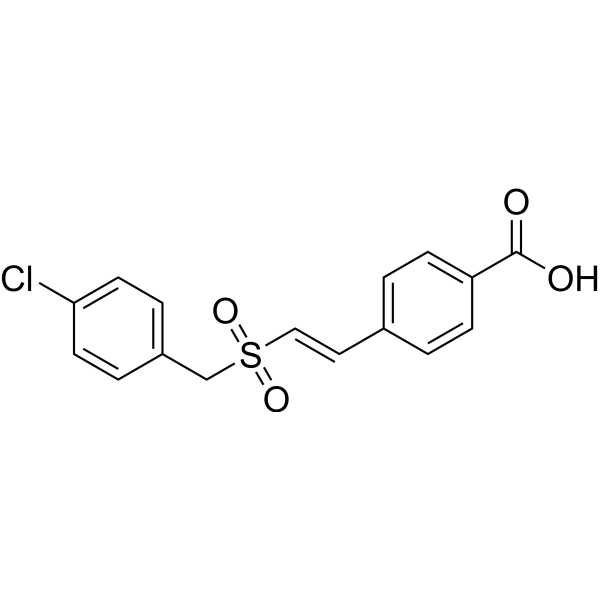
Recilisib (ON 01210) is a radioprotectant, which can activate AKT, PI3K activities in cells .
loading...
    loading...
38
38 Cited Publications
Cat. No.: HY-12481
CAS No.: 1523406-39-4
Purity:  99.74%
Target:  

PI3K Autophagy

Research Areas:  

Cancer

SAR405 is a first-in-class, selective, and ATP-competitive PI3K class III (PIK3C3) isoform Vps34 inhibitor (IC50=1.2 nM; Kd=1.5 nM). SAR405 inhibits autophagy induced either by starvation or by mTOR inhibition. Anticancer activity .
loading...
    loading...
36
36 Cited Publications
Cat. No.: HY-15346
CAS No.: 1032568-63-0
Purity:  99.50%
Synonyms: BAY 80-6946
Target:  

PI3K Apoptosis

Research Areas:  

Cancer

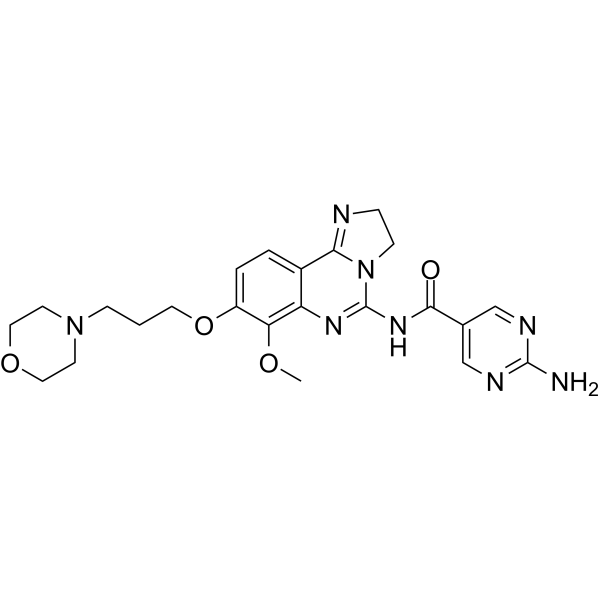
Copanlisib (BAY 80-6946) is a potent, selective and ATP-competitive pan-class I PI3K inhibitor, with IC50s of 0.5 nM, 0.7 nM, 3.7 nM and 6.4 nM for PI3, PI3, PI3 and PI3, respectively. Copanlisib has more than 2,000-fold selectivity against other lipid and protein kinases, except for mTOR. Copanlisib has superior antitumor activity .
loading...
    loading...
36
36 Cited Publications
Cat. No.: HY-15346A
CAS No.: 1402152-13-9
Purity:  99.55%
Synonyms: BAY 80-6946 dihydrochloride
Target:  

PI3K Apoptosis

Research Areas:  

Cancer

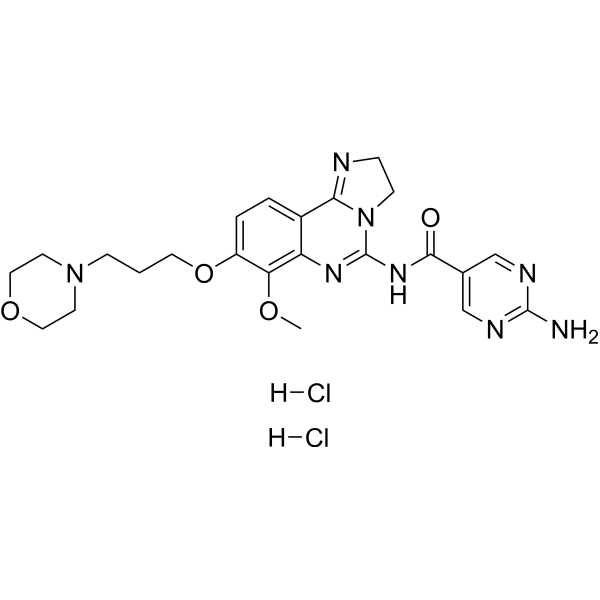
Copanlisib dihydrochloride (BAY 80-6946 dihydrochloride) is a potent, selective and ATP-competitive pan-class I PI3K inhibitor, with IC50s of 0.5 nM, 0.7 nM, 3.7 nM and 6.4 nM for PI3, PI3, PI3 and PI3, respectively. Copanlisib dihydrochloride has more than 2,000-fold selectivity against other lipid and protein kinases, except for mTOR. Copanlisib dihydrochloride has superior antitumor activity .
loading...
    loading...
33
33 Cited Publications
Cat. No.: HY-10115
CAS No.: 371935-74-9
Purity:  99.82%
Research Areas:  

Cancer

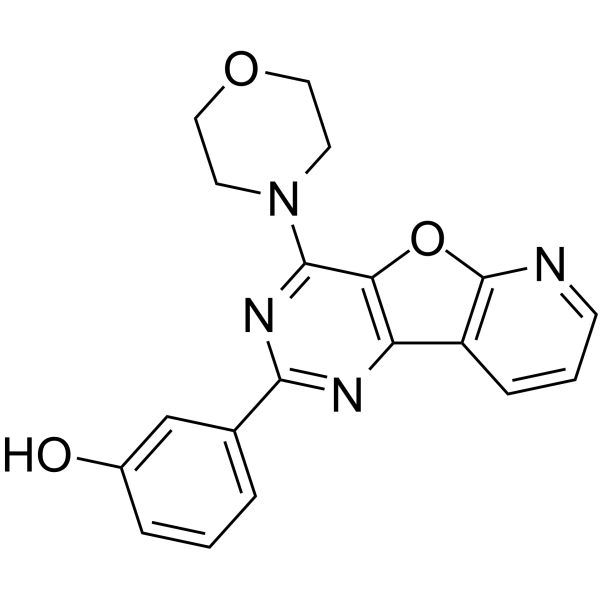
PI-103 is a potent PI3K and mTOR inhibitor with IC50s of 8 nM, 88 nM, 48 nM, 150 nM, 20 nM, and 83 nM for p110α, p110β, p110δ, p110γ, mTORC1, and mTORC2. PI-103 also inhibits DNA-PK with an IC50 of 2 nM. PI-103 induces autophagy [3] .
loading...
    loading...
33
33 Cited Publications
Cat. No.: HY-10115A
CAS No.: 371935-79-4
Purity:  98.55%
Research Areas:  

Cancer

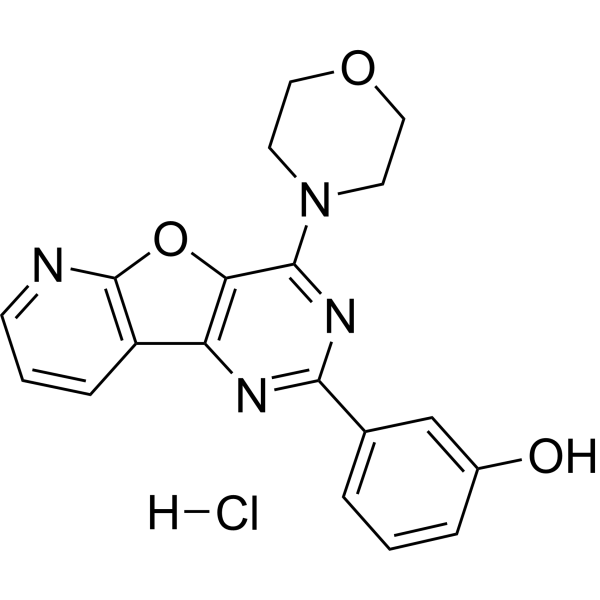
PI-103 Hydrochloride is a dual PI3K and mTOR inhibitor with IC50s of 8 nM, 88 nM, 48 nM, 150 nM, 20 nM, and 83 nM for p110α, p110β, p110δ, p110γ, mTORC1, and mTORC2. PI-103 Hydrochloride also inhibits DNA-PK with an IC50 of 2 nM. PI-103 Hydrochloride induces autophagy [3] .
loading...
    loading...
26
26 Cited Publications
Cat. No.: HY-100716
CAS No.: 1693758-51-8
Purity:  99.68%
Synonyms: IPI-549
Target:  

PI3K

Research Areas:  

Cancer

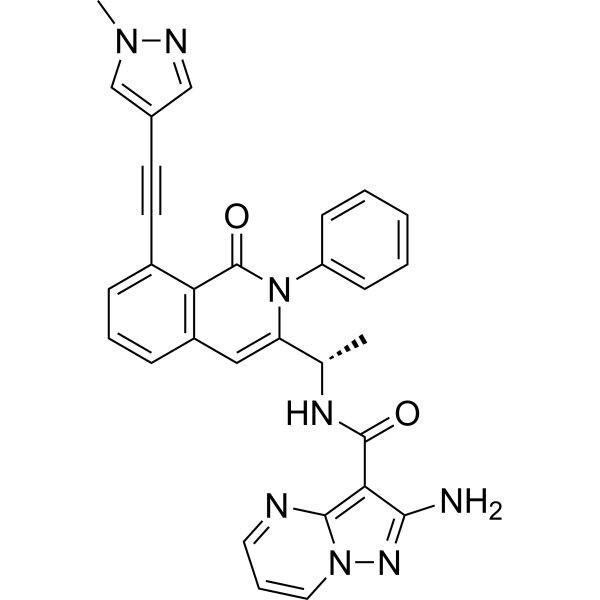
Eganelisib (IPI549) is a potent and selective PI3 inhibitor with an IC50 of 16 nM. Eganelisib shows >100-fold selectivity over other lipid and protein kinases .
loading...
    loading...
25
25 Cited Publications
Cat. No.: HY-12036
CAS No.: 958852-01-2
Purity:  98.28%
Target:  

PI3K mTOR Apoptosis

Research Areas:  

Cancer

GSK1059615 is a dual inhibitor of PI3Kα/β/δ/γ (reversible) and mTOR with IC50 of 0.4 nM/0.6 nM/2 nM/5 nM and 12 nM, respectively.
loading...
    loading...
23
23 Cited Publications
Cat. No.: HY-13898
CAS No.: 1282512-48-4
Purity:  99.75%
Synonyms: GDC-0032; RG-7604
Target:  

PI3K

Research Areas:  

Cancer

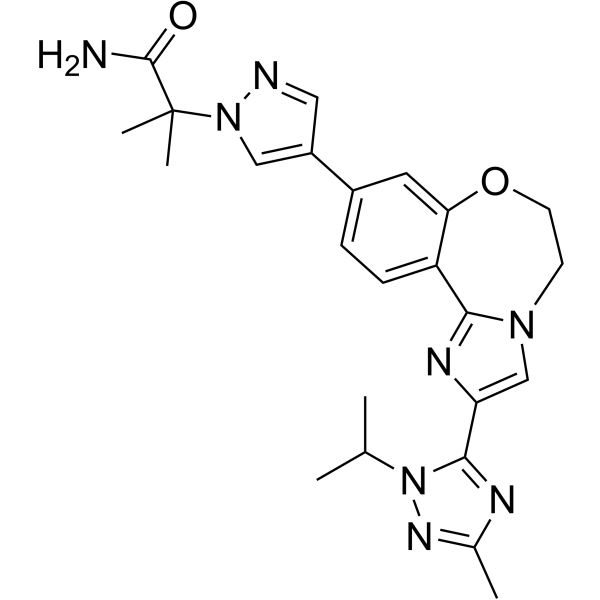
Taselisib (GDC-0032) is a potent PI3K inhibitor targets PIK3CA mutations, with Kis of 0.12 nM, 0.29 nM, 0.97 nM, and 9.1 nM for PI3Kδ, PI3Kα, PI3Kγ and PI3Kβ, respectively.
loading...
    loading...
23
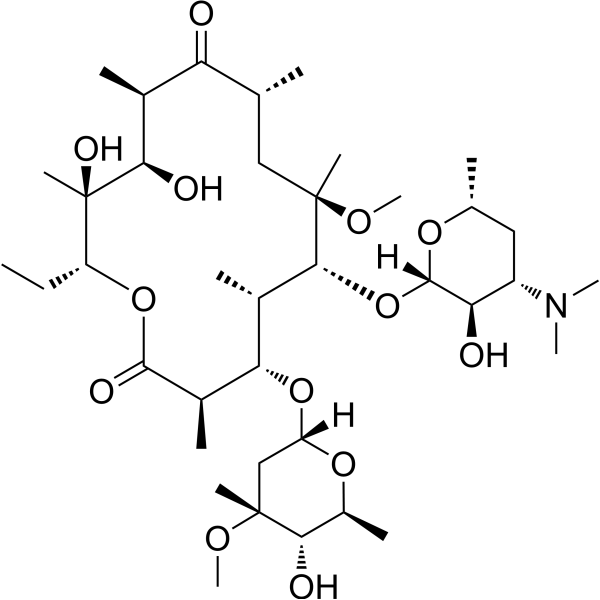
23 Cited Publications
Cat. No.: HY-17508
CAS No.: 81103-11-9
Research Areas:  

Infection Cancer

Clarithromycin has a broad spectrum of antimicrobial activity. Clarithromycin inhibits the CYP3A4-catalyzed triazolam alpha-hydroxylation with the IC50 (Ki) value of 56 (43) μM . Clarithromycin significantly inhibits the HERG potassium current [3].Clarithromycin affects the autophagic flux by impairing the signaling pathway linking hERG1 and PI3K .
loading...
    loading...
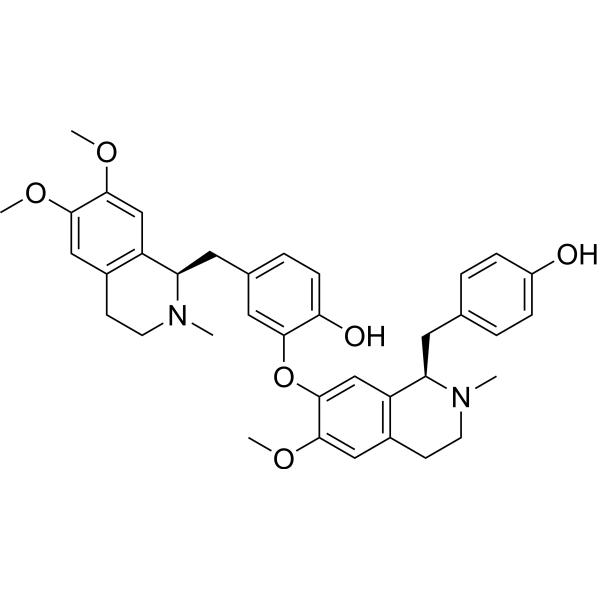
22
22 Cited Publications
Cat. No.: HY-N0484
CAS No.: 2586-96-1
Liensinine is a bisbenzylisoquinoline alkaloid. By inhibiting the PI3K/AKT and JNK/p38-MAPK signaling pathways, Liensinine suppresses autophagy and apoptosis, clears , and exerts anti-inflammatory, antioxidant and neuroprotective effects. Liensinine activates AMPK and inhibits the expression of HIF-1α and VEGF, thereby suppressing angiogenesis. Liensinine exerts anti-tumor effects through ROS-mediated inhibition of the JAK2/STAT3 signaling pathway. Liensinine can be used for the research of diseases such as Alzheimer's disease, hepatocellular carcinoma, osteosarcoma, sepsis-induced organ injury and stroke [3] .
loading...
    loading...
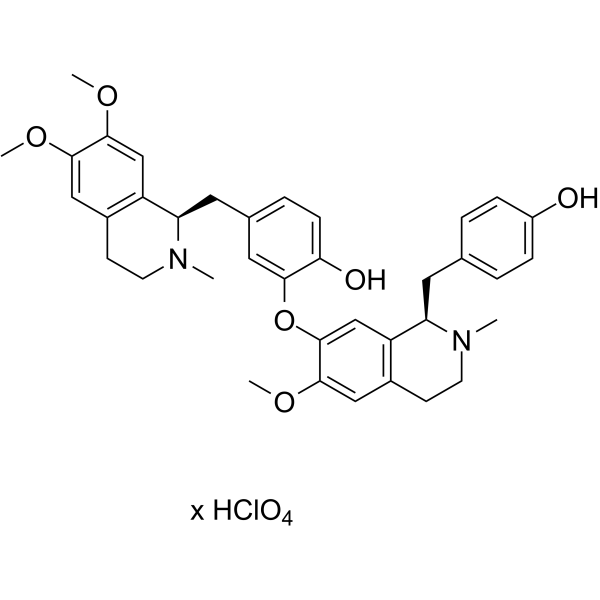
22
22 Cited Publications
Cat. No.: HY-N5014
CAS No.: 2385-63-9
Liensinine perchlorate is a bisbenzylisoquinoline alkaloid. By inhibiting the PI3K/AKT and JNK/p38-MAPK signaling pathways, Liensinine perchlorate suppresses autophagy and apoptosis, clears , and exerts anti-inflammatory, antioxidant and neuroprotective effects. Liensinine perchlorate activates AMPK and inhibits the expression of HIF-1α and VEGF, thereby suppressing angiogenesis. Liensinine perchlorate exerts anti-tumor effects through ROS-mediated inhibition of the JAK2/STAT3 signaling pathway. Liensinine perchlorate can be used for the research of diseases such as Alzheimer's disease, hepatocellular carcinoma, osteosarcoma, sepsis-induced organ injury and stroke [3] .
loading...
    loading...
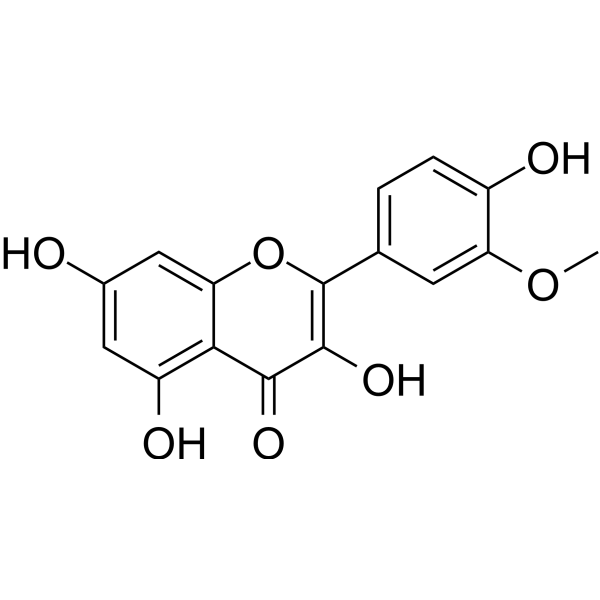
21
21 Cited Publications
Cat. No.: HY-N0776
CAS No.: 480-19-3
Synonyms: 3'-Methylquercetin
Isorhamnetin is a flavonoid compound extracted from the Chinese herb Hippophae rhamnoides L.. Isorhamnetin suppresses skin cancer through direct inhibition of MEK1 and PI3K.
loading...
    loading...
21
21 Cited Publications
Cat. No.: HY-13002
CAS No.: 1223001-51-1
Purity:  99.65%
Research Areas:  

Cancer

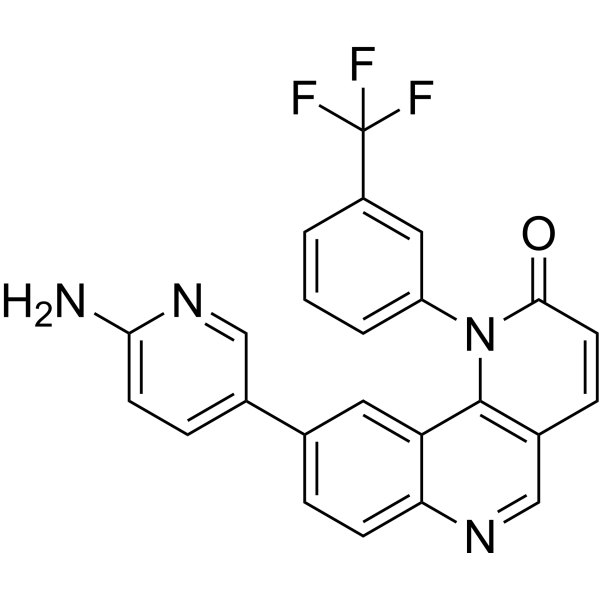
Torin 2 is an mTOR inhibitor with EC50 of 0.25 nM for inhibiting cellular mTOR activity, and exhibits 800-fold selectivity over PI3K (EC50: 200 nM). Torin 2 also inhibits DNA-PK with an IC50 of 0.5 nM in the cell free assay. Torin 2 can suppress both mTORC1 and mTORC2.
loading...
    loading...
21
21 Cited Publications
Cat. No.: HY-B0633
CAS No.: 9067-32-7
Synonyms: Sodium hyaluronate
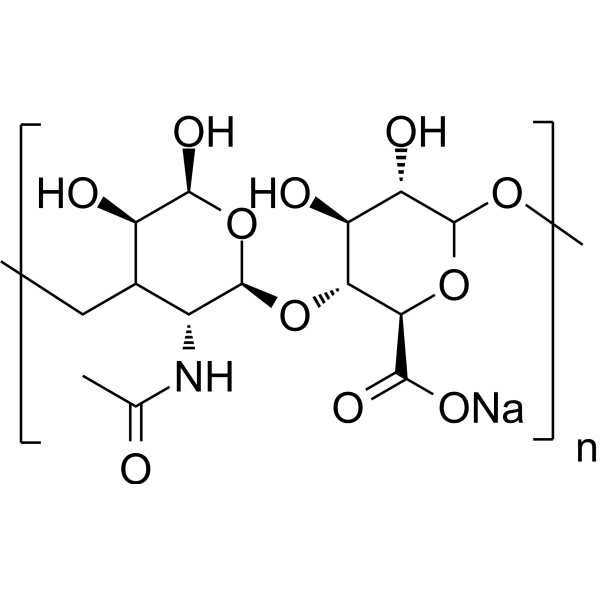
Hyaluronic acid sodium (Sodium hyaluronate) is a biopolymer composed of repeating units of disaccharides with various applications. Hyaluronic acid sodium is a major component of the extracellular matrix (ECM). Hyaluronic acid sodium is synthesized at the plasma membrane. Increased hyaluronic acid sodium levels are associated with tumor cell growth, adhesion, migration, invasion and angiogenesis in digestive cancers. Hyaluronic acid sodium participates in tissue remodeling and rapid cell proliferation in some physiological processes including embryonic morphogenesis and wound-healing. Hyaluronic acid sodium activates the PI3K-Akt signaling. Hyaluronic acid sodium acts as a regulator of cancer-associated lymphangiogenesis. Hyaluronic acid sodium also enhances cell invasion and angiogenesis by promoting proteolytic MMP-9 binding to cell surface or stimulating MMP-9 binding to cell surface. Hyaluronic acid sodium can be used as drug delivery for sodium butyrate to improve the anti-proliferative activity on breast cancer cell line. Hyaluronic acid sodium can be studied in joint diseases, wound healing and cancer [3] .
loading...
    loading...
21
21 Cited Publications
Cat. No.: HY-B0633A
CAS No.: 9004-61-9
Synonyms: Hyaluronan; Hyaluronate
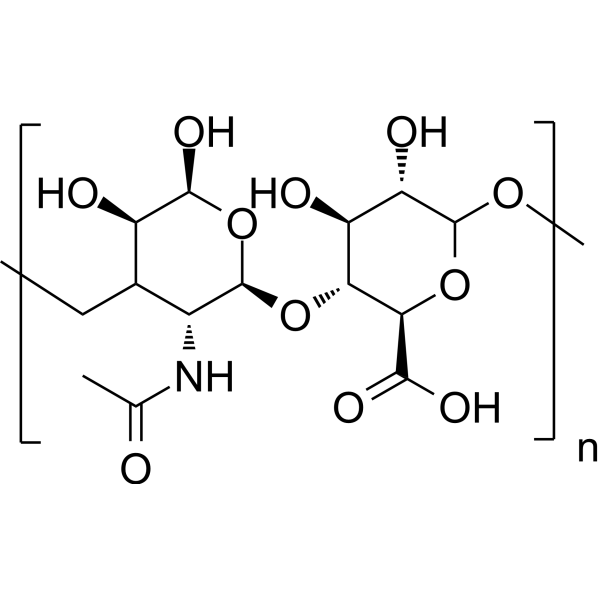
Hyaluronic acid is a biopolymer composed of repeating units of disaccharides with various applications. Hyaluronic acid is a major component of the extracellular matrix (ECM). Hyaluronic acid is synthesized at the plasma membrane. Increased hyaluronic acid levels are associated with tumor cell growth, adhesion, migration, invasion and angiogenesis in digestive cancers. Hyaluronic acid participates in tissue remodeling and rapid cell proliferation in some physiological processes including embryonic morphogenesis and wound-healing. Hyaluronic acid activates the PI3K-Akt signaling. Hyaluronic acid acts as a regulator of cancer-associated lymphangiogenesis. Hyaluronic acid also enhances cell invasion and angiogenesis by promoting proteolytic MMP-9 binding to cell surface or stimulating MMP-9 binding to cell surface. Hyaluronic acid can be used as drug delivery for sodium butyrate to improve the anti-proliferative activity on breast cancer cell line. Hyaluronic acid can be studied in joint diseases, wound healing and cancer [3] .
loading...
    loading...

