

52 Results for "

TCA cycle

" in MedChemExpress (MCE) Product Catalog:
Products (52)

52 Results for "TCA cycle" in MCE Product Catalog:

Cat. No.: HY-Y1269D
CAS No.: 12125-02-9
Synonyms: Salmiac, for molecular biology
Ammonium chloride (Salmiac), for molecular biology is an inhibitor of Slc26a4 and SMAD2. Ammonium chloride, for molecular biology reduces the protein expression level of Slc26a4 in lung tissue, and attenuates ozone-induced increases in proinflammatory cytokines, inflammatory cells, pulmonary resistance, goblet cell hyperplasia, peribronchial inflammation and thiocyanate levels in mouse tissues and bronchoalveolar lavage fluid. Ammonium chloride, for molecular biology decreases the level of phosphorylated SMAD2, inhibits autophagy by reducing autophagy-related proteins, and enhances Cisplatin (HY-17394)-induced cancer cell apoptosis and DNA double-strand breaks. Ammonium chloride, for molecular biology also inhibits the TCA cycle, reduces ATP production, increases glucose utilization, regulates the levels of lactic acid, glutamic acid and ATP, and induces morphological degeneration of neuroblastoma cells. Ammonium chloride, for molecular biology can be used in studies related to ozone-induced airway injury, hepatocellular carcinoma, human cervical cancer, hepatic encephalopathy, Reye syndrome, epilepsy and neurodegenerative diseases .
loading...
    loading...
Cat. No.: HY-164909
CAS No.: 2170608-85-0
Target:  

PANK

Research Areas:  

Metabolic Disease

PZ-3022 is an orally active allosteric agonist of pantothenate kinase (PanK) with an EC50 of 5.3 nM against PanK3. PZ-3022 antagonizes the inhibitory effect of C3-CoA. PZ-3022 increases CoA levels in cells and the liver, upregulates CoASH and C2-CoA, downregulates C3-CoA, and restores impaired TCA cycle and mitochondrial function. PZ-3022 can be used for the research of propionic acidemia and metabolic CoA deficiency .
loading...
    loading...
Cat. No.: HY-175673
CAS No.: 2211175-99-2
LCB-2151 (Compound 2), a nucleoside analogue, is an anticancer agent. LCB-2151 disrupts the two primary sources of ATP production (glycolysis and mitochondrial oxidative phosphorylation), reducing the bioenergetic capacity of KRAS-mutated pancreatic cancer cells and inducing ROS formation. LCB-2151 effectively inhibits key enzymes (such as CACT and CPT2) in glycolysis, the TCA cycle and fatty acid β-oxidation. LCB-2151 has significant cytotoxicity and induces cells apoptosis. LCB-2151 can be used for radiation therapy of cancers research .
loading...
    loading...
Cat. No.: HY-Y1269H
CAS No.: 12125-02-9
Synonyms: Salmiac, meets analytical specification of Ph. Eur. BP USP FCC
Ammonium chloride, meets analytical specification of Ph. Eur. BP USP FCC (Salmiac, meets analytical specification of Ph. Eur. BP USP FCC) is an inhibitor of Slc26a4 and SMAD2. Ammonium chloride, meets analytical specification of Ph. Eur. BP USP FCC reduces the protein expression level of Slc26a4 in lung tissue, and attenuates ozone-induced increases in proinflammatory cytokines, inflammatory cells, pulmonary resistance, goblet cell hyperplasia, peribronchial inflammation and thiocyanate levels in mouse tissues and bronchoalveolar lavage fluid. Ammonium chloride, meets analytical specification of Ph. Eur. BP USP FCC decreases the level of phosphorylated SMAD2, inhibits autophagy by reducing autophagy-related proteins, and enhances Cisplatin (HY-17394)-induced cancer cell apoptosis and DNA double-strand breaks. Ammonium chloride, meets analytical specification of Ph. Eur. BP USP FCC also inhibits the TCA cycle, reduces ATP production, increases glucose utilization, regulates the levels of lactic acid, glutamic acid and ATP, and induces morphological degeneration of neuroblastoma cells. Ammonium chloride, meets analytical specification of Ph. Eur. BP USP FCC can be used in studies related to ozone-induced airway injury, hepatocellular carcinoma, human cervical cancer, hepatic encephalopathy, Reye syndrome, epilepsy and neurodegenerative diseases .
loading...
    loading...
Cat. No.: HY-B0831S
CAS No.: 2140803-94-5
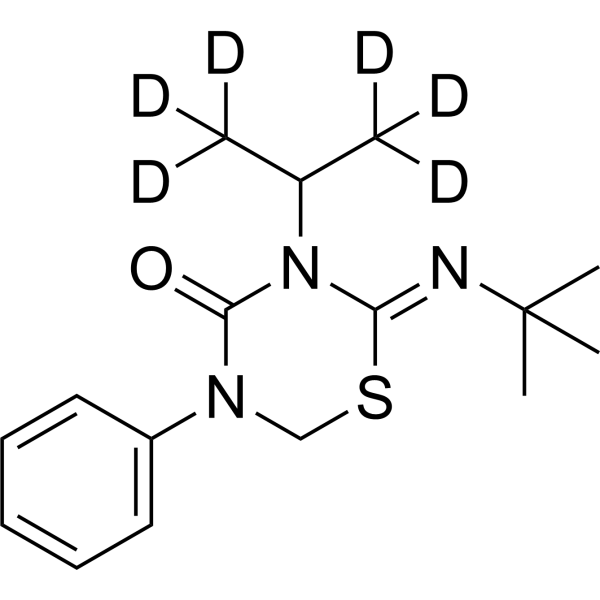
Buprofezin-d6 is the deuterium labeled Buprofezin. Buprofezin is a broad-spectrum insecticide and chitin synthesis inhibitor that targets developmental stage coleopteran pests.Buprofezin promotes the conversion of energy metabolism from the aerobic tricarboxylic acid (TCA) cycle and oxidative phosphorylation to anaerobic glycolysis. Buprofezin also promotes the production of reactive oxygen species (ROS) by inhibiting cytochrome c oxidase .
loading...
    loading...
Cat. No.: HY-W250154
CAS No.: 104809-32-7
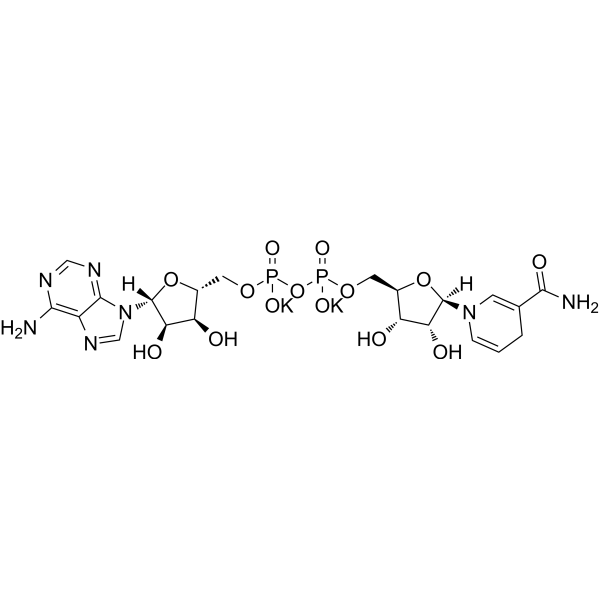
β-Nicotinamide adenine dinucleotide reduced dipotassium is an orally effective reduced coenzyme. β-Nicotinamide adenine dinucleotide reduced dipotassium plays a role in regenerating electron donors during cellular energy metabolism, including glycolysis, β-oxidation, and the tricarboxylic acid (TCA) cycle. β-Nicotinamide adenine dinucleotide reduced dipotassium regulates calcium homeostasis by promoting the opening of IP3-gated Ca 2+ channels and inhibiting Ryanodine receptor, and affects mitochondrial function through direct interaction with VDAC. β-Nicotinamide adenine dinucleotide reduced dipotassium is used in cytoprotective studies related to cerebral ischemic injury, neurodegenerative diseases, aging, and signal transduction .
loading...
    loading...
Cat. No.: HY-W754527
CAS No.: 554-44-9
Synonyms: Allithiamin
Allithiamine is a thiamin derivative with absorption characteristics similar to fat-soluble vitamins. Allithiamine acts as a cofactor precursor for thiamin pyrophosphate (TPP), which participates in carbohydrate metabolism by supporting the pyruvate dehydrogenase (PDH) complex to facilitate pyruvate entry into the tricarboxylic acid (TCA) cycle as acetyl CoA. Allithiamine can be used for researching thiamin metabolism .
loading...
    loading...
Cat. No.: HY-L148
72 compounds

The TCA cycle (tricarboxylic acid cycle)—is also known as the Krebs cycle or the citric acid cycle (CAC). The TCA cycle is a series of chemical reactions that release stored energy through the oxidation of acetyl-CoA in carbohydrates, fats, and proteins.

For decades, the TCA cycle has been considered as the central pathway for cell oxidative phosphorylation to produce energy and biosynthesis. Research shows that TCA cycle is associated with many diseases, especially cancer. In colon carcinoma, liver cancer and other cancers, there are mutations that lead to the imbalance of TCA cycle metabolites, indicating that TCA cycle may be related to the occurrence of cancer. Understanding the role and molecular mechanism of TCA cycle in inhibiting or promoting cancer progression will promote the development of new metabolite-based cancer treatment methods in the future.

MCE supplies a unique collection of 72 compounds related to the TCA cycle. MCE TCA Cycle Compound Library is a useful tool for the TCA cycle related research and anti-cancer drug development.

Cat. No.: HY-L231
25 compounds

The TCA cycle (tricarboxylic acid cycle)—is also known as the Krebs cycle or the citric acid cycle (CAC). The TCA cycle is a series of chemical reactions that release stored energy through the oxidation of acetyl-CoA in carbohydrates, fats, and proteins.

For decades, the TCA cycle has been considered as the central pathway for cell oxidative phosphorylation to produce energy and biosynthesis. Research shows that TCA cycle is associated with many diseases, especially cancer. In colon carcinoma, liver cancer and other cancers, there are mutations that lead to the imbalance of TCA cycle metabolites, indicating that TCA cycle may be related to the occurrence of cancer. Understanding the role and molecular mechanism of TCA cycle in inhibiting or promoting cancer progression will promote the development of new metabolite-based cancer treatment methods in the future.

MCE supplies a unique collection of 25 key intermediates of the TCA cycle, which can be utilized for TCA-related research and metabolomics identification studies.

Cat. No.: HY-170838
Target:  

PDHK

Research Areas:  

Cancer

PDHK1-IN-1 (compound 17) is a selective inhibitor of PDHK1 (IC50=1.5 μM) with anticancer activity. PDHK1 negatively regulates the pyruvate dehydrogenase complex (PDC), limiting the tricarboxylic acid (TCA) cycle and oxidative phosphorylation. Overexpression of PDHK1 can shift the metabolism towards an increased glycolysis dependence (Warburg effect). PDHK1-IN-1 can inhibit the phosphorylation of the PDC E1α Ser232 recognition site of PDHK1 and the phosphorylation of Ser293 .
loading...
    loading...
Cat. No.: HY-B0831R
CAS No.: 69327-76-0
Buprofezin (Standard) is the analytical standard of Buprofezin. This product is intended for research and analytical applications. Buprofezin is a broad-spectrum insecticide and chitin synthesis inhibitor that targets developmental stage coleopteran pests.Buprofezin promotes the conversion of energy metabolism from the aerobic tricarboxylic acid (TCA) cycle and oxidative phosphorylation to anaerobic glycolysis. Buprofezin also promotes the production of reactive oxygen species (ROS) by inhibiting cytochrome c oxidase .
loading...
    loading...
Cat. No.: HY-E70262
CAS No.: 799812-78-5
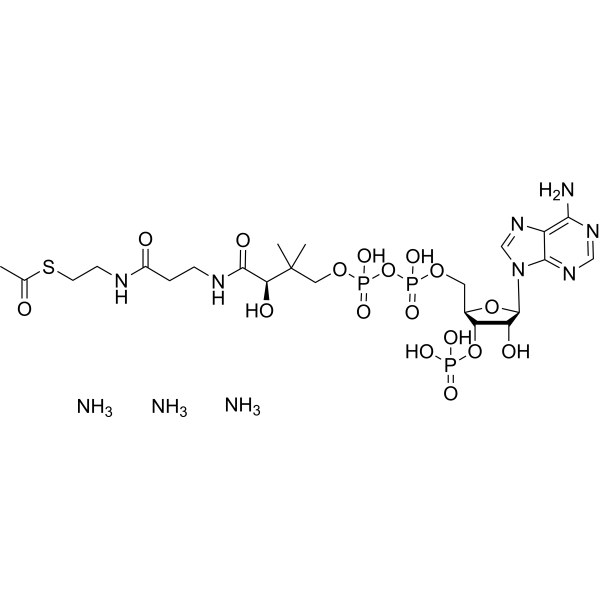
Acetoyl-CoA (triammonium) is a triammonium derivative of Acetoyl-CoA (HY-114293), Acetyl-CoA is a membrane-impermeant central metabolic intermediate, participates in the TCA cycle and oxidative phosphorylation metabolism. Acetyl-coenzyme A, regulates various cellular mechanisms by providing (sole donor) acetyl groups to target amino acid residues for post-translational acetylation reactions of proteins. Acetyl Coenzyme A is also a key precursor of lipid synthesis .
loading...
    loading...
Cat. No.: HY-157840
CAS No.: 758689-17-7
Target:  

Parasite

Research Areas:  

Infection

Anti-infective agent 9 (compound 1) is a Plasmodium falciparum inhibitor (IC50=600 nM), can downregulate pyruvate levels and TCA cycle in Plasmodium. Anti-infective agent 9It has good metabolic stability and low toxicity to human liver cells. The study found, Anti-infective agent 9Potential targets for inhibiting Plasmodium falciparum are not 1-deoxidation-d-xylulose-5-Phosphate synthase (DXPS) .
loading...
    loading...
Cat. No.: HY-F0001A
CAS No.: 1949720-50-6
Synonyms: Disodium NADH hydrate
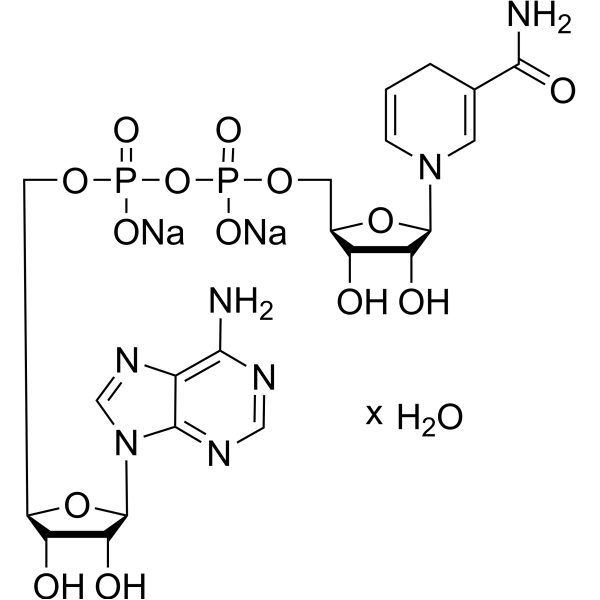
NADH disodium hydrate (Disodium NADH hydrate) is an orally effective reduced coenzyme. NADH disodium hydrate plays a role in regenerating electron donors during cellular energy metabolism, including glycolysis, β-oxidation, and the tricarboxylic acid (TCA) cycle. NADH disodium hydrate regulates calcium homeostasis by promoting the opening of IP3-gated Ca 2+ channels and inhibiting Ryanodine receptor, and affects mitochondrial function through direct interaction with VDAC. NADH disodium hydrate is used in cytoprotective studies related to cerebral ischemic injury, neurodegenerative diseases, aging, and signal transduction .
loading...
    loading...
Cat. No.: HY-W016103R
CAS No.: 86-48-6
1-Hydroxy-2-naphthoic acid (Standard) is an analytical standard for 1-Hydroxy-2-naphthoic acid (HY-W016103). This product is intended for research and analytical applications. 1-Hydroxy-2-naphthoic acid is a ubiquitous bicyclic intermediate metabolite in the microbial degradation process of polycyclic aromatic hydrocarbons (PAHs). 1-Hydroxy-2-naphthoic acid can be converted into 1,2-naphthalenediol, which enters the naphthalene degradation pathway and participates in the tricarboxylic acid (TCA) cycle to achieve complete mineralization.
loading...
    loading...
Cat. No.: HY-N6663R
CAS No.: 13466-78-9
3-Carene (Standard) is the analytical standard of 3-Carene (HY-N6663). This product is intended for research and analytical applications. 3-Carene is an orally active TCA cycle enzyme inhibitor. 3-Carene inhibits succinate dehydrogenase and malate dehydrogenase as well as pyruvate kinase, disrupting energy metabolism. 3-Carene disrupts cell wall and cell membrane integrity, leading to potassium ion leakage, protein leakage, membrane depolarization, ATP depletion, morphological disruption, and cell lysis. 3-Carene interferes with amino acid metabolism, pantothenate and CoA biosynthesis, purine and pyrimidine metabolism, and aminoacyl-tRNA biosynthesis. 3-Carene enhances GABA receptor-mediated synaptic responses. 3-Carene can be used in research on bacterial infections, inflammation, anxiety, and sleep disorders .
loading...
    loading...
Cat. No.: HY-P2809B
Research Areas:  

Metabolic Disease

Malic Dehydrogenase, Porcine (EC 1.1.1.37) exists as two isoforms within eukaryotic cells, one that is expressed in the mitochondria and functions in the TCA cycle and one in the cytoplasm that converts malate from the mitochondria back into oxaloacetate.
loading...
    loading...
Cat. No.: HY-P2809D
Research Areas:  

Metabolic Disease

Malic Dehydrogenase, Bovine (EC 1.1.1.37) exists as two isoforms within eukaryotic cells, one that is expressed in the mitochondria and functions in the TCA cycle and one in the cytoplasm that converts malate from the mitochondria back into oxaloacetate.
loading...
    loading...
Cat. No.: HY-P2809C
Research Areas:  

Metabolic Disease

Malic Dehydrogenase (oxaloacetate-decarboxylating), Chicken (EC 1.1.1.40) exists as two isoforms within eukaryotic cells, one that is expressed in the mitochondria and functions in the TCA cycle and one in the cytoplasm that converts malate from the mitochondria back into oxaloacetate.
loading...
    loading...
Cat. No.: HY-Y0836S1
CAS No.: 52089-62-0
Synonyms: Diethyl Butanedioate-d4
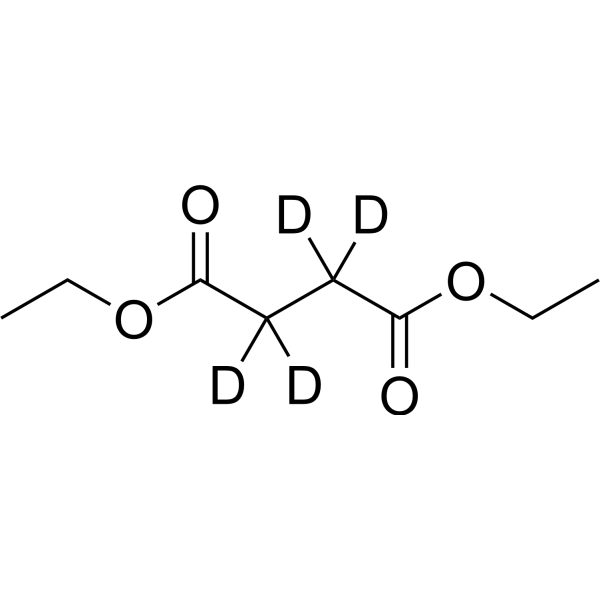
Diethyl succinate-d4 is the deuterium labeled Diethyl succinate . Diethyl succinate (Diethyl Butanedioate) is used at physiological pH and crosses biological membranes, incorporates into cells in tissue culture and is metabolized by the TCA cycle. Diethyl succinate is known to be non-toxic and used in fragrances and flavoring .
loading...
    loading...

