


614 Results for "

TGF-beta

" in MedChemExpress (MCE) Product Catalog:
Products (614)

614 Results for "TGF-beta" in MCE Product Catalog:

23
23 Cited Publications
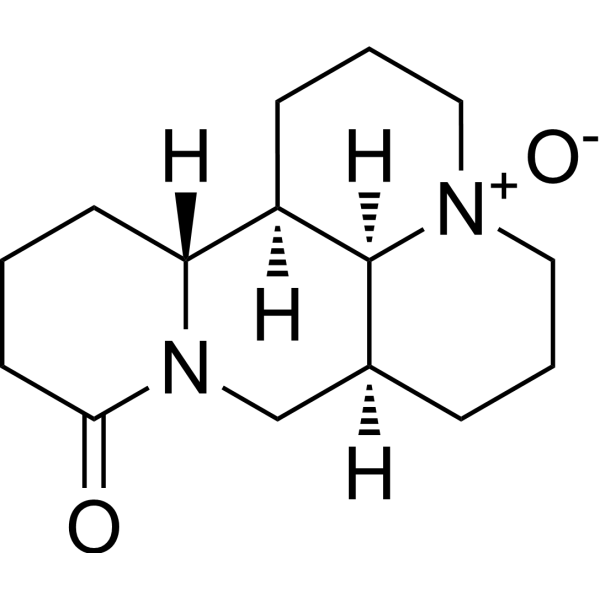
Cat. No.: HY-N0158
CAS No.: 16837-52-8
Oxymatrine, an alkaloid from Sophora flavescens Alt. with anti-inflammatory, antifibrosis, and antitumor effects, inhibits the iNOS expression and TGF-β/Smad pathway. Oxymatrine inhibits bocavirus minute virus of canines (MVC) replication, reduces viral gene expression and decreases apoptosis induced by viral infection .
loading...
    loading...
22
22 Cited Publications
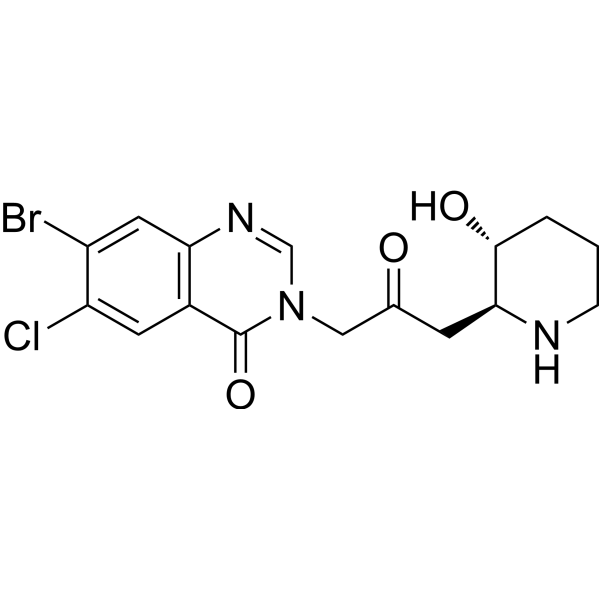
Cat. No.: HY-N1584
CAS No.: 55837-20-2
Synonyms: RU-19110
Halofuginone (RU-19110), a Febrifugine derivative, is a competitive prolyl-tRNA synthetase inhibitor with a Ki of 18.3 nM . Halofuginone is a specific inhibitor of type-I collagen synthesis and attenuates osteoarthritis (OA) by inhibition of TGF-β activity . Halofuginone is also a potent pulmonary vasodilator by activating Kv channels and blocking voltage-gated, receptor-operated and store-operated Ca 2+ channels. Halofuginone has anti-malaria, anti-inflammatory, anti-cancer, anti-fibrosis effects .
loading...
    loading...
22
22 Cited Publications
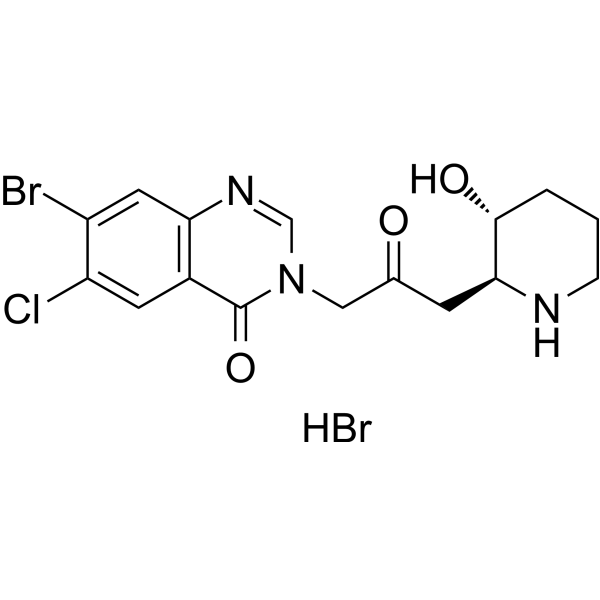
Cat. No.: HY-N1584A
CAS No.: 64924-67-0
Synonyms: RU-19110 hydrobromide
Halofuginone hydrobromide (RU-19110 hydrobromide), a Febrifugine derivative, is a competitive prolyl-tRNA synthetase inhibitor with a Ki of 18.3 nM . Halofuginone hydrobromide is a specific inhibitor of type-I collagen synthesis and attenuates osteoarthritis (OA) by inhibition of TGF-β activity . Halofuginone hydrobromide is also a potent pulmonary vasodilator by activating Kv channels and blocking voltage-gated, receptor-operated and store-operated Ca 2+ channels. Halofuginone hydrobromide has anti-malaria, anti-inflammatory, anti-cancer, anti-fibrosis effects .
loading...
    loading...
22
22 Cited Publications
Cat. No.: HY-N1584C
CAS No.: 82186-71-8
Synonyms: RU-19110 lactate
Halofuginone lactate (RU-19110 lactate), a Febrifugine derivative, is a competitive prolyl-tRNA synthetase inhibitor with a Ki of 18.3 nM . Halofuginone lactate is a specific inhibitor of type-I collagen synthesis and attenuates osteoarthritis (OA) by inhibition of TGF-β activity . Halofuginone lactate is also a potent pulmonary vasodilator by activating Kv channels and blocking voltage-gated, receptor-operated and store-operated Ca 2+ channels. Halofuginone lactate has anti-malaria, anti-inflammatory, anti-cancer, anti-fibrosis effects .
loading...
    loading...
20
20 Cited Publications
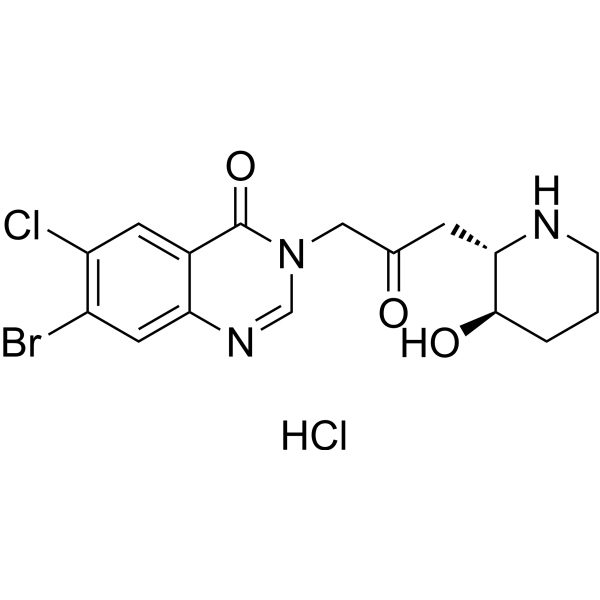
Cat. No.: HY-N1584B
CAS No.: 1217623-74-9
Synonyms: RU-19110 hydrochloride
Halofuginone hydrochloride (RU-19110 hydrochloride), a Febrifugine derivative, is a competitive prolyl-tRNA synthetase inhibitor with a Ki of 18.3 nM . Halofuginone hydrochloride is a specific inhibitor of type-I collagen synthesis and attenuates osteoarthritis (OA) by inhibition of TGF-β activity . Halofuginone hydrochloride is also a potent pulmonary vasodilator by activating Kv channels and blocking voltage-gated, receptor-operated and store-operated Ca 2+ channels. Halofuginone hydrochloride has anti-malaria, anti-inflammatory, anti-cancer, anti-fibrosis effects .
loading...
    loading...
19
19 Cited Publications
Cat. No.: HY-N0439
CAS No.: 16830-15-2
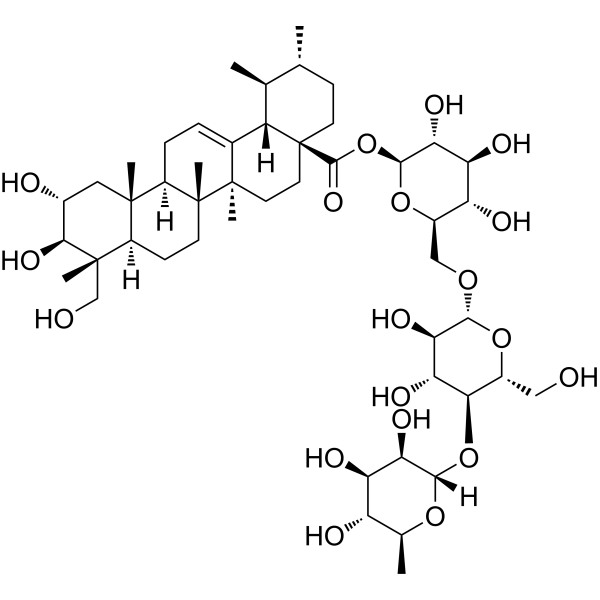
Asiaticoside, a trisaccaride triterpene from Centella asiatica, suppresses TGF-β/Smad signaling through inducing Smad7 and inhibiting TGF-βRI and TGF-βRII in keloid fibroblasts; Asiaticoside shows antioxidant, anti-inflammatory, and anti-ulcer properties.
loading...
    loading...
19
19 Cited Publications
Cat. No.: HY-P0118
CAS No.: 272105-42-7
Synonyms: P144
Research Areas:  

Cancer

Disitertide (P144) is a peptidic transforming growth factor-beta 1 (TGF-β1) inhibitor specifically designed to block the interaction with its receptor. Disitertide (P144) is also a PI3K inhibitor and an apoptosis inducer .
loading...
    loading...
19
19 Cited Publications
Cat. No.: HY-P0118B
Synonyms: P144 diammonium
Research Areas:  

Cancer

Disitertide (P144) diammonium is a peptidic transforming growth factor-beta 1 (TGF-β1) inhibitor specifically designed to block the interaction with its receptor. Disitertide diammonium is also a PI3K inhibitor and an apoptosis inducer .
loading...
    loading...
18
18 Cited Publications
Cat. No.: HY-P0299
CAS No.: 283609-79-0
Target:  

TGF-β Receptor

Research Areas:  

Cancer

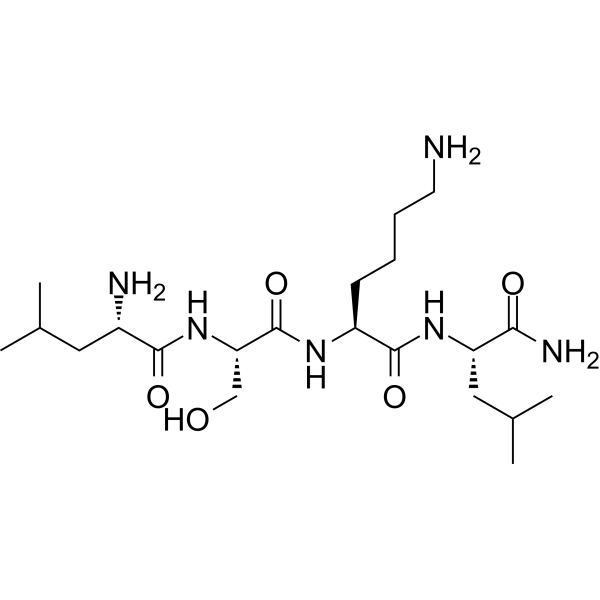
LSKL, Inhibitor of Thrombospondin (TSP-1) is a latency-associated protein (LAP)-TGFβ derived tetrapeptide and a competitive TGF-β1 antagonist. LSKL, Inhibitor of Thrombospondin (TSP-1) inhibits the binding of TSP-1 to LAP and alleviates renal interstitial fibrosis and hepatic fibrosis. LSKL, Inhibitor of Thrombospondin (TSP-1) suppresses subarachnoid fibrosis via inhibition of TSP-1-mediated TGF-β1 activity, prevents the development of chronic hydrocephalus and improves long-term neurocognitive defects following subarachnoid hemorrhage (SAH). LSKL, Inhibitor of Thrombospondin (TSP-1) can readily crosse the blood-brain barrier .
loading...
    loading...
18
18 Cited Publications
Cat. No.: HY-P0299A
CAS No.: 2828433-17-4
Target:  

TGF-β Receptor

Research Areas:  

Cancer

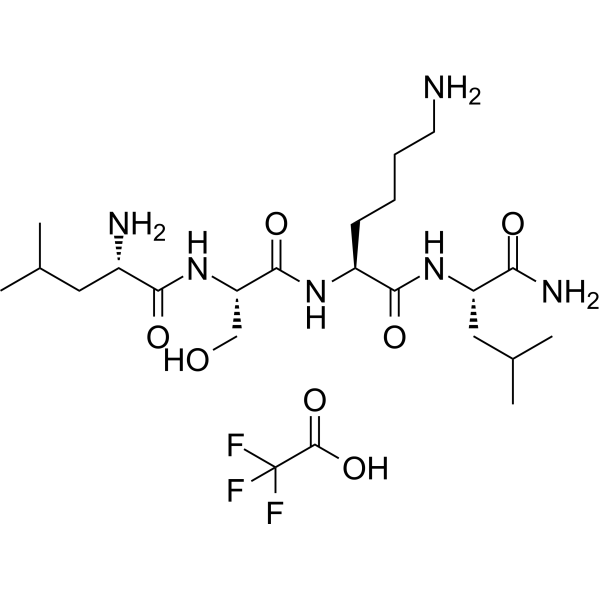
LSKL, Inhibitor of Thrombospondin (TSP-1) TFA is a latency-associated protein (LAP)-TGFβ derived tetrapeptide and a competitive TGF-β1 antagonist. LSKL, Inhibitor of Thrombospondin (TSP-1) TFA inhibits the binding of TSP-1 to LAP and alleviates renal interstitial fibrosis and hepatic fibrosis. LSKL, Inhibitor of Thrombospondin (TSP-1) TFA suppresses subarachnoid fibrosis via inhibition of TSP-1-mediated TGF-β1 activity, prevents the development of chronic hydrocephalus and improves long-term neurocognitive defects following subarachnoid hemorrhage (SAH). LSKL, Inhibitor of Thrombospondin (TSP-1) TFA can readily crosse the blood-brain barrier .
loading...
    loading...
17
17 Cited Publications
Cat. No.: HY-10326
CAS No.: 452342-67-5
Purity:  99.92%
Target:  

TGF-β Receptor

Research Areas:  

Cancer

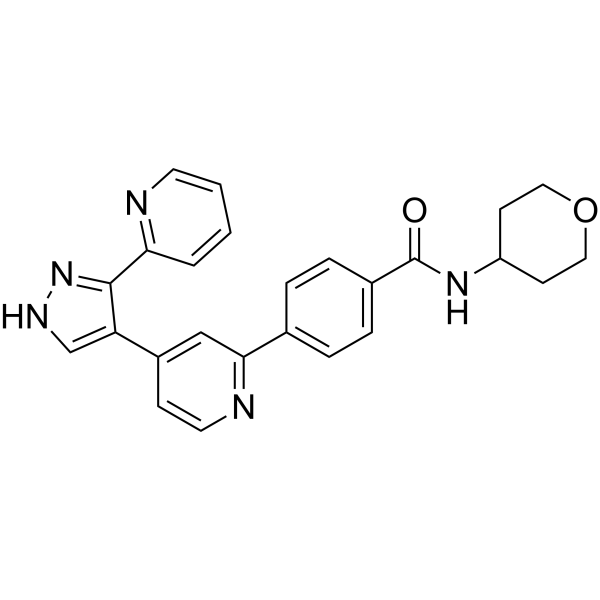
GW788388 is a potent and selective inhibitor of ALK5 with IC50 of 18 nM, and also inhibits TGF-β type II receptor and activin type II receptor activities, without inhibiting BMP type II receptor.
loading...
    loading...
14
14 Cited Publications
Cat. No.: HY-103021
CAS No.: 1898283-02-7
Purity:  99.87%
Target:  

TGF-β Receptor

Research Areas:  

Inflammation/Immunology Cancer

LY3200882 is a potent, highly selective, ATP-competitive and orally active TGF-β receptor type 1 (ALK5) inhibitor with an IC50 of 38.2 nM. LY3200882 inhibits various pro-tumorigenic activities and is also used as an immune modulatory agent .
loading...
    loading...
13
13 Cited Publications
Cat. No.: HY-P7119
Purity:  ≥ 95%, as determined by reducing SDS-PAGE.
Synonyms: TGFB2; Transforming Growth Factor, beta 2; Transforming Growth Factor beta 2; BSC-1 Cell Growth Inhibitor; Glioblastoma-Derived T-Cell Suppressor Factor; TGF-beta2; Transforming Growth Factor beta-2 Proprotein; Polyergin; Prepro-Transforming Growth Factor
Species:  
Human
Source:  
HEK293
loading...
    loading...
13
13 Cited Publications
Cat. No.: HY-B1829
CAS No.: 312-93-6
Synonyms: Dexamethasone 21-phosphate
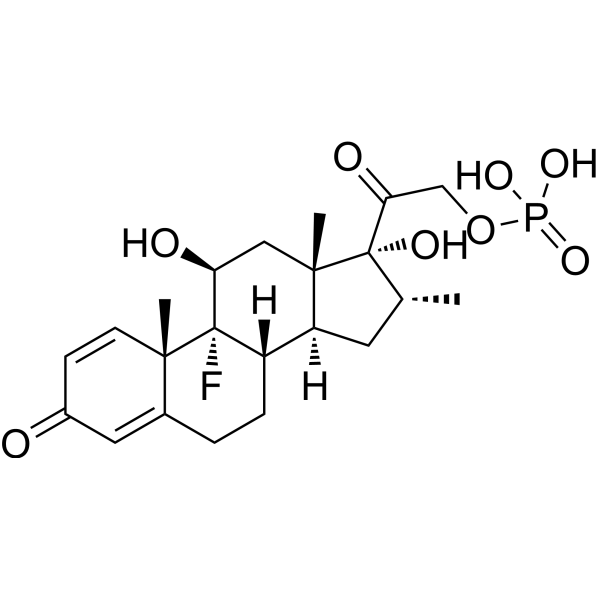
Dexamethasone phosphate (Dexamethasone 21-phosphate) is a prodrug form of the glucocorticoid Dexamethasone (HY-14648). Dexamethasone phosphate is prepared by introducing a phosphate ester group to the hydroxyl group at position 21 of the Dexamethasone molecule. Dexamethasone phosphate inhibits LPS (HY-D1056)-induced degradation of IRAK-1 and IRAK-4, and blocks LPS-induced activation of TRAF6, p-TAK1 and p-JNK. Dexamethasone phosphate inhibits the secretion of RANTES, TGF-β1 and NO, promotes the production of MIP-1α and IL-10, and blocks microglial migration. Dexamethasone phosphate is almost completely converted to Dexamethasone in rat blood, and supports transdermal delivery via iontophoresis. Dexamethasone phosphate can be used in research related to steroid-dependent ulcerative colitis, chemotherapy-induced vomiting, allergic asthma and acute colitis (inflammatory bowel disease) .
loading...
    loading...
13
13 Cited Publications
Cat. No.: HY-B1829A
CAS No.: 2392-39-4
Synonyms: Dexamethasone 21-phosphate disodium
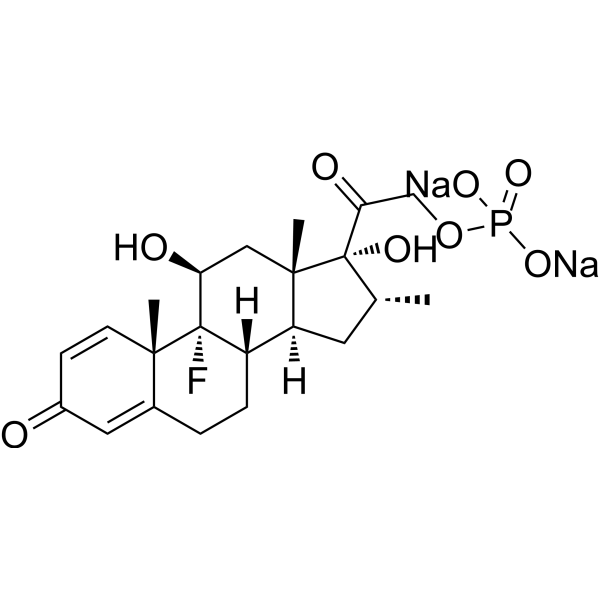
Dexamethasone phosphate (Dexamethasone 21-phosphate) disodium is a prodrug form of the glucocorticoid Dexamethasone (HY-14648). Dexamethasone phosphate disodium is produced by introducing a phosphate ester group at the 21-position of the Dexamethasone molecule, forming a salt with sodium ions, thereby significantly improving water solubility. Dexamethasone phosphate disodium inhibits LPS (HY-D1056)-induced degradation of IRAK-1 and IRAK-4, and blocks LPS-induced activation of TRAF6, p-TAK1 and p-JNK. Dexamethasone phosphate disodium inhibits the secretion of RANTES, TGF-β1 and NO, promotes the production of MIP-1α and IL-10, and blocks microglial migration. Dexamethasone phosphate disodium is almost completely converted to Dexamethasone in rat blood, and supports transdermal delivery via iontophoresis. Dexamethasone phosphate disodium can be used in research related to steroid-dependent ulcerative colitis, chemotherapy-induced vomiting, allergic asthma and acute colitis (inflammatory bowel disease) .
loading...
    loading...
12
12 Cited Publications
Cat. No.: HY-116084
CAS No.: 1184-78-7
Purity:  ≥98.0%
Trimethylamine N-oxide is a gut microbe-dependent metabolite of dietary choline and other trimethylamine-containing nutrients. Trimethylamine N-oxide induces inflammation by activating the ROS/NLRP3 inflammasome. Trimethylamine N-oxide also accelerates fibroblast-myofibroblast differentiation and induces cardiac fibrosis by activating the TGF-β/smad2 signaling pathway .
loading...
    loading...
12
12 Cited Publications
Cat. No.: HY-108915
CAS No.: 62637-93-8
Purity:  ≥98.0%
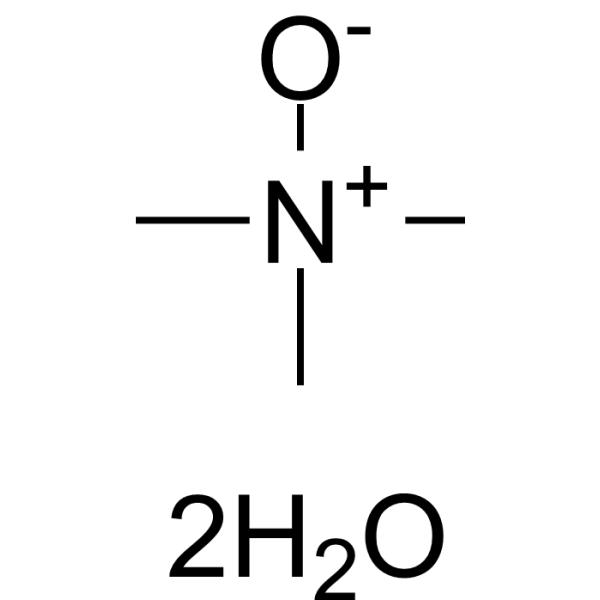
Trimethylamine N-oxide dihydrate is a gut microbe-dependent metabolite of dietary choline and other trimethylamine-containing nutrients. Trimethylamine N-oxide dihydrate induces inflammation by activating the ROS/NLRP3 inflammasome. Trimethylamine N-oxide dihydrate also accelerates fibroblast-myofibroblast differentiation and induces cardiac fibrosis by activating the TGF-β/smad2 signaling pathway .
loading...
    loading...
10
10 Cited Publications
Cat. No.: HY-P7120
Purity:  ≥ 95%, as determined by reducing SDS-PAGE.
Synonyms: TGFB3; Transforming Growth Factor, beta 3; Prev. ARVD1; Transforming Growth Factor beta; Prev. ARVD; TGF-beta3; Transforming Growth Factor beta-3 Proprotein; LDS5; Prepro-Transforming Growth Factor beta-3; RNHF; Arrhythmogenic Right Ventricular Dysplasia
Species:  
Human
Source:  
HEK293
loading...
    loading...
10
10 Cited Publications
Cat. No.: HY-12274
CAS No.: 1062368-49-3
Purity:  99.94%
Synonyms: LDN 193719
Target:  

TGF-β Receptor

Research Areas:  

Cancer

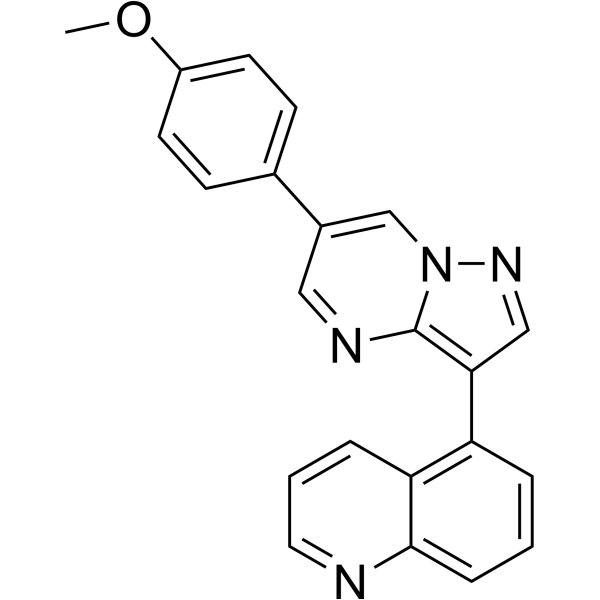
ML347 (LDN193719) is a highly selective ALK1/ALK2 inhibitor. ML347 has IC50 values of 46 and 32 nM against ALK1 and ALK2, respectively, >300-fold selective over ALK3. ML347 block the phosphorylation of Smad1/5 by TGF-β1 .
loading...
    loading...
10
10 Cited Publications
Cat. No.: HY-N0847
CAS No.: 68370-47-8
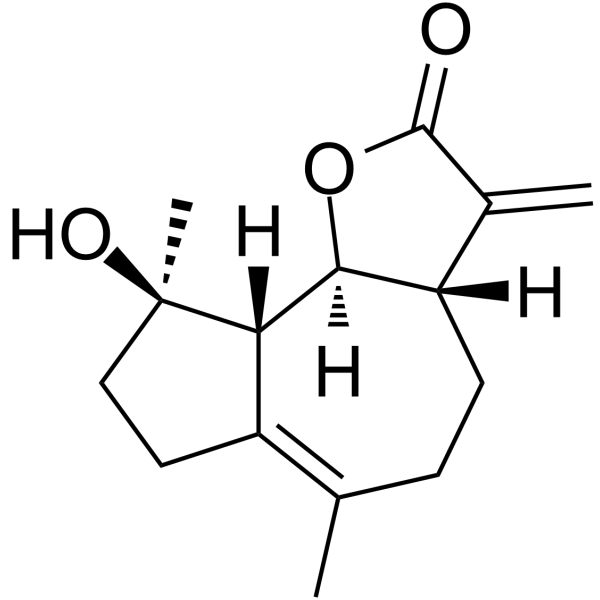
Micheliolide is a sesquiterpene lactone with anti-cancer and anti-inflammatory effects, which is derived from Michelia compressa and Michelia champaca. Micheliolide can attenuate high glucose-stimulated NF-κB activation, IκBα degradation, and the expression of MCP-1, TGF-β1, and FN in mouse mesangial cells. Micheliolide inhibits LPS (HY-D1056)-induced activation of NF-κB and PI3K/Akt/p70S6K pathways to play an anti-inflammatory role. Micheliolide inhibits dextran sodium sulphate (DSS) (HY-116282)-induced inflammatory intestinal disease, colitis-associated cancer and rheumatic arthritis .
loading...
    loading...

