
64 Results for "

lung fibroblast

" in MedChemExpress (MCE) Product Catalog:
Products (64)

64 Results for "lung fibroblast" in MCE Product Catalog:

  • Categories Recommended:
    More
Cat. No.: HY-155328
CAS No.: 3032392-39-2
Target:  

HDAC

Research Areas:  

Inflammation/Immunology

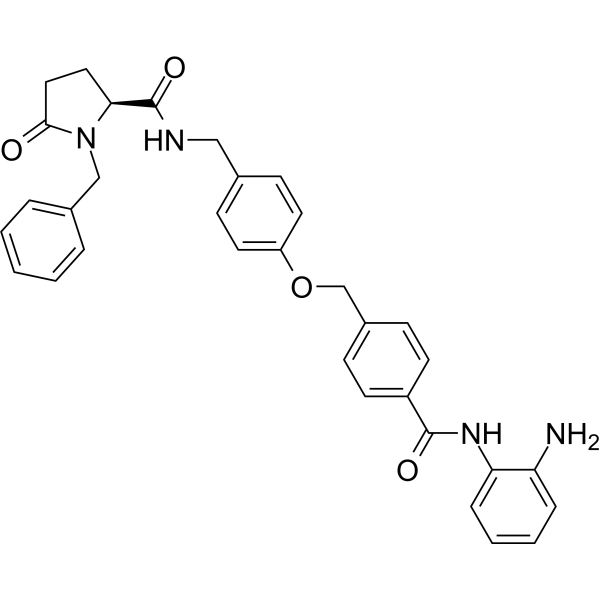
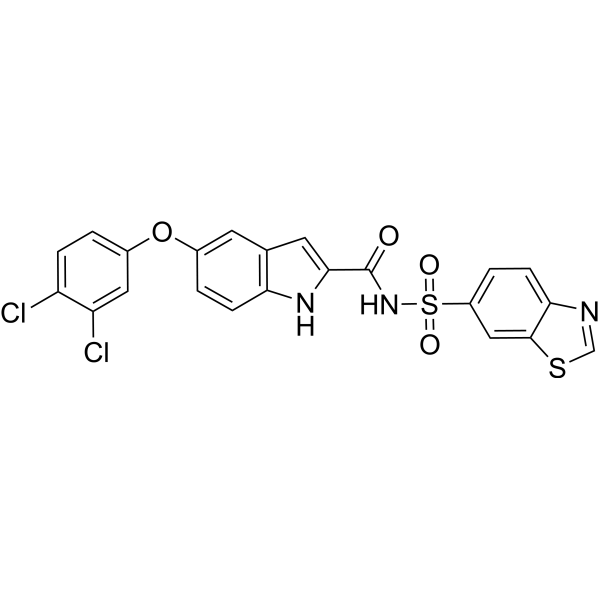
GK444 (Compound 15a) is a HDAC1/2 inhibitor (IC50: 100 and 92 nM for HDAC1/2 respectively). GK444 inhibits Caco-2 cells with IC50 of 4.1 μM. GK444 also reduces TGF-β1 induced COL1A1 mRNA levels in primary normal human lung fibroblasts. GK444 inhibits Bleomycin (HY-108345)-induced lung fibrosis in mice .
loading...
    loading...
Cat. No.: HY-155732
CAS No.: 3032452-65-3
Target:  

Parasite

Research Areas:  

Infection

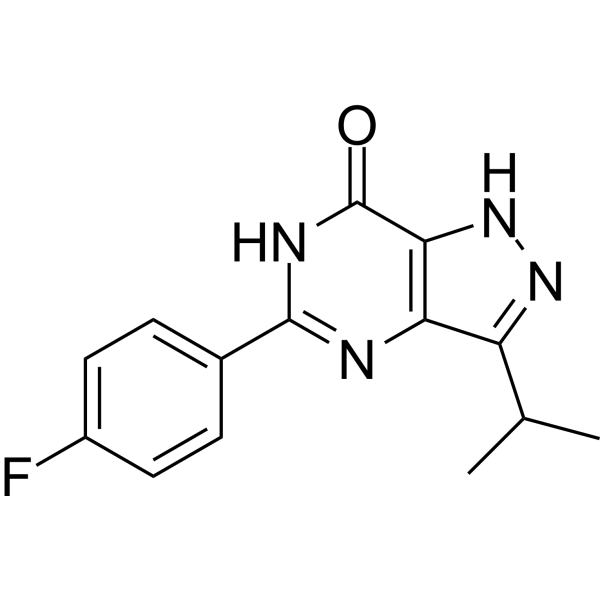
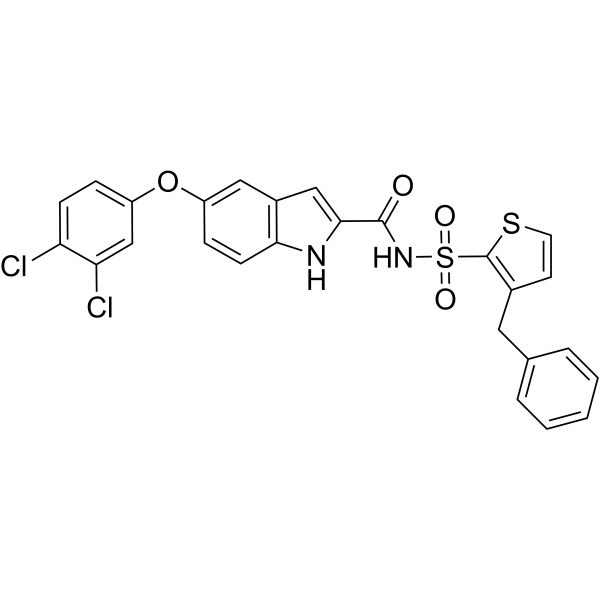
NPD-2975 (compound 30) is an orally active antitrypanosomal agent, against Human African Trypanosomiasis (HAT). NPD-2975 has low toxicity potential against human MRC-5 lung fibroblasts, and acute mouse model of T. b. brucei infection. NPD-2975 shows acceptable metabolic stability, inhibits T. b. brucei with IC500 of 70 nM in vitro. NPD-2975 also inhibits CYP enzymes resulted in IC50 values of 0.16 and 0.42 μM against CYP1A2 and CYP2C19, respectively .
loading...
    loading...
Cat. No.: HY-147802
CAS No.: 2529891-44-7
Target:  

EGFR Apoptosis

Research Areas:  

Cancer

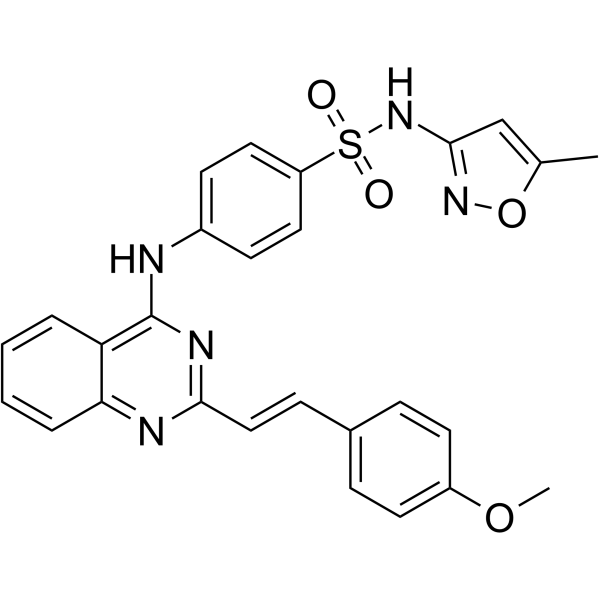
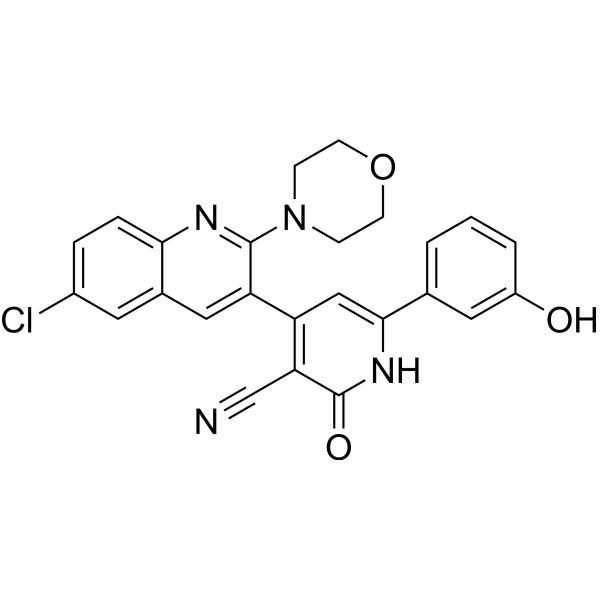
EGFR-IN-59 (Compound 8c) is a EGFR inhibitor (IC50=190 nM) and apoptosis inducer. EGFR-IN-59 exhibits cytotoxicity against non-small lung cancer cell lines (A549) and normal lung fibroblasts (WI38) with IC50s of 8.62 and 52.6 µM, respectively. EGFR-IN-59 can be used for the research of various cancers such as non-small cell lung cancer (NSCLC), head and neck cancer, breast cancer and colorectal cancer .
loading...
    loading...
Cat. No.: HY-170776
Target:  

PDGFR VEGFR FGFR Apoptosis

Research Areas:  

Cancer

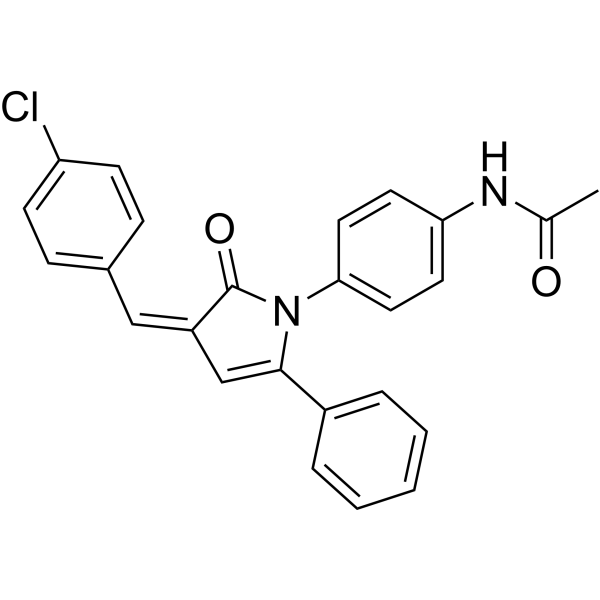
AXL/Angiokinase-IN-1 (compound 11b) is an AXL/triple angiokinase inhibitor, IC50=3.75 nM (AXL expression). AXL/Angiokinase-IN-1 inhibits epithelial-mesenchymal transition (EMT) in Bxpc-3, blocking lung cancer cell metastasis. AXL/Angiokinase-IN-1 also inhibits vascular and fibroblast functions, promoting apoptosis (apoptosis) in cancer cells and fibroblasts. AXL/Angiokinase-IN-1 features low toxicity and good metabolic stability .
loading...
    loading...
Cat. No.: HY-149022
CAS No.: 2490468-31-8
Target:  

HSV Orthopoxvirus

Research Areas:  

Infection

HSV-1/HSV-2-IN-1 (compound 7d) is a HSV-1 and HSV-2 inhibitor, with EC50s of 7.6, 7.6, 4, and 12 μM for HSV-1 (KOS), HSV-2 (G), HSV-1 TK - KOS ACV r and vaccinia virus in human embryonic lung fibroblast cell cultures .
loading...
    loading...
Cat. No.: HY-Y0030R
CAS No.: 874-24-8
Synonyms: 3-hydroxypyridine-2-carboxylic acid (Standard)
3-Hydroxypicolinic acid (Standard) is an analytical standard for 3-Hydroxypicolinic acid. This product is for research and analytical applications. 3-Hydroxypicolinic acid is a heterocyclic carboxylic acid ligand and cytotoxin, with a MIC90 of >25 μg/mL against Mycobacterium tuberculosis H37Rv. 3-Hydroxypicolinic acid inhibits the growth of cancer cells and normal fibroblasts. 3-Hydroxypicolinic acid is applicable to research related to chronic myeloid leukemia, human lung adenocarcinoma, and tuberculosis .
loading...
    loading...
Cat. No.: HY-155191
CAS No.: 3053895-85-2
Purity:  99.53%
Target:  

Galectin

Research Areas:  

Inflammation/Immunology Cancer

Galectin-3/galectin-8-IN-1 (Compound 53) is a dual Galectin-3 and galectin-8 C-terminal domain inhibitor, with Kd values of 4.12 μM and 6.04 μM respectively. Galectin-3/galectin-8-IN-1 inhibits the MRC-5 lung fibroblast cells migration. Galectin-3/galectin-8-IN-1 can be used for research of cancer and tissue fibrosis .
loading...
    loading...
Cat. No.: HY-155192
Target:  

Galectin

Research Areas:  

Inflammation/Immunology Cancer

Galectin-3/galectin-8-IN-2 (Compound 57) is a dual Galectin-3 and galectin-8 C-terminal domain inhibitor, with Kd values of 12.8 μM and 2.06 μM respectively. Galectin-3/galectin-8-IN-2 inhibits the MRC-5 lung fibroblast cells migration. Galectin-3/galectin-8-IN-2 can be used for research of cancer and tissue fibrosis .
loading...
    loading...
Cat. No.: HY-175662
Target:  

TGF-beta/Smad

Research Areas:  

Inflammation/Immunology

TGF-β/Smad-IN-2 is an orally active TGF-β/Smad inhibitor. TGF-β/Smad-IN-2 inhibits TGF-β-induced fibroblast-to-myofibroblast differentiation and collagen deposition, with an IC50 value of 102 μM for collagen reduction in LL29 cells. TGF-β/Smad-IN-2 exerts its effects through modulation of the SMAD3/SMAD7 signaling pathway. TGF-β/Smad-IN-2 reduces lung index in pulmonary fibrosis mice. TGF-β/Smad-IN-2 can be used for the study of pulmonary fibrosis .
loading...
    loading...
Cat. No.: HY-157404
CAS No.: 2918764-16-4
Target:  

Pim

Research Areas:  

Cancer

Pim-1/2 kinase inhibitor 2 (compound 5b) is a competitive PIM-1 and PIM-2 kinase inhibitor with IC50s of 1.31 μM and 0.67 μM, respectively. Pim-1/2 kinase inhibitor 2 shows in-vitro low cytotoxicity against normal human lung fibroblast Wi-38 cell line and potent in-vitro anticancer activity against myeloid leukaemia (NFS-60), liver (HepG-2), prostate (PC-3), and colon (Caco-2) cancer cell lines .
loading...
    loading...
Cat. No.: HY-B1777S
CAS No.: 93827-50-0
Synonyms: NSC 268508-15N2; Neuridine-15N2
Spermine- 15N2 (NSC 268508- 15N2) is the 15N-labeled Spermine (HY-B1777). Spermine is a natural antioxidant and anti-inflammatory agent. Spermine is known to inhibit some bacterial cultures, especially strains of Staphylococcus aureus. Spermine induces neurotoxicity in the striarum dose-dependently. Spermine can reversibly inhibits DNA synthetic response, mixed lymphocyte response and the induction of cytolytic lymphocyte response in primary cultures of murine spleen cells. Spermine tetrahydrochloride is a polyamine nitric oxide donor that can provide nitric oxide to platelets and inhibit platelet activation to a certain extent concentration-dependently. Spermine tetrahydrochloride occurs in mammalian tissues, plants, bacteria, ribosomes and bacteriophage. Spermine tetrahydrochloride inhibits primary human embryo lung fibroblasts in vitro .
loading...
    loading...
Cat. No.: HY-118081
CAS No.: 328998-77-2
Target:  

STAT

Research Areas:  

Cancer

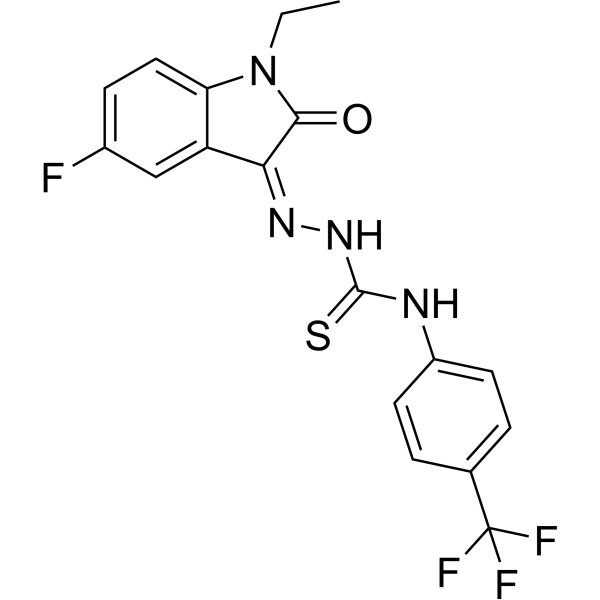
inS3-54-A26 is a STAT3 inhibitor. inS3-54-A26 has a toxic IC50 of 4.0 μM for non-cancerous lung fibroblasts .
loading...
    loading...
Cat. No.: HY-N1031
CAS No.: 958885-86-4
Synonyms: 12-epi-Vitexolide D; Curcucomosin C
Target:  

Bacterial

Research Areas:  

Cancer

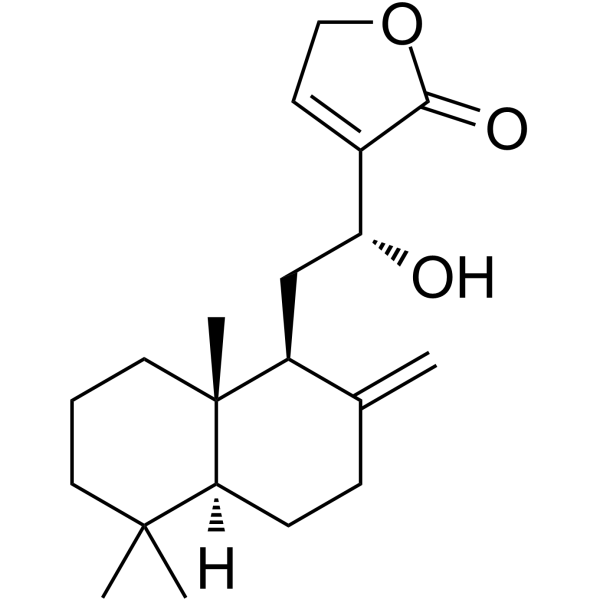
Vitexolide E is a diterpenoid compound isolated from the leaves of the Malaysian species Vitex vestita. Vitexolide E shows cytotoxic activities against the HCT-116 cancer cell line and human fetal lung fibroblast MRC5 cell line .
loading...
    loading...
Cat. No.: HY-173367
Target:  

EGFR PI3K mTOR

Research Areas:  

Cancer

Anticancer agent 271 (compound 5C) has antiproliferative activity against lung (A549), colon (Caco-2) cancer cell lines, and human lung fibroblast (WI38) with an IC50 value of 9.18 μM on A549 cells. Anticancer agent 271 downregulates PI3K and mTOR gene expression that can be used for cancer research .
loading...
    loading...
Cat. No.: HY-P3600
Target:  

Apoptosis

Research Areas:  

Inflammation/Immunology

FIZZ-1 (32-51) (mouse) is a cysteine-rich secretory protein that is highly expressed by macrophages, bronchial epithelial and type II alveolar epithelial cells (AEC) in allergic airway inflammation. FIZZ1 (32-51) (mouse) also shows an antiapoptotic effect on lung fibroblasts. FIZZ-1 (32-51) (mouse) can be used in the study of allergic pneumonia .
loading...
    loading...
Cat. No.: HY-119609
CAS No.: 22562-67-0
Ilicicolin C exhibits antibacterial activity against Pseudomonas syringae with IC50 of 28.5 µg/mL. Ilicicolin C exhibits weak inhibitory activities against acetylcholinesterase (AChE) and β-glucuronidase with IC50 of 30-43 µg/mL. Ilicicolin C exhibits weak cytoxicity in human lung fibroblasts with IC50 of 64-120 µg/mL. Ilicicolin C affects seed germination and root tip growth of lettuce .
loading...
    loading...
Cat. No.: HY-N16437
CAS No.: 1375224-55-7
Target:  

Parasite

Panowamycin A is an isochroman compound that can be produced by Streptomyces sp. K07-0010. Panowamycin A exhibits antitrypanosomal activity against the Trypanosoma brucei brucei GUTat 3.1 strain (IC50: 0.40 μg/mL). Panowamycin A shows weak cytotoxicity towards human fetal lung fibroblast MRC-5 cells (IC50: 2.95 μg/mL). Panowamycin A can be used for research in the field of antitrypanosomal studies .
loading...
    loading...
Cat. No.: HY-162721
Research Areas:  

Cancer

Anticancer agent 242 (7) possesses anticancer activity in A2780 (IC50 = 0.24 μM, ovarian adenocarcinoma), A2780cis (IC50 = 0.45 μM, resistant derivative of A2780), CCD18Co (IC50 = 0.59 μM, non-malignant human fibroblasts), A549 (IC50 = 0.32 μM, lung carcinoma), HT29 (IC50 = 0.26 μM, colorectal adenocarcinoma), and MCF7 (IC50 = 0.55 μM, breast adenocarcinoma) .
loading...
    loading...
Cat. No.: HY-165603
CAS No.: 3006860-57-4
Si5-N14 is a key component of siloxane-incorporated lipid nanoparticles (SiLNP), possessing pro-vascular repair and anti-tumor activities. In the transgenic GFP mouse model, Si5-N14 can mediate CRISPR-Cas9 editing. In the Lewis lung carcinoma (LLC) tumor-bearing mouse model, Si5-N14 can knock out the expression of Vascular Endothelial Growth Factor Receptor 2 (VEGFR2) to exert an anti-tumor effect. In a mouse model of lung injury induced by viral infection, the delivery of Fibroblast Growth Factor-2 (FGF-2) mRNA via Si5-N14 can promote vascular repair, increase blood oxygen levels, and improve lung function. Si5-N14 shows promise for research in the fields of oncology, pneumonia, and cardiovascular diseases .
loading...
    loading...
Cat. No.: HY-N4089R
CAS No.: 7431-83-6
Quercetin 3-gentiobioside (Standard) is the analytical standard of Quercetin 3-gentiobioside (HY-N4089). This product is intended for research and analytical applications. Quercetin 3-gentiobioside is a flavonoid found in Artemisia iwayomogi. Quercetin 3-gentiobioside inhibits aromatase with an Ki of 46.77 nM. Quercetin 3-gentiobioside inhibits aldose reductase (AR) and the formation of advanced glycation end products (AGEs), with IC50 values of 10.60 μM and 109.46 μM, respectively. Quercetin 3-gentiobioside inhibits proliferation of cancer cells and fibroblast-like synoviocytes. Quercetin 3-gentiobioside can be used for the research of cancer, such as lung carcinoma .
loading...
    loading...

