


96 Results for "

mouse plasma

" in MedChemExpress (MCE) Product Catalog:
Products (96)

96 Results for "mouse plasma" in MCE Product Catalog:

Cat. No.: HY-162484
CAS No.: 3089845-68-8
Target:  

SARS-CoV Virus Protease

Research Areas:  

Infection

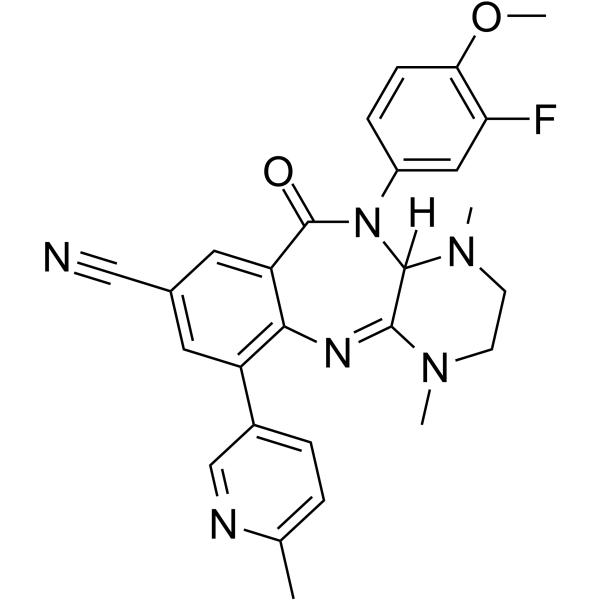
GZNL-P36 is an orally active inhibitor for SARS-CoV-2 papain-like protease (PL pro), with an IC50 of 6.45 nM. GZNL-P36 inhibits SARS-CoV and its variants with EC50 range from 58.2 nM to 2.66 μM. GZNL-P36 exhibits a peak plasma concentration Cmax of 549 ng/mL, a half-life T1/2 of 1.45 h and a bioavailability of 74.7% in CD-1 mouse. GZNL-P36 exhibits antiviral activity in SARS-CoV-2 XXB.1 infection in mouse .
loading...
    loading...
Cat. No.: HY-173276
CAS No.: 3069378-18-0
Research Areas:  

Neurological Disease

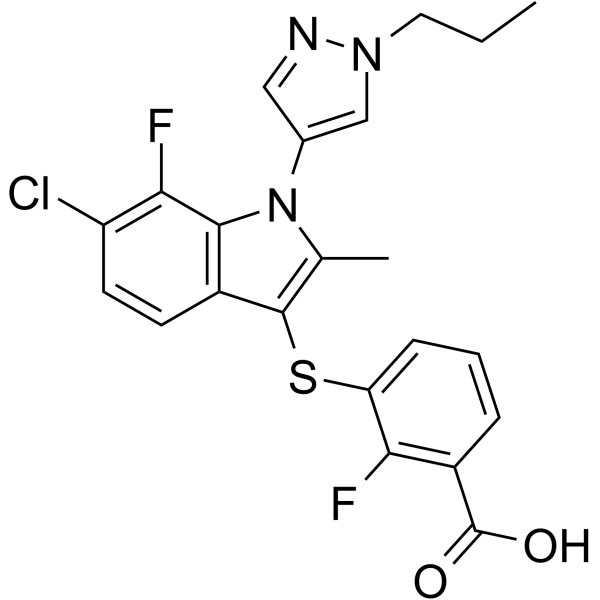
SARM1-IN-4 (Compound 7) is an orally active SARM1 inhibitor. After being orally administered at a dose of 50 mg/kg in a mouse model, it can reduce the level of plasma neurofilament light chain (NfL). SARM1-IN-4 prevents programmed axonal degeneration by inhibiting the NAD+ hydrolase activity of SARM1, and it can be used in research related to neurodegenerative diseases and neurological disorders (such as multiple sclerosis, amyotrophic lateral sclerosis, Parkinson's disease, and peripheral neuropathies, etc.).
loading...
    loading...
Cat. No.: HY-147278
CAS No.: 2646704-10-9
Synonyms: Divesiran; SLN124
Manusiran (Divesiran) is a GalNac-siRNA targeting liver and transmembrane serine protease 6 (Serine protease 6). Manusiran increases hepatic Hepcidin synthesis and plasma levels by silencing TMPRSS6, a negative regulator of hepcidin production, and limits the availability of iron required for erythropoiesis. Combined use of Manusiran with Deferiprone (HY-B0568) reduces ineffective erythropoiesis and hepatic iron overload in a mouse model of β-thalassemia. Manusiran can be used for research on polycythemia vera, type 1 hereditary hemochromatosis, and β-thalassemia .
loading...
    loading...
Cat. No.: HY-164429
CAS No.: 2418533-90-9
Target:  

Integrin Elastase

Research Areas:  

Cancer

VIP236 is a small-molecule drug conjugate targeting αvβ3 integrin. VIP236 achieves tumor homing via specific binding to αvβ3 integrin and delivers its payload to the tumor microenvironment. The linker of VIP236 is cleavable by neutrophil elastase, which is highly expressed in the tumor microenvironment, to release the payload 7-ethylcamptothecin. This payload induces DNA damage by inhibiting topoisomerase 1, thereby exerting anti-tumor effects. VIP236 exhibits excellent plasma stability and tumor targeting property, with a tumor/plasma payload ratio 10-fold higher than that of the single administration. It effectively induces tumor regression, reduces metastasis formation, and shows good tolerance in mouse models. VIP236 has been used in studies related to non-small cell lung cancer, clear cell renal cell carcinoma, colon cancer, triple-negative breast cancer, small cell lung cancer, and metastatic solid tumors .
loading...
    loading...
Cat. No.: HY-121663
CAS No.: 400863-77-6
Target:  

Dengue Virus

Research Areas:  

Infection

ST-148 is a novel small molecule compound that has potent inhibitory effects against all four dengue virus serotypes. In the nonlethal AG129 mouse dengue virus infection model, ST-148 significantly reduced viremia and viral load in vital organs and tended to reduce plasma cytokine levels. Compound resistance was associated with the dengue virus capsid (C) gene, and the direct interaction of ST-148 with the C protein was presumed to be achieved through the protein's built-in fluorescence change in the presence of the compound. Therefore, ST-148 appears to interact with the dengue virus C protein and inhibit one or more unique steps of the viral replication cycle.
loading...
    loading...
Cat. No.: HY-113553
CAS No.: 102185-28-4
Synonyms: (p-Aminophenyl)phosphocholine; p-Aminophenylphosphorylcholine; 4-APPC
Research Areas:  

Others

4-Aminophenylphosphorylcholine ((p-Aminophenyl) phosphocholine; p-Aminophenylphosphorylcholine; 4-APPC) is a phosphatidylcholine derivative that serves as a coupling ligand and antigen probe. When conjugated with gold nanoclusters, the phosphocholine head epitope of 4-Aminophenylphosphorylcholine is specifically recognized by anti-Pc IgM and CRP. It can be covalently coupled to human serum albumin (HSA) or glutathione-protected gold nanoclusters (Au-GSH) via covalent chemistry, respectively. The 4-Aminophenylphosphorylcholine-HSA complex acts as an ELISA coating antigen for detecting endogenous anti-Pc IgM antibodies in plasma; 4-Aminophenylphosphorylcholine-modified Au-GSH can be used to construct an ultra-stealthy NIR-II fluorescent gold nanocluster probe for imaging-related studies in mouse breast cancer and colon cancer models .
loading...
    loading...
Cat. No.: HY-170546
CAS No.: 3067968-52-6
Target:  

Haspin Kinase

Research Areas:  

Cancer

MU1920 is an ATP-competitive, selective inhibitor for haspin with an IC50 of 6 nM. MU1920 exhibits good pharmacokinetic properties and metabolic stability in mouse plasma and microsomes without obvious anticancer effects, which can be used for development of chemical probes .
loading...
    loading...
Cat. No.: HY-W241345
CAS No.: 913542-71-9
Research Areas:  

Cancer

DOTA-bis(tert-butyl)ester is a DOTA-based metal chelator that can bind to radionuclides and is used to prepare radionuclide conjugates (RDCs). DOTA-bis(tert-butyl)ester can be conjugated with different salts to form different metal chelators, such as (HY-B1244) hydrochloride to obtain DOTA-MN2. DOTA-MN2 can be reacted with [67]Ga-citrate to obtain radiolabeling. When (67)Ga-DOTA-MN2 is incubated in phosphate buffer solution or mouse plasma for 24 hours, it does not undergo significant decomposition. In the biodistribution experiment of NFSa tumor mice, it has high tumor uptake and rapid plasma clearance, and is a good material for SPECT and PET studies.
loading...
    loading...
Cat. No.: HY-172351B
CAS No.: 24991-53-5
PEG10000-bis-amine is a bisamine-terminated polyethylene glycol that serves as a key starting material for the preparation of cholesterol-conjugated polyethylene glycol derivatives. After radioiodination modification, PEG10000-bis-amine significantly prolongs plasma retention time and exhibits enhanced tumor accumulation in a subcutaneous melanoma mouse model. PEG10000-bis-amine has important application value in studies of tumor-targeted delivery and drug modification .
loading...
    loading...
Cat. No.: HY-P4856
CAS No.: 120298-73-9
Target:  

PTHR PKC

Research Areas:  

Endocrinology

pTH-Related Protein (1-40) (human, mouse, rat) stimulates calcium uptake in rat intestinal cells through PTHR1 receptor and PKCα/β signaling pathways. pTH-Related Protein (1-40) up-regulates parathyroid hormone 1 receptor (PTHR1) protein, four transcellular calcium transporters, potential vanillin member 6 (TRPV6), calcium-binding protein-D9K (CaBP-D9k), sodium-calcium Exchanger 1 (NCX1) and plasma membrane calcium ATPase 1 (PMCA1) .
loading...
    loading...
Cat. No.: HY-P10331
CAS No.: 2757292-12-7
Target:  

SDCBP

Research Areas:  

Cancer

KSL 128114, a peptide inhibitor of syntenin, binds the PDZ1 domain of syntenin with nanomolar affinity. KSL 128114 is resistant toward degradation in human plasma and mouse hepatic microsomes and displays a global PDZ domain selectivity for syntenin .
loading...
    loading...
Cat. No.: HY-145842
Target:  

Virus Protease

Research Areas:  

Infection Neurological Disease

Encephalitic alphavirus-IN-1 has antiviral activity for VEEV and EEEV with EC50s of 0.24 μM and 0.16 μM, respectively. Encephalitic alphavirus-IN-1 has robust mouse plasma stability, and no obvious cytotoxicity .
loading...
    loading...
Cat. No.: HY-118147
CAS No.: 1808260-45-8
Research Areas:  

Cancer

ML356 (Compound 16) is an inhibitor for fatty acid synthase (FAS), that inhibits the thioesterase domain of FAS (FAS TE) with an IC50 of 0.334 μM, and blocks the de novo palmitate synthesis in PC-3 cell with an IC50 of 20 μM. ML356 exhibits good membrane permeability, and good stability in human and mouse plasma .
loading...
    loading...
Cat. No.: HY-123522
CAS No.: 1359983-15-5
Research Areas:  

Inflammation/Immunology

PAT-048 is a potent, selective and orally active autotaxin inhibitor, inhibits IL-6 mRNA expression, but shows no effect on autotaxin protein and pulmonary lysophosphatidic acid (LPA) production in lung fibrosis model. PAT-048 shows an IC50 and IC90 of 20 nM and 200 nM for autotaxin in mouse plasma. PAT-048 reduces dermal fibrosis in vivo .
loading...
    loading...
Cat. No.: HY-14343
CAS No.: 1125746-49-7
Target:  

NO Synthase

Research Areas:  

Neurological Disease

KLYP961 is a selective and orally active dual inhibitor of inducible and neuronal NO synthase (IC50 = 50-400 nM). KLYP961 can inhibit endotoxin-evoked plasma nitrates increases and attenuate pain behaviors in a mouse formalin model. KLYP961 can attenuate carrageenin-induced edema and inflammatory hyperalgesia and writhing response elicited by Phenylbenzoquinone (HY-W275039). KLYP961 can be used for the research of neurological disease .
loading...
    loading...
Cat. No.: HY-W127408
CAS No.: 20246-55-3
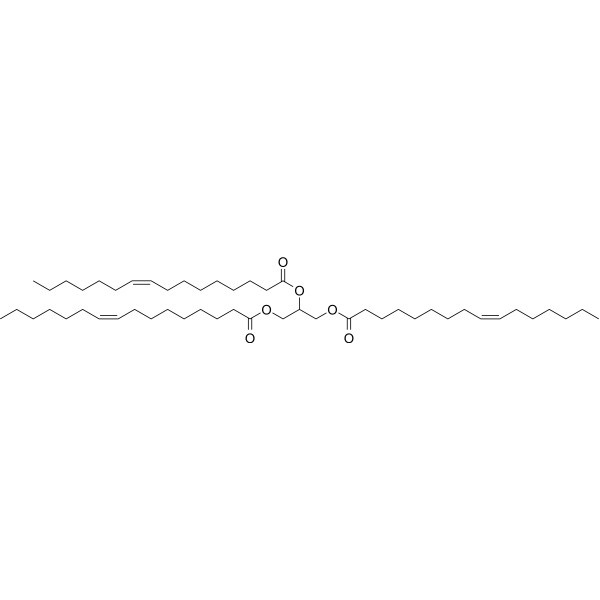
1,2,3-Tripalmitoleoyl-rac-glycerol is a triacylglycerol containing palmitoleic acid at the sn-1, sn-2 and sn-3 positions. It reduces erythrocyte deformability in a concentration-dependent manner in the Reid filtration assay. Hepatic levels of 1,2,3-tripalmitoleoyl-rac-glycerol are increased in a JAK2L mouse model of hepatic steatosis. 1,2,3-Tripalmitoleoyl-rac-glycerol plasma levels are reduced in patients with predialysis renal disease.
loading...
    loading...
Cat. No.: HY-113202S
CAS No.: 1021439-31-5
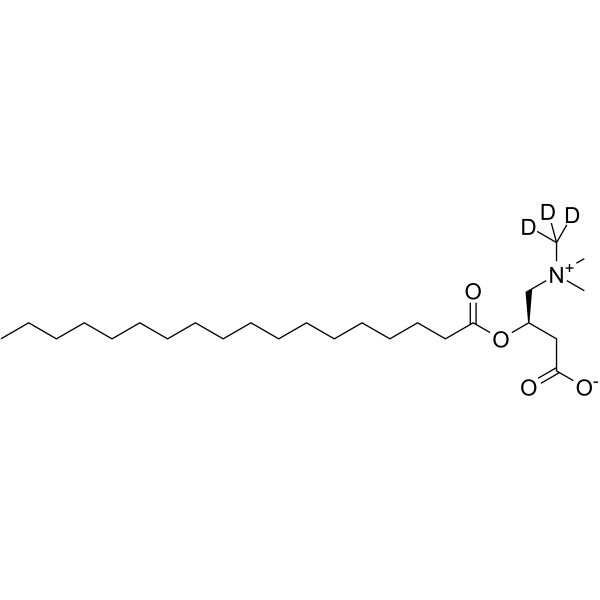
Stearoyl-L-carnitine-d3 is the deuterium labeled Stearoylcarnitine. Stearoylcarnitine, a fatty ester lipid molecule, is an endogenous metabolite. Stearoylcarnitine can be used as PKC inhibitor. Stearoylcarnitine accumulates in β cells, leading to arrest of insulin synthesis and energy deficiency in type 2 diabetes mouse. Stearoylcarnitine inhibits lecithin cholesterol acyltransferase (LCAT) in rat and rabbits plasma. Stearoylcarnitine acts as a metabolomics biomarker for Parkinson’s disease. Stearoylcarnitine is a less potent inhibitor of GlyT2 .
loading...
    loading...
Cat. No.: HY-161630
CAS No.: 3034750-58-5
Research Areas:  

Cancer

TLR8 agonist 8 (Compound II-72) is an agonist for Toll-like receptor 8 (TLR8) with EC50 of 0.25-1 μM. TLR8 agonist 8 is stable in human and murine plasma, induces secretion of cytokines TNFα, with EC50 <1 μM. TLR8 agonist 8 exhibits antitumor activity in MC38-HER2 xenograft mouse model with a tumor growth inhibition (TGI) rate of 89% .
loading...
    loading...
Cat. No.: HY-147278A
Synonyms: Divesiran sodium; SLN124 sodium
Manusiran sodium (Divesiran sodium) is a GalNac-siRNA targeting liver and transmembrane serine protease 6 (Serine protease 6). Manusiran sodium increases hepatic Hepcidin synthesis and plasma levels by silencing TMPRSS6, a negative regulator of hepcidin production, and limits the availability of iron required for erythropoiesis. Combined use of Manusiran sodium with Deferiprone (HY-B0568) reduces ineffective erythropoiesis and hepatic iron overload in a mouse model of β-thalassemia. Manusiran sodium can be used for research on polycythemia vera, type 1 hereditary hemochromatosis, and β-thalassemia .
loading...
    loading...
Cat. No.: HY-170491
Target:  

GSK-3

Research Areas:  

Infection Neurological Disease

GSK-3β inhibitor 23 (Compound 11726169) is the inhibitor for glycogen synthase kinase-3, that inhibits GSK-3β and GSK-3α with IC50 of 12.1 nM and 18.8 nM. GSK-3β inhibitor 23 exhibits antiviral activity against HIV 1. GSK-3β inhibitor 23 exhibits good metabolic stablility in mouse/human liver microsomes and plasma, but poor Caco-2 permeability (which predicts low oral bioavailability) .
loading...
    loading...

