
54 Results for "

BAD

" in MedChemExpress (MCE) Product Catalog:
Products (54)

54 Results for "BAD" in MCE Product Catalog:

  • Categories Recommended:
    More
Cat. No.: HY-122423
CAS No.: 83409-32-9
Synonyms: N-Desethylamiodarone; LB 33020
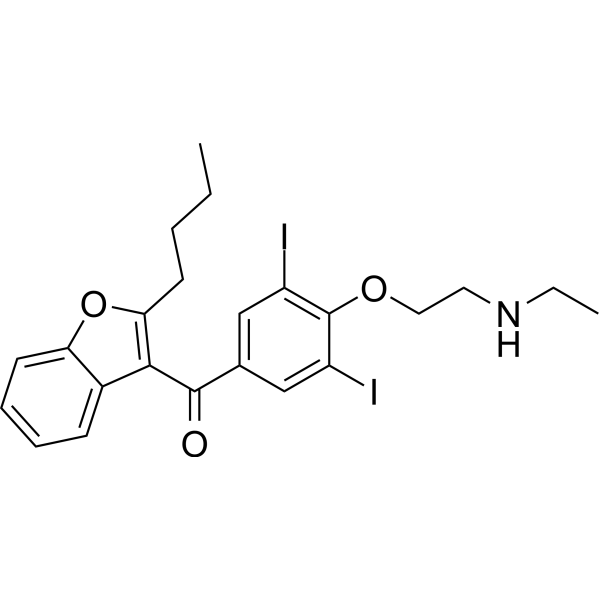
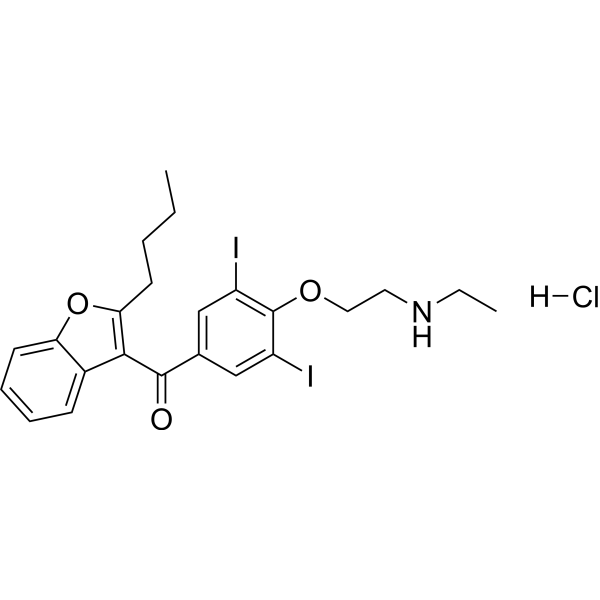
Desethylamiodarone (N-Desethylamiodarone; LB 33020) is the major active metabolite of Amiodarone (HY-14187) generated via CYP3A4 metabolism. Desethylamiodarone downregulates p‑Akt, p‑Bad and Bcl‑2, upregulates Bax, promotes mitochondrial release of cytochrome c, activates caspase‑3 and cleaves PARP‑1, thereby inducing cell cycle arrest and apoptosis. Desethylamiodarone can be used in cervical cancer-related research .
loading...
    loading...
Cat. No.: HY-130353S
CAS No.: 1189960-80-2
Synonyms: N-Desethylamiodarone-d4 hydrochloride; LB 33020-d4 hydrochloride
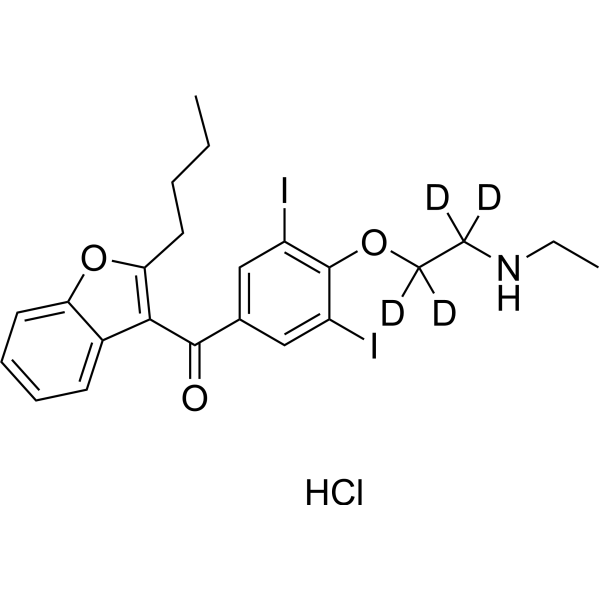
Desethylamiodarone-d4 hydrochloride (N-Desethylamiodarone-d4 hydrochloride; LB 33020-d4 hydrochloride) is the deuterated-labeled Desethylamiodarone hydrochloride (HY-130353). Desethylamiodarone hydrochloride (N-Desethylamiodarone hydrochloride; LB 33020 hydrochloride) is the major active metabolite of Amiodarone (HY-14187) generated via CYP3A4 metabolism. Desethylamiodarone hydrochloride downregulates p‑Akt, p‑Bad and Bcl‑2, upregulates Bax, promotes mitochondrial release of cytochrome c, activates caspase‑3 and cleaves PARP‑1, thereby inducing cell cycle arrest and apoptosis. Desethylamiodarone hydrochloride can be used in cervical cancer-related research .
loading...
    loading...
Cat. No.: HY-P2499
Target:  

Bcl-2 Family

Research Areas:  

Cancer

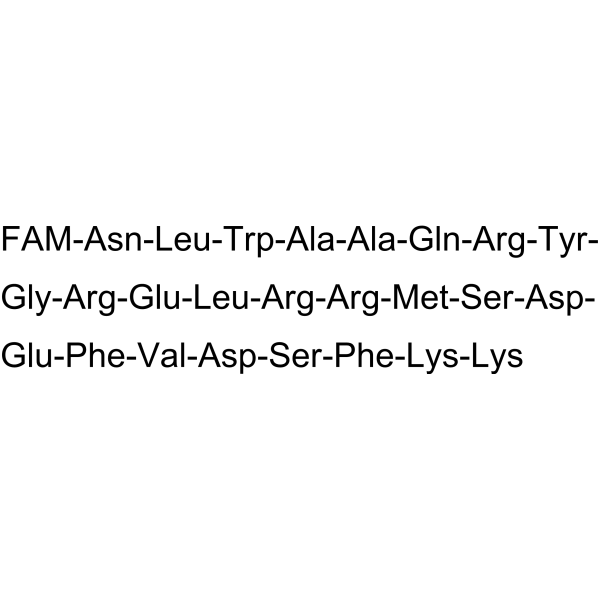
BAD (103-127) (human), FAM-labeled is a FAM-labeled human BAD (103-127) (HY-P2468). BAD (103-127) (human), the 25-mer Bad peptide, is derived from the BH3 domain of BAD and can antagonize the function of Bcl-xL .
loading...
    loading...
Cat. No.: HY-P5324
CAS No.: 505070-07-5
Target:  

Bcl-2 Family

Research Areas:  

Others

Bad BH3 (mouse) is a biological active peptide. (This is a bcl-2 binding peptide. This peptide is derived from the BH3 domain (a death domain) of Bad, amino acid residues 140 to 165.)
loading...
    loading...
Cat. No.: HY-RS01341
Research Areas:  

Others

BAD Human Pre-designed siRNA Set A contains three designed siRNAs for BAD gene (Human), as well as a negative control, a positive control, and a FAM-labeled negative control.

loading...
    loading...
Cat. No.: HY-RS17318
Research Areas:  

Others

Bad Mouse Pre-designed siRNA Set A contains three designed siRNAs for Bad gene (Mouse), as well as a negative control, a positive control, and a FAM-labeled negative control.

loading...
    loading...
Cat. No.: HY-14266S
CAS No.: 1329613-10-6
Synonyms: TMC120-d11; R147681-d11
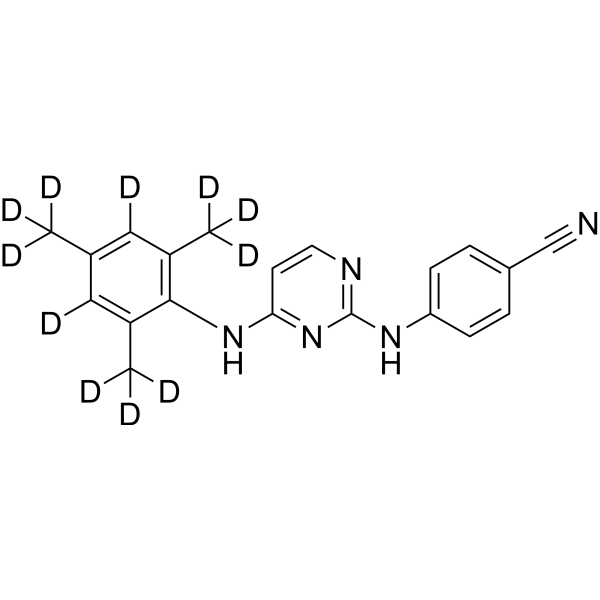
Dapivirine-d11 is the deuterium labeled Dapivirine. Dapivirine (TMC120), the prototype of diarylpyrimidines (DAPY), is an orally active and nonnucleoside reverse transcriptase inhibitor (NRTI). Dapivirine (TMC120) binds directly to HIV-1 reverse transcriptase. Dapivirine (TMC120) regulates autophagy and induced Akt, Bad and SAPK/JNK activations .
loading...
    loading...
Cat. No.: HY-14266A
CAS No.: 244768-47-6
Research Areas:  

Infection

Dapivirine hydrochloride is a non-nucleoside reverse transcriptase inhibitor with antitumor activity. Dapivirine hydrochloride attenuates the proliferation of glioblastoma cells and induces apoptosis. Dapivirine hydrochloride modulates autophagy and activates Akt, Bad, and SAPK/JNK signaling pathways. Dapivirine hydrochloride has shown inhibitory effects on glioma cell growth both in vitro and in vivo. Dapivirine hydrochloride is also a promising drug candidate for topical microbial agents for the prevention of sexual transmission of HIV-1 .
loading...
    loading...
Cat. No.: HY-14266S1
CAS No.: 1309283-15-5
Synonyms: TMC120-d4; R147681-d4
Dapivirine-d4 (TMC120-d4) is deuterium labeled Dapivirine. Dapivirine (TMC120), the prototype of diarylpyrimidines (DAPY), is an orally active and nonnucleoside reverse transcriptase inhibitor (NRTI). Dapivirine (TMC120) binds directly to HIV-1 reverse transcriptase. Dapivirine (TMC120) regulates autophagy and induced Akt, Bad and SAPK/JNK activations .
loading...
    loading...
Cat. No.: HY-113427R
CAS No.: 693-72-1
trans-Vaccenic acid (Standard) is the analytical standard of trans-Vaccenic acid (HY-113427). This product is intended for research and analytical applications. trans-Vaccenic acid is a naturally occurring trans fatty acid (TFA). trans-Vaccenic acid inhibits nasopharyngeal carcinoma (NPC) cell growth and induces apoptosis through the inhibition of Bad/Akt phosphorylation. trans-Vaccenic acid is a precursor for the synthesis of saturated fatty acid in the rumen and of conjugated Linoleic acid (CLA) at the tissue level. trans-Vaccenic acid exerts hypolipidemic effects in a rat model of obesity.
loading...
    loading...
Cat. No.: HY-50868R
CAS No.: 859212-16-1
Synonyms: INNO-406 (Standard); NS-187 (Standard)
Research Areas:  

Cancer

Bafetinib (Standard) is the analytical standard of Bafetinib. This product is intended for research and analytical applications. Bafetinib is an orally active Lyn/Bcr-Abl tyrosine kinase inhibitor. Bafetinib enhances the activity of several pro-apoptotic Bcl-2 homology (BH) 3-pure proteins (Bim, Bad, Bmf, and Bik) through intrinsic apoptotic pathways regulated by the Bcl-2 family, and induces apoptosis of Ph+ leukemia cells. Bafetinib has antitumor activity .
loading...
    loading...
Cat. No.: HY-130353R
CAS No.: 96027-74-6
Synonyms: N-Desethylamiodarone hydrochloride (Standard); LB 33020 hydrochloride (Standard)
Desethylamiodarone hydrochloride (Standard) (N-Desethylamiodarone hydrochloride (Standard); LB 33020 hydrochloride (Standard)) is the analytical standard of Desethylamiodarone hydrochloride (HY-130353). This product is intended for research and analytical applications. Desethylamiodarone hydrochloride (N-Desethylamiodarone hydrochloride; LB 33020 hydrochloride) is the major active metabolite of Amiodarone (HY-14187) generated via CYP3A4 metabolism. Desethylamiodarone hydrochloride downregulates p‑Akt, p‑Bad and Bcl‑2, upregulates Bax, promotes mitochondrial release of cytochrome c, activates caspase‑3 and cleaves PARP‑1, thereby inducing cell cycle arrest and apoptosis. Desethylamiodarone hydrochloride can be used in cervical cancer-related research .
loading...
    loading...
Cat. No.: HY-168338
Research Areas:  

Cancer

CB2 receptor agonist 8 (Compound 17) is an agonist for cannabinoid receptor 2 (CB2 receptor). CB2 receptor agonist 8 exhibits cytotoxicity in cells U87, RPMI 8226, HL-60, and L929 with IC50s of 91.03, 16.29, 23.51 and 564.6 μM, respectively. CB2 receptor agonist 8 activates caspase 3/7, increases the expressions of pro-apoptotic genes BAX, BAD, BIM and tumor suppressor genes p53, and induces apoptosis in U87. CB2 receptor agonist 8 inhibits the migration of U87 .
loading...
    loading...
Cat. No.: HY-W758414
Phoxim-d5 (phenyl-d5) (mixture of isomers) is the deuterated-labeled Phoxim (HY-B0819). Phoxim is an organophosphorus pesticide and an orally active inhibitor of cholinesterase and CYP3A, which induces neurotoxicity in Caenorhabditis elegans and causes nephrotoxicity characterized by glomerular atrophy and interstitial fibrosis. Phoxim induces inhibition of the autophagy pathway. Phoxim induces dopaminergic neuron degeneration and exacerbates Aβ-induced paralysis. Phoxim damages enterocytes and disrupts intestinal barrier integrity. Phoxim induces ROS accumulation. Phoxim induces mitochondrial apoptosis, involving upregulation of Bad, Bax, caspase-3, and caspase-9 and downregulation of Bcl-2. Phoxim inhibits mitochondrial functional enzymes (COX, Ca 2+-Mg 2+-ATPase, SDH). Phoxim upregulates Nrf2 mRNA expression in the jejunal mucosa. Phoxim increases TNF-α and decreases IL-6 and IL-8 in the intestinal mucosa. Phoxim alters gut microbial composition by increasing total bacteria and Escherichia coli and reducing Lactobacillus. Phoxim enhances energy metabolism in silver carp by upregulating key glycolytic and gluconeogenic enzymes. Phoxim is used in research on neurodegenerative diseases, nephrotoxicity, intestinal oxidative stress and barrier dysfunction, and bacterial sepsis .
loading...
    loading...
Cat. No.: HY-RS23773
Research Areas:  

Others

Bad Rat Pre-designed siRNA Set A contains three designed siRNAs for Bad gene (Rat), as well as a negative control, a positive control, and a FAM-labeled negative control.

loading...
    loading...
Cat. No.: HY-P83354
Synonyms: BAD; BBC6; BCL2L8; Bcl2 antagonist of cell death; BAD; Bcl-2-binding component 6; Bcl-2-like protein 8; Bcl2-L-8; Bcl-XL/Bcl-2-associated death promoter

Host:  

Rabbit

Application:  

WB, IP

Reactivity:  

Human, Mouse, Rat

loading...
    loading...
Cat. No.: HY-P86533
Synonyms: BAD; BBC6; BCL2L8; Bcl2 antagonist of cell death; BAD; Bcl-2-binding component 6; Bcl-2-like protein 8; Bcl2-L-8; Bcl-XL/Bcl-2-associated death promoter

Host:  

Rabbit

Application:  

WB, IHC-P, ICC/IF, IP, ELISA

Reactivity:  

Human, Mouse, Rat

loading...
    loading...
Cat. No.: HY-P80025
Synonyms: Bbc6, BAD, Bcl2-associated agonist of cell death, BAD, Bcl-2-binding component 6, Bcl-xL/Bcl-2-associated death promoter, Bcl2 antagonist of cell death

Host:  

Rabbit

Application:  

WB, ICC/IF, IHC-P, FC, IP

Reactivity:  

Human

loading...
    loading...
Cat. No.: HY-18088
CAS No.: 1036380-87-6
Target:  

Pim

Research Areas:  

Cancer

PIM-IN-4 is a Pim kinase inhibitor with Ki values of 2, 3, and 0.5 nM against Pim-1, 2, 3, respectively. PIM-IN-4 blocks the phosphorylation of the pro-apoptotic protein Bad. PIM-IN-4 inhibits the growth of leukemia cells. PIM-IN-4 is applicable for leukemia-related research .
loading...
    loading...
Cat. No.: HY-179538
Research Areas:  

Cancer

CSH-4044 can be isolated from fermented wheat germ extract. CSH-4044 is a unique benzothiazole compound. CSH-4044 can inhibit PIM3-driven BAD phosphorylation in pancreatic cancer cell lines as well as reducing DYRK1A-induced Tau phosphorylation in neuronal cells .
loading...
    loading...

