425 Results for "

fluorescence labelling

" in MedChemExpress (MCE) Product Catalog:
Products (425)

425 Results for "fluorescence labelling" in MCE Product Catalog:

Cat. No.: HY-110210R
CAS No.: 146616-66-2
Synonyms: BODIPY FL,SE (Standard)
Research Areas:  

Others

BODIPY-FL NHS ester (Standard) is the analytical standard of BODIPY-FL NHS ester (HY-110210). This product is intended for research and analytical applications. BODIPY FL NHS ester (BODIPY FL, SE) is a cell membranes-penatrable amine-reactive fluorescent probe. The maximum excitation/emission wavelength of the BODIPY-FL NHS ester are 502/511 nm, respectively. BODIPY-FL NHS ester has high stability and is insensitive to the polarity, pH and type of solvent, and can maintain stable fluorescence properties under different environmental conditions. BODIPY-FL NHS ester can be used for the synthesis of protease substrates, live cell imaging, protein labeling and immunoassay .
loading...
    loading...
Cat. No.: HY-175132
Synonyms: NBD L-threo cer (d18:1/12:0); NBD L-threo ceramide (d18:1/12:0); N-Dodecanoyl-NBD L-threo-sphingosine
Target:  

Fluorescent Dye

Research Areas:  

Others

C12 NBD L-threo Ceramide (d18:1/12:0) (NBD L-threo cer (d18:1/12:0); NBD L-threo ceramide (d18:1/12:0); N-Dodecanoyl-NBD L-threo-sphingosine) is an NBD fluorescently labeled ceramide analog. C12 NBD L-threo Ceramide (d18:1/12:0) is an isomer of C12 NBD ceramide. C12 NBD L-threo Ceramide (d18:1/12:0) can be used for fluorescence detection, imaging, and kinetic analysis.
loading...
    loading...
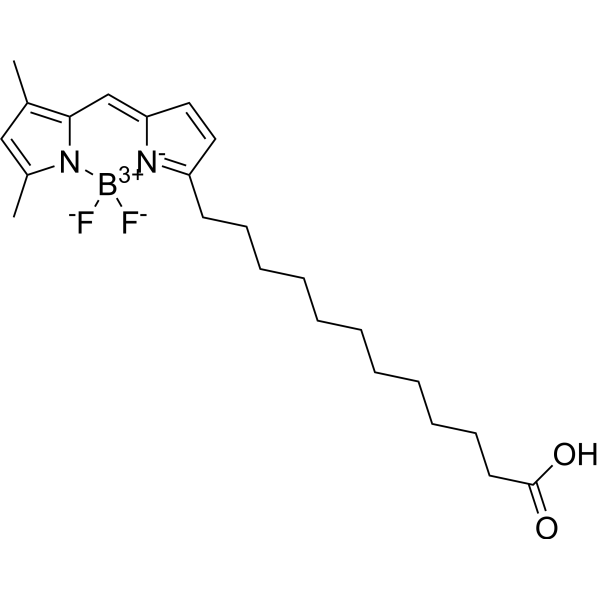
Cat. No.: HY-D1570
CAS No.: 158757-79-0
BODIPYFL C12 is a BODIPY dye. BODIPY dye is a small molecule dye with strong ultraviolet absorption ability, its fluorescence peak is relatively sharp, and the quantum yield is high. They are relatively insensitive to the polarity and pH of the environment and are relatively stable under different physiological conditions. Due to its structural asymmetry, BODIPY derives a variety of structural products. BODIPY lipid droplet dyes can well pass through the cell membrane into the cell, and localize the neutral lipids in the cell to specifically stain the lipid droplets, which can be used for labeling of live cells and fixed cells . Maximum excitation/emission wavelength: 480/508 nm .
loading...
    loading...
Cat. No.: HY-D2422B
Research Areas:  

Cancer

Cy5-Paclitaxel is a fluorescently labeled drug probe formed by conjugating the fluorescent dye Cy5 (Cyanine 5) with the chemotherapeutic agent Paclitaxel, which is used to track the cellular uptake, subcellular distribution and drug delivery process of Paclitaxel. The Cy5 (Cyanine 5) fluorophore is covalently linked to Paclitaxel, possessing both fluorescent tracing function and the biological activities of Paclitaxel (promoting tubulin polymerization and arresting the cell cycle at the G2/M phase); after entering cells, Cy5 emits far-red fluorescence, enabling real-time monitoring of drug localization and release .
loading...
    loading...
Cat. No.: HY-D2422C
Research Areas:  

Cancer

Cy5-Paclitaxel bromide is a fluorescently labeled drug probe formed by conjugating the fluorescent dye Cy5 (Cyanine 5) with the chemotherapeutic agent Paclitaxel, which is used to track the cellular uptake, subcellular distribution and drug delivery process of Paclitaxel. The Cy5 (Cyanine 5) fluorophore is covalently linked to Paclitaxel, possessing both fluorescent tracing function and the biological activities of Paclitaxel (promoting tubulin polymerization and arresting the cell cycle at the G2/M phase); after entering cells, Cy5 emits far-red fluorescence, enabling real-time monitoring of drug localization and release .
loading...
    loading...
Cat. No.: HY-W008048S
2',3'-O-Isopropylideneadenosine- 13C5 is the 13C-labeled 2',3'-O-Isopropylideneadenosine (HY-W008048). 2',3'-O-Isopropylideneadenosine is a nucleoside compound and also a Golgi-targeting moiety. 2',3'-O-Isopropylideneadenosine constitutes a furanose ribose group that undergoes cyclization at the O (2') and O (3') atoms. As a component of the fluorescent probe TPE-Ade, 2',3'-O-Isopropylideneadenosine enables specific Golgi localization for fluorescence imaging. 2',3'-O-Isopropylideneadenosine participates in the synthesis of aggregation-induced emission (AIE) fluorescent probes .
loading...
    loading...
Cat. No.: HY-13963S
ZCL278- 13C is a 13C-labeled version of ZCL278 (HY-13963). ZCL278 is a selective Cdc42 inhibitor with Kds of 6.4 μM in fluorescence titration and 11.4 μM in surface plasmon resonance (SPR) measurement. ZCL278 can disrupt the interaction between Cdc42 and ITSN, and also inhibit the binding of GTP and GDP. ZCL278 has inhibitory effects on various enveloped viruses, but is ineffective against non-enveloped viruses. ZCL278 can be used in the research of arsenic neurotoxicity and HER2-positive gastric cancer (GC) [1][2][3][4].
loading...
    loading...
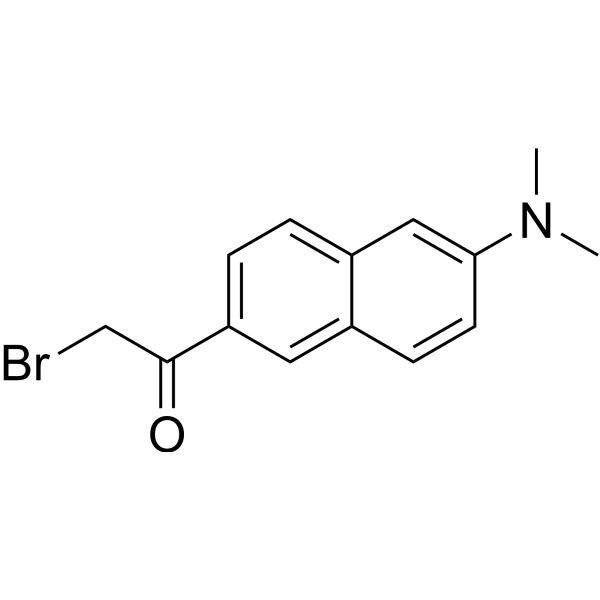
Cat. No.: HY-D1470
CAS No.: 210832-86-3
Target:  

Fluorescent Dye

Research Areas:  

Others

BADAN is a thiol-reactive, environment-sensitive fluorescent probe used for site-specific labeling of protein cysteine residues to detect protein topology, local polarity, protein-lipid interactions, and conformational changes. The bromoacetyl group of BADAN covalently binds to cysteine thiols, and its fluorescence originates from the intramolecular charge transfer (ICT) excited state. The emission peak position varies with the polarity of the surrounding medium: it blue-shifts to approximately 488 nm in nonpolar environments (such as the hydrophobic core of lipid bilayers) and red-shifts to approximately 496-507 nm in polar environments (such as aqueous phases), independent of enzymes, pH, or membrane potential. Ex = 380-402 nm; Em = 400-600 nm .
loading...
    loading...
Cat. No.: HY-DY1004
CAS No.: 121207-31-6
BODIPY 493/503 (solution) is a BODIPY dye. BODIPY dye is a small molecule dye with strong ultraviolet absorption ability, its fluorescence peak is relatively sharp, and the quantum yield is high. They are relatively insensitive to the polarity and pH of the environment and are relatively stable under different physiological conditions. Due to its structural asymmetry, BODIPY derives a variety of structural products. BODIPY lipid droplet dyes can well pass through the cell membrane into the cell, and localize the neutral lipids in the cell to specifically stain the lipid droplets, which can be used for labeling of live cells and fixed cells . Maximum excitation/emission wavelength: 493/503 nm.
Solvent and concentration: DMSO: 5 mM.
loading...
    loading...
Cat. No.: HY-126192
CAS No.: 566169-93-5
Purity:  ≥95.0%
Synonyms: PiB; 6-OH-BTA-1
Pittsburgh Compound B (PiB) is a blood-brain barrier-permeable, specific Aβ deposition PET tracer that binds to Aβ(1-40) fibrils with a Ki value of 678.4 nM. Through click chemical modification (a clickable Pittsburgh Compound B derivative is prepared by introducing a PEG3 linker and an alkynyl group at the 6-hydroxy site of Pittsburgh Compound B, followed by covalent conjugation with azide-labeled fluorescent dyes or affinity tags via copper-catalyzed azide-alkyne cycloaddition (CuAAC)), Pittsburgh Compound B and its conjugates can be used for fluorescence imaging, ultrastructural studies, and enrichment and characterization of Aβ complexes. Pittsburgh Compound B is applicable to Alzheimer's disease research .
loading...
    loading...
Cat. No.: HY-DY1061
CAS No.: 158757-84-7
BODIPY 558/568 C12 (solution) is a BODIPY dye. BODIPY dye is a small molecule dye with strong ultraviolet absorption ability, its fluorescence peak is relatively sharp, and the quantum yield is high. They are relatively insensitive to the polarity and pH of the environment and are relatively stable under different physiological conditions. Due to its structural asymmetry, BODIPY derives a variety of structural products. BODIPY lipid droplet dyes can well pass through the cell membrane into the cell, and localize the neutral lipids in the cell to specifically stain the lipid droplets, which can be used for labeling of live cells and fixed cells . Maximum excitation/emission wavelength: 558/568 nm .
Solvent and concentration: DMSO: 2 mM
loading...
    loading...
Cat. No.: HY-DY1090
CAS No.: 216434-81-0
BODIPY 493/503 methyl bromide (solution) is a BODIPY dye. BODIPY dye is a small molecule dye with strong ultraviolet absorption ability, its fluorescence peak is relatively sharp, and the quantum yield is high. They are relatively insensitive to the polarity and pH of the environment and are relatively stable under different physiological conditions. Due to its structural asymmetry, BODIPY derives a variety of structural products. BODIPY lipid droplet dyes can well pass through the cell membrane into the cell, and localize the neutral lipids in the cell to specifically stain the lipid droplets, which can be used for labeling of live cells and fixed cells . Maximum excitation/emission wavelength: 493/503 nm .
Solvent and concentration: DMSO: 5 mM
loading...
    loading...
Cat. No.: HY-NP163A
Synonyms: WGA-AF488
Wheat germ agglutinin-AF488 (WGA-AF488) is a cell membrane-specific staining agent prepared by conjugating wheat germ agglutinin with the Alexa Fluor 488 (HY-D1304) fluorescent dye, and it binds to cell surface glycoproteins with high affinity. Wheat germ agglutinin-AF488 is applied in fluorescence microscopy and confocal imaging techniques, and it can clearly label the membrane structures of various cells including breast cancer cells, enabling high-resolution visual observation. Wheat germ agglutinin-AF488 is used in studies of breast cancer and triple-negative breast cancer to observe cell morphology and membrane dynamic changes .
loading...
    loading...
Cat. No.: HY-DY1007
CAS No.: 3326-32-7
Target:  

Fluorescent Dye

Research Areas:  

Inflammation/Immunology

FITC (Fluorescein Isothiocyanate) (solution) , is one of the green fluorescein derivatives widely used in biology. FITC has the characteristics of high absorptivity and excellent fluorescence quantum yield. The isothiocyanate group of FITC can be combined with amino, sulfhydryl, imidazole, tyrosyl, carbonyl and other groups on the protein, so as to achieve protein labeling including antibodies and lectins. In addition to its use as a protein marker, FITC can also be used as a fluorescent protein tracer to rapidly identify pathogens by labeling antibodies, or for microsequencing of proteins and peptides (HPLC). The maximum excitation wavelength of FITC is 494 nm. Once excited, it fluoresces yellow-green at a maximum emission wavelength of 520 nm. In addition, FITC is also a hapten that can induce contact hypersensitivity (CHS) and induce an atopic dermatitis model .
Solvent and concentration: DMSO: 20 mM
The 1 mL volume is defined as the base specification. All larger sizes correspond to incremental volumes of this base.
loading...
    loading...
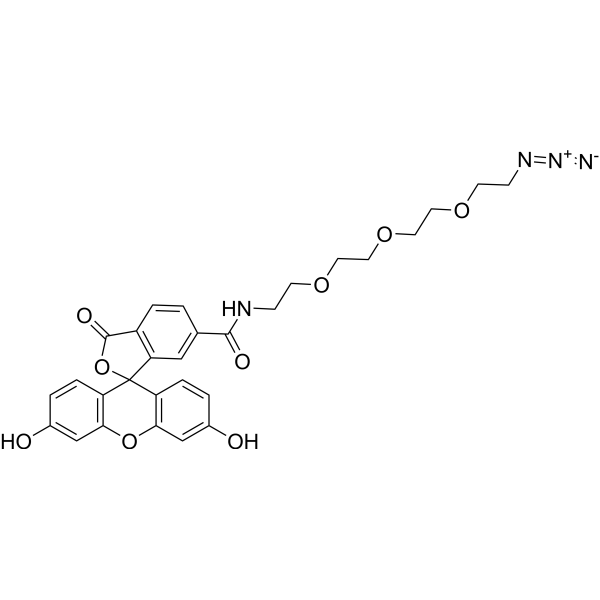
Cat. No.: HY-135835
CAS No.: 412319-45-0
Purity:  98.05%
Target:  

Fluorescent Dye

Research Areas:  

Others

6-FAM-PEG3-Azide is a PEG-modified azide-functionalized fluorescein derivative that is used for labeling oligonucleotides. 6-FAM-PEG3-Azide is also a click chemistry reagent. It contains an Azide group and can undergo a copper-catalyzed azide-alkyne cycloaddition reaction (CuAAc) with molecules containing an Alkyne group. When 6-FAM-PEG3-Azide is co-incubated with boron clusters in a non-covalent manner, it enhances the cellular uptake and membrane permeability of 6-FAM (HY-66021). 6-FAM-PEG3-azide is applicable for fluorescence bioconjugation and probe development-related research .
loading...
    loading...
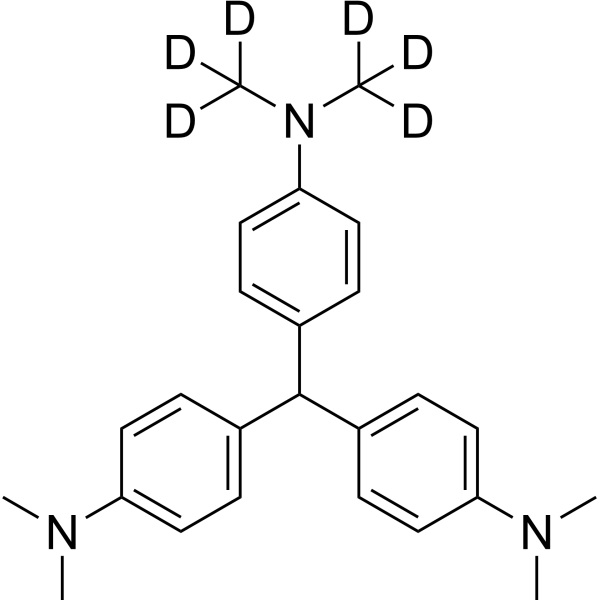
Cat. No.: HY-D0233S
CAS No.: 1173023-92-1
Leucocrystal violet-d6 is the deuterium labeled Leucocrystal violet (HY-D0233). Leucocrystal violet is a cationic triarylmethane dye. Leucocrystal violet generates a colored purple product in the presence of hydrogen peroxide and horseradish peroxidase, or when oxidized by periodate under the catalysis of horseradish peroxidase. Leucocrystal violet serves as a chromogenic reagent for the determination of submicrogram-level hydrogen peroxide, with no interference from tryptophan, persulfate or chromate. Leucocrystal violet reacts with blood to produce a purple/violet color in the presence of hydrogen peroxide; it forms a very weak fluorophore when acting with whole blood in an unbuffered solution, with a maximum absorption wavelength of 630 nm and a maximum fluorescence emission wavelength of 665 nm upon excitation at 630 nm. Leucocrystal violet is widely used for staining blood residues on porous and non-porous materials.
loading...
    loading...
Cat. No.: HY-D1991
CAS No.: 906664-68-4
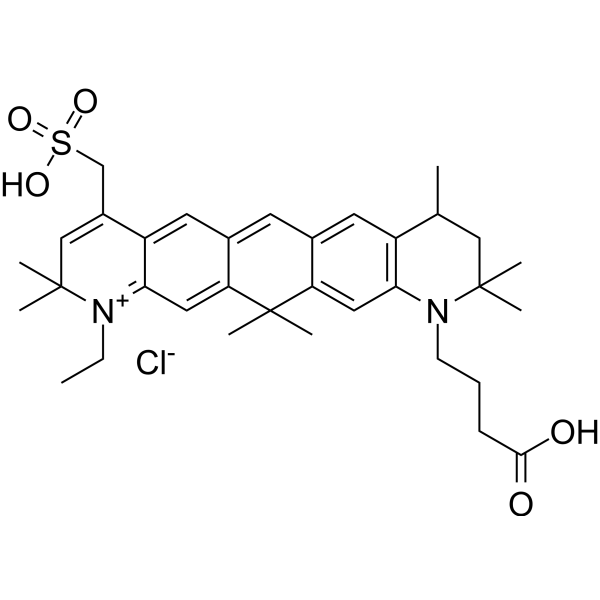
ATTO 647 is a carborhodamine fluorophore and imaging tracer with photostable properties. ATTO 647 serves as a fluorescent probe to investigate cell membrane structure and diffusion characteristics. When conjugated with wheat germ agglutinin, ATTO 647 specifically binds to N-acetyl-β-D-glucosamine and sialic acid residues on membrane glycoproteins, enabling single-molecule tracing of glycoprotein diffusion. ATTO 647 exhibits highly stable fluorescence properties with significantly reduced blinking in mounting media such as ROXS (AA/MV) and ROXS (TX/TQ), whereas its brightness properties vary in Ibidi-MM and Vectashield. ATTO 647 can also be used to label histone H2B-GFP in fixed cells for confocal microscopy photobleaching experiments .
loading...
    loading...
Cat. No.: HY-P5520
CAS No.: 2413262-74-3
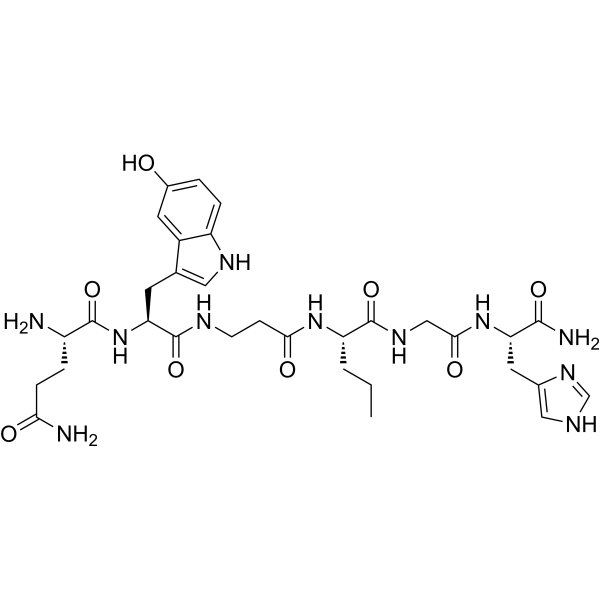
GB-6 is a short linear peptide that targets the gastrin releasing peptide receptor (GRPR). GRPR is overexpressed in pancreatic cancer. Based on the tumor selectivity and tumor-specific accumulation properties of GB-6, GB-6 labeled with near infrared (NIR) fluorescent dyes or radionuclide netium-99m (99mTc) can be used as a high-contrast imaging probe. GB-6 has excellent in vivo stability, with tumor to pancreatic and intestinal fluorescence signal ratios of 5.2 and 6.3, respectively, in SW199 0 subcutaneous xenograft models. GB-6 can rapidly target tumors and accurately delineate tumor boundaries, which has broad application prospects .
loading...
    loading...
Cat. No.: HY-D3073
CAS No.: 2477607-64-8
Target:  

Fluorescent Dye

Research Areas:  

Others

DXB-NIR is a push-pull dioxaboron fluorescent probe with solvatochromic properties, featuring high fluorescence brightness, photostability, and a large two-photon absorption cross-section. DXB-NIR exhibits Ex/Em of 550/620–780 nm (with two-photon excitation at 930 nm). DXB-NIR quantifies local polarity via the intensity ratio I (>640)/I (<640) between the far-red channel (<640 nm) and the near-infrared channel (>640 nm), and it can simultaneously label the plasma membrane, endoplasmic reticulum, and lipid droplets in live cells. DXB-NIR monitors the increase in local polarity of various cell compartments under conditions of cholesterol depletion, starvation, and oxidative stress. DXB-NIR can be used for polarity imaging of biological membranes and lipid droplets, as well as studies related to cellular stress .
loading...
    loading...
Cat. No.: HY-D3391
RMR-Tre is a fluorescent probe targeting the mycobacterial acyltransferase Ag85. Under the catalysis of Ag85, RMR-Tre undergoes 6-position mycoloylation and anchors to the mycobacterial membrane, while achieving fluorescence activation by inhibiting the intramolecular twisted charge transfer state transition. RMR-Tre can distinguish live mycobacteria from dead ones through metabolism-driven labeling, enabling rapid, wash-free, low-background detection of viable bacteria. RMR-Tre reports the drug resistance of Mycobacterium tuberculosis via the trehalose catalytic shift activity readout associated with TreS. In addition, RMR-Tre can be combined with flow cytometry or high-content imaging techniques to visualize and quantitatively analyze the metabolic heterogeneity of Mycobacterium tuberculosis related to persistence and drug resistance. RMR-Tre is widely used in tuberculosis-related research .
loading...
    loading...

