4603 Results for "

specificity

" in MedChemExpress (MCE) Product Catalog:
Products (4603)

4603 Results for "specificity" in MCE Product Catalog:

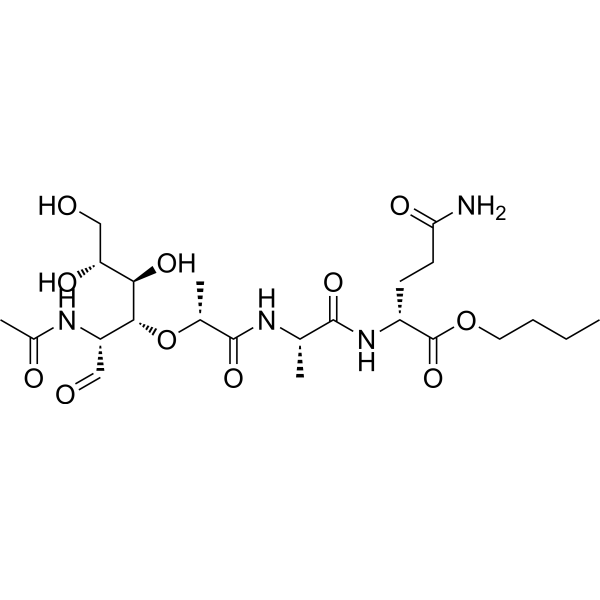
Cat. No.: HY-106055
CAS No.: 74817-61-1
Murabutide is an immunomodulator and also a NOD2 receptor agonist . Murabutide enhances the signal transduction of ATR and NOD2, mediates the activation of the DDR pathway, and thereby repairs radiation-induced DNA double-strand breaks. Murabutide inhibits radiation-induced cell apoptosis and protects cells and mice from radiation-induced toxic damage. Murabutide induces the expression and DNA-binding activity of Oct-1 in macrophages, thereby inhibiting the transcription and replication of HIV-1. Murabutide reduces the expression levels of CD4 and CCR5 on the surface of macrophages, and induces the secretion of β-chemokines, TNF-α and IL-6. Murabutide enhances non-specific viral resistance and targets reticuloendothelial cells. Murabutide can be used in research related to radiation-induced damage and human immunodeficiency virus type 1 infection .
loading...
    loading...
Cat. No.: HY-107830R
CAS No.: 1448-36-8
Methyl cholate (Standard) is the analytical standard of Methyl cholate. This product is intended for research and analytical applications. Methyl cholate is a bile acid analog and a specific inhibitor of TcdB toxin from Clostridioides difficile. Methyl cholate exerts a stronger selective inhibitory effect on TcdB than on TcdA. Methyl cholate induces conformational stabilization by binding to a unique site of TcdB, thereby blocking the binding of the toxin to host receptors and its self-processing process. Methyl cholate effectively protects human fibroblasts from TcdB-induced cytopathic effects. Methyl cholate exhibits dose-dependent anti-hepatic fibrosis activity in both cellular and zebrafish models, and significantly reduces the expression levels of α-SMA and COL-I. Methyl cholate is suitable for in-depth research in the fields of Clostridioides difficile infection and hepatic fibrosis .
loading...
    loading...
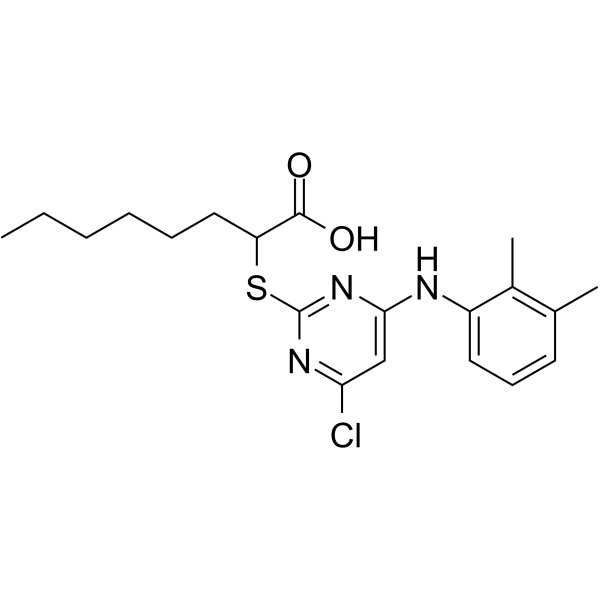
Cat. No.: HY-111140
CAS No.: 916482-17-2
Purity:  99.74%
Research Areas:  

Inflammation/Immunology

YS121 is a dual inhibitor of microsomal prostaglandin E2 synthase-1 (mPGES-1; IC50 = 3.4 μM) and 5-lipoxygenase (5-LOX; IC50 = 6.5 μM). YS121 exhibits direct, reversible, and specific binding to mPGES-1 (KD = 10-14 μM) . YS121 dose-dependently reduces PGE2 production with an EC50 of 12 μM in IL-1β-stimulated A549 cells . YS121 (compound 9) activates PPAR-α and -γ (EC50 = 1 and 3.6 μM, respectively) . YS121 exhibits anti-inflammatory efficiency in human whole blood as well as in vivo. YS121 can be used for pleurisy research .
loading...
    loading...
Cat. No.: HY-113138R
CAS No.: 2140-69-4
Synonyms: N3-Methyluridine (Standard)
3-Methyluridine (Standard) is the analytical standard of 3-Methyluridine. This product is intended for research and analytical applications. 3-Methyluridine (m3U; N3-Methyluridine) is a methylated nucleotide present in ribosomal RNA (rRNA), mainly targeting specific base sites of RNA molecules such as 23S rRNA. 3-Methyluridine can introduce a methyl group at the N3 position of uracil, affecting the secondary structure stability and base pairing ability of RNA, and regulating ribosome function. For example, it affects ribosomal subunit binding and tRNA interaction. 3-Methyluridine is often used as a key raw material for the synthesis of modified nucleotides, and is used to construct RNA oligonucleotides containing methylation modifications to study the effects of RNA methylation on gene expression and drug resistance .
loading...
    loading...
Cat. No.: HY-113252R
CAS No.: 362-08-3
2-Methoxyestrone (Standard) is the analytical standard of 2-Methoxyestrone (HY-113252). This product is intended for research and analytical applications. 2-Methoxyestrone is an estrogen metabolite with antimitotic activity. 2-Methoxyestrone acts as a liver-specific prohormone that undergoes demethylation to form active 2-hydroxyestrogens, and it can also interconvert with 2-Methoxyestradiol (HY-12033) via the 17β-hydroxysteroid dehydrogenase pathway. In the presence of all-trans retinoic acid, 2-Methoxyestrone exerts a strong, concentration-dependent inhibitory effect on cell growth. 2-Methoxyestrone delays the progression of pulmonary hypertension in rats, alleviates right ventricular and pulmonary vascular remodeling, and relieves proliferative pulmonary hypertension in rats. 2-Methoxyestrone can be used in studies related to proliferative pulmonary hypertension .
loading...
    loading...
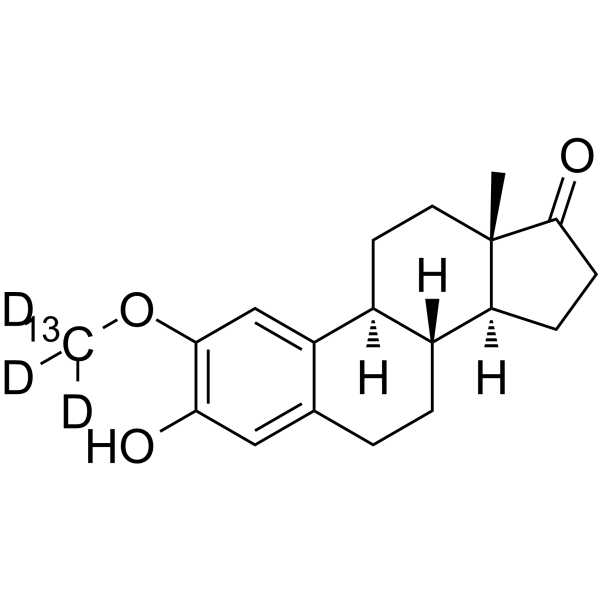
Cat. No.: HY-113252S
CAS No.: 1217460-84-8
2-Methoxyestrone- 13C,d3 is the deuterated, 13C-labeled 2-Methoxyestrone (HY-113252). 2-Methoxyestrone is an estrogen metabolite with antimitotic activity. 2-Methoxyestrone acts as a liver-specific prohormone that undergoes demethylation to form active 2-hydroxyestrogens, and it can also interconvert with 2-Methoxyestradiol (HY-12033) via the 17β-hydroxysteroid dehydrogenase pathway. In the presence of all-trans retinoic acid, 2-Methoxyestrone exerts a strong, concentration-dependent inhibitory effect on cell growth. 2-Methoxyestrone delays the progression of pulmonary hypertension in rats, alleviates right ventricular and pulmonary vascular remodeling, and relieves proliferative pulmonary hypertension in rats. 2-Methoxyestrone can be used in studies related to proliferative pulmonary hypertension .
loading...
    loading...
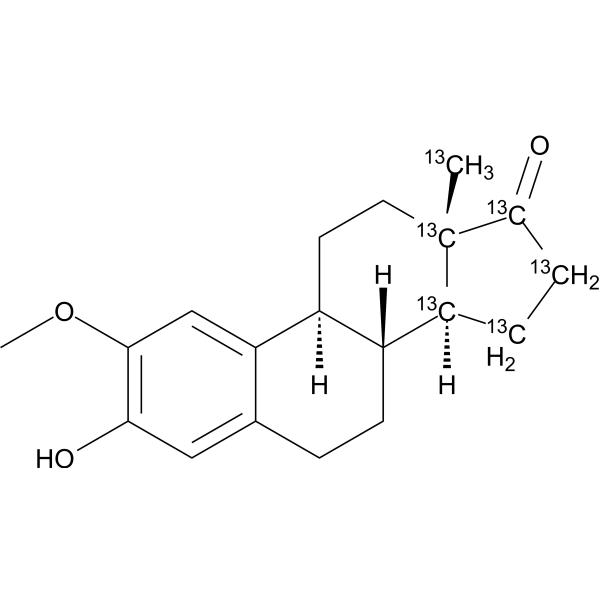
Cat. No.: HY-113252S1
2-Methoxyestrone- 13C6 is the 13C-labeled 2-Methoxyestrone (HY-113252). 2-Methoxyestrone is an estrogen metabolite with antimitotic activity. 2-Methoxyestrone acts as a liver-specific prohormone that undergoes demethylation to form active 2-hydroxyestrogens, and it can also interconvert with 2-Methoxyestradiol (HY-12033) via the 17β-hydroxysteroid dehydrogenase pathway. In the presence of all-trans retinoic acid, 2-Methoxyestrone exerts a strong, concentration-dependent inhibitory effect on cell growth. 2-Methoxyestrone delays the progression of pulmonary hypertension in rats, alleviates right ventricular and pulmonary vascular remodeling, and relieves proliferative pulmonary hypertension in rats. 2-Methoxyestrone can be used in studies related to proliferative pulmonary hypertension .
loading...
    loading...
Cat. No.: HY-113252S2
CAS No.: 949885-90-9
Purity:  ≥98.0%
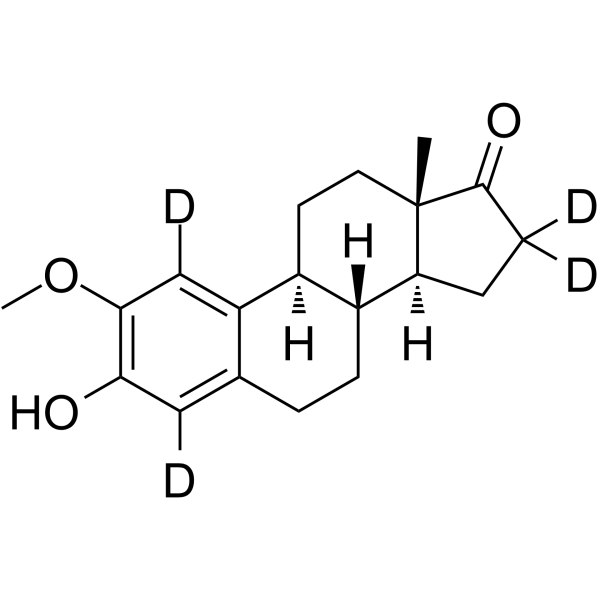
2-Methoxyestrone-d4 is the deuterated-labeled 2-Methoxyestrone (HY-113252). 2-Methoxyestrone is an estrogen metabolite with antimitotic activity. 2-Methoxyestrone acts as a liver-specific prohormone that undergoes demethylation to form active 2-hydroxyestrogens, and it can also interconvert with 2-Methoxyestradiol (HY-12033) via the 17β-hydroxysteroid dehydrogenase pathway. In the presence of all-trans retinoic acid, 2-Methoxyestrone exerts a strong, concentration-dependent inhibitory effect on cell growth. 2-Methoxyestrone delays the progression of pulmonary hypertension in rats, alleviates right ventricular and pulmonary vascular remodeling, and relieves proliferative pulmonary hypertension in rats. 2-Methoxyestrone can be used in studies related to proliferative pulmonary hypertension .
loading...
    loading...
Cat. No.: HY-117093
CAS No.: 423731-10-6
Target:  

HDAC

Research Areas:  

Cancer

H8-A5 is a novel human histone deacetylase 8 (HDAC8) inhibitor. A highly specific ZBG-based pharmacophore model was developed by incorporating a custom zinc-binding group (ZBG) feature. Pharmacophore-based virtual screening identified three novel HDAC8 inhibitors with low micromolar IC50 values (1.8-1.9 μM). Further studies showed that H8-A5 was more selective for HDAC8 than HDAC1/4 and exhibited antiproliferative activity in MDA-MB-231 cancer cells. Molecular docking and molecular dynamics studies showed that H8-A5 could bind to HDAC8, providing a good starting point for the development of HDAC8 inhibitors for cancer treatment.
loading...
    loading...
Cat. No.: HY-118386
CAS No.: 1060478-12-7
Target:  

Endogenous Metabolite

Research Areas:  

Metabolic Disease

H2-005 is a compound that selectively inhibits diacylglycerol acyltransferase 2 (DGAT2) and has the activity to inhibit triacylglycerol synthesis in hepatocytes and preadipocytes. H2-005 significantly reduces triacylglycerol biosynthesis in HepG2 hepatocytes and 3T3-L1 preadipocytes. H2-005 exhibits specific inhibitory activity in DGAT2-overexpressing HEK293 cells. H2-005 almost completely inhibits lipid droplet formation in 3T3-L1 cells when co-treated with a DGAT1 inhibitor. H2-005 will contribute to DGAT2-related lipid metabolism research and the development of drugs to inhibit metabolic diseases .
loading...
    loading...
Cat. No.: HY-138660
CAS No.: 2376841-30-2
Synonyms: HM-JF526 NHS
Target:  

Fluorescent Dye

Research Areas:  

Others

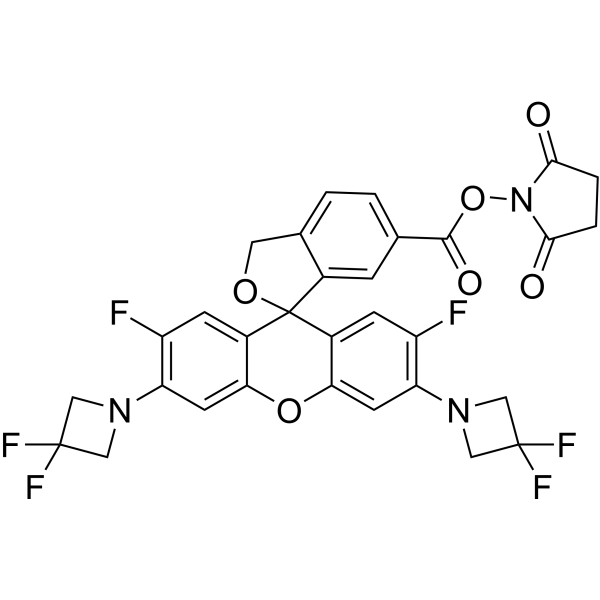
HM Janelia Fluor 526, SE (HM-JF526 NHS) is a derivative of hydroxymethyl JF526 (HM-JF526). SMLM (single-molecule localization microscopy) imaging in standard phosphate-buffered saline (pH 7.4) revealed that the HM-JF526 label showed spontaneous blinking behavior throughout the imaging session and did not require short-wavelength activation light . Janelia Fluor fluorescent dyes can be chemically conjugated to the specific HaloTag substrate (a chloroalkane ligand) to form a fluorescent ligand, rather than binding directly to the HaloTag protein itself. Janelia Fluor products are licensed under U.S. Pat. Nos. 9,933,417, 10,018,624 and 10,161,932 and other patents from Howard Hughes Medical Institute.
loading...
    loading...
Cat. No.: HY-141466
CAS No.: 992-67-6
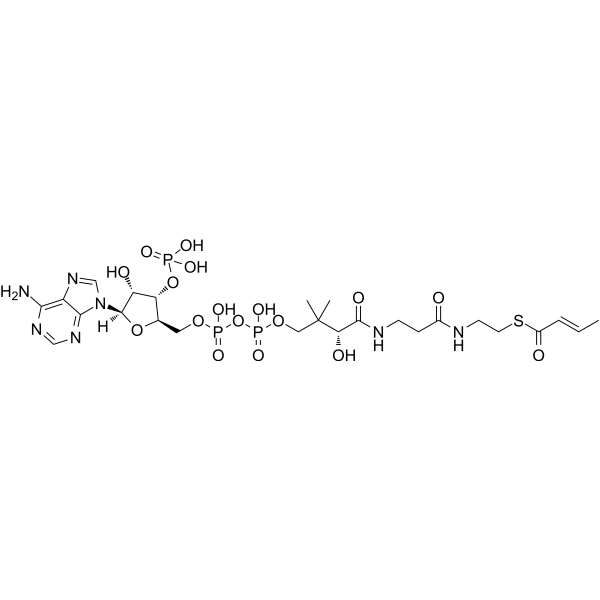
Crotonyl-CoA, a high-energy acyl donor, is an intermediate in the fermentation of butyric acid, and in the metabolism of lysine and tryptophan. Crotonyl-CoA is important in the metabolism of fatty acids and amino acids. Crotonyl-CoA acts as a substrate for p300’s histone crotonyltransferase activity, competing with acetyl-CoA for p300-mediated histone acylation reactions. Crotonyl-CoA regulates global and gene-specific histone crotonylation levels in cells, with cellular concentration changes altering histone crotonylation at regulatory elements of activated genes. Crotonyl-CoA serves as the substrate for crotonyl-CoA reductase/carboxylase (CCRC)-catalyzed NADPH-mediated reduction and carbon dioxide trapping to form unusual alkylmalonyl-CoA polyketide synthase extender units. Crotonyl-CoA can be used for the research of LPS-induced inflammatory response .
loading...
    loading...
Cat. No.: HY-151852
CAS No.: 76487-51-9
Purity:  ≥95.0%
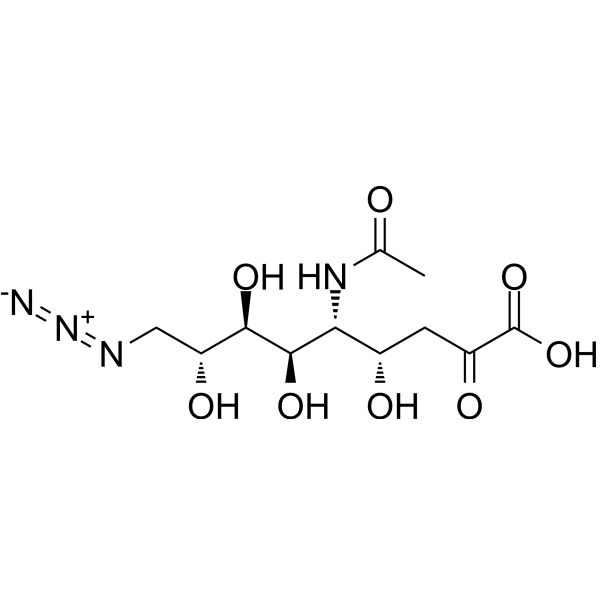
9AzNue5Ac, 9-azido-9-deoxy-N-acetylneuraminic acid, is a click chemistry reagent and a Neu5Ac analogue with the substitution of 9-hydroxyl group with an azide. 9AzNue5Ac could be metabolized and incorporated into sialoglycans in living cells and mice. Click chemistry has great potential for use in binding between nucleic acids, lipids, proteins, and other molecules, and has been used in many research fields because of its beneficial characteristics, including high yield, high specificity, and simplicity . It contains an azide group and can undergo copper-catalyzed azide-alkyne cycloaddition (CuAAc) with molecules containing alkyne groups. It can also undergo ring strain-promoted alkyne-azide cycloaddition (SPAAC) with molecules containing DBCO or BCN groups.
loading...
    loading...
Cat. No.: HY-160841
CAS No.: 2567941-52-8
Research Areas:  

Others

Biotin-16-dCTP is a biotinylated deoxycytidine triphosphate that serves as an important DNA labeling substrate. Biotin-16-dCTP can be enzymatically incorporated into the 3' end of DNA probes via terminal deoxynucleotidyl transferase, forming a 1-3 nucleotide-long tail to achieve biotinylation of the probes. Biotin-16-dCTP enhances chemiluminescent detection of low-abundance targets such as specific tRNA isoacceptors through Northern blotting. Biotin-16-dCTP can also replace conventional dCTP to be integrated into single-stranded DNA generated by asymmetric polymerase chain reaction, which is applicable for bioconjugation or pull-down assays. Repeated freeze-thaw cycles of Biotin-16-dCTP should be avoided to prevent degradation of its function for probe biotinylation .
loading...
    loading...
Cat. No.: HY-161250
Research Areas:  

Cancer

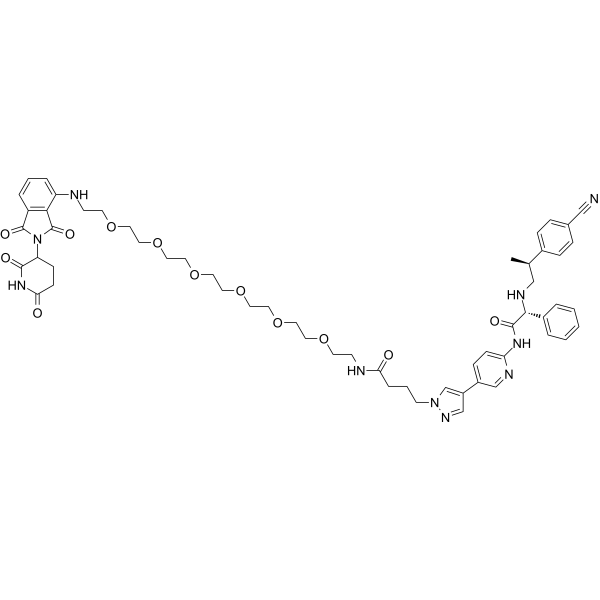
Pomalidomide-NH-PEG6-amide-C2-CPI-1612 is a CBP/EP300 PROTAC degrader with a DC50 value of 1.3 μM. Pomalidomide-NH-PEG6-amide-C2-CPI-1612 mediates the formation of a ternary complex between CRBN and the core of CBP, with an EC50 of 1.2 μM. Pomalidomide-NH-PEG6-amide-C2-CPI-1612 inhibits cancer cell growth and exhibits cell line-specific degradation activity. Pomalidomide-NH-PEG6-amide-C2-CPI-1612 can be used in research related to multiple myeloma and leukemia .
loading...
    loading...
Cat. No.: HY-161577
CAS No.: 701231-39-2
Target:  

Bcl-2 Family

Research Areas:  

Cancer

BFC1103 is a small-molecule compound whose primary mechanism of action involves interaction with a specific domain of Bcl-2, particularly its loop domain. This interaction induces a conformational change in Bcl-2, exposing its BH3 (Bcl-2 homology 3) domain, thereby switching Bcl-2's function from anti-apoptotic to pro-apoptotic. The cell death induced by BFC1103 is dependent on the presence of Bax or Bak, both of which are key proteins involved in the intrinsic apoptotic pathway mediated by mitochondria. BFC1103 has successfully inhibited lung metastasis of triple-negative breast cancer in mouse models. It can be utilized in studying the roles of Bcl-2 family proteins in cancer development and how they impact the survival and proliferation of cancer cells .
loading...
    loading...
Cat. No.: HY-162633
CAS No.: 2925548-22-5
Target:  

Deubiquitinase

Research Areas:  

Cancer

USP1-IN-9 (Compound 1m) is reversible and noncompetitive ubiquitin-specific proteases (USP1) inhibitors with an IC50 of 8.8 nM, which is designed and synthesized to pyrido[2,3-d]pyrimidin-7(8H)-one derivative based on the disclosed structure of ML323(HY-17543) and KSQ-4279(HY-145471). USP1-IN-9 displays excellent USP1/UAF inhibition and exhibits strong antiproliferation effect in breast cancer cells. USP1-IN-9 can generate enhanced cell killing with PARP inhibitor olaparib(HY-10162) in olaparib-resistant MDA-MB-436/OP cells, which is promising for research in the field of cancer .
loading...
    loading...
Cat. No.: HY-164090
CAS No.: 482-67-7
Target:  

P2Y Receptor

Research Areas:  

Cardiovascular Disease

Adenosine 3'-phosphate 5'-phosphosulfate, an adenine nucleotide derivative, is a selective P2Y1 antagonist with no effect on P2Y2, P2Y4, or P2Y6 receptors. Adenosine 3'-phosphate 5'-phosphosulfate can competitive inhibit ADP-induced platelet aggregation, as well as the ability of ADP to cause shape change and increases in Ca 2+ in platelets, but had no effect on the inhibition of stimulated adenylate cyclase by ADP. Adenosine 3'-phosphate 5'-phosphosulfate is a co-substrate used for the sulfonation of glycans. Adenosine 3'-phosphate 5'-phosphosulfate can be used for Golgi-resident PAP-specific 3'-phosphatase-coupled sulfotransferase assays, which as donor substrate to transfer a sulfonate group .
loading...
    loading...

