527 Results for "

electron

" in MedChemExpress (MCE) Product Catalog:
Products (527)

527 Results for "electron" in MCE Product Catalog:

Cat. No.: HY-B0166GL
CAS No.: 50-81-7
Synonyms: L-Ascorbate (GMP Like); Vitamin C (GMP Like)
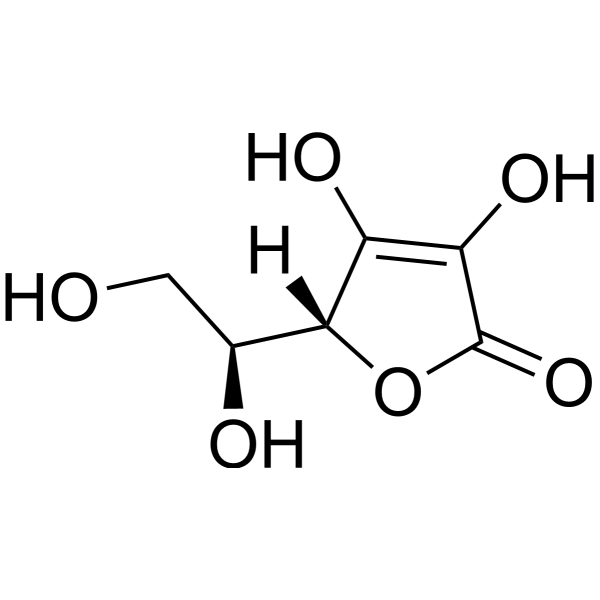
L-Ascorbic acid (GMP Like) is the GMP Like class L-Ascorbic acid (HY-B0166). L-Ascorbic acid (L-Ascorbate, Vitamin C), an electron donor, is an endogenous antioxidant agent. L-Ascorbic acid inhibits selectively Cav3.2 channels with an IC50 of 6.5 μM. L-Ascorbic acid is also a collagen deposition enhancer and an elastogenesis inhibitor . L-Ascorbic acid exhibits anti-cancer effects through the generation of reactive oxygen species (ROS) and selective damage to cancer cells .
loading...
    loading...
Cat. No.: HY-D3129
Target:  

Fluorescent Dye

Research Areas:  

Others

Ratio-pHCL-1 is a fluorescent probe for quantitative ratiometric pH imaging in biological systems. Ratio-pHCL-1 consists of an acrylamide 1,2-dioxetane chemiluminescent scaffold and a linked pH-sensitive carbon fluorescein fluorophore, and functions via chemically initiated electron exchange luminescence (CIEEL) decomposition and chemiluminescence resonance energy transfer (CRET). Ratio-pHCL-1 can cross cell membranes and accumulate intracellularly, enabling pH measurement within the range of 6.8-8.4 .
loading...
    loading...
Cat. No.: HY-D3185
CAS No.: 2243148-62-9
AlDeSense AM is a cell-permeable ALDH1A1-selective fluorescent reporter. AlDeSense AM is oxidized by ALDH1A1, which eliminates photoinduced electron transfer quenching and enhances the fluorescent signal. AlDeSense AM can be used to detect cells with cancer stem cell properties, as well as to monitor the plasticity of cancer stem cells in cell culture systems and animal models. AlDeSense AM is applicable to the study of cancers associated with cancer stem cells, including chronic myeloid leukemia, melanoma, and breast cancer .
loading...
    loading...
Cat. No.: HY-P11475
Research Areas:  

Infection

DD-S067 is an antibacterial peptide. DD-S067 exhibits multiple antibacterial mechanisms, including disrupting both the outer and inner bacterial membranes, and inducing ROS that trigger lipid peroxidation. DD-S067 inhibits the electron transport chain. DD-S067 demonstrates potent antibacterial activity, achieving a GM value of 4.1 μM against 27 MDR bacteria. DD-S067 exhibits significant protective effects in a CRAB-induced septic shock mouse model .
loading...
    loading...
Cat. No.: HY-W008927
CAS No.: 361377-29-9
Fluoxastrobin is a fungicide. By binding to NAD-dependent epimerase/dehydratase, Fluoxastrobin interferes with electron transport, reduces ATP production and inhibits mycelial growth, thereby effectively controlling foliar diseases of tea plants. Fluoxastrobin induces oxidative stress by increasing ROS levels and lipid peroxidation, causes DNA damage and promotes apoptosis; meanwhile, it shows high acute toxicity to Danio rerio embryos and larvae. Fluoxastrobin can be used in research related to tea foliar diseases (including tea red leaf spot and tea gray leaf spot) .
loading...
    loading...
Cat. No.: HY-W019824
CAS No.: 762-29-8
Farnesylacetone acts as a transcriptional regulator, RNA synthesis modulator, and male hormone. Farnesylacetone can be extracted from the androgenic glands of the green crab (Carcinus maenas). Farnesylacetone modulates transcriptional processes, inhibits uridine incorporation into all types of RNA and leucine incorporation into ovaries, while stimulating uridine incorporation into tRNA/poly (A) + RNA and leucine incorporation into testes. It suppresses electron transport in mitochondrial Complex I and Complex II. Farnesylacetone inhibits vitellogenesis in crustacean ovaries and stimulates uridine incorporation in crustacean intestines. It functions as an androgen in crustaceans .
loading...
    loading...
Cat. No.: HY-W800718
CAS No.: 2665664-66-2
Research Areas:  

Others

Methyltetrazine-amido-Tri-(acid-PEG1-ethoxymethyl)-methane is a click chemistry PEG reagent which contains three carboxylic acid groups and a methyltetrazine group. This reagent can react with TCO-containing compounds to form a stable covalent bond without the catalysis of Cu or elevated temperatures. The inverse-electron demand Diels-Alder cycloaddition reaction of TCO with tetrazines is the fastest bioorthogonal reaction with exceptional selectivity. The terminal carboxylic acid can react with primary amine groups in the presence of activators (e.g. EDC, or HATU) to form a stable amide bond.
loading...
    loading...
Cat. No.: HY-K3122

MCE Dry Plant-Derived Extracellular Vesicle Isolation and Purification Kit is specifically optimized for dried plant samples. It facilitates the efficient release of vesicles from plant tissues and employs an optimized extraction and purification system to remove non-vesicular components such as polysaccharides and phenolic compounds, thereby enabling the efficient extraction and purification of plant-derived vesicles. The isolated plant-derived vesicles can be used for downstream applications including transmission electron microscopy (TEM), nanoparticle tracking analysis (NTA), Western blotting, qPCR, cell-based studies, and animal experiments.

loading...
    loading...
Cat. No.: HY-K3123

MCE Succulent Plant -Derived Extracellular Vesicle Isolation and Purification Kit is specifically optimized for succulent plant samples. It facilitates the efficient release of vesicles from plant tissues and employs an optimized extraction and purification system to remove non-vesicular components such as polysaccharides and phenolic compounds, thereby enabling the efficient extraction and purification of plant-derived vesicles. The isolated plant-derived vesicles can be used for downstream applications including transmission electron microscopy (TEM), nanoparticle tracking analysis (NTA), Western blotting, qPCR, cell-based studies, and animal experiments.

loading...
    loading...
Cat. No.: HY-107869R
CAS No.: 476-34-6
Research Areas:  

Cancer

Isoindigo (Standard) is the analytical standard of Isoindigo (HY-107869). This product is intended for research and analytical applications. Isoindigo acts as the acceptor unit in donor-acceptor (D-A) conjugated polymers and belongs to the indigo dye family. Isoindigo contains two lactam rings and exhibits strong electron-withdrawing properties. Isoindigo can be used in dyeing and pigment preparation. Isoindigo shows high mobility and excellent environmental stability in field-effect transistors (FETs). Isoindigo possesses the activity to inhibit tumor cell proliferation and has certain anti-tumor activity .
loading...
    loading...
Cat. No.: HY-134599
CAS No.: 1580501-97-8
Research Areas:  

Cancer

(2E)-TCO-PNB ester is an active reaction substrate with the properties of trans-cyclooctene derivatives. The core chemical property of (2E)-TCO-PNB ester is its ability to undergo efficient inverse electron-demand Diels-Alder (IEDDA) cycloaddition with tetrazine groups. (2E)-TCO-PNB ester can be used in ligation reactions to verify the integrity of tetrazine groups, and also serves as a key synthetic raw material for the preparation of the prodrug TCO-DOX. (2E)-TCO-PNB ester is applied in research related to drug synthesis and bioorthogonal chemistry .
loading...
    loading...
Cat. No.: HY-136079
Target:  

ADC Linkers

Research Areas:  

Cancer

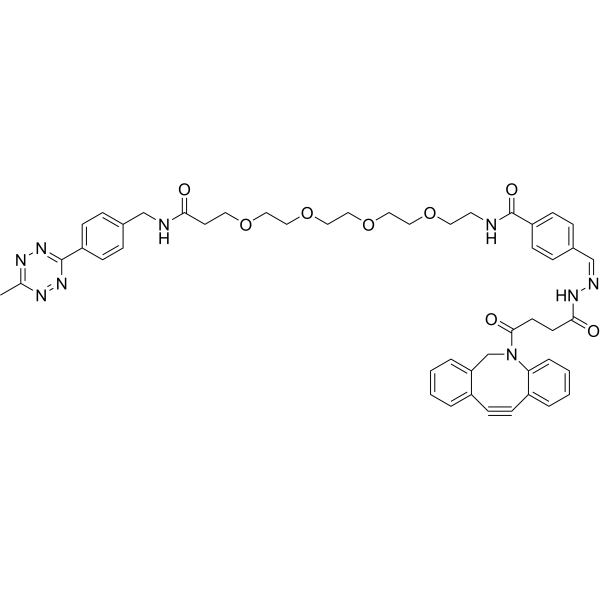
Methyltetrazine-PEG4-hydrazone-DBCO is a cleavable 4 unit PEG ADC linker used in the synthesis of antibody-drug conjugates (ADCs) . Methyltetrazine-PEG4-hydrazone-DBCO is a click chemistry reagent, it contains a DBCO group that can undergo strain-promoted alkyne-azide cycloaddition (SPAAC) with molecules containing Azide groups. Methyltetrazine-PEG4-hydrazone-DBCO also contains a Tetrazine group that can undergo an inverse electron demand Diels-Alder reaction (iEDDA) with molecules containing TCO groups.
loading...
    loading...
Cat. No.: HY-17516R
CAS No.: 129558-76-5
Tolfenpyrad (Standard) is the analytical standard of Tolfenpyrad (HY-17516). This product is intended for research and analytical applications. Tolfenpyrad is an orally active insecticide, acaricide and antibacterial agent. Tolfenpyrad inhibits Complex I in the mitochondrial respiratory electron transport chain, interfering with the cell respiration process. Tolfenpyrad has significant insecticidal activity against a variety of insect pests such as H. contortus, Coccinella septempunctata. Tolfenpyrad has antibacterial activity against Francisella novicida, with an IC50 of 1.2 µM or 1.5 µM .
loading...
    loading...
Cat. No.: HY-176217
Research Areas:  

Cancer

dA-NHbenzylOCF3 is a DNA-targeted radiosensitizer that enhances the sensitivity of tumor cells to X-rays via the dissociative electron attachment (DEA) mechanism. dA-NHbenzylOCF3 shows low cytotoxicity to normal cells and mainly localizes to the cytoplasm and nucleus after entering cells. dA-NHbenzylOCF3 exerts its radiosensitizing effect by inducing cell cycle arrest at the radiation-sensitive G2/M phase. dA-NHbenzylOCF3 can be used for radiosensitization research on malignant tumors such as prostate cancer and breast cancer .
loading...
    loading...
Cat. No.: HY-178495
CAS No.: 261929-60-6
SDH-IN-36 (Compound 17) is a derivative of alpha-D-tocopherol. SDH-IN-36 increases ROS and induces apoptosis by inhibiting SDHC and blocking electron transfer. SDH-IN-36 can inhibit the proliferation of various tumor cells, such as SSK4 (GI50 = 0.156 µM), SSNU638 (GI50 = 0.659 µM), and SKATOIII (GI50 = 0.490 µM) cells. SDH-IN-36 can significantly inhibit tumor growth. SDH-IN-36 can be used for research on cancers such as gastric cancer .
loading...
    loading...
Cat. No.: HY-181478
Target:  

HSP

Research Areas:  

Cancer

Hsp90-IN-45 is a Hsp90 inhibitor. Hsp90-IN-45 competitively binds to the ATP-binding site of purified Hsp90α with a Kd of 70 nM, blocks ATP hydrolysis, and disrupts Hsp90 client signaling. Hsp90-IN-45 inhibits ATPase activity of purified Hsp90α. Hsp90-IN-45 will be radiolabeled with 76/ 77Br for use as a radiotheragnostic agent for PET imaging and Meitner-Auger electron therapy. Hsp90-IN-45 can be used for the research of cancer .
loading...
    loading...
Cat. No.: HY-B1036
CAS No.: 18507-89-6
Target:  

Parasite

Research Areas:  

Infection

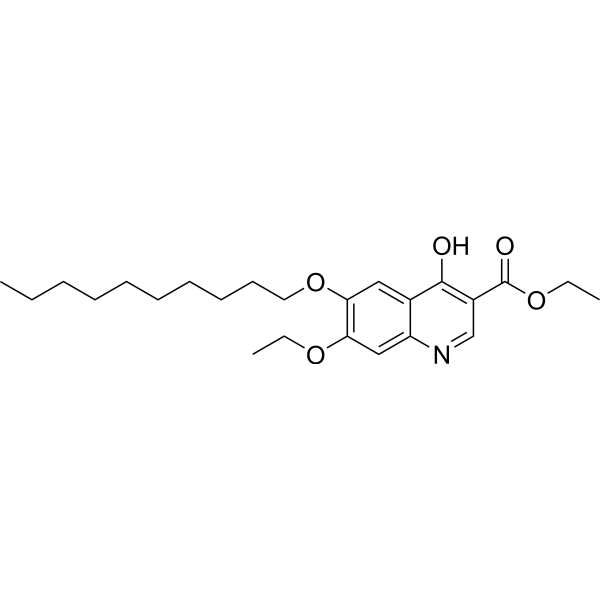
Decoquinate is an orally active, selective inhibitor of the mitochondrial bc1 complex, targeting Eimeria spp. sporozoites and first generation schizonts, and Plasmodium spp. Decoquinate inhibits electron transfer by competitively binding to the mitochondrial cytochrome b system, blocking the parasite's energy metabolism, thereby inhibiting its development and reproduction. Decoquinate has significant anticoccidial activity, preventing intestinal damage and improving host growth performance, and also has inhibitory effects on the liver and blood stages of Plasmodium. Decoquinate is mainly used in veterinary research to prevent and treat coccidiosis in ruminants and poultry .
loading...
    loading...
Cat. No.: HY-B1853R
CAS No.: 1014-70-6
Simetryn (Standard) is the analytical standard of Simetryn (HY-B1853). This product is intended for research and analytical applications. Simetryn is a triazine herbicide that exerts teratogenicity. Simetryn inhibits photosynthesis by blocking electron transfer in the chloroplast photosystem II and activates the MEK/Erk signaling pathway. Simetryn triggers vascular and developmental abnormalities in zebrafish and tadpoles, suppresses proliferation, enhances apoptosis, and induces malformations. Simetryn serves as a tool to establish a zebrafish model for studying arteriovenous malformations and related pathogenesis. Simetryn controls paddy weeds and can be used for research on developmental and vascular disorders .
loading...
    loading...
Cat. No.: HY-F0001A
CAS No.: 1949720-50-6
Synonyms: Disodium NADH hydrate
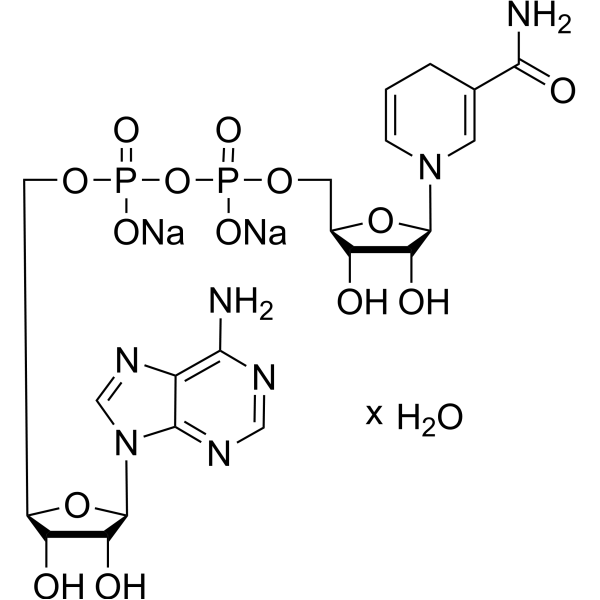
NADH disodium hydrate (Disodium NADH hydrate) is an orally effective reduced coenzyme. NADH disodium hydrate plays a role in regenerating electron donors during cellular energy metabolism, including glycolysis, β-oxidation, and the tricarboxylic acid (TCA) cycle. NADH disodium hydrate regulates calcium homeostasis by promoting the opening of IP3-gated Ca 2+ channels and inhibiting Ryanodine receptor, and affects mitochondrial function through direct interaction with VDAC. NADH disodium hydrate is used in cytoprotective studies related to cerebral ischemic injury, neurodegenerative diseases, aging, and signal transduction .
loading...
    loading...
Cat. No.: HY-N17779
CAS No.: 173658-86-1
3-O-Caffeoyl-5-O-feruloylquinic acid is a quinic acid-based phenolic compound that can be isolated from Eryngium bourgatii. 3-O-Caffeoyl-5-O-feruloylquinic acid regulates free radical scavenging and inflammatory pathways, exerting antioxidant activity through electron transfer and hydrogen atom transfer mechanisms. It also inhibits TNF-α-induced reactive oxygen species (ROS) production and the production of monocyte chemoattractant protein-1 (MCP-1) and its transcripts in human umbilical vein endothelial cells (HUVECs).
loading...
    loading...

