
527 Results for "

electron

" in MedChemExpress (MCE) Product Catalog:
Products (527)

527 Results for "electron" in MCE Product Catalog:

Cat. No.: HY-140312
Target:  

PROTAC Linkers

Research Areas:  

Cancer

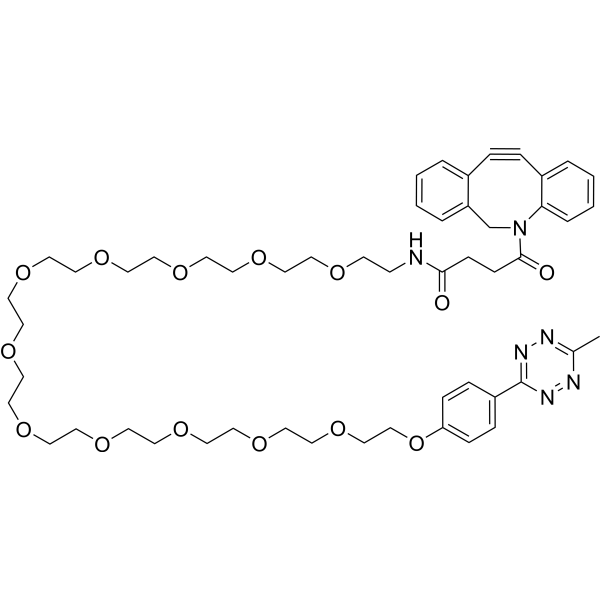
Methyltetrazine-PEG12-DBCO is a PEG-based PROTAC linker that can be used in the synthesis of PROTACs . Methyltetrazine-PEG12-DBCO is a click chemistry reagent, it contains a DBCO group that can undergo strain-promoted alkyne-azide cycloaddition (SPAAC) with molecules containing Azide groups. Methyltetrazine-PEG12-DBCO also contains a Tetrazine group that can undergo an inverse electron demand Diels-Alder reaction (iEDDA) with molecules containing TCO groups.
loading...
    loading...
Cat. No.: HY-184209
Antifungal agent-163 is an antifungal agent. Antifungal agent-163 inhibits the activity of coenzyme Q-cytochrome C reductase (CoQ-Ccr), thereby disrupting electron transport in the mitochondrial respiratory chain. Antifungal agent-163 induces intracellular ROS accumulation, causes cell membrane damage, and impairs mitochondrial function in *Sublineola* cells. Antifungal agent-163 exhibits control effects against fungal plant diseases. Antifungal agent-163 can be used in the research of sorghum anthracnose .
loading...
    loading...
Cat. No.: HY-189416
Target:  

Parasite

Research Areas:  

Infection Inflammation/Immunology

Antimalarial agent-71 is an antimalarial agent and antioxidant. Antimalarial agent-71 is computationally predicted to bind within the PfNDH2 binding pocket, which is located on the type II NADH dehydrogenase of the mitochondrial electron transport chain. Antimalarial agent-71 inhibits the growth of Plasmodium falciparum 3D7 parasites in whole-cell assays. Antimalarial agent-71 scavenges DPPH free radicals. Antimalarial agent-71 can be used in research on malaria and antioxidation .
loading...
    loading...
Cat. No.: HY-B0166S
CAS No.: 1354064-87-1
Synonyms: L-Ascorbate-13C6; Vitamin C-13C6
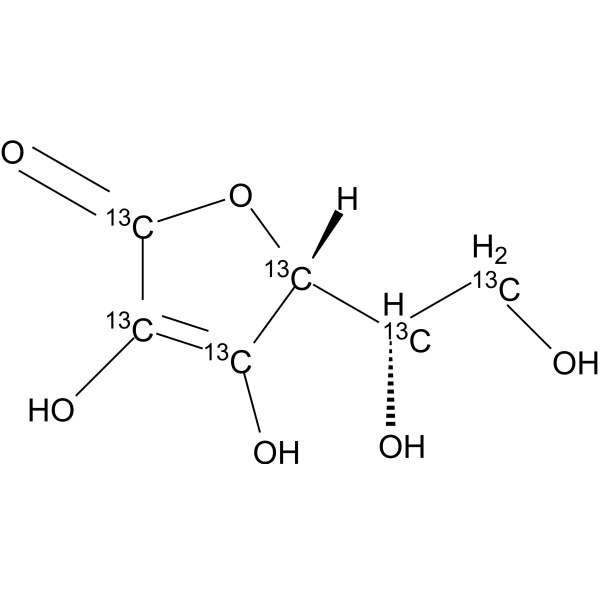
L-Ascorbic acid- 13C6 is the 13C-labeled L-Ascorbic acid. L-Ascorbic acid (L-Ascorbate), an electron donor, is an endogenous antioxidant agent. L-Ascorbic acid inhibits selectively Cav3.2 channels with an IC50 of 6.5 μM. L-Ascorbic acid is also a collagen deposition enhancer and an elastogenesis inhibitor . L-Ascorbic acid exhibits anti-cancer effects through the generation of reactive oxygen species (ROS) and selective damage to cancer cells .
loading...
    loading...
Cat. No.: HY-B0166S1
CAS No.: 178101-88-7
Synonyms: L-Ascorbate-13C; Vitamin C-13C
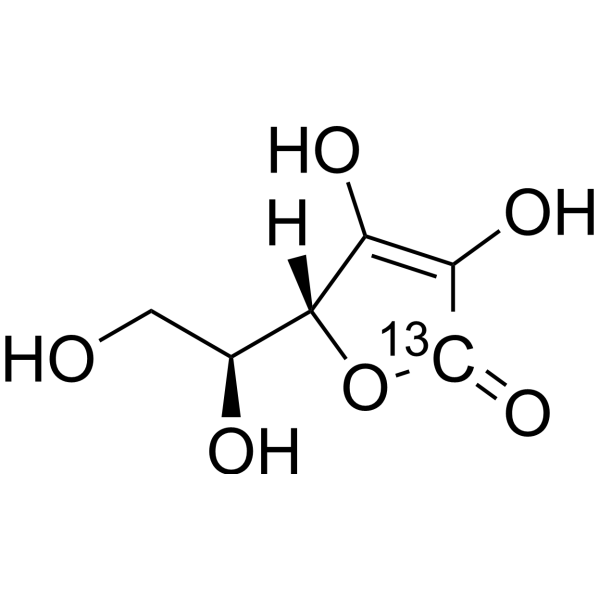
L-Ascorbic acid- 13C is the 13C-labeled L-Ascorbic acid. L-Ascorbic acid (L-Ascorbate), an electron donor, is an endogenous antioxidant agent. L-Ascorbic acid inhibits selectively Cav3.2 channels with an IC50 of 6.5 μM. L-Ascorbic acid is also a collagen deposition enhancer and an elastogenesis inhibitor . L-Ascorbic acid exhibits anti-cancer effects through the generation of reactive oxygen species (ROS) and selective damage to cancer cells .
loading...
    loading...
Cat. No.: HY-D1071
CAS No.: 2055022-06-3
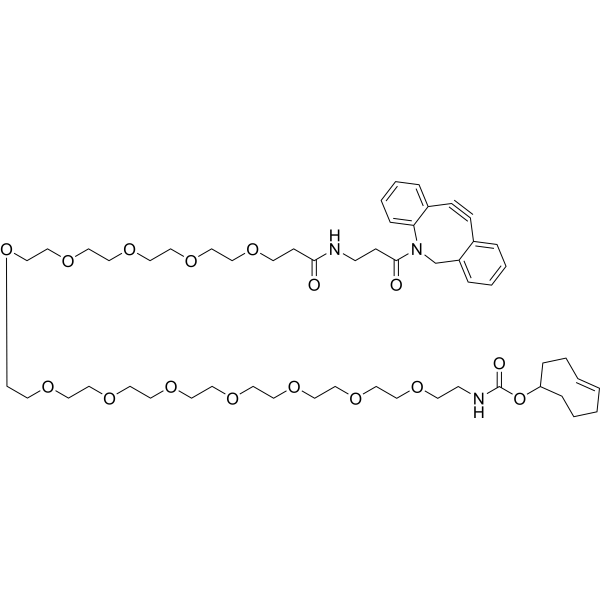
DBCO-PEG12-TCO cantains a TCO and a DBCO moiety. TCO group can specifically react with terrahydrazine. DBCO-PEG12-TCO is a click chemistry reagent, it contains a DBCO group that can undergo strain-promoted alkyne-azide cycloaddition (SPAAC) with molecules containing Azide groups. DBCO-PEG12-TCO also contains a TCO group that can undergo an inverse electron demand Diels-Alder reaction (iEDDA) with molecules containing Tetrazine groups.
loading...
    loading...
Cat. No.: HY-D1557
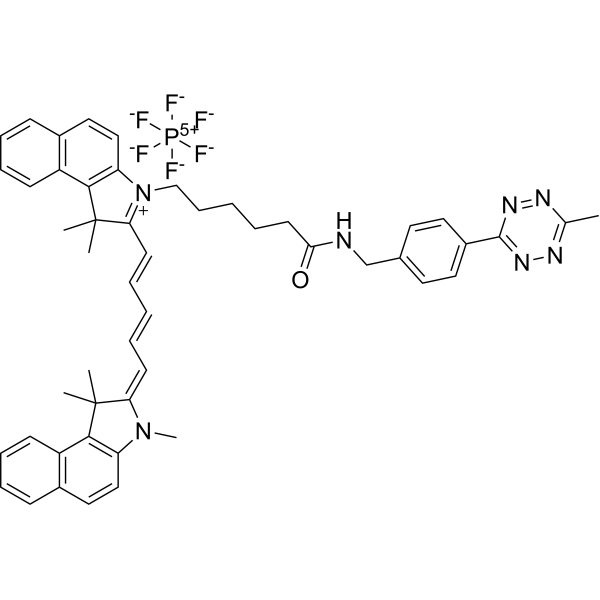
Cyanine5.5 tetrazine is a far-infrared luminescent dye. Cyanine5.5 tetrazine is a Cyanine5.5 (HY-D0925A) derivative contains a tetrazine moiety. Cyanine5.5 tetrazine can be used for in vivo imaging and low background applications. Cyanine5.5 tetrazine is a click chemistry reagent, it contains a Tetrazine group that can undergo an inverse electron demand Diels-Alder reaction (iEDDA) with molecules containing TCO groups.
loading...
    loading...
Cat. No.: HY-D3095
CAS No.: 2244914-41-6
Target:  

Fluorescent Dye

Research Areas:  

Others

TPEP-6-NH-MA is a Fluorescent probe that selectively detects cysteine (Cys) and homocysteine (Hcy) without interference from glutathione (GSH) and other amino acids, and can also be used for bioimaging of biothiols in living cells. Its detection mechanism relies on terminating the photoinduced electron transfer (PET) effect via a Michael addition reaction between the maleimide recognition moiety and the thiol group of Cys or Hcy. The excitation wavelength of TPEP-6-NH-MA is Ex = 361 nm .
loading...
    loading...
Cat. No.: HY-FLB0166
CAS No.: 50-81-7
Target:  

Endogenous Metabolite

Research Areas:  

Metabolic Disease

Vitamin C solution is mainly composed of L-Ascorbic acid (HY-B0166). L-Ascorbic acid (L-Ascorbate), an electron donor, is an endogenous antioxidant agent. L-Ascorbic acid inhibits selectively Cav3.2 channels with an IC50 of 6.5 μM. L-Ascorbic acid is also a collagen deposition enhancer and an elastogenesis inhibitor . L-Ascorbic acid exhibits anti-cancer effects through the generation of reactive oxygen species (ROS) and selective damage to cancer cells .
loading...
    loading...
Cat. No.: HY-P1004
CAS No.: 9014-00-0
Luciferase (bacterial) acts as a luminescence inducer and catalyst. Luciferase (bacterial) catalyzes the reduction of methylene blue, quinones, ferricyanide, and FMN using reduced DPN (HY-12452) (or an alternative electron donor for FMN). Luciferase (bacterial) binds to reduced FMN to form a luminescent reaction complex. Luciferase (bacterial) scavenges reactive oxygen species (ROS) and protects bacterial cells from oxidative stress damage. Luciferase (bacterial) is applicable to studies related to oxidative stress .
loading...
    loading...
Cat. No.: HY-W014386
CAS No.: 132-32-1
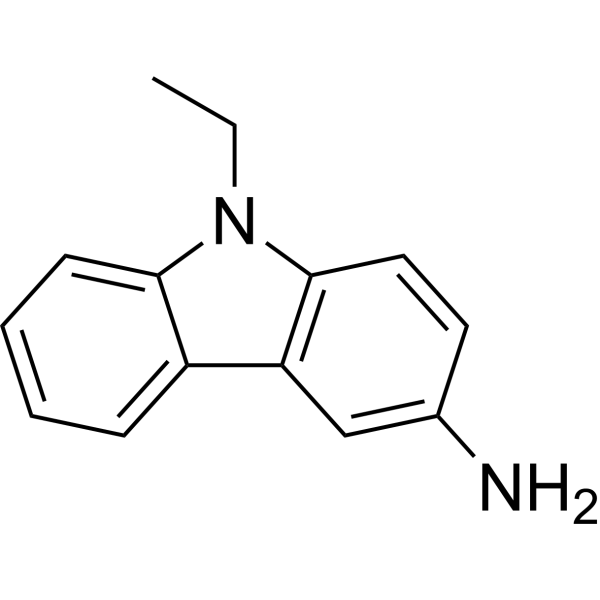
9-Ethyl-9H-carbazol-3-amineWith high electron mobility and other favorable electronic properties, the compound is known for its use in organic electronic devices such as organic light-emitting diodes (OLED)and organic solar cells) have been investigated for potential applications. 9-Ethyl-9H-carbazol-3-amineIt can also be used as a starting material for the synthesis of other organic compounds.
loading...
    loading...
Cat. No.: HY-W034041
CAS No.: 370878-69-6
Synonyms: Tris(2-(4-fluorophenyl)pyridine)iridium; Tris[5-fluoro-2-(2-pyridinyl-kN)phenyl-kC]iridium(III)
Target:  

Endogenous Metabolite

Ir(pF-ppy)3 (Tris(2-(4-fluorophenyl)pyridine)iridium) is a compound that catalyzes photoreactions and has excellent photocatalytic activity. Ir(pF-ppy)3 can be used as a catalyst in organic reactions, especially in photocatalytic synthesis. Ir(pF-ppy)3 shows its unique advantages in promoting electron transfer and improving reaction selectivity. Ir(pF-ppy)3 is also used to improve the efficiency of displays and solar cells.
loading...
    loading...
Cat. No.: HY-W040305
CAS No.: 99-30-9
2,6-Dichloro-4-nitroaniline is an orally active Herbicide, Fungicide and uncoupler. 2,6-Dichloro-4-nitroaniline uncouples oxidative phosphorylation and inhibits electron transport. 2,6-Dichloro-4-nitroaniline induces biphenyl hydroxylase activity in rat liver. 2,6-Dichloro-4-nitroaniline increases the relative liver weight of rats via hepatomegaly without altering their body weight .
loading...
    loading...
Cat. No.: HY-W800721
CAS No.: 2698339-32-9
Research Areas:  

Others

Methyltetrazine-amido-bis-(carboxyethoxymethyl)-methane is a click chemistry PEG reagent which contains three carboxylic acid groups and a methyltetrazine group. This reagent can react with TCO-containing compounds to form a stable covalent bond without the catalysis of Cu or elevated temperatures. The inverse-electron demand Diels-Alder cycloaddition reaction of TCO with tetrazines is the fastest bioorthogonal reaction with exceptional selectivity. The terminal carboxylic acid can react with primary amine groups in the presence of activators (e.g. EDC, or HATU) to form a stable amide bond.
loading...
    loading...
Cat. No.: HY-Y1359
CAS No.: 693-98-1
Synonyms: 2-Methyl-1H-imidazole
Target:  

Drug Intermediate MOFs

Research Areas:  

Others

2-Methylimidazole (2-Methyl-1H-imidazole) is a nitrogen-containing MOF ligand that serves as a laccase-mimicking activity enhancer and a morphology regulator for copper-based metal-organic frameworks. 2-Methylimidazole promotes the formation of natural laccase-like nanoenzyme structures, accelerates electron transfer and enhances catalytic activity. During hydrothermal synthesis, 2-Methylimidazole inhibits the vertical growth of crystals, thus enabling the preparation of two-dimensional nanosheet morphology .
loading...
    loading...
Cat. No.: HY-112573A
CAS No.: 3863-80-7
Synonyms: Phacolysine sodium
Research Areas:  

Neurological Disease

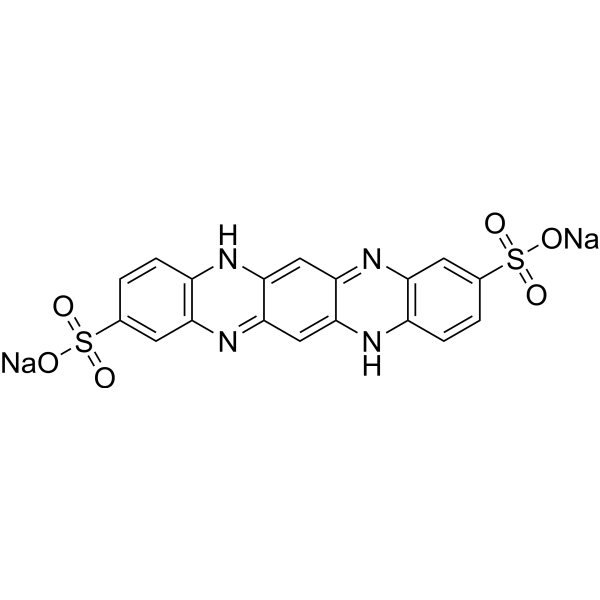
Azapentacene (Phacolysine) sodium is an anti-cataract compound. Azapentacene sodium prevents cataract formation in guinea pigs with vitamin C deficiency and delays the progression of congenital cataract in Nakano mice. Azapentacene sodium undergoes reversible one-electron oxidation to form a stable radical cation, undergoes irreversible secondary oxidation to form a hydrolyzable unstable dication, and can also be oxidized by thallium (III) trifluoroacetate in trifluoroacetic acid to generate a detectable radical cation. Azapentacene sodium is used in research related to cataracts, vitamin C deficiency-induced cataracts, and congenital cataracts .
loading...
    loading...
Cat. No.: HY-114625
CAS No.: 17230-85-2
Amquinate is a coccidiostat and a cytochrome b inhibitor. Amquinate blocks cytochrome-mediated electron transport near cytochrome b in mitochondria, acting downstream of coenzyme Q without affecting succinate dehydrogenase or NADH dehydrogenase. Amquinate inhibits succinate- and malate plus pyruvate-supported mitochondrial respiration in Eimeria tenella and does not affect L-ascorbate-supported respiration or any mitochondrial respiration in chicken liver mitochondria. Amquinate exhibits selective anticoccidial activity against wild-type Eimeria tenella. Amquinate can be used for the research of coccidiosis (Eimeria tenella infection) .
loading...
    loading...
Cat. No.: HY-119475S
Satranidazole-d3 is the deuterium labeled Satranidazole. Satranidazole is an orally active insecticide and antimicrobial agent with high electron affinity. Satranidazole forms reduced nitro intermediates, which interact with DNA, causing helix instability, strand breakage and release of thymidine derivatives. Satranidazole exhibits antitrichomonal activity against Trichomonas vaginalis and Trichomonas foetus, and antiamoebic activity in rodent models of hepatic amoebiasis and caecal amoebiasis. Satranidazole inhibits the replication of bacteriophage φX174 DNA. Satranidazole can be used in research related to caecal amoebiasis, trichomoniasis and anaerobic bacterial infections.
loading...
    loading...
Cat. No.: HY-133428
CAS No.: 2755573-20-5
Target:  

ADC Linkers

Research Areas:  

Cancer

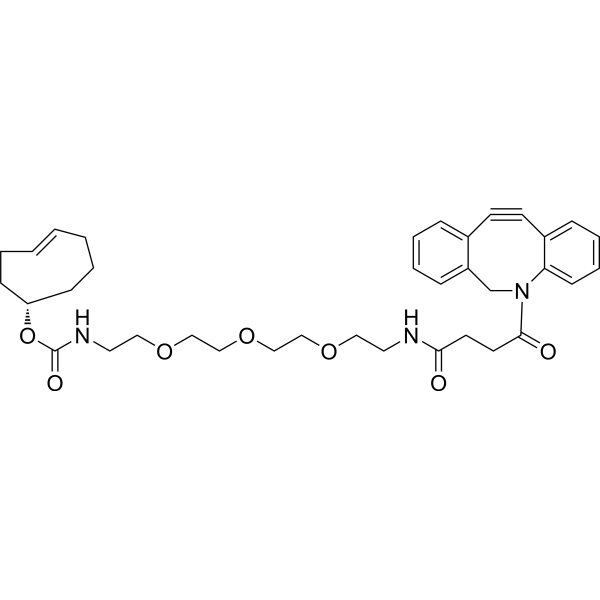
DBCO-PEG3-TCO is a non-cleavable 3 unit PEG ADC linker used in the synthesis of antibody-drug conjugates (ADCs) . DBCO-PEG3-TCO is a click chemistry reagent, it contains a DBCO group that can undergo strain-promoted alkyne-azide cycloaddition (SPAAC) with molecules containing Azide groups. DBCO-PEG3-TCO also contains a TCO group that can undergo an inverse electron demand Diels-Alder reaction (iEDDA) with molecules containing Tetrazine groups.
loading...
    loading...
Cat. No.: HY-148057
CAS No.: 2758671-45-1
Purity:  99.30%
Research Areas:  

Cancer

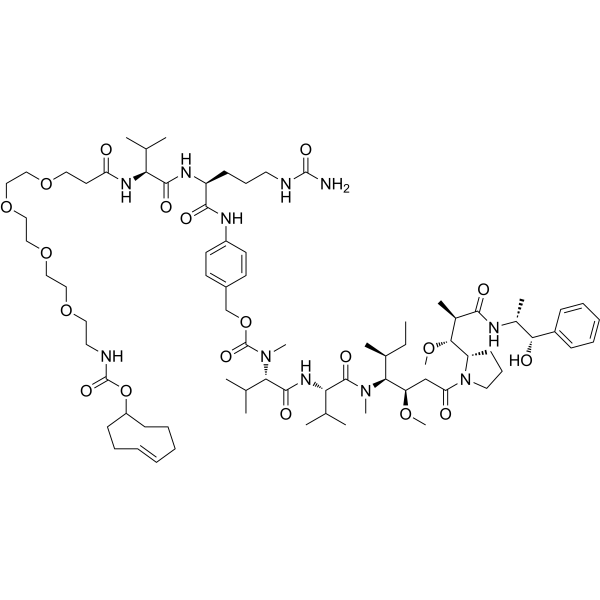
TCO-PEG4-VC-PAB-MMAE is a agent-linker conjugate for ADC. TCO-PEG4-VC-PAB-MMAE contains a cleavable ADC linker (TCO-PEG4-VC-PA) and a potent tubulin inhibitor MMAE (HY-15162) . TCO-PEG4-VC-PAB-MMAE is a click chemistry reagent, it contains a TCO group that can undergo an inverse electron demand Diels-Alder reaction (iEDDA) with molecules containing Tetrazine groups.
loading...
    loading...

