507 Results for "

hydroxyl

" in MedChemExpress (MCE) Product Catalog:
Products (507)

507 Results for "hydroxyl" in MCE Product Catalog:

Cat. No.: HY-174970D
Synonyms: Silane-PEG3400-azide
Silane-PEG3400-N3 (Silane-PEG3400-azide) is a PEG derivative composed of silane, PEG units, and azide groups, which can be used to modify glass, silicon, or other surfaces by reacting hydroxyl groups with ethoxy (methoxy) silanes. Silane-PEG3400-N3 contains an azide group and can undergo copper-catalyzed azide-alkyne cycloaddition (CuAAc) with molecules containing alkyne groups. It can also undergo ring strain-driven alkyne-azide cycloaddition (SPAAC) with molecules containing DBCO or BCN groups .
loading...
    loading...
Cat. No.: HY-174970E
Synonyms: Silane-PEG5000-azide
Silane-PEG5000-N3 (Silane-PEG5000-azide) is a PEG derivative composed of silane, PEG units, and azide groups, which can be used to modify glass, silicon, or other surfaces by reacting hydroxyl groups with ethoxy (methoxy) silanes. Silane-PEG5000-N3 contains an azide group and can undergo copper-catalyzed azide-alkyne cycloaddition (CuAAc) with molecules containing alkyne groups. It can also undergo ring strain-driven alkyne-azide cycloaddition (SPAAC) with molecules containing DBCO or BCN groups .
loading...
    loading...
Cat. No.: HY-174970H
Synonyms: Silane-PEG10000-azide
Silane-PEG10000-N3 (Silane-PEG10000-azide) is a PEG derivative composed of silane, PEG units, and azide groups, which can be used to modify glass, silicon, or other surfaces by reacting hydroxyl groups with ethoxy (methoxy) silanes. Silane-PEG10000-N3 contains an azide group and can undergo copper-catalyzed azide-alkyne cycloaddition (CuAAc) with molecules containing alkyne groups. It can also undergo ring strain-driven alkyne-azide cycloaddition (SPAAC) with molecules containing DBCO or BCN groups .
loading...
    loading...
Cat. No.: HY-183570
CAS No.: 2813319-14-9
Research Areas:  

Cancer

Antitumor photosensitizer-11 is a type-I carbazole/benzindolium photosensitizer with antitumor activity. Antitumor photosensitizer-11 induces ROS generation via a type-I pathway, forming superoxide anions and hydroxyl radicals. Antitumor photosensitizer-11 triggers immunogenic cell death in cancer cells via enhanced oxidative stress. Antitumor photosensitizer-11 exhibits antiproliferative activity in normoxic and hypoxic environments, inhibits breast cancer tumor growth in vivo, and promotes dendritic cell maturation and T cell infiltration. Antitumor photosensitizer-11 can be used for the research of cancer, such as breast cancer .
loading...
    loading...
Cat. No.: HY-78004S1
CAS No.: 20389-19-9
Synonyms: Dibenzil-d4; s-Diphenylethane-d4; Bibenzyl-d4
1,2-Diphenylethane-d4 (Dibenzil-d4; s-Diphenylethane-d4; Bibenzyl-d4) is the d4-labeled Bibenzyl (HY-78004). Bibenzyl (s-Diphenylethane; Dibenzyl) is the parent core structure of bibenzyl-type natural products and an intermediate in organic synthesis. Hydroxyl-substituted derivatives of Bibenzyl are mainly isolated from plants such as Dendrobium (Orchidaceae) and Cannabaceae. These derivatives accumulate when plants are exposed to fungal infection and biotic stress, and exhibit antioxidant, anti-inflammatory, and anti-hepatic steatosis activities .
loading...
    loading...
Cat. No.: HY-W017241R
CAS No.: 4780-79-4
Synonyms: 1-Hydroxymethylnaphthalene (Standard)
1-Naphthalenemethanol (Standard) is the analytical standard of 1-Naphthalenemethanol (HY-W017241). This product is intended for research and analytical applications. 1-Naphthalenemethanol is a hydroxyl-substituted naphthalene derivative. 1-Naphthalenemethanol can be extracted from the root of Annona senegalensis. 1-Naphthalenemethanol is a photolysis product of 1-napthaleneacetic acid. 1-Naphthalenemethanol, together with PAPS, provides some protection against the irreversible inactivation of AST IV caused by N-OH-2AF. 1-Naphthalenemethanol can be used in antibacterial research .
loading...
    loading...
Cat. No.: HY-W1049017
3-Arm PEG2000-NCO is a three-armed PEG derivative. The core structure of 3-Arm PEG2000-NCO consists of three PEG chains, each terminal of which is modified with an isocyanate (-NCO) group. The isocyanate groups in 3-Arm PEG2000-NCO can undergo rapid addition reactions with molecules containing amino (-NH2) or hydroxyl (-OH) groups to form stable carbamate or urea bonds, which can be used in applications such as constructing targeted drug delivery systems and modifying nanoparticles.
loading...
    loading...
Cat. No.: HY-W1049017A
3-Arm PEG5000-NCO is a three-armed PEG derivative. The core structure of 3-Arm PEG5000-NCO consists of three PEG chains, each terminal of which is modified with an isocyanate (-NCO) group. The isocyanate groups in 3-Arm PEG5000-NCO can undergo rapid addition reactions with molecules containing amino (-NH2) or hydroxyl (-OH) groups to form stable carbamate or urea bonds, which can be used in applications such as constructing targeted drug delivery systems and modifying nanoparticles.
loading...
    loading...
Cat. No.: HY-W1049017B
3-Arm PEG10000-NCO is a three-armed PEG derivative. The core structure of 3-Arm PEG10000-NCO consists of three PEG chains, each terminal of which is modified with an isocyanate (-NCO) group. The isocyanate groups in 3-Arm PEG10000-NCO can undergo rapid addition reactions with molecules containing amino (-NH2) or hydroxyl (-OH) groups to form stable carbamate or urea bonds, which can be used in applications such as constructing targeted drug delivery systems and modifying nanoparticles.
loading...
    loading...
Cat. No.: HY-W1049017C
3-Arm PEG20000-NCO is a three-armed PEG derivative. The core structure of 3-Arm PEG20000-NCO consists of three PEG chains, each terminal of which is modified with an isocyanate (-NCO) group. The isocyanate groups in 3-Arm PEG20000-NCO can undergo rapid addition reactions with molecules containing amino (-NH2) or hydroxyl (-OH) groups to form stable carbamate or urea bonds, which can be used in applications such as constructing targeted drug delivery systems and modifying nanoparticles.
loading...
    loading...
Cat. No.: HY-W1049017D
3-Arm PEG40000-NCO is a three-armed PEG derivative. The core structure of 3-Arm PEG40000-NCO consists of three PEG chains, each terminal of which is modified with an isocyanate (-NCO) group. The isocyanate groups in 3-Arm PEG40000-NCO can undergo rapid addition reactions with molecules containing amino (-NH2) or hydroxyl (-OH) groups to form stable carbamate or urea bonds, which can be used in applications such as constructing targeted drug delivery systems and modifying nanoparticles.
loading...
    loading...
Cat. No.: HY-W339834
CAS No.: 325465-92-7
Research Areas:  

Others

1-Stearoyl-sn-glycerol 3-phosphate sodium is a bioactive phospholipid that plays a crucial role in modulating cellular processes such as motility, proliferation, invasion, survival, and growth factor production, primarily through its interaction with G protein-coupled receptors (GPCRs). Typically found at low concentrations in plasma (~100nM), this compound is synthesized during the formation of membrane phospholipids and is derived from various cell types, including activated platelets, epithelial cells, leukocytes, neuronal cells, and tumor cells. Its unique structure includes stearic acid at the sn-1 position alongside a hydroxyl group at the sn-2 position.
loading...
    loading...
Cat. No.: HY-Y1353
CAS No.: 24424-99-5
Research Areas:  

Others Metabolic Disease

Di-tert-butyl dicarbonate (tBOC) is a covalent modification agent for hydroxyl groups (-OH) on the chitosan molecular chain. Di-tert-butyl dicarbonate selectively modifies chitosan and stabilizes the material structure through hydrophobic encapsulation. Di-tert-butyl dicarbonate reacts with the -OH groups of chitosan to form a hydrophobic layer, and in conjunction with triethylamine (TEA), removes trifluoroacetic acid (TFA) salts produced during the electrospinning process, preserving the nanofiber structure and high porosity of the membrane, and improving the material's cytocompatibility and mineralization-promoting ability. Di-tert-butyl dicarbonate can be used in research in the field of guided bone regeneration (GBR) .
loading...
    loading...
Cat. No.: HY-128417AR
CAS No.: 14431-43-7
alpha-D-glucose (hydrate) (Standard) is the analytical standard of alpha-D-glucose (hydrate). This product is intended for research and analytical applications. alpha-D-glucose hydrate is a monosaccharide and the most common form of glucose. It is a monosaccharide, which means it cannot be broken down into simpler sugars. alpha-D-glucose plays a vital role in energy metabolism and is the primary source of energy for many cells in the body. It is also a building block of larger carbohydrates such as starch and glycogen. The "α" prefix refers to the orientation of the hydroxyl group attached to the first carbon atom. Alpha-D-glucose exists in solution as a hydrate, which means it is bound to water molecules.
loading...
    loading...
Cat. No.: HY-132280R
CAS No.: 110101-66-1
Synonyms: U 74006F free base (Standard)
Tirilazad (U 74006F free base) Standard is the analytical standard of Tirilazad (HY-132280). This product is intended for research and analytical applications. Tirilazad (U 74006F free base) is a neuroprotective agent. Tirilazad can also bind tightly to the main protease of the COVID-19 virus and exert anti-SARS-CoV-2 activity. Tirilazad scavenges hydroxyl and lipid peroxyl free radicals and maintains the levels of endogenous antioxidants. Tirilazad reduces cerebral infarct volume and improves neurobehavioral scores in animal models of focal ischemia. Tirilazad can be used in research related to ischemic stroke and subarachnoid hemorrhage .
loading...
    loading...
Cat. No.: HY-183242
CAS No.: 120154-96-3
Target:  

Bacterial Parasite

Research Areas:  

Infection Neurological Disease Cancer

Eilatin is a seven-ring pyridoacridine marine alkaloid with anticancer, antibacterial, and antiparasitic activities. Eilatin acts as a DNA intercalator with selectivity for electron-deficient polycyclic purines; it can chelate Ni 2+ ions and cleave DNA via hydroxyl radical generation. Eilatin induces the SOS response in bacteria, inhibits cancer cell proliferation, and induces cancer cell differentiation and reversion of transformation. The IC50 of Eilatin against Trypanosoma brucei brucei is 1.33 μM. Eilatin can be used in research related to colon tumors, neuroblastoma, chronic myeloid leukemia, acute myeloid leukemia, and trypanosome infections .
loading...
    loading...
Cat. No.: HY-G0004R
CAS No.: 37519-14-5
Synonyms: 3-Hydroxyacetaminophen (Standard)
Acetaminophen metabolite 3-hydroxy-acetaminophen (3-Hydroxyacetaminophen) (Standard) is the analytical standard of Acetaminophen metabolite 3-hydroxy-acetaminophen (HY-G0004). This product is intended for research and analytical applications. Acetaminophen metabolite 3-hydroxy-acetaminophen is a non-toxic metabolite and antioxidant of acetaminophen (HY-66005) with free radical scavenging activity. Acetaminophen metabolite 3-hydroxy-acetaminophen can reduce oxidative damage by exerting electron donation ability and antioxidant activity through phenolic hydroxyl groups. 3-hydroxy-acetaminophen can be used to study the toxicity mechanism and drug metabolism of acetaminophen .
loading...
    loading...
Cat. No.: HY-N21789
CAS No.: 152543-09-4
Dihydroconiferyl dihydro-p-coumarate is a mesophenolic acetylcholinesterase (AChE) inhibitor discovered in orchids such as Vanda roxburghii and Dendrobium nobile, with an IC50 of 118.17 μg/mL against mouse AChE. Dihydroconiferyl dihydro-p-coumarate reduces the hydrolytic activity of AChE, scavenges DPPH and hydroxyl radicals, exhibits potassium ferricyanide reducing power, reduces Mo (VI) to Mo (V), and inhibits lipid peroxidation in mouse brain homogenates. Dihydroconiferyl dihydro-p-coumarate is a key hypoglycemic compound and shows no significant cytotoxicity to human cancer cells. Dihydroconiferyl dihydro-p-coumarate can be used in research related to Alzheimer's disease and type 2 diabetes .
loading...
    loading...
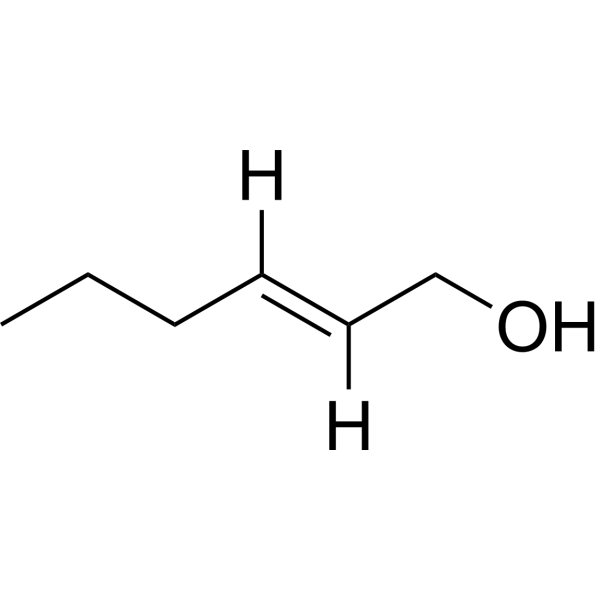
Cat. No.: HY-W015936
CAS No.: 928-95-0
Synonyms: trans-Hex-2-en-1-ol
(E)-Hex-2-en-1-ol belongs to the class of unsaturated alcohols consisting of a six-carbon chain with a double bond between carbon atoms 2 and 3 and a hydroxyl group attached to carbon atom 1. The compound has a grassy or herbaceous smell and is commonly used as a flavoring in foods such as baked goods, candy and beverages. It can also be used as a fragrance ingredient in personal care products and as a starting material for the synthesis of other organic compounds. Furthermore, (E)-hex-2-en-1-ol can be used as a solvent or reagent in various chemical reactions.
loading...
    loading...
Cat. No.: HY-W1048558A
Synonyms: mPEG2000-COOH
mPEG2000-CM (mPEG2000-COOH) is a carboxyl-terminated monomethoxy polyethylene glycol. mPEG2000-CM bears a reactive carboxyl group (-COOH) at its structural terminal site, which can form stable amide bonds with amino groups and ester bonds with hydroxyl groups. mPEG2000-CM binds to PCA-g-PCL copolymers via electrostatic interaction to form polyion complex micelles with a hydrophilic PEG surface, which enhances the stability of micelles in aqueous media. mPEG2000-CM can be used for drug delivery .
loading...
    loading...

