507 Results for "

hydroxyl

" in MedChemExpress (MCE) Product Catalog:
Products (507)

507 Results for "hydroxyl" in MCE Product Catalog:

Cat. No.: HY-W015229R
CAS No.: 830-96-6
Synonyms: Indole-3-propionic acid (Standard); 3-IPA (Standard)
3-Indolepropionic acid (Standard) is the analytical standard of 3-Indolepropionic acid. This product is intended for research and analytical applications. 3-Indolepropionic acid is shown to be a powerful antioxidant and has potential in the treatment for Alzheimer’s disease. In Vitro: 3-Indolepropionic acid is shown to be a powerful antioxidant and has potential in the treatment for Alzheimer’s disease . 3-Indolepropionic acid is a more potent scavenger of hydroxyl radicals than melatonin. Similar to melatonin but unlike other antioxidants, 3-Indolepropionic acid scavenges radicals without subsequently generating reactive and pro-oxidant intermediate compounds . It is also suggested that indolepropionic acid, a gut microbiota-produced metabolite, is a potential biomarker for the development of type 2 diabetes (T2D) that may mediate its protective effect by preservation of β-cell function .
loading...
    loading...
Cat. No.: HY-W115721
CAS No.: 523-21-7
Synonyms: Sodium rhodizonate dibasic
Rhodizonic acid disodium (Sodium rhodizonate dibasic) is a transition metal-dependent pro-oxidant and lead detection agent that induces reactive oxygen species generation, DNA damage, and inhibits Aconitase activity. Rhodizonic acid disodium generates superoxide anion radicals in an iron (II)-dependent manner, leading to aconitase inactivation. Rhodizonic acid disodium also triggers hydroxyl radical-mediated DNA strand breaks and 8-OHdG formation via copper ion reduction. Rhodizonic acid disodium reacts with lead to form a scarlet precipitate, with the color intensity proportional to lead content, enabling qualitative or quantitative analysis of lead. Rhodizonic acid disodium can also be used for real-time visualization of the dynamic process of lead sequestration in the plant rhizosphere and evaluation of the effects of environmental factors such as soil type on the stability of lead-sequestering structures .
loading...
    loading...
Cat. No.: HY-KE8012

Protein Deglycosylation Kit (for O-linked Glycans)contains O-Glycosidase and a2-3,6,8,9 Neuraminidase.Both enzymes are crucial tool enzymes for glycosylation research and are used in combination to enzymatically release O-linked glycans from glycoproteins.O-Glycosidase is capable of cleaving and releasing Core 1 (Gal-B(1-3)-GalNAc-)and Core 3(GIcNAc-B(1-3)-GalNAc-)O-linked disaccharides,which are linked to the hydroxyl groups of Ser or Thr residues in glycoproteins.a2-3,6,8,9 Neuraminidase can remove a(2,3)-,a(2,6)-,a(2,8)-,and a(2,9)-sialic acid residues from the non-reducing termini of O-linked glycans.

loading...
    loading...
Cat. No.: HY-P4948
CAS No.: 1926163-49-6
Research Areas:  

Others

Coumarin-phalloidin is a kind of phalloidin labeled with Coumarin (HY-N0709). Coumarin-phalloidin is a new type of actin probe that can be used for triple immunofluorescence microscopic observation of the cell skeleton .
loading...
    loading...
Cat. No.: HY-P86815
Synonyms: ATP/GTP binding protein antibody; Cleavage and polyadenylation factor I subunit 1 antibody; CLP 1 antibody; clp1 antibody; CLP1 cleavage and polyadenylation factor I subunit homolog antibody; CLP1, cleavage and polyadenylation factor I subunit, homolog (S. cerevisiae) antibody; CLP1, yeast, homolog of antibody; CLP1_HUMAN antibody; hClp1 antibody; Homolog of yeast CFIA subunit Clp1p antibody; ATP/GTP binding protein antibody; Cleavage and polyadenylation factor I subunit 1 antibody; CLP 1 antibody; clp1 antibody; CLP1 cleavage and polyadenylation factor I subunit homolog antibody; CLP1, cleavage and polyadenylation factor I subunit, homolog (S. cerevisiae) antibody; CLP1, yeast, homolog of antibody; CLP1_HUMAN antibody; hClp1 antibody; Homolog of yeast CFIA subunit Clp1p antibody; Polyadenylation factor Clp1 antibody; Polynucleotide kinase Clp1 antibody; Polyribonucleotide 5' hydroxyl kinase Clp1 antibody; Polyribonucleotide 5''-hydroxyl-kinase Clp1 antibody; Pre mRNA cleavage complex II protein Clp1 antibody; Pre-mRNA cleavage complex II protein Clp1 antibody;

Host:  

Rabbit

Application:  

WB, IHC-P, FC

Reactivity:  

Human, Mouse, Rat

loading...
    loading...
Cat. No.: HY-129242
CAS No.: 2896-70-0
Purity:  97.01%
Synonyms: 4-Oxo-Tempo
Research Areas:  

Metabolic Disease Cancer

Tempone (4-Oxo-Tempo) is a nitroxide radical spin label and ROS scavenger. Tempone induces cytotoxicity in lymphoma cells. Tempone serves as a substrate for intracellular reduction to hydroxylamine, rapidly equilibrates between intracellular and extracellular compartments, reduces nitroxide radical spin labels at the ubiquinol site of the respiratory chain, and acts as an alternative terminal electron acceptor when electron flow to oxygen is blocked. Tempone serves as a superoxide sensor, a T2-weighted MRI contrast agent, and a dynamic nuclear polarization polarizing agent for 13C. Tempone inhibits superoxide and peroxynitrite, hydroxyl radical generation, nitrotyrosine formation, and poly (ADP-ribose) formation, and alleviates renal dysfunction and injury in ischemia/reperfusion and hydrogen peroxide-induced injury. Tempone can be used for research on ischemia-reperfusion injury, acute renal failure, and lymphoma .
loading...
    loading...
Cat. No.: HY-E70305
CAS No.: 84012-69-1
Target:  

Endogenous Metabolite

Research Areas:  

Neurological Disease

GlcNAc-1-Phosphotransferase is a Golgi membrane-bound glycosylphosphotransferase. GlcNAc-1-Phosphotransferase is composed of an α/β catalytic subunit encoded by the GNPTAB gene and a γ regulatory subunit encoded by the GNPTG gene, forming an α2β2γ2 hexameric complex. GlcNAc-1-Phosphotransferase catalyzes the transfer of GlcNAc-1-phosphate from UDP-GlcNAc to the C-6 hydroxyl group of terminal mannose residues on high-mannose-type N-glycans, thereby initiating the mannose-6-phosphate tagging pathway. GlcNAc-1-Phosphotransferase loss-of-function mutations can lead to lysosomal storage diseases such as mucolipidosis type II/III. GlcNAc-1-Phosphotransferase can be used in research related to mucolipidosis .
loading...
    loading...
Cat. No.: HY-L914
3,211 compounds

In the research of covalent inhibitors targeting serine and threonine, scientists have found that the nucleophilicity of these hydroxyl groups is significantly enhanced due to the influence of their surrounding environment. This results in higher activity during catalytic reactions. Aspirin, which targets the non-catalytic domain serine (Ser529 in human COX1) of cyclooxygenase, exerts its anti-inflammatory effect through covalent binding. β-lactam antibiotics, which targets the catalytic domain serine of penicillin-binding proteins, interferes with bacterial cell wall synthesis.

Through careful selection, we constructed a structural filter containing over 110 electrophilic groups. By analyzing the electrophilic fragments selected by the structural filter, we removed any molecules with trivial or undesirable structural features. Ultimately, we obtained 3,300 fragment molecules which can target serine and threonine residues and can be used for fragment-based covalent drug discovery.

Cat. No.: HY-184600
Reactive oxygen species responsive hydrogels are a novel class of smart hydrogels, formed by the cross-linking of ROS-responsive modules through covalent, coordination, or supramolecular interactions. Due to the introduction of these ROS-responsive modules, these hydrogels exhibit a sensitive response to the oxidative stress microenvironment present in organisms. PVA-TSPBA hydrogel is a hydrogel formed by the cross-linking polymerization of polyvinyl alcohol (PVA) and the reactive oxygen species-sensitive cross-linking agent N1-(4-benzyl borate)-N3-(4-phenyl borate)N1,N1,N3,N3-tetramethyl-1,3-propanediamine (TSPBA). This hydrogel consists of two parts: a boric acid precursor (TSPBA) and an aqueous solution of PVA. The boric acid bonds on TSPBA and the hydroxyl groups on PVA rapidly cross-link to form borate ester bonds, thus forming the hydrogel.
loading...
    loading...
Cat. No.: HY-D3401
CAS No.: 3121511-17-6
Research Areas:  

Others

LHA585 is a fluorescent probe targeting the lipid hydrogen abstraction process for the early detection of ferroptosis (Ferroptosis). Its detection mechanism relies on the reactivity of its own 4-phenyl-3-methylbut-2-enyl moiety with biologically relevant oxidative radicals, including peroxyl radicals (ROO·), alkoxyl radicals (RO·), hydroxyl radicals (HO·), and peroxynitrite anions (ONOO−); upon hydrogen abstraction from this structure, radical rearrangement and radical cleavage occur, releasing a xanthene radical which converts into a highly fluorescent rhodamine dye in biological environments, thereby achieving a fluorescence turn-on ratio of up to 360-fold. LHA585 is non-fluorescent in its native state, possesses excellent membrane permeability due to its non-polar property, and the rhodamine dye generated after oxidation diffuses into mitochondria. The excitation wavelength of LHA585 is 561 nm, and its emission wavelength ranges from 570 to 620 nm .
loading...
    loading...
Cat. No.: HY-W587743
CAS No.: 1215711-91-3
Synonyms: AMK hydrochloride
N1-Acetyl-5-methoxykynuramine hydrochloride (AMK hydrochloride) is an active metabolite of Melatonin (HY-B0075) with antioxidant activity and blood-brain barrier permeability. N1-Acetyl-5-methoxykynuramine hydrochloride inhibits LPS-induced activation of inducible nitric oxide synthase and COX-2, scavenges ROS, hydroxyl radicals, carbonate radicals and ABTS cation radicals, and protects bovine serum albumin from peroxyl radical-mediated damage. N1-Acetyl-5-methoxykynuramine hydrochloride reduces the increase in cytoplasmic and mitochondrial lipid peroxidation in the substantia nigra and striatum in MPTP (HY-15608)-induced mouse models of Parkinson's disease. N1-Acetyl-5-methoxykynuramine hydrochloride can be used in studies related to Parkinson's disease, metabolism-related diseases and oxidative stress .
loading...
    loading...
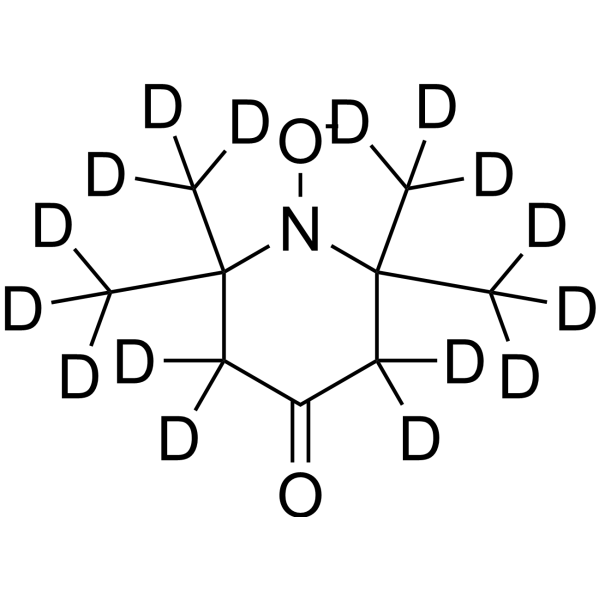
Cat. No.: HY-129242S1
CAS No.: 36763-53-8
Synonyms: 4-Oxo-Tempo-d16
Tempone-d16 (4-Oxo-Tempo-d16) is the deuterated-labeled Tempone (HY-129242). Tempone (4-Oxo-Tempo) is a nitroxide radical spin label and ROS scavenger. Tempone induces cytotoxicity in lymphoma cells. Tempone serves as a substrate for intracellular reduction to hydroxylamine, rapidly equilibrates between intracellular and extracellular compartments, reduces nitroxide radical spin labels at the ubiquinol site of the respiratory chain, and acts as an alternative terminal electron acceptor when electron flow to oxygen is blocked. Tempone serves as a superoxide sensor, a T2-weighted MRI contrast agent, and a dynamic nuclear polarization polarizing agent for 13C. Tempone inhibits superoxide and peroxynitrite, hydroxyl radical generation, nitrotyrosine formation, and poly (ADP-ribose) formation, and alleviates renal dysfunction and injury in ischemia/reperfusion and hydrogen peroxide-induced injury. Tempone can be used for research on ischemia-reperfusion injury, acute renal failure, and lymphoma .
loading...
    loading...
Cat. No.: HY-172892
Research Areas:  

Cancer

PI3K-IN-59 (Compound 3d) is a PI3K inhibitor (IC50: 17.44 μM). PI3K-IN-59 has significant antiproliferative activity and exhibits potent inhibitory effects on breast cancer 4T1 cells (IC50: 3.70 μM) and colon cancer CT26 cells (IC50: 1.98 μM) as well as human breast cancer cells (IC50: 19.72 μM). PI3K-IN-59 exerts a dual anti-tumor mechanism by inhibiting PI3Kα enzymatic activity and triggering the Fenton reaction to generate hydroxyl radicals (•OH). PI3K-IN-59 shows promising anti-4T1 tumor effects and is suitable for synergistic targeting studies in breast and colon cancers .
loading...
    loading...
Cat. No.: HY-B1829R
CAS No.: 312-93-6
Synonyms: Dexamethasone 21-phosphate (Standard)
Dexamethasone phosphate (Standard) (Dexamethasone 21-phosphate (Standard)) is the analytical standard of Dexamethasone phosphate (HY-B1829). This product is intended for research and analytical applications. Dexamethasone phosphate (Dexamethasone 21-phosphate) is a prodrug form of the glucocorticoid Dexamethasone (HY-14648). Dexamethasone phosphate is prepared by introducing a phosphate ester group to the hydroxyl group at position 21 of the Dexamethasone molecule. Dexamethasone phosphate inhibits LPS (HY-D1056)-induced degradation of IRAK-1 and IRAK-4, and blocks LPS-induced activation of TRAF6, p-TAK1 and p-JNK. Dexamethasone phosphate inhibits the secretion of RANTES, TGF-β1 and NO, promotes the production of MIP-1α and IL-10, and blocks microglial migration. Dexamethasone phosphate is almost completely converted to Dexamethasone in rat blood, and supports transdermal delivery via iontophoresis. Dexamethasone phosphate can be used in research related to steroid-dependent ulcerative colitis, chemotherapy-induced vomiting, allergic asthma and acute colitis (inflammatory bowel disease).
loading...
    loading...
Cat. No.: HY-D3120
CAS No.: 2246946-53-0
Target:  

Fluorescent Dye

Research Areas:  

Others

LysoAIE2 is a Fluorescent probe for lysosomal viscosity detection and live-cell imaging. Its detection mechanism relies on the aggregation-induced emission effect: it exhibits only weak fluorescence in non-viscous media; in viscous environments, restricted intramolecular motion inhibits non-radiative energy dissipation pathways, thereby significantly enhancing fluorescence intensity. It achieves specific targeting of lysosomes through the proton acceptor property of its indole ring structure, while its hydroxyl group endows it with excellent water solubility. This probe is basically unaffected by microenvironmental polarity and pH within the range of pH 4.0 to pH 8.0, which avoids interference from these factors in viscosity measurement. LysoAIE2 has an emission wavelength of 570 nm. It can be used to monitor lysosomal viscosity changes during processes such as Dexamethasone (HY-14648)-induced lysosomal migration and starvation-induced mitophagy in live cells; at concentrations up to 40 μM, cell viability remains above 80%, demonstrating excellent biocompatibility .
loading...
    loading...
Cat. No.: HY-W145481A
CAS No.: 11078-30-1
Synonyms: Carob galactomannan
D-Galacto-D-mannan (Carob galactomannan) is an orally active Dectin-2 agonist. D-Galacto-D-mannan exerts antioxidant activity against hydroxyl radical generation. D-Galacto-D-mannan activates Dectin-2 to trigger downstream signaling pathways, promote the expression of immunoregulatory molecules, coordinate innate and adaptive immune responses, and inhibit excessive inflammatory responses by upregulating the expression of Sirtuin 1. When used as a vaccine adjuvant, D-Galacto-D-mannan induces cellular and humoral immune responses, promotes IFNγ secretion, increases antibody levels and virus neutralization titers, and elevates the levels of immunoglobulin G and A. D-Galacto-D-mannan can serve as an adjuvant for foot-and-mouth disease vaccines, enhance the vaccine-mediated ability of hosts to defend against viral infection in mice, and reduce local side effects at the inoculation site in pigs. D-Galacto-D-mannan can be used in the research of inflammatory and immune diseases, such as foot-and-mouth disease .
loading...
    loading...
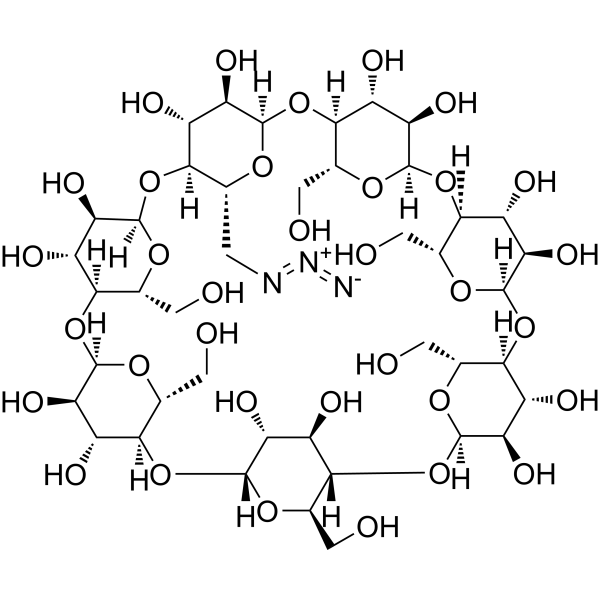
Cat. No.: HY-101532
CAS No.: 98169-85-8
Purity:  ≥98.0%
Synonyms: β-CDN3; 6A-deoxy-6A-azido-β-cyclodextrin
Research Areas:  

Others

6A-Azido-6A-deoxy-β-cyclodextrin (β-CDN3) is a site-specifically modified β-cyclodextrin with a single azido group replacing the hydroxyl group at the C6 position. 6A-Azido-6A-deoxy-β-cyclodextrin forms a host-guest inclusion complex with Dexamethasone (HY-14648), localizing the drug within its hydrophobic cavity, which restricts the rotational mobility of the drug and places Dexamethasone in a less polar environment. 6A-Azido-6A-deoxy-β-cyclodextrin acts as a coupling agent to graft β-cyclodextrin onto thermosensitive nanogels via strain-promoted alkyne-azide cycloaddition (SPAAC). 6A-Azido-6A-deoxy-β-cyclodextrin also serves as a click chemistry reagent. It contains an azide group and undergoes copper-catalyzed azide-alkyne cycloaddition (CuAAc) with molecules bearing an alkyne group. It also undergoes strain-driven alkyne-azide cycloaddition (SPAAC) with molecules containing DBCO or BCN groups .
loading...
    loading...
Cat. No.: HY-103315R
CAS No.: 68099-86-5
Synonyms: CERM 1978 (Standard); Org 5730 hydrochloride (Standard)
Bepridil hydrochloride (Standard) (CERM 1978 (Standard);Org 5730 hydrochloride (Standard)) is the analytical standard of Bepridil hydrochloride (HY-103315). This product is intended for research and analytical applications. Bepridil hydrochloride is an orally active non-selective calcium channel antagonist with multi-ion channel blocking activity. Bepridil hydrochloride modulates Calmodulin, the 20S proteasome, T-type/L-type calcium channels, cardiac sodium channels, multiple potassium channels, γ-secretase, β-secretase, and mitoKATP/sarcKATP channels. Bepridil hydrochloride acts as a hydroxyl radical scavenger, regulates mitochondrial and intracellular calcium handling, and exerts antiarrhythmic, antianginal, and cardioprotective effects. Bepridil hydrochloride alters amyloid precursor protein processing, reduces β-amyloid and thalamic calcium levels, restores seladin-1/DHCR24 expression, and improves sensorimotor recovery after cerebral ischemia. Bepridil hydrochloride also exhibits potent inhibitory effects on SARS-CoV-2 replication. Bepridil hydrochloride is used in studies related to stable angina, arrhythmias, cerebral ischemia, Alzheimer's disease, and SARS-CoV-2 infection .
loading...
    loading...
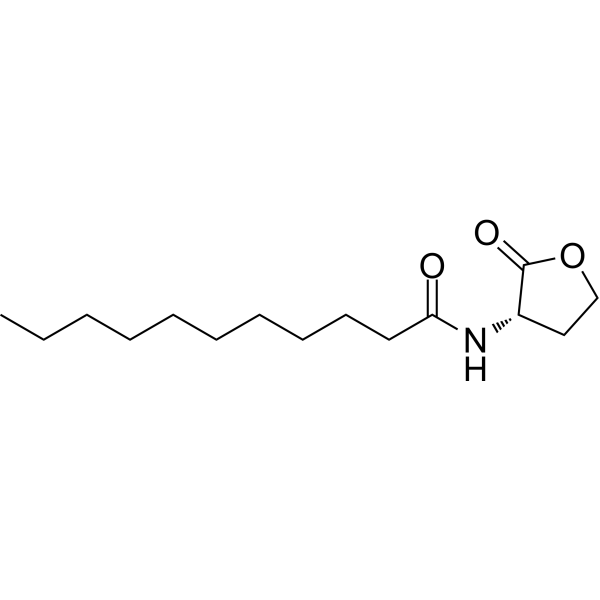
Cat. No.: HY-114773
CAS No.: 216596-71-3
Quorum sensing is a regulatory system used by bacteria to control gene expression in response to increased cell density. This regulatory process manifests itself in a variety of phenotypes, including biofilm formation and virulence factor production. Coordinated gene expression is achieved through the production, release and detection of small diffusible signaling molecules called autoinducers. N-acylated homoserine lactones (AHLs) comprise a class of such autoinducers, each of which generally consists of a fatty acid coupled to a homoserine lactone (HSL). Modulation of bacterial quorum-sensing signaling systems to suppress pathogenesis represents a new approach to antimicrobial research for infectious diseases. AHLs differ in acyl length (C4-C18), C3 substitution (hydrogen, hydroxyl, or oxo group), and the presence or absence of one or more carbon-carbon double bonds in the fatty acid chain. These differences confer signaling specificity through the affinity of the LuxR family of transcriptional regulators. C11-HSL has a rare odd-numbered acyl carbon chain and may be a minor quorum-sensing signaling molecule in Pseudomonas aeruginosa strains.
loading...
    loading...
Cat. No.: HY-116161
CAS No.: 130273-87-9
Target:  

Drug Intermediate

Research Areas:  

Cardiovascular Disease Others

15(R)-17-phenyl trinor Prostaglandin F2α isopropyl ester (15(R)-17-phenyl trinor PGF2α isopropyl ester) is the latanoprost-related isomer containing both a double bond at 13,14 and an inverted (β) hydroxyl group at C-15. Similar to 15(S)-latanoprost, 15(R)-17-phenyl trinor PGF2α isopropyl ester is a potential impurity in most commercial preparations of the latanoprost bulk drug product. The IC50 values for the free acid forms of 15(S)-17-phenyl trinor PGF2α and 15(R)-17-phenyl trinor PGF2α were determined to be 0.71 nM and 30 nM, respectively, in a FP receptor binding assay using the cat iris sphincter muscle.1 A 3 μg dose of 15(R)-17-phenyl trinor PGF2α caused a 1.9 mmHg reduction of IOP in normotensive cynomolgus monkeys.
loading...
    loading...

