515 Results for "

high specificity

" in MedChemExpress (MCE) Product Catalog:
Products (515)

515 Results for "high specificity" in MCE Product Catalog:

Cat. No.: HY-101144R
CAS No.: 850807-63-5
Synonyms: TCD-717 (Standard)
Research Areas:  

Cancer

RSM-932A (Standard) is the analytical standard of RSM-932A (HY-101144). This product is intended for research and analytical applications. RSM-932A (TCD-717) is a specific ChoKα inhibitor with IC50s of 1 and 33 μM for human recombinant ChoKα and ChoKβ enzymes, respectively. RSM-932A acts as the “first in humans” compound targeting ChoKα. RSM-932A is potent in vitro anti-proliferative and in vivo anti-tumoral activity against human xenografts in mice, showing high efficacy with low toxicity profiles .
loading...
    loading...
Cat. No.: HY-107420R
CAS No.: 366-93-8
AY 9944 (Standard) is the analytical standard of AY 9944 (HY-107420). This product is intended for research and analytical applications. AY 9944 is a specific cholesterol biosynthesis inhibitor. AY 9944 inhibits the 7-dehydro cholesterol Δ7-reductase (DHCR7) enzyme with an IC50 of 13 nM. AY 9944 causes hypocholesterolemia and accumulation of 7DHC. At high doses, AY 9944 inhibits also in cultured embryos sterol Δ7-Δ8 isomerase, which causes the accumulation of cholest-8-en-3β-ol .
loading...
    loading...
Cat. No.: HY-121535
CAS No.: 116476-16-5
Research Areas:  

Others

Levosemotiadil, an S-isomer of semotiadil, exhibits stronger binding affinity to human serum albumin (HSA) compared to its R-isomer counterpart. This study utilized high-performance frontal analysis (HPFA) to demonstrate that levosemotiadil binds approximately three times more strongly to HSA than semotiadil. The binding parameters were evaluated using Scatchard analysis, revealing specific interactions with the diazepam binding site on HSA. The presence of diazepam decreased the binding affinity of both enantiomers, while warfarin did not alter their binding characteristics. These findings highlight levosemotiadil's potential as a Ca- and Na-channel blocker with significant binding preferences for HSA, crucial for understanding its pharmacokinetics and therapeutic effects .
loading...
    loading...
Cat. No.: HY-14151R
CAS No.: 179474-81-8
Prucalopride (Standard) is the analytical standard of Prucalopride. This product is intended for research and analytical applications. Prucalopride is an orally active, selective and specific 5-HT 4 receptor agonist (high affinity), with pKis of 8.6 and 8.1 for human 5-HT4a/4b receptors, respectively. Prucalopride improves intestinal motility by promoting regeneration of the intestinal nervous system in rats. Prucalopride also shows anticancer activity by blocking of the PI3K/AKT/mTor signaling pathway. Prucalopride can be used in studies of chronic constipation, pseudo-intestinal obstruction and cancer .
loading...
    loading...
Cat. No.: HY-158476
Synonyms: FA2G2S1 N-linked oligosaccharide, procainamide labelled; α(2,6)/FA2G2S(6)1 glycan, procainamide labelled; F(6)A2G(4)2S(6)1 glycan, procainamide labelled
FA2G2S1 glycan (G2FS1), procainamide labelled (FA2G2S1 N-linked oligosaccharide, procainamide labelled; α(2,6)/FA2G2S(6)1 glycan, procainamide labelled; F(6)A2G(4)2S(6)1 glycan, procainamide labelled) is a N-polysaccharide protein and a multifunctional fluorescent linker. The resulting conjugates exhibit high sensitivity and specificity by mimicking the antennal elements of N-glycans .
loading...
    loading...
Cat. No.: HY-172815
CAS No.: 3079913-81-5
Research Areas:  

Cancer

IDB-001 is a human ribosomal peptidyl transferase center (PTC) inhibitor that induces conformational changes and blocks translational elongation in specific sequence contexts through complementary interactions with Asp/Glu residues in nascent polypeptides. IDB-001 preferentially stalls ribosomes at positions containing acidic peptide motifs, thereby inhibiting cancer cell proliferation, and activates the integrated stress response via eIF2α phosphorylation at high concentrations. In addition, IDB-001 mildly triggers ribotoxic stress responses through phosphorylation of JNK and p38. IDB-001 has been applied to mechanistic studies of triple-negative breast cancer .
loading...
    loading...
Cat. No.: HY-B0661C
CAS No.: 80223-99-0
Synonyms: YM12617 hydrochloride; LY253351 hydrochloride
Tamsolusin hydrochloride (YM12617 hydrochloride; LY253351 hydrochloride) is an isomer of Tamsulosin (HY-B0661). Tamsolusin hydrochloride is a sulfonamide phenethylamine derivative and a competitive antagonist of selective post-synaptic α1-adrenoceptors. Tamsolusin hydrochloride inhibits CYP3A4 activity in a non-competitive, enantiomer-specific manner, with an IC50 and Ki of 6.75 μM. Tamsolusin hydrochloride produces dose-dependent hypotension, preferentially antagonizing α1-adrenoceptor-mediated pressor responses, and inhibits α2-adrenoceptor-mediated pressor responses at high doses. Tamsolusin hydrochloride can be used in research related to various diseases such as metabolism .
loading...
    loading...
Cat. No.: HY-N16308
CAS No.: 3091879-77-2
Category:  

Lipids

Target:  

Fluorescent Dye

ER-Laurdan is a derivative of the membrane-permeable fluorescent probe Laurdan (HY-D0080) that targets the endoplasmic reticulum (ER). As a membrane fluidity reporter, ER-Laurdan specifically localizes to the ER luminal membrane, and exhibits a prominent solvatochromic response to fluidity changes caused by membrane packing and exogenous saturated fatty acid stress. ER-Laurdan shows no overlapping localization with mitochondria, enables quantitative analysis of ER membrane fluidity via generalized polarization ratio measurement, and allows automatic signal masking with the help of ER markers. With high specificity and quantitative capability, ER-Laurdan serves as an important tool for investigating metabolic disorders and associated changes in the physical properties of cell membranes .
loading...
    loading...
Cat. No.: HY-W009724R
CAS No.: 524-95-8
Synonyms: 2-APB (Standard)
2-Aminoethyl diphenylborinate (Standard) is the analytical standard of 2-Aminoethyl diphenylborinate (HY-W009724). This product is intended for research and analytical applications. 2-Aminoethyl diphenylborinate (2-APB) is a cell-permeable inhibitor of Inositol triphosphate receptor (IP3R). 2-Aminoethyl diphenylborinate also inhibits the store-operated Ca 2+ (SOC) channel and activates some TRP channels (V1, V2 and V3). Additionally, 2-Aminoethyl diphenylborinate has inhibitory effects on vasospasm. At high concentrations, it exhibits specific anti-inflammatory and antioxidant effects in neural tissue .
loading...
    loading...
Cat. No.: HY-L166
1,751 compounds

Ion channel is a membrane-binding enzyme whose catalytic site is an ion conduction pore, which is opened and closed in response to specific environmental stimuli (voltage, ligand concentration, membrane tension, temperature, etc.). Ion channel provide pores for the passive diffusion of ions on the biofilm. Due to their high selectivity for ion, ion channel are generally classified as sodium (Na+ ), potassium (K+ ), calcium (Ca2+ ), chloride (Cl- ), and non-specific cation channel. Ion channel is an important contributor to cell signal transduction and homeostasis. In addition to electrical signal transduction, ion channel also have many functions: regulating vascular smooth muscle contraction, maintaining normal cell volume, regulating glandular secretion, protein kinase activation, etc. Therefore, dysfunction of ion channel can lead to many diseases, and its mechanism research is particularly important.

MCE designs a unique collection of 1,751 small molecules related to ion channel, mainly targeting Na+ channel, K+ channel, Ca2+ channel, GABA receptor, iGluR, etc. It is an essential tool for research of cardiovascular diseases, Nervous system diseases and other diseases.

Cat. No.: HY-124350R
CAS No.: 134-05-4
10-Formylfolic acid (Standard) is the analytical standard of 10-Formylfolic acid (HY-124350). This product is intended for research and analytical applications. 10-Formylfolic acid is a potent inhibitor of dihydrofolate reductase, with an IC50 of 80 nM against the rat enzyme. 10-Formylfolic acid also acts as an orally active folate source and a growth factor for specific bacteria. 10-Formylfolic acid supports growth and increases plasma folate levels; its absorption and metabolism patterns are similar to those of folic acid, but its liver retention is slightly higher. It exhibits high folate activity in microbial assays, serves as a growth factor for Enterococcus faecalis and Lactobacillus casei, aids folate nutrient supply, and may exert cell regulatory functions .
loading...
    loading...
Cat. No.: HY-124350S
CAS No.: 461426-41-5
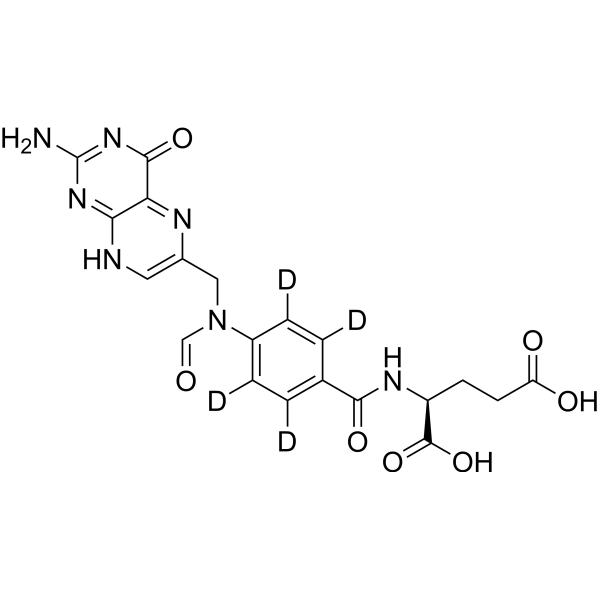
10-Formylfolic acid-d4 is the deuterated-labeled 10-Formylfolic acid (HY-124350). 10-Formylfolic acid is a potent inhibitor of dihydrofolate reductase, with an IC50 of 80 nM against the rat enzyme. 10-Formylfolic acid also acts as an orally active folate source and a growth factor for specific bacteria. 10-Formylfolic acid supports growth and increases plasma folate levels; its absorption and metabolism patterns are similar to those of folic acid, but its liver retention is slightly higher. It exhibits high folate activity in microbial assays, serves as a growth factor for Enterococcus faecalis and Lactobacillus casei, aids folate nutrient supply, and may exert cell regulatory functions .
loading...
    loading...
Cat. No.: HY-12694R
CAS No.: 179474-85-2
Synonyms: R-108512 (Standard)
Prucalopride (succinate) (Standard) is the analytical standard of Prucalopride (succinate). This product is intended for research and analytical applications. Prucalopride succinate is an orally active, selective and specific 5-HT 4 receptor agonist (high affinity), with pKis of 8.6 and 8.1 for human 5-HT4a/4b receptors, respectively. Prucalopride succinate improves intestinal motility by promoting regeneration of the intestinal nervous system in rats. Prucalopride succinate also shows anticancer activity by blocking of the PI3K/AKT/mTor signaling pathway. Prucalopride succinate can be used in studies of chronic constipation, pseudo-intestinal obstruction and cancer .
loading...
    loading...
Cat. No.: HY-141659A
Research Areas:  

Neurological Disease

(R)-CMPD-39 is the R enantiomer of CMPD-39 ( HY-141659 ). CMPD-39 is a selective non-covalent inhibitor of the ubiquitin-specific protease USP30 (IC50 =~20 nM), with high selectivity over other DUB family members (1-100 μM). CMPD-39 inhibits the deubiquitinating activity of USP30, enhances the ubiquitination of mitochondrial proteins TOMM20 and SYNJ2BP; thus, CMPD-39 promotes phosphoubuitin accumulation, thereby accelerating mitochondrial autophagy (mitophagy) and peroxisomal autophagy (pexophagy). CMPD-39 significantly restores impaired mitochondrial function in dopaminergic neurons derived from Parkinson's disease patients .
loading...
    loading...
Cat. No.: HY-E70400
Target:  

DNA/RNA Synthesis

Research Areas:  

Infection

Thermostable T7 RNA Polymerase is a thermostable version of T7 RNA Polymerase (HY-E70090). Compared with T7 RNA Polymerase, it has high temperature resistance and stable activity. T7 RNA polymerase is a polymerase expressed by Escherichia coli from the RNA polymerase gene of T7 bacteriophage. T7 RNA polymerase is highly specific and involved in in vitro transcription (IVT) of mRNA. In the presence of Mg 2+, T7 RNA polymerase only uses the single-stranded or double-stranded DNA containing the T7 promoter sequence as a template, and uses NTP as a substrate to synthesize RNA complementary to the single-stranded DNA downstream of the promoter .
loading...
    loading...
Cat. No.: HY-P991196

Research Areas:  

Cancer

Anti-CD24 Antibody (SWA11) is a human IgG1 monoclonal antibody targeting CD24, with high affinity and specificity for CD24-expressing tumor cells. Anti-CD24 Antibody (SWA11) triggers endocytosis, alters STAT3-dependent gene expression, regulates Src phosphorylation, and blocks CD24-mediated signaling pathways. Anti-CD24 Antibody (SWA11) is applicable to cancer-related research such as lung cancer and ovarian cancer. Recommended isotype control: Human IgG1 kappa, Isotype Control (HY-P99001) .
loading...
    loading...
Cat. No.: HY-P991881
KY1070 is a fully human anti-BMP6 antibody with a Kd of 0.00014 μM against the human BMP6. It exhibits high specificity for BMP6, showing no cross-reactivity with other members of the BMP family, and effectively inhibits BMP6-induced BMP receptor heterodimerization and hepcidin expression. KY1070 modulates Ferroportin expression on erythroid progenitor cells and accelerates erythropoiesis. In rodent anemia models, KY1070 reduces the required dose of erythropoietin (EPO) when used in combination with EPO and enhances the responsiveness of mice with chronic kidney disease (CKD)-associated anemia to EPO treatment. KY1070 is applicable for research on anemia of chronic disease [1] [2].
loading...
    loading...
Cat. No.: HY-102086
CAS No.: 261717-23-1
Research Areas:  

Neurological Disease

MSX3 is an orally active, selective A2a adenosine receptor antagonist and a prodrug of MSX2 (HY-117184). MSX3 reduces hyperphosphorylation of Tau at specific epitopes in mice without altering total Tau levels, Tau fragments, or Tau aggregation in these animals. MSX3 enhances spatial memory. MSX3 regulates effort-related decision-making behaviors. MSX3 reverses D2 antagonist-induced suppression of lever pressing, increased Chow feed intake, reduced selection of high-barrier arms, and prolonged response latency, and also slightly attenuates effects induced by D1 antagonists. MSX3 can be used in the research of Tauopathies (Alzheimer's disease-related), depression, and Parkinsonism .
loading...
    loading...
Cat. No.: HY-126969
CAS No.: 870095-15-1
Target:  

PPAR

Research Areas:  

Metabolic Disease

C333H is a selective PPARγ modulator with insulin-sensitizing and hypoglycemic activities. C333H exhibits similar insulin-sensitizing effects to thiazolidinediones (TZDs) in diabetic mouse models without significantly increasing body weight or adipose tissue weight. C333H increases circulating high molecular weight adiponectin isoform levels in diabetic db/db mice, reduces serine phosphorylation of PPARγ 273 in brown adipose tissue, and selectively modulates the expression of specific PPARγ target genes in adipose tissue. Express. C333H exhibits weak recruitment of co-activators and weak dissociation of co-repressors in vitro. These properties suggest that C333H may be a potential inhibitor of type 2 diabetes .
loading...
    loading...
Cat. No.: HY-153898
CAS No.: 1332175-56-0
Purity:  99.10%
Target:  

Amyloid-β

Research Areas:  

Neurological Disease

rTRD01 is an orally active, specific TDP-43 binder that targets the RRM1 and RRM2 domains of TDP-43. rTRD01 partially disrupts the interaction between TDP-43 and c9orf72 repeat RNA, but does not affect the binding of TDP-43 to canonical binding sequences. rTRD01 exhibits significant neuroprotective effects in zebrafish models, improves motor function and protects against paraquat (a widely used herbicide)-induced neurodegeneration, with no teratogenicity at high concentrations. rTRD01 is not a general antioxidant and cannot counteract Rotenone (HY-B1756)-induced neuronal death. rTRD01 can be used to study amyotrophic lateral sclerosis and other TDP-43 proteinopathies .
loading...
    loading...

