
4982 Results for "

NO level

" in MedChemExpress (MCE) Product Catalog:
Products (4982)

4982 Results for "NO level" in MCE Product Catalog:

Cat. No.: HY-168894
CT-1 is a secreted protein belonging to the IL-6 cytokine family. Overexpression of CT-1 enhances cell proliferation, migration and angiogenesis via the ADMA/DDAH pathway. CT-1 inhibits the growth of triple-negative breast cancer cells by simultaneously inducing Ferroptosis in N2-type tumor-associated neutrophils and cancer cells. CT-1 activates the Jak/STAT-3, p42/p44 MAPK and AMPK pathways, and inhibits GSK-3β activity through phosphorylation to induce cardiomyocyte hypertrophy. CT-1 enhances the viability of cardiomyocytes and neurons, reduces cell Apoptosis, induces the expression of heat shock proteins (HSP) and BNP, and inhibits TNF levels. CT-1 exerts anti-tumor activity in mouse models of triple-negative breast cancer. CT-1 improves cognitive impairment in mice. CT-1 is applicable to the research of ischemic heart disease, triple-negative breast cancer, myocardial hypertrophy, Parkinson's disease, hypertensive heart disease, myocardial infarction, acute Chagas cardiomyopathy, high-fat diet-induced cognitive impairment and diabetes-related cognitive impairment .
loading...
    loading...
Cat. No.: HY-170576
Target:  

FLT3 STAT Apoptosis

Research Areas:  

Cancer

FLT3-IN-28 (Compound 12y) is an orally active FLT3 inhibitor with antitumor activity. FLT3-IN-28 selectively inhibits cancer cells harboring the FLT3 internal tandem duplication (ITD) mutation, with IC50 values of 85, 290, 130, 65, and 220 nM for BaF3-FLT3-ITD, BaF3-TEL-VEGFR2, MV4-11, MOLM-13, and MOLM-14 cell lines respectively (MV4-11 and MOLM-13/14 are acute myeloid leukemia (AML) cell lines carrying the FLT3-ITD mutation). Additionally, FLT3-IN-28 can downregulate the phosphorylation levels of FLT3 and STAT5 in MOLM-13 cells and induce cell cycle arrest and Apoptosis. FLT3-IN-28 has an oral bioavailability of 19.2% in SD rats and can prolong survival in a dose-dependent manner in NSG mice xenografted with MOLM-13 cells. FLT3-IN-28 holds promise for research in cancer fields related to FLT3-ITD .
loading...
    loading...
Cat. No.: HY-181926
COX-2/HDAC6-IN-1 (Compound 11e) is a dual COX-2 and HDAC6 inhibitor, with an IC50 of 0.12 μM against HDAC6 and an IC50 of 0.66 μM against COX-2. COX-2/HDAC6-IN-1 enhances the acetylation level of α-tubulin, regulates epigenetic gene expression, and inhibits the expression of pro-inflammatory mediators (COX-2, IL-1β, IL-6 and TNF-α). COX-2/HDAC6-IN-1 promotes Amyloid-β clearance and reduces excessive phosphorylation of Tau protein. COX-2/HDAC6-IN-1 maintains neuronal morphology by stabilizing MAP2, protects synaptic integrity by regulating synapsin, and restores the expression of memory-related genes. COX-2/HDAC6-IN-1 possesses neuroprotective activity and improves learning and memory abilities in Scopolamine (HY-N0296)-induced Alzheimer's disease mouse models. COX-2/HDAC6-IN-1 is applicable to research related to Alzheimer's disease .
loading...
    loading...
Cat. No.: HY-18719S
CAS No.: 1584173-54-5
Endoxifen-d5 (Z-isomer) is the deuterated-labeled Endoxifen (Z-isomer methanesulfonate) (HY-18719H). Endoxifen-d5 Z-isomer is an orally active selective PKCβ1 inhibitor with an IC50 of 360 nM against human PKCβ1. It also acts as an estrogen receptor modulator and antiestrogen. Endoxifen-d5 Z-isomer binds to and blocks ERα, ERβ and PKCβ1, inhibits estrogen and PI3K/AKT/mTORC1 signaling pathways, suppresses the expression of genes associated with cell cycle, cell proliferation and extracellular matrix remodeling, and induces apoptosis, reactive oxygen species (ROS) production and hypoxic features. Endoxifen-d5 Z-isomer inhibits tumor growth in breast tumor and glioblastoma models, reduces bone turnover and blood lipid levels, and does not require metabolism via CYP2D6. It can be used in research related to ER + breast cancer, invasive breast cancer, glioblastoma multiforme, type I bipolar disorder, desmoid tumor, gynecological malignancies, melanoma and hormone receptor-positive solid tumors
loading...
    loading...
Cat. No.: HY-B0633D
CAS No.: 9067-32-7
Hyaluronic acid sodium (MW 200-1560) is a biopolymer composed of repeating disaccharide units, with a molecular weight of 200-1560. Hyaluronic acid sodium is a major component of the extracellular matrix (ECM). It is synthesized on the plasma membrane. Hyaluronic acid sodium exerts its effects by binding to receptors CD44 and RHAMM. Hyaluronic acid sodium activates PI3K-Akt signaling. Hyaluronic acid sodium also enhances cell invasion and angiogenesis by promoting or stimulating the binding of proteolytic MMP-9 to the cell surface. Elevated hyaluronic acid levels are associated with tumor cell growth, adhesion, migration, invasion, and angiogenesis in digestive system cancers. Hyaluronic acid sodium is involved in tissue remodeling and rapid cell proliferation in several physiological processes, including embryonic morphogenesis and wound healing. Hyaluronic acid sodium can be used as a regulator of cancer-associated lymphangiogenesis. Hyaluronic acid sodium can be used as a drug delivery carrier for sodium butyrate, enhancing its anti-proliferative activity against breast cancer cell lines. Hyaluronic acid sodium can lubricate the corneal endothelium. Hyaluronic acid sodium can improve tissue hydration and enhance the resistance of cells to mechanical damage. Hyaluronic acid sodium has been conjugated with antibodies to ensure that the active compound continues to exert its effects at the site of inflammation. Hyaluronic acid sodium can be used in research in the fields of osteoarthritis, ophthalmology, cosmetic dermatology, oncology, and liver diseases .
loading...
    loading...
Cat. No.: HY-B1580AR
CAS No.: 4075-81-4
Synonyms: Bioban-C, meets analytical specification of E282 (Standard)
Calcium propionate, meets analytical specification of E282 (Standard) (Bioban-C, meets analytical specification of E282 (Standard)) is the analytical standard of Calcium propionate, meets analytical specification of E282 (HY-B1580A). This product is intended for research and analytical applications. Calcium propionate, meets analytical specification of E282 is a calcium salt of Propionic acid with oral activity, which can be hydrolyzed into propionate and calcium ions. Calcium propionate, meets analytical specification of E282 elevates intracellular ROS levels in tumor cells, depletes GSH, reduces mitochondrial membrane potential, and thereby induces tumor cell apoptosis. In mouse colitis models, Calcium propionate, meets analytical specification of E282 modulates inflammatory factors such as IFN-γ, calprotectin, and Pglyrp3, ameliorating intestinal inflammation and metabolic disorders. In ruminants, Calcium propionate, meets analytical specification of E282 serves as a gluconeogenic precursor, regulating rumen fermentation and microbial diversity; in high-fat diet rats, it alters gut microbiota composition and affects blood biochemical parameters. Calcium propionate, meets analytical specification of E282 is commonly used as a food and feed additive, and is also used in research related to hypocalcemia, dyslipidemia, colitis, and lung cancer .
loading...
    loading...
Cat. No.: HY-N0468R
CAS No.: 63279-13-0
Rebaudioside D (Standard) is the analytical standard of Rebaudioside D. This product is intended for research and analytical applications. Rebaudioside D is an orally active sweetener that targets and activates FXR, modulates Acetyl-CoA Carboxylase, and inhibits 3-hydroxy-3-methylglutaryl-CoA reductase. Rebaudioside D regulates bile acid homeostasis and lipid metabolism, reduces the synthesis rates of fatty acids and cholesterol, and exerts multiple effects including anti-adipogenesis, hepatoprotection, anti-steatosis, gut microbiota modulation, enhancement of secondary bile acid metabolism, anti-endotoxin activity, regulation of bile acid transport, and inhibition of bile acid efflux. Rebaudioside D also reduces body weight gain, visceral fat accumulation, hepatic triglyceride and cholesterol accumulation, hepatic lipid peroxidation, and decreases the circulating level of lipopolysaccharide-binding protein. Rebaudioside D additionally enhances the secondary bile acid metabolic pathway of intestinal bacteria, upregulates the gene expression of ileal organic solute transporter α, and downregulates the gene expression of hepatic bile salt export pump. Rebaudioside D does not affect glucose homeostasis, alter total caloric intake or fecal energy excretion, induce weight gain, exacerbate obesity, promote hepatic steatosis, impair brown adipose tissue function, nor change skeletal muscle metabolism-related proteins. Rebaudioside D can be used in diet-induced obesity and obesity-related research .
loading...
    loading...
Cat. No.: HY-W002199
CAS No.: 647-42-7
Synonyms: 6:2 FTOH; 1H,1H,2H,2H-Perfluoro-1-octaNOl; 2-(Perfluorohexyl)ethaNOl
6:2 Fluorotelomer alcohol (6:2 FTOH) is an orally active, blood-brain barrier-permeable modulator of cyclin D1 and ETS1. 6:2 Fluorotelomer alcohol downregulates cyclin D1 expression, upregulates ETS1 via the TNF-α/ERK 1/2 pathway, impairs mitochondrial membrane potential and respiratory function, increases reactive oxygen species levels, disrupts calcium homeostasis and activates endoplasmic reticulum stress markers, and induces cell proliferation inhibition and endothelial-mesenchymal transition. Furthermore, 6:2 Fluorotelomer alcohol induces morphological abnormalities in zebrafish embryos and liver developmental damage, while disrupting the brain immune microenvironment in mice, causing systemic toxicity and delayed pup maturation in CD-1 mice. 6:2 Fluorotelomer alcohol also induces cortical neuron apoptosis, glial cell activation, synaptic abnormalities, colonic barrier damage, intestinal dysbiosis and autism spectrum disorder-like symptoms in mice. 6:2 Fluorotelomer alcohol shows no mutagenic, clastogenic, primary skin/eye irritation or skin sensitizing effects, exhibits no selective reproductive toxicity in CD-1 mice, and is classified as GHS Category 4 for acute oral toxicity. 6:2 Fluorotelomer alcohol can be used in studies of neurodevelopmental disorders and autism spectrum disorders .
loading...
    loading...
Cat. No.: HY-112288R
CAS No.: 432001-19-9
Synonyms: TTI-101 (Standard)
C188-9 (Standard) is the analytical standard of C188-9 (HY-112288). This product is intended for research and analytical applications. C188-9 (TTI-101) is a STAT3 inhibitor with a Kd value of 4.7 nM. C188-9 targets the SH2 domain of STAT3, blocks the processes of STAT3 ligand binding, receptor recruitment, homodimerization and phosphorylation, and regulates STAT3-mediated genes associated with tumorigenesis and radioresistance. C188-9 regulates STAT1-mediated genes related to radioresistance and reduces the activation level of STAT1. C188-9 downregulates the expression of DNMT1, enhances DAC-induced demethylation and re-expression of RASSF1A, and simultaneously potentiates the anti-tumor effect of DAC on pancreatic cancer cells. C188-9 inhibits both anchorage-dependent and anchorage-independent growth of cancer cells, induces Apoptosis, blocks the growth of tumor xenografts, and suppresses muscle atrophy. C188-9 maintains muscle mass, increases body weight and improves grip strength in tumor-bearing mice. C188-9 can be used in research related to head and neck squamous cell carcinoma, pancreatic cancer, sepsis-related skeletal muscle wasting, non-small cell lung cancer, acute myeloid leukemia and cancer cachexia .
loading...
    loading...
Cat. No.: HY-113402AR
CAS No.: 283159-88-6
Synonyms: γ-Glu-Cys TFA (Standard)
Gamma-glutamylcysteine (TFA) (Standard) is the analytical standard of Gamma-glutamylcysteine (TFA). This product is intended for research and analytical applications. Gamma-glutamylcysteine TFA (γ-Glu-Cys TFA) is an orally active, blood-brain barrier permeable dipeptide . Gamma-glutamylcysteine TFA activates AMPK, SIRT1, IL-4/STAT6, AC/cAMP/PI3K, IGF-1R/IRS1/PI3K, and Nrf2 signaling pathways; it inhibits NF-κB, JAK1/STAT1/3, MAPKs, cadmium-induced p38 MAPK, JNK, and PI3K/Akt signaling pathways. Gamma-glutamylcysteine TFA regulates macrophage polarization, modulates the trafficking of CD36 and GLUT4, induces glutathione synthesis, improves metabolic dysfunction, reduces lipid deposition, ameliorates glucose homeostasis, inhibits apoptosis (Apoptosis), stabilizes mitochondria, suppresses lipid peroxidation, iron accumulation and ferroptosis (Ferroptosis), reduces ds-HMGB1 levels, reverses mechanical hyperalgesia, and alleviates hepatic lipid droplet formation. Gamma-glutamylcysteine TFA is applicable to research related to inflammatory bowel disease, type 2 diabetes, cadmium-induced neurotoxicity, Alzheimer's disease, cerebral ischemia/reperfusion injury, neuropathy, and alcoholic liver disease.
loading...
    loading...
Cat. No.: HY-113402B
Synonyms: γ-Glu-Cys ammonium
Gamma-glutamylcysteine ammonium (γ-Glu-Cys ammonium) is an orally active, blood-brain barrier permeable dipeptide . Gamma-glutamylcysteine ammonium activates AMPK, SIRT1, IL-4/STAT6, AC/cAMP/PI3K, IGF-1R/IRS1/PI3K, and Nrf2 signaling pathways; it inhibits NF-κB, JAK1/STAT1/3, MAPKs, cadmium-induced p38 MAPK, JNK, and PI3K/Akt signaling pathways. Gamma-glutamylcysteine ammonium regulates macrophage polarization, modulates the trafficking of CD36 and GLUT4, induces glutathione synthesis, improves metabolic dysfunction, reduces lipid deposition, ameliorates glucose homeostasis, inhibits apoptosis (Apoptosis), stabilizes mitochondria, suppresses lipid peroxidation, iron accumulation and ferroptosis (Ferroptosis), reduces ds-HMGB1 levels, reverses mechanical hyperalgesia, and alleviates hepatic lipid droplet formation. Gamma-glutamylcysteine ammonium is applicable to research related to inflammatory bowel disease, type 2 diabetes, cadmium-induced neurotoxicity, Alzheimer's disease, cerebral ischemia/reperfusion injury, neuropathy, and alcoholic liver disease .
loading...
    loading...
Cat. No.: HY-113402R
CAS No.: 636-58-8
Synonyms: γ-Glu-Cys (Standard)
Gamma-glutamylcysteine (Standard) is the analytical standard of Gamma-glutamylcysteine. This product is intended for research and analytical applications. Gamma-glutamylcysteine (γ-Glu-Cys) is an orally active, blood-brain barrier permeable dipeptide . Gamma-glutamylcysteine activates AMPK, SIRT1, IL-4/STAT6, AC/cAMP/PI3K, IGF-1R/IRS1/PI3K, and Nrf2 signaling pathways; it inhibits NF-κB, JAK1/STAT1/3, MAPKs, cadmium-induced p38 MAPK, JNK, and PI3K/Akt signaling pathways. Gamma-glutamylcysteine regulates macrophage polarization, modulates the trafficking of CD36 and GLUT4, induces glutathione synthesis, improves metabolic dysfunction, reduces lipid deposition, ameliorates glucose homeostasis, inhibits apoptosis (Apoptosis), stabilizes mitochondria, suppresses lipid peroxidation, iron accumulation and ferroptosis (Ferroptosis), reduces ds-HMGB1 levels, reverses mechanical hyperalgesia, and alleviates hepatic lipid droplet formation. Gamma-glutamylcysteine is applicable to research related to inflammatory bowel disease, type 2 diabetes, cadmium-induced neurotoxicity, Alzheimer's disease, cerebral ischemia/reperfusion injury, neuropathy, and alcoholic liver disease.
loading...
    loading...
Cat. No.: HY-118828A
CAS No.: 71606-07-0
Purity:  ≥99.0%
Synonyms: (9S,13R)-12-OPDA
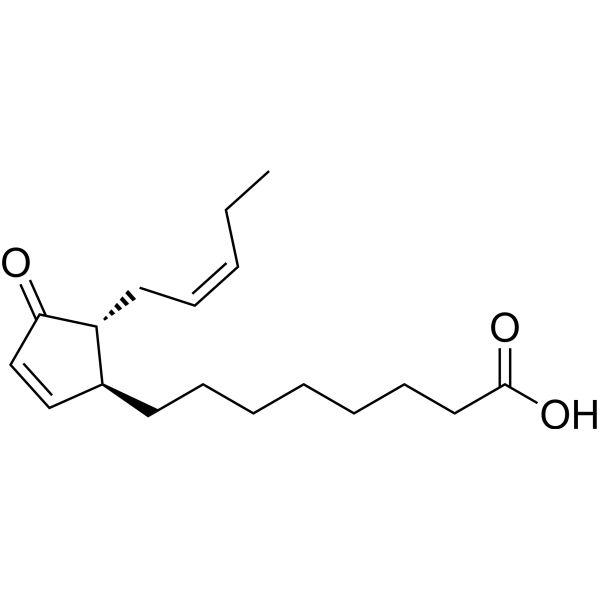
(9S,13R)-12-Oxo phytodienoic acid ((9S,13R)-12-OPDA) is a mPGES-1 inhibitor and Nrf2 activator. (9S,13R)-12-Oxo phytodienoic acid selectively inhibits mPGES-1 expression and reduces inducible PGE2 production without affecting COX-1 or COX-2. (9S,13R)-12-Oxo phytodienoic acid inhibits the phosphorylation of IKKβ, IκBα, and NF-κB (p65), blocks the nuclear translocation of p65, increases the nuclear translocation of Nrf2, and upregulates HO-1 expression. (9S,13R)-12-Oxo phytodienoic acid inhibits the differentiation of M0 macrophages toward the M1 phenotype and promotes differentiation toward the M2 phenotype. (9S,13R)-12-Oxo phytodienoic acid decreases the levels of NO, PGE2, IL-1β, IL-6, iNOS, and PGD2. (9S,13R)-12-Oxo phytodienoic acid can be used for inflammation research .
loading...
    loading...
Cat. No.: HY-126359
CAS No.: 27098-24-4
Purity:  ≥98.0%
Synonyms: SLPC; 18:0-18:2 PC
1-Stearoyl-2-linoleoyl-sn-glycero-3-phosphocholine (SLPC; 18:0-18:2 PC) is an endogenous phospholipid marker molecule in the glycerophospholipid metabolic pathway. 1-Stearoyl-2-linoleoyl-sn-glycero-3-phosphocholine is a core component of the phospholipid bilayer of biological membranes and a key responsive lipid for radiation injury and cardiometabolic diseases. 1-Stearoyl-2-linoleoyl-sn-glycero-3-phosphocholine constitutes the phospholipid bilayers of cell membranes and high-density lipoprotein (HDL), and regulates the core activity of lipoprotein functional homeostasis. The content of 1-Stearoyl-2-linoleoyl-sn-glycero-3-phosphocholine in mouse serum shows a significant dose-dependent decrease with increasing ionizing radiation dose, and its level in human HDL also decreases significantly in metabolic syndrome. 1-Stearoyl-2-linoleoyl-sn-glycero-3-phosphocholine can serve as a biological dosimeter marker for ionizing radiation injury, and is used for rapid and accurate assessment of radiation absorbed dose in exposed individuals. 1-Stearoyl-2-linoleoyl-sn-glycero-3-phosphocholine can also act as a lipidomics research target for cardiometabolic diseases such as lipid metabolic syndrome and early-onset coronary heart disease .
loading...
    loading...
Cat. No.: HY-14604R
CAS No.: 90494-79-4
Synonyms: SR57746A (Standard); SR57746 hydrochloride (Standard)
Xaliproden (hydrochloride) (Standard) is the analytical standard of Xaliproden (hydrochloride). This product is intended for research and analytical applications. Xaliproden (SR57746) hydrochloride (SR57746A) is an orally active, highly selective 5-HT1A receptor agonist. Xaliproden hydrochloride activates pertussis toxin-sensitive G protein-coupled signaling cascades, as well as the PKC, ERK1/ERK2, Akt and p21 Ras/MEK-1 pathways. Xaliproden hydrochloride also downregulates the JNK/p66/c-Jun signaling pathway, induces phosphorylation of the shc adaptor protein, regulates extracellular dopamine and 5-HT levels, and induces [ 35S]GTPγS labeling in rat brain structures rich in 5-HT1A receptors. Xaliproden hydrochloride exerts neurotrophic, neuroprotective, renoprotective, anti-inflammatory, anti-apoptotic, anti-fibrotic and analgesic effects. Xaliproden hydrochloride also enhances NGF-induced neurite outgrowth, promotes motor neuron survival, attenuates renal tubular injury and inhibits chemotherapy-induced mechanical allodynia, without activating or altering NGF-induced TrkA receptor activation. Xaliproden hydrochloride can be used in the research of motor neuron disease, diabetic nephropathy, chemotherapy-induced peripheral neuropathy, amyotrophic lateral sclerosis, Alzheimer's disease, acute tonic nociceptive pain, inflammatory pain, depression and anxiety .
loading...
    loading...
Cat. No.: HY-184926
PEG9MA10-PAB10-GalMA10 is a CD147 LYTAC degrader. PEG9MA10-PAB10-GalMA10 binds to the asialoglycoprotein receptor (ASGPR) via its galactose methacrylate domain, mediating its uptake by hepatoma cells. PEG9MA10-PAB10-GalMA10 induces lysosome-dependent degradation of CD147, resulting in concurrent loss of associated MCT1 and MCT4. PEG9MA10-PAB10-GalMA10 reduces extracellular lactate levels, increases intracellular lactate accumulation, inhibits glycolytic activity, and enhances mitochondrial respiratory capacity. PEG9MA10-PAB10-GalMA10 decreases the secretion of MMP-2 and MMP-9, and upregulates the expression of E-cadherin. PEG9MA10-PAB10-GalMA10 exhibits anti-tumor efficacy in hepatoma models. PEG9MA10-PAB10-GalMA10 can be used for research on liver cancer (hepatocellular carcinoma) .
loading...
    loading...
Cat. No.: HY-B2167R
CAS No.: 6217-54-5
Synonyms: DHA (Standard); Cervonic acid (Standard)
Docosahexaenoic acid (Standard) is the analytical standard of Docosahexaenoic acid. This product is intended for research and analytical applications. Docosahexaenoic Acid (DHA) is an omega-3 fatty acid abundantly present brain and retina. It can be obtained directly from fish oil and maternal milk. In Vitro: Docosahexaenoic acid (DHA) is essential for the growth and functional development of the brain in infants. DHA is also required for maintenance of normal brain function in adults. The inclusion of plentiful DHA in the diet improves learning ability and memory . DHA is an essential requirement in every step of brain development like neural cell proliferation, migration, differentiation, synaptogenesis. The multiple double bonds and unique structure allow DHA to impart special membrane characteristics for effective cell signaling. Many development disorders like dyslexia, autism spectrum disorder, attention deficit hyperactivity disorder, schizophrenia etc. are causally related to decreased level of DHA . DHA is a potent RXR ligand inducing robust RXR activation already at low micro molar concentrations. The EC50 for RXRα activation by DHA is about 5-10 μM fatty acid . In Vivo: Docosahexaenoic acid administration over 10 weeks significantly reduces the number of reference memory errors, without affecting the number of working memory errors, and significantly increases the docosahexaenoic acid content and the docosahexaenoic acid/arachidonic acid ratio in both the hippocampus and the cerebral cortex . DHA treatment exerts neuroprotective actions on an experimental mouse model of PD. There is a decrease tendency in brain lipid oxidation of MPTP mice but it does not significantly .
loading...
    loading...
Cat. No.: HY-P990252
Anti-Mouse Delta-like protein 4/DLL4 Antibody (HMD4-2) is an anti-mouse Delta-like protein 4/DLL4 IgG monoclonal antibody. Anti-Mouse Delta-like protein 4/DLL4 Antibody (HMD4-2) can reduce angiogenesis and density by blocking the DLL4-Notch signaling pathway. Anti-Mouse Delta-like protein 4/DLL4 Antibody (HMD4-2) reduces inflammatory response by decreasing NF-κB activity and pro-inflammatory factors (IL-1β, iNOS, IL-6) levels. Anti-Mouse Delta-like protein 4/DLL4 Antibody (HMD4-2) can inhibit Th17 cell differentiation and IL-17A production. Anti-Mouse Delta-like protein 4/DLL4 Antibody (HMD4-2) can reduce macrophage infiltration and alleviate insulin resistance. Anti-Mouse Delta-like protein 4/DLL4 Antibody (HMD4-2) can be used for researches on inflammation, metabolic conditions and cancer such as atherosclerosis, pancreatic cancer and asthma .
loading...
    loading...
Cat. No.: HY-123996
CAS No.: 20041-64-9
3-Ethoxy-5,6-dibromosalicylaldehyde is an IRE1/ERN1 inhibitor, with an IC50 of 0.12 μM, a Ki of 71-88 nM, and a Kd of 100 nM against the ribonuclease activity of hIRE1α, as well as an IC50 of 4.8 μM against yeast Ire1. It shows selectivity toward IRE1 ribonuclease. 3-Ethoxy-5,6-dibromosalicylaldehyde blocks the IRE1/ERN1-mediated unfolded protein response (UPR) signaling pathway, including XBP-1 mRNA splicing, induction of XBP1 target genes, and activation of MAPK8/9/10, but does not alter the phosphorylation level of IRE1α or the PERK/ATF6 pathway. 3-Ethoxy-5,6-dibromosalicylaldehyde inhibits chikungunya virus replication, induces growth arrest, apoptosis and clonogenic inhibition in pancreatic cancer cells, reduces FB1 (Fumonisin B1) (HY-N6719)-induced autophagy and cell death, regulates PGG-induced senescence and apoptosis, and alleviates Sorafenib (HY-10201)-induced vacuolization and damage in hepatic stellate cells. 3-Ethoxy-5,6-dibromosalicylaldehyde can be used in research related to chikungunya virus infection, pancreatic cancer, FB1-induced nephrotoxicity, liver cancer, breast cancer, lung cancer and liver fibrosis .
loading...
    loading...
Cat. No.: HY-L040
1,172 compounds

Diabetes mellitus, usually called diabetes, is a group of metabolic disorders characterized by a high blood sugar level over a prolonged period of time. The most common types are Type I and Type II. Type I diabetes (T1D), also called juvenile onset diabetes mellitus or insulin-dependent diabetes mellitus, is characterized by destruction of the β-cells of the pancreas and insulin is not produced, whereas type II diabetes (T2D), also called non-insulin-dependent diabetes mellitus, is characterized by a progressive impairment of insulin secretion and relative decreased sensitivity of target tissues to the action of this hormone. Type 2 diabetes accounts for the vast majority of all diabetes mellitus. Diabetes of all types can lead to complications in many parts of the body and can increase the overall risk of dying prematurely. Possible complications include kidney failure, leg amputation, vision loss and nerve damage.

The pathogenesis of diabetes is complicated, and development of the safe and effective drugs against diabetes is full of challenge. Increasing studies have confirmed that the pathogenesis of diabetes is related to various signaling pathways, such as insulin signaling pathway, AMPK pathway, PPAR regulation and chromatin modification pathways. These signaling pathways have thus become the major source of the promising novel drug targets to treat metabolic diseases and diabetes.

MCE Anti-diabetic Compound Library owns a unique collection of 1,172 compounds, which mainly target SGLT, PPAR, DPP-4, AMPK, Dipeptidyl Peptidase, Glucagon Receptor, etc. This library is a useful tool for discovery anti-diabetes drugs.

