547 Results for "

gastric-simulating medium

" in MedChemExpress (MCE) Product Catalog:
Products (547)

547 Results for "gastric-simulating medium" in MCE Product Catalog:

Cat. No.: HY-P86895
Synonyms: 3 hydroxyacyl Coenzyme A dehydrogenase antibody; HAD antibody; HADH antibody; HADH1 antibody; HADHSC antibody; HADHSC, formerly antibody; HADSC, formerly antibody; HCDH antibody; HCDH_HUMAN antibody; HHF4 antibody; 3 hydroxyacyl Coenzyme A dehydrogenase antibody; HAD antibody; HADH antibody; HADH1 antibody; HADHSC antibody; HADHSC, formerly antibody; HADSC, formerly antibody; HCDH antibody; HCDH_HUMAN antibody; HHF4 antibody; Hydroxyacyl CoA dehydrogenase antibody; Hydroxyacyl-coenzyme A dehydrogenase antibody; hydroxyacyl-coenzyme A dehydrogenase, mitochondrial antibody; L 3 hydroxyacyl Coenzyme A dehydrogenase short chain antibody; M SCHAD antibody; medium and short chain L 3 hydroxyacyl coenzyme A dehydrogenase antibody; medium and short-chain L-3-hydroxyacyl-coenzyme A dehydrogenase antibody; MGC8392 antibody; mitochondrial antibody; MSCHAD antibody; OTTHUMP00000162626 antibody; OTTHUMP00000219688 antibody; SCHAD antibody; SCHAD, formerly antibody; Short chain 3 hydroxyacyl CoA dehydrogenase mitochondrial antibody; short chain 3-hydroxyacyl-coa dehydrogenase antibody; Short-chain 3-hydroxyacyl-CoA dehydrogenase antibody;

Host:  

Mouse

Application:  

WB, ICC/IF, IHC-P

Reactivity:  

Human, Mouse, Rat

loading...
    loading...
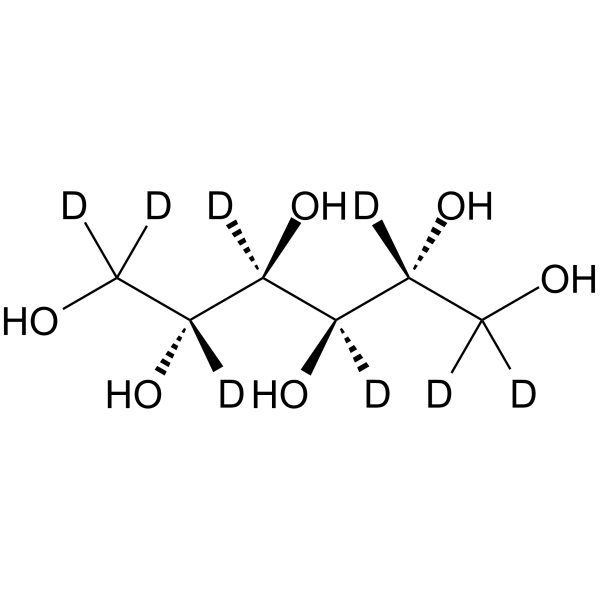
Cat. No.: HY-N0378S
Synonyms: Mannitol-d8; Mannite-d8
D-Mannitol-d8 is the deuterium labeled D-Mannitol (HY-N0378). D-Mannitol (Mannitol) is an oral, resistant sugar widely used in the food and pharmaceutical industries to promote the absorption and retention of calcium and magnesium through cecal fermentation, while acting as a osmotic diuretic to reduce tissue edema. D-Mannitol can enhance brown fat formation, improve insulin effect, reduce blood sugar levels, And through the start the β3-adrenergic receptor (β3-AR), PGC1α and PKA induced by means of white fat cells into brown fat cells . D-Mannitol is commonly used to maintain osmotic pressure between the plant cytoplasm and the culture medium and protect cells when the cell wall is weakened or even removed .
loading...
    loading...
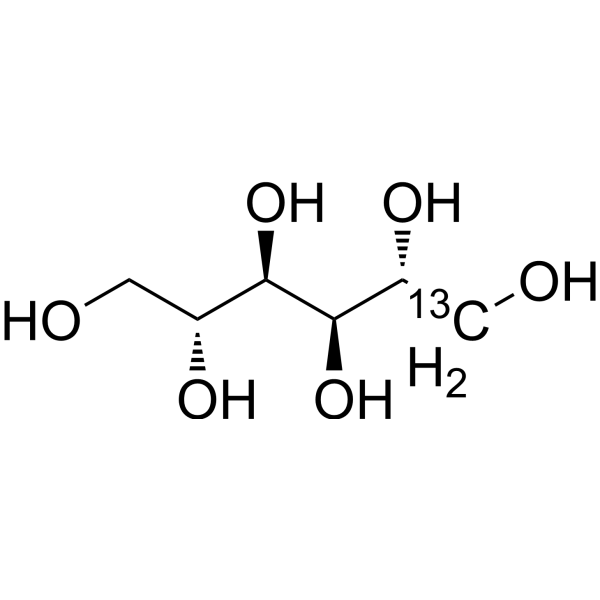
Cat. No.: HY-N0378S1
CAS No.: 132202-29-0
Synonyms: Mannitol-13C; Mannite-13C
D-Mannitol- 13C is the 13C labeled D-Mannitol (HY-N0378). D-Mannitol (Mannitol) is an oral, resistant sugar widely used in the food and pharmaceutical industries to promote the absorption and retention of calcium and magnesium through cecal fermentation, while acting as a osmotic diuretic to reduce tissue edema. D-Mannitol can enhance brown fat formation, improve insulin effect, reduce blood sugar levels, And through the start the β3-adrenergic receptor (β3-AR), PGC1α and PKA induced by means of white fat cells into brown fat cells . D-Mannitol is commonly used to maintain osmotic pressure between the plant cytoplasm and the culture medium and protect cells when the cell wall is weakened or even removed .
loading...
    loading...
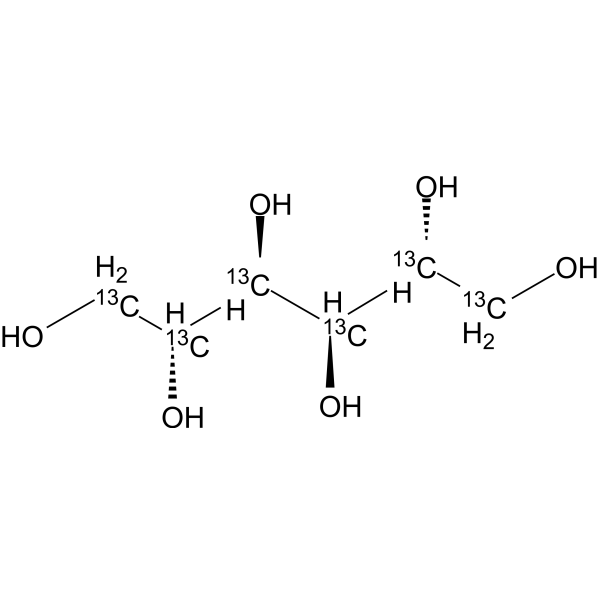
Cat. No.: HY-N0378S2
CAS No.: 287112-34-9
Synonyms: Mannitol-13C6; Mannite-13C6
D-Mannitol- 13C6 is the 13C labeled D-Mannitol (HY-N0378). D-Mannitol (Mannitol) is an oral, resistant sugar widely used in the food and pharmaceutical industries to promote the absorption and retention of calcium and magnesium through cecal fermentation, while acting as a osmotic diuretic to reduce tissue edema. D-Mannitol can enhance brown fat formation, improve insulin effect, reduce blood sugar levels, And through the start the β3-adrenergic receptor (β3-AR), PGC1α and PKA induced by means of white fat cells into brown fat cells . D-Mannitol is commonly used to maintain osmotic pressure between the plant cytoplasm and the culture medium and protect cells when the cell wall is weakened or even removed .
loading...
    loading...
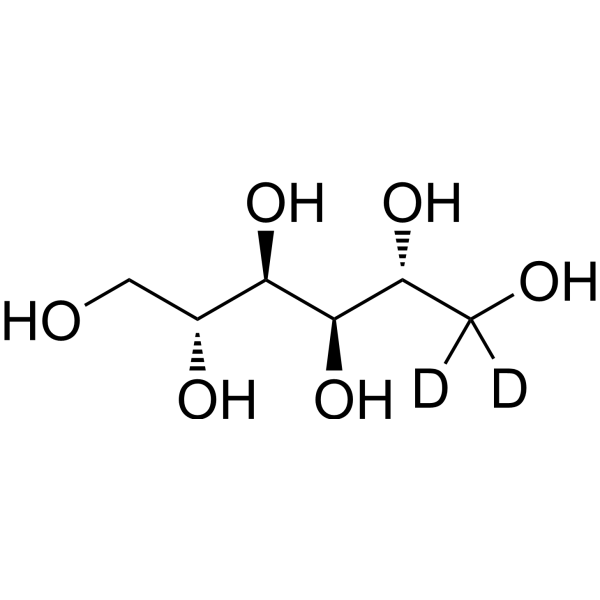
Cat. No.: HY-N0378S4
CAS No.: 2649096-16-0
Synonyms: Mannitol-d2; Mannite-d2
D-Mannitol-d2 is the deuterium labeled D-Mannitol (HY-N0378). D-Mannitol (Mannitol) is an oral, resistant sugar widely used in the food and pharmaceutical industries to promote the absorption and retention of calcium and magnesium through cecal fermentation, while acting as a osmotic diuretic to reduce tissue edema. D-Mannitol can enhance brown fat formation, improve insulin effect, reduce blood sugar levels, And through the start the β3-adrenergic receptor (β3-AR), PGC1α and PKA induced by means of white fat cells into brown fat cells . D-Mannitol is commonly used to maintain osmotic pressure between the plant cytoplasm and the culture medium and protect cells when the cell wall is weakened or even removed .
loading...
    loading...
Cat. No.: HY-N0378S5
CAS No.: 75607-68-0
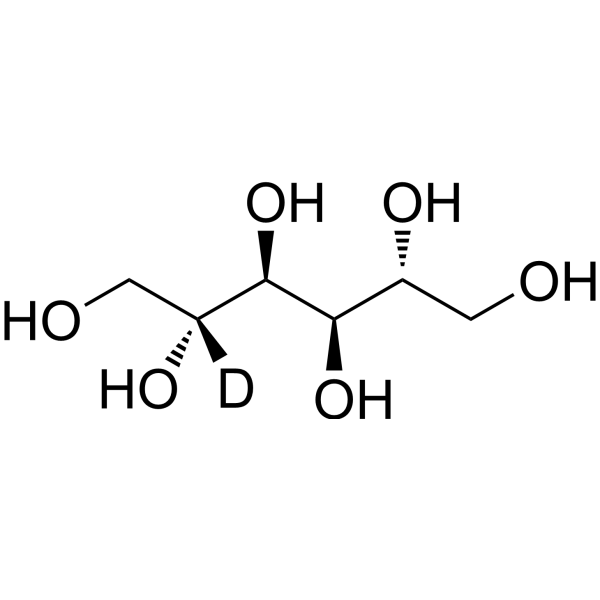
Synonyms: Mannitol-d1; Mannite-d1
D-Mannitol-d is the deuterium labeled D-Mannitol (HY-N0378). D-Mannitol (Mannitol) is an oral, resistant sugar widely used in the food and pharmaceutical industries to promote the absorption and retention of calcium and magnesium through cecal fermentation, while acting as a osmotic diuretic to reduce tissue edema. D-Mannitol can enhance brown fat formation, improve insulin effect, reduce blood sugar levels, And through the start the β3-adrenergic receptor (β3-AR), PGC1α and PKA induced by means of white fat cells into brown fat cells . D-Mannitol is commonly used to maintain osmotic pressure between the plant cytoplasm and the culture medium and protect cells when the cell wall is weakened or even removed .
loading...
    loading...
Cat. No.: HY-W010178R
CAS No.: 54947-74-9
4-Methyloctanoic acid (Standard) is the analytical standard of 4-Methyloctanoic acid (HY-W010178). This product is intended for research and analytical applications. 4-Methyloctanoic acid is an endogenous branched-chain medium-chain fatty acid and a negative regulator of the cAMP/PKA signaling pathway. 4-Methyloctanoic acid exerts antiepileptic effects by inhibiting epileptiform discharges and terminating behavioral and electroencephalographic seizures. 4-Methyloctanoic acid has neuroprotective effects; its polar metabolites can cross the blood-brain barrier, repair presynaptic release defects, improve motor function and alleviate neuromuscular degeneration in ALS models. 4-Methyloctanoic acid regulates phosphatidylinositol metabolism, reduces PIP/PIP2 levels and increases inositol levels. 4-Methyloctanoic acid can be used in studies related to epilepsy and amyotrophic lateral sclerosis .
loading...
    loading...
Cat. No.: HY-113166R
CAS No.: 25518-54-1
Synonyms: (-)-Lauroylcarnitine (Standard)
Dodecanoylcarnitine (Standard) is the analytical standard of Dodecanoylcarnitine (HY-113166). This product is intended for research and analytical applications. Dodecanoylcarnitine ((-)-Lauroylcarnitine) is a medium long-chain acylcarnitine, an intermediate product in key energy metabolic pathways of fatty acid β-oxidation and amino acids catabolism. The abnormal decrease in the Dodecanoylcarnitine levels indicats that mitochondrial fuel metabolism, including fatty acid oxidation is significantly disturbed. Changes in plasma concentrations of Dodecanoylcarnitine are not only associated with type II diabetes, but also with pre-diabetes status. Dodecanoylcarnitine is present in fatty acid oxidation disorders such as long-chain acyl CoA dehydrogenase deficiency, carnitine palmitoyltransferase I/II deficiency, and is also associated with celiac disease. Dodecanoylcarnitine deomonstrates high sensitivities and specificities in predicting asthma. Combined model of Decanoylcarnitine (HY-113069), Dodecanoylcarnitine, PC (16:0/0:0), and Asp Arg Pro can be used as a potential biomarker for the diagnosis of Yin-deficiency-heat syndrome .
loading...
    loading...
Cat. No.: HY-178413S
Synonyms: Mannitol-d4; Mannite-d4
D-Mannitol-d4 (Mannitol-d4) is the deuterium labeled D-Mannitol (HY-N0378). D-Mannitol (Mannitol) is an oral, resistant sugar widely used in the food and pharmaceutical industries to promote the absorption and retention of calcium and magnesium through cecal fermentation, while acting as a osmotic diuretic to reduce tissue edema. D-Mannitol can enhance brown fat formation, improve insulin effect, reduce blood sugar levels, And through the start the β3-adrenergic receptor (β3-AR), PGC1α and PKA induced by means of white fat cells into brown fat cells . D-Mannitol is commonly used to maintain osmotic pressure between the plant cytoplasm and the culture medium and protect cells when the cell wall is weakened or even removed .
loading...
    loading...
Cat. No.: HY-N0378R
CAS No.: 69-65-8
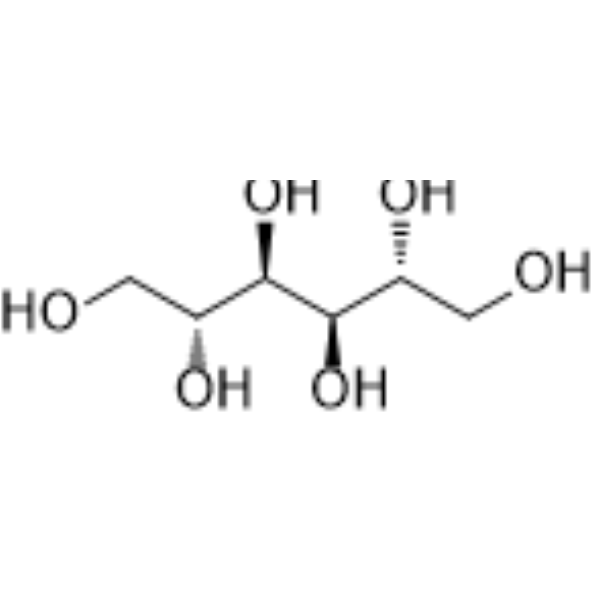
Synonyms: Mannitol(Standard); Mannite (Standard)
D-Mannitol (Standard) is the analytical standard of D-Mannitol (HY-N0378). This product is intended for research and analytical applications. D-Mannitol (Mannitol) is an oral, resistant sugar widely used in the food and pharmaceutical industries to promote the absorption and retention of calcium and magnesium through cecal fermentation, while acting as a osmotic diuretic to reduce tissue edema. D-Mannitol can enhance brown fat formation, improve insulin effect, reduce blood sugar levels, And through the start the β3-adrenergic receptor (β3-AR), PGC1α and PKA induced by means of white fat cells into brown fat cells . D-Mannitol is commonly used to maintain osmotic pressure between the plant cytoplasm and the culture medium and protect cells when the cell wall is weakened or even removed .
loading...
    loading...
Cat. No.: HY-N0378S3
CAS No.: 287100-69-0
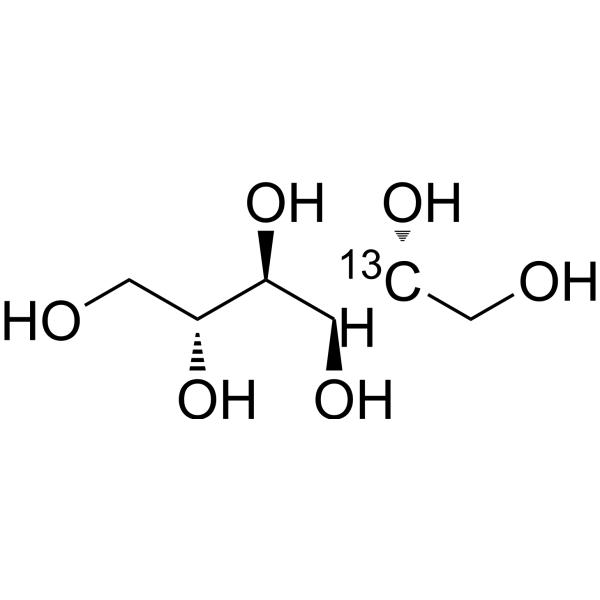
Synonyms: Mannitol-2-13C; Mannite-2-13C
D-Mannitol-2- 13C is the 13C labeled D-Mannitol (HY-N0378). D-Mannitol (Mannitol) is an oral, resistant sugar widely used in the food and pharmaceutical industries to promote the absorption and retention of calcium and magnesium through cecal fermentation, while acting as a osmotic diuretic to reduce tissue edema. D-Mannitol can enhance brown fat formation, improve insulin effect, reduce blood sugar levels, And through the start the β3-adrenergic receptor (β3-AR), PGC1α and PKA induced by means of white fat cells into brown fat cells . D-Mannitol is commonly used to maintain osmotic pressure between the plant cytoplasm and the culture medium and protect cells when the cell wall is weakened or even removed .
loading...
    loading...
Cat. No.: HY-N0378S6
CAS No.: 1217463-58-5
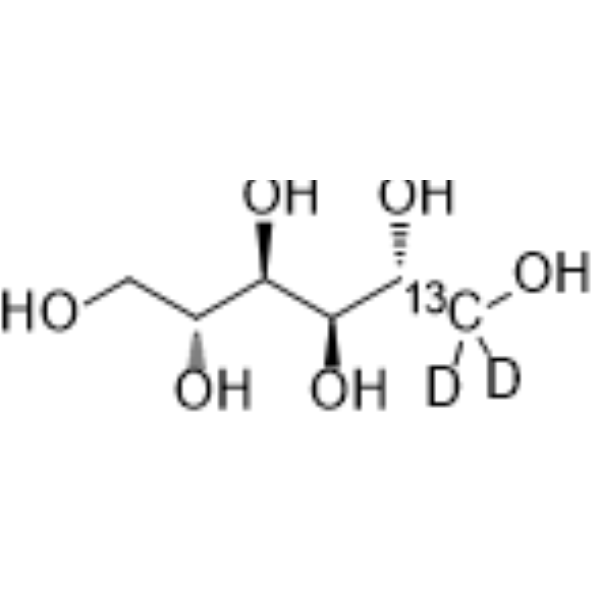
Synonyms: Mannitol-13C,d2; Mannite-13C,d2
D-Mannitol- 13C,d2 is the deuterium and 13C labeled D-Mannitol (HY-N0378). D-Mannitol (Mannitol) is an oral, resistant sugar widely used in the food and pharmaceutical industries to promote the absorption and retention of calcium and magnesium through cecal fermentation, while acting as a osmotic diuretic to reduce tissue edema. D-Mannitol can enhance brown fat formation, improve insulin effect, reduce blood sugar levels, And through the start the β3-adrenergic receptor (β3-AR), PGC1α and PKA induced by means of white fat cells into brown fat cells . D-Mannitol is commonly used to maintain osmotic pressure between the plant cytoplasm and the culture medium and protect cells when the cell wall is weakened or even removed .
loading...
    loading...
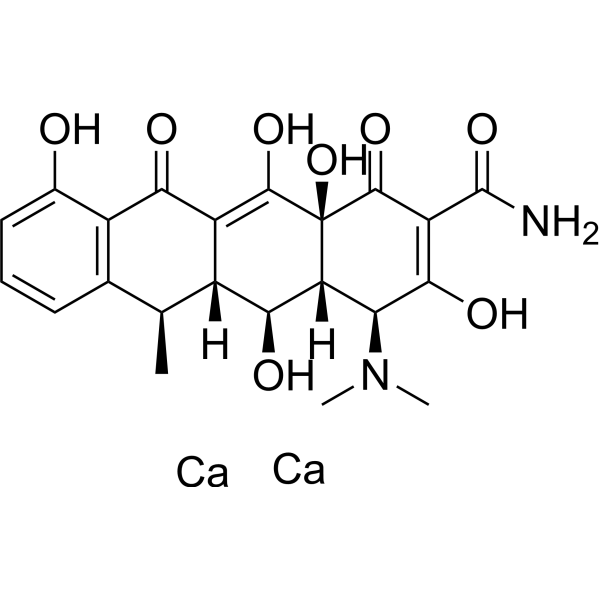
Cat. No.: HY-N0565C
CAS No.: 94088-85-4
Doxycycline calcium is an orally active highly lipophilic, tissue-permeable MMP inhibitor with broad-spectrum antibacterial activity. Doxycycline calcium is also a semi-synthetic antibiotic with chelating properties, which blocks bacterial protein synthesis and inhibits extracellular matrix degradation through interactions with zinc and calcium atoms. Doxycycline calcium also inhibits mitochondrial biogenesis, translation, and the expression of respiratory chain proteins. Doxycycline calcium induces apoptosis, inhibits autophagy and EMT, downregulates stem cell markers, and activates the PI3K-AKT pathway, thereby effectively inhibiting the viability and proliferation of cancer cells such as breast cancer cells. Doxycycline calcium also promotes the survival and self-renewal of embryonic stem cells and neural stem cells, and reduces the frequency of medium changes in culture. Doxycycline calcium has been applied in studies related to breast cancer, prostate cancer, bladder cancer, and other cancers .
loading...
    loading...
Cat. No.: HY-N0565D
CAS No.: 83038-87-3
Doxycycline fosfatex is an orally active highly lipophilic, tissue-permeable MMP inhibitor with broad-spectrum antibacterial activity. Doxycycline fosfatex is also a semi-synthetic antibiotic with chelating properties, which blocks bacterial protein synthesis and inhibits extracellular matrix degradation through interactions with zinc and fosfatex atoms. Doxycycline fosfatex also inhibits mitochondrial biogenesis, translation, and the expression of respiratory chain proteins. Doxycycline fosfatex induces apoptosis, inhibits autophagy and EMT, downregulates stem cell markers, and activates the PI3K-AKT pathway, thereby effectively inhibiting the viability and proliferation of cancer cells such as breast cancer cells. Doxycycline fosfatex also promotes the survival and self-renewal of embryonic stem cells and neural stem cells, and reduces the frequency of medium changes in culture. Doxycycline fosfatex has been applied in studies related to breast cancer, prostate cancer, bladder cancer, and other cancers .
loading...
    loading...
Cat. No.: HY-W008923R
CAS No.: 17086-28-1
Doxycycline monohydrate (Standard) is the analytical standard of Doxycycline monohydrate (HY-W008923). Doxycycline monohydrate is an orally active highly lipophilic, tissue-permeable MMP inhibitor with broad-spectrum antibacterial activity. Doxycycline monohydrate is also a semi-synthetic antibiotic with chelating properties, which blocks bacterial protein synthesis and inhibits extracellular matrix degradation through interactions with zinc and calcium atoms. Doxycycline monohydrate also inhibits mitochondrial biogenesis, translation, and the expression of respiratory chain proteins. Doxycycline monohydrate induces apoptosis, inhibits autophagy and EMT, downregulates stem cell markers, and activates the PI3K-AKT pathway, thereby effectively inhibiting the viability and proliferation of cancer cells such as breast cancer cells. Doxycycline monohydrate also promotes the survival and self-renewal of embryonic stem cells and neural stem cells, and reduces the frequency of medium changes in culture. Doxycycline monohydrate has been applied in studies related to breast cancer, prostate cancer, bladder cancer, and other cancers .
loading...
    loading...
Cat. No.: HY-12299G
CAS No.: 837422-57-8
Synonyms: Dual LCK/SRC inhibitor (GMP)
WH-4-023 GMP is WH-4-023 (HY-12299) produced by using GMP guidelines. GMP small molecules works appropriately as an auxiliary reagent for cell therapy manufacture. WH-4-023 (Dual LCK/SRC inhibitor) is a Lck/Src dual target inhibitor with functions in stem cell maintenance and differentiation regulation. WH-4-023 blocks epithelial-mesenchymal transition, supports the self-renewal of porcine embryonic stem cells, and inhibits their differentiation into mesoderm and endoderm. WH-4-023 is a key component of 3i/LAF medium, and enables the stable establishment and long-term maintenance of porcine pre-gastrulation epiblast stem cell lines. Removal of WH-4-023 reduces the expression of pluripotency factors in porcine and human extended pluripotent stem cells. WH-4-023 can be applied to relevant studies such as non-small cell lung cancer resistant to EGFR-TKIs .
loading...
    loading...
Cat. No.: HY-N0565AR
CAS No.: 10592-13-9
Doxycycline hydrochloride (Standard) is the analytical standard of Doxycycline hydrochloride (HY-N0565A). This product is intended for research and analytical applications. Doxycycline hydrochloride is an orally active highly lipophilic, tissue-permeable MMP inhibitor with broad-spectrum antibacterial activity. Doxycycline hydrochloride is also a semi-synthetic antibiotic with chelating properties, which blocks bacterial protein synthesis and inhibits extracellular matrix degradation through interactions with zinc and calcium atoms. Doxycycline hydrochloride also inhibits mitochondrial biogenesis, translation, and the expression of respiratory chain proteins. Doxycycline hydrochloride induces apoptosis, inhibits autophagy and EMT, downregulates stem cell markers, and activates the PI3K-AKT pathway, thereby effectively inhibiting the viability and proliferation of cancer cells such as breast cancer cells. Doxycycline hydrochloride also promotes the survival and self-renewal of embryonic stem cells and neural stem cells, and reduces the frequency of medium changes in culture. Doxycycline hydrochloride has been applied in studies related to breast cancer, prostate cancer, bladder cancer, and other cancers .
loading...
    loading...
Cat. No.: HY-N0565AS
Doxycycline-d3 hydrochloride is deuterium labeled Doxycycline hydrochloride (HY-N0565A). Doxycycline hydrochloride is an orally active highly lipophilic, tissue-permeable MMP inhibitor with broad-spectrum antibacterial activity. Doxycycline hydrochloride is also a semi-synthetic antibiotic with chelating properties, which blocks bacterial protein synthesis and inhibits extracellular matrix degradation through interactions with zinc and calcium atoms. Doxycycline hydrochloride also inhibits mitochondrial biogenesis, translation, and the expression of respiratory chain proteins. Doxycycline hydrochloride induces apoptosis, inhibits autophagy and EMT, downregulates stem cell markers, and activates the PI3K-AKT pathway, thereby effectively inhibiting the viability and proliferation of cancer cells such as breast cancer cells. Doxycycline hydrochloride also promotes the survival and self-renewal of embryonic stem cells and neural stem cells, and reduces the frequency of medium changes in culture. Doxycycline hydrochloride has been applied in studies related to breast cancer, prostate cancer, bladder cancer, and other cancers .
loading...
    loading...
Cat. No.: HY-N0565R
CAS No.: 564-25-0
Doxycycline (Standard) is the analytical standard of Doxycycline (HY-N0565). This product is intended for research and analytical applications. Doxycycline is an orally active highly lipophilic, tissue-permeable MMP inhibitor with broad-spectrum antibacterial activity. Doxycycline is also a semi-synthetic antibiotic with chelating properties, which blocks bacterial protein synthesis and inhibits extracellular matrix degradation through interactions with zinc and calcium atoms. Doxycycline also inhibits mitochondrial biogenesis, translation, and the expression of respiratory chain proteins. Doxycycline induces apoptosis, inhibits autophagy and EMT, downregulates stem cell markers, and activates the PI3K-AKT pathway, thereby effectively inhibiting the viability and proliferation of cancer cells such as breast cancer cells. Doxycycline also promotes the survival and self-renewal of embryonic stem cells and neural stem cells, and reduces the frequency of medium changes in culture. Doxycycline has been applied in studies related to breast cancer, prostate cancer, bladder cancer, and other cancers .
loading...
    loading...
Cat. No.: HY-N0565S3
CAS No.: 1902958-13-7
Doxycycline- 13C,d3 is 13C and deuterium labeled Doxycycline (HY-N0565). Doxycycline is an orally active highly lipophilic, tissue-permeable MMP inhibitor with broad-spectrum antibacterial activity. Doxycycline is also a semi-synthetic antibiotic with chelating properties, which blocks bacterial protein synthesis and inhibits extracellular matrix degradation through interactions with zinc and calcium atoms. Doxycycline also inhibits mitochondrial biogenesis, translation, and the expression of respiratory chain proteins. Doxycycline induces apoptosis, inhibits autophagy and EMT, downregulates stem cell markers, and activates the PI3K-AKT pathway, thereby effectively inhibiting the viability and proliferation of cancer cells such as breast cancer cells. Doxycycline also promotes the survival and self-renewal of embryonic stem cells and neural stem cells, and reduces the frequency of medium changes in culture. Doxycycline has been applied in studies related to breast cancer, prostate cancer, bladder cancer, and other cancers .
loading...
    loading...

