197 Results for "

Cancer therapy

" in MedChemExpress (MCE) Product Catalog:
Products (197)

197 Results for "Cancer therapy" in MCE Product Catalog:

  • Categories Recommended:
    More
Cat. No.: HY-141520G
CAS No.: 2603528-97-6
ART558 (GMP) is ART558 (HY-141520) produced by using GMP guidelines. GMP small molecules works appropriately as an auxiliary reagent for cell therapy manufacture. ART558 is a potent, selective and allosteric DNA polymerase theta (Polθ) inhibitor (IC50=7.9 nM). ART558 elicits BRCA-gene synthetic lethality and DNA damage. ART558 can be used for the research of cancer, such as breast cancer .
loading...
    loading...
Cat. No.: HY-N16394
CAS No.: 103614-68-2
4-Hydroxyscytalone (Compound 3) is a microbial secondary metabolite. 4-Hydroxyscytalone can be isolated from the oak fungus Diplodia corticola. 4-Hydroxyscytalone has toxicity against Artemia salina with a LC50 of 90.6 μ/mL, but no significant antifungal activity. 4-Hydroxyscytalone can be used for cancer therapy research .
loading...
    loading...
Cat. No.: HY-W127809
CAS No.: 550-52-7
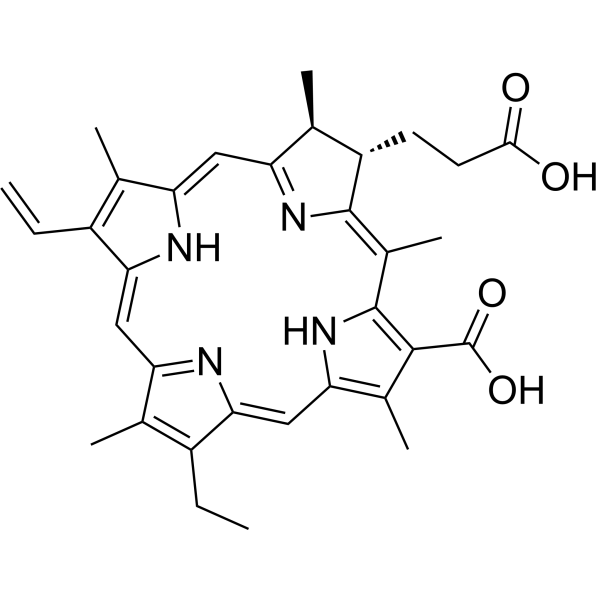
Chlorin e4 is an organic compound belonging to the family of chlorins, which are macrocyclic compounds with a similar structure to porphyrins. It is commonly used to improve photodynamic therapy for cancer and other diseases. Chlorin e4 has multiple applications in medical research, including as a photosensitizer for localized tumor destruction. In addition, its antimicrobial properties and potential use in disinfection applications were investigated.
loading...
    loading...
Cat. No.: HY-N9968
CAS No.: 5988-76-1
Synonyms: CuC
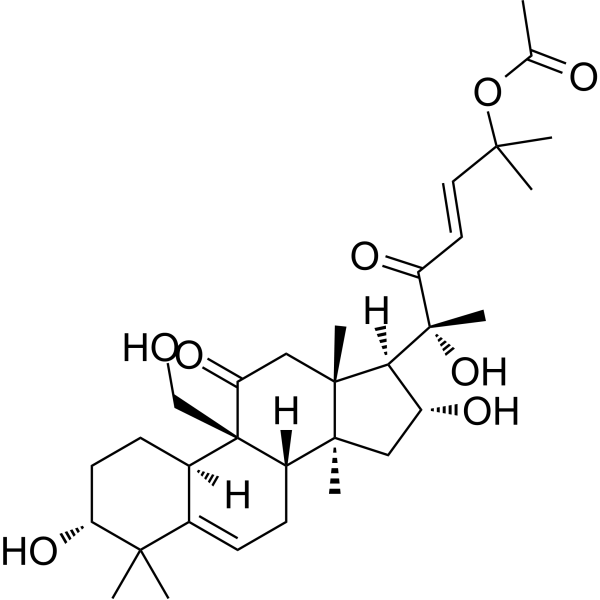
Cucurbitacin C is a tetracyclic triterpenoid compound. Cucurbitacin C exhibits significant in vivo and in vitro anticancer activity, which inhibits the PI3K/AKT signaling pathway to induce cell cycle arrest and apoptosis in cancer cells, and significantly suppresses the growth of HepG2 and PC-3 xenograft tumors in mice. Cucurbitacin C can be used in studies on plant defense mechanisms, secondary metabolism and cancer therapy .
loading...
    loading...
Cat. No.: HY-164523
CAS No.: 1093793-11-3
Research Areas:  

Cancer

PV1162 is a selective Chk2 inhibitor with an IC50 of 0.29 nM. PV1162 inhibits ATP binding to Chk2 by targeting the gatekeeper-dependent hydrophobic pocket, which is specific to Chk2 and located behind the ATP-binding site (adenine-binding region), thereby inhibiting the phosphorylation activity of Chk2. PV1162 holds potential application value in the field of cancer therapy .
loading...
    loading...
Cat. No.: HY-175633
ML210-ansaFc (Compound III-13) is a covalent GPX4 inhibitor with a -ferrocenophane group (IC50 of 3.4 μM). ML210-ansaFc potently induces ferroptosis by increasing the level of ROSand promoting lipid peroxidation (LPO) in cancers cells. ML210-ansaFc has an anticancer activity and suppresses tumor growth in tumor 3D spheroids. ML210-ansaFc can be used for cancer therapy resistance research .
loading...
    loading...
Cat. No.: HY-110368
CAS No.: 1883548-83-1
Target:  

CDK

Research Areas:  

Cancer

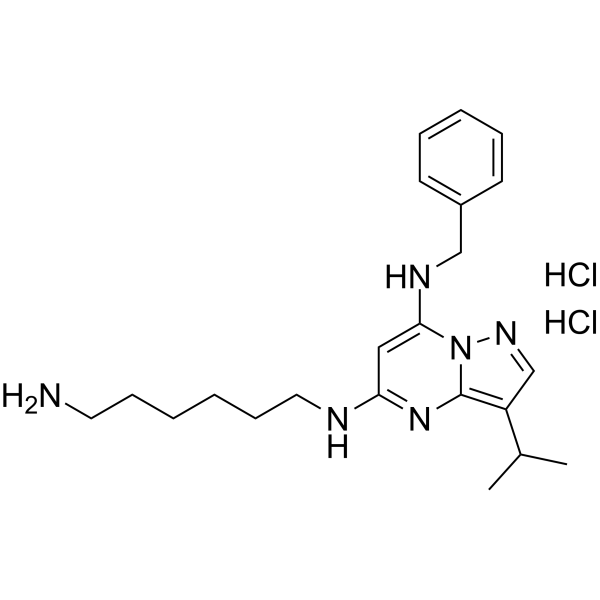
BS-181 dihydrochloride is a potent and selective CDK7 inhibitor (IC50=21 nM) than Seliciclib (HY-30237). BS-181 is also against CDK2, CDK5 and CDK9 with IC50 values of 880 nM, 3000 nM and 4200 nM, respectively (fails to block CDK1, 4 and 6). BS-181 dihydrochloride inhibits a panel of cancer cells growth (IC50=11.5 μM-37.3 μM) and induces cell apoptosis. BS-181 dihydrochloride has the potential for the research of cancer therapy .
loading...
    loading...
Cat. No.: HY-15150G
CAS No.: 1037624-75-1
Synonyms: R428 (GMP); BGB324 (GMP)
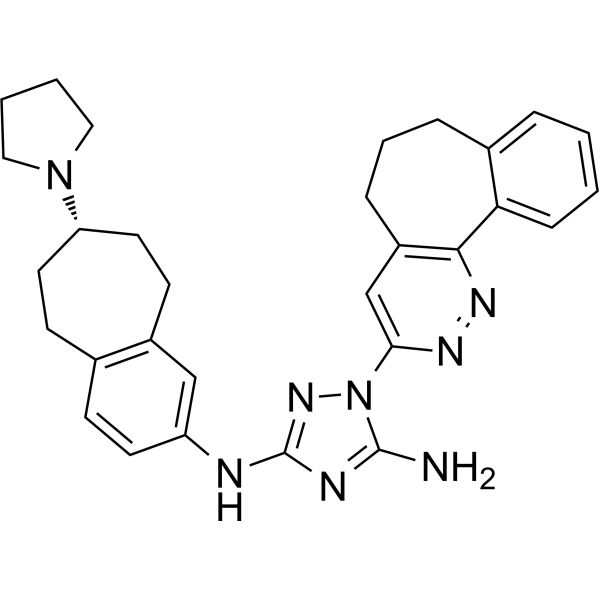
Bemcentinib (R428) GMP is Bemcentinib (HY-15150) in GMP grade. GMP-grade small molecules can be used as auxiliary reagents in cell therapy.Bemcentinib (R428) is a selective and orally active Axl inhibitor with an IC50 of 14 nM. Bemcentinib retards cancer cell migration and invasion. Bemcentinib exhibits >100-fold selectivity for Axl versus Abl and 50- and >100-fold selectivity over TAM family kinases Mer and Tyro3, respectively, in cells. Bemcentinib blocks tumor spread and prolongs survival in models of metastatic breast cancer .
loading...
    loading...
Cat. No.: HY-20457G
CAS No.: 1268163-15-0
TL8-506 (GMP) is TL8-506 (HY-20457) produced by using GMP guidelines. GMP small molecules work appropriately as an auxiliary reagent for cell therapy manufacture. TL8-506 is a specific TLR8 agonist with an EC50 of 30?nM. TL8-506 has immunomodulatory effects and can be used in the study of tuberculosis and cancer immunotherapy .
loading...
    loading...
Cat. No.: HY-D1673
CAS No.: 623903-26-4
Target:  

Fluorescent Dye

Research Areas:  

Cancer

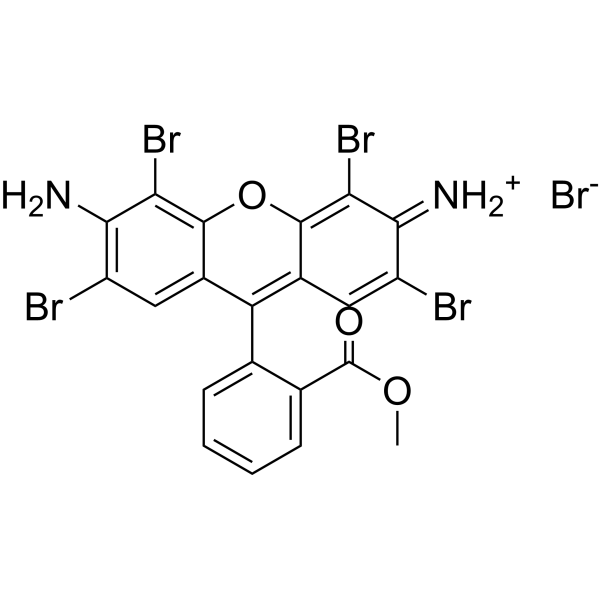
Tetrabromorhodamine 123 (TBR) bromide is a photosensitizer. Tetrabromorhodamine 123 bromide can be used for the research of photo dynamic therapy (PDT) and cancer .
loading...
    loading...
Cat. No.: HY-128937
CAS No.: 1602487-15-9
Research Areas:  

Cancer

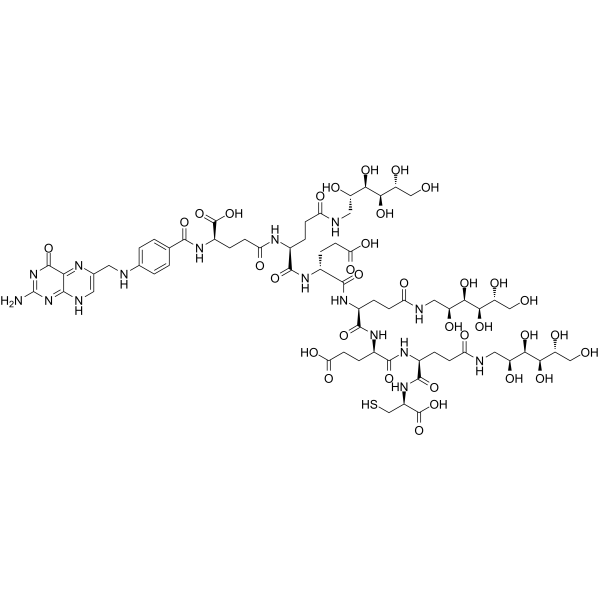
EC1454 is a peptide compound with anticancer activity that targets folate receptor-expressing cancers. EC1454 is a folate-tubulysin conjugate that can be used to prepare drug delivery conjugates for targeted therapy .
loading...
    loading...
Cat. No.: HY-P991689
CAS No.: 3024821-77-7

Target:  

VEGFR

Research Areas:  

Cancer

Girancitug is a humanized IgG1κ monoclonal antibody inhibitor targeting VEGFR2/KDR/CD309. Girancitug effectively inhibits angiogenesis. Girancitug can be used for anti-angiogenic therapy in cancers like colorectal and ovarian cancer research .
loading...
    loading...
Cat. No.: HY-14919
CAS No.: 284019-34-7
Synonyms: MN-029 free base
Target:  

Microtubule/Tubulin

Research Areas:  

Cancer

Denibulin, a novel vascular-disrupting agent, inhibits microtubule assembly reversibly, disrupting tumor vascular endothelial cell cytoskeletons. Denibulin demonstrated tolerability and potential anti-vascular effects, warranting further investigation in cancer therapy .
loading...
    loading...
Cat. No.: HY-N15349
CAS No.: 1558013-79-8
Target:  

Others

Nocapyrone Q is a polyketide compound discovered in the karst cave mold Streptomyces sp. FD-2-6. At a dose of 100 μM, Nocapyrone Q exhibits inhibitory activity against human hepatocellular carcinoma HepG2 cells and human cervical cancer HeLa cells. Nocapyrone Q holds potential for research in the field of cancer therapy .
loading...
    loading...
Cat. No.: HY-175214
Research Areas:  

Cancer

Antitumor photosensitizer-9 is a near-infrared Photosensitizer (PS) with a high singlet oxygen production rate (relative rate = 1.79). Antitumor photosensitizer-9 exhibits strong phototoxicity against various cancer cells and induces ROS generation under light irradiation. Antitumor photosensitizer-9 inhibits tumor growth in vivo and exhibits excellent anticancer photodynamic therapy (PDT) efficacy at low drug and light doses. Antitumor photosensitizer-9 can be used in photodynamic therapy research .
loading...
    loading...
Cat. No.: HY-151940
CAS No.: 2670367-74-3
Research Areas:  

Cancer

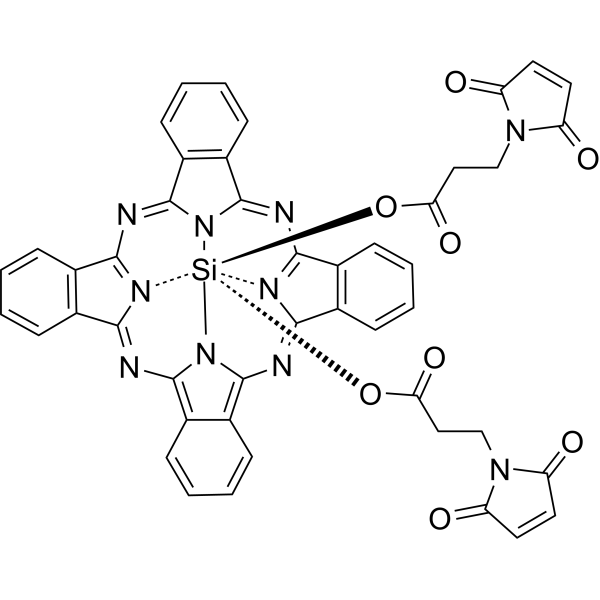
Mal-Pc is a versatile molecular photosensitizer designed based phthalocyanine and maleimides. Mal-Pc can react with GSH to deplete GSH and reduce aggregation, thereby improving ROS (Reactive Oxygen Species)-mediated effect of photodynamic therapy (PDT) in cancer cells .
loading...
    loading...
Cat. No.: HY-118974
CAS No.: 225925-12-2
Target:  

Calcium Channel

Research Areas:  

Neurological Disease Cancer

PD-151307 is an N-type calcium channel antagonist with significant inhibitory effects in IMR-32 human neuroblastoma cells, exhibiting an IC50 of 0.32 µM. PD-151307 can be used in research related to cancer therapy, anticonvulsants, and neuropathic pain .
loading...
    loading...
Cat. No.: HY-162575
CAS No.: 128519-30-2
Target:  

ERK

Research Areas:  

Cancer

Anticancer agent 231 (Compound P5) is a tyrosine protein kinase inhibitor with a IC50 value of 3.95 μM. Anticancer agent 231 inhibits the cell viability, cell proliferation, cell migration and cancer dryness of triple negative breast cancer (TNBC) cells by targeting EGFR-ERK 1/2 signaling pathway, and is expected to play an important role in the field of TNBC disease therapy .
loading...
    loading...
Cat. No.: HY-P10711
Target:  

Autophagy

Research Areas:  

Cancer

ALA-A2 is an anticancer peptide discovered in alpha-lactalbumin that selectively kills cancer cells by inducing Autophagy. ALA-A2 has cell-penetrating capabilities, allowing it to effectively enter cells without relying on membranolytic effects. In A549 lung cancer cells, ALA-A2 demonstrates significant dose-dependent anticancer activity. ALA-A2 holds promise for research in cancer therapy and autophagy regulation .
loading...
    loading...
Cat. No.: HY-169517
CAS No.: 871317-00-9
Target:  

TAM Receptor FAK c-Kit

Research Areas:  

Cancer

Protein kinase inhibitor 10 is a protein kinase inhibitor with IC50 values of 28.9, 13.6, and 2.41 μM for TAM receptor, FAK, and KIT, respectively. Protein kinase inhibitor 10 can inhibit abnormal and excessive cell proliferation, showing promise for research in cancer therapy .
loading...
    loading...

