139 Results for "

GPCRs

" in MedChemExpress (MCE) Product Catalog:
Products (139)

139 Results for "GPCRs" in MCE Product Catalog:

Cat. No.: HY-W010448
CAS No.: 22884-10-2
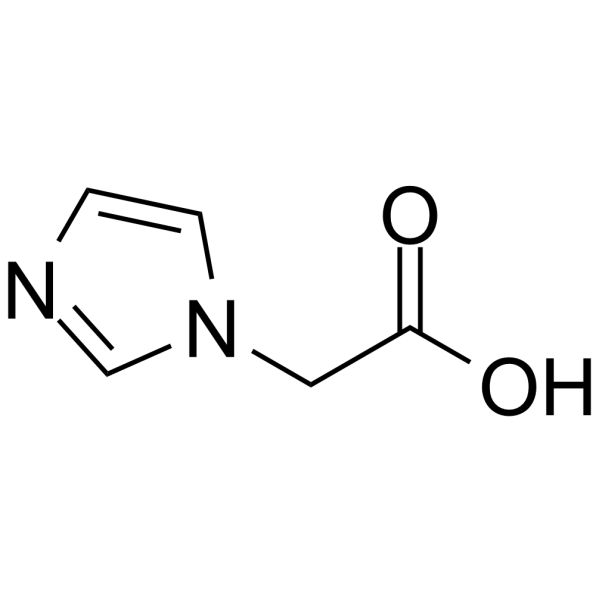
Imidazol-1-yl-acetic acid is a BRS-3 agonist that mediates anorectic effects through activation of orphan G protein-coupled receptors (Orphan GPCR) in peripheral tissues; it also serves as a green, water-soluble, recyclable bifunctional organocatalyst for transformations such as Biginelli multicomponent reactions and epoxide ring opening. Imidazol-1-yl-acetic acid is used in the study of obesity .
loading...
    loading...
Cat. No.: HY-134801
CAS No.: 354126-20-8
Purity:  99.74%
Target:  

GPR35

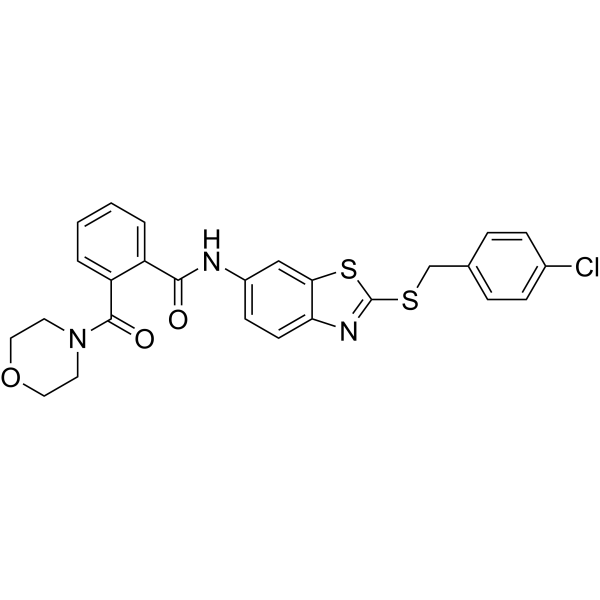
CID1231538, a benzothiazole analog, is a potent GPR35 antagonist with no significant activity against rodent orthologs of GPR35, which is also a G protein-coupled receptor (GPCR) .
loading...
    loading...
Cat. No.: HY-110012
CAS No.: 265980-25-4
Purity:  96.81%
Target:  

Adenosine Receptor

Research Areas:  

Infection

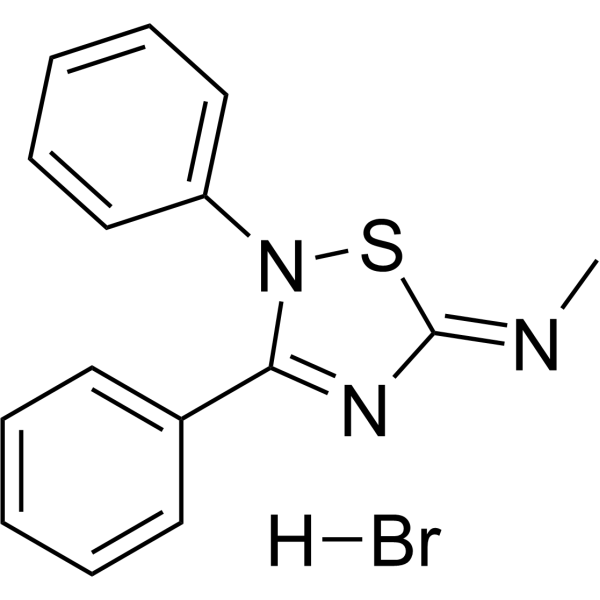
SCH-202676 hydrobromide is an allosteric modulator of G protein-coupled receptors (GPCRs) and adenosine receptor (AR). SCH-202676 hydrobromide has antiviral activity and inhibits 3CL pro in a time-dependent manner with an IC50 value of 0.655 μM .
loading...
    loading...
Cat. No.: HY-119226
CAS No.: 612514-42-8
Purity:  98.25%
Target:  

mAChR

Research Areas:  

Neurological Disease

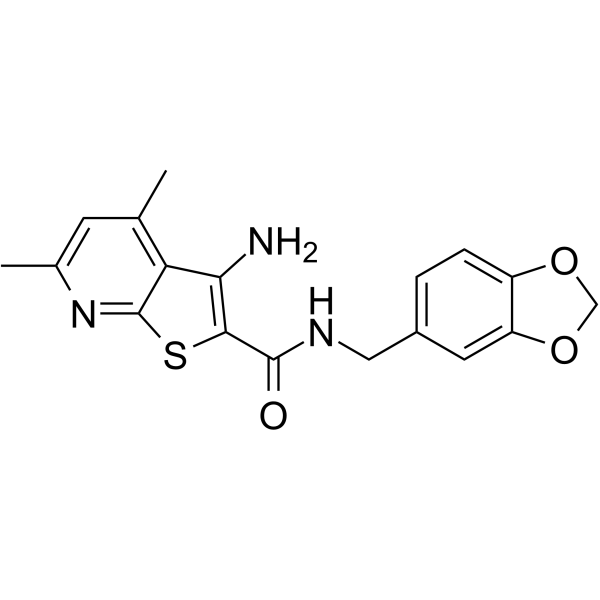
VU0152099 is a potent, selective and brain-penetrant mAChR M4 positive allosteric modulator with an EC50 of 0.4 µM for rat M4 receptor. VU0152099 is inactive for other mAChR subtypes or other GPCRs. VU0152099 has no agonist activity but potentiated responses of M4 to acetylcholine .
loading...
    loading...
Cat. No.: HY-P10365
Research Areas:  

Others

Vmm-p15 is a peptide agonist optimized for the adhesion G protein-coupled receptor GPR64 (also known as ADGRG2 or HE6). The affinity of VPM-p15 with GPR64 is significantly higher than that of the original p15 peptide. The cAMP level induced by VMM-P15 increased significantly, activated GPR64, and triggered downstream Gs, Gq, and G12/13 signaling. VPM-p15 can be used to study the activation mechanism of adherent GPCR family members .
loading...
    loading...
Cat. No.: HY-12752
CAS No.: 84-96-8
Synonyms: Trimeprazine
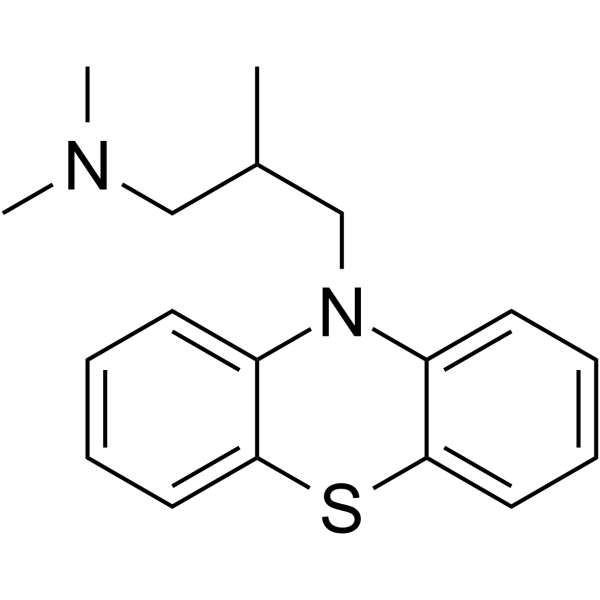
Alimemazine is a phenothiazine derivative that is generally used as an antipruritic agent and also a hemagglutinin (HA)-receptor antagonist.Alimemazine (Trimeprazine) is also acts as a partial agonist against the histamine H1 receptor (H1R) and other GPCRs. Alimemazine displays antiserotonin, antispasmodic, and antiemetic properties .
loading...
    loading...
Cat. No.: HY-P1792
CAS No.: 52580-29-7
Target:  

Angiotensin Receptor

Research Areas:  

Metabolic Disease Endocrinology

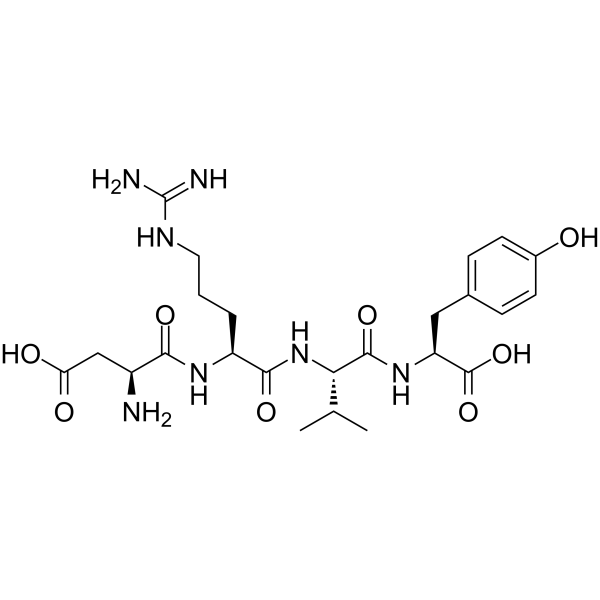
Angiotensin II (1-4), human is an endogenous peptide produced from AT I by angiotensin-converting-enzyme (ACE). Angiotensin II binds the AT II type 1 (AT1) receptor, stimulating GPCRs in vascular smooth muscle cells and increasing intracellular Ca 2+ levels. Angiotensin II also acts at the Na +/H + exchanger in the proximal tubules of the kidney .
loading...
    loading...
Cat. No.: HY-113962S
CAS No.: 2260669-11-0
Synonyms: 7α,25-OHC-d6
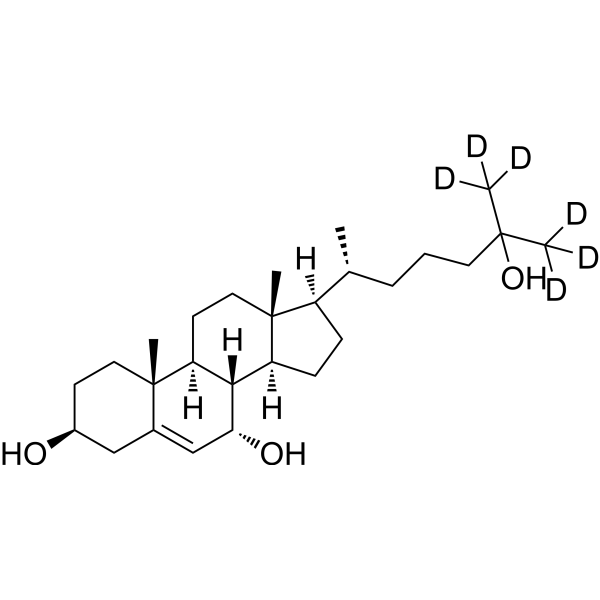
7α,25-Dihydroxycholesterol-d6 is deuterium labeled 7α,25-Dihydroxycholesterol. 7α, 25-dihydroxycholesterol (7α,25-OHC) is a potent and selective agonist and endogenous ligand of the orphan GPCR receptor EBI2 (GPR183). 7α, 25-dihydroxycholesterol is highly
loading...
    loading...
Cat. No.: HY-P0049A
CAS No.: 75499-44-4
Synonyms: Arg8-vasopressin diacetate; AVP diacetate; ADH
Research Areas:  

Neurological Disease Cancer

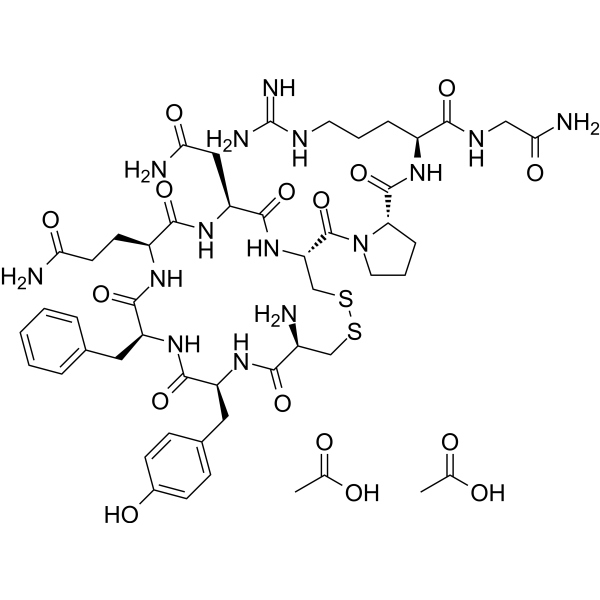
Argipressin (diacetate) (AVP (diacetate), also known as antidiuretic hormone (ADH)) is a 9 amino acid neuropeptide secreted by the posterior pituitary. Argipressin (diacetate) (AVP (diacetate)) can regulate the biological effects of fluid balance, osmolality and cardiovascular through three separate G-protein coupled receptors (GPCRs), namely Avpr1a (V1a), Avpr1b (V1b) and Avpr2 (V2). Argipressin (diacetate) (AVP (diacetate)) also have potentially important effects on centrally regulated metabolic processes .
loading...
    loading...
Cat. No.: HY-47823
CAS No.: 291528-35-3
Target:  

GPR109A

Research Areas:  

Metabolic Disease

GPCR agonist-2 (Compound 5j) is a GPCR GPR109b (HM74) agonist, with a pEC50 value of 6.51. GPCR agonist-2 can be used for research of lipid disorders .
loading...
    loading...
Cat. No.: HY-119494
CAS No.: 193825-78-4
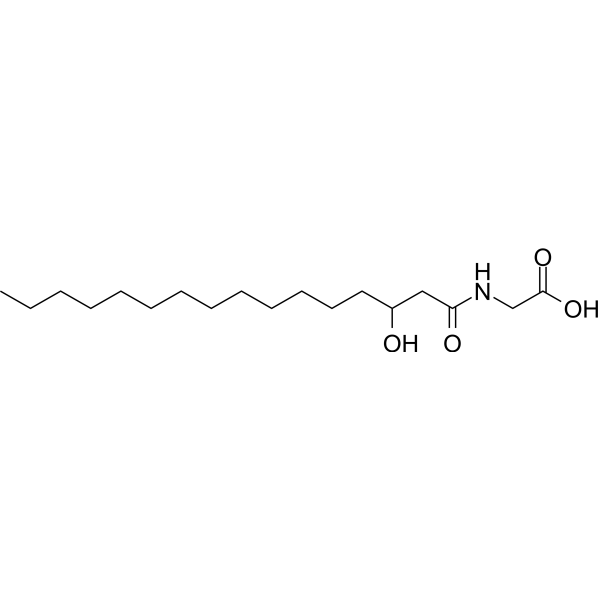
Commendamide is a GPCR G2A/GPR132 agonist (EC50: 11.8 μM). Commendamide can be used for research of autoimmunity and atherosclerosis .
loading...
    loading...
Cat. No.: HY-N0169S
Synonyms: HDCA-d5
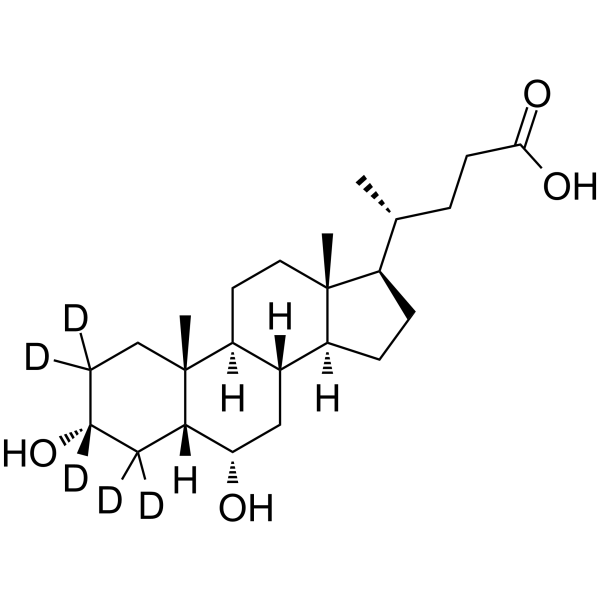
Hyodeoxycholic acid-d5 is the deuterium labeled Hyodeoxycholic acid. Hyodeoxycholic acid is a secondary bile acid formed in the small intestine by the gut flora, and acts as a TGR5 (GPCR19) agonist, with an EC50 of 31.6 µM in CHO cells.
loading...
    loading...
Cat. No.: HY-137525
CAS No.: 1643879-88-2
Target:  

Neurotensin Receptor

Research Areas:  

Neurological Disease

NTRC-808 is a nonpeptide selective GPCR neurotensin receptor type 2 (NTS2) partial agonist with an EC50 of 14 nM and Ki of 88 nM. NTRC-808 has higher selectivity for NTS2 than for NTS1. NTRC-808 has antipsychotic and analgesic activity .
loading...
    loading...
Cat. No.: HY-P10430
Research Areas:  

Neurological Disease

Stalk peptide is a GPR110 activator. Stalk peptide is released from GPCR Autoproteolysis INducing domain by autocatalytic process and then Stalk peptide is inserted into the ligand-binding pocket of the receptor to activate the receptor. Stalk peptide can promote nerve growth and synaptic formation. Stalk peptide can be used to study neurodevelopmental and neurodegenerative diseases .
loading...
    loading...
Cat. No.: HY-W727728
CAS No.: 1544739-75-4
Research Areas:  

Metabolic Disease

MK-8666 is a potent and selective partial GPR40 agonist (EC50 = 0.54 nM for human GPR40). MK-8666 shows selectivity over GPR119, GPR43, GPR41, GPR120, and other G-protein-coupled receptors (GPCRs). MK-8666 reduces glucose in the rodent. MK-8666 can be used for type 2 diabetes research [1][2].
loading...
    loading...
Cat. No.: HY-P10289A
Synonyms: NPW30, rat acetate
Research Areas:  

Neurological Disease

Neuropeptide W-30 (rat) is an important stress mediator in the central nervous system that modulates the hypothalamus-pituitary-adrenal (HPA) axis and sympathetic outflow. Neuropeptide W-30 (rat) is an endogenous ligand for the two structurally related orphan G-protein-coupled receptors (GPCRs) GPR7 and GPR8. NPW-30 activates and binds to both GPR7 and GPR8 at similar effective doses .
loading...
    loading...
Cat. No.: HY-107625
CAS No.: 487051-12-7
Target:  

MCHR1 (GPR24)

Research Areas:  

Neurological Disease Endocrinology

SNAP 94847 is a novel, high affinity selective melanin-concentrating hormonereceptor1 (MCHR1) antagonist with (Ki= 2.2 nM, Kd=530 pM), it displays >80-fold and >500-fold selectivity over MCHα1A and MCHD2 receptors respectively. SNAP 94847 binds with high affinity to the mouse and rat MCHR1 with minimal cross-reactivity to other GPCR, ion channels, enzymes, and transporters .
loading...
    loading...
Cat. No.: HY-P10287
CAS No.: 383415-80-3
Synonyms: NPW30, human
Research Areas:  

Neurological Disease

Neuropeptide W-30 (human) is an important stress mediator in the central nervous system that modulates the hypothalamus-pituitary-adrenal (HPA) axis and sympathetic outflow. Neuropeptide W-30 (human) is an endogenous ligand for the two structurally related orphan G-protein-coupled receptors (GPCRs) GPR7 and GPR8. Neuropeptide W-30 (human) activates and binds to both GPR7 and GPR8 at similar effective doses .
loading...
    loading...
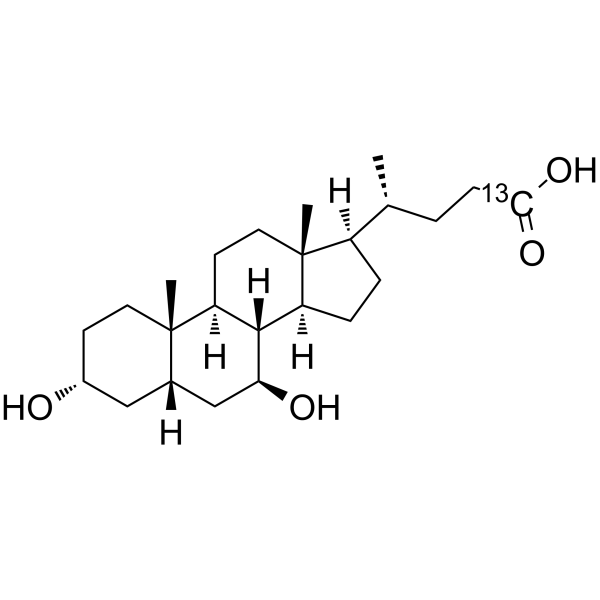
Cat. No.: HY-13771S1
CAS No.: 63296-46-8
Synonyms: Ursodeoxycholate-13C; Ursodiol-13C; UDCA-13C
Ursodeoxycholic acid- 13C is the 13C labeled Ursodeoxycholic acid. Ursodeoxycholic acid (Ursodeoxycholate) is a secondary bile acid issued from the transformation of (cheno)deoxycholic acid by intestinal bacteria, acting as a key regulator of the intestinal barrier integrity and essential for lipid metabolism. Ursodeoxycholic acid acts as signaling molecule, exerting its effects by interacting with bile acid activated receptors, including G-protein coupled bile acid receptor 5 (TGR5, GPCR19) and the farnesoid X receptor (FXR). Ursodeoxycholic acid can be used for the research of a variety of hepatic and gastrointestinal diseases. Orally active .
loading...
    loading...
Cat. No.: HY-W783254
CAS No.: 799279-67-7
Synonyms: PA(18:0e/0:0)
C18 LPA (PA(18:0e/0:0)) is a water-soluble phospholipid that functions as a signaling molecule, influencing various cellular responses through G protein-coupled receptors (GPCRs). It is known to promote smooth muscle contraction, cytoskeletal rearrangement, and chemotaxis, while also playing a role in neurotransmitter release, cell proliferation, platelet aggregation, and Ca2+ mobilization. Elevated levels of C18 LPA in human plasma are associated with ovarian cancer and atherosclerosis, suggesting its potential as a biomarker for ovarian cancer.
loading...
    loading...

