

96 Results for "

Probe substrate

" in MedChemExpress (MCE) Product Catalog:
Products (96)

96 Results for "Probe substrate" in MCE Product Catalog:

Cat. No.: HY-P10471A
Synonyms: MARCKS-ED TFA
Target:  

MARCKS PKC

Research Areas:  

Others

MPSD TFA (MARCKS-ED TFA) is the TFA salt form of MPSD (HY-P10471). MPSD TFA is a 25-amino acid peptide based on the effector domain sequence of the intracellular membrane protein myristoylated alanine-rich C-kinase substrate (MARCKS). MPSD TFA can sense membrane curvature and recognize phosphatidylserine. MPSD TFA can be utilized as biological probe to study membrane shape and lipid composition .
loading...
    loading...
Cat. No.: HY-B1259
CAS No.: 57-08-9
Synonyms: Acexamic acid; 6-Acetamidocaproic acid
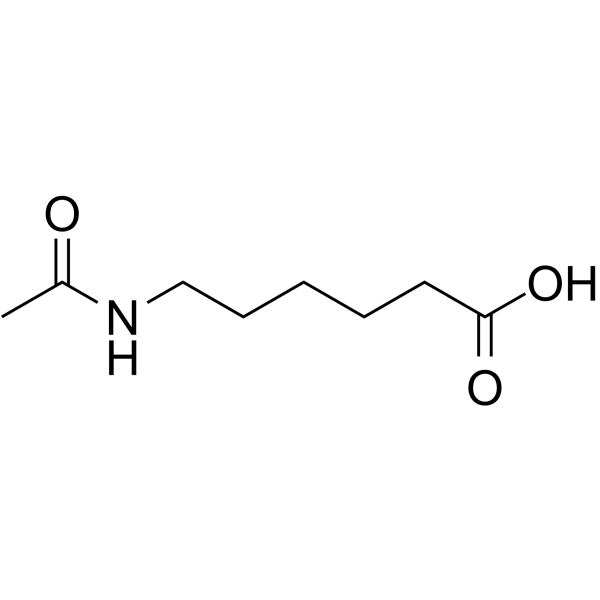
6-Acetamidohexanoic acid (Acexamic acid; 6-Acetamidocaproic acid) is a metabolite of Hexamethylene bisacetamide (HMBA) (HY-124284) with anti-pulmonary fibrosis activity. 6-Acetamidohexanoic acid does not induce differentiation of human promyelocytic leukemia cells, but is taken up by such cells. 6-Acetamidohexanoic acid serves as a carboxylic acid substrate component for constructing carboxylesterase-responsive near-infrared phototheranostic probes. 6-Acetamidohexanoic acid is applicable to research related to pulmonary fibrosis, refractory hypoxemia and cervical cancer .
loading...
    loading...
Cat. No.: HY-D1460
CAS No.: 134869-04-8
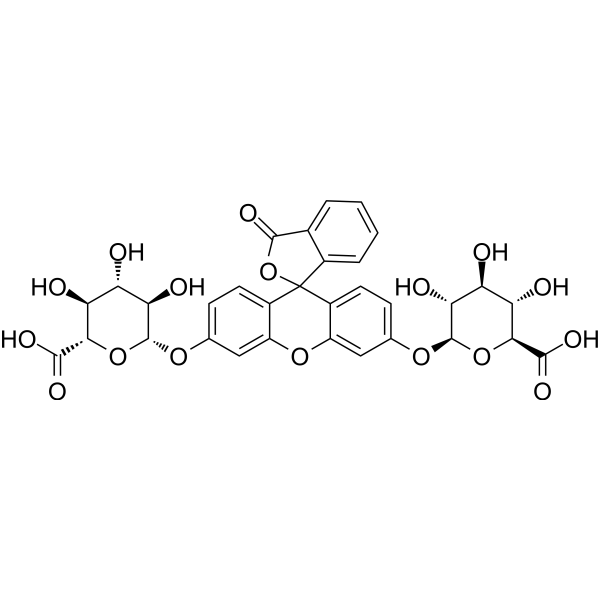
Fluorescein Di-β-D-Glucuronide is an orally active fluorescent probe substrate and an indicator of β-glucuronidase (βG) activity in intestinal bacteria. Fluorescein Di-β-D-Glucuronide can be used for non-invasive time-lapse optical imaging of βG activity in intestinal bacteria in nude mice. Fluorescein Di-β-D-Glucuronide supports the quantitative analysis of bacterial βG enzyme activity and inhibition .
loading...
    loading...
Cat. No.: HY-P3818
CAS No.: 813416-46-5
Target:  

PKC

Research Areas:  

Others

PKCδ Peptide Substrate is a highly selective peptide substrate targeting PKCδ. PKCδ Peptide Substrate can only be efficiently catalyzed for phosphorylation modification by PKCδ, and Thr431 is the sole phosphorylation site. PKCδ Peptide Substrate binds to the catalytic pocket of PKC in a competitive manner, but exhibits no PKC agonistic or inhibitory activity. PKCδ Peptide Substrate is a dedicated biochemical probe for the quantitative detection of PKCδ in vitro, and can be used for studies on PKCδ-related pathways .
loading...
    loading...
Cat. No.: HY-D0147
CAS No.: 87687-03-4
Synonyms: Pentoxyresorufin
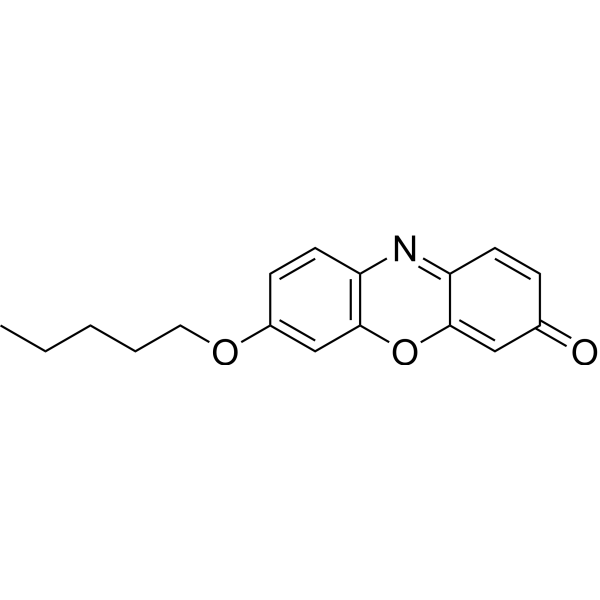
Resorufin pentyl ether (Pentoxyresorufin) is a Resazurin (HY-111391) analogue. Resorufin pentyl ether can function as a substrate probe to characterize and differentiate between a variety of inducers of cytochromes P-450. Resorufin pentyl ether has bactericidal activity against N. gonorrhoeae .
loading...
    loading...
Cat. No.: HY-160841
CAS No.: 2567941-52-8
Research Areas:  

Others

Biotin-16-dCTP is a biotinylated deoxycytidine triphosphate that serves as an important DNA labeling substrate. Biotin-16-dCTP can be enzymatically incorporated into the 3' end of DNA probes via terminal deoxynucleotidyl transferase, forming a 1-3 nucleotide-long tail to achieve biotinylation of the probes. Biotin-16-dCTP enhances chemiluminescent detection of low-abundance targets such as specific tRNA isoacceptors through Northern blotting. Biotin-16-dCTP can also replace conventional dCTP to be integrated into single-stranded DNA generated by asymmetric polymerase chain reaction, which is applicable for bioconjugation or pull-down assays. Repeated freeze-thaw cycles of Biotin-16-dCTP should be avoided to prevent degradation of its function for probe biotinylation .
loading...
    loading...
Cat. No.: HY-D1079
CAS No.: 100900-07-0
Target:  

DNA Stain

Research Areas:  

Others

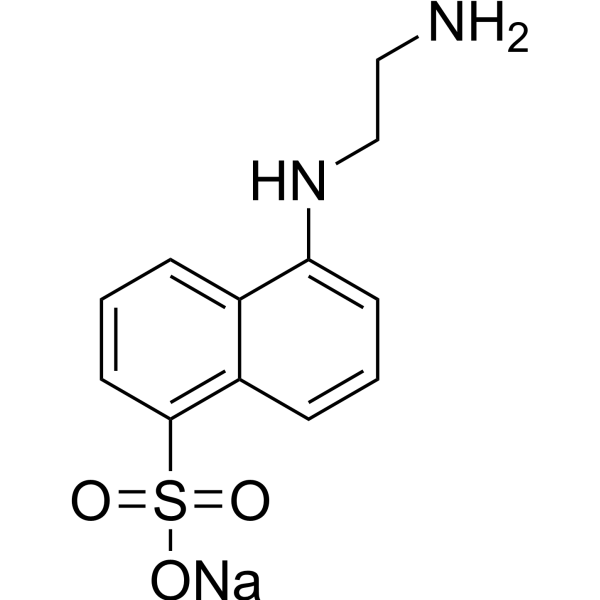
EDANS sodium is a potent fluorogenic substrates. EDANS sodium is a donor for FRET-based nucleic acid probes and protease substrates. EDANS sodium is often paired with DABCYL or DABSYL. The optimal absorbance and emission wavelengths of EDANS sodium are λabs = 336 nm and λem = 490 nm respectively .
loading...
    loading...
Cat. No.: HY-P3791
CAS No.: 133525-12-9
Target:  

Fluorescent Dye

Research Areas:  

Others

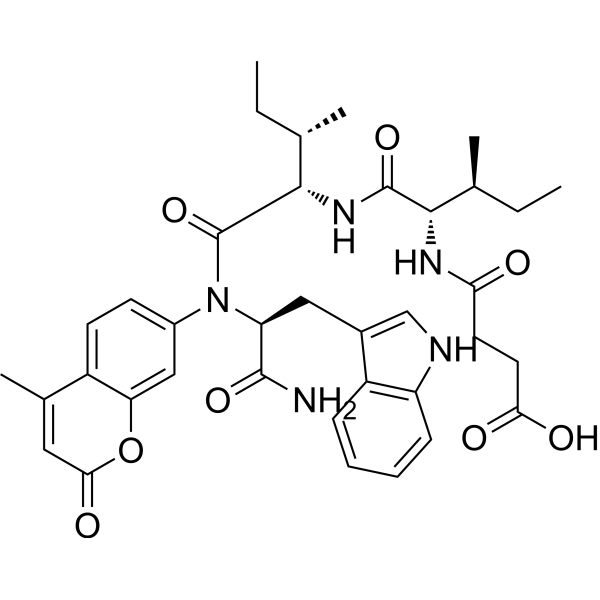
N-Succinyl-Ile-Ile-Trp-AMC is a peptide-based fluorescent substrate or probe for carboxypeptidase Y (CPY) .
loading...
    loading...
Cat. No.: HY-D2817
Target:  

Fluorescent Dye

Research Areas:  

Others

FITC-PLL is a fluorescently labeled polycationic polypeptide probe composed of polylysine (PLL) and FITC (HY-66019), with a typical Ex/Em of 495/520 nm. The fluorescence intensity and lifetime of FITC-PLL are sensitive to pH and FITC density. FITC-PLL can be used for quantifying hapten receptor binding and endocytosis kinetics in macrophages, as a patternable substrate for neuron guidance, for negatively charged phospholipid membrane binding and transmembrane transport, and for live-cell imaging of starch nanoparticle conjugates and lysosome labeling .
loading...
    loading...
Cat. No.: HY-W800701
CAS No.: 2762752-63-4
BP Fluor 546 DBCO is an azide-reactive probe that can be used for imaging azide-tagged biomolecules via a copper-free click reaction. The DBCO moiety reacts with azides to form a stable triazole and does not require a Cu-catalyst or elevated temperatures. In applications where the presence of copper is a concern, BP Fluor 546 DBCO is an ideal alternative to copper-requiring fluorescent alkynes. BP Fluor 546 is a water-soluble, pH-insensitive (from pH 4-10), orange-fluorescent dye with absorption and emission maxima at 554 and 570 nm, respectively. It can be used with the 488 nm and 532 nm laser lines. BP Fluor 546 dye conjugates to a variety of antibodies, peptides, proteins, tracers, and amplification substrates, which are often used for generating stable signals in imaging and flow cytometry.
loading...
    loading...
Cat. No.: HY-119395
CAS No.: 363-36-0
Synonyms: Kynurenamine
Target:  

Monoamine Oxidase

Research Areas:  

Metabolic Disease

Kynuramine is an endogenous amine that serves as a fluorescent substrate and probe for plasma amine oxidase .
loading...
    loading...
Cat. No.: HY-Y0421
CAS No.: 700-58-3
Synonyms: 2-Adamantone; 2-Oxoadamantane
Target:  

11β-HSD

Research Areas:  

Others

Adamantanone (2-Adamantone; 2-Oxoadamantane) serves as a substrate for some alcohol dehydrogenases and also acts as a probe for characterizing substrate-binding pockets. Adamantanone can be reduced by 3α-hydroxysteroid dehydrogenase and 3β-17β-hydroxysteroid dehydrogenase derived from Pseudomonas testosteroni, and it can fit into the conformationally flexible substrate-binding pockets of these enzymes that undergo substrate-induced fit .
loading...
    loading...
Cat. No.: HY-D1609
CAS No.: 216571-88-9
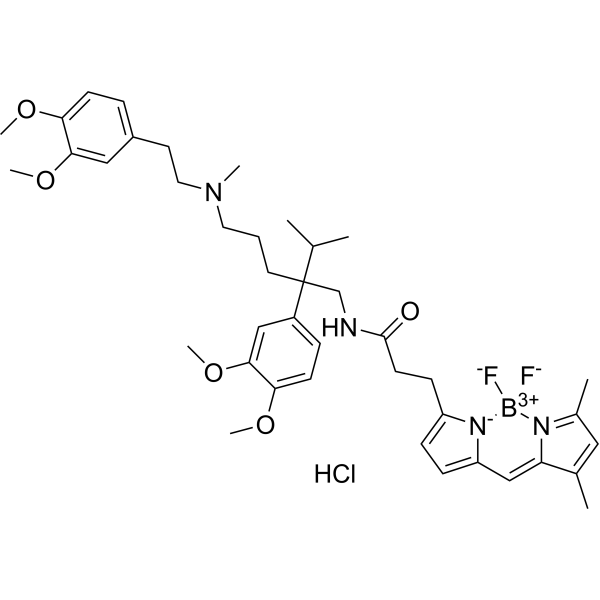
BODIPY FL Verapamil hydrochloride is a fluorescent dye, it can be used as a molecular probe to label tissues and cells. BODIPY FL Verapamil hydrochloride is a substrate for both ABCB1 and ABCC1 .
loading...
    loading...
Cat. No.: HY-D0092
CAS No.: 87-05-8
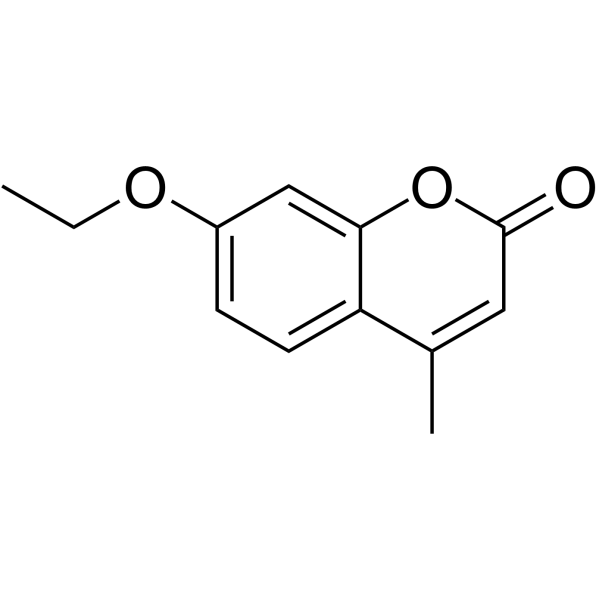
7-Ethoxy-4-methylcoumarin is a coumarin derivative and can be used as a substrate probe of mammalian cytochromes P450 1A1, 2B4 and 2B6 .
loading...
    loading...
Cat. No.: HY-P1230
CAS No.: 852155-81-8
Research Areas:  

Metabolic Disease

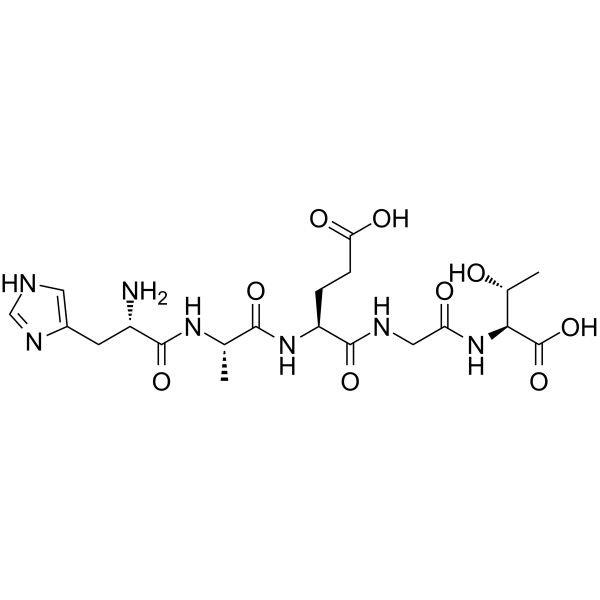
HAEGT is the first N-terminal 1-5 residues of glucagon like peptide-1 (GLP-1) peptide, and the sequence is His-Ala-Glu-Gly-Thr. HAEGT acts as a competitive substrate for probing prime substrate binding sites of human dipeptidyl peptidase-IV (DPP-IV) 1, in which the N-terminal His-Ala is catalyzed cleavage by DPP-IV. HAEGT can be used in the research of diabetes, obesity .
loading...
    loading...
Cat. No.: HY-P10471
CAS No.: 134248-85-4
Synonyms: MARCKS-ED
Target:  

MARCKS PKC

Research Areas:  

Others

MPSD (MARCKS-ED) is a 25-amino acid peptide based on the effector domain sequence of the intracellular membrane protein myristoylated alanine-rich C-kinase substrate (MARCKS). MPSD can sense membrane curvature and recognize phosphatidylserine. MPSD can be utilized as biological probe to study membrane shape and lipid composition .
loading...
    loading...
Cat. No.: HY-D2379
CAS No.: 1629965-68-9
Target:  

Fluorescent Dye

Research Areas:  

Others

HMRG is a fluorescent dye, which serves as the fluorescent active product generated by enzyme-activated fluorescent probes targeting proteases and glycosidases. Its detection mechanism relies on the intramolecular spirocyclization equilibrium: HMRG itself exists in an open non-spirocyclic structure under physiological pH, which maintains a conjugated π system and produces strong fluorescence; whereas its probe precursors (such as Leu-HMRG, Ac-GlyPro-HMRG and βGal-HMRG) exist in a closed spirocyclic form and show no fluorescence due to the disruption of the π-conjugated system; when the target enzyme cleaves the substrate fragment linked to the probe precursor, the closed spirocyclic structure converts to the open structure of HMRG, restoring the conjugated system and generating a strong fluorescent signal. Its detection wavelength is Ex/Em = 501/524 nm .
loading...
    loading...
Cat. No.: HY-P10471D
CAS No.: 190711-66-1
Synonyms: MARCKS-ED control peptide
Target:  

MARCKS PKC

Research Areas:  

Others

MPSD control peptide (MARCKS-ED control peptide) is a control peptide for MPSD peptide (HY-P10471). MPSD (MARCKS-ED) is a 25-amino acid peptide based on the effector domain sequence of the intracellular membrane protein myristoylated alanine-rich C-kinase substrate (MARCKS). MPSD can sense membrane curvature and recognize phosphatidylserine. MPSD can be utilized as biological probe to study membrane shape and lipid composition .
loading...
    loading...
Cat. No.: HY-W099563
CAS No.: 14617-86-8
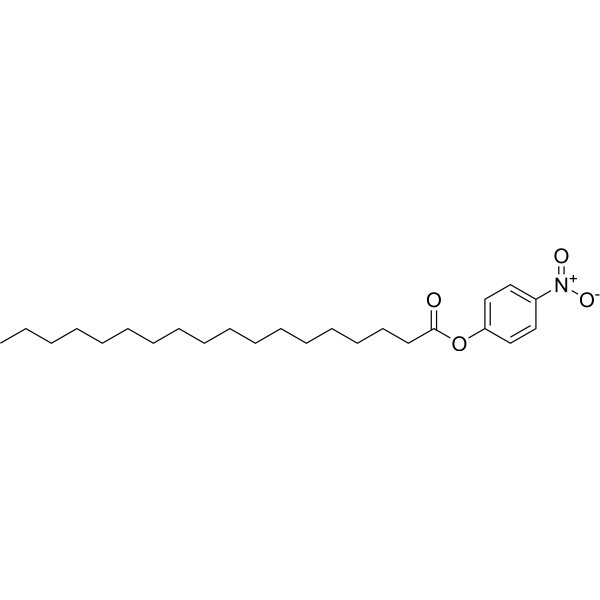
4-Nitrophenyl stearate, which is an ester formed by the condensation of stearic acid and 4-nitrophenol, is commonly used as a substrate for enzymatic assays, where the hydrolysis of ester bonds by esterase and lipase can be measured by absorbance or ratio In addition, 4-Nitrophenyl stearate has been used as a model compound to study the enzymatic activity and selectivity of lipases and esterases from various sources. The long hydrophobic tail of the molecule makes it suitable for use in lipophilic Good solubility in the environment makes it a useful probe for studying lipid metabolism.
loading...
    loading...
Cat. No.: HY-W354821
CAS No.: 66185-70-4
Synonyms: 4-MUD
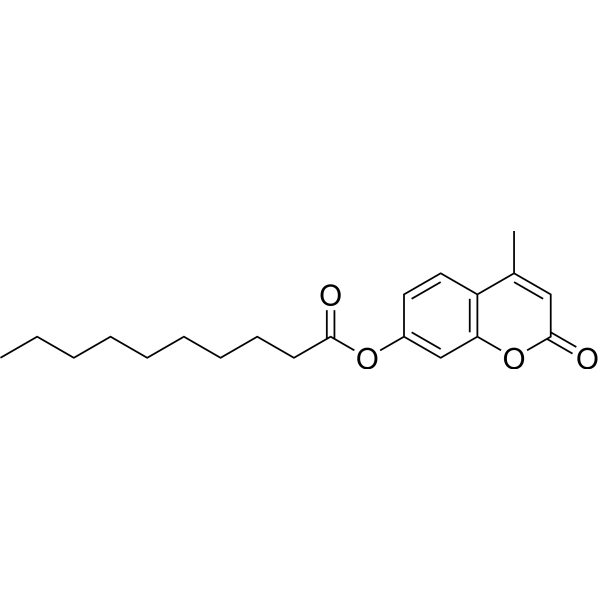
4-Methyl-2-oxo-2H-1-benzopyran-7-yl decanoate is a fluorogenic substrate used to follow the hydrolytic activity of carboxylesterases .
loading...
    loading...

