60 Results for "

feces

" in MedChemExpress (MCE) Product Catalog:
Products (60)

60 Results for "feces" in MCE Product Catalog:

Cat. No.: HY-133813S
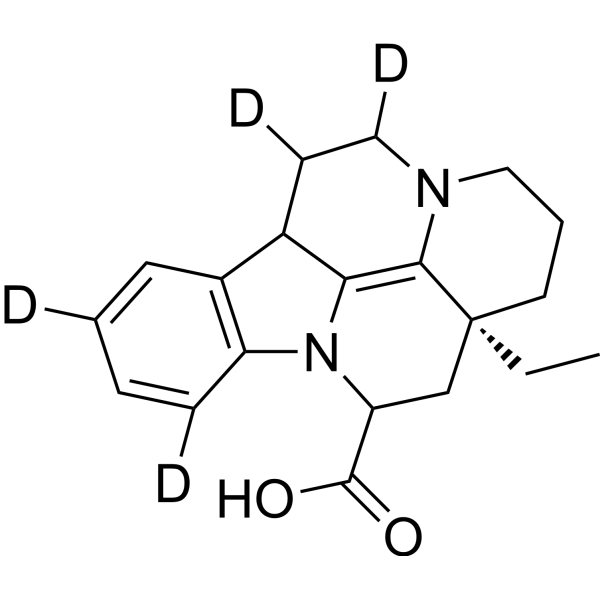
Apovincaminic acid-d4 is the deuterated-labeled Apovincaminic acid (HY-133813). Apovincaminic acid is the major metabolite of Vinpocetine (HY-13295), with blood-brain barrier permeability and oral activity. Apovincaminic acid is detectable in the plasma of pregnant rabbits after oral administration of Vinpocetine. Apovincaminic acid is absorbable from all segments of the gastrointestinal tract of Norway rat, with the stomach as the primary absorption site, and is excreted via urine and feces. Apovincaminic acid is used in the research of cerebrovascular diseases .
loading...
    loading...
Cat. No.: HY-B2085
CAS No.: 119-96-0
Synonyms: Arsthinol; Balarsen
Arsthinenol (Arsthinol; Balarsen) is an orally active small organic arsenic molecule. Arsthinenol exhibits anti-amoebic activity by eliminating cysts and trophozoites of Entamoeba histolytica in feces and promoting the healing of amoebic rectal ulcers. Arsthinenol forms the hydroxypropyl-β-cyclodextrin inclusion complex STB-HPβCD, which has an IC50 of 31.6 μM against U87 MG cells and possesses anti-tumor activity. Arsthinenol can be used in the research of intestinal amoebiasis and glioblastoma .
loading...
    loading...
Cat. No.: HY-W399297R
CAS No.: 566-17-6
Synonyms: 7α,12α-Dihydroxycholanoic acid (Standard)
Isodeoxycholic acid (7α,12α-Dihydroxycholanoic acid) Standard is the analytical standard of Isodeoxycholic acid (HY-W399297). This product is intended for research and analytical applications. Isodeoxycholic acid (7α,12α-Dihydroxycholanoic acid) is a 3β-hydroxylated secondary bile acid. Isodeoxycholic acid is produced by epimerization of deoxycholic acid by intestinal bacteria. Isodeoxycholic acid is detectable in feces, mainly existing as saponifiable conjugates with long-chain fatty acids. Isodeoxycholic acid participates in the regulation of intestinal physiology .
loading...
    loading...
Cat. No.: HY-W004305R
CAS No.: 629-80-1
Synonyms: Palmitaldehyde (Standard)
Hexadecanal (Standard) is an analytical standard for Hexadecanal. This product is intended for research and analytical applications. Hexadecanal (Palmitaldehyde), a volatile, long-chain fatty aldehyde, is released from human feces, skin, and breath. The hexadecanal receptor (OR37B) is highly conserved in mammals. Hexadecanal may exert its effects by modulating functional connectivity between social evaluation brain substrates and aggression execution brain substrates. Hexadecanal has also been shown to have a strong deterrent effect on black ants. Hexadecanal has potential for use in startle response and aggression behavior
loading...
    loading...
Cat. No.: HY-137263
CAS No.: 35775-65-6
Target:  

Antibiotic

Research Areas:  

Infection

Propionylmaridomycin is a macrolide antibiotic with antibacterial activity. Propionylmaridomycin is rapidly absorbed from the gastrointestinal tract and rapidly distributed to tissues. Propionylmaridomycin radioactivity levels in the liver, kidneys, and lungs were significantly higher than in plasma, while distribution to the brain was less. Propionylmaridomycin is excreted primarily through the feces, and the high fecal recovery rate is due to unabsorbed compounds and biliary excretion of compounds and their metabolites. Propionylmaridomycin exhibits the highest antibacterial activity in the lungs. Propionylmaridomycin is completely converted to several metabolites in rats, of which 4''-depropionyl-9-propionylmaridomycin was identified as the major metabolite .
loading...
    loading...
Cat. No.: HY-W004305S
CAS No.: 2703602-66-6
Synonyms: Palmitaldehyde-d5
Hexadecanal-d5 (Palmitaldehyde-d5) is deuterium labeled Hexadecanal. Hexadecanal (Palmitaldehyde) , a volatile long-chain aliphatic aldehyde, is emitted from human feces, skin, and breath. The receptor for hexadecanal(OR37B) is highly conserved across mammals. Hexadecanal may exert its effects by modulating functional connectivity between the brain substrates of social appraisal and the brain substrates of aggressive execution. Also, Hexadecanal is confirmed to be highly deterrent to the ant Lasius niger. Hexadecanal is promising for the research of startle responses and aggression
loading...
    loading...
Cat. No.: HY-W782193
CAS No.: 55320-91-7
Synonyms: 6-Methyl-5-hepten-2-one-d5
Sulcatone-d5 (6-Methyl-5-hepten-2-one-d5) is the deuterium labeled Sulcatone (HY-W010435). Sulcatone (6-Methyl-5-hepten-2-one) is a plant-derived volatile organic compound with activities such as insecticidal, antifungal, and blood pressure-lowering effects. Sulcatone also serves as an insect pheromone and an endogenous metabolite, which can be found in feces. Changes in Sulcatone levels can be used for the auxiliary diagnosis of ulcerative colitis .
loading...
    loading...
Cat. No.: HY-W010516R
CAS No.: 97-61-0
Synonyms: 2-Methylpentanoic acid (Standard)
2-Methylvaleric acid (Standard) is the analytical standard of 2-Methylvaleric acid. This product is intended for research and analytical applications. 2-Methylvaleric acid is a branched short-chain fatty acid (SCFA) produced by the metabolism of branched-chain amino acids by gut microbes. 2-Methylvaleric acid can be used as a potential biomarker for metabolic diseases such as type 2 diabetes, and its content is significantly reduced in the feces of diabetic mice. 2-Methylvaleric acid may regulate host energy metabolism and inflammatory response through G protein-coupled receptors (GPCRs) or histone deacetylase (HDAC) inhibition. 2-Methylvaleric acid can be used to study gut microbe-host interactions and metabolic diseases as a fecal biomarker[1][2].
loading...
    loading...
Cat. No.: HY-B0937S
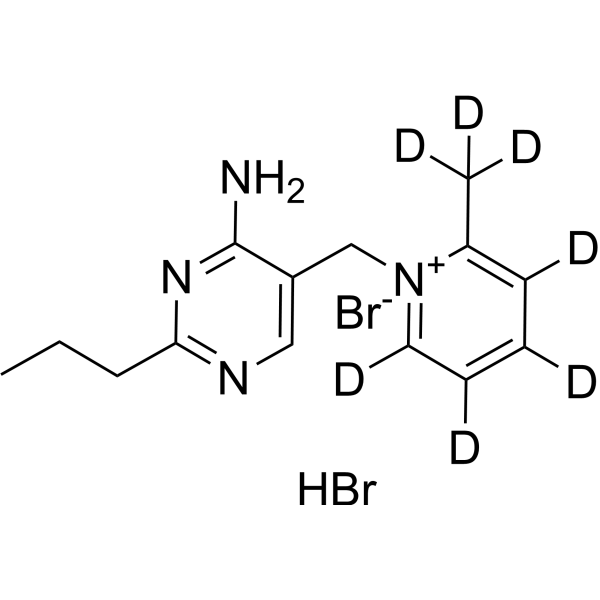
Amprolium-d7 (bromide hydrobromide) is the deuterated-labeled Amprolium (HY-B0937). Amprolium is a thiamine transporter inhibitor and antiparasitic agent with oral activity and blood-brain barrier penetration. Amprolium blocks thiamine transport at the blood-brain barrier and intestine, and competitively inhibits thiamine pyrophosphokinase, inducing thiamine pyrophosphate deficiency and impairing carbohydrate synthesis. Amprolium induces oxidative stress, alters antioxidant enzyme activity, and inhibits acetylcholinesterase (AchE) activity. Amprolium disrupts reproductive organs and gametogenesis, and causes histopathological and ultrastructural damage to multiple organs. Amprolium induces thiamine deficiency, reduces body weight gain in mice, and causes psychomotor behavioral changes and nephropathy. Amprolium exhibits molluscicidal activity against the terrestrial snail Eobania vermiculata, and reduces the shedding of Eimeria meleagrimitis oocysts in feces and litter. Amprolium can be used for research on thiamine deficiency and coccidiosis .
loading...
    loading...
Cat. No.: HY-B1120R
CAS No.: 3383-96-8
Synonyms: Temefos (Standard)
Temephos (Standard) is the analytical standard of Temephos. This product is intended for research and analytical applications. Temephos (Temefos) is an orally active, blood-brain barrier-permeable organophosphate insecticide and AChE inhibitor. By irreversibly inhibiting AChE to induce cholinergic overactivation, Temephos effectively blocks larval development of Aedes aegypti (yellow fever mosquito) and Aedes albopictus (Asian tiger mosquito), and is commonly used in studies related to Dengue Virus, Zika Virus and other relevant pathogens. Temephos exhibits genotoxicity and neurodevelopmental toxicity, and may also cause liver injury, reproductive system abnormalities and cholinergic poisoning symptoms in mammals. Temephos tends to accumulate in adipose tissues and aquatic organisms, and is excreted via feces after metabolism through oxidation and hydrolysis. Note that CYP-mediated metabolic detoxification may reduce the actual larvicidal efficacy of Temephos against some mosquito species. Temephos can be used in research related to dengue fever, Zika virus disease, chikungunya and dracunculiasis .
loading...
    loading...
Cat. No.: HY-B1120S
CAS No.: 1219795-39-7
Synonyms: Temefos-d12
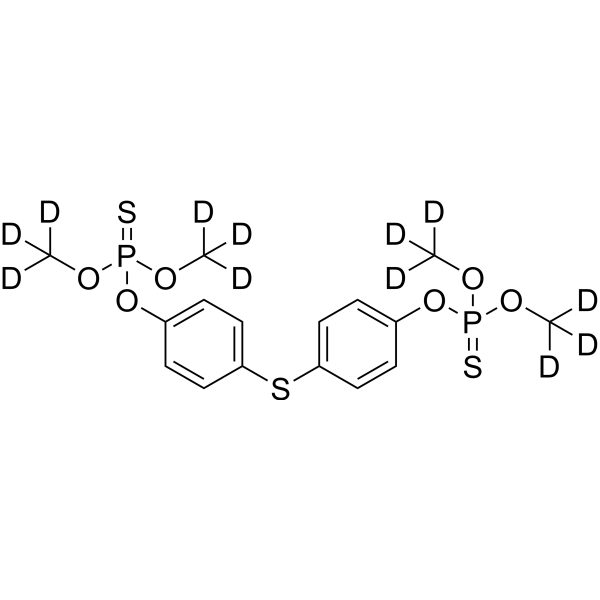
Temephos-d12 is the deuterium labeled Temephos. Temephos (Temefos) is an orally active, blood-brain barrier-permeable organophosphate insecticide and AChE inhibitor. By irreversibly inhibiting AChE to induce cholinergic overactivation, Temephos effectively blocks larval development of Aedes aegypti (yellow fever mosquito) and Aedes albopictus (Asian tiger mosquito), and is commonly used in studies related to Dengue Virus, Zika Virus and other relevant pathogens. Temephos exhibits genotoxicity and neurodevelopmental toxicity, and may also cause liver injury, reproductive system abnormalities and cholinergic poisoning symptoms in mammals. Temephos tends to accumulate in adipose tissues and aquatic organisms, and is excreted via feces after metabolism through oxidation and hydrolysis. Note that CYP-mediated metabolic detoxification may reduce the actual larvicidal efficacy of Temephos against some mosquito species. Temephos can be used in research related to dengue fever, Zika virus disease, chikungunya and dracunculiasis .
loading...
    loading...
Cat. No.: HY-W740426
CAS No.: 190710-79-3
Target:  

Drug Metabolite

Research Areas:  

Cancer

N-Desmethyltopotecan is a metabolite of Topotecan (HY-13768), and it can be detected in plasma, urine and feces .
loading...
    loading...
Cat. No.: HY-N17735
CAS No.: 3175-79-9
(R)-1,2-Dihydroxyaporphine (Compound M1) is a metabolite of Nuciferine (HY-N0049) and is easily excreted through urine and feces .
loading...
    loading...
Cat. No.: HY-120422
CAS No.: 1343498-72-5
Target:  

Drug Derivative

Research Areas:  

Others

N-Desmethyl Regorafenib is a demethylated metabolite of Regorafenib (HY-10331), formed by N-demethylation, and is found in feces and occasionally in plasma as a trace component. N-Desmethyl Regorafenib is a substrate for amide hydrolysis .
loading...
    loading...
Cat. No.: HY-156126
CAS No.: 1808096-68-5
Target:  

Others

Lentztrehalose C (compound LTC) is a trehalose analogue with high stability in microbial and mammalian cells. It can be detected in the blood of mice and is ultimately excreted in feces and urine. It can induce autophagy in human cancer cells.
loading...
    loading...
Cat. No.: HY-133813
CAS No.: 27773-65-5
Apovincaminic acid is the major metabolite of Vinpocetine (HY-13295), with blood-brain barrier permeability and oral activity. Apovincaminic acid is detectable in the plasma of pregnant rabbits after oral administration of Vinpocetine. Apovincaminic acid is absorbable from all segments of the gastrointestinal tract of Norway rat, with the stomach as the primary absorption site, and is excreted via urine and feces. Apovincaminic acid is used in the research of cerebrovascular diseases .
loading...
    loading...
Cat. No.: HY-184082
CAS No.: 3784-99-4
Target:  

Parasite

Research Areas:  

Infection

Stilbazium iodide is an orally effective pyridinium quaternary ammonium repellent. Stilbazium (iodide) exhibits broad-spectrum activity against a variety of human and animal intestinal parasites. Stilbazium iodide eliminates both mature and immature worms, reduces egg counts, reddens feces, and causes mild gastrointestinal irritation. Stilbazium iodide can be used in research related to intestinal parasitic infections including pinworm, whipworm, and strongyloidiasis .
loading...
    loading...
Cat. No.: HY-W007355S2
Synonyms: 3-Methylindole-13C6; 3-Methyl-1H-indole-13C6
Skatole- 13C6 is the 13C-labeled Skatole (HY-W007355). Skatole (3-methylindole) is a heterocyclic compound naturally found in the feces of vertebrates and can be found in certain plants. Skatole can be produced by intestinal bacteria, inducing apoptosis of intestinal epithelial cells through activating aryl hydrocarbon receptors (AhR) and p38. Skatole has been used in specific products of the perfume industry or as a flavor additive in ice cream.
loading...
    loading...
Cat. No.: HY-138135
CAS No.: 1030825-28-5
Synonyms: Fidaxomicin metabolite OP-1118
Research Areas:  

Infection

OP-1118 (Fidaxomicin metabolite OP-1118) is an orally active dual inhibitor of NF-κB and ERK1/2, with low systemic plasma exposure, no accumulation, and primary excretion via feces. By inhibiting the phosphorylation of NF-κB and ERK1/2 and reducing the expression of pro-inflammatory cytokines, OP-1118 exerts significant anti-inflammatory, cytoprotective, anti-apoptotic and antibacterial activities. In Clostridium difficile infection models, OP-1118 effectively blocks toxin-mediated intestinal inflammation, cell rounding, histological damage and apoptosis, and its protective effect can be reversed by PMA (HY-18739) .
loading...
    loading...
Cat. No.: HY-16265A
CAS No.: 2514957-81-2
Research Areas:  

Cancer

JI-101 hydrochloride is an orally active angiogenesis inhibitor and anticancer agent with 55% oral bioavailability in Sprague Dawley rats, high permeability, and no P-gp substrate activity .JI-101 hydrochloride modulates angiogenesis signaling pathways in tumor vessel beds, downregulates EphB4, targets EphB4, VEGFR-2, and PDGFR-β, and inhibits multiple stages of tumor angiogenesis .JI-101 hydrochloride exerts activity against cancer cells and xenografts, exhibits mild to moderate inhibition of CYP3A4, and shows stability in pre-clinical and human liver microsomes .JI-101 hydrochloride undergoes rapid oral absorption in Sprague Dawley rats, has extensive tissue distribution with preferred lung uptake, and is excreted via bile with mono- and di-hydroxy metabolites, with feces as the primary elimination route .JI-101 hydrochloride can be used for the research of ovarian cancer and solid tumors .
loading...
    loading...

