613 Results for "

MAPK pathways

" in MedChemExpress (MCE) Product Catalog:
Products (613)

613 Results for "MAPK pathways" in MCE Product Catalog:

Cat. No.: HY-179042
CAS No.: 3100351-69-4
TGF-β/Smad-IN-3 (Compound 4w) is an effective TGF-β/Smad inhibitor. TGF-β/Smad-IN-3 exerts anti-pulmonary fibrosis activity by simultaneously inhibiting the TGF-β/Smad and MAPK signaling pathways. TGF-β/Smad-IN-3 significantly inhibits collagen deposition induced by TGF-β1, with its IC50 value being 3.21 μM. TGF-β/Smad-IN-3 has an IC₅₀ of 46.77 nM for the autocrine motility factor (ATX). TGF-β/Smad-IN-3 significantly reduces the expression levels of α-SMA, COL1A1 and FN in TGF-β1-induced CCC-HPF-1 cells, and effectively inhibited TGF-β1-induced cell migration. TGF-β/Smad-IN-3 can be used for the study of pulmonary fibrosis .
loading...
    loading...
Cat. No.: HY-182470
CAS No.: 486414-32-8
Target:  

CDK

AG-012986 (dihydrochloride) is a pan-CDK inhibitor with Ki values of 44 nM (CDK1), 9.2 nM (CDK4), 94 nM (CDK2), and IC50 values of 22 nM (CDK5), 4 nM (CDK9). AG-012986 (dihydrochloride) causes apoptosis of T-cells by targeting upstream kinases in the p38 Mitogen-activated protein kinase (MAPK) pathway and impairing cellular survival. AG-012986 (dihydrochloride) induces cell cycle arrest, retinoblastoma protein hypophosphorylation, and reduces Ki-67 expression. AG-012986 (dihydrochloride) exerts antiproliferative activity in tumor cells, demonstrates antitumor efficacy in human xenograft models, and causes retinal and peripheral neurotoxicity, plus immune cell toxicity. AG-012986 (dihydrochloride) can be used for the research of colon carcinoma, non-small cell lung carcinoma, lung carcinoma, breast carcinoma, ovarian tumor, pancreatic carcinoma, osteosarcoma, lymphoma, leukemia, retinotoxicity .
loading...
    loading...
Cat. No.: HY-G0007R
CAS No.: 88546-55-8
Synonyms: Omeprazole sulphone (Standard)
Omeprazole sulfone (Standard) is the analytical standard of Omeprazole sulfone. This product is intended for research and analytical applications. Omeprazole sulfone (Omeprazole sulphone) is one of the major circulating metabolites of Omeprazole (HY-B0113) in vivo, and belongs to class 4 non-mutagenic impurities. Omeprazole sulfone does not bind to the aryl hydrocarbon receptor (AhR), nor does it induce the expression of CYP1A1 or CYP1A2. However, Omeprazole sulfone promotes the migration of gastric epithelial cells under basal conditions and reverses the inhibitory effect of Indomethacin (HY-14397) on cell migration. Omeprazole sulfone does not promote cell proliferation, nor does it upregulate COX-2 expression or activate signaling pathways such as ERK, P38 MAPK and PI3K. Omeprazole sulfone maintains basal ulcer healing under non-acid-dependent conditions and can be used in studies related to gastric ulcer repair .
loading...
    loading...
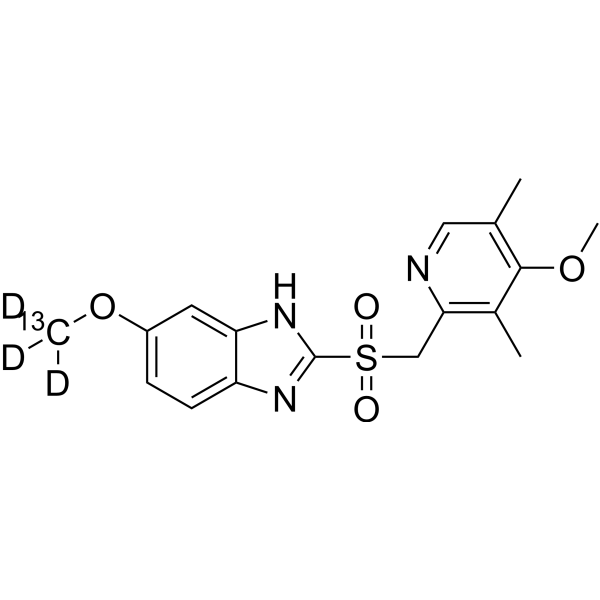
Cat. No.: HY-G0007S1
CAS No.: 1261393-28-5
Synonyms: Omeprazole sulfone-13C,d3; Omeprazole sulphone-13C,d3
Omeprazole sulfone- 13C,d3 is the deuterium and 13C labeled Omeprazole sulfone. Omeprazole sulfone (Omeprazole sulphone) is one of the major circulating metabolites of Omeprazole (HY-B0113) in vivo, and belongs to class 4 non-mutagenic impurities. Omeprazole sulfone does not bind to the aryl hydrocarbon receptor (AhR), nor does it induce the expression of CYP1A1 or CYP1A2. However, Omeprazole sulfone promotes the migration of gastric epithelial cells under basal conditions and reverses the inhibitory effect of Indomethacin (HY-14397) on cell migration. Omeprazole sulfone does not promote cell proliferation, nor does it upregulate COX-2 expression or activate signaling pathways such as ERK, P38 MAPK and PI3K. Omeprazole sulfone maintains basal ulcer healing under non-acid-dependent conditions and can be used in studies related to gastric ulcer repair .
loading...
    loading...
Cat. No.: HY-N1983R
CAS No.: 38395-02-7
Caudatin (Standard) is the analytical standard of Caudatin (HY-N1983). This product is intended for research and analytical applications. Caudatin is an orally active and brain-penetrant C-21 steroidal found in Cynanchum bungei decne with a variety of biological activities. Caudatin can inhibit cell proliferation, migration, invasion, cause cell phase arrest, induce apoptosis, autophagy, ROS prodution and loss of mitochondrial membrane potential. Caudatin activates PARP, caspase-3, -7, -9, upregulates pro-apoptotic Bad and Bax and downregulates anti-apoptotic Bcl-2 and Bcl-XL. Caudatin suppresses VEGF, FAK phosphorylation, upregulates p21, p27, DR5 protein expression, activates the p38 MAPK, JNK and PPARα/TFEB-mediated autophagy-lysosomal signaling pathways. Caudatin can be used for the research of cancer, inflammation and neurological disease, such as glioma and Alzheimer's disease .
loading...
    loading...
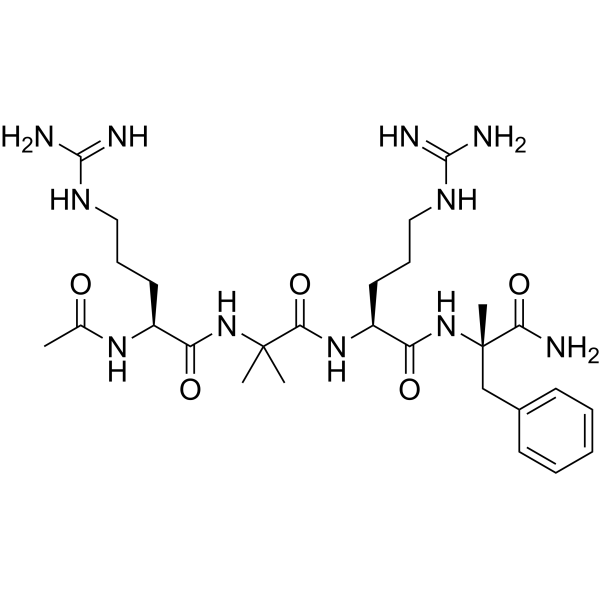
Cat. No.: HY-P1615
CAS No.: 1006388-38-0
Synonyms: UPARANT
Cenupatide (UPARANT) is a uPAR and FPR antagonist with anti-angiogenic, anti-inflammatory, and vascular barrier regulatory activities, as well as high stability and resistance to enzymatic degradation in blood/plasma. Cenupatide blocks the uPAR-FPR interaction, reduces VEGF-induced phosphorylation levels of AKT, VEGFR-2, STAT3, JNK, p38 MAPK, ERK1/2, and NF-κB p65, and inhibits αvβ3 integrin activation. Cenupatide suppresses endothelial cell migration, invasion, tube formation, and angiogenic signaling pathways, restores tight junctions and blood-retinal barrier integrity, reduces pro-inflammatory marker levels, and inhibits apoptosis. Cenupatide reduces retinal neovascularization, renal fibrosis, and vascular leakage, and restores visual function in preclinical models. Cenupatide is applicable to research related to retinopathy, diabetic complications, ocular diseases, cancer, and inflammatory diseases .
loading...
    loading...
Cat. No.: HY-P991400
GSK1995057 is a human monoclonal antibody (mAb) targeting TNFRSF1A. GSK1995057 selectively binds to TNFR1, blocks the binding of TNF-α and LT-α, and does not interfere with TNFR2 signaling. GSK1995057 inhibits the activation of NF-κB, JNK and MAPK pathways, alleviates apoptosis (apoptosis) and inflammatory responses (inhibiting IL-1β, IL-6, IL-10, TNF-α), and prevents viability loss of human nucleus pulposus cells. GSK1995057 inhibits the expression of cytokines and neutrophil adhesion molecules in human pulmonary microvascular endothelial cell monolayers, and reduces inflammatory responses and lung injury symptoms in non-human primates. GSK1995057 forms complexes with HAVH autoantibodies, thereby activating TNFR1 and triggering the release of cytokines and IL-8 in human cells. GSK1995057 can be used in research related to intervertebral disc degeneration and acute lung injury .
loading...
    loading...
Cat. No.: HY-P992200
Anti-CD146 Antibody (AA98) is an antibody targeting CD146 and an angiogenesis inhibitor. Anti-CD146 Antibody (AA98) blocks the dimerization of CD146 as well as its downstream PI3K/AKT, p38 MAPK and NF-κB signaling pathways; it inhibits the expression of MMP9 and ICAM1, epithelial-mesenchymal transition (EMT), and the proliferation, migration and tube formation of endothelial cells. Anti-CD146 Antibody (AA98) enhances radiation-induced cancer cell apoptosis and survival inhibition, reduces tumor microvessel density, and suppresses tumor growth, invasion and vasculogenic mimicry. Anti-CD146 Antibody (AA98) can be used in research related to cervical cancer, liver cancer, malignant phyllodes tumor of the breast, uveal melanoma, leiomyosarcoma, pancreatic cancer, other tumors and angiogenesis .
loading...
    loading...
Cat. No.: HY-W715812
CAS No.: 116255-48-2
Bromuconazole is a triazole fungicide with oral efficacy and blood-brain barrier permeability . Bromuconazole protects crops from various fungal contaminations. Bromuconazole exhibits cytotoxicity against a variety of cancer cells, induces G0/G1 cell cycle arrest and inhibits DNA synthesis in cancer cells, and triggers cytoskeletal structural disorder, genotoxic damage, apoptotic (apoptosis) cell death, and mitochondrial membrane depolarization. Bromuconazole activates caspase-3, induces excessive production of ROS, p53 and Bax, lipid peroxidation, increased activities of SOD and CAT, and downregulates Bcl-2. By upregulating p-ERK1/2 and p-JNK, Bromuconazole disrupts the MAPK signaling pathway, impairs the cellular stress response of human trophoblast cells and endometrial cells, and damages the implantation process . Bromuconazole is applicable to research related to glioma, colon cancer, reproductive injury (implantation dysfunction), and cardiac dysfunction .
loading...
    loading...
Cat. No.: HY-L139
3,530 compounds

Pain is a kind of distressing feeling caused by the stimulation of tissue damage. According to the International Association for the Study of Pain (IASP), pain is defined as ”An unpleasant sensory and emotional experience associated with actual or potential tissue damage, or described in terms of such damage”.

Pain is usually classified according to its location, duration, underlying causes, and intensity. For example, acute and chronic pain, muscle pain, and nerve pain. Pain is the main symptom of most diseases, which seriously affects the quality of life and body function of patients. In the medical treatment of pain, anti-inflammatory drugs and opioid analgesic agents have traditionally been used, but the side effects are serious. In recent years, targeted drugs targeting the ERK/MAPK pathway or other targets have gradually become a research hotspot.

MCE supplies a unique collection of 3,530 compounds targeting key proteins in the pain system. MCE Pain-Related Compound Library is a useful tool for pain related research and anti-pain drug development.

Cat. No.: HY-100742R
CAS No.: 1802977-61-2
GNE-140 racemate (Standard) is the analytical standard of GNE-140 racemate (HY-100742). This product is intended for research and analytical applications. GNE-140 racemate is a racemic mixture of (R)-GNE-140 (HY-100742A) and (S)-GNE-140 (HY-100742B), and also a tautomer of GNE-140 (HY-118241). GNE-140 racemate is an orally active lactate dehydrogenase inhibitor, with an IC50 of 3 nM against human LDHA and an IC50 of 5 nM against LDHB. GNE-140 racemate reduces the phosphorylation level and total protein expression of p38 MAPK, and inhibits EGF-induced AKT phosphorylation. GNE-140 racemate decreases lactate production, regulates glycolysis, the pentose phosphate pathway and nucleotide biosynthesis, increases extracellular pH, inhibits cell proliferation, migration and invasion, and induces caspase-3 activation and ROS accumulation. GNE-140 racemate can be used in research related to breast cancer, cystic fibrosis and pancreatic cancer .
loading...
    loading...
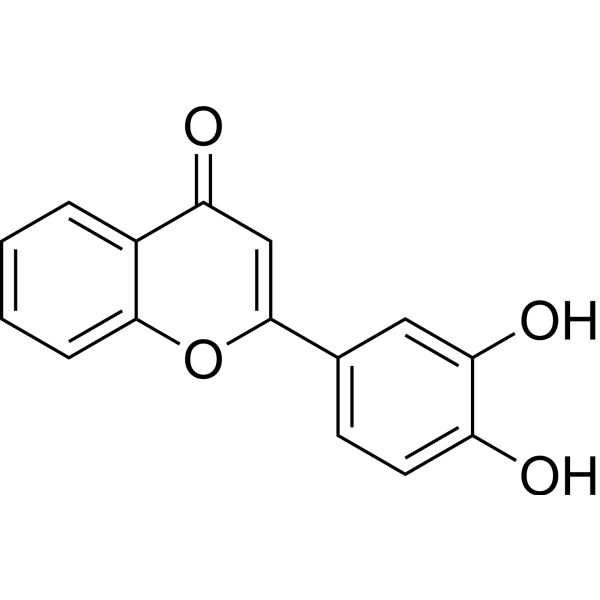
Cat. No.: HY-127167
CAS No.: 4143-64-0
Purity:  98.61%
3',4'-Dihydroxyflavone is an orally active antioxidant. 3',4'-Dihydroxyflavone inhibits the NF-κB, JAK1/STAT1, AP-1, IRF3, and MAPK/MEK/ERK pathways, while activating Nrf2 and reducing Keap1, thereby exerting anti-inflammatory and antioxidant effects. 3',4'-Dihydroxyflavone inhibits NO, PGE2, pro-inflammatory cytokines, and ROS production, upregulates GSH, and activates KATP channels, adenosine A3 receptors, and GABAA receptors. 3',4'-Dihydroxyflavone inhibits PPARγ expression and adipogenic differentiation, induces osteogenic differentiation; it also inhibits 5-lipoxygenase and xanthine oxidase, weakly inhibits PARP1, and scavenges DPPH and superoxide radicals. 3',4'-Dihydroxyflavone can be used for research on peripheral nerve injury, septic shock, obesity, influenza A virus infection, infertility, and diabetic complications .
loading...
    loading...
Cat. No.: HY-172581
CAS No.: 1862226-99-0
Research Areas:  

Cancer

Clifutinib is an orally active and selective internal tandem duplication mutation of FMS-like tyrosine kinase 3 (FLT3-ITD) inhibitor with an IC50 value of 15.1 nM. Clifutinib exerts strong antiproliferative effects on FLT3-ITD acute myeloid leukemia (AML) cell lines (MV-4-11: IC50 = 1.5 nM; MOLM-13: IC50 = 1.4 nM). Clifutinib inhibits the activity of FLT3-ITD kinase and blocks the downstream RAS/MAPK, PI3K/AKT, and JAK/STAT5 signaling pathways of FLT3. Clifutinib induces apoptosis of acute myeloid leukemia (AML) cells with FLT3-ITD mutations. Clifutinib demonstrates significant antitumor efficacy in mice bearing MV-4-11 or MOLM-13 xenografts. Clifutinib is promising for research of relapsed/refractory FLT3-ITD-positive acute myeloid leukemia .
loading...
    loading...
Cat. No.: HY-181420
CAS No.: 3029184-80-0
Research Areas:  

Cancer

(S,R,S)-BBO-11818 is an orally active, highly selective (relative to NRAS and HRAS), non-covalent pan-KRAS inhibitor (IC50=28-120 nM). (S,R,S)-BBO-11818 specifically binds to the Switch-II/Helix 3 pocket, disrupts the KRAS:RAF1 interaction by inducing conformational changes, and blocks the MAPK signaling pathway. (S,R,S)-BBO-11818 exhibits significant anti-tumor activity, which not only inhibits cell proliferation and induces apoptosis, but also drives tumor regression in xenograft models. (S,R,S)-BBO-11818 produces synergistic effects when combined with Cetuximab (HY-P9905), anti-PD-1 antibody or PI3Kα inhibitor. (S,R,S)-BBO-11818 is used in the research of KRAS mutation-related malignancies such as pancreatic cancer, non-small cell lung cancer and colorectal cancer .
loading...
    loading...
Cat. No.: HY-N0259R
CAS No.: 110623-73-9
Synonyms: Epmedin B (Standard)
Epimedin B (Standard) (Epmedin B (Standard)) is the analytical standard of Epimedin B (HY-N0259). This product is intended for research and analytical applications. Epimedin B (Epmedin B) is a flavonoid active component found in Epimedium, with oral activity, and exhibits anti-osteoporotic and neuroprotective effects. Epimedin B inhibits RANKL-induced osteoclast differentiation, F-actin ring formation, and mature osteoclast bone resorption, inhibits the phosphorylation of JNK, p38 MAPK, PI3K, and AKT, activates the AMPK-Nrf2 antioxidant pathway, and reduces cellular and mitochondrial ROS. Epimedin B acts on ESR1 and exerts its effects via GPER. Epimedin B alleviates bone loss and improves bone microstructure in vivo, and in Parkinson's models protects dopaminergic neurons and maintains striatal dopamine levels through anti-apoptotic and anti-endoplasmic reticulum stress effects. Epimedin B can be used for research related to osteoporosis, diabetic osteoporosis, and Parkinson's disease .
loading...
    loading...
Cat. No.: HY-N0657R
CAS No.: 63902-38-5
Pinoresinol Diglucoside (Standard) is the analytical standard of Pinoresinol Diglucoside (HY-N0657). This product is intended for research and analytical applications. Pinoresinol Diglucoside is an orally active lignan with multifunctional bioactivity. Pinoresinol Diglucoside interacts with targets including ALB, HIF1A, GSK3B, BCL2, MARK3, IL6, NF-κB p65, Nrf2, HO-1, and TLR4, and modulates pathways including PI3K-Akt, estrogen, MAPK, Rap1, AKT/mTOR/NF-κB, and TGF-β1/Smads. Pinoresinol Diglucoside regulates osteogenesis, bone resorption, oxidative stress, inflammation, apoptosis, ferroptosis, ferritinophagy, cardiac fibrosis, and vasorelaxation. Pinoresinol Diglucoside can be used for the research of osteoporosis, ischemia/reperfusion-induced brain injury, Alzheimer’s disease, myocardial ischemia-reperfusion injury, chondrodysplasia, diabetic cardiomyopathy, cardiac hypertrophy, hypertension, cisplatin-induced hearing loss, atherosclerotic cardiovascular diseases, and disuse osteoporosis.
loading...
    loading...
Cat. No.: HY-N2942
CAS No.: 52328-96-8
Bisdemethoxycurcumin is an orally effective curcuminoid. Bisdemethoxycurcumin downregulates pro-inflammatory cytokines in macrophages by inhibiting the phosphorylation of PI3K/Akt and p38 MAPK. Bisdemethoxycurcumin relieves autophagy inhibition and promotes lipophagy to clear vascular smooth muscle foam cells by inhibiting the PDK1/Akt/mTOR pathway. Bisdemethoxycurcumin activates the cAMP/Epac/AMPKα axis and the NRF2/HO-1 antioxidant axis, thereby indirectly inhibiting the phosphorylation of NF-κB p65 and pro-inflammatory outputs such as IL-1β/IL-6/TNF-α, so as to alleviate pulmonary oxidative stress, inflammatory infiltration and pulmonary edema. Bisdemethoxycurcumin blocks NLRP3-mediated pyroptosis and protects cartilage extracellular matrix degradation by activating NRF2/HO-1. Bisdemethoxycurcumin also exerts a synergistic effect with potassium iodide against Candida .
loading...
    loading...
Cat. No.: HY-148062
CAS No.: 2769753-48-0
Purity:  99.85%
RSS0680 is a small noncoding RNA (sRNA) targeting the mRNA ribosome binding site (RBS) and a PROTAC. RSS0680 competitively binds to RBS through the conserved CCUCCUCCC anti-Shine-Dalgarno (aSD) sequence and inhibits the translation initiation of target genes. RSS0680 can interact with the DUF1127 protein CcaF1, regulate its own stability and participate in bacterial oxidative stress defense, enhancing the host's resistance to heat shock and oxidative damage by affecting pathways such as C1 metabolism and pyruvate dehydrogenase complex. RSS0680 degrades AAK1, CDK1, CDK16, CDK2, CDK4, CDK6, EIF2AK4, GAK, LATSl, LIMK2, MAPK6, MAPKAPK5, MARK2, MARK4, MKNK2, NEK9, RPS6KB1, SIK2, SNRK, STK17A, STK17B, STK35, and WEEl. RSS0680 can be used to study diseases or disorders mediated by aberrant kinase activity and regulatory mechanisms of noncoding RNAs in α-proteobacteria[1][2].
loading...
    loading...
Cat. No.: HY-171705
CAS No.: 1478585-60-2
KMS99220 is an orally active, blood-brain barrier-permeable activator of the Nrf2 inhibitory protein Keap-1. KMS99220 enhances the activity of AMPK, activates the Nrf2 signaling pathway, and reduces the phosphorylation of IκB, nuclear translocation of NFκB, as well as the phosphorylation levels of JNK, IKK and p38 MAPK via HO-1. KMS99220 binds to Keap1 to trigger the nuclear translocation of Nrf2, induces the expression of HO-1, NQO1, GCLC, GCLM and proteasome subunits; enhances proteasomal enzymatic activity; inhibits iNOS expression, nitric oxide production and IL-1β generation; attenuates microglial activation; reduces α-synuclein aggregation; and prevents dopaminergic neuron degeneration and motor dysfunction. KMS99220 prevents the degeneration of dopaminergic neurons in the substantia nigra, induces the expression of Nrf2 downstream target genes, and effectively ameliorates associated motor dysfunction in a mouse model of Parkinson's disease. KMS99220 is applicable to research related to Parkinson's disease .
loading...
    loading...
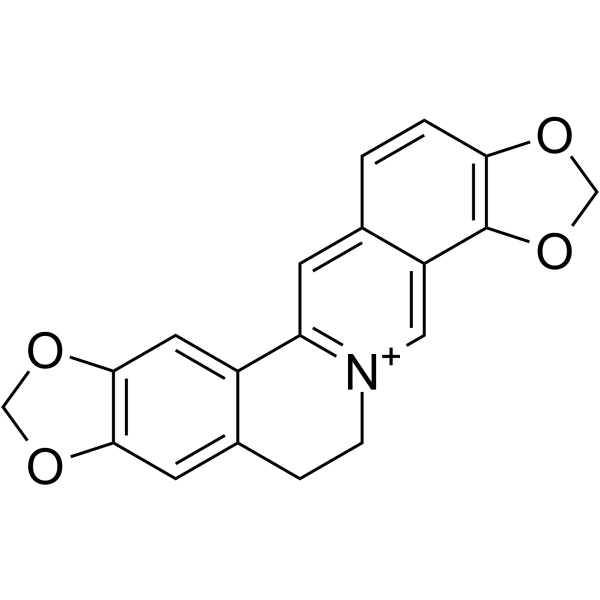
Cat. No.: HY-N0430
CAS No.: 3486-66-6
Synonyms: Coptisin
Coptisine is an orally active and brain-penetrant alkaloid found in Coptis chinensis. Coptisine is a reversible, uncompetitive IDO inhibitor with a Ki of 5.8 μM and an IC50 of 6.3 μM. Coptisine suppresses neuroinflammation, reduces Aβ plaque burden and shows neuroprotective activity. Coptisine shows anti-inflammation activity by blocking NF-κB, MAPK, and PI3K/Akt activation. Coptisine inhibits cancer cells proliferation, induces DNA damage, G2/M phase cell cycle arrest, apoptosis, ROS production and mitochondrial dysfunction. Coptisine inhibits Rho/ROCK pathway activation, reduces arrhythmia, limits cardiac injury marker release, reduces infarct size, and preserves cardiac function in rat myocardial ischemia/reperfusion models. Coptisine downregulates HMGCR and upregulates LDLR and CYP7A1 to modulate cholesterol metabolism, reduces abnormal serum lipid levels, and promotes fecal bile acid excretion. Coptisine can be used for the research of cancer, hypercholesterolemia, Alzheimer’s disease, inflammatory disorders and cardiovascular disease .
loading...
    loading...

