617 Results for "

Allosteric modulator

" in MedChemExpress (MCE) Product Catalog:
Products (617)

617 Results for "Allosteric modulator" in MCE Product Catalog:

Cat. No.: HY-117106
CAS No.: 200266-76-8
Target:  

GABA Receptor

Research Areas:  

Others

PNU-107484A is a GABAA receptor ligand that exhibits target activity mechanisms dependent on α isoforms. In the α1β2γ2 subtype, PNU-107484A acts as a positive allosteric modulator, enhancing GABA-induced Cl - currents, while it inhibits the currents in the α3β2γ2 and α6β2γ2 subtypes. The half-maximal concentrations for the α1β2γ2, α3β2γ2, and α6β2γ2 subtypes are 3.1, 4.2, and 3.5 μM, respectively. PNU-107484A can be used as a probe to investigate the physiological roles of different α isoform subtypes .
loading...
    loading...
Cat. No.: HY-120874
CAS No.: 1614245-70-3
Purity:  99.29%
Synonyms: PF-06372865; CVL-865
Target:  

GABA Receptor

Research Areas:  

Neurological Disease

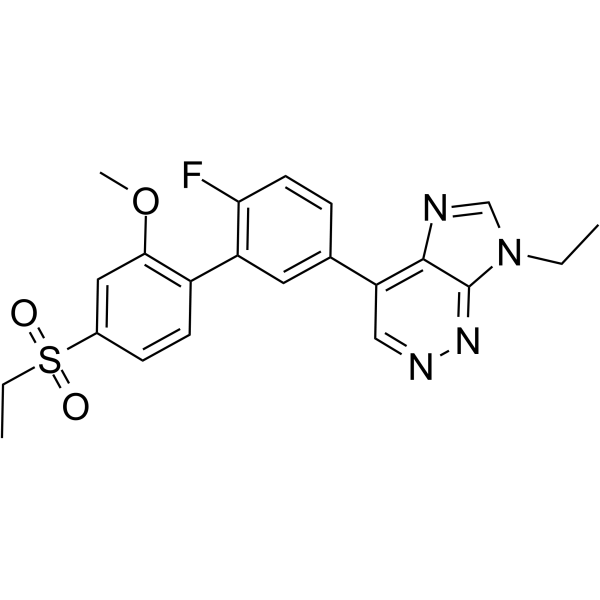
Darigabat (PF-06372865) is an orally active, α2/α3/α5 subtype-selective GABAA positive allosteric modulator (PAM). Darigabat is a high affinity ligand at GABAA receptors containing α1/α2/α3/α5 subunits (Kis of 2.9 nM, 21 nM, 134 nM for α2, α1 PAM, α2 PAM, respectively), with low affinity for α4/α6 subunits. Darigabat can across the blood-brain barrier (BBB). Darigabat has anxiolytic activity and has the potential for epilepsy .
loading...
    loading...
Cat. No.: HY-123382
CAS No.: 1695551-19-9
Target:  

Drug Isomer

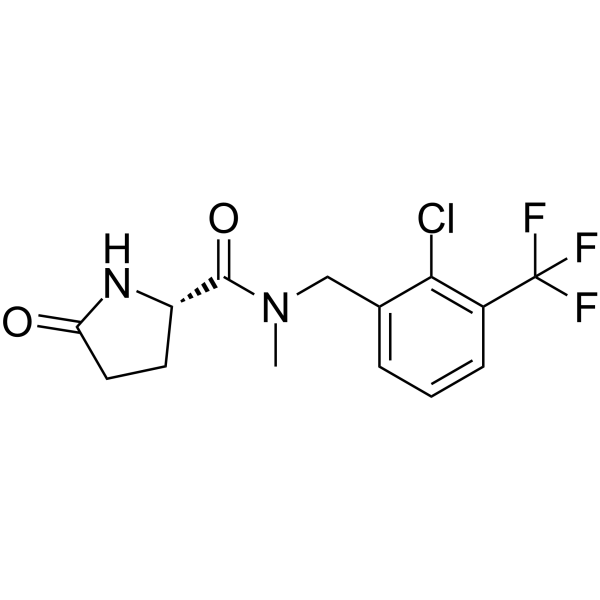
GSK-1482160 isomer is the isomer of GSK-1482160 (HY-19888). GSK-1482160 is an orally active and blood-brain barrier penetrant P2X7 receptor (P2X7R) negative allosteric modulator with pIC50s of 8.5 (human) and 6.5 (rat). GSK-1482160 reduces the efficacy of ATP at the P2X7 receptor without affecting its affinity, thereby inhibiting the release of IL-1β. GSK-1482160 is an effective radioligand and can be labeled with radioactive isotopes like 11C or 18F to image P2X7R. GSK-1482160 can be used for the studies of chronic joint pain and chronic constriction injury (CCI).
loading...
    loading...
Cat. No.: HY-131997
CAS No.: 89112-85-6
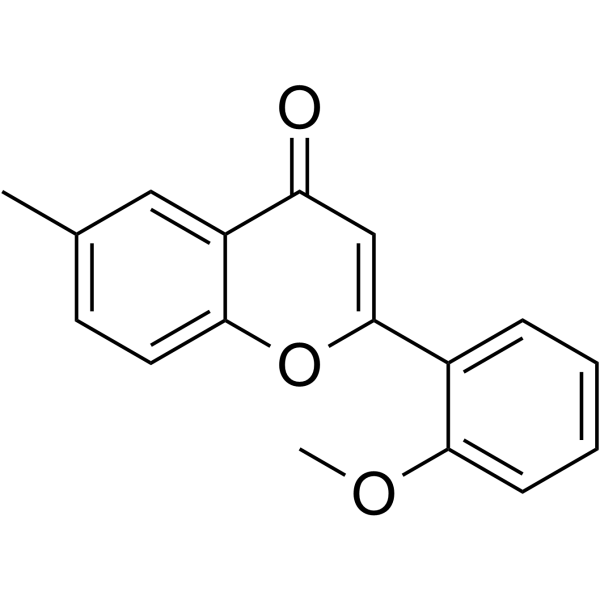
2'MeO6MF is a brain-penetrant positive allosteric modulator at α2β1γ2L and all α1-containing GABAA receptors. 2'MeO6MF also can directly activate α2β2/3 and α2β2/3γ2L GABAA receptors. 2'MeO6MF has anxiolytic and psychomotor stabilizing properties. 2'MeO6MF offers neuroprotection and improved functional recovery and dampens the stroke-induced inflammatory response .
loading...
    loading...
Cat. No.: HY-15446R
CAS No.: 802906-73-6
Synonyms: RG7090 (Standard); RO4917523 (Standard)
Research Areas:  

Neurological Disease

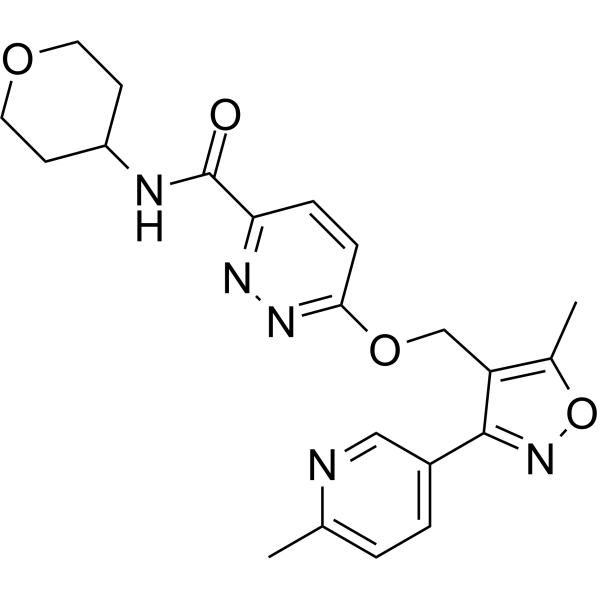
Basimglurant (RG7090; RO4917523) (Standard) is the analytical standard of Basimglurant. This product is intended for research and analytical applications. Basimglurant is a selective, orally active, blood-brain barrier permeable negative allosteric modulator of metabotropic glutamate receptor 5 (mGluR5), with a Ki of 1.4 nM (against [ 3H]-ABP688 (HY-110141)) and 35.6 nM (against [ 3H]-MPEP (HY-14609A)). Basimglurant inhibits mGlu5-mediated signaling pathways and receptor constitutive activity, regulates dopamine levels in the nucleus accumbens, exerts anxiolytic, antidepressant-like, analgesic and arousal-promoting effects, and alters δ-wave power during non-rapid eye movement sleep. Basimglurant can be used in research on depression, fragile X syndrome, anxiety disorders, etc.
loading...
    loading...
Cat. No.: HY-175504
CAS No.: 932544-59-7
Target:  

Dopamine Receptor PERK

Research Areas:  

Neurological Disease

MLS6357 is a D3 dopamine receptor (D3R)-selective positive allosteric modulator (PAM)-antagonist. MLS6357 exhibits antagonist activity in the D3R-mediated and the BRET-based β-arrestin recruitment assay with IC50s of 13 and 14 μM, and no activity for other DAR subtypes (D1R/D2R/D4R/D5R) (IC50 > 100 μM). MLS6357 is also an antagonist in the D3R-mediated Go-BRET assay with an IC50 of 17 μM. MLS6357 can be used for the study of neuropsychiatric disorders, including substance use disorder .
loading...
    loading...
Cat. No.: HY-181102
CAS No.: 3081614-92-5
TGR5 agonist 10 is a selective, allosteric and orally active Takeda G protein coupled receptor 5 (TGR5) agonist with EC50s of 0.8 μM and 0.6 μM for human TGR5 and mouse TGR5, respectively. TGR5 agonist 10 demonstrates selectivity for TGR5 over FXR. TGR5 agonist 10 activates hTGR5 and mTGR5 to induce cAMP accumulation, and positively modulates lithocholic acid functional activity and potency at hTGR5, with higher selectivity for cAMP formation over β-arrestin2 recruitment. TGR5 agonist 10 exerts glucose-lowering effects in Mus musculus oral glucose tolerance tests. TGR5 agonist 10 can be used for the research of diabetes .
loading...
    loading...
Cat. No.: HY-185978
CAS No.: 2133456-91-2
Target:  

GABA Receptor

Research Areas:  

Neurological Disease

GL-II-73 is a selective, orally active and blood-brain barrier permeable positive allosteric modulator of α5GABAA receptor, acting on the benzodiazepine-binding site of GABAA receptors. The binding selectivity of GL-II-73 for the α5 subtype is 6-, 11- and 12.5-fold higher than that for the α2, α1 and α3 subtypes, respectively . GL-II-73 reverses pilocarpine-induced hyperactivation of dopamine neurons in the ventral tegmental area, improves working memory and pyramidal neuron dendritic morphology in 5xFAD mice, but does not reduce β-amyloid load . GL-II-73 can be used in research related to Alzheimer's disease and temporal lobe epilepsy with comorbid psychosis .
loading...
    loading...
Cat. No.: HY-182707
CAS No.: 2055045-42-4
JWX-A0108 is a selective human α7 nAChR positive allosteric modulator with an EC50 of 4.35 μM. JWX-A0108 potentiates α7 nAChR currents only in the presence of acetylcholine, with no direct activating effect or alteration of desensitization. JWX-A0108 enhances hippocampal GABAergic synaptic transmission by increasing spontaneous inhibitory postsynaptic currents. JWX-A0108 reduces the brain expression levels of IL-1β, TNF-α, and IL-6 by blocking the NF-κB signaling pathway, and reduces microglial activation by downregulating Iba1. JWX-A0108 effectively improves cognitive deficits, neuroinflammation, and hippocampal neuronal damage in mouse models of schizophrenia and Alzheimer's disease. JWX-A0108 can be used for research related to schizophrenia and Alzheimer's disease .
loading...
    loading...
Cat. No.: HY-L928
7,106 compounds

G protein-coupled receptors (GPCRs) are membrane proteins in humans and one of the most important targets in drug discovery. Approximately 35% of launched drugs are targeted GPCRs, making them a crucial class of targets in drug discovery.

The orthosteric site of a GPCR is its endogenous ligand’s (such as neurotransmitters or hormones) binding site. This site plays a central role in signal transduction. Small molecules binding to this site typically contain a protonatable amino group, enabling the formation of salt bridges or hydrogen bonds with acidic residues in the binding pocket. In contrast, the allosteric site does not directly initiate signaling but modulates the signal intensity of the GPCR by altering or stabilizing the conformation of the orthosteric site. Small molecules binding to the allosteric site often contain multiple aromatic rings to occupy hydrophobic pockets and achieve their functional effects.

MCE has collected over 7,106 reported bioactive molecules targeting GPCRs, covering Class A, B, and C GPCRs. These small molecules were subjected to AI representation to extract 2D and 3D features. Subsequently, we do screening by AI score based on similarity to identify molecules in diversity library highly similar to the reported bioactive molecules in both 2D and 3D, with a threshold greater than 0.7. Further screening based on cLogP was applied to select molecules with good lipophilicity, which facilitates the binding of small molecules to GPCRs. This diversity library can be widely applied to the discovery of compounds targeting GPCR proteins.

Cat. No.: HY-132806
CAS No.: 2230009-48-8
Purity:  99.93%
Synonyms: RG-7816; RO-7017773
Target:  

GABA Receptor

Research Areas:  

Neurological Disease

Alogabat is a positive allosteric modulator (PAM) and agonist (Ki <100 nM) of the GABAA α5 receptor, targeting the α5β3γ2 subunit with a Ki of 8.7 nM. Alogabat increases the expression level of α5β3γ2 in oocytes (1.97-fold). GABAA has been implicated in cognitive impairment associated with central nervous system (CNS) disorders, brain cancer (including brain tumors such as medulloblastoma), and can be used in the study of mild cognitive impairment (MCI), amnestic MCI (aMCI), age-associated memory impairment (AAMI), age-related cognitive decline (ARCD), dementia, Alzheimer's disease (AD), prodromal AD, post-traumatic stress disorder (PTSD), schizophrenia, bipolar disorder, amyotrophic lateral sclerosis (ALS), cognitive impairment associated with cancer treatment, mental retardation, Parkinson's disease (PD), autism spectrum disorder, fragile X, Rett syndrome, obsessive-compulsive behavior, and substance addiction .
loading...
    loading...
Cat. No.: HY-187088
CAS No.: 1198309-73-7
Target:  

mGluR

Research Areas:  

Neurological Disease

AZD-8418 is an orally active positive allosteric modulator of metabotropic glutamate receptor 2 (mGluR2), with an EC50 of 0.86 μM for rat mGlu2 receptors. AZD-8418 reduces the in vitro binding level of [ 3H]AZ12559322 in prefrontal cortex brain tissues of non-human primates. AZD8418 enhances the inhibitory effect of the mGlu2/3 agonist DCG-IV (HY-101335) on field excitatory postsynaptic potentials (fEPSP) in rat hippocampal brain slices. AZD-8418 reduces nicotine self-administration behavior in rats, and blocks cue-induced reinstatement of nicotine-seeking and food-seeking behaviors. The attenuating effect on nicotine self-administration behavior develops rapid tolerance, while inhibition of food self-administration behavior requires chronic administration. AZD-8418 can be used in research related to nicotine dependence and neuropsychiatric disorders .
loading...
    loading...
Cat. No.: HY-B0110
CAS No.: 60282-87-3
Synonyms: SHB 331; WL 70
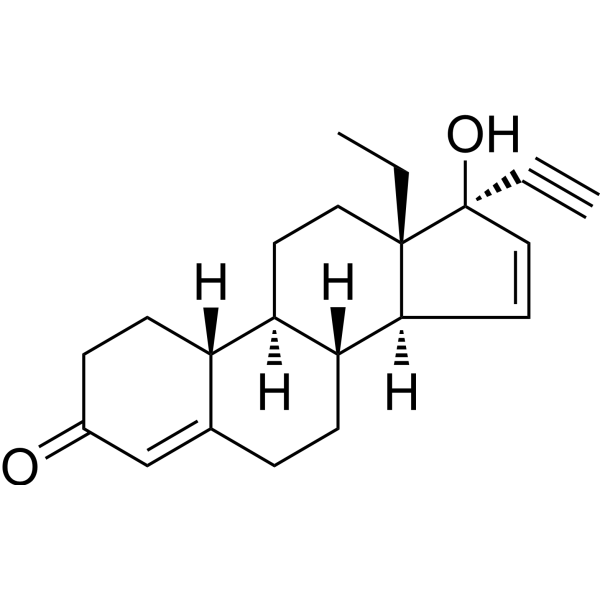
Gestodene (SHB 331; WL 70) is an orally active synthetic progestogen compound of the 19-nortestosterone class. Gestodene binds with high affinity to the progesterone receptor, inhibits 5α-reductase, binds to androgen and aldosterone receptors, and inactivates CYP3A. Gestodene acts as a positive allosteric modulator of PAR1, enhances PAR1-mediated signaling pathways, and is capable of increasing the activation potency of PAR1-AP toward PAR1, thereby promoting ERK1/2 phosphorylation, receptor internalization, cell morphological changes, and human platelet aggregation. Gestodene and its A-ring reduced metabolites promote the proliferation, differentiation, and mineralization of neonatal rat osteoblasts. Gestodene itself has no binding capacity for estrogen receptors, and this osteogenic activity depends on intracellular metabolism to generate A-ring reduced products with estrogen-like agonistic activity. Gestodene is useful for research on diseases related to progesterone secretion and diseases related to thrombosis .
loading...
    loading...
Cat. No.: HY-B0110R
CAS No.: 60282-87-3
Synonyms: SHB 331 (Standard); WL 70 (Standard)
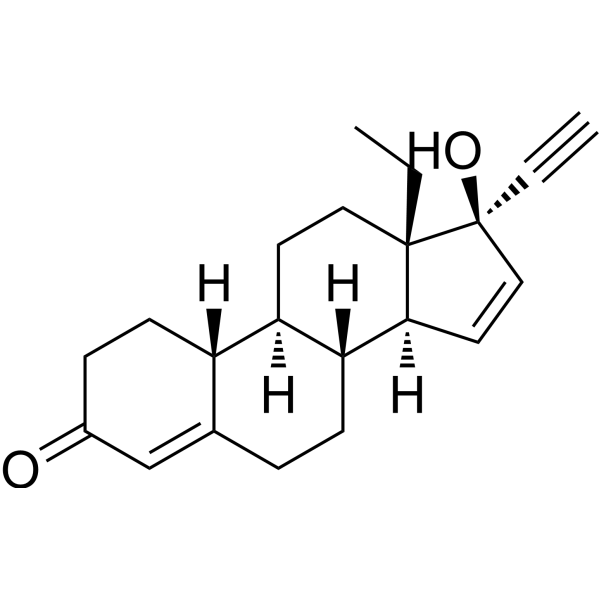
Gestodene (Standard) (SHB 331 (Standard); WL 70 (Standard)) is the analytical standard of Gestodene (HY-B0110). This product is intended for research and analytical applications. Gestodene is an orally active synthetic progestogen compound of the 19-nortestosterone class. Gestodene binds with high affinity to the progesterone receptor, inhibits 5α-reductase, binds to androgen and aldosterone receptors, and inactivates CYP3A. Gestodene acts as a positive allosteric modulator of PAR1, enhances PAR1-mediated signaling pathways, and is capable of increasing the activation potency of PAR1-AP toward PAR1, thereby promoting ERK1/2 phosphorylation, receptor internalization, cell morphological changes, and human platelet aggregation. Gestodene and its A-ring reduced metabolites promote the proliferation, differentiation, and mineralization of neonatal rat osteoblasts. Gestodene itself has no binding capacity for estrogen receptors, and this osteogenic activity depends on intracellular metabolism to generate A-ring reduced products with estrogen-like agonistic activity. Gestodene is useful for research on diseases related to progesterone secretion and diseases related to thrombosis .
loading...
    loading...
Cat. No.: HY-B0110S
CAS No.: 1542211-40-4
Synonyms: SHB 331-d6; WL 70-d6
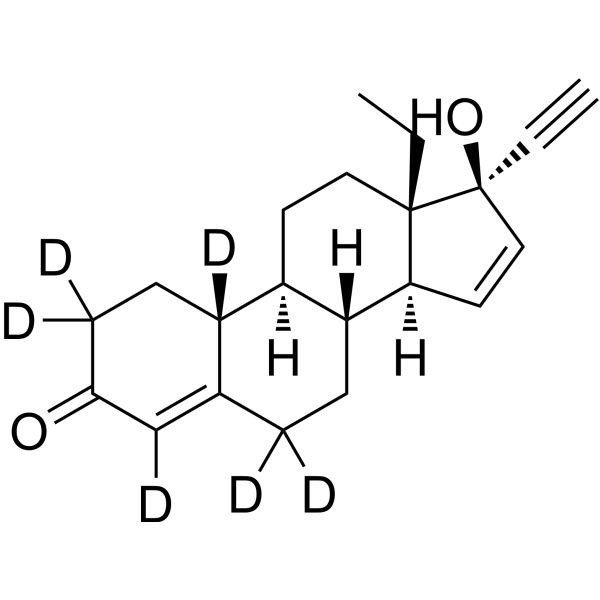
Gestodene-d6 (SHB 331-d6; WL 70-d6) is the deuterated-labeled Gestodene (HY-B0110). Gestodene is an orally active synthetic progestogen compound of the 19-nortestosterone class. Gestodene binds with high affinity to the progesterone receptor, inhibits 5α-reductase, binds to androgen and aldosterone receptors, and inactivates CYP3A. Gestodene acts as a positive allosteric modulator of PAR1, enhances PAR1-mediated signaling pathways, and is capable of increasing the activation potency of PAR1-AP toward PAR1, thereby promoting ERK1/2 phosphorylation, receptor internalization, cell morphological changes, and human platelet aggregation. Gestodene and its A-ring reduced metabolites promote the proliferation, differentiation, and mineralization of neonatal rat osteoblasts. Gestodene itself has no binding capacity for estrogen receptors, and this osteogenic activity depends on intracellular metabolism to generate A-ring reduced products with estrogen-like agonistic activity. Gestodene is useful for research on diseases related to progesterone secretion and diseases related to thrombosis .
loading...
    loading...
Cat. No.: HY-W753897
Synonyms: SHB 331-d7; WL 70-d7
Gestodene-d7 (SHB 331-d7; WL 70-d7) is the deuterated-labeled Gestodene (HY-B0110). Gestodene is an orally active synthetic progestogen compound of the 19-nortestosterone class. Gestodene binds with high affinity to the progesterone receptor, inhibits 5α-reductase, binds to androgen and aldosterone receptors, and inactivates CYP3A. Gestodene acts as a positive allosteric modulator of PAR1, enhances PAR1-mediated signaling pathways, and is capable of increasing the activation potency of PAR1-AP toward PAR1, thereby promoting ERK1/2 phosphorylation, receptor internalization, cell morphological changes, and human platelet aggregation. Gestodene and its A-ring reduced metabolites promote the proliferation, differentiation, and mineralization of neonatal rat osteoblasts. Gestodene itself has no binding capacity for estrogen receptors, and this osteogenic activity depends on intracellular metabolism to generate A-ring reduced products with estrogen-like agonistic activity. Gestodene is useful for research on diseases related to progesterone secretion and diseases related to thrombosis .
loading...
    loading...
Cat. No.: HY-W097625R
CAS No.: 26964-24-9
6-Methoxyflavone (Standard) is the analytical standard of 6-Methoxyflavone (HY-W097625). This product is intended for research and analytical applications. 6-Methoxyflavone is an orally active methoxyflavone. 6-Methoxyflavone suppresses neuroinflammation in microglia through the inhibition of TLR4/MyD88/p38 MAPK/NF-κB dependent pathways and the activation of HO-1/NQO-1 signaling. 6-Methoxyflavone induces S-phase arrest through the CCNA2/CDK2/p21CIP1 signaling pathway and activates the PERK/EIF2a/ATF4/CHOP pathway in HeLa cells. 6-Methoxyflavone acts as a Flumazenil (HY-B0009)-insensitive positive allosteric modulator at human recombinant α1β2γ2L and α2β2γ2L GABAα receptors. 6-Methoxyflavone inhibits NFAT Translocation into the nucleus and suppresses T cell activation. 6-Methoxyflavone partially restores chronic ethanol-induced behavioral deficits in mice. 6-Methoxyflavone antagonizes chronic constriction injury and diabetes associated neuropathic nociception expression. 6-Methoxyflavone can be used for the study of cancer, inflammation and neurological diseases .
loading...
    loading...

