707 Results for "

time

" in MedChemExpress (MCE) Product Catalog:
Products (707)

707 Results for "time" in MCE Product Catalog:

Cat. No.: HY-189663
Research Areas:  

Infection

Y-U0-R is a potent covalent inhibitor of coronavirus main protease (M pro), with IC50 values of 0.22 and 0.25 μM against SARS-CoV-2 M pro and SARS-CoV M pro, respectively. Y-U0-R exhibits broad-spectrum anti-coronavirus activity, with an EC50 of 0.47 µM against SARS-CoV-2. Y-U0-R forms a stable hemithioacetal covalent bond with the catalytic residue C145 through its aldehyde warhead, and occupies multiple active subsites and residue networks, resulting in time-dependent irreversible inhibition of enzymatic activity. Y-U0-R can be used for research on COVID-19 and SARS-CoV-2 infection .
loading...
    loading...
Cat. No.: HY-B0115R
CAS No.: 15574-96-6
Synonyms: Pizotyline (Standard); BC-105 (Standard)
Pizotifen (Standard) (Pizotyline (Standard)) is the analytical standard of Pizotifen (HY-B0115). This product is intended for research and analytical applications. Pizotifen (Pizotyline) is a 5-HT2 receptor antagonist. Pizotifen inhibits the Wnt/β-catenin-EMT signaling pathway and induces mitochondria-mediated Apoptosis. Pizotifen causes transient ERK1/2 phosphorylation and restores ATP. Pizotifen blocks Serotonin (HY-B1473A)-mediated platelet activation, inhibits Serotonin-enhanced ADP-induced platelet aggregation, and prolongs carotid artery occlusion and tail bleeding time. Pizotifen exhibits anticancer activity against gastric cancer and colon cancer. Pizotifen exerts neuroprotective effects in the striatum of R6/2 mice. Pizotifen can be used for research on gastric cancer, colon cancer, Huntington's disease, metastasis, and thromboembolic diseases .
loading...
    loading...
Cat. No.: HY-B1325
CAS No.: 64544-07-6
Target:  

Bacterial Antibiotic

Research Areas:  

Infection Inflammation/Immunology

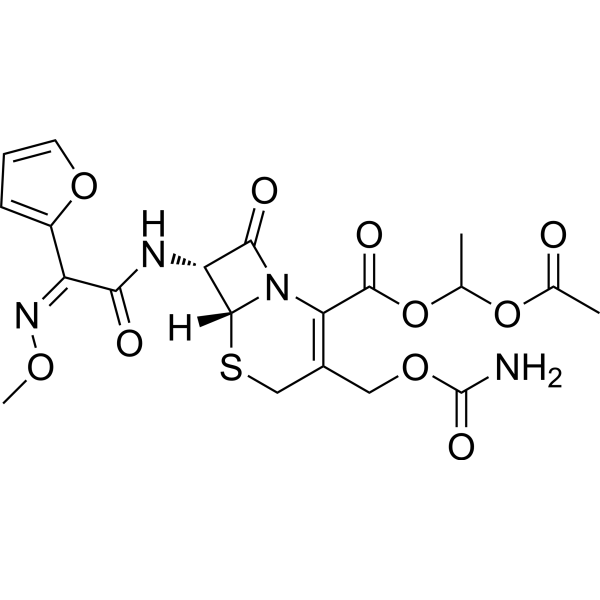
Cefuroxime axetil is an orally effective broad-spectrum β-lactam antibiotic that targets bacterial penicillin-binding proteins (PBPs, such as PBP3 and PBP1). Cefuroxime axetil inhibits cell wall synthesis, leading to bacterial lysis and death, with a minimum inhibitory concentration (MIC) of 0.12-4 mg/L for non-typeable Haemophilus influenzae (NTHi). Cefuroxime axetil is hydrolyzed by esterase to the active ingredient Cefuroxime (HY-B1256A) after oral absorption. Topical administration of Cefuroxime via bioadhesive nanoparticles (BNPs) can prolong the drug's retention time in the middle ear (≥7 days). Cefuroxime axetil can be used in the study of otitis media (especially NTHi infection). Cefuroxime axetil can achieve precise antibacterial effects through oral or topical nano-delivery systems, reducing systemic exposure and the risk of antibiotic resistance .
loading...
    loading...
Cat. No.: HY-D3080
Target:  

Fluorescent Dye

Research Areas:  

Others

CR-1 is a ratiometric photoacoustic (PA) probe for in-situ real-time imaging of Zn 2+ in deep living tissues. CR-1 is formed by coupling the near-infrared cyanine dye IR825 with the Zn 2+ ligand tris (2-pyridylmethyl) amine (TMPA). Upon binding to Zn 2+, the five N atoms on TMPA coordinate with Zn 2+, leading to double bond rearrangement of IR825 and attenuation of its π-electron conjugated system. The absorption peak of CR-1 blue-shifts from 710 nm to 532 nm, enabling quantitative detection of Zn 2+ via the PA532/PA710 ratio. Free CR-1 generates a strong PA signal at 710 nm, while CR-1 bound to Zn 2+ produces a strong PA signal at 532 nm .
loading...
    loading...
Cat. No.: HY-N0245R
CAS No.: 30462-34-1
Theaflavin-3-gallate (Standard) is the analytical standard of Theaflavin-3-gallate. This product is intended for research and analytical applications. Theaflavin-3-gallate, a black tea theaflavin monomer, is regarded as the biologically important active component of black tea and provides health benefits. Theaflavin-3-gallate acts as prooxidants and induces oxidative stress in the carcinoma cells. Theaflavin-3-gallate reacts directly with reduced glutathione (GSH) in a time- and concentration-dependent manner. Theaflavin-3-gallate induces apoptosis and G1 cell cycle arrest in ovarian cancer A2780/CP70 cells through p53-dependent pathways. Theaflavin-3-gallate induces DNA damage through ATM/Chk/p53 pathway .
loading...
    loading...
Cat. No.: HY-N8146
CAS No.: 53729-52-5
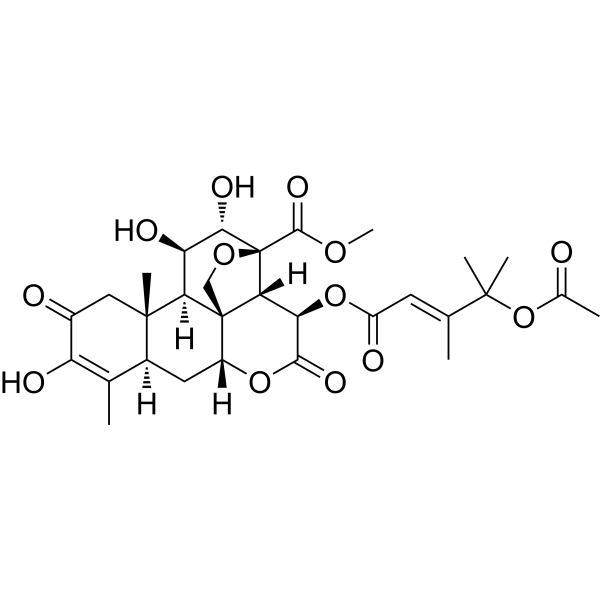
Bruceantinol is a quassinoid that can be isolated from Brucea javanica, inhibits pepper mottle virus (PepMoV) in pepper. Bruceantinol is a STAT3 inhibitor demonstrating potent antitumor activity in in vitro and in vivo human colorectal cancer (CRC) models. Bruceantinol has potent anti-leukemic activity. Bruceantinol strongly inhibits STAT3 DNA-binding ability (IC50 = 2.4 pM), blocks the constitutive and IL-6-induced STAT3 activation, and suppresses transcription of MCL-1, PTTG1, survivin and c-Myc. Bruceantinol binds with CDK2/4/6 to facilitate protein degradation through proteasome pathway. Bruceantinol can dose- and time-dependently reduces the cell growth, impede cell proliferation, disrupts the cell cycle, and induces necrosis in MCF-7 cells and apoptosis in MDA-MB-231 cells .
loading...
    loading...
Cat. No.: HY-P990242
Anti-Mouse Galectin-9 Antibody (RG9-1) is an anti-mouse Galectin-9 IgG2b monoclonal antibody. Anti-Mouse Galectin-9 Antibody (RG9-1) promotes inflammatory response by enhancing the secretion of IFN-γ, TNF-α, and IL-6. Anti-Mouse Galectin-9 Antibody (RG9-1) can increase CD8 T cell and Treg frequency. Anti-Mouse Galectin-9 Antibody (RG9-1) reduces graft survival time by increasing CD4 + and CD8 + T cell infiltration. Anti-Mouse Galectin-9 Antibody (RG9-1) can be used for researches on inflammation conditions, cancer and xenotransplantation such as ischemia-reperfusion, colon cancer, breast cancer and leukemia .
loading...
    loading...
Cat. No.: HY-W010713
CAS No.: 2669-65-0
Synonyms: Fimaporfin free base
Target:  

Photosensitizer

Research Areas:  

Cancer

Meso-tetraphenylchlorin (TPCS2a) is a photosensitizer with poor water solubility, which limits its use in the blood circulation. However, TPCS2a@NPs nanoparticles can be prepared based on polylactic-co-polyethylene glycol acid (PLGA) polymer core loaded with TPCS2. Such nanoparticles can be coated with mesenchymal stem cell-derived plasma membranes (mMSCs) to form mMSC-TPCS2a@NPs, which prolongs blood circulation time and improves tumor targeting ability. Compared with uncoated TPCS2a@NPs, mMSC-TPCS2a@NPs can reduce macrophage uptake by 54% to 70% under different conditions. Both nanoparticle forms are effectively accumulated in MCF7 and MDA-MB-231 breast cancer cells, while uptake in normal breast epithelial cells MCF10A is significantly lower .
loading...
    loading...
Cat. No.: HY-L245
2,256 compounds

At the forefront of innovative drug discovery, every medicinal chemist faces the challenge of rapidly identifying high-quality hit compounds from vast repositories of chemical resources.

The MCE Natural Product Diversity Scaffold Library is the result of a streamlined optimization process built upon our existing natural product collection. Adhering to the rigorous selection principle of "retaining only one representative compound per BMS scaffold", we have concentrated the diversity of thousands of compounds into a high-value, low-redundancy core set containing 2,256 compounds. All compounds are derived from natural sources, inheriting their inherent advantages of structural complexity and drug-likeness. By eliminating redundancy, the library size is significantly reduced without any compromise to chemical diversity. This approach effectively lowers the cost and time required for primary screening while simplifying downstream data analysis and structure-activity relationship (SAR) studies.

Cat. No.: HY-L153
5,267 compounds

Covalent inhibitors are small molecules that can bind specifically to target proteins through covalent bonds and inhibit their biological functions. Although for a long time, covalent targeting has been playing a subordinate role in drug discovery, with an increasing number of reports on successful clinical applications of such drugs, the potential of these agents is now being acknowledged. Currently, cysteine is the most common covalent amino acid residue in a variety of covalent drugs, and various warheads have been developed that can react with cysteine, providing the key building blocks for covalent drugs to form covalent bonds.

To meet the development needs of covalent inhibitors targeting cysteine, MCE has designed a unique collection of 5,267 compounds with different covalent warheads that target cysteine. The MCE Cysteine Targeted Covalent Library is designed using the following covalent warheads: Acrylamides, Propiolic acid ester, Dimethylamine functionalized acrylamides, Chloroacetamides, Acrylonitrile, 2-Cyanoacrylamide, Aziridine, Haloacetamide, etc.

Cat. No.: HY-L004
3,522 compounds

DNA is prone to numerous forms of damage that can injure cells and impair fitness. Cells have developed an array of mechanisms to repair these injuries. Proliferating cells are especially vulnerable to DNA damage due to the added demands of cellular growth and division. Cell cycle checkpoints represent integral components of DNA repair that coordinate cooperation between the machinery of the cell cycle and several biochemical pathways that respond to damage and restore DNA structure. By delaying progression through the cell cycle, checkpoints provide more time for repair before the critical phases of DNA replication, when the genome is replicated, and of mitosis, when the genome is segregated. Loss or attenuation of checkpoint function may increase spontaneous and induced gene mutations and chromosomal aberrations by reducing the efficiency of DNA repair.

MCE owns a unique collection of 3,522 cell cycle/DNA damage-related compounds which can be used in the research of the same.

Cat. No.: HY-L026P
3,298 compounds

New drug development is a time-consuming and high-cost process. Drug repurposing (also called drug repositioning, reprofiling or re‑tasking) offers various advantages over developing an entirely new drug for a given indication, such as lower risk and less investment. Clinical drugs have confirmed bioactivities, clear mechanisms and high safety that are suitable for drug repurposing.

MCE owns a unique collection of 3,298 clinical compounds that refer to various research areas including anti-cancer, anti-infection, anti-inflammation, nervous disease. Those compounds are of detailed information on clinical development status, research area, targets, etc. Clinical Compound Library Plus, with powerful screening capability, further complements Clinical Compound Library (HY-L026) by adding some compounds with low solubility or solution stability (Part B) to this library. All those supplementary are supplied in powder form.

Cat. No.: HY-158118
CAS No.: 2088426-96-2
Purity:  97.19%
Target:  

DNA-PK

Research Areas:  

Cancer

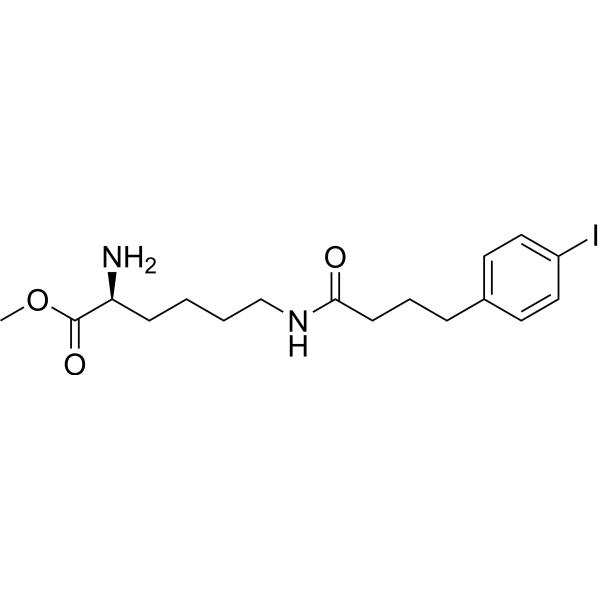
Lys(CO-C3-p-I-Ph)-OMe is a pharmacokinetic modifier (PK modifier) that can improve the PK properties of PSMA ligand molecules (such as Ac-PSMA-trillium). Lys(CO-C3-p-I-Ph)-OMe can increase the residence time of Ac-PSMA-trillium in plasma by increasing its binding capacity to albumin. Lys(CO-C3-p-I-Ph)-OMe also reduces salivary gland absorption of Ac-PSMA-trillium, potentially extending its half-life. Ac-PSMA-trillium is a suitable PSMA-targeting compound that has different biological applications after modification with different radioactive isotopes. If labeled with 111In, it can be used as DOTA chelating agent and imaging agent. Or labeled with 225Ac as a Macropa chelator for targeted radionuclide therapy (TRT) in the study of metastatic castration-resistant prostate cancer (mCRPC) .
loading...
    loading...
Cat. No.: HY-174829
CAS No.: 13198-99-7
7,4'-Dimethoxy-3-hydroxyflavone is an orally active PAR4 antagonist. 7,4'-Dimethoxy-3-hydroxyflavone inhibits PAR4-mediated human platelet aggregation with an IC50 of 1.4 μM. 7,4'-Dimethoxy-3-hydroxyflavone inhibits PAR4-mediated human platelet aggregation and PAR4 signaling pathways, including NF-κB, Ca 2+/protein kinase C, Akt, ERK and p38. 7,4'-Dimethoxy-3-hydroxyflavone prevents vascular PAR4 expression, endothelial dysfunction and ameliorates oxidative stress in Streptozotocin (STZ) (HY-13753)-induced diabetic mice. 7,4'-Dimethoxy-3-hydroxyflavone prevents thrombosis in mice without affecting bleeding time [1][2].
loading...
    loading...
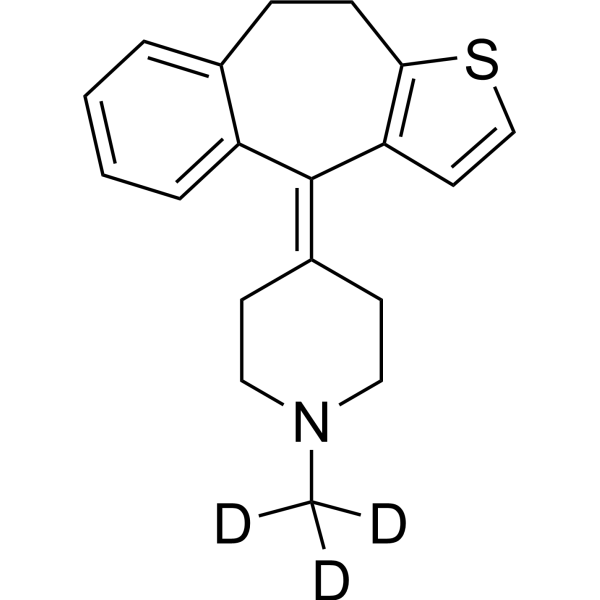
Cat. No.: HY-B0115S
Synonyms: Pizotyline-d3; BC-105-d3
Pizotyline-d3 (BC-105-d3) is the d3-labeled Pizotifen (HY-B0115). Pizotifen (Pizotyline) is a 5-HT2 receptor antagonist. Pizotifen inhibits the Wnt/β-catenin-EMT signaling pathway and induces mitochondria-mediated Apoptosis. Pizotifen causes transient ERK1/2 phosphorylation and restores ATP. Pizotifen blocks Serotonin (HY-B1473A)-mediated platelet activation, inhibits Serotonin-enhanced ADP-induced platelet aggregation, and prolongs carotid artery occlusion and tail bleeding time. Pizotifen exhibits anticancer activity against gastric cancer and colon cancer. Pizotifen exerts neuroprotective effects in the striatum of R6/2 mice. Pizotifen can be used for research on gastric cancer, colon cancer, Huntington's disease, metastasis, and thromboembolic diseases .
loading...
    loading...
Cat. No.: HY-D3106
CAS No.: 2659241-66-2
Target:  

Fluorescent Dye

Research Areas:  

Others

Lys-VBOD is a Fluorescent probe for lysosomal viscosity monitoring and live cell imaging. Its detection mechanism depends on viscosity: increased viscosity restricts the twisting of the double bond between the indole and BODIPY fluorophore, as well as the rotation of the single bond between quinoline and BODIPY, which reduces non-radiative decay and leads to enhanced fluorescence intensity in high viscosity environments; it also features a morpholine group that provides lysosome-targeting properties, allowing it to localize to lysosomes for viscosity detection. The probe has excitation/emission wavelengths of Ex/Em = 602/637 nm, and its fluorescence intensity shows a good linear relationship with log-transformed viscosity values. Lys-VBOD is stable across a wide pH range of 5.35 to 10.74, is not affected by macromolecules and proteins like BSA, has a fluorescence lifetime that increases with viscosity, and can visualize real-time lysosomal viscosity changes in live cells under Dexamethasone (HY-14648) stimulation[1].
loading...
    loading...
Cat. No.: HY-N2125R
CAS No.: 174972-80-6
Parishin C (Standard) is the analytical standard of Parishin C (HY-N2125). This product is intended for research and analytical applications. Parishin C is a brain-penetrant major bioactive component found in Gastrodia elata Blume. Parishin C is a 5-HT1A receptor agonist with an EC50 of 34 nM. Parishin C has antipsychotic and neuroprotective effects. Parishin C protects against Aβ-induced long-term potentiation damage and NMDA receptor current impairment. Parishin C reduces oxidative stress, pro-inflammatory cytokine levels, caspase activity, brain water content, and cerebral infarct volume; increases antioxidant enzyme activity and BDNF levels; improves nerve function and histopathological brain damage. Parishin C attenuates phencyclidine-induced immobility time increases, sociability deficits, and visual recognition memory impairment. Parishin C can be used for the research of ischemic stroke, Alzheimer's disease, and schizophrenia-like psychosis .
loading...
    loading...
Cat. No.: HY-L102
1,900 compounds

Rare diseases are an important public-health issue and a challenge for the medical community. Most rare diseases are genetic disorders, which are often severely disabling, substantially affect life expectancy, and impair physical and mental abilities. Currently, there are about 7,000 identified rare diseases, together affecting 10% of the population. However, fewer than 6% of all rare diseases have an approved treatment option, highlighting their tremendous unmet needs in drug development. The process of repurposing drugs for new indications, compared with the development of novel orphan drugs, is a time-saving and cost-efficient method resulting in higher success rates, which can therefore drastically reduce the risk of drug development for rare diseases.

MCE carefully collects a unique of 1,900 compounds studied in preclinical, clinical trials or approved used in rare diseases treatment. MCE rare diseases drug library is a useful tool for the research of rare diseases. All compounds can provide corresponding indications for rare diseases.

Cat. No.: HY-L176
7,362 compounds

The occurrence of diseases is often associated with multiple targets and pathways, and the factors of disease formation are complex and diverse, so the development of more powerful drugs is needed. According to statistics, 21% of the FDA-approved drugs in 2015-2017 were multi-target compounds. Multi-target compounds refer to a drug targeting multiple disease-related targets or multiple subtypes of a target. Multi-target compounds can be applied to drug screening or targeted ligand design. Because the targets of such compounds are diverse and clear, they have the characteristics of saving time and drug cost during the mechanism research of new drug research and development. In addition, due to the diversity of drug targets, multiple strategies can be applied to pharmacological studies.

MCE supplies a unique collection of 7,362 multi-target compounds that targets two or more different targets or different subtypes of the same target. MCE Multi-Target Compound Library can be used for target protein ligand screening or drug development.

Cat. No.: HY-L086
3,759 compounds

Neurodegenerative diseases are incurable and life-threatening conditions that result in progressive degeneration and/or death of nerve cells. Some common neurodegenerative diseases include Alzheimer’s Disease (AD), Parkinson’s Disease (PD), Motor Neuron Disease (MND), Huntington’s Disease (HD), Spino-Cerebellar Ataxia (SCA), Spinal Muscular Atrophy (SMA), and Amyotrophic Lateral Sclerosis (ALS). Because the pathophysiology of neurodegenerative disorders is generally poorly understood, it is difficult to identify promising molecular targets and validate them. At the same time, about 85% of the drugs fail in clinical trials. Therefore, validating new targets and discovering new drugs to mitigate neurodegenerative disorders is need of the hour.

MCE offers a unique collection of 3,759 compounds with anti-Neurodegenerative Diseases activities or targeting the unique targets of neurodegenerative diseases. MCE Neurodegenerative Disease-related Compound Library is a useful tool for exploring the mechanism of neurodegenerative diseases and discovering new drugs for neurodegenerative diseases.

