760 Results for "

smooth

" in MedChemExpress (MCE) Product Catalog:
Products (760)

760 Results for "smooth" in MCE Product Catalog:

Cat. No.: HY-19261
CAS No.: 169042-78-8
Research Areas:  

Metabolic Disease

T-0632 is a CCK A receptor antagonist that exhibits significant pharmacological properties in in vitro studies. T-0632 competitively inhibits the binding of [125I]CCK-8 to rat pancreatic CCK A receptors with a K_i value of 0.24 nM, which is significantly lower than the K_i value for guinea pig CCK B receptors. T-0632 has higher selectivity in inhibiting CCK-8-stimulated pancreatic enzyme release, with an IC_50 value of 5.0 nM, which is more advantageous than L-364,718 and loxiglumide. In rabbit gallbladder smooth muscle, the antagonistic effects of T-0632 and loxiglumide are reversible, while L-364,718 shows a persistent inhibitory effect. These results indicate that T-0632 is a highly potent, reversible and more selective CCK A receptor antagonist.
loading...
    loading...
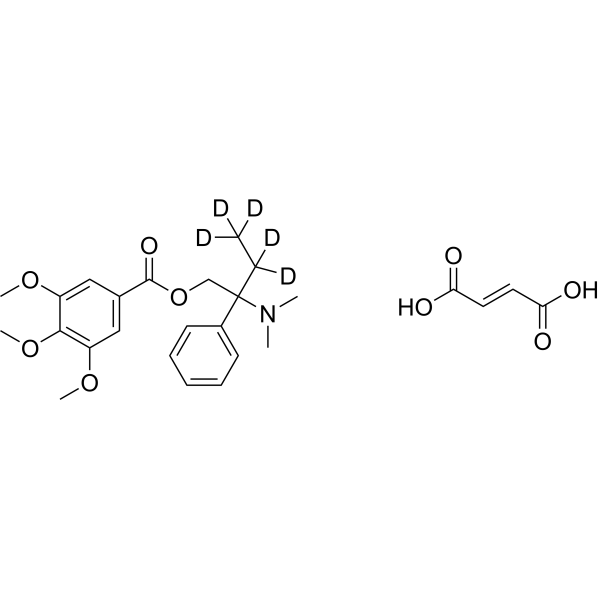
Cat. No.: HY-B0380S1
CAS No.: 2747915-18-8
Trimebutine-d5 fumarate is deuterium labeled Trimebutine fumarate. Trimebutine fumarate is a multi-target inhibitor and opioid receptor agonist with antimuscarinic activity. Trimebutine fumarate inhibits L-type Ca 2+ channels and large-conductance calcium-activated potassium channels (BKCa channels), thereby inhibiting extracellular calcium influx and potassium ion efflux. Trimebutine fumarate also targets Toll-like receptors, inhibits Toll-like receptor 2/4/7/8/9 signals, and inhibits LPS-induced IRAK1 activation, as well as ERK1/2, JNK and NF-κB activation, thereby exerting anti-inflammatory effects. Trimebutine fumarate also induces tumor cell apoptosis by inhibiting the AKT/ERK pathway. Trimebutine fumarate also inhibits excessive contraction of smooth muscle and can be used in the study of gastrointestinal disorders such as irritable bowel syndrome (IBS) .
loading...
    loading...
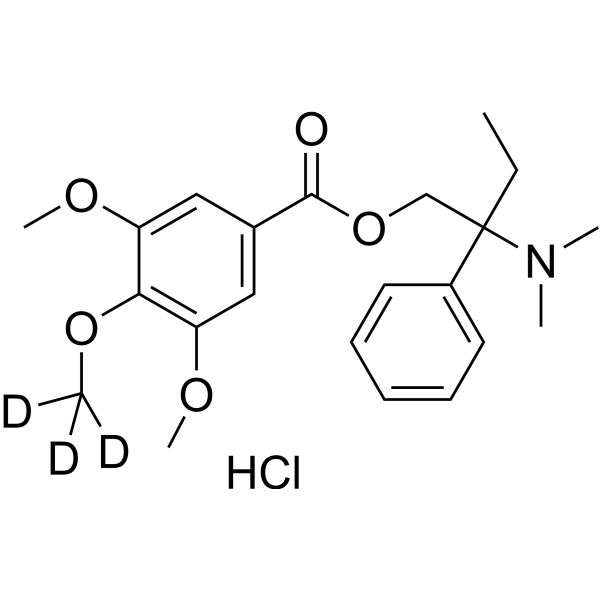
Cat. No.: HY-B0380S2
Trimebutine-d3 hydrochloride is deuterium labeled Trimebutine hydrochloride. Trimebutine hydrochloride is a multi-target inhibitor and opioid receptor agonist with antimuscarinic activity. Trimebutine hydrochloride inhibits L-type Ca 2+ channels and large-conductance calcium-activated potassium channels (BKCa channels), thereby inhibiting extracellular calcium influx and potassium ion efflux. Trimebutine hydrochloride also targets Toll-like receptors, inhibits Toll-like receptor 2/4/7/8/9 signals, and inhibits LPS-induced IRAK1 activation, as well as ERK1/2, JNK and NF-κB activation, thereby exerting anti-inflammatory effects. Trimebutine hydrochloride also induces tumor cell apoptosis by inhibiting the AKT/ERK pathway. Trimebutine hydrochloride also inhibits excessive contraction of smooth muscle and can be used in the study of gastrointestinal disorders such as irritable bowel syndrome (IBS) .
loading...
    loading...
Cat. No.: HY-B1239A
CAS No.: 1679-76-1
Synonyms: Cycloadiphene; Hexahydroadiphenine
Drofenine (Cycloadiphene; Hexahydroadiphenine) is an brain-penetrant antispasmodic agent. Drofenine is a Kv2.1 channel inhibitor with human IC50 of 9.53 μM. Drofenine is a butyrylcholinesterase (BChE) inhibitor with Ki of 0.003 mM, and is a TRPV3 activator. Drofenine blocks Kv2.1-dependent potassium efflux, inhibits Kv2.1/JNK/NF-κB and IkBa/NF-kB signaling, suppresses Kv2.1 mRNA/protein expression. Drofenine suppresses oligomeric Aβ-induced microglial NLRP3 inflammasome activation and neuronal Tau hyperphosphorylation, improves cognitive impairment, promotes neurite outgrowth. Drofenine induces calcium influx in keratinocytes and exert cytotoxicity against keratinocytes. Drofenine ameliorates diabetic peripheral neuropathy -like pathology. Drofenine can be used for the researches of Alzheimer's disease, diabetic peripheral neuropathy and smooth muscle spasm .
loading...
    loading...
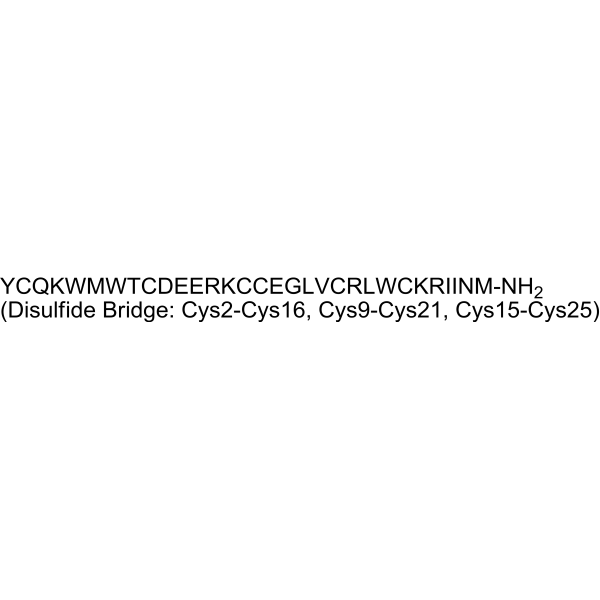
Cat. No.: HY-P11642
CAS No.: 131748-26-0
Sialorphin is a neutral endopeptidase (NEP) and aminopeptidase N (APN) inhibitor that responds to androgen signals. Sialorphin blocks the degradation of endogenous opioid peptides and interacts with μ-, δ-, κ-opioid receptors. Sialorphin regulates the ERK/mTOR signaling pathway by inducing cell cycle arrest, enhancing ERK1/2 activity, and reducing the phosphorylation levels of mTOR, 4E-BP1, p70S6K; accordingly, Sialorphin exhibits antiproliferative activity against colorectal cancer, glioma and prostate cancer cells without cytotoxicity. In addition, Sialorphin also produces antinociceptive responses, regulates sexual behavior, relaxes corpus cavernosum smooth muscle, and alleviates experimental colitis. Sialorphin is also a copper (II) ion-binding ligand. Sialorphin has been used in mechanistic studies related to cancer, pain management and inflammatory bowel disease .
loading...
    loading...
Cat. No.: HY-P2786A
CAS No.: 741738-57-8
Target:  

Potassium Channel

Research Areas:  

Neurological Disease

Phrixotoxin 2 is a Kv4 family potassium channel inhibitor, with Ki values in rats of 120 nM for Kv4.2, 110 nM for Kv4.3, and 230 nM for Kv4.1. Phrixotoxin 2 mediates voltage-dependent inhibition of Kv4.2 and Kv4.3 currents, and voltage-independent inhibition of Kv4.1 currents. Phrixotoxin 2 fails to inhibit A-type K + currents in visceral dorsal root ganglion neurons. Phrixotoxin 2 induces contraction of non-pregnant uterine smooth muscle and triggers orofacial cold hyperalgesia in rats. Phrixotoxin 2 can distinguish the contribution of Kv4 subunits to A-type K + currents in different subsets of sensory neurons. Phrixotoxin 2 can be used in research related to chronic pain and trigeminal neuropathic pain .
loading...
    loading...
Cat. No.: HY-U00134R
CAS No.: 2179-37-5
Synonyms: Bencyclane (Standard); Benzcyclan (Standard)
Benzcyclane (Standard) is the analytical standard of Benzcyclane (HY-U00134). This product is intended for research and analytical applications. Benzcyclane (Bencyclane; Benzcyclan) is a vasodilator with serotonin receptor antagonism. Benzcyclane exerts atypical serotonin antagonistic effects in rabbit superior mesenteric arteries. Benzcyclane relaxes high K +-induced contractions in rabbit basilar arteries and superior mesenteric arteries, and selectively inhibits sympathetic nerve stimulation-induced contractions in rabbit pulmonary arteries. Benzcyclane exerts non-competitive norepinephrine antagonistic effects in rabbit superior mesenteric arteries, and slightly reduces the maximum contractile response induced by histamine. Benzcyclane relaxes smooth muscles, induces transient hypotension, inhibits thrombosis, and accelerates blood fibrinolytic activity. Benzcyclane increases cerebral glucose content/uptake, enhances hypoxia tolerance in mice, and increases cerebral blood supply in dogs. Benzcyclane is applicable to studies related to cerebral vascular circulation .
loading...
    loading...
Cat. No.: HY-W010476R
CAS No.: 14667-55-1
2,3,5-Trimethylpyrazine (Standard) is the analytical standard of 2,3,5-Trimethylpyrazine (HY-W010476). This product is intended for research and analytical applications. 2,3,5-Trimethylpyrazine is an activator of OR5K1 with an EC50 of 65.03 μM in Hana-3A cells. 2,3,5-Trimethylpyrazine inhibits ZEN biosynthetic gene expression, disrupts cell membrane phospholipid composition, and inhibits mycelial growth. 2,3,5-Trimethylpyrazine inhibits DNA synthesis in the chorioallantoic membrane without disrupting vascular pattern formation. 2,3,5-Trimethylpyrazine inhibits ciliary beating frequency, oocyte pickup, and infundibular smooth muscle contraction in hamster oviduct explants. 2,3,5-Trimethylpyrazine is useful for research related to plant fungal infections .
loading...
    loading...
Cat. No.: HY-W010476S
CAS No.: 85735-49-5
2,3,5-Trimethylpyrazine-d9 is the deuterated-labeled 2,3,5-Trimethylpyrazine (HY-W010476). 2,3,5-Trimethylpyrazine is an activator of OR5K1 with an EC50 of 65.03 μM in Hana-3A cells. 2,3,5-Trimethylpyrazine inhibits ZEN biosynthetic gene expression, disrupts cell membrane phospholipid composition, and inhibits mycelial growth. 2,3,5-Trimethylpyrazine inhibits DNA synthesis in the chorioallantoic membrane without disrupting vascular pattern formation. 2,3,5-Trimethylpyrazine inhibits ciliary beating frequency, oocyte pickup, and infundibular smooth muscle contraction in hamster oviduct explants. 2,3,5-Trimethylpyrazine is useful for research related to plant fungal infections .
loading...
    loading...
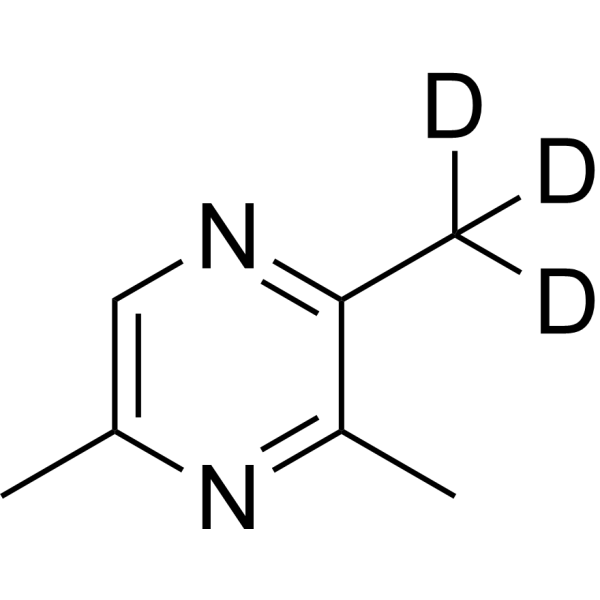
Cat. No.: HY-W010476S1
CAS No.: 1082582-30-6
2,3,5-Trimethylpyrazine-d3 is the deuterated-labeled 2,3,5-Trimethylpyrazine (HY-W010476). 2,3,5-Trimethylpyrazine is an activator of OR5K1 with an EC50 of 65.03 μM in Hana-3A cells. 2,3,5-Trimethylpyrazine inhibits ZEN biosynthetic gene expression, disrupts cell membrane phospholipid composition, and inhibits mycelial growth. 2,3,5-Trimethylpyrazine inhibits DNA synthesis in the chorioallantoic membrane without disrupting vascular pattern formation. 2,3,5-Trimethylpyrazine inhibits ciliary beating frequency, oocyte pickup, and infundibular smooth muscle contraction in hamster oviduct explants. 2,3,5-Trimethylpyrazine is useful for research related to plant fungal infections .
loading...
    loading...
Cat. No.: HY-W100287R
CAS No.: 4532-33-6
Murrayafoline A (Standard) is the analytical standard of Murrayafoline A (HY-W100287). This product is intended for research and analytical applications. Murrayafoline A is a carbazole alkaloid that can be extracted from Murraya tetramera. Murrayafoline A directly targets Specificity protein 1 (Sp1), thereby inhibiting NF-κB and MAPK signaling pathways. Murrayafoline a induces a G0/G1-phase arrest in platelet-derived growth factor (PDGF)-stimulated vascular smooth muscle cells. Murrayafoline A attenuates the Wnt/β-catenin pathway by promoting the degradation of intracellular β-catenin proteins. Murrayafoline A enhances the contraction of rat ventricular myocytes and L-type calcium current by activating protein kinase C. Murrayafoline A inhibits LPS (HY-D1056)-induced neuroinflammation in vivo. Murrayafoline A can be used for the study of inflammation, vascular complications and colon cancer .
loading...
    loading...
Cat. No.: HY-W153159R
CAS No.: 13062-76-5
N-Methyltyramine (hydrochloride) (Standard) is the analytical standard of N-Methyltyramine (hydrochloride) (HY-W153159). This product is intended for research and analytical applications. N-Methyltyramine hydrochloride is an orally active α2-adrenoreceptor antagonist with an IC50 value of 5.53 μM against rat targets. N-Methyltyramine hydrochloride blocks α2-adrenoreceptors, while inhibiting lipolysis, hyperactivity responses and small intestinal peristalsis in mice. N-Methyltyramine hydrochloride promotes gastrin release and pancreatic juice secretion, upregulates appetite, blood pressure, myocardial contraction frequency and contraction intensity, and increases renal blood flow, renal vascular resistance and mean peripheral arterial resistance. N-Methyltyramine hydrochloride relaxes mouse small intestinal smooth muscle and undergoes biotransformation in vivo to produce adrenaline. N-Methyltyramine hydrochloride can be used in studies related to gastrointestinal diseases .
loading...
    loading...
Cat. No.: HY-W153897R
CAS No.: 370-98-9
N-Methyltyramine (Standard) is the analytical standard of N-Methyltyramine (HY-W153897). This product is intended for research and analytical applications. N-Methyltyramine is an orally active α2-adrenoreceptor antagonist with an IC50 value of 5.53 μM against rat targets. N-Methyltyramine blocks α2-adrenoreceptors, while inhibiting lipolysis, hyperactivity responses and small intestinal peristalsis in mice. N-Methyltyramine promotes gastrin release and pancreatic juice secretion, upregulates appetite, blood pressure, myocardial contraction frequency and contraction intensity, and increases renal blood flow, renal vascular resistance and mean peripheral arterial resistance. N-Methyltyramine relaxes mouse small intestinal smooth muscle and undergoes biotransformation in vivo to produce adrenaline. N-Methyltyramine can be used in studies related to gastrointestinal diseases .
loading...
    loading...
Cat. No.: HY-W276164
CAS No.: 1120-04-3
Synonyms: Sodium stearyl sulfate
Sodium octadecyl sulfate (Sodium stearyl sulfate) is a long-chain alkyl sodium sulfate that functions as an emulsifier, crosslinking agent, and regulator. Sodium octadecyl sulfate has high safety, with a LD50 greater than 3.00 Gm./Kg for both intraperitoneal injection in mice and oral administration in rats. Sodium octadecyl sulfate enhances continuous contraction of the gastrocnemius muscle in frogs and boosts intestinal smooth muscle activity in albino rats. However, Sodium octadecyl sulfate exerts no significant effect on isolated tortoise myocardium and does not alter the conduction function of frog sciatic nerves. Sodium octadecyl sulfate can also be used to coat the surface of starch aggregates, promote crosslinking and increase aggregate size through hydrophobic and electrostatic interactions, and further form a coexistent B-V type crystalline structure with acid-hydrolyzed gelatinized starch, thereby effectively modifying the structure and surface properties of high-starch systems .
loading...
    loading...
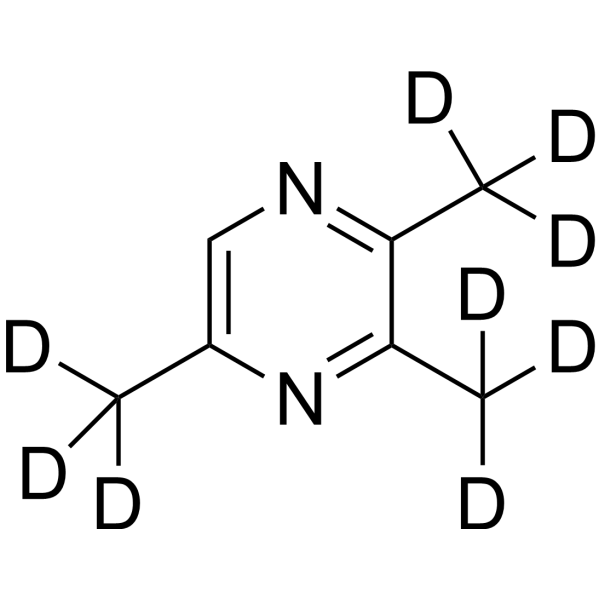
Cat. No.: HY-W724350
2,3,5-Trimethylpyrazine-d10 is the deuterated-labeled 2,3,5-Trimethylpyrazine (HY-W010476). 2,3,5-Trimethylpyrazine is an activator of OR5K1 with an EC50 of 65.03 μM in Hana-3A cells. 2,3,5-Trimethylpyrazine inhibits ZEN biosynthetic gene expression, disrupts cell membrane phospholipid composition, and inhibits mycelial growth. 2,3,5-Trimethylpyrazine inhibits DNA synthesis in the chorioallantoic membrane without disrupting vascular pattern formation. 2,3,5-Trimethylpyrazine inhibits ciliary beating frequency, oocyte pickup, and infundibular smooth muscle contraction in hamster oviduct explants. 2,3,5-Trimethylpyrazine is useful for research related to plant fungal infections .
loading...
    loading...
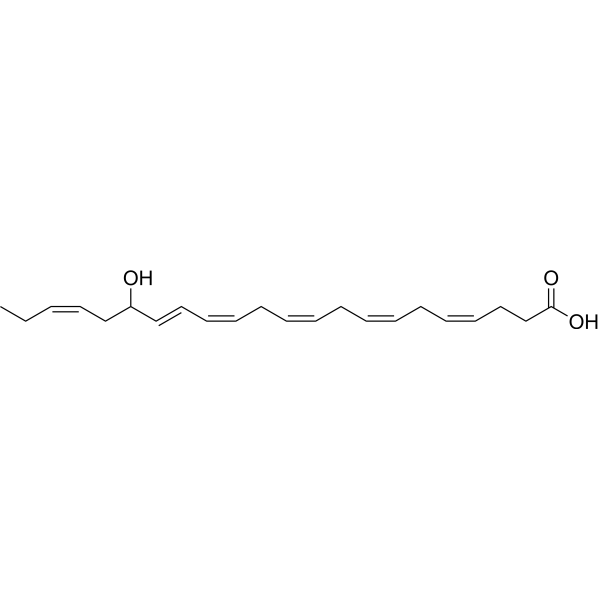
Cat. No.: HY-113512
CAS No.: 90780-52-2
Purity:  98.8%
17-HDHA is a DHA-derived specialized pro-resolving mediator (SPM). 17-HDHA inhibits NF-κB activation by activating PPARγ and upregulating IκBα, targets FPR2 and Bcl-6, and also acts as a precursor of RvD1 and PD1. 17-HDHA inhibits pulmonary artery smooth muscle cell proliferation, regulates the expression of adiponectin, GLUT-4 and inflammatory cytokines, suppresses IgE production by B cells and promotes antibody secretion. 17-HDHA reduces adipose tissue inflammation, improves insulin sensitivity and glucose tolerance, alleviates pathological processes associated with pulmonary hypertension, and enhances antibody responses and virus neutralizing activity against influenza HA. 17-HDHA can be used in research related to obesity-associated inflammation, insulin resistance, glucose intolerance, pulmonary hypertension and influenza virus infection .
loading...
    loading...
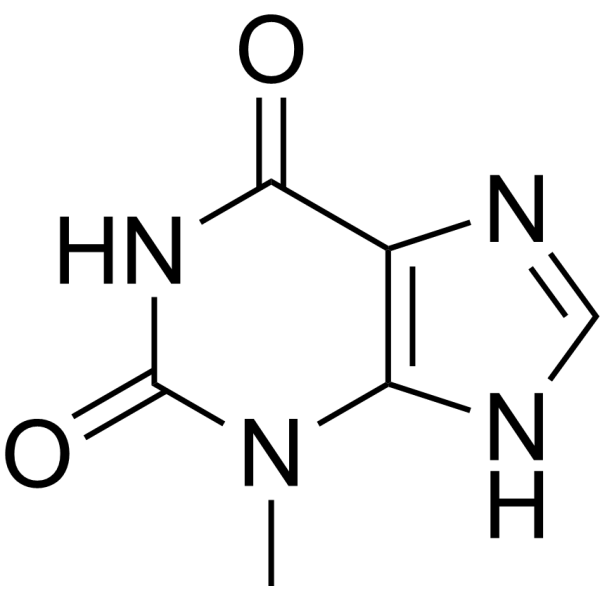
Cat. No.: HY-50723R
CAS No.: 1076-22-8
3-Methylxanthine (Standard) is the analytical standard of 3-Methylxanthine. This product is intended for research and analytical applications. 3-Methylxanthine is a blood-brain barrier-permeable cyclic GMP phosphodiesterase inhibitor, with an IC50 of 920 μM against guinea pig cyclic GMP phosphodiesterase. 3-Methylxanthine relaxes the spontaneous tension of isolated guinea pig tracheal smooth muscle preparations. Through a DRD1-dependent pathway, 3-Methylxanthine upregulates the expression of γH2AX and activated caspase-3, downregulates the expression of Bcl-2, and enhances Cisplatin-induced apoptosis (apoptosis) in ovarian cancer cells both in vitro and in vivo. 3-Methylxanthine induces clonic convulsions in the central nervous system. 3-Methylxanthine is the major metabolite of Theophylline (HY-B0809). 3-Methylxanthine can be used in studies related to ovarian cancer and neurotoxic convulsions .
loading...
    loading...
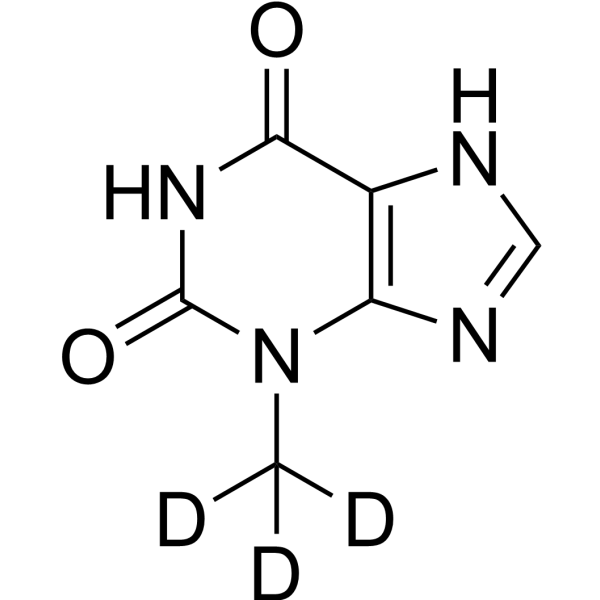
Cat. No.: HY-50723S1
3-Methylxanthine-d3 is deuterated labeled 3-Methylxanthine (HY-50723). 3-Methylxanthine is a blood-brain barrier-permeable cyclic GMP phosphodiesterase inhibitor, with an IC50 of 920 μM against guinea pig cyclic GMP phosphodiesterase. 3-Methylxanthine relaxes the spontaneous tension of isolated guinea pig tracheal smooth muscle preparations. Through a DRD1-dependent pathway, 3-Methylxanthine upregulates the expression of γH2AX and activated caspase-3, downregulates the expression of Bcl-2, and enhances Cisplatin-induced apoptosis (apoptosis) in ovarian cancer cells both in vitro and in vivo. 3-Methylxanthine induces clonic convulsions in the central nervous system. 3-Methylxanthine is the major metabolite of Theophylline (HY-B0809). 3-Methylxanthine can be used in studies related to ovarian cancer and neurotoxic convulsions .
loading...
    loading...
Cat. No.: HY-B0380AR
CAS No.: 34140-59-5
Trimebutine maleate (Standard) is the analytical standard of Trimebutine maleate (HY-B0380A). This product is intended for research and analytical applications. Trimebutine maleate is a multi-target inhibitor and opioid receptor agonist with antimuscarinic activity. Trimebutine maleate inhibits L-type Ca 2+ channels and large-conductance calcium-activated potassium channels (BKCa channels), thereby inhibiting extracellular calcium influx and potassium ion efflux. Trimebutine maleate also targets Toll-like receptors, inhibits Toll-like receptor 2/4/7/8/9 signals, and inhibits LPS-induced IRAK1 activation, as well as ERK1/2, JNK and NF-κB activation, thereby exerting anti-inflammatory effects. Trimebutine maleate also induces tumor cell apoptosis by inhibiting the AKT/ERK pathway. Trimebutine maleate also inhibits excessive contraction of smooth muscle and can be used in the study of gastrointestinal disorders such as irritable bowel syndrome (IBS) .
loading...
    loading...
Cat. No.: HY-B0380R
CAS No.: 39133-31-8
Trimebutine (Standard) is the analytical standard of Trimebutine (HY-B0380). This product is intended for research and analytical applications. Trimebutine is a multi-target inhibitor and opioid receptor agonist with antimuscarinic activity. Trimebutine inhibits L-type Ca 2+ channels and large-conductance calcium-activated potassium channels (BKCa channels), thereby inhibiting extracellular calcium influx and potassium ion efflux. Trimebutine also targets Toll-like receptors, inhibits Toll-like receptor 2/4/7/8/9 signals, and inhibits LPS-induced IRAK1 activation, as well as ERK1/2, JNK and NF-κB activation, thereby exerting anti-inflammatory effects. Trimebutine also induces tumor cell apoptosis by inhibiting the AKT/ERK pathway. Trimebutine also inhibits excessive contraction of smooth muscle and can be used in the study of gastrointestinal disorders such as irritable bowel syndrome (IBS) .
loading...
    loading...

