125 Results for "

Major compounds

" in MedChemExpress (MCE) Product Catalog:
Products (125)

125 Results for "Major compounds" in MCE Product Catalog:

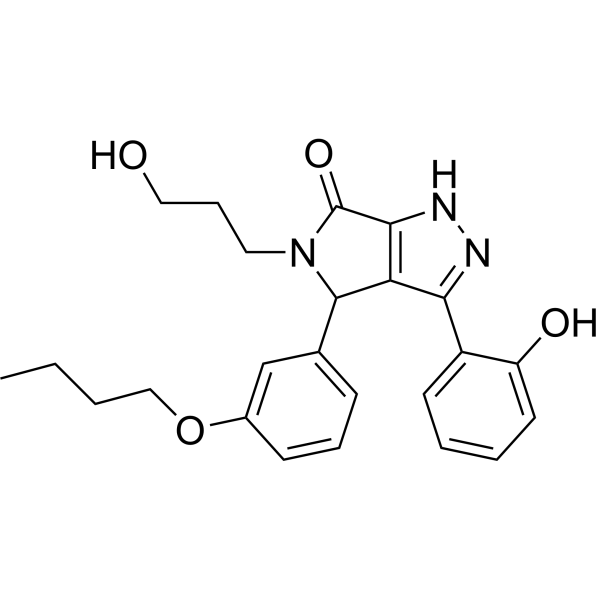
Cat. No.: HY-175246
CAS No.: 294197-66-3
Target:  

Parasite

Research Areas:  

Infection

Antitoxoplasmal agent-1 (Compound 4) is an antiparasitic agent. Antitoxoplasmal agent-1 has strong activity and selectivity against T. gondii, with an IC50 of 3.1 μM. Antitoxoplasmal agent-1 also has certain activity against L. major amastigotes, with an EC50 of 23.3 μM. Antitoxoplasmal agent-1 can be used in the research of parasite-related diseases .
loading...
    loading...
Cat. No.: HY-W086896R
CAS No.: 23981-47-7
α-Demethylnaproxen (Standard) is the analytical standard of α-Demethylnaproxen (HY-W086896). This product is intended for research and analytical applications. α-Demethylnaproxen (Compound 6-MNA) is the major metabolite of Nabumetone (HY-B0559). Nabumetone is an orally active non-acidic anti-inflammatory agent, acts as a potent and selective COX-2 inhibitor .
loading...
    loading...
Cat. No.: HY-W740498
CAS No.: 182219-43-8
Synonyms: Frambione-d5; 4-(4-Hydroxyphenyl)-2-butanone-d5
Raspberry ketone-d5 (Frambione-d5; 4-(4-Hydroxyphenyl)-2-butanone-d5) is the deuterium labeled Raspberry ketone (HY-N1426). Raspberry ketone is a major aromatic compound of red raspberry, widely used as a fragrance in cosmetics and as a flavoring agent in foodstuff; also shows PPAR-α agonistic activity.
loading...
    loading...
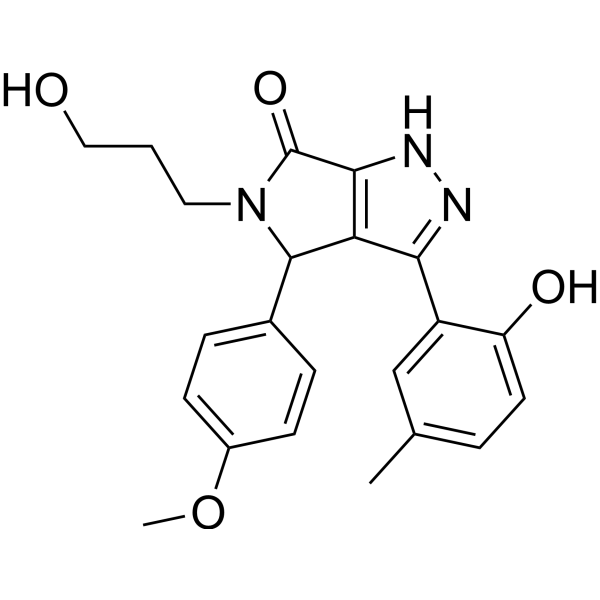
Cat. No.: HY-115911
CAS No.: 880399-00-8
Target:  

Glycoprotein VI

Research Areas:  

Cardiovascular Disease

GPVI antagonist 2 (Compound 1) is a potential antagonist of Glycoprotein VI (GPVI). IC50 values of GPVI antagonist 2 are, respectively, 0.35 μM for collagen, 0.80 μM for CRP, 195.2 μM for convulxin and 81.38 μM for thrombin. Glycoprotein VI (GPVI) is a platelet major collagen receptor and a target for potent and safe antithrombotic research. GPVI antagonist 2 is a promising antiplatelet agent .
loading...
    loading...
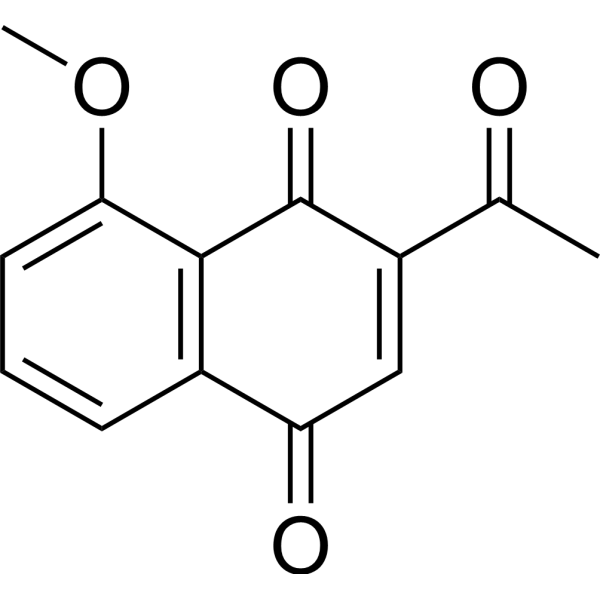
Cat. No.: HY-115912
CAS No.: 901654-94-2
Target:  

Glycoprotein VI

Research Areas:  

Cardiovascular Disease

GPVI antagonist 3 (Compound 2) is a potential antagonist of Glycoprotein VI (GPVI). IC50 values of GPVI antagonist 3 are, respectively, 1.01 μM for collagen, 1.92 μM for CRP, 7.24 μM for convulxin and 51.74 μM for thrombin. Glycoprotein VI (GPVI) is a platelet major collagen receptor and a target for potent and safe antithrombotic research. GPVI antagonist 3 is a promising antiplatelet agent .
loading...
    loading...
Cat. No.: HY-120432
CAS No.: 1257542-38-3
Research Areas:  

Infection

CaMdr1p-IN-1 (Compound A) is an inhibitor for the major facilitator superfamily transporter CaMdr1p. CaMdr1p-IN-1 exhibits chemosensitizing efficacy. CaMdr1p-IN-1 synergizes with Fluconazole (HY-B0101), that inhibits CaMdr1p overexpressing Candida albicans with MIC of 10 μM .
loading...
    loading...
Cat. No.: HY-137263
CAS No.: 35775-65-6
Target:  

Antibiotic

Research Areas:  

Infection

Propionylmaridomycin is a macrolide antibiotic with antibacterial activity. Propionylmaridomycin is rapidly absorbed from the gastrointestinal tract and rapidly distributed to tissues. Propionylmaridomycin radioactivity levels in the liver, kidneys, and lungs were significantly higher than in plasma, while distribution to the brain was less. Propionylmaridomycin is excreted primarily through the feces, and the high fecal recovery rate is due to unabsorbed compounds and biliary excretion of compounds and their metabolites. Propionylmaridomycin exhibits the highest antibacterial activity in the lungs. Propionylmaridomycin is completely converted to several metabolites in rats, of which 4''-depropionyl-9-propionylmaridomycin was identified as the major metabolite .
loading...
    loading...
Cat. No.: HY-118099R
CAS No.: 108656-33-3
Research Areas:  

Infection

Florfenicol amine hydrochloride (Standard) is the analytical standard of Florfenicol amine hydrochloride (HY-118099). This product is intended for research and analytical applications. Florfenicol amine hydrochloride is the major metabolite of Florfenicol (HY-B1374) and serves as a marker residue in studies of the in vivo disposition and residue depletion of Florfenicol. Florfenicol amine hydrochloride is eliminated more slowly than the parent compound and persists in plasma and tissues. Florfenicol amine hydrochloride is used in veterinary research for studies on the metabolism, pharmacokinetics, and residue depletion of Florfenicol .
loading...
    loading...
Cat. No.: HY-N144101
CAS No.: 81418-42-0
SARS-CoV MPro-IN-2 (compound 15) is a potent inhibitor of SARS-CoV-2 M pro with an IC50 value of 72.07 nM. The main protease (M pro) of the virus as the major enzyme processing viral polyproteins contributes to the replication and transcription of SARS-CoV-2 in host cells, and has been characterized as an attractive target in agent discovery. SARS-CoV MPro-IN-2 has the potential for the research of COVID-19 .
loading...
    loading...
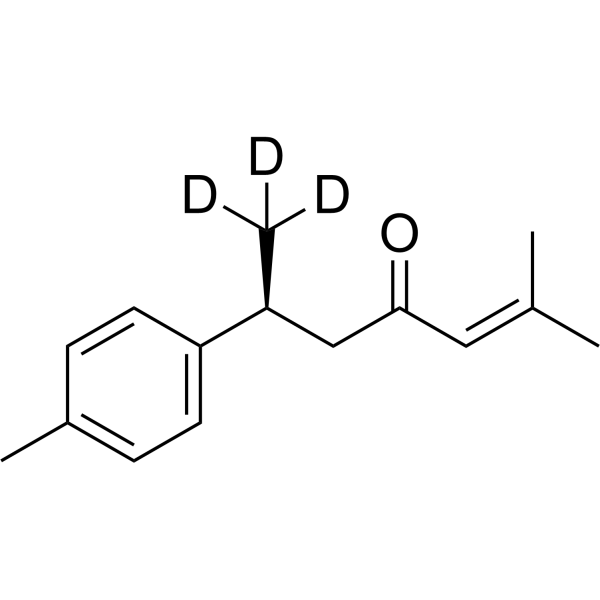
Cat. No.: HY-N6703S
Synonyms: (+)-ar-Turmerone-d3
ar-Turmerone-d3 is the deuterium labeled ar-Turmerone. ar-Turmerone ((+)-ar-Turmerone) is an orally active and major bioactive compound of the herb Curcuma longa with anti-tumorigenesis and anti-inflammatory activities. ar-Turmerone induces apoptosis in U937 cells. ar-Turmerone exerts positive modulation on murine DCs. ar-Turmerone induces NSC proliferation in vitro and in vivo, and can be used for various neurologic disorders study .
loading...
    loading...
Cat. No.: HY-159899
CAS No.: 2941327-87-1
DHFR-IN-22 (Compound 8) is a DHFR (Dihydrofolate Reductase) inhibitor belonging to the class of 2,4-diaminopyrimidine compounds. DHFR-IN-22 exhibits significant inhibitory activity against purified DHFR enzyme and major species of nontuberculous mycobacteria (NTM), namely Mycobacterium avium and Mycobacterium abscessus. It shows an IC50 of 1.1 nM and MIC of 1.5 μg/mL against M. abscessus, and an IC50 of 6.3 nM and MIC of 0.1 μg/mL against M. avium. Additionally, it demonstrates an IC50 of 2100 nM against human DHFR. DHFR-IN-22 holds potential for studying novel strategies to combat NTM infections .
loading...
    loading...
Cat. No.: HY-169217
Target:  

Cytochrome P450

Research Areas:  

Cancer

CYP3A4-IN-4 (compound Δ,Λ-3), a Ru(II) Ir(III) Conjugate, is a photoactive inhibitor of the major human drug metabolizing enzyme CYP3A4. CYP3A4-IN-4 containing the [Ru(tpy)(Me2bpy)] photocaging group showed an IC50 of 2.2 μM for inhibition of microsomal CYP3A4 under light conditions (λirr=530 nm, tirr=15 min) .
loading...
    loading...
Cat. No.: HY-162818
Research Areas:  

Infection

Antibacterial agent 237 (compound Ru-8) is a bacteriostatic agent for Staphylococcus aureus, with MIC of 0.78-1.56 μg/mL. Antibacterial agent 237 destroys bacterial cell membranes, changes their permeability, and induces bacteria to produce Reactive Oxygen Species, leading to bacterial death without causing drug resistance. Antibacterial agent 237 has low hemolytic toxicity to rabbit red blood cells and Raw 264.7 cells, and has significant antibacterial effects against Staphylococcus aureus in mouse skin wound infection models and Bacillus major larvae infection models .
loading...
    loading...
Cat. No.: HY-120618
CAS No.: 153707-88-1
Synonyms: BMS-180492
Target:  

Drug Derivative

Research Areas:  

Neurological Disease

Triazoledione (BMS-180492) is a phenylpiperazine compound and the major metabolite of Nefazodone (HY-119209). Triazoledione is used in the research of depression .
loading...
    loading...
Cat. No.: HY-W355652
CAS No.: 88699-91-6
Research Areas:  

Neurological Disease

Fluvoxamino acid is the major metabolite of Fluvoxamine (HY-B0103) produced in the human body, and acts as a 5-HT reuptake transporter inhibitor. Fluvoxamino acid exhibits weaker inhibitory activity against 5-HT reuptake than its parent compound Fluvoxamine, and can synergistically regulate 5-HT transmission with the parent compound. Fluvoxamino acid can be used in the research of major depressive disorder .
loading...
    loading...
Cat. No.: HY-Y1088S1
CAS No.: 19136-97-1
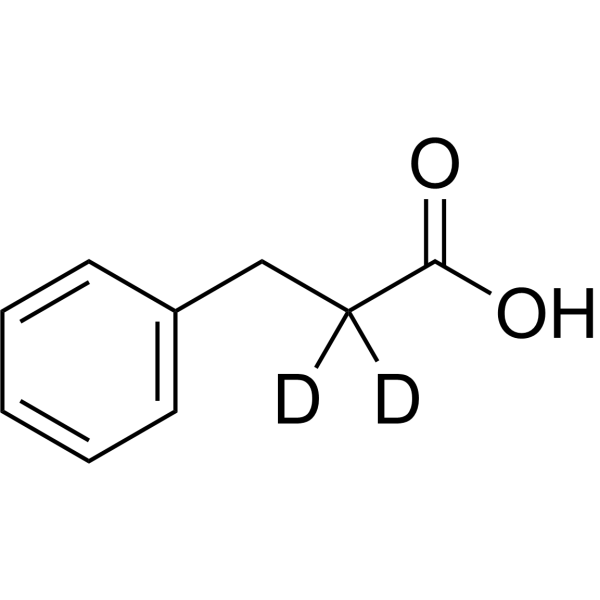
Hydrocinnamic acid-d2 is the deuterium labeled Hydrocinnamic acid . Hydrocinnamic acid is the major rhizospheric compound with known growth regulatory activities .
loading...
    loading...
Cat. No.: HY-L040
1,172 compounds

Diabetes mellitus, usually called diabetes, is a group of metabolic disorders characterized by a high blood sugar level over a prolonged period of time. The most common types are Type I and Type II. Type I diabetes (T1D), also called juvenile onset diabetes mellitus or insulin-dependent diabetes mellitus, is characterized by destruction of the β-cells of the pancreas and insulin is not produced, whereas type II diabetes (T2D), also called non-insulin-dependent diabetes mellitus, is characterized by a progressive impairment of insulin secretion and relative decreased sensitivity of target tissues to the action of this hormone. Type 2 diabetes accounts for the vast majority of all diabetes mellitus. Diabetes of all types can lead to complications in many parts of the body and can increase the overall risk of dying prematurely. Possible complications include kidney failure, leg amputation, vision loss and nerve damage.

The pathogenesis of diabetes is complicated, and development of the safe and effective drugs against diabetes is full of challenge. Increasing studies have confirmed that the pathogenesis of diabetes is related to various signaling pathways, such as insulin signaling pathway, AMPK pathway, PPAR regulation and chromatin modification pathways. These signaling pathways have thus become the major source of the promising novel drug targets to treat metabolic diseases and diabetes.

MCE Anti-diabetic Compound Library owns a unique collection of 1,172 compounds, which mainly target SGLT, PPAR, DPP-4, AMPK, Dipeptidyl Peptidase, Glucagon Receptor, etc. This library is a useful tool for discovery anti-diabetes drugs.

Cat. No.: HY-N8491C
CAS No.: 20549-48-8
Target:  

Others

(+)-Neodihydrocarveol is a monoterpenoid compound. (+)-Neodihydrocarveol is a major metabolite during the biotransformation of (-)-limonene (HY-Z0478) by the fungus Aspergillus cellulosae M-77 .
loading...
    loading...
Cat. No.: HY-187799
CAS No.: 1417918-09-2
Target:  

Serotonin Transporter

Research Areas:  

Neurological Disease

Moleroxetine (Compound I-b) is a 5-hydroxytryptamine/norepinephrine dual reuptake inhibitor. Moleroxetine can be used in studies related to major depressive disorder .
loading...
    loading...
Cat. No.: HY-N17811
CAS No.: 910580-56-2
Vincristine metabolite-1 (Compound M1) is the major metabolite of Vincristine (HY-N0488A) by CYP3A4 and CYP3A5 .
loading...
    loading...

