154 Results for "

cellular proliferation

" in MedChemExpress (MCE) Product Catalog:
Products (154)

154 Results for "cellular proliferation" in MCE Product Catalog:

Cat. No.: HY-W783446A
CAS No.: 61593-75-7
Synonyms: DACH-sulph
Target:  

DNA/RNA Synthesis

Research Areas:  

Cancer

DACH-Pt-SO4 (DACH-sulph) is an anti-tumor agent. DACH-Pt-SO4 inhibits DNA function and cellular proliferation. DACH-Pt-SO4 reduces chloramphenicol acetyltransferase (CAT) expression in repair-deficient cells. DACH-Pt-SO4 can be used for the study of cancer .
loading...
    loading...
Cat. No.: HY-13007A
CAS No.: 1279034-84-2
Synonyms: PF-03758309 hydrochloride
Target:  

PAK Apoptosis

Research Areas:  

Cancer

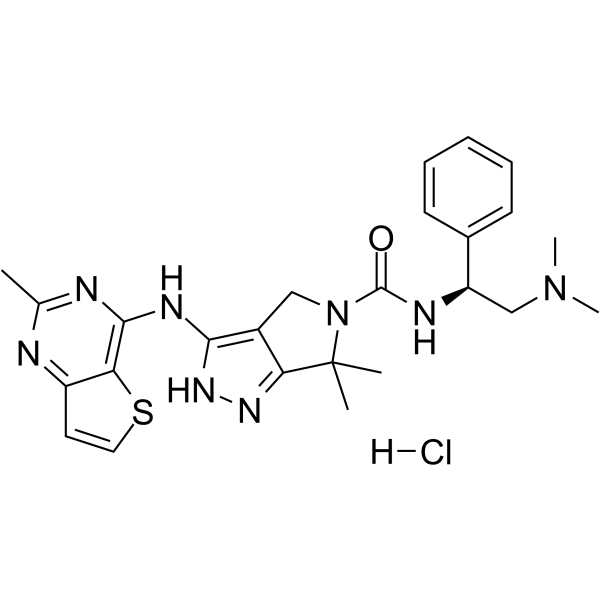
PF-3758309 (PF-03758309) hydrochloride is a potent, orally available, and reversible ATP-competitive inhibitor of PAK4 (Kd= 2.7 nM; Ki=18.7 nM). PF-3758309 hydrochloride has the expected cellular functions of a PAK4 inhibitor: inhibition of anchorage-independent growth, induction of apoptosis, cytoskeletal remodeling, and inhibition of proliferation .
loading...
    loading...
Cat. No.: HY-13007B
Synonyms: PF-03758309 dihydrochloride
Target:  

PAK Apoptosis

Research Areas:  

Cancer

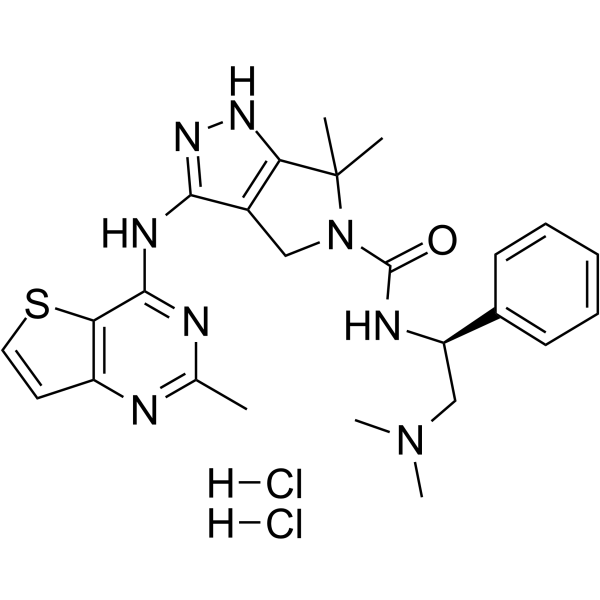
PF-3758309 (PF-03758309) dihydrochloride is a potent, orally available, and reversible ATP-competitive inhibitor of PAK4 (Kd= 2.7 nM; Ki=18.7 nM). PF-3758309 dihydrochloride has the expected cellular functions of a PAK4 inhibitor: inhibition of anchorage-independent growth, induction of apoptosis, cytoskeletal remodeling, and inhibition of proliferation .
loading...
    loading...
Cat. No.: HY-106979
CAS No.: 186752-78-3
Synonyms: SAR-943
Olcorolimus (SAR-943) is a Rapamycin (HY-10219) derivative. Olcorolimus can reduce IL-4, IL-5, eosinophil, neutrophil, lymphocyte, cellular fibronectin; lung epithelial cell proliferation and mucus hypersecretory phenotype in Ovalbumin (HY-W250978)-sensitized BALB/c mice. Olcorolimus can be used for the researches of inflammation and immunology, such as asthma .
loading...
    loading...
Cat. No.: HY-13001R
CAS No.: 950769-58-1
Synonyms: AC220 (Standard)
Research Areas:  

Cancer

Quizartinib (AC220) (Standard) is the analytical standard of Quizartinib (HY-13001). This product is intended for research and analytical applications. Quizartinib is an orally active, potent and selective FLT3 inhibitor. Quizartinib inhibits kinase activity of mutant-FLT3, -PDGFRA and -KIT isoforms and inhibits autophosphorylation. Quizartinib inhibits cellular proliferation, induces apoptosis in cancer cells. Quizartinib can be used for the research of cancer .
loading...
    loading...
Cat. No.: HY-176237
CAS No.: 3077970-44-3
Target:  

NAMPT Apoptosis

Research Areas:  

Cancer

Nampt-IN-16 (Compound 9a) is an orally active NAMPT inhibitor with an IC50 of 0.15 μM. Nampt-IN-16 can reduce intracellular NAD + and ATP levels. Nampt-IN-16 can inhibit the proliferation, migration, and invasion, induce cell cycle arrest and apoptosis, and alter cellular metabolism of gastric cancer cells. Nampt-IN-16 can be used in the research of tumors such as gastric cancer .
loading...
    loading...
Cat. No.: HY-N6801R
CAS No.: 23282-20-4
Nivalenol (Standard) is the analytical standard of Nivalenol (HY-N6801). This product is intended for research and analytical applications. Nivalenol, a trichothecene mycotoxin that can be produced by Fusarium graminearum, is a fungal metabolite present in agricultural product. Nivalenol modulates apoptotic pathway, cell cycle regulation, Bax, ERK, caspase-3, and poly-ADP-ribose synthase activity in macrophages. Nivalenol inhibits ribosomal peptidyltransferase site, protein synthesis, DNA synthesis, and cell proliferation. Nivalenol induces late-stage apoptotic morphological changes, reduces cellular metabolism, and decreases cell proliferation in erythroleukemia cells. Nivalenol induces lymphocyte apoptosis in murine thymus, spleen, and Peyer's patches. Nivalenol can be used for the research of erythroleukemia.
loading...
    loading...
Cat. No.: HY-178987
CAS No.: 3067849-10-6
Research Areas:  

Cancer

BJH-86 is a soluble mitochondrial complex 1 inhibitor (oxygen consumption rate inhibition IC50 = 5 μM). BJH-86 exhibits weak inhibitory activity against phosphodiesterase 10A (PDE10A) (IC50 >10 μM). BJH-86 can reduce cellular oxygen consumption and inhibit cancer cell proliferation. BJH-86 can be used for the research of cancer, such as lung cancer .
loading...
    loading...
Cat. No.: HY-101960
CAS No.: 122520-90-5
Synonyms: (Z)-AG-183
Target:  

EGFR

Research Areas:  

Others

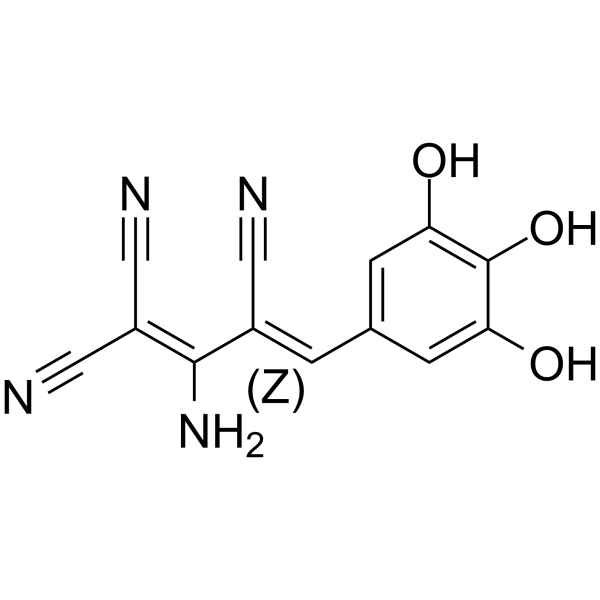
(Z)-Tyrphostin A51 is the Z configuration of Lanoconazole A51. Tyrphostin A51 is a potent protein tyrosine kinase (PTK) inhibitor. Tyrphostin A51 inhibits the volume-dependent release of [ 3H]taurine in a dose-dependent manner. Tyrphostin A51 markedly reduces cellular tyrosyl phosphorylation level. Tyrphostin A51 inhibits both basal and EGF-induced human bone cell proliferation .
loading...
    loading...
Cat. No.: HY-E70786
Target:  

Akt

Research Areas:  

Cancer

AKT is the oncogenic protein kinase that regulates essential cellular functions such as migration, proliferation, differentiation, apoptosis, and metabolism. Mammalian cells are characterized by the expression of three different Akt isoforms, Akt1, Akt2, and Akt3. AKT1 E17K is a mutant of AKT1. AKT1 E17K Recombinant Human Active Protein Kinase is obtained by expressing AKT1 E17K proteins .
loading...
    loading...
Cat. No.: HY-146033
CAS No.: 331851-78-6
Target:  

HPV

Research Areas:  

Cancer

HPV18-IN-1 (Compound H1) is a potent inhibitor of HPV18. HPV18-IN-1 prevents cervical cancer cells from premature cell procession and abnormal proliferation. HPV18-IN-1 supresses E7-Rb-E2F cellular pathway and DNA methylation. HPV18-IN-1 has the potential for the research of cancer diseases .
loading...
    loading...
Cat. No.: HY-W783254
CAS No.: 799279-67-7
Synonyms: PA(18:0e/0:0)
C18 LPA (PA(18:0e/0:0)) is a water-soluble phospholipid that functions as a signaling molecule, influencing various cellular responses through G protein-coupled receptors (GPCRs). It is known to promote smooth muscle contraction, cytoskeletal rearrangement, and chemotaxis, while also playing a role in neurotransmitter release, cell proliferation, platelet aggregation, and Ca2+ mobilization. Elevated levels of C18 LPA in human plasma are associated with ovarian cancer and atherosclerosis, suggesting its potential as a biomarker for ovarian cancer.
loading...
    loading...
Cat. No.: HY-N0650S12
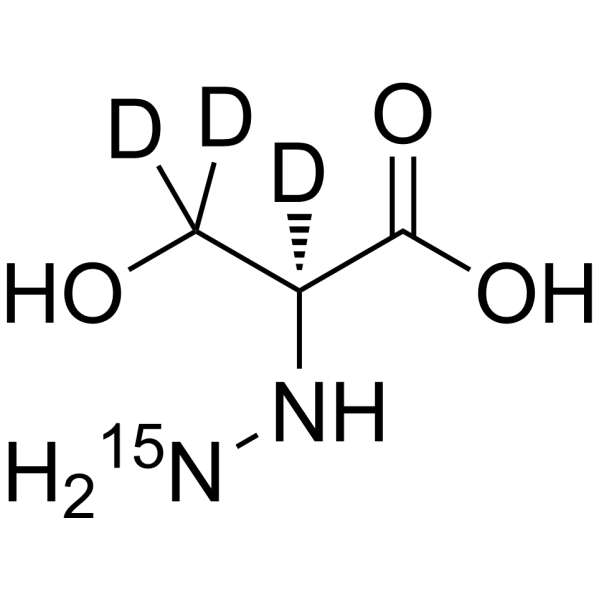
L-Serine- 15N,d3 is the deuterium and 15N labeled L-Serine[1]. L-Serine ((-)-Serine;(S)-Serine), one of the so-called non-essential amino acids, plays a central role in cellular proliferation[2].
loading...
    loading...
Cat. No.: HY-N0650S4
CAS No.: 89232-76-8
Synonyms: (-)-Serine-2-13C; (S)-Serine-2-13C
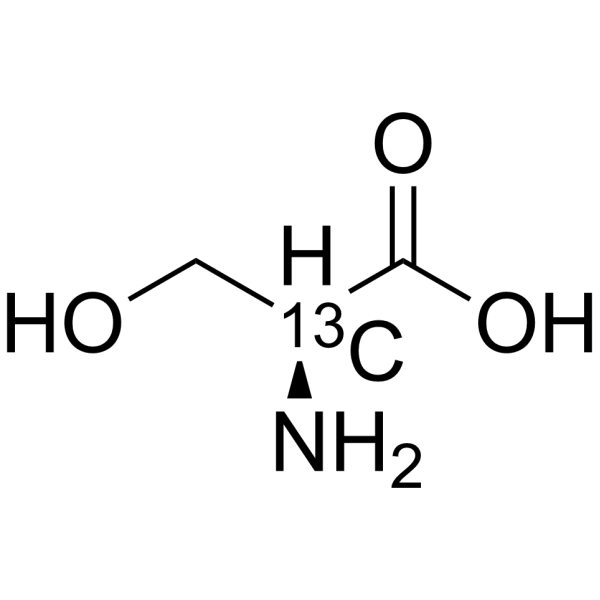
L-Serine-2- 13C is the 13C-labeled L-Serine. L-Serine ((-)-Serine; (S)-Serine), one of the so-called non-essential amino acids, plays a central role in cellular proliferation.
loading...
    loading...
Cat. No.: HY-145499
CAS No.: 413585-64-5
XTT is a cell-impermeable, negatively charged tetrazolium dye that produces a water-soluble formazan when reduced at the cell surface by cellular-derived NADH and an electron mediator. It is frequently used in colorimetric assays to measure cell proliferation, cytotoxicity, and apoptosis.
loading...
    loading...
Cat. No.: HY-N0650S9
Synonyms: (-)-Serine-15N,d3; (S)-Serine-15N,d3
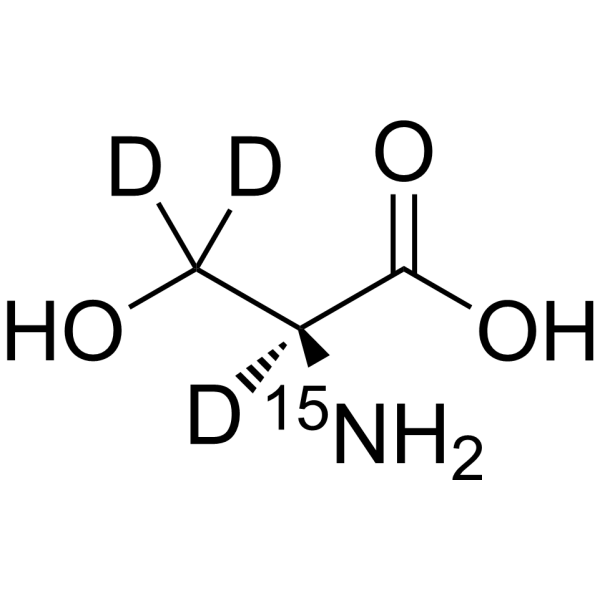
L-Serine- 15N,d3 is the deuterium and 15N-labeled L-Serine. L-Serine ((-)-Serine; (S)-Serine), one of the so-called non-essential amino acids, plays a central role in cellular proliferation.
loading...
    loading...
Cat. No.: HY-P3766
CAS No.: 159939-84-1
Target:  

PKC

Research Areas:  

Others

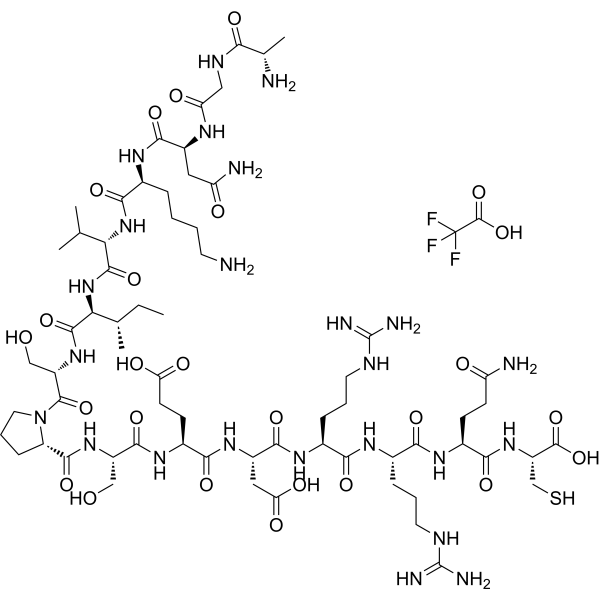
Protein kinase C α peptide (TFA) is a peptide of PKC-α. PKC-α acts as a lipid-dependent ser/thr protein kinase, can modulate various cellular processes, including cell survival, proliferation, differentiation, migration, adhesion and so on .
loading...
    loading...
Cat. No.: HY-126775
CAS No.: 7599-61-3
Xenoclauxin is a secondary metabolite isolated from certain species of the Penicillium genus, which exhibits an inhibitory effect on the proliferation of tumor cells. Xenoclauxin affects cellular energy metabolism, particularly by inhibiting ATP synthesis in the mitochondria. Xenoclauxin can be used for anti-tumor research .
loading...
    loading...
Cat. No.: HY-174627
Target:  

mRNA

Research Areas:  

Inflammation/Immunology

Human IL1B mRNA encodes the human interleukin 1 beta (IL1B) protein, a member of the interleukin 1 cytokine family. IL1B is an important mediator of the inflammatory response, and is involved in a variety of cellular activities, including cell proliferation, differentiation, and apoptosis.
loading...
    loading...
Cat. No.: HY-174542
Target:  

mRNA

Research Areas:  

Cancer

Human PRKCB mRNA encodes the human protein kinase C beta (PRKCB) protein, a member of Protein kinase C (PKC) family. PRKCB has been reported to be involved in many different cellular functions, such as B cell activation, apoptosis induction, endothelial cell proliferation, and intestinal sugar absorption.
loading...
    loading...

