
111 Results for "

hypoxic cell

" in MedChemExpress (MCE) Product Catalog:
Products (111)

111 Results for "hypoxic cell" in MCE Product Catalog:

Cat. No.: HY-105129AR
CAS No.: 70132-50-2
Research Areas:  

Cancer

Pimonidazole (Standard) is the analytical standard of Pimonidazole. This product is intended for research and analytical applications. Pimonidazole is a novel hypoxia marker for complementary study of tumor hypoxia and cell proliferation in tumor . Pimonidazole accumulates in hypoxic cells via covalent binding with macromolecules or by forming reductive metabolites after reduction of its nitro group, it can be used for qualitative and quantitative assessment of tumor hypoxia .
loading...
    loading...
Cat. No.: HY-105129R
CAS No.: 70132-51-3
Research Areas:  

Cancer

Pimonidazole (hydrochloride) (Standard) is the analytical standard of Pimonidazole (hydrochloride). This product is intended for research and analytical applications. Pimonidazole is a novel hypoxia marker for complementary study of tumor hypoxia and cell proliferation in tumor . Pimonidazole accumulates in hypoxic cells via covalent binding with macromolecules or by forming reductive metabolites after reduction of its nitro group, it can be used for qualitative and quantitative assessment of tumor hypoxia .
loading...
    loading...
Cat. No.: HY-175638
Research Areas:  

Cancer

Carbonic anhydrase-IN-35 is a selective carbonic anhydrase (CA) inhibitor. Carbonic anhydrase-IN-35 potently inhibits tumor-associated hCA IX (Ki = 0.6 nM) and hCA XII (Ki = 2.2 nM). Carbonic anhydrase-IN-35 induces apoptosis in MCF-7 cells by elevating Bax, reducing Bcl-2, and downregulating CDK4/6. Carbonic anhydrase-IN-35 exhibits potent cytotoxicity against MCF-7 (IC50 = 0.3975 μM normoxic/0.6575 μM hypoxic), MCF-7-ADR (IC50> = 0.3975 μM normoxic/4.488 μM hypoxic), MDA-MB-231, and 4T1 breast cancer cells. Carbonic anhydrase-IN-35 can be used for the study of breast cancer .
loading...
    loading...
Cat. No.: HY-149257
CAS No.: 2973282-50-5
Target:  

JAK STAT

Research Areas:  

Cancer

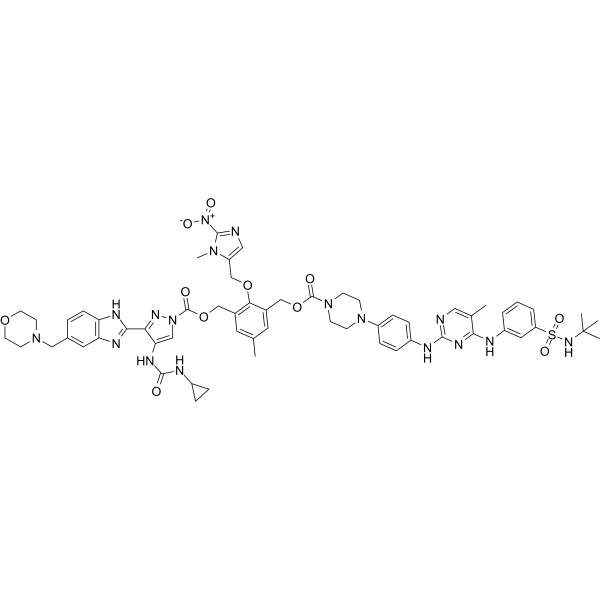
HAT-SIL-TG-1&AT is a Janus tyrosine kinase (JAK) inhibitor with antitumor effects. HAT-SIL-TG-1&AT is the hypoxia-activated prodrug, witch inhibits JAK-STAT signaling in tumor tissue. And HAT-SIL-TG-1&AT inhibits HEL cells proliferation and downregulated phosphorylated STAT3/5 under hypoxic conditions .
loading...
    loading...
Cat. No.: HY-162000
Target:  

Apoptosis

Research Areas:  

Cancer

hCAIX/XII-IN-13 is an inhibitor of human carbonic anhydrases (hCA). hCAIX/XII-IN-13 shows good inhibitory activity against the tumor-related CA subtypes IX and XII, with Ki values of 0.08 µM and 0.06 µM, respectively. Under hypoxic conditions, hCAIX/XII-IN-13 can restore the cytotoxicity of Doxorubicin (HY-15142A) on MCF-7 cells, increasing G2/M phase cell cycle arrest and apoptosis .
loading...
    loading...
Cat. No.: HY-125575
CAS No.: 1380411-57-3
Target:  

Carbonic Anhydrase

Research Areas:  

Cancer

FC11409B is an ureido-sulfamate carbonic anhydrase IX (CAIX) inhibitor. FC11409B inhibits proliferation and migration of breast cancer cell lines in both hypoxic (0.5% O2) and normoxic conditions (21% O2). FC11409B also inhibits 3D spheroid of breast cancer subtypes invasion. FC11409B is promising for research of breast and ovarian cancers .
loading...
    loading...
Cat. No.: HY-P1435A
Target:  

NADPH Oxidase

Research Areas:  

Cardiovascular Disease Cancer

NoxA1ds TFA is a potent and highly selective NADPH oxidase 1 (NOX1) inhibitor (IC50=20 nM). NoxA1ds TFA inhibits NOX1-derived O 2- production in HT-29 human colon cancer cells. NoxA1ds TFA attenuates VEGF-induced human pulmonary artery endothelial cell migration under hypoxic conditions in vitro. NoxA1ds TFA can be used in the study of hypertension, atherosclerosis and tumors .
loading...
    loading...
Cat. No.: HY-168096
CAS No.: 3067565-40-3
iNOs-IN-5 (Compound BN-4) is an inhibitor for iNOS with an IC50 of 0.1707 μM, and reduces NO levels in LPS (HT-D1056)-induced RAW264.7 cells. iNOs-IN-5 reduces the hypoxic injury stimulated ROS and lactate dehydrogenase expression, and exhibits anti-necrosis and anti-apoptosis efficacy. iNOs-IN-5 exhibits anti-cerebral ischemia and neuroprotective activities in SD rat models. iNOs-IN-5 is blood-brain barrier penetrable .
loading...
    loading...
Cat. No.: HY-W014394R
CAS No.: 82654-98-6
Protoporphyrin IX (Standard) is the analytical standard of Protoporphyrin IX. This product is intended for research and analytical applications. Protoporphyrin IX is a final intermediate in the heme biosynthetic pathway, which acts as a radiation sensitizer enhancing ROS generation even in a hypoxic state and inducing DNA damage. Protoporphyrin IX also acts as a photo sensitizer undergoing photobleaching that occurs through direct degradation by light irradiation. Protoporphyrin IX is formed and accumulated following 5-aminolevulinic acid (5-ALA) (HY-W000450) administration in the tumor cells of rats. Protoporphyrin IX causes selective improvement of basal cell carcinoma when activated red fluorescence of a peak wavelength at 405 nm. Protoporphyrin IX is promising for research of sonodynamic and photodynamic agents for a wide range of cancers, such as bladder cancer and nodular basal cell carcinoma .
loading...
    loading...
Cat. No.: HY-178475
CA IX/GPX4-IN-1 (Compound 22abcb) is a dual targeted inhibitor of CA IX and GPX4 activity. CA IX/GPX4-IN-1 can effectively kill SUM159PT cells (IC50 = 416 nM) by inducing iron death under hypoxic conditions. CA IX/GPX4-IN-1 has an IC50 of 663 nM to CA IX in SUM159PT-CAIX-FL cells. CA IX/GPX4-IN-1 can significantly inhibit tumor growth and can be reversed by ferroptosis inhibitors. CA IX/GPX4-IN-1 can be used for research on breast cancer and other cancers .
loading...
    loading...
Cat. No.: HY-40136R
CAS No.: 618-27-9
cis-4-Hydroxy-L-proline (Standard) is the analytical standard of cis-4-Hydroxy-L-proline (HY-40136). This product is intended for research and analytical applications. cis-4-Hydroxy-L-proline is an orally active proline analog and collagen production inhibitor. cis-4-Hydroxy-L-proline inhibits cell growth by preventing the deposition of triple helical collagen on the cell layer. cis-4-Hydroxy-L-proline inhibits N-nitrosomethylurea-induced breast tumor growth. cis-4-Hydroxy-L-proline improves lung compliance and reduces prostate weight. cis-4-Hydroxy-L-proline can be used in the study of hypoxic pulmonary hypertension .
loading...
    loading...
Cat. No.: HY-155178
CAS No.: 2910858-34-1
Target:  

EGFR

Research Areas:  

Cancer

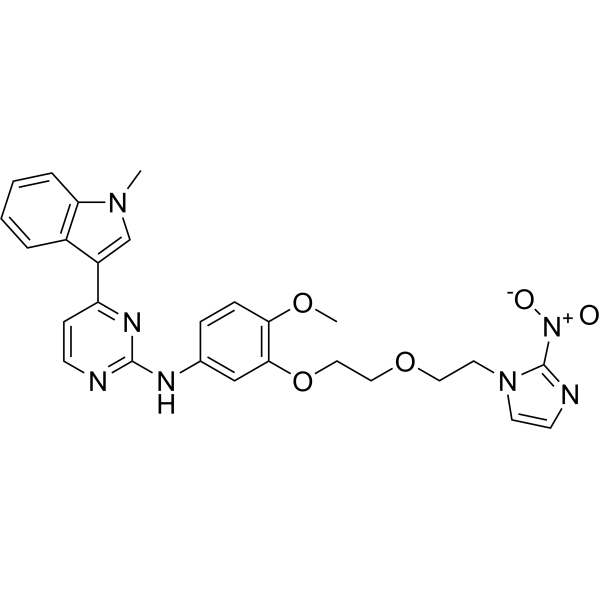
Antiproliferative agent-34 (Compound A14) is a multi-target kinase inhibitor, with an IC50 of 177 nM and 1567 nM for EGFR L858R/T790M and EGFR WT. Antiproliferative agent-34 also inhibits JAK2, ROS1, FLT3, FLT4, PDGFRα with IC50 of 30.93, 106.90, 108.00, 226.60, 42.53 nM. Antiproliferative agent-34 inhibits H1975 and HCC827 cells proliferation with IC50 values below 40 nM under normoxic condition, and the anti-proliferation potency achieves 4–6-fold improvement (IC50 values < 10 nM) under hypoxic condition .
loading...
    loading...
Cat. No.: HY-B0762R
CAS No.: 5080-50-2
Synonyms: O-Acetyl-L-carnitine hydrochloride (Standard); ALCAR hydrochloride (Standard)
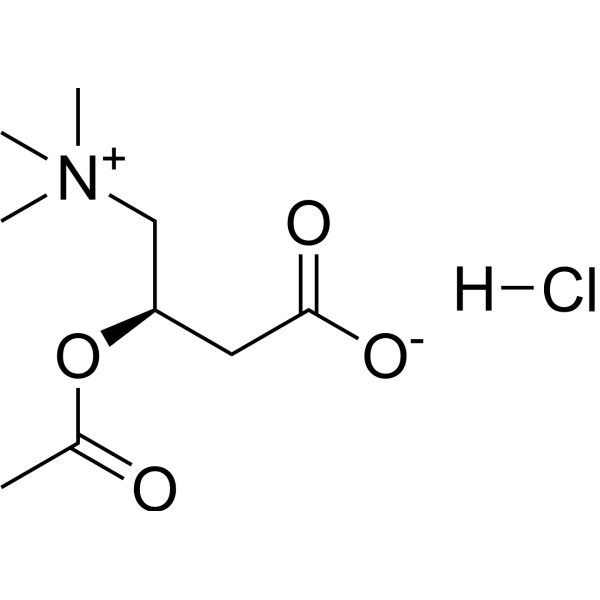
Acetyl-L-carnitine hydrochloride (Standard) is the analytical standard of Acetyl-L-carnitine hydrochloride. This product is intended for research and analytical applications. Acetyl-L-carnitine (O-Acetyl-L-carnitine; ALCAR) hydrochloride is an orally active mitochondrial energy metabolism regulator and neuroprotectant that can penetrate the blood-brain barrier. Acetyl-L-carnitine hydrochloride selectively enters cells and the brain through the organic cation transporter OCTN2. Acetyl-L-carnitine hydrochloride can participate in fatty acid β-oxidation, promote acetylcholine synthesis, regulate mitochondrial function and inhibit oxidative stress as an acetyl donor. Acetyl-L-carnitine hydrochloride exerts its activity by enhancing energy metabolism, protecting neurons and improving synaptic plasticity. Acetyl-L-carnitine hydrochloride is mainly used in the study of neurodegenerative diseases and metabolic disorder-related diseases such as neonatal hypoxic-ischemic brain damage, Alzheimer's disease, and depression .
loading...
    loading...
Cat. No.: HY-W765177
Synonyms: O-Acetyl-L-carnitine hydrochloride-13C3; ALCAR hydrochloride-13C3
Acetyl-L-carnitine hydrochloride- 13C3 (O-Acetyl-L-carnitine hydrochloride- 13C3) is the 13C-labeled Acetyl-L-carnitine hydrochloride (HY-B0762). Acetyl-L-carnitine (O-Acetyl-L-carnitine; ALCAR) hydrochloride is an orally active mitochondrial energy metabolism regulator and neuroprotectant that can penetrate the blood-brain barrier. Acetyl-L-carnitine hydrochloride selectively enters cells and the brain through the organic cation transporter OCTN2. Acetyl-L-carnitine hydrochloride can participate in fatty acid β-oxidation, promote acetylcholine synthesis, regulate mitochondrial function and inhibit oxidative stress as an acetyl donor. Acetyl-L-carnitine hydrochloride exerts its activity by enhancing energy metabolism, protecting neurons and improving synaptic plasticity. Acetyl-L-carnitine hydrochloride is mainly used in the study of neurodegenerative diseases and metabolic disorder-related diseases such as neonatal hypoxic-ischemic brain damage, Alzheimer's disease, and depression .
loading...
    loading...
Cat. No.: HY-113837
CAS No.: 1070878-63-5
Flortanidazole is a derivative of 2-Nitroimidazole (HY-N0195). Under hypoxic conditions, Flortanidazole accumulates in hypoxic tissues through the reduction of 2-nitroimidazole and the retention of reactive intermediates by viable hypoxic cells. Flortanidazole binds to intracellular macromolecules under hypoxic conditions, thereby enabling quantification of tumor hypoxia. [ 18F]Flortanidazole, formed after labeling Flortanidazole with 18F, is a hypoxic PET imaging tracer and prognostic imaging biomarker. Flortanidazole can be used in the study of non-small cell lung cancer and colorectal cancer .
loading...
    loading...
Cat. No.: HY-119270
CAS No.: 131505-02-7
Research Areas:  

Cancer

PD 130908 is an orally active hypoxic cell radiosensitizer with potent radiosensitizing activity. PD 130908 can be utilized in cancer research .
loading...
    loading...
Cat. No.: HY-175163
Target:  

Photosensitizer

Research Areas:  

Cancer

TPAPyN is a nitroreductase(NTR)-responsive type I photosensitizer. TPAPyN facilitates the imaging of hypoxic cancer cells and image-guided photodynamic therapy (PDT). TPAPyN does not emit fluorescence in the aqueous environment, but restores when NTR cleaves the nitrofuran quencher with aggregation-induced emission. TPAPyN can be used as a fluorescent probe for specific imaging of hypoxic cancer .
loading...
    loading...
Cat. No.: HY-W585945
CAS No.: 56524-77-7
Research Areas:  

Inflammation/Immunology

Mono N-Desmethyl Disperse Polyester Dark Blue is a bioreductive agent that is activated under hypoxic conditions. Once inside a cell, it is reduced to its active form, which generates reactive oxygen species that can damage cellular components, including DNA. This damage can lead to cell death, particularly in hypoxic cancer cells that are already under stress. It has also been shown to inhibit the activity of hypoxia-inducible factor 1 (HIF-1) , which is a key regulator of the cellular response to hypoxia.
loading...
    loading...
Cat. No.: HY-105095
CAS No.: 149838-23-3
Synonyms: PR 350; RP 343
Research Areas:  

Cancer

Doranidazole (PR 350) is a radiosensitizer. Doranidazole increases the radiosensitivity of hypoxic SCCVII cells. Doranidazole significantly enhances radiation-induced growth delay in SCCVII tumors when administered intravenously before tumor irradiation. Doranidazole radiosensitizes tumors to an extent that depends on the tumor's oxygenation status. Doranidazole can be used for the study of lymphoma and hypoxic pancreatic tumors .
loading...
    loading...
Cat. No.: HY-187015
CAS No.: 74141-74-5
Synonyms: NSC 314055
Target:  

Cytochrome P450

Research Areas:  

Cancer

SR-2555 (NSC 314055) is a CYP2D6 inhibitor with an IC50 of 1017 μM against human CYP2D6. SR-2555 inhibits the AMMC demethylase activity of recombinant CYP2D6; differentially enhances the sensitivity of hypoxic cells to the lethal effect of γ-rays; and exhibits cytotoxicity against hypoxic cells. SR-2555 can be used in cancer-related research .
loading...
    loading...

