92 Results for "

normal human cells

" in MedChemExpress (MCE) Product Catalog:
Products (92)

92 Results for "normal human cells" in MCE Product Catalog:

Cat. No.: HY-101349A
CAS No.: 874882-93-6
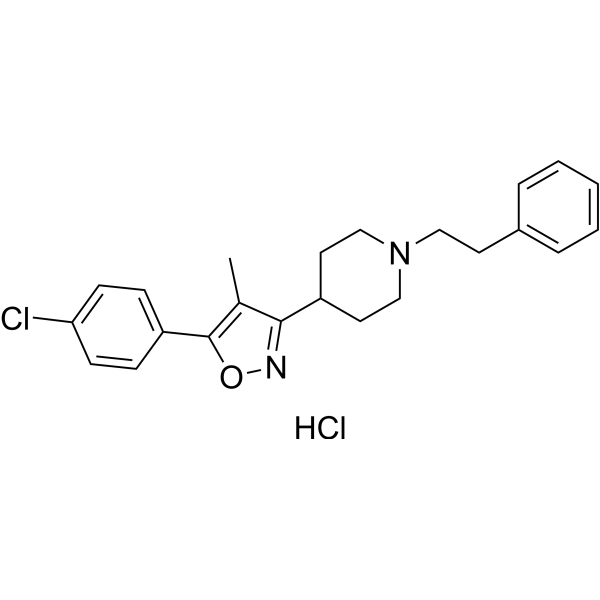
L 741742 hydrochloride is a highly selective and brain-penetrant D4 dopamine receptor antagonist, with Ki values of 3.5 nM, 770 nM and >1700 nM for human D4, D3 and D2 receptors, respectively. L 741742 hydrochloride suppresses PDGFRβ, ERK1/2, and mTOR signaling pathways, and impairs autophagic flux while disrupting lysosomal function.L 741742 hydrochloride induces G0/G1 cell-cycle arrest and apoptosis, promotes neuronal differentiation of normal human neural stem cells, selectively inhibits growth and clonogenic potential of glioblastoma neural stem cells and primary glioblastoma tumor cells, exerts synergistic effects with Temozolomide (TMZ) (HY-17364) against glioblastoma neural stem cells in vitro, and inhibits glioblastoma neural stem cell xenograft growth in immunocompromised mice. L 741742 hydrochloride can be used for the research of schizophrenia and glioblastoma .
loading...
    loading...
Cat. No.: HY-169006
CAS No.: 2820245-53-0
Target:  

Apoptosis PKC

Research Areas:  

Cancer

Evo312 is a dose-dependent inhibitor of protein kinase CβⅠ (PKCβⅠ) (IC50 is 117.34 nM). Evo312 induces PANC-GR (acquired gemcitabine-resistant PC cells) cell cycle arrest and apoptosis by inhibiting PKCβ1 protein expression. Evo312 has antiproliferative effects in pancreatic cancer cells PANC-1 and PANC-GR cells with IC50 of 0.08 μM and 0.07 μM, and in human normal pancreatic ductal epithelial cells HPDE6-c7 with IC50 of 2.95 μM. Evo312 exhibits antitumor activity in a PANC-GR cell transplantation mouse model .
loading...
    loading...
Cat. No.: HY-E70724
Target:  

FLT3

Research Areas:  

Cancer

FLT3 (FMS-like tyrosine kinase 3, CD135) is a type 3 receptor tyrosine kinase that plays important roles in cell survival, proliferation, and differentiation during normal hematopoiesis. FLT3 is one of the most frequently mutated genes in acute myeloid leukemia (AML). FLT3 ITD is a internal tandem duplication (ITD) mutation of FLT3 that may be present in AML cells. FLT3 ITD Recombinant Human Active Protein Kinase is a recombinant FLT3 ITD protein that can be used to study FLT3 ITD-related functions .
loading...
    loading...
Cat. No.: HY-118041
CAS No.: 1190196-76-9
Research Areas:  

Cancer

PMPMEase-IN-1 is an allylated methylated protein methylesterase inhibitor with the property of inhibiting PMPMEase activity. PMPMEase-IN-1 may provide a useful strategy for cancer inhibition by enhancing its affinity for polyisoprenyl derivatives. PMPMEase-IN-1 showed the potential to have an effective concentration (EC50) value in causing degeneration of human neuroblastoma SH-SY5Y cells. Specific inhibition of PMPMEase-IN-1 may help regulate the metabolism of polyisoprenyl proteins and thus maintain normal cell survival. Further development and application of PMPMEase-IN-1 may open up new avenues for inhibiting degenerative diseases and cancer .
loading...
    loading...
Cat. No.: HY-170606
CAS No.: 3068686-30-3
Target:  

Glycosidase

Research Areas:  

Metabolic Disease

α-Glucosidase-IN-79 (Compound 4d9) is a non-competitive α-Glucosidase inhibitor with an IC50 of 2.11 μM, which is more potent than existing α-Glucosidase inhibitors such as Acarbose (HY-B0089) (IC50 of 327.0 μM) and HXH8r (IC50 of 15.32 μM). α-Glucosidase-IN-79 is non-cytotoxic to human normal hepatocyte (LO2) cells and shows good metabolic stability in rat plasma. α-Glucosidase-IN-79 holds promise for research into type 2 diabetes .
loading...
    loading...
Cat. No.: HY-E70723
Target:  

FLT3

Research Areas:  

Cancer

FLT3 (FMS-like tyrosine kinase 3, CD135) is a type 3 receptor tyrosine kinase that plays important roles in cell survival, proliferation, and differentiation during normal hematopoiesis. FLT3 is one of the most frequently mutated genes in acute myeloid leukemia (AML). FLT3 D835Y is the most frequent kinase domain mutation, converting aspartic acid to tyrosine. FLT3 D835Y Recombinant Human Active Protein Kinase is a recombinant FLT3 D835Y protein that can be used to study FLT3 D835Y-related functions .
loading...
    loading...
Cat. No.: HY-17587R
CAS No.: 36861-47-9
Synonyms: 4-MBC (Standard); Enzacamene (Standard)
Research Areas:  

Metabolic Disease

4-Methylbenzylidene camphor (Standard) is the analytical standard of 4-Methylbenzylidene camphor. This product is intended for research and analytical applications. 4-Methylbenzylidene camphor (4-MBC) is an endocrine disrupter that produces estrogen-like effects. 4-Methylbenzylidene camphor decreases the proliferation of human trophoblast cells and induces apoptosis. 4-Methylbenzylidene camphor activates PI3K/AKT and ERK1/2 signaling pathways and elevates intracellular ROS production. 4-Methylbenzylidene camphor is a ultraviolet (UV) filter and may hamper normal placental formation during early pregnancy .
loading...
    loading...
Cat. No.: HY-N17854
CAS No.: 356785-71-2
3β-O-α-L-Arabinopyranosylsiaresinolic acid 28-O-β-D-glucopyranosyl ester is a triterpene glycoside found in the roots of Sanguisorba officinalis. 3β-O-α-L-Arabinopyranosylsiaresinolic acid 28-O-β-D-glucopyranosyl ester is non-cytotoxic and does not exhibit cytotoxic activity against human oral squamous cell carcinoma cells or normal human gingival fibroblasts .
loading...
    loading...
Cat. No.: HY-181392
CAS No.: 3034875-56-1
Research Areas:  

Cancer

PROTAC EZH2 Degrader-35 (compound U3i (44)) is a PROTAC protein degrader targeting EZH2 with a human EZH2 Ka of 16.19 nM. PROTAC EZH2 Degrader-35 exhibits antiproliferative activity in triple-negative breast cancer cells and minimal cytotoxicity in normal human epithelial, hepatic, renal cells.PROTAC EZH2 Degrader-35 can be used for the research of triple-negative breast cancer .
loading...
    loading...
Cat. No.: HY-L178
3,066 compounds

Radiation sickness is a general term for various types and degrees of damage (or disease) occurring in the human body after exposure to ionizing radiation. Although small amounts of ionizing radiation can also cause the body to produce free radicals and ROS, causing oxidative stress, resulting in DNA damage and chromosomal aberration. Radioprotector are compounds with radiation protection that can be used to prevent/protect non-tumor cells from the harmful effects of radiation. Radioprotective compounds can prevent the damage of radioactive substances to the human body and reduce the clinical symptoms of various radioactive diseases. In addition, radioprotectors can protect normal cells from damage during radiation therapy. The ideal anti-radiation drug should not affect the sensitivity of tumor cells to radiation therapy while protecting normal cells.

MCE designs a unique collection of 3,066 radioprotectors. Radioprotector Library is an effective tool for acute Radiation Syndrome, drug combination research with radiation drugs.

Cat. No.: HY-181116
Target:  

CDK

Research Areas:  

Cancer

Anticancer agent 298 is a bi-nuclear Cu(II)-hydrazone complexe. Anticancer agent 298 can bind to the CDK-2 active site (PDB ID: 3IG7) via hydrogen bonds with key amino acid residues. Anticancer agent 298 exerts cytotoxic effects against hepatocellular carcinoma cells, and has lower cytotoxicity against normal human embryonic kidney cells. Anticancer agent 298 can be used for the research of hepatocellular carcinoma .
loading...
    loading...
Cat. No.: HY-187813
Target:  

HDAC

Research Areas:  

Cancer

HDAC2-IN-4 is a HDAC2 inhibitor with an IC50 of 4.2 nM against human HDAC2. HDAC2-IN-4 binds to the active site of HDAC2 via hydrogen bonding and hydrophobic interactions, forming a thermodynamically stable and kinetically compatible protein-ligand complex to inhibit enzymatic activity. HDAC2-IN-4 inhibits cancer cell proliferation and exhibits low toxicity to normal cells. HDAC2-IN-4 can be used in studies related to human endocervical adenocarcinoma and Burkitt lymphoma .
loading...
    loading...
Cat. No.: HY-182005
Target:  

EGFR VEGFR

Research Areas:  

Cancer

EGFR/VEGFR2-IN-12 is a dual EGFR/VEGFR2 inhibitor, with an IC50 value of 64 nM against human EGFR and an IC50 value of 74 nM against human VEGFR2. EGFR/VEGFR2-IN-12 inhibits the phosphorylation of EGFR and VEGFR2, induces cell cycle arrest at the G1/S phase, activates apoptotic pathways, promotes PARP-1 cleavage, exhibits low micromolar antiproliferative activity, and shows much higher selectivity for cancer cells than normal cells. EGFR/VEGFR2-IN-12 is applicable for cancer-related research .
loading...
    loading...
Cat. No.: HY-N20639
CAS No.: 464-71-1
Synonyms: 3-Deoxycaryoptinol
Clerodin (3-Deoxycaryoptinol) is a natural diterpenoid compound that can be isolated from traditional Chinese medicinal plants such as Clerodendrum infortunatum. Clerodin exhibits caspase-3 regulation, apoptosis induction, cell cycle arrest, ROS induction and glutathione depletion effects, along with anti-cancer and antifeedant activities. It shows selective cytotoxicity against leukemia cells and breast cancer cells, but has no obvious toxicity to normal human blood cells and lymphocytes. Clerodin also reduces the feeding behavior of Helicoverpa armigera larvae on cabbage leaf discs, but has no significant contact toxicity to these larvae. Clerodin can be used in research related to acute monocytic leukemia and human breast cancer .
loading...
    loading...
Cat. No.: HY-N16691
CAS No.: 24177-16-0
Acrovestone (compound 4) is an Acronychia-type acetophenone dimer and a selective anticancer agent. Acrovestone has IC50 values ??of 0.38 μM and 0.93 μM against A2058 melanoma cells and DU145 prostate cancer cells, respectively. Acrovestone shows low inhibitory activity against normal human dermal fibroblasts (NHDF), with an IC50 >5 μM. Acrovestone can be used in anticancer research related to prostate cancer and melanoma. Acrovestone can be naturally extracted from the trunk bark of Acronychia pedunculata .
loading...
    loading...
Cat. No.: HY-184741
Target:  

GSK-3 VEGFR Akt MEK ERK

Research Areas:  

Cancer

GSK-3β/VEGFR2-IN-1 is an orally active dual inhibitor of GSK-3β (IC50 = 325 nM) and VEGFR2 (IC50 = 78 nM). GSK-3β/VEGFR2-IN-1 suppresses the phosphorylation of VEGFR2, AKT, MEK and ERK, inhibits human tongue squamous cell carcinoma cells migration and suppresses formation of HUVECs, exhibits low toxicity towards other cancer cells and normal cells, demonstrates significant antitumor efficacy in a CAL27 xenograft mouse model. GSK-3β/VEGFR2-IN-1 can be used for the study of tongue squamous cell carcinoma .
loading...
    loading...
Cat. No.: HY-187170
CAS No.: 3038211-56-9
BM-51 is a selective inhibitor of CYP4Z1, with a human IC50 value of 91.7 nM. BM-51 binds to amino acid residues of CYP4Z1, thereby inhibiting its enzymatic activity. BM-51 downregulates the protein expression of stem cell markers (ALDH1A1, SOX2, OCT3/4 and KLF4) in cancer cells, inhibits cancer cell migration and invasion, and exhibits low toxicity to normal cells/tissues. BM-51 suppresses tumor initiation capacity and enhances the chemotherapeutic efficacy of Doxorubicin (HY-15142A). BM-51 can be used in breast cancer-related research .
loading...
    loading...
Cat. No.: HY-L025
11,237 compounds

Cancer is the second leading cause of death globally and seriously threatens human health. A neoplasm and malignant tumor are other common names for cancer. Disruption of the normal regulation of cell-cycle progression and division lies at the heart of the events leading to cancer. Target therapy, which targets proteins that control how cancer cells grow, divide and spread, plays an important role in cancer treatment. Recent studies mainly focus on targeting the key proteins for cancer surviving, cancer stem cells, the tumor microenvironment, tumor immunology, etc.

MCE designs a unique collection of 11,237 anti-cancer compounds that target kinases, cell cycle key components, tumorigenesis related signaling pathways, etc. MCE Anti-cancer compound library is a useful tool for anti-cancer drug screening.

Cat. No.: HY-181561
Target:  

RAD51

Research Areas:  

Cancer

BRCA2-RAD51-IN-3 is a RAD51-BRCA2 protein-protein interaction inhibitor with an EC50 of 29.35 μM and a Kd of 75.14 μM. BRCA2-RAD51-IN-3 blocks RAD51-BRCA2 binding, impairs homologous recombination in cancer cells, and induces synthetic lethality. BRCA2-RAD51-IN-3 acts in human pancreatic cancer cells and shows no activity in normal pancreatic cells. BRCA2-RAD51-IN-3 can be used for the research of pancreatic cancer .
loading...
    loading...
Cat. No.: HY-182784
Target:  

Bacterial

Research Areas:  

Infection

Antibacterial agent 336 is an antibacterical agent with broad-spectrum inhibitory activity against Gram-negative and Gram-positive bacteria. Antibacterial agent 336 binds tightly via its pyridine group to the carboxyl group, Lys-465 residue, and Leu-480 residue of the MsbA protein, interfering with bacterial outer membrane synthesis, and exerts concentration-dependent bactericidal activity against bacterial. Antibacterial agent 336 has low cytotoxicity to normal human liver cells. Antibacterial agent 336 can be used for the research of bacterial infections .
loading...
    loading...

