1018 Results for "

detection

" in MedChemExpress (MCE) Product Catalog:
Products (1018)

1018 Results for "detection" in MCE Product Catalog:

Cat. No.: HY-159500
CAS No.: 2206660-94-6
Synonyms: OTL-0078; OTL78
Target:  

PSMA

Research Areas:  

Cancer

Zopocianine (OTL-0078; OTL78) is a near-infrared optical probe targeting PSMA. Zopocianine binds to PSMA on the surface of PSMA-expressing cells, enters cells via receptor-mediated endocytosis, and accumulates in acidic endosomes. Zopocianine selectively accumulates in PSMA-positive cancer tissues and enables the detection of small tumors, primary prostate tumors, and locoregional metastases. Zopocianine helps achieve negative tumor surgical margins during fluorescence-guided surgery. Zopocianine is applicable to research related to prostate cancer .
loading...
    loading...
Cat. No.: HY-159500A
CAS No.: 2206660-95-7
Synonyms: OTL-0078 sodium; OTL78 sodium
Target:  

PSMA

Research Areas:  

Cancer

Zopocianine sodium (OTL-0078 sodium; OTL78 sodium) is a near-infrared optical probe targeting PSMA. Zopocianine sodium binds to PSMA on the surface of PSMA-expressing cells, enters cells via receptor-mediated endocytosis, and accumulates in acidic endosomes. Zopocianine sodium selectively accumulates in PSMA-positive cancer tissues and enables the detection of small tumors, primary prostate tumors, and locoregional metastases. Zopocianine sodium helps achieve negative tumor surgical margins during fluorescence-guided surgery. Zopocianine sodium is applicable to research related to prostate cancer .
loading...
    loading...
Cat. No.: HY-171995
CAS No.: 2369899-34-1
Synonyms: Rotor NO.4 TFA
Research Areas:  

Infection

Rf470 (Rotor NO.4) TFA is a FMR-probe-D-lysine conjugate (Max Ex: 470 nM; Max Em: 640 nM) that can be covalently incorporated into peptidoglycan by bacteria. Rf470 TFA has extremely weak fluorescence in the free state, but its fluorescence is significantly enhanced when it is catalytically incorporated into peptidoglycan by transpeptidases. Through fluorescence changes, Rf470 TFA can be used for real-time monitoring of peptidoglycan biosynthesis, detection of transpeptidase activity, and screening of antibiotics, etc .
loading...
    loading...
Cat. No.: HY-175080
Research Areas:  

Others

8-DY547-cGMP is a fluorescent cGMP analogue composed of a dye DY547 to position 8 of cGMP. 8-DY547-cGMP is a Cyclic nucleotide-gated A2 (CNGA2) ligand. 8-DY547-cGMP can activated CNGA2 channel. 8-DY547-cGMP can be used for simultaneously detection CNG channel activation and ligand binding .
loading...
    loading...
Cat. No.: HY-188102
Target:  

mRNA

Research Areas:  

Others

mCherry mRNA (N1-Me-Pseudo UTP)-LNP is a lipid nanoparticle (LNP) encapsulating mCherry mRNA (N1-Me-Pseudo UTP). mCherry mRNA (N1-Me-Pseudo UTP) is a reporter mRNA encoding a red fluorescent protein, suitable for gene expression, cell viability, in vivo imaging, and other detection methods. mCherry is a red fluorescent protein derived from mushroom coral and is widely used in biotechnology as a red fluorescent dye tracer.
loading...
    loading...
Cat. No.: HY-B2106DR
CAS No.: 9002-92-0
Synonyms: Decaethylene glycol monododecyl ether (C12E10) (Standard); Polidocanol (10) (Standard)
Polyoxyethylene (10) lauryl ether (Standard) is the analytical standard of Polyoxyethylene (10) lauryl ether. This product is intended for research and analytical applications. Polyoxyethylene (10) lauryl ether is a non-ionic surfactant. Polyoxyethylene (10) lauryl ether exhibits unique properties in dissolving liposomes and exerts the minimal interference with endotoxin detection. Polyoxyethylene (10) lauryl ether forms hybrid liposomes with Dimyristoylphosphatidylcholine (DMPC) (HY-109541), which can inhibit the proliferation of human promyelocytic leukemia cells without the administration of any drugs.
loading...
    loading...
Cat. No.: HY-D0961
CAS No.: 1562-85-2
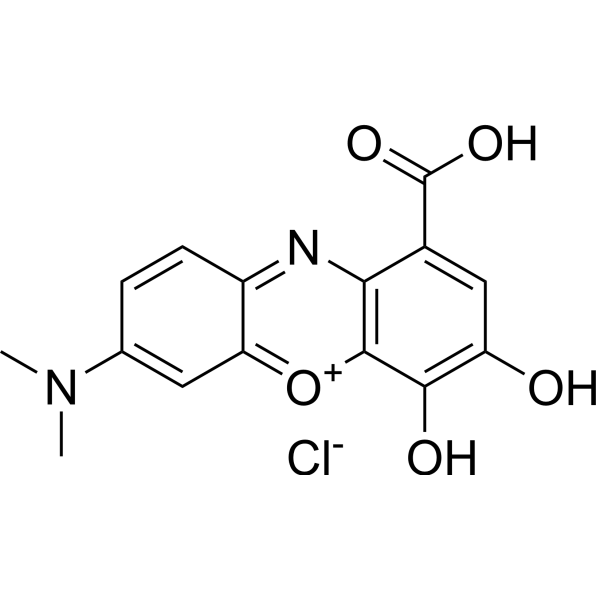
Gallocyanine chloride is a synthetic blue dyestuff that can be used as a potential agent for the research of Alzheimer's disease and related neurodegenerative tauopathies. Gallocyanine chloride inhibits DKK1/LRP6 interaction (IC50=6.38 μM), activates Wnt signaling pathway, and causes β-catenin accumulation. Gallocyanine chloride exhibits anti-metastasis, anti-inflammatory and anti-fibrosis activities. Gallocyanine chloride can be used as a fluorescent probe for detection of superoxide anion radicals .
loading...
    loading...
Cat. No.: HY-D1189
CAS No.: 1471982-33-8
Synonyms: Lucifer Yellow 3-amino-D-alanine
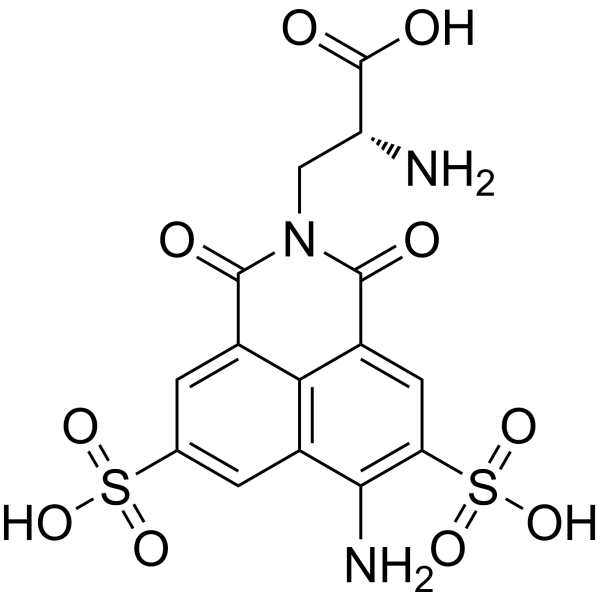
YADA (Lucifer Yellow 3-amino-D-alanine) is a conjugate of the fluorescent dyes Lucifer yellow and D-alanine, which is a green-yellow fluorescent dye. YADA is suitable for labeling peptidoglycans in living bacteria that can be incorporated into the cell wall where they are being synthesized. YADA has a large Stokes shift and a wide emission spectrum, allowing excitation through a purple light source and detection using a green filter. YADA showed good water solubility, light stability and thermal stability.
loading...
    loading...
Cat. No.: HY-D2315
Probe-Cys is a water-soluble and selective near-infrared fluorescent probe for Cysteine (Cys) (λex= 680 nm, λem=710 nm) that is not interfered by Hcy, GSH, and HS-. Probe-Cys can react with the stimulant DTT (HY-15917) and the NEM (HY-D0843) in HepG2 cells and zebrafish for the detection of endogenous Cys. Probe-Cys can also be used for imaging Cys in Arabidopsis thaliana. Probe-Cys provides a method for cancer diagnosis and exploration of plant sulfur metabolism .
loading...
    loading...
Cat. No.: HY-D2413
CAS No.: 2770675-66-4
Synonyms: BODIPY FL PEG4-VH032
BODIPY FL VH032 is a high-affinity VHL fluorescent probe with a Kd value of 3.01 nM. BODIPY FL VH032 consists of von Hippel-Lindau (VHL) ligand VH032 (HY-120217) and BODIPY FL (HY-43520). BODIPY FL VH032 can be used for time-resolved fluorescence resonance energy transfer (TR-FRET) detection for high-throughput identification and characterization of VHL ligands with maximum excitation emission wavelength: 504/520 nm .
loading...
    loading...
Cat. No.: HY-D3095
CAS No.: 2244914-41-6
Target:  

Fluorescent Dye

Research Areas:  

Others

TPEP-6-NH-MA is a Fluorescent probe that selectively detects cysteine (Cys) and homocysteine (Hcy) without interference from glutathione (GSH) and other amino acids, and can also be used for bioimaging of biothiols in living cells. Its detection mechanism relies on terminating the photoinduced electron transfer (PET) effect via a Michael addition reaction between the maleimide recognition moiety and the thiol group of Cys or Hcy. The excitation wavelength of TPEP-6-NH-MA is Ex = 361 nm .
loading...
    loading...
Cat. No.: HY-D3209
CAS No.: 2646628-35-3
NIR-ASM is a near-infrared fluorescent probe that can cross cell membranes and be activated by NQO1. NIR-ASM can distinguish NQO1-expressing cancer cells from normal cells via fluorescence microscopy and flow cytometry. NIR-ASM generates near-infrared fluorescence with a high signal-to-noise ratio in tumor models with NQO1 activity, enabling the detection of endogenous NQO1 activity in vivo. NIR-ASM is applicable to the research of lung cancer and breast cancer .
loading...
    loading...
Cat. No.: HY-D3222
CAS No.: 2413264-79-4
NIR-PN1 is a blood-brain barrier-permeable near-infrared fluorescent indicator targeting peroxynitrite anion (ONOO −) (Ex/Em = 510 nm/670 nm). NIR-PN1 reacts with ONOO − to trigger a strong near-infrared fluorescence enhancement, enabling the detection of ONOO − flux. NIR-PN1 allows the imaging of ONOO − flux in various Parkinson's disease models. NIR-PN1 is applicable to Parkinson's disease-related research .
loading...
    loading...
Cat. No.: HY-D3224
CAS No.: 2413777-91-8
HCP is a two-photon fluorescent probe capable of crossing the blood-brain barrier, which is specifically designed for real-time detection of hypochlorous acid (HClO/ClO -) produced by myeloperoxidase (MPO). Chlorination of the quinoline skeleton of HCP generates HCP-Cl, which eliminates intramolecular charge transfer (ICT) quenching and thereby produces fluorescence. HCP is suitable for in vivo dynamic imaging of HClO in the brains of epileptic mice and high-throughput screening of antiepileptic drugs (HCP-Cl: Ex/Em = 800 nm/495 nm) .
loading...
    loading...
Cat. No.: HY-E0225
Target:  

Others

Research Areas:  

Others

The 0.5 mL SBS Rack is a 96-well biobank storage rack suitable for -80°C environments. It can hold 0.5 mL externally threaded cryogenic vials with 2D codes on the bottom, and supports automated sample tracking, detection, and laboratory information system integration. The 0.5 mL SBS Rack can be used with camera-based reading devices to scan and log biobank vials with 2D codes into databases, enabling rapid identification of aliquoted samples .
loading...
    loading...
Cat. No.: HY-P10913
CAS No.: 1186217-15-1
Target:  

Bacterial

Research Areas:  

Infection

HYNIC-UBI29-41 is composed of a bifunctional chelator HYNIC and an antimicrobial peptide UBI 29-41 (HY-P10364) (HY-P10364). HYNIC-UBI29-41 retains the antibacterial properties of UBI 29-41, and exhibits good affinity to Gram-positive and Gram-negative bacteria. HYNIC-UBI29-41 can be used as an imaging agent for bacterial infection detection in mouse models, when labeled with the radioactive element technetium (99mTc) .
loading...
    loading...
Cat. No.: HY-P10913A
Target:  

Bacterial

Research Areas:  

Infection

HYNIC-UBI29-41 TFA is composed of a bifunctional chelator HYNIC and an antimicrobial peptide UBI 29-41 (HY-P10364). HYNIC-UBI29-41 TFA retains the antibacterial properties of UBI 29-41, and exhibits good affinity to Gram-positive and Gram-negative bacteria. HYNIC-UBI29-41 TFA can be used as an imaging agent for bacterial infection detection in mouse models, when labeled with the radioactive element technetium (99mTc) .
loading...
    loading...
Cat. No.: HY-P11850
CAS No.: 1192023-11-2
Research Areas:  

Cancer

PTP peptide is a specific Plectin-1 binder. PTP peptide can serve as a component of imaging agents; when conjugated with magnetofluorescent nanoparticles, it enables the detection of small pancreatic ductal adenocarcinomas and precancerous lesions via in vivo confocal microscopy and MRI. When conjugated with imaging agents, PTP peptide specifically targets pancreatic ductal adenocarcinoma cells, and can be used for tumor visualization and compound delivery. PTP peptide is applicable to research related to pancreatic ductal adenocarcinoma .
loading...
    loading...
Cat. No.: HY-P990329

Research Areas:  

Inflammation/Immunology

Anti-Albumin Antibody is a monoclonal IgG1 antibody targeting human serum albumin (HSA). Anti-Albumin Antibody binds to immobilized Human HSA-hFc, with an EC50 of 0.04661 μg/mL in ELISA assays using 2 μg/mL HSA-hFc. Anti-Albumin Antibody is applicable for human serum albumin detection and research related to antigen-antibody interactions. The corresponding isotype control is: Human IgG1 lambda2, Isotype Control (HY-P990096) .
loading...
    loading...
Cat. No.: HY-P990810

Target:  

Arenavirus

Research Areas:  

Infection

Anti-LCMV Nucleoprotein Antibody (VL-4) is rat-derived IgG2a κ type antibody inhibitor, targeting to LCMV nucleoprotein. Anti-LCMV Nucleoprotein Antibody (VL-4) reacts with lymphocytic choriomeningitis virus (LCMV) nucleoprotein. Anti-LCMV Nucleoprotein Antibody (VL-4) stain LCMV-infected cell internally with no surface staining. Anti-LCMV Nucleoprotein Antibody (VL-4) can be used for the detections of immunohistochemistry and flow cytometry in LCMV infection .
loading...
    loading...

