921 Results for "

Irreversible

" in MedChemExpress (MCE) Product Catalog:
Products (921)

921 Results for "Irreversible" in MCE Product Catalog:

Cat. No.: HY-146677
CAS No.: 2986222-45-9
Research Areas:  

Neurological Disease

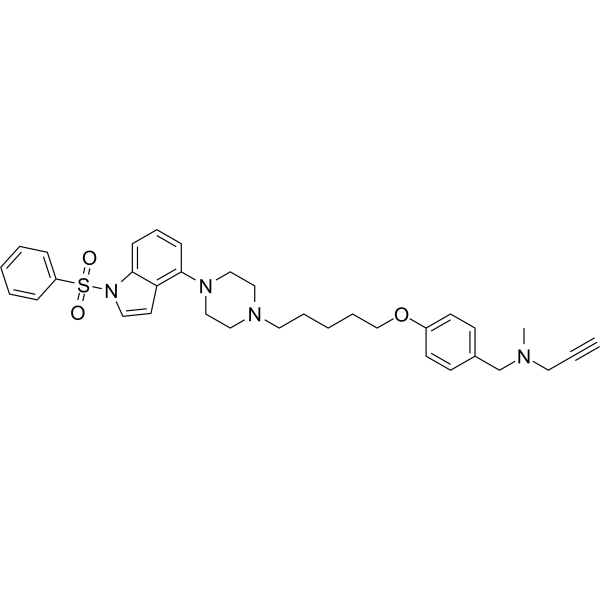
5-HT6R/MAO-B modulator 1 (compound 48) is an antagonist of 5-HT6R at Gs signaling and an irreversible MAO-B inhibitor. 5-HT6R/MAO-B modulator 1 exhibits glioprotective properties. 5-HT6R/MAO-B modulator 1 can reverse Scopolamine-induced memory deficits . 5-HT6R/MAO-B modulator 1 is a click chemistry reagent, it contains an Alkyne group and can undergo copper-catalyzed azide-alkyne cycloaddition (CuAAc) with molecules containing Azide groups.
loading...
    loading...
Cat. No.: HY-14811
CAS No.: 251111-30-5
Synonyms: ZGN-440; CKD-732 free base
Target:  

MetAP NF-κB

Research Areas:  

Metabolic Disease

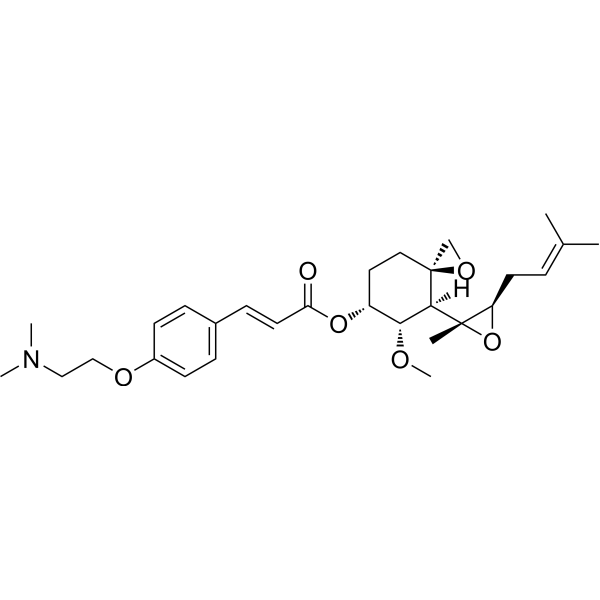
Beloranib (ZGN-440; CKD-732 free base) is a selective, irreversible inhibitor of methionine aminopeptidase MetAP2 that suppresses appetite and increases energy expenditure. Beloranib blocks the enzymatic cleavage of N-terminal methionine from nascent proteins by forming a covalent bond with MetAP2, thereby regulating fatty acid metabolism, adrenergic signaling, and hypothalamic NF-κB expression. Beloranib significantly reduces food intake, body weight, and fat accumulation, while improving glucose tolerance, insulin sensitivity, and lipid metabolism. Beloranib also elevates energy expenditure and fat oxidation levels, without affecting body temperature, spontaneous activity, or the inflammatory cytokine IL-1β. Beloranib can be used in research on obesity and hypothalamic obesity .
loading...
    loading...
Cat. No.: HY-149933
CAS No.: 871978-21-1
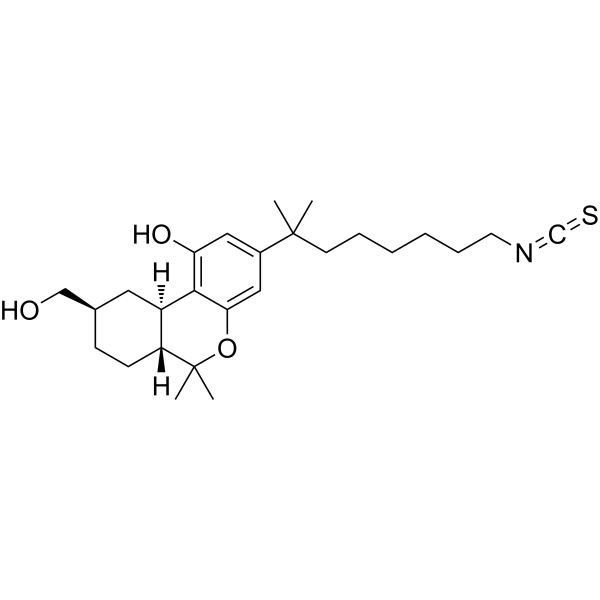
AM841 is a cannabinoid superagonist and a covalent, irreversible full agonist of CB1. AM841 can activate peripheral CB1 receptors to reduce excitatory neurotransmission and GI smooth muscle contractility, and inhibit synaptic transmission. AM841 is peripherally restricted at low doses in mice, with extremely low brain penetration, potently inhibits gastrointestinal motility, and can reverse acute stress-induced hyperaccelerated gastrointestinal transit; at high doses, it can produce the classic tetrad of central cannabinoid phenotypes (analgesia, catalepsy, hypothermia, decreased spontaneous activity). AM841 can improve intestinal inflammation in mouse colitis models. AM841 induces transient stress-induced hyperthermia. AM841 can be used for research on gastrointestinal motility disorders and colitis .
loading...
    loading...
Cat. No.: HY-156240
CAS No.: 2247060-97-3
Research Areas:  

Metabolic Disease

DI-1548 is a potent, selective, and irreversible covalent inhibitor of DCN1 (IC50 = 4.6 nM). DI-1548 potently and selectively inhibits cullin 3 neddylation at nanomolar concentrations, and exhibits no obvious effect on the neddylation of other cullin members (including cullin 1, 2, 4A, 4B, and 5). DI-1548 exhibits no cytotoxicity. DI-1548 covalently binds to DCN1, disrupting the DCN1-UBC12 interaction, causing the collapse of the neddylation complex, inactivating CRL3, leading to NRF2 accumulation and upregulation of its target genes, and ultimately protecting mice from liver damage. DI-1548 can be used in liver injury research .
loading...
    loading...
Cat. No.: HY-164388R
CAS No.: 162852-62-2
Z-VAD (Standard) is the analytical standard of Z-VAD (HY-164388). This product is intended for research and analytical applications. Z-VAD is an irreversible, broad-spectrum pan-caspase inhibitor that can inhibit a variety of caspases including caspase-3, -6, -7, -8, -9, etc. (with a weaker inhibitory effect on caspase-2). Z-VAD can block apoptosis signaling pathways, induce autophagy and necrosis in tumor cells, and has anti-angiogenic activity. Z-VAD can enhance the sensitivity of breast cancer and lung cancer cells to radiotherapy in vitro and in vivo, and prolong the growth delay of tumor xenograft models. Z-VAD is well tolerated and is mainly used in research related to cancer radiosensitization and cell death pathway regulation .
loading...
    loading...
Cat. No.: HY-171955
CAS No.: 315705-04-5
LXG6403 is an orally active and irreversible LOX inhibitor (IC50 = 1.3 μM). LXG6403 is ~3.5-fold more specific for LOX than LOXL2 and does not inhibit LOXL1. LXG6403 inhibits FAK signaling and induces ROS generation and DNA damage, leading to G1 arrest and apoptosis in chemoresistant triple-negative breast cancer (TNBC) cell lines. LXG6403 alters the extracellular matrix (ECM) and collagen structure, reducing collagen cross-linking and deposition, thereby increasing drug penetration and reducing tumor stiffness. LXG6403 overcomes Doxorubicin (HY-15142) resistance in chemoresistant TNBC PDX in vivo and can be used to study high-stiffness resistant tumors .
loading...
    loading...
Cat. No.: HY-175292
Research Areas:  

Cancer

EGFR WT/T790M-IN-3 is an irreversible covalent EGFR WT and EGFR T790M inhibitor with IC50s value of 28.1 and 24.6 nM. EGFR WT/T790M-IN-3 hampers tubulin polymerization through IC50 value of 5.1 μM. EGFR WT/T790M-IN-3 shows significant anti-proliferative effects on HCT116 and T47D cells, with IC50 values of 3.12 and 4.12 μM, respectively. EGFR WT/T790M-IN-3 can be used for the study of cancers such as non-small cell lung cancer, colon cancer and breast cancer .
loading...
    loading...
Cat. No.: HY-181482
Target:  

DAGL

Research Areas:  

Neurological Disease

A1480LS is a peripherally restricted, orally active covalent and irreversible inhibitor of DAGLα and DAGLβ, with IC50 values of 6 nM and 4 nM against human targets, respectively, and IC50 values ≤15 nM across mouse, rat, dog, monkey and human systems. A1480LS reduces the levels of 2-arachidonoylglycerol, arachidonic acid, and cyclooxygenase- and lipoxygenase-derived eicosanoids. A1480LS inhibits injury-induced production of 2-arachidonoylglycerol and arachidonic acid in the peripheral sciatic nerve, and suppresses the responses of high-threshold and wide-dynamic-range-like dorsal horn neurons to mechanical stimulation. A1480LS alleviates pain behaviors in rat models of inflammatory pain, neuropathic pain and chemotherapy-induced peripheral neuropathy .
loading...
    loading...
Cat. No.: HY-183253
DL149 is a component of an antibody-drug conjugate (ADC) formed by conjugating the eIF4A inhibitor FD236 (HY-186186) with an ADC linker, and exhibits potential antitumor activity. DL149 can bind to an anti-HER2 antibody to form a complete ADC molecule, which precisely binds to the HER2 receptor on the surface of tumor cells. After internalization into cells, it releases the eIF4A inhibitor payload. DL149 irreversibly blocks the mRNA translation process in tumor cells, thereby inhibiting tumor cell proliferation and inducing their death. DL149 exhibits in vivo antitumor activity in the SK-OV-3 xenograft tumor model, and can be used for the research of HER2-positive solid tumors .
loading...
    loading...
Cat. No.: HY-183723
Research Areas:  

Metabolic Disease

GAA-4OH is a potent and irreversible dihydroceramide desaturase-1 (DES1) inhibitor with an IC50 of 0.6 μM and a Ki of 139.5 nM. GAA-4OH undergoes oxidation to form a reactive iminoquinone that covalently blocks DES1’s catalytic cavity, causing permanent enzyme inactivation. GAA-4OH modulates sphingolipid balance by reducing ceramide-to-dihydroceramide ratios in liver tissue. GAA-4OH improves liver steatosis, inflammation, fibrosis, and reduces pro-inflammatory and pro-fibrogenic gene expression. GAA-4OH can be used for the research of metabolic dysfunction-associated steatotic liver disease (MASLD) .
loading...
    loading...
Cat. No.: HY-186086
CAS No.: 2953276-07-6
Target:  

Ras

Research Areas:  

Cancer

RM-041 is a selective, orally active KRAS G13C (ON) inhibitor that forms a covalent complex with KRAS G13C (ON) and Cyclophilin A. RM-041 blocks the binding of RAS effector proteins via steric hindrance, and then covalently binds to Cys-13 to form an irreversible inhibitory complex, thereby inhibiting the proliferation of KRAS G13C mutant cancer cells. RM-041 induces regression of KRAS G13C tumors in cellular and xenograft tumor models. RM-041 exerts a synergistic effect when combined with upstream node inhibitors (such as SHP2 inhibitors). RM-041 can be used for the research of non-small cell lung cancer .
loading...
    loading...
Cat. No.: HY-187585
CAS No.: 104639-01-2
Fourphit is a dopamine transporter (DAT) inhibitor and phencyclidine (PCP) receptor binding agent. Fourphit irreversibly acylates the DAT [ 3H]methylphenidate binding site, reversibly binds to the PCP receptor, and sensitizes neuronal L-type DHP calcium channels. Fourphit attenuates K +-stimulated 45Ca 2+ uptake at high concentrations, and after its pretreatment, Nifedipine (HY-B0284) effectively inhibits this uptake without affecting resting calcium uptake. Fourphit reduces cocaine-induced hyperactivity, decreases cocaine-induced rearing frequency, enhances cocaine-induced thigmotaxis, elicits an acute increase in locomotor activity, and suppresses dark-cycle activity. Fourphit is used in research related to cocaine abuse and addiction .
loading...
    loading...
Cat. No.: HY-188168
CAS No.: 99630-95-2
Synonyms: FMMT
MDL 72394 (FMMT) is an orally active, blood-brain barrier-penetrant amino acid-based prodrug compound. MDL 72394 is decarboxylated by aromatic L-amino acid decarboxylase to generate the active metabolite MDL 72392 (HY-182727), which is a covalent irreversible MAO inhibitor. MDL 72394 is transported into the brain and synaptosomes via the L-neutral amino acid transport system and the norepinephrine transporter. MDL 72394 selectively inhibits MAO in noradrenergic and dopaminergic neurons without inhibiting serotonergic neurons. MDL 72394 increases hypothalamic extracellular 5-HT, tissue 5-HT, and pineal melatonin biosynthesis, and decreases 5-HIAA. MDL 72394 can be used in research related to MAO-mediated diseases, such as depression .
loading...
    loading...
Cat. No.: HY-B1018AS
CAS No.: 1219798-40-9
Phenelzine-d5 sulfate is the deuterium labeled Phenelzine sulfate (HY-B1018A). Phenelzine sulfate, an antidepressant agent, is an irreversible and orally active monoamine oxidase (MAO-A and MAO-B) inhibitor. Phenelzine sulfate inhibits GABA transaminase and primary amine oxidase (PrAO), and sequester reactive aldehydes. Phenelzine sulfate also inhibits LSD1 (Ki: 5.6 μM) and suppresses oxidative stress and lipogenesis. Phenelzine sulfate elevates neurotransmitters (serotonin, norepinephrine, dopamine). Phenelzine sulfate is studied in neurological, metabolic and cancer diseases for depression and anxiety disorders, stroke, spinal cord injury, traumatic brain injury, multiple sclerosis, Parkinson’s disease, Alzheimer’s disease, inflammatory pain, obesity and prostate cancer .
loading...
    loading...
Cat. No.: HY-B1692R
CAS No.: 15985-39-4
Synonyms: MSX (Standard); MSO (Standard)
L-Methionine-DL-sulfoximine (Standard) is the analytical standard of L-Methionine-DL-sulfoximine (HY-B1692). This product is intended for research and analytical applications. L-Methionine-DL-sulfoximine (MSX; MSO), a highly specific and irreversible inhibitor of Glutamine synthetase (GS), is also a potent convulsant which metabolically and morphologically primarily affects astroglia. L-Methionine-DL-sulfoximine has been employed to inhibit the Gln-dependent ammonia-stimulated neuronal toxicity in vitro, potentiating Gln deficit-dependent depression. L-Methionine-DL-sulfoximine tremendously increases the rate of release of fixed nitrogen in cyanobacteria. L-Methionine-DL-sulfoximine is a promising candidate for research in biofertilizers and convulsive seizures (CS) .
loading...
    loading...
Cat. No.: HY-D3573
Research Areas:  

Others

AF488 C5 Maleimide is a thiol-reactive Fluorescent dye used to label target proteins and bacterial structures. AF488 C5 Maleimide irreversibly forms covalent thioether conjugates with cysteine ​​thiol groups. AF488 C5 Maleimide stabilizes pre-formed globular low-molecular-weight Tau protein oligomers by blocking cysteine-dependent tau protein aggregation, allowing observation of the internalization process of tau protein oligomers into neuronal cells via confocal microscopy. AF488 C5 Maleimide can label cysteine-modified pili; the outer membrane permeability varies among different bacterial species, allowing imaging via epifluorescence microscopy using a FITC filter set .
loading...
    loading...
Cat. No.: HY-N11852
CAS No.: 51415-08-8
Momilactone B is an inhibitor of α-amylase and α-glucosidase, with an IC50 of 146.85 μg/mL against Aspergillus oryzae α-amylase and an IC50 of 612.03 μg/mL against Saccharomyces cerevisiae α-glucosidase. Momilactone B upregulates the expression of p21 Waf1/Cip1, reduces the kinase activity of Cdk4 and Cdk6, induces cell cycle arrest and apoptosis in cancer cells, and triggers irreversible cell death via cell membrane damage. Momilactone B inhibits the growth of neighboring plant species and serves as a major contributing factor to the allelopathy of rice. Momilactone B can be used in studies related to rice allelopathy, type 2 diabetes, colon cancer and leukemia .
loading...
    loading...
Cat. No.: HY-U00265
CAS No.: 20073-24-9
Synonyms: 3-Carbethoxypsoralen; 3-Ethoxycarbonylpsoralen
Target:  

Bacterial

Research Areas:  

Infection

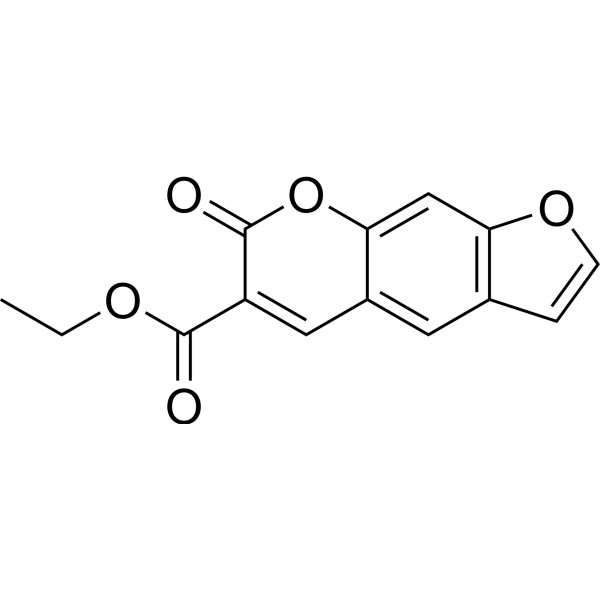
3-CPs is a monofunctional furanocoumarin and a photoprotective agent targeting Staphylococcus aureus DNA, possessesing anti-UVB lethal activity. 3-CPs competitively intercalates into DNA, forming exclusively 4',5'-furan-side mono-adducts upon UVB irradiation, and irreversibly inhibits the formation of cyclobutane pyrimidine dimers. 3-CPs prevents UVB-induced DNA damage by preferentially binding to strong (AT)n sites within the DNA, without inducing lethal interstrand DNA cross-links; the limited number of mono-adducts it induces can be efficiently repaired by bacteria. 3-CPs holds potential for use in the development of photoprotective formulations for skin diseases, as well as in studies investigating bacterial DNA photodamage repair mechanisms and the optimization of photochemotherapy safety .
loading...
    loading...
Cat. No.: HY-W583212
CAS No.: 14354-67-7
Synonyms: ZnMP
Zn (II) Mesoporphyrin IX (ZnMP) is a heme oxygenase inhibitor with photochemical substrate activity. Zn (II) Mesoporphyrin IX specifically inhibits the activity of bone marrow heme oxygenase. In vitro, Zn (II) Mesoporphyrin IX inhibits the growth of erythroid and myeloid progenitor cells in rabbit bone marrow, and blocks the rhG-CSF-induced mobilization of these progenitor cells into the peripheral blood, exhibiting toxicity to hematopoietic growth and progenitor cell production in rabbits. Zn (II) Mesoporphyrin IX undergoes irreversible photochemical decomposition conforming to first-order kinetic characteristics when irradiated with UV-B in 95% ethanol solution. Zn (II) Mesoporphyrin IX can be used in hematopoietic regulation research, but its photolability and toxic effects on the hematopoietic system require attention .
loading...
    loading...
Cat. No.: HY-W751362
CAS No.: 14176-10-4
Cetiedil is a vasodilator and potassium channel blocker with anti-sickle cell and analgesic activities. Cetiedil increases cyclic adenosine monophosphate levels, relaxes vascular smooth muscle, and blocks the action of Bradykinin (HY-P0206). Cetiedil inhibits platelet aggregation, reduces plasma fibrinogen concentration and blood viscosity, suppresses sickling of sickle red blood cells and improves their filterability, and decreases irreversible sickle cells. Cetiedil binds to calmodulin, inhibits Ca 2+-dependent potassium permeability of erythrocyte membranes, increases sodium permeability of erythrocytes, and regulates polymorphonuclear leukocyte function. Cetiedil can be used in research related to intermittent claudication, arteriosclerosis obliterans, diabetic arteriosclerosis, Raynaud's disease, angina pectoris, and sickle cell anemia .
loading...
    loading...

