1135 Results for "

Ca2

" in MedChemExpress (MCE) Product Catalog:
Products (1135)

1135 Results for "Ca2" in MCE Product Catalog:

Cat. No.: HY-W250153A
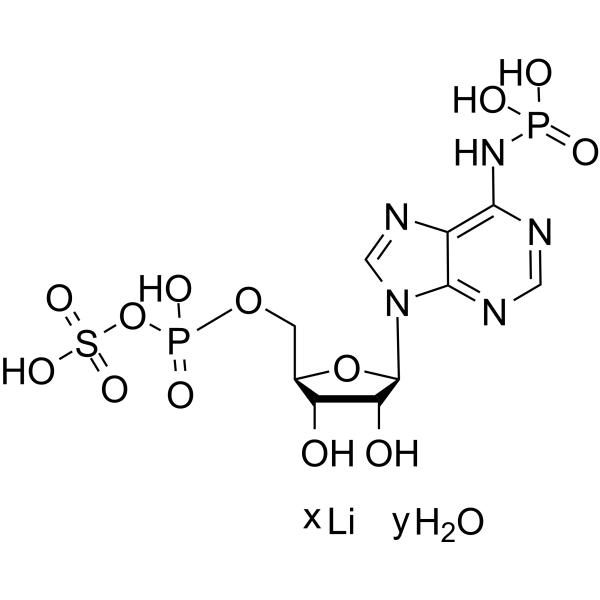
Adenosine 3'-phosphate 5'-phosphosulfate lithium hydrate, an adenine nucleotide derivative, is a selective P2Y1 antagonist with no effect on P2Y2, P2Y4, or P2Y6 receptors. Adenosine 3'-phosphate 5'-phosphosulfate lithium hydrate can competitive inhibit ADP-induced platelet aggregation, as well as the ability of ADP to cause shape change and increases in Ca 2+ in platelets, but had no effect on the inhibition of stimulated adenylate cyclase by ADP. Adenosine 3'-phosphate 5'-phosphosulfate lithium hydrate is a co-substrate used for the sulfonation of glycans. Adenosine 3'-phosphate 5'-phosphosulfate lithium hydrate can be used for Golgi-resident PAP-specific 3'-phosphatase-coupled sulfotransferase assays, which as donor substrate to transfer a sulfonate group [2] .
loading...
    loading...
Cat. No.: HY-116312
CAS No.: 510774-50-2
Synonyms: 8-CPT-2'-O-Me-CaMP
Target:  

Ras

Research Areas:  

Cardiovascular Disease

8-pCPT-2′-O-Me-cAMP (8-CPT-2'-O-Me-cAMP), an analog of cAMP, is an activator of exchange proteins activated by cAMP (Epac). 8-pCPT-2′-O-Me-cAMP activates Epac1 (EC50 = 2.2 μM), but not PKA (EC50 >10 μM). 8-pCPT-2′-O-Me-cAMP stimulates Epac-mediated Ca 2+ release in pancreatic β-cells in vitro. 8-pCPT-2′-O-Me-cAMP is a Rap1 activator. 8-pCPT-2′-O-Me-cAMP enhances the retinal pigment epithelium barrier against the pathological choroidal endothelial cell invasion that occurs in macular degeneration [2] .
loading...
    loading...
Cat. No.: HY-13551C
CAS No.: 80277-14-1
Synonyms: m-AMSA isethionate; Acridinyl anisidide isethionate
Amsacrine isethionate (m-AMSA isethionate) is a Topoisomerase II inhibitor. Amsacrine isethionate intercalates into DNA. Amsacrine isethionate induces Ca 2+-mediated inactivation of ERK, and also downregulates AKT, promoting MCL1 downregulation mediated by GSK3β via reducing the phosphorylation level of GSK3β. Amsacrine isethionate induces Apoptosis by activating Caspase-9 and Caspase-3. Amsacrine isethionate blocks HERG potassium channels in the open/inactivated state. Amsacrine isethionate induces chromosomal aberrations and sister chromatid exchanges, and inhibits the synthesis of RNA and DNA. Amsacrine isethionate exhibits anti-leukemic activity. Amsacrine isethionate causes cardiac repolarization disorders, QT interval prolongation, ventricular arrhythmias, and increases the risk of sudden cardiac death. Amsacrine isethionate can be used in research related to acute myeloid leukemia, lymphoma and progressive malignancies [2] .
loading...
    loading...
Cat. No.: HY-13551D
CAS No.: 80277-11-8
Synonyms: m-AMSA lactate; Acridinyl anisidide lactate
Amsacrine lactate (m-AMSA lactate) is a Topoisomerase II inhibitor. Amsacrine lactate intercalates into DNA. Amsacrine lactate induces Ca 2+-mediated inactivation of ERK, and also downregulates AKT, promoting MCL1 downregulation mediated by GSK3β via reducing the phosphorylation level of GSK3β. Amsacrine lactate induces Apoptosis by activating Caspase-9 and Caspase-3. Amsacrine lactate blocks HERG potassium channels in the open/inactivated state. Amsacrine lactate induces chromosomal aberrations and sister chromatid exchanges, and inhibits the synthesis of RNA and DNA. Amsacrine lactate exhibits anti-leukemic activity. Amsacrine lactate causes cardiac repolarization disorders, QT interval prolongation, ventricular arrhythmias, and increases the risk of sudden cardiac death. Amsacrine lactate can be used in research related to acute myeloid leukemia, lymphoma and progressive malignancies [2] .
loading...
    loading...
Cat. No.: HY-173191
CAS No.: 2760404-50-8
SK-124 is an orally active salt-inducible kinase (SIK) inhibitor with an IC50 of 230 nM against SIK1, 4.1 nM against SIK2, and 21 nM against SIK3, exhibiting excellent kinome selectivity [2] . SK-124 blocks SIK-mediated CRTC2 phosphorylation, promotes CRTC2 nuclear translocation, and regulates vitamin D metabolism by upregulating renal Cyp27b1 and downregulating Cyp24a1 . SK-124 upregulates the expression of bone-related genes, increases serum Ca 2+, 1,25-vitamin D and intact FGF23 levels, and suppresses endogenous PTH levels [2] . SK-124 can be used in studies related to osteoporosis, male osteoporosis, and chronic kidney disease-mineral and bone disorder [2] .
loading...
    loading...
Cat. No.: HY-175675
CAS No.: 3104888-50-5
P2Y1 antagonist 4 is a selective P2Y1 receptor antagonist with excellent blood-brain barrier (BBB) penetration. P2Y1 antagonist 4 inhibits P2Y1 receptor-mediated cytosolic Ca 2+ increase (IC50 = 1.95 μM) and platelet aggregation (IC50 = 3.24 μM) induced by ADP in rabbit washed platelets. P2Y1 antagonist 4 significantly upregulates the level of nuclear Nrf2 protein in H2O2-treated HT22 cells. P2Y1 antagonist 4 reduces myocardial infarct size in a mouse acute myocardial infarction (MI) model. P2Y1 antagonist 4 can be used for the study of ischemic stroke and myocardial infarction .
loading...
    loading...
Cat. No.: HY-187732
CAS No.: 76739-51-0
Research Areas:  

Others

EP-459 is a papain inhibitor (IC50=0.4 μg/mL) with no significant inhibitory activity against serine proteases such as trypsin, plasmin, thrombin, and urokinase. The effects of EP-459 are similar to those of E-64C (HY-100227), but differ from the functions of leupeptin and its analogs. EP-459 can serve as a titration reagent for mouse cathepsin L (precursor form/MEP) activity, covalently binding to the cysteine residue at its active site. EP-459 is also a Ca 2+-dependent active site-directed inhibitor that can inactivate chicken gizzard smooth muscle calpain II, and can be acetylated to generate Ac-Ep-459, which after radiolabeling can be used to prepare [ 3H]Ac-Ep-459 for calpain active site labeling [2] .
loading...
    loading...
Cat. No.: HY-188122
CAS No.: 113960-50-2
Meglumine cyclic adenylate is a cAMP analog. Meglumine cyclic adenylate promotes STAT3 phosphorylation at Ser727 and mitochondrial translocation. Meglumine cyclic adenylate inhibits cell apoptosis by reducing cytochrome c release and caspase-3 activation. Meglumine cyclic adenylate suppresses the expression of NF-κBp65, activates adenylate cyclase 3, and inhibits phosphodiesterase 4D. Meglumine cyclic adenylate enhances myocardial contractility, increases myocardial Ca 2+ influx, dilates peripheral blood vessels, improves hypotension and bradycardia, promotes spinal cord function recovery, and regulates fear extinction and anxiety-like behaviors. Meglumine cyclic adenylate can be used in research related to cerebral ischemia/reperfusion injury, systemic inflammatory response syndrome, acute T4 thoracic spinal cord injury, and post-traumatic stress disorder (PTSD) [2] .
loading...
    loading...
Cat. No.: HY-B0380S1
CAS No.: 2747915-18-8
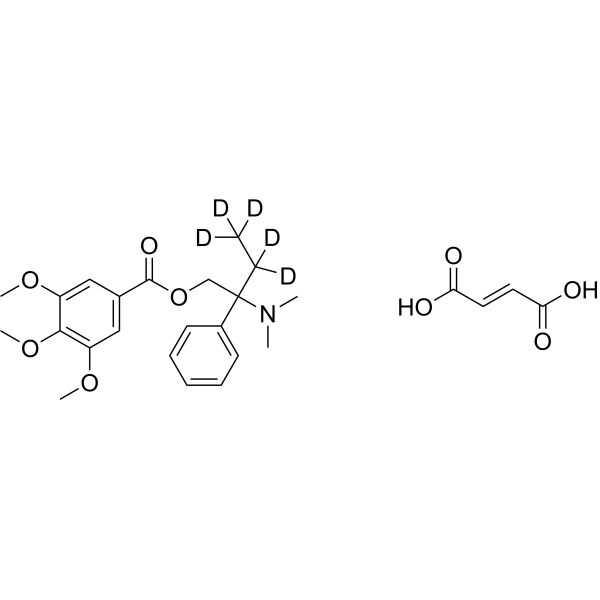
Trimebutine-d5 fumarate is deuterium labeled Trimebutine fumarate. Trimebutine fumarate is a multi-target inhibitor and opioid receptor agonist with antimuscarinic activity. Trimebutine fumarate inhibits L-type Ca 2+ channels and large-conductance calcium-activated potassium channels (BKCa channels), thereby inhibiting extracellular calcium influx and potassium ion efflux. Trimebutine fumarate also targets Toll-like receptors, inhibits Toll-like receptor 2/4/7/8/9 signals, and inhibits LPS-induced IRAK1 activation, as well as ERK1/2, JNK and NF-κB activation, thereby exerting anti-inflammatory effects. Trimebutine fumarate also induces tumor cell apoptosis by inhibiting the AKT/ERK pathway. Trimebutine fumarate also inhibits excessive contraction of smooth muscle and can be used in the study of gastrointestinal disorders such as irritable bowel syndrome (IBS) [2] .
loading...
    loading...
Cat. No.: HY-B0380S2
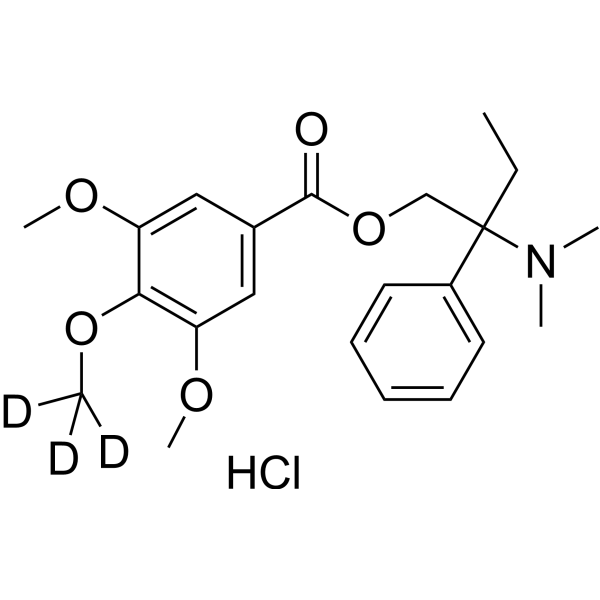
Trimebutine-d3 hydrochloride is deuterium labeled Trimebutine hydrochloride. Trimebutine hydrochloride is a multi-target inhibitor and opioid receptor agonist with antimuscarinic activity. Trimebutine hydrochloride inhibits L-type Ca 2+ channels and large-conductance calcium-activated potassium channels (BKCa channels), thereby inhibiting extracellular calcium influx and potassium ion efflux. Trimebutine hydrochloride also targets Toll-like receptors, inhibits Toll-like receptor 2/4/7/8/9 signals, and inhibits LPS-induced IRAK1 activation, as well as ERK1/2, JNK and NF-κB activation, thereby exerting anti-inflammatory effects. Trimebutine hydrochloride also induces tumor cell apoptosis by inhibiting the AKT/ERK pathway. Trimebutine hydrochloride also inhibits excessive contraction of smooth muscle and can be used in the study of gastrointestinal disorders such as irritable bowel syndrome (IBS) [2] .
loading...
    loading...
Cat. No.: HY-B0561S4
Spironolactone-d6-1 is the deuterium labeled Spironolactone (HY-B0561). Spironolactone is an aldosterone antagonist that acts on the aldosterone mineralocorticoid receptor (IC50=24 nM) and androgen receptor (IC50=77 nM), promotes podocyte autophagy and regulates pain. Spironolactone improves hypertension-related vascular hypertrophy and remodeling by reducing angiotensin II (Ang II)-induced inflammation, reduces aldosterone-induced vascular and soft tissue calcification through PIT1-dependent signaling, and alleviates vascular dysfunction in type II diabetic mice by reducing oxidative stress and restoring NO/GC signaling; at low concentrations, it and its metabolites can interfere with aldosterone biosynthesis in the adrenal cortex and inhibit voltage-dependent Ca 2+ channels to exert antihypertensive effects [2] .
loading...
    loading...
Cat. No.: HY-P11405
CAS No.: 122481-75-8
Target:  

Neurotensin Receptor

Research Areas:  

Neurological Disease Cancer

[D-Arg1, D-Trp5, 7, 9, Leu11]-Substance P is a potent inhibitor of cell growth in small cell lung cancer (SCLC). [D-Arg1, D-Trp5, 7, 9, Leu11]-Substance P is also a neuropeptide antagonist, capable of blocking colony formation stimulated by various neuropeptides (including vasopressin and bradykinin). [D-Arg1, D-Trp5, 7, 9, Leu11]-Substance P inhibits the mobilization of Ca 2+ and the activation of mitogen-activated protein kinases induced by vasopressin or bradykinin. [D-Arg1, D-Trp5, 7, 9, Leu11]-Substance P inhibits the growth of H-69 xenograft tumors in nude mice .
loading...
    loading...
Cat. No.: HY-W017387S
CAS No.: 93523-67-2
Synonyms: Sodium 4-methyl-2-oxopentanoate-d3; 2-KetoisoCaproic acid-d3 sodium salt
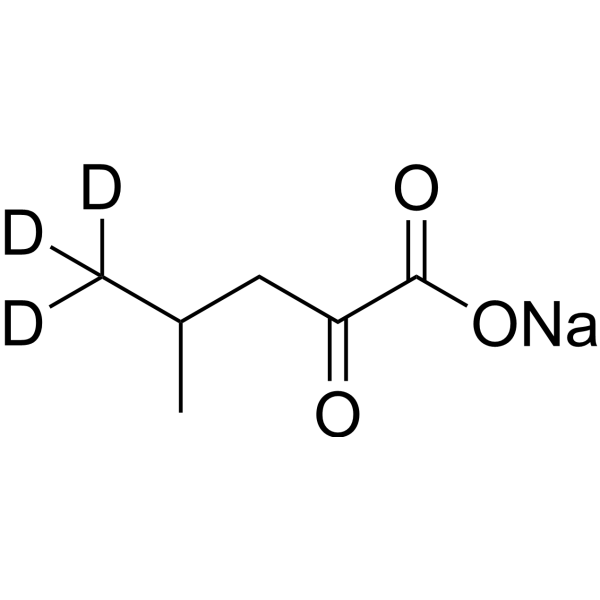
Sodium α-ketoisocaproate-d3 (Sodium 4-methyl-2-oxopentanoate-d3; 2-Ketoisocaproic acid-d3 (sodium salt)) is the deuterated-labeled Sodium α-ketoisocaproate (HY-W017387). Sodium α-ketoisocaproate (Sodium 4-methyl-2-oxopentanoate) is an insulin secretagogue. Sodium α-ketoisocaproate undergoes transamination catalyzed by BCAT and BCATm to produce α-ketoglutarate and leucine; it also binds to the SUR1 site to inhibit KATP channel activity, but does not directly affect the Kir6.2 subunit. Sodium α-ketoisocaproate regulates Ca 2+ influx. Sodium α-ketoisocaproate exerts insulinotropic activity in pancreatic islets and intact mouse pancreata with sufficient BCATm expression. Sodium α-ketoisocaproate can be used in research related to type 2 diabetes [2] .
loading...
    loading...
Cat. No.: HY-W1113135A
CAS No.: 2828447-14-7
Research Areas:  

Others

Carboxymethyl-β-cyclodextrin sodium salt, for capillary electrophoresis is a negatively charged β-cyclodextrin derivative, as well as a metal ion chelator and solubilizing reagent. Carboxymethyl-β-cyclodextrin sodium salt, for capillary electrophoresis forms stable aqueous complexes with Ba 2+, Ca 2+, Cd 2+, Ni 2+, Pb 2+, Sr 2+, and Zn 2+ ions. Carboxymethyl-β-cyclodextrin sodium salt derived hydrogel carriers support oral insulin delivery via paracellular permeation across Caco-2 monolayers and produce sustained hypoglycemic effects in diabetic mice. Carboxymethyl-β-cyclodextrin sodium salt can be conjugated onto folate-modified BSA nanoparticles to boost folate receptor-mediated endocytosis, elevate intracellular anticancer drug uptake and trigger cell apoptosis. Carboxymethyl-β-cyclodextrin sodium salt can be utilized for chiral separation in capillary electrophoresis, development of nanoscale drug carriers and nucleic acid transfection research [2] .
loading...
    loading...
Cat. No.: HY-174829
CAS No.: 13198-99-7
7,4'-Dimethoxy-3-hydroxyflavone is an orally active PAR4 antagonist. 7,4'-Dimethoxy-3-hydroxyflavone inhibits PAR4-mediated human platelet aggregation with an IC50 of 1.4 μM. 7,4'-Dimethoxy-3-hydroxyflavone inhibits PAR4-mediated human platelet aggregation and PAR4 signaling pathways, including NF-κB, Ca 2+/protein kinase C, Akt, ERK and p38. 7,4'-Dimethoxy-3-hydroxyflavone prevents vascular PAR4 expression, endothelial dysfunction and ameliorates oxidative stress in Streptozotocin (STZ) (HY-13753)-induced diabetic mice. 7,4'-Dimethoxy-3-hydroxyflavone prevents thrombosis in mice without affecting bleeding time [1][2].
loading...
    loading...
Cat. No.: HY-B0380AR
CAS No.: 34140-59-5
Trimebutine maleate (Standard) is the analytical standard of Trimebutine maleate (HY-B0380A). This product is intended for research and analytical applications. Trimebutine maleate is a multi-target inhibitor and opioid receptor agonist with antimuscarinic activity. Trimebutine maleate inhibits L-type Ca 2+ channels and large-conductance calcium-activated potassium channels (BKCa channels), thereby inhibiting extracellular calcium influx and potassium ion efflux. Trimebutine maleate also targets Toll-like receptors, inhibits Toll-like receptor 2/4/7/8/9 signals, and inhibits LPS-induced IRAK1 activation, as well as ERK1/2, JNK and NF-κB activation, thereby exerting anti-inflammatory effects. Trimebutine maleate also induces tumor cell apoptosis by inhibiting the AKT/ERK pathway. Trimebutine maleate also inhibits excessive contraction of smooth muscle and can be used in the study of gastrointestinal disorders such as irritable bowel syndrome (IBS) [2] .
loading...
    loading...
Cat. No.: HY-B0380R
CAS No.: 39133-31-8
Trimebutine (Standard) is the analytical standard of Trimebutine (HY-B0380). This product is intended for research and analytical applications. Trimebutine is a multi-target inhibitor and opioid receptor agonist with antimuscarinic activity. Trimebutine inhibits L-type Ca 2+ channels and large-conductance calcium-activated potassium channels (BKCa channels), thereby inhibiting extracellular calcium influx and potassium ion efflux. Trimebutine also targets Toll-like receptors, inhibits Toll-like receptor 2/4/7/8/9 signals, and inhibits LPS-induced IRAK1 activation, as well as ERK1/2, JNK and NF-κB activation, thereby exerting anti-inflammatory effects. Trimebutine also induces tumor cell apoptosis by inhibiting the AKT/ERK pathway. Trimebutine also inhibits excessive contraction of smooth muscle and can be used in the study of gastrointestinal disorders such as irritable bowel syndrome (IBS) [2] .
loading...
    loading...
Cat. No.: HY-D0077
CAS No.: 195136-58-4
Synonyms: Oregon green 488
Target:  

Fluorescent Dye

Research Areas:  

Others

2',7'-Difluorofluorescein (Oregon green 488) is a fluorescein derivative and a pH-sensitive fluorescent probe (pKa ~4.7). Upon excitation at 488 nm, 2',7'-Difluorofluorescein exhibits pH-sensitive fluorescence intensity through the formation of dianions, while its pH sensitivity decreases under excitation at 450 nm, allowing its use in ratiometric pH analysis. 2',7'-Difluorofluorescein can be used for the quantitative analysis of pH values in the range of 2-7 in submicron aerosol particles. 2',7'-Difluorofluorescein undergoes buffer-mediated and buffer-free excited-state proton transfer between different protonated forms, and its cationic form undergoes rapid excited-state deprotonation. 2',7'-Difluorofluorescein is resistant to photodegradation, maintains stable absorption and fluorescence properties within the physiological pH range, and serves as a fluorescent protein label, a component of Ca 2+ indicators, a fluorescent imaging agent, and an anisotropy probe [2] .
loading...
    loading...
Cat. No.: HY-N1989
CAS No.: 11028-00-5
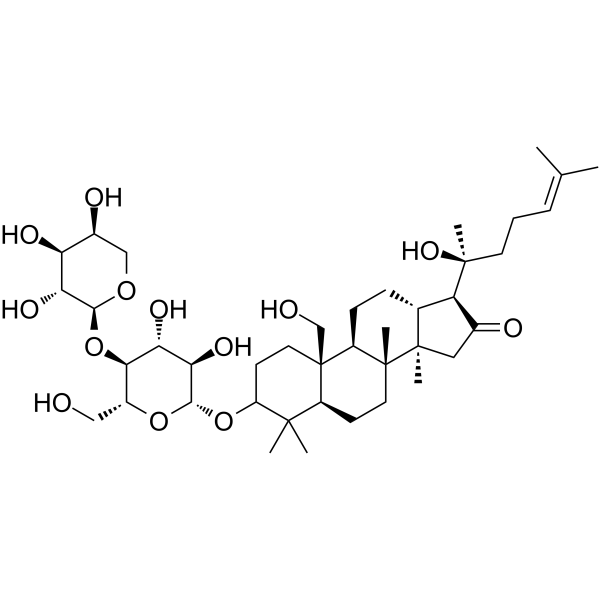
Bacoside A is an orally active, blood-brain barrier-permeable triterpenoid saponin that modulates the activities of ATPases, AChE, CaMK2A and iNOS. Derived from Bacopa monniera. Bacoside A exerts significant antioxidant, anti-inflammatory and anti-apoptotic effects by maintaining ion balance, scavenging reactive oxygen species, stabilizing cell membranes, and regulating the expression of NF-κB and apoptosis-related proteins. Bacoside A counteracts morphine-induced reductions in Na +/K +-ATPase, Ca 2+-ATPase and Mg 2+-ATPase activities, increases mitochondrial membrane potential, and decreases intracellular reactive oxygen species levels. Bacoside A specifically binds to calcium/calmodulin-dependent protein kinase IIA to trigger endoplasmic reticulum calcium release. Bacoside A exhibits non-apoptotic cytotoxicity against glioblastoma cells while protecting normal nerve cells from stress-induced damage. Bacoside A is applicable to the research of Parkinson's disease and glioblastoma multiforme [2] .
loading...
    loading...
Cat. No.: HY-P0221A
Synonyms: Pituitary Adenylate Cyclase Activating Polypeptide 38 TFA
PACAP (1-38), human, ovine, rat TFA is a PAC1 receptor agonist. PACAP (1-38), human, ovine, rat TFA binds to PACAP type I receptor, PACAP type II receptor VIP1, and PACAP type II receptor VIP2 with IC50s of 4 nM, 2 nM, and 1 nM, respectively. PACAP (1-38), human, ovine, rat TFA increases the α-secretase activity. PACAP (1-38), human, ovine, rat TFA elevates cytosolic Ca 2+, increases proliferation and increases phosphorylation of extracellular regulates kinase (ERK) and the epidermal growth factor receptor (EGFR). PACAP (1-38), human, ovine, rat TFA demonstrates potent, efficacious, and sustained stimulatory effects on sympathetic neuronal NPY and catecholamine production. PACAP (1-38), human, ovine, rat TFA can be used for neurotrophic and neuroprotective research [2] .
loading...
    loading...