
135 Results for "

PDMS interfaces

" in MedChemExpress (MCE) Product Catalog:
Products (135)

135 Results for "PDMS interfaces" in MCE Product Catalog:

Cat. No.: HY-131829A
Synonyms: 6-AE-NAD+ sodium
Target:  

Lactate Dehydrogenase

Research Areas:  

Others

N6-(2-Aminoethyl)-NAD+ (6-AE-NAD+) sodium is an adenine-modified NAD analog with coenzyme activity and the property of targeting lactate dehydrogenase (LDH). N6-(2-Aminoethyl)-NAD+ sodium undergoes transient affinity binding with LDH, thereby crosslinking the enzyme monolayer into an integrated electrode. N6-(2-Aminoethyl)-NAD + is a component of the PQQ (HY-100196)-NAD + binary interface, and supports the bioelectrocatalytic oxidation of lactate through PQQ-mediated immobilized NADH oxidation .
loading...
    loading...
Cat. No.: HY-184164
Target:  

TRP Channel

Research Areas:  

Neurological Disease

JD03-02 is an orally active, blood-brain barrier-permeable TRPC1/5 heterodimer inhibitor with an IC50 of 0.2 nM. JD03-02 preferentially binds to a unique ligand-binding pocket at the interface of TRPC1-TRPC5, exerts almost no inhibitory effect on TRPC5 homotetramers, and thus avoids side effects such as obesity and hyperkinesia. JD03-02 induces anxiolytic and antidepressant effects in mouse models. JD03-02 can be used in studies related to depression and anxiety disorders .
loading...
    loading...
Cat. No.: HY-P11796
CAS No.: 1235835-17-2
Research Areas:  

Inflammation/Immunology

MOG 37-46 is a dominant immunodominant CD8 + T cell epitope. As a truncated version of MOG35-55, MOG 37-46 is recognizable by MOG 35-55-specific T cells, and serves as an autoantibody target at the dimer interface of the extracellular domain of myelin oligodendrocyte glycoprotein (MOG). MOG 37-46 stimulates MOG-specific CD8 + T cell lines and proinflammatory CD8 + T cells migrating into the central nervous system (CNS) to produce IFN-γ. MOG 37-46 is applicable to research related to experimental autoimmune encephalomyelitis .
loading...
    loading...
Cat. No.: HY-178042
CAS No.: 2756257-56-2
Target:  

Ras Akt ERK

Research Areas:  

Cancer

SS-3091 is a pan-KRas inhibitor active across KRas G12D, KRas G12C, KRas G12V, KRas G12S mutants, with minimal effects on non-KRas-driven cancer cells. SS-3091 binds to the KRas·ARaf interaction interface, destabilizes the complex, and attenuates KRas activity. SS-3091 suppresses phosphorylation of S6K, Akt, and ERK. SS-3091 reduces proliferation and decreases colony formation of cancer cells bearing KRas G12 mutations. SS-3091 can be used for the research of KRas-driven cancers .
loading...
    loading...
Cat. No.: HY-181066
Research Areas:  

Infection

ACE2-SP PPI-IN-1 is an inhibitor of the interaction between the SARS-CoV-2 spike protein and ACE2, with an IC50 of 2162.77 nM. ACE2-SP PPI-IN-1 exhibits low cytotoxicity in human fibroblasts. ACE2-SP PPI-IN-1 binds to the interface region between the spike protein RBD and ACE2, reducing the flexibility of the critical receptor-binding loop and maintaining the structural compactness of the spike protein. ACE2-SP PPI-IN-1 can be used for research related to SARS-CoV-2 .
loading...
    loading...
Cat. No.: HY-21170B
CAS No.: 33454-82-9
Synonyms: Triflate lithium; Trifluoromethylsulfonate lithium; Trifluoromethanesulphonic acid lithium
Trifluoromethanesulfonate (Triflate;Trifluoromethylsulfonate) lithium is a stable lithium salt and dopant with four resonance states, which is commonly used as an electrolyte component in polymer light-emitting electrochemical cells and primary lithium batteries. Trifluoromethanesulfonate lithiumalso acts as a catalyst for the preparation of the herbicide Imazapyr. In MEH-PPV-based light-emitting electrochemical cells, Trifluoromethanesulfonate lithium promotes electrochemical p-type doping at the anode interface under applied bias, thereby facilitating the formation of p-i-n junctions, exciton generation, and light emission. Trifluoromethanesulfonate lithiumexhibits strong ion pairing in non-aqueous electrolytes, but its electrochemical stability window is narrower than that of lithium bistrifluoromethylsulfonyl imidee .
loading...
    loading...
Cat. No.: HY-P11903
Research Areas:  

Cancer

dTBP-3 is a fully D-configured polypeptide competitive inhibitor that targets TIGIT. dTBP-3 can competitively occupy the binding interface between TIGIT and its ligand PVR, block TIGIT-mediated immunosuppressive signals, and reverse the immune exhaustion of NK cells and CD8 + T cells . dTBP-3 possesses anti-proteolytic activity and tumor tissue penetration ability, and can also enhance the tumor penetration capacity and cellular internalization efficiency of nanocarriers. dTBP-3 can be used in studies related to liver cancer, triple-negative breast cancer and non-small cell lung cancer .
loading...
    loading...
Cat. No.: HY-W611371A
CAS No.: 2490401-57-3
Target:  

TRP Channel iGluR

Research Areas:  

Neurological Disease

FP802 dihydrochloride is an orally active potent TwinF interface inhibitor that disrupts and detoxifies the NMDAR/TRPM4 death complex. FP802 dihydrochloride exerts powerful neuroprotective effects in the 5xFAD mouse model of Alzheimer’s disease (AD) by preventing cognitive decline, preserving neuronal structural integrity, reducing amyloid-β plaque formation, and mitigating mitochondrial pathology . FP802 dihydrochloride stops loss of motor neurons, reduces serum neurofilament light chain (NfL) levels, improves motor performance, and extends life in a mouse model of amyotrophic lateral sclerosis (ALS) . FP802 dihydrochloride can be used for AD and ALS research .
loading...
    loading...
Cat. No.: HY-W683900A
CAS No.: 58725-46-5
Research Areas:  

Others

(S)-3-Hydroxy-2-palmitamidopropanoic acid (sodium) (Compound C16Ser) is a serinate surfactants. (S)-3-Hydroxy-2-palmitamidopropanoic acid (sodium) can be used to study the effect of fatty acyl chain length on the foam properties. (S)-3-Hydroxy-2-palmitamidopropanoic acid (sodium) has the longer acyl chain, which enhances the intermolecular interaction, thereby facilitating a compact adsorption film at the interface. (S)-3-Hydroxy-2-palmitamidopropanoic acid (sodium) exhibits higher interfacial activity and forms more stable interfacial films under stronger intermolecular interaction .
loading...
    loading...
Cat. No.: HY-P10428
Target:  

HPV

Research Areas:  

Infection

E6AP-mimicking peptide (compound 13) is a high-affinity, selective, irreversible and potent peptide-based covalent HPV16 E6 inhibitor targeting the 16E6 oncoprotein using a cysteine-reactive acrylamide warhead. E6AP-mimicking peptide has a Ki of 17 nM. E6AP-mimicking peptide targets all residues appearing in the binding pocket of E6 to disrupt the binding interface of 16E6 and E6AP. E6AP-mimicking peptide selectively binds and crosslinks to MBP-16E6 in PBS or a protein mixture .
loading...
    loading...
Cat. No.: HY-W099535
CAS No.: 2044-56-6
Research Areas:  

Others

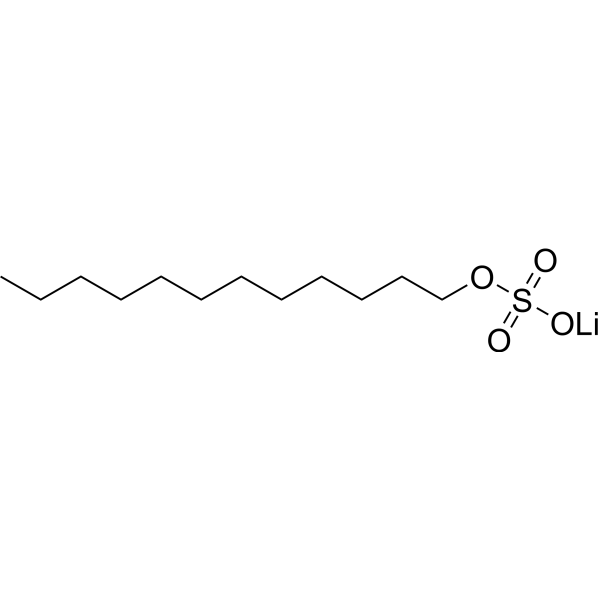
Lithium dodecyl sulfate is an anionic hydrocarbon surfactant with both surface tension reduction and interfacial adsorption capabilities. Lithium dodecyl sulfate forms micelles in aqueous solutions via entropy-driven (low temperature) and enthalpy-driven (high temperature) mechanisms, and can also form an adsorption layer at the air-water interface with quantifiable surface excess and minimum area per molecule. Lithium dodecyl sulfate exhibits favorable equilibrium surface tension and foamability, but shows low foam stability above its critical micelle concentration. When acting synergistically with tetrabutylammonium bromide, Lithium dodecyl sulfate also exhibits unique cloud point behavior due to micelle aggregation and phase separation .
loading...
    loading...
Cat. No.: HY-103078
CAS No.: 5496-35-5
Purity:  99.71%
Research Areas:  

Infection

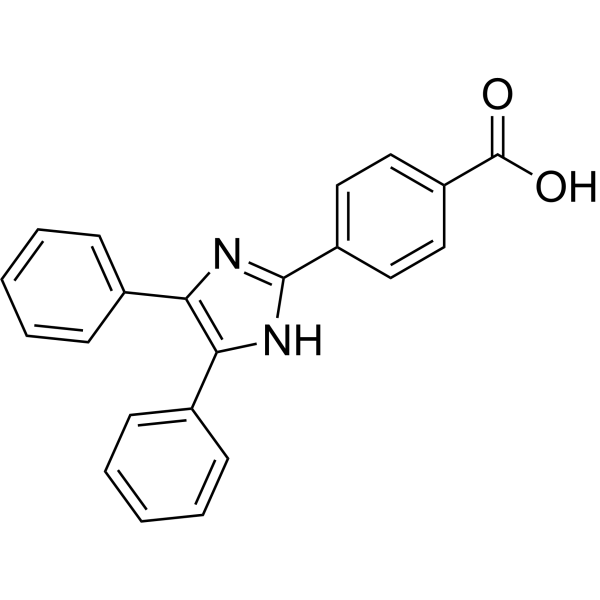
I-XW-053 is a specific anti-HIV-1 capsid inhibitor (IC50=164.2 μM). By binding to the CA NTD-NTD hexamerization interface and the R173 region of CTD (Kd=66.3 μM), I-XW-053 disrupts capsid function and reduces polymerization levels. I-XW-053 effectively blocks HIV-1 uncoating, inhibits reverse transcription and early replication, and exhibits broad-spectrum activity against primary HIV-1 isolates in peripheral blood mononuclear cells. I-XW-053 can be widely used in studies related to HIV-1 infection .
loading...
    loading...
Cat. No.: HY-103078A
CAS No.: 1644644-89-2
Research Areas:  

Infection

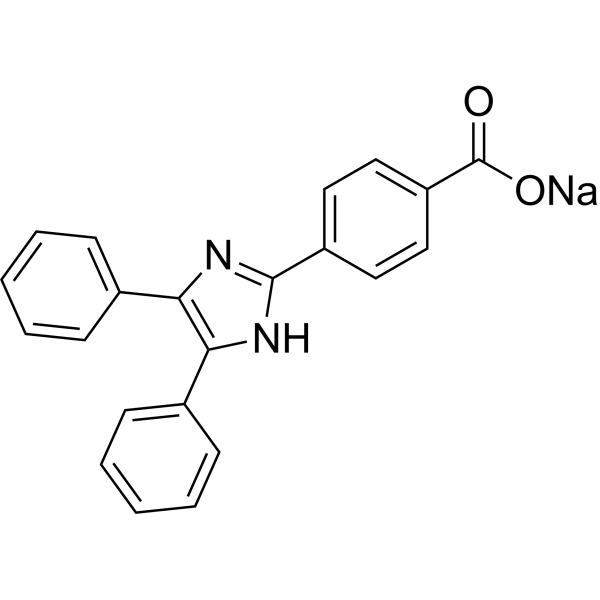
I-XW-053 sodium is a specific anti-HIV-1 capsid inhibitor (IC50=164.2 μM). By binding to the CA NTD-NTD hexamerization interface and the R173 region of CTD (Kd=66.3 μM), I-XW-053 sodium disrupts capsid function and reduces polymerization levels. I-XW-053 sodium effectively blocks HIV-1 uncoating, inhibits reverse transcription and early replication, and exhibits broad-spectrum activity against primary HIV-1 isolates in peripheral blood mononuclear cells. I-XW-053 sodium can be widely used in studies related to HIV-1 infection .
loading...
    loading...
Cat. No.: HY-111964R
CAS No.: 2189684-44-2
Synonyms: GS-6207 (Standard)
Target:  

Reference Standards HIV

Research Areas:  

Infection

Lenacapavir (Standard) is the analytical standard of Lenacapavir (HY-111964). This product is intended for research and analytical applications. Lenacapavir (GS-6207) is an HIV-1 capsid inhibitor. Lenacapavir binds to the interface between capsid hexamers and CA monomers, disrupts capsid assembly and viral maturation, inhibits nuclear translocation of HIV-1 DNA, interferes with CA-mediated protein-protein interactions, reduces the formation of 2-LTR circles and pre-integration proviruses, induces aberrant capsids, and decreases the production of mature HIV-1. Lenacapavir exhibits activity against a variety of HIV-1 subtypes and clinical isolates. Lenacapavir is applicable to research related to human immunodeficiency virus type 1 (HIV-1) infection .
loading...
    loading...
Cat. No.: HY-184048
CAS No.: 33580-97-1
Research Areas:  

Infection

JMX0207 is an orally active flavivirus NS2B-NS3 protease inhibitor. JMX0207 showed an IC50-SLC of 1.3 μM for blocking NS2B-NS3 protein interaction and an IC50-pro of 8.2 μM for inhibiting protease catalytic activity.. JMX0207 directly binds viral NS3 protease at the NS2B-NS3 interface with a Kd of 1.1 μM, blocks viral polyprotein precursor processing, suppresses viral RNA replication and viral protein production. JMX0207 can be used for the study of Zika virus infection and Dengue virus infection .
loading...
    loading...
Cat. No.: HY-184417
CAS No.: 3085883-97-9
Target:  

Bacterial

Research Areas:  

Infection

Energy-coupling factor-IN-1 is an energy-coupling factor (ECF) transporter inhibitor with an IC50 of 42.84 μM against ECF-FolT2. Energy-coupling factor-IN-1 binds to the interface between the S component and the ECF module, and inhibits the uptake of folic acid and pantothenic acid via the target transporter. Energy-coupling factor-IN-1 acts as a bactericidal agent, exerting rapid and sustained activity for 24 h against Enterococcus faecium, while also acting against Gram-positive bacteria including drug-resistant strains. Energy-coupling factor-IN-1 improves the survival rate of zebrafish embryos infected with Enterococcus faecium. Energy-coupling factor-IN-1 can be used in studies of Gram-positive bacterial infections .
loading...
    loading...
Cat. No.: HY-187459
Research Areas:  

Cancer

Topoisomerase I-IN-23 is a topoisomerase I inhibitor with anticancer activity. Topoisomerase I-IN-23 competitively binds to the hydrophobic pocket at the Topo I-DNA interface, stabilizes the covalent DNA-Topo I complex, downregulates Topo I protein expression in a concentration-dependent manner, induces S-phase cell cycle arrest in tumor cells, regulates the expression of apoptosis-related proteins Bax, Bcl-2 and cleaved caspase-3 to trigger apoptosis, and inhibits the migration and invasion of tumor cells. Topoisomerase I-IN-23 exhibits in vivo antitumor efficacy in xenograft models. Topoisomerase I-IN-23 can be used in research related to colorectal cancer, lung cancer and hepatocellular carcinoma .
loading...
    loading...
Cat. No.: HY-D3441
Research Areas:  

Others

LumiPK is an environment-sensitive probe that specifically targets the liver isoform of pyruvate kinase (PKL). LumiPK exhibits high affinity for PKL with a Kd of 37 nM. LumiPK integrates the 4-sulfonamido-7-aminobenzoxadiazole (SBD) fluorophore into a phthalazine scaffold, and its fluorescence intensity changes with the polarity of the chemical environment, thereby directly reflecting protein occupancy. LumiPK binds only to the tetrameric form of PKL, with the binding site being an allosteric pocket formed at the subunit interface, and key water-mediated interactions enhance its potency; in polar environments such as buffer, its fluorescence is significantly quenched, whereas upon binding to the nonpolar allosteric pocket of PKL, its fluorescence is enhanced. In fluorescence detection, its excitation/emission wavelengths are Ex/Em = 450/550 nm .
loading...
    loading...
Cat. No.: HY-101913R
CAS No.: 2205034-18-8
IL-17A antagonist 1 (Standard) is the analytical standard of IL-17A antagonist 1 (HY-101913). This product is intended for research and analytical applications. IL-17A antagonist 1 is an interleukin-17A (IL-17A) antagonist with an IC50 of 1.14 μM and a Kd of 0.66 μM. IL-17A antagonist 1 binds specifically and exclusively to the IL-17A homodimer at its central dimer interface pocket, induces a large conformational change that widens the pocket, and disrupts the IL-17A/IL-17RA interaction. IL-17A antagonist 1 does not bind to IL-17F or IL-17RA .
loading...
    loading...
Cat. No.: HY-111964S1
Synonyms: GS-6207-d5
Lenacapavir-d5 (GS-6207-d5) is the deuterium labeled Lenacapavir (HY-111964). Lenacapavir (GS-6207) is an HIV-1 capsid inhibitor. Lenacapavir binds to the interface between capsid hexamers and CA monomers, disrupts capsid assembly and viral maturation, inhibits nuclear translocation of HIV-1 DNA, interferes with CA-mediated protein-protein interactions, reduces the formation of 2-LTR circles and pre-integration proviruses, induces aberrant capsids, and decreases the production of mature HIV-1. Lenacapavir exhibits activity against a variety of HIV-1 subtypes and clinical isolates. Lenacapavir is applicable to research related to human immunodeficiency virus type 1 (HIV-1) infection .
loading...
    loading...

