
135 Results for "

PDMS interfaces

" in MedChemExpress (MCE) Product Catalog:
Products (135)

135 Results for "PDMS interfaces" in MCE Product Catalog:

Cat. No.: HY-104035E
CAS No.: 63148-62-9
Synonyms: Poly(dimethylsiloxane) (PDMS), viscosity 100 cSt (25 °C); Dimethylsilcone fluid, viscosity 100 cSt (25 °C)
Dimethyl silicone oil, viscosity 100 cSt (25 °C) (Poly(dimethylsiloxane) (PDMS), viscosity 100 cSt (25 °C); Dimethylsilcone fluid, viscosity 100 cSt (25 °C)) is a transparent, colorless, and inert polydimethylsiloxane liquid with stable properties. Dimethyl silicone oil, viscosity 100 cSt (25 °C) exhibits high dielectric strength and excellent lubrication, cushioning, and thermal conductivity. Dimethyl silicone oil, viscosity 100 cSt (25 °C) can be used in cosmetics, lubricants, and electronics.
loading...
    loading...
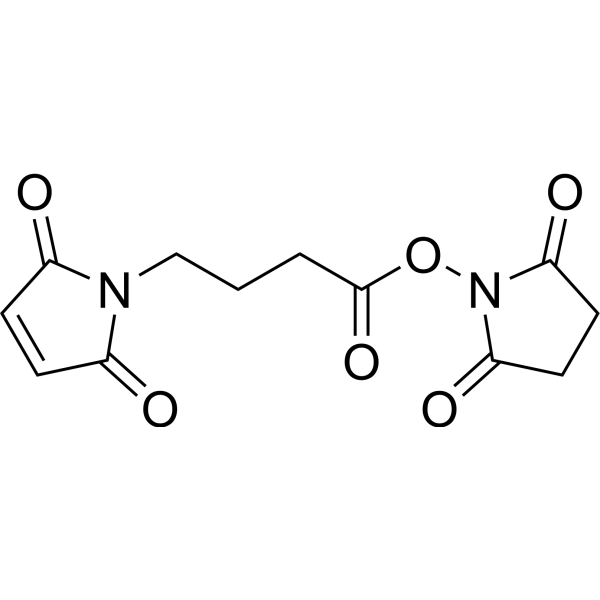
Cat. No.: HY-W041994
CAS No.: 80307-12-6
GMBS is a heterobifunctional crosslinker targeting primary amines and sulfhydryl groups. GMBS can be used for chemical crosslinking of proteins and crosslinking mass spectrometry (CXMS) to study protein folding and map interfaces between interacting proteins .
loading...
    loading...
Cat. No.: HY-W034344
CAS No.: 2386-57-4
Sodium methanesulfonate is a hygroscopic atmospheric aerosol, which typically forms from the reaction of methanesulfonic acid with sodium chloride or sea salt particles. Sodium methanesulfonate can serve as a substrate for oxidation reactions, undergoing heterogeneous oxidation by hydroxyl radicals at the air-aerosol interface, thereby initiating subsequent aerosol-phase chain reactions. Sodium methanesulfonate exhibits significant temperature-dependent deliquescence and efflorescence properties; particularly at lower temperatures relevant to the troposphere, its deliquescence and efflorescence relative humidity increase accordingly .
loading...
    loading...
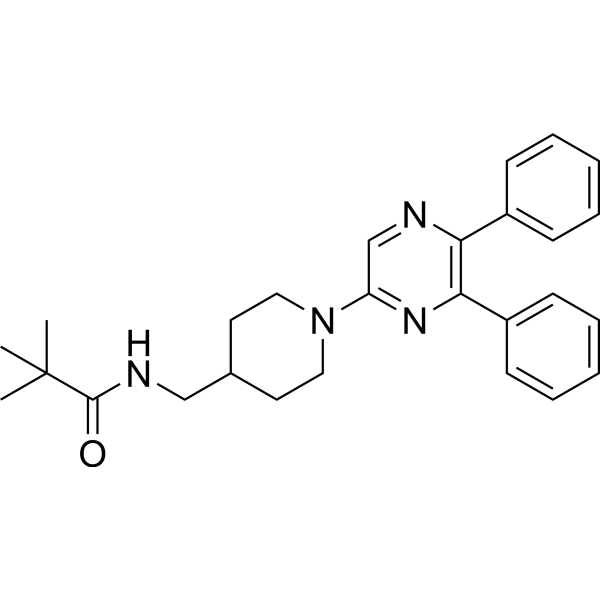
Cat. No.: HY-153937
CAS No.: 2760612-77-7
Purity:  99.67%
Target:  

E1/E2/E3 Enzyme

Research Areas:  

Cancer

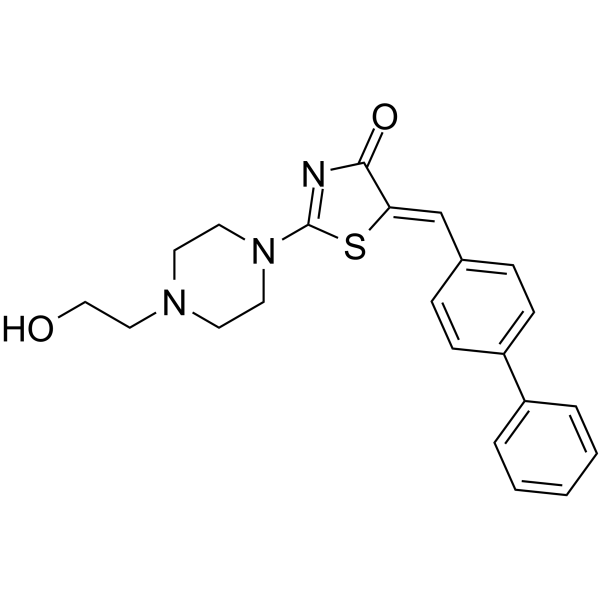
Skp2 inhibitor 2 is a Skp2-Cks1 protein-protein interaction inhibitor with a human IC50 of 0.57 μM. Skp2 inhibitor 2 binds to Skp2 at the interaction interface to block Skp2-Cks1 complex formation. Skp2 inhibitor 2 can be used for the research of gastric cancer, non-small cell lung cancer, breast cancer, prostate cancer .
loading...
    loading...
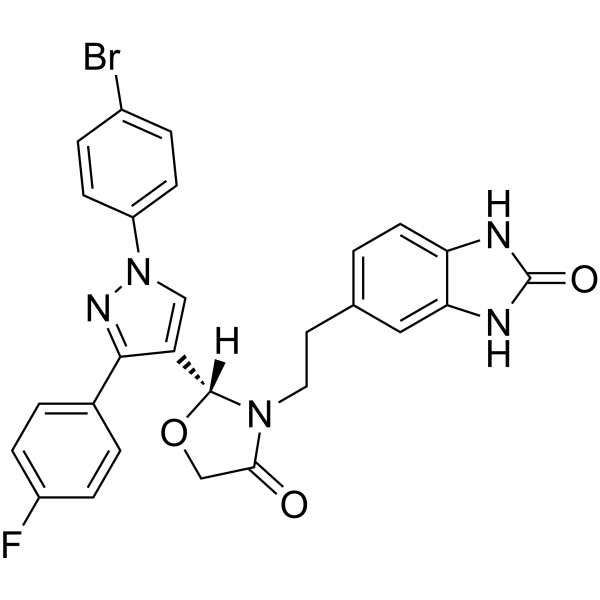
Cat. No.: HY-147255
CAS No.: 2137847-19-7
Purity:  98.40%
Synonyms: ZM-H1505R
Target:  

HBV

Research Areas:  

Infection

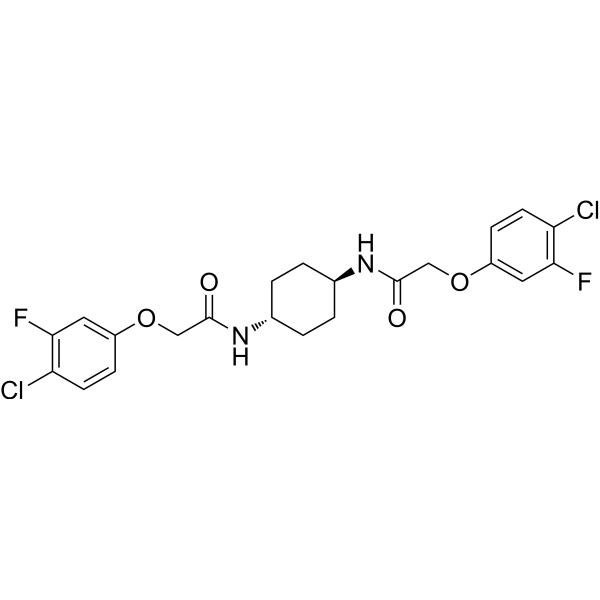
Canocapavir (ZM-H1505R) is an orally active HBV core protein-targeting antiviral agent. Canocapavir binds to the hydrophobic pocket at the dimer-dimer interface of HBV core protein (HBc), stimulating intracellular accumulation of nonfunctional HBV capsids, disrupting viral replication. Canocapavir interferes with the interaction between HBc and HBV large surface protein, resulting in diminished
production of empty virionsis. Canocapavir can be used for the research of hepatitis B virus (HBV) infection .
loading...
    loading...
Cat. No.: HY-P11017
CAS No.: 1152066-26-6
Target:  

p38 MAPK Cadherin

Research Areas:  

Inflammation/Immunology

LNSMGQD is a cyclic peptide fragment derived from desmoglein 1 (amino acids 81-86), which mimics trans-interactions and acts as part of the tandem peptide binding interface of desmoglein 2. LNSMGQD not only binds to desmoglein 1 and 3, but also effectively inhibits their homophilic trans-interactions, while reducing the probability of homophilic or heterophilic binding between desmoglein 2 and Dsc2, N-cadherin and E-cadherin. LNSMGQD is applicable to the research on disease mechanisms such as Crohn's disease and pemphigus vulgaris .
loading...
    loading...
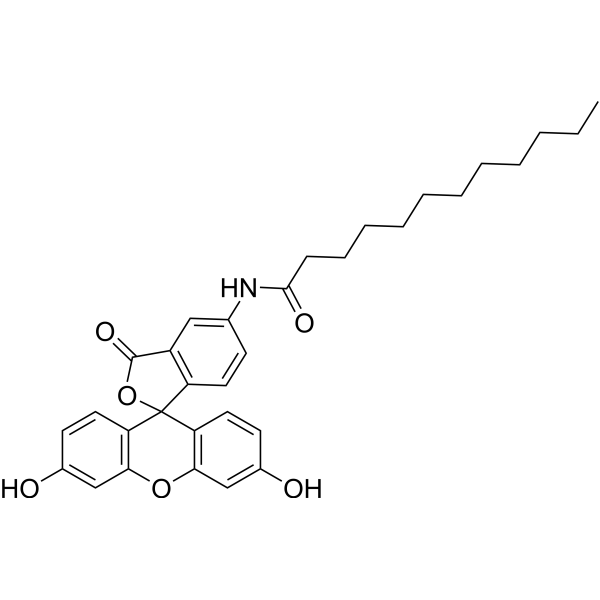
Cat. No.: HY-117401
CAS No.: 107827-77-0
Purity:  99.32%
5-Dodecanoylaminofluorescein is an amphipathic (amphoteric) fluorescent probe (Ex/Em = 485 nm/515-535 nm), which consists of a hydrophilic fluorescein core and a hydrophobic dodecanoyl group (C12 fatty acid chain) linked by an amide bond. 5-Dodecanoylaminofluorescein is mainly used as an interface-localized radical trapping/indicator probe. Dodecanoylaminofluorescein can be used for the determination of the antioxidant properties of emulsions, or can serve as a lipophilic drug model for the study of passive skin penetration when encapsulated in tyrosine-derived nanospheres .
loading...
    loading...
Cat. No.: HY-122627
CAS No.: 678158-55-9
Purity:  99.14%
Target:  

Bcl-2 Family Apoptosis

Research Areas:  

Cancer

CLZ-8 (Compound 8) is an orally active Mcl-1-PUMA interface inhibitor, with a Ki of 0.3 μM. CLZ-8 exhibits dual activity on reduce PUMA-dependent apoptosis while deactivating Mcl-1-mediated anti-apoptosis in cancer cells .
loading...
    loading...
Cat. No.: HY-153074
CAS No.: 1628478-15-8
Purity:  98.25%
Research Areas:  

Infection

ISR-IN-1 is an integrated stress response (ISR) inhibitor targeting eIF2B. ISR-IN-1 enhances eIF2B guanine nucleotide exchange factor activity, stabilizes eIF2B heteropentamer dimers via symmetrical protein-protein interface binding, and releases global protein synthesis inhibition from phosphorylated eIF2α α. ISR-IN-1 can be used for the research of prion disease .
loading...
    loading...
Cat. No.: HY-124066
CAS No.: 1182129-77-6
Purity:  98.72%
Target:  

TAM Receptor

Research Areas:  

Cancer

RU-302 is a pan TAM inhibitor that blocks the interface between the TAM Ig1 ectodomain and the Gas6 Lg domain. RU-302 effectively blocks Gas6-inducible Axl receptor activation with a low micromolar IC50in cell assays, and suppresses lung cancer tumor growth .
loading...
    loading...
Cat. No.: HY-P1805
CAS No.: 104041-80-7
Target:  

Calmodulin

Research Areas:  

Neurological Disease

Calmodulin Binding Peptide 1 is a high-affinity (pM) CaM-binding peptide derived from smooth muscle myosin light chain kinase (MLCK peptide). The interface of the complex formed by Calmodulin Binding Peptide 1 and Ca 2+-CaM can be specifically bound by small-molecule inhibitors, serving as a key target for selective regulation of smooth muscle contraction and development of anti-CaM drugs .
loading...
    loading...
Cat. No.: HY-W284558
CAS No.: 1120-01-0
Sodium hexadecyl sulfate is a long-chain anionic surfactant. Sodium hexadecyl sulfate can act as an interface-regulating substance to form a soft layer on the surface of carbon nanotubes, guide proteins to adsorb in the correct orientation with active sites facing outward through electrostatic interactions, and significantly enhance the activity of immobilized enzymes. Sodium hexadecyl sulfate can replace or supplement SDS (HY-Y0316) in capillary gel electrophoresis (CGE) .
loading...
    loading...
Cat. No.: HY-W014861
CAS No.: 75-58-1
Synonyms: Tetramethyl-ammoniuiodide
Tetramethylammonium iodide (Tetramethyl-ammoniuiodide) is a capillary active agent and weakly capillary active quasi-simple salt. Tetramethylammonium iodide decreases aqueous solution surface tension with increasing concentration and exhibits surface accumulation of constituent ions at liquid-vapor interfaces .
loading...
    loading...
Cat. No.: HY-N0347
CAS No.: 302-23-8
Target:  

Progesterone Receptor

Research Areas:  

Endocrinology

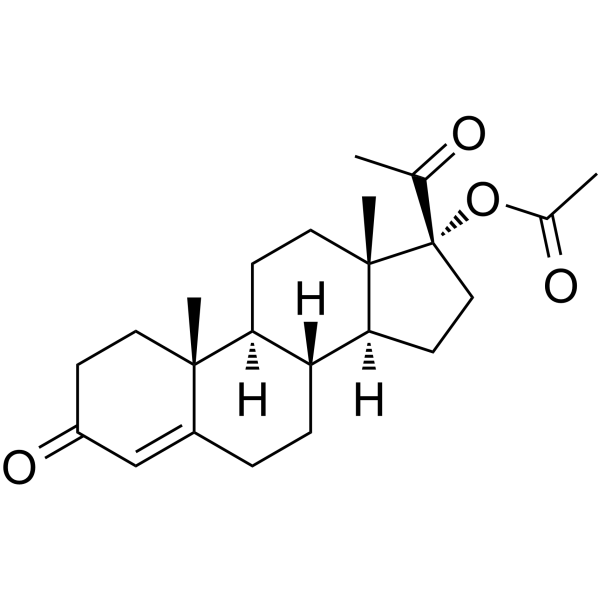
17α-Hydroxyprogesterone acetate possesses progestational activity. 17α-Hydroxyprogesterone acetate has antiinflammatory effects at the murine maternal-fetal interface .
loading...
    loading...
Cat. No.: HY-121068
CAS No.: 17692-24-9
Research Areas:  

Infection

Bisoxatin is a laxative drug used for constipation. Bisoxatin binds substantially at the S-protein-ACE2 interface. Bisoxatin has the potential for inhibiting SARS-CoV-2 entry into the host research .
loading...
    loading...
Cat. No.: HY-171444
CAS No.: 1493797-28-6
Target:  

γ-secretase Amyloid-β

Research Areas:  

Neurological Disease

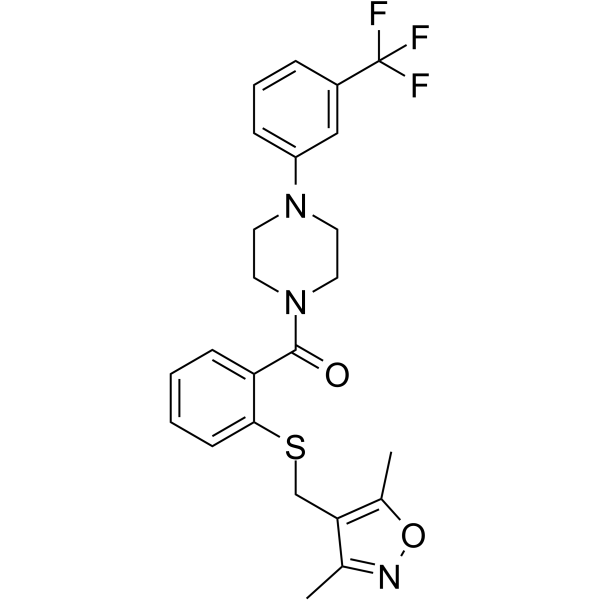
GSM III is a γ-Secretase complexe (GSEC) modulator. GSM III significantly regulates amyloid-β (Aβ) length at the extracellular interface between the protease (NCT, PSEN) and the substrate APPC99. GSM III can be used for Alzheimer's disease (AD) research .
loading...
    loading...
Cat. No.: HY-W099642
CAS No.: 2083-68-3
Synonyms: Trimethyl-n-octylammonium bromide
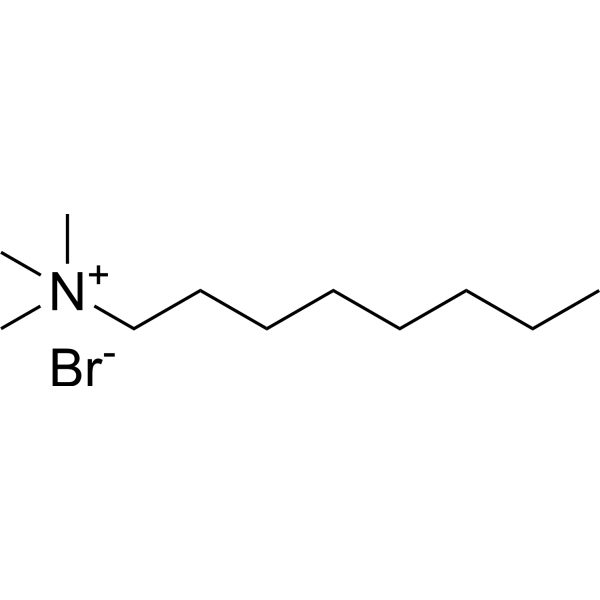
Trimethyloctylammonium bromide (TOAB) is used as a surfactant and phase transfer catalyst in various chemical reactions. TOAB can be used in the synthesis of nanomaterials due to its ability to selectively transfer ions across interfaces and as a surfactant in the production of emulsions and foams. It is valued for its amphiphilic properties, which allow it to interact with water and oils, stabilizing and dispersing mixtures.
loading...
    loading...
Cat. No.: HY-P10436
CAS No.: 2411851-64-2
Target:  

Raf

Research Areas:  

Cancer

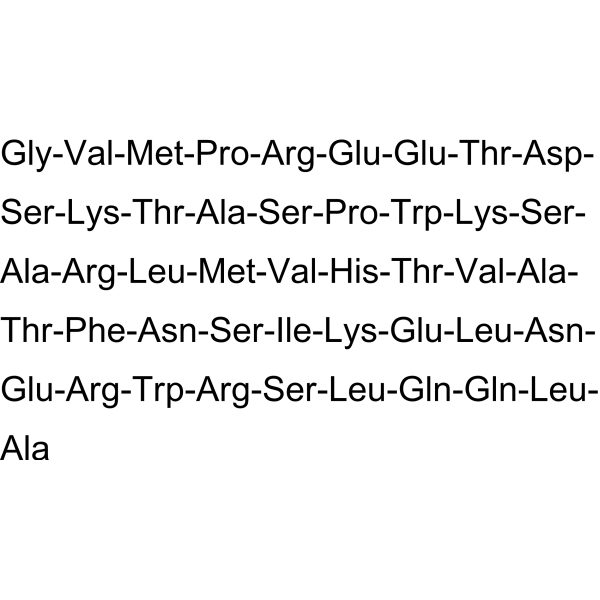
Braftide is an allosteric inhibitor for BRAF kinase by targeting the dimer interface of BRAF kinase and inhibiting the formation of BRAF dimers. Braftide inhibits wild-type BRAF and oncogenic BRAF G469A with IC50 of 364 nM and 172 nM, respectively. Braftide inhibits MAPK signaling pathway, inhibits proliferation of KRAS mutant tumor cells (EC50 is 7.1 and 6.6 μM, for HCT116 and HCT-15), in combination of TAT sequence. Braftide can be used for cancer research .
loading...
    loading...
Cat. No.: HY-W611371
CAS No.: 61694-81-3
Target:  

TRP Channel iGluR

Research Areas:  

Neurological Disease

FP802 is an orally active potent TwinF interface inhibitor that disrupts and detoxifies the NMDAR/TRPM4 death complex. FP802 exerts powerful neuroprotective effects in the 5xFAD mouse model of Alzheimer’s disease (AD) by preventing cognitive decline, preserving neuronal structural integrity, reducing amyloid-β plaque formation, and mitigating mitochondrial pathology . FP802 stops loss of motor neurons, reduces serum neurofilament light chain (NfL) levels, improves motor performance, and extends life in a mouse model of amyotrophic lateral sclerosis (ALS). FP802 can be used for AD and ALS research .
loading...
    loading...
Cat. No.: HY-102043
CAS No.: 2095312-08-4
Research Areas:  

Neurological Disease

PDM-631 is a selective and orally active PDE2A inhibitor with blood-brain barrier penetration. PDM-631 exhibits potent inhibitory activity against human and rat recombinant PDE2A with IC50 values of 1.5 nM and 4.2 nM, respectively. PDM-631 increases cGMP levels in the rat cerebral cortex. PDM-631 can be used for the study of schizophrenia and neurodegenerative disorders .
loading...
    loading...

