130 Results for "

Vasoconstriction

" in MedChemExpress (MCE) Product Catalog:
Products (130)

130 Results for "Vasoconstriction" in MCE Product Catalog:

Cat. No.: HY-W010973R
CAS No.: 61-47-2
5-Hydroxytryptamine creatinine sulfate monohydrate (Standard) is the analytical standard of 5-Hydroxytryptamine creatinine sulfate monohydrate (HY-W010973). This product is intended for research and analytical applications. 5-Hydroxytryptamine creatinine sulfate monohydrate is a 5-HT receptor agonist and amine oxidase substrate that acts through multiple physiological responses, including induction of vasoconstriction, pressor effects, acceleration of platelet potassium exchange, and endothelium-dependent relaxation, and can serve as a radiolabeled substrate for organelle uptake assays. 5-Hydroxytryptamine creatinine sulfate monohydrate can be used in research on burns, tourniquet and botulinum shock .
loading...
    loading...
Cat. No.: HY-109163R
CAS No.: 1706528-83-7
Synonyms: INS-1009 (Standard)
Treprostinil palmitil (Standard) is the analytical standard of Treprostinil palmitil (HY-109163). This product is intended for research and analytical applications. Treprostinil palmitil is a long-acting inhaled pulmonary vasodilator prodrug of Treprostinil (HY-100441), formulated in a lipid nanoparticle (LNP). Treprostinil palmitil can inhibit pulmonary vascular remodeling induced by Su/Hx challenge in rats. Treprostinil palmitil can induce cough. Treprostinil palmitil demonstrates a sustained presence in the lungs with reduced systemic exposure and prolonged inhibition of hypoxia-induced pulmonary vasoconstriction in vivo. Treprostinil palmitil can be studied in research for pulmonary arterial hypertension and interstitial lung disease .
loading...
    loading...
Cat. No.: HY-160099S
Synonyms: WIT003-d2
20-5,14-HEDE-d2 (WIT003-d2) is the deuterated-labeled 20-5,14-HEDE (HY-160099). 20-5,14-HEDE (WIT003) is an analog of 20-HETE. 20-5,14-HEDE activates PI3K/Akt signaling pathway, thereby exhibiting anti-apoptotic and cell survival promoting effects. 20-5,14-HEDE is the agonist for 20-HETE that increases intracellular Ca 2+ concentrations, thereby enhancing vasoconstriction .
loading...
    loading...
Cat. No.: HY-160099S2
Synonyms: WIT003-d2-2
20-5,14-HEDE-d2 (WIT003-d2) is the deuterated-labeled 20-5,14-HEDE (HY-160099). 20-5,14-HEDE (WIT003) is an analog of 20-HETE. 20-5,14-HEDE activates PI3K/Akt signaling pathway, thereby exhibiting anti-apoptotic and cell survival promoting effects. 20-5,14-HEDE is the agonist for 20-HETE that increases intracellular Ca 2+ concentrations, thereby enhancing vasoconstriction .
loading...
    loading...
Cat. No.: HY-109163S
Synonyms: INS-1009-d4
Treprostinil palmitil-d4 (INS-1009-d4) is the deuterated-labeled Treprostinil palmitil (HY-109163). Treprostinil palmitil is a long-acting inhaled pulmonary vasodilator prodrug of Treprostinil (HY-100441), formulated in a lipid nanoparticle (LNP). Treprostinil palmitil can inhibit pulmonary vascular remodeling induced by Su/Hx challenge in rats. Treprostinil palmitil can induce cough. Treprostinil palmitil demonstrates a sustained presence in the lungs with reduced systemic exposure and prolonged inhibition of hypoxia-induced pulmonary vasoconstriction in vivo. Treprostinil palmitil can be studied in research for pulmonary arterial hypertension and interstitial lung disease .
loading...
    loading...
Cat. No.: HY-160099S1
Synonyms: WIT003-d2-1
20-5,14-HEDE-d2-1 (WIT003-d2-1) is the deuterated-labeled 20-5,14-HEDE (HY-160099). 20-5,14-HEDE (WIT003) is an analog of 20-HETE. 20-5,14-HEDE activates PI3K/Akt signaling pathway, thereby exhibiting anti-apoptotic and cell survival promoting effects. 20-5,14-HEDE is the agonist for 20-HETE that increases intracellular Ca 2+ concentrations, thereby enhancing vasoconstriction .
loading...
    loading...
Cat. No.: HY-12115
CAS No.: 2149-70-4
Purity:  99.78%
Synonyms: Nω-nitro-L-arginine; L-NOARG; L-NG-Nitroarginine
Target:  

NO Synthase

Research Areas:  

Cardiovascular Disease

NG-nitro-L-arginine (Nω-nitro-L-arginine; L-NOARG; L-NG-Nitroarginine) is a nitric oxide synthase (NO Synthase) inhibitor, with a Kd of 15 nM for constitutive NOS from bovine brain and a Ki of 4.4 μM for inducible NOS from mouse macrophages. NG-nitro-L-arginine competitively blocks the synthesis of NO from L-arginine; in addition, it inhibits endothelium-dependent vasodilation, and exhibits effects such as blood pressure elevation, heart rate reduction and vasoconstriction. NG-nitro-L-arginine regulates mitochondrial respiratory efficiency, antioxidant enzyme activity, lipid peroxidation level and tissue lead content in rats. NG-nitro-L-arginine can be used in studies related to cardiovascular diseases .
loading...
    loading...
Cat. No.: HY-136500
CAS No.: 42935-17-1
Purity:  ≥95.0%
Synonyms: PGH2
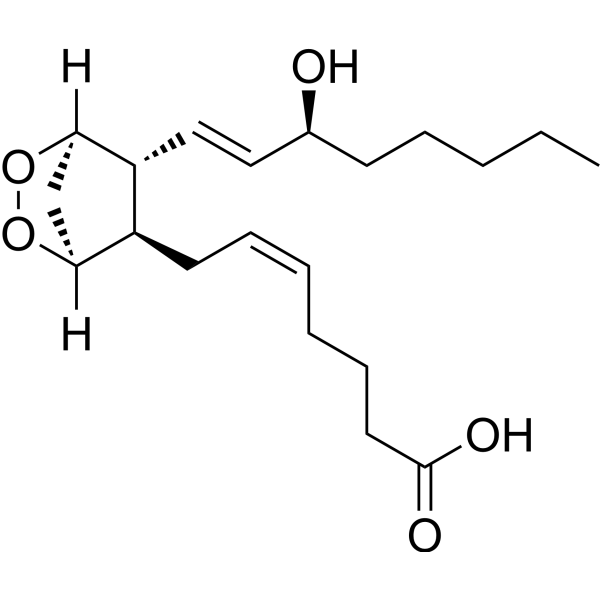
Prostaglandin H2 (PGH2) is an endothelium-derived contracting factor. Prostaglandin H2 can cause vasoconstriction. Prostaglandin H2 is the common precursor of all PGs and is produced by several cells that express cyclooxygen-ases. Prostaglandin H2 can activate PGD2 receptors CRTH2 and DP via interacting directly with the receptors and/or by giving rise to PGD2 after catalytic conversion by plasma proteins. Prostaglandin H2 can induce eosinophils migration and inhibit platelet aggregation. Prostaglandin H2 can accelerate the formation of dimers and higher oligomers of amyloid β1-42. Prostaglandin H2 can be used for the researches of inflammation and neurological disease, such as Alzheimer disease .
loading...
    loading...
Cat. No.: HY-160431
CAS No.: 82864-43-5
Research Areas:  

Metabolic Disease

8(9)-EET is one of the main metabolites produced by the metabolism of arachidonic acid (HY-109590) through the cytochrome P450 epoxide pathway. 8(9)-EET is an effective substrate for COX-1 and COX-2. 8(9)-EET activates PPARα in HEK293 cells and inhibits the activity of NF-κB induced by IL-1β in a PPARα-dependent and -independent manner. The (8S,9R)-isomer of 8(9)-EET ([(8S,9R)-EET]) causes vasoconstriction, thereby reducing renal plasma flow and glomerular filtration rate .
loading...
    loading...
Cat. No.: HY-179488
CAS No.: 184488-44-6
Research Areas:  

Inflammation/Immunology

(±)8(9)-EET is one of the main metabolites produced by the metabolism of arachidonic acid (HY-109590) through the cytochrome P450 epoxide pathway. (±)8(9)-EET is an effective substrate for COX-1 and COX-2. (±)8(9)-EET activates PPARα in HEK293 cells and inhibits the activity of NF-κB induced by IL-1β in a PPARα-dependent and -independent manner. The (8S,9R)-isomer of (±)8(9)-EET ([(8S,9R)-EET]) causes vasoconstriction, thereby reducing renal plasma flow and glomerular filtration rate .
loading...
    loading...
Cat. No.: HY-18347
CAS No.: 210101-16-9
Synonyms: YM 087 free base
Conivaptan (YM 087 free base) is an orally active dual vasopressin V1a/V2 receptor antagonist with Ki values of 0.48 nM and 3.04 nM for vasopressin V1a receptor and V2 receptor, respectively. Conivaptan competitively and reversibly blocks vasopressin-mediated antidiuresis, vasoconstriction, and cellular hypertrophy, while inhibiting CYP3A4. Conivaptan inhibits vasopressin-induced intracellular calcium, cAMP, and mitogen-activated kinase activation in vascular smooth muscle cells and cardiomyocytes. Conivaptan induces water diuresis while improving hemodynamics in heart failure models, reducing left ventricular end-diastolic pressure, vascular resistance, and organ weight. Conivaptan is used for research on hyponatremia and congestive heart failure .
loading...
    loading...
Cat. No.: HY-B0197AR
CAS No.: 143388-64-1
Synonyms: GR-85548A hydrochloride (Standard)
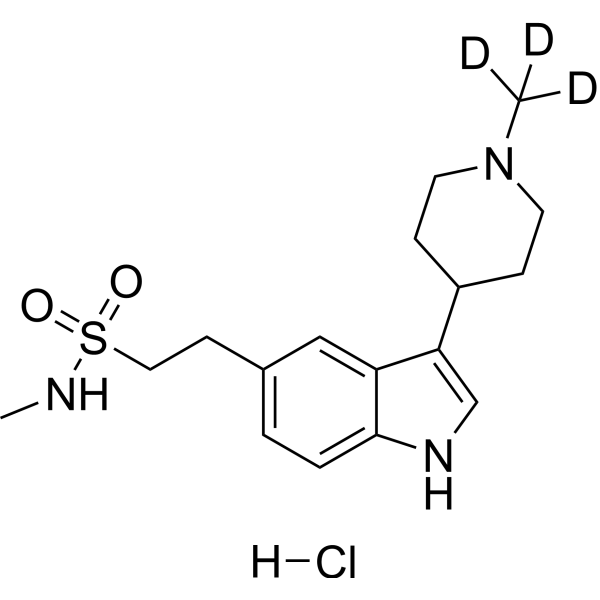
Naratriptan (GR-85548A) hydrochloride (Standard) is the analytical standard of Naratriptan hydrochloride (HY-B0197A). This product is intended for research and analytical applications. Naratriptan is a selective 5-HT1B/1D receptor agonist. Naratriptan is peripherally active and has good oral bioavailability, inducing cranial artery vasoconstriction by activating 5-HT1B/1D receptors (EC50=0.11 μM for dog basilar artery). Naratriptan also inhibits trigeminal nerve-mediated dural neurogenic plasma extravasation and reduces sterile inflammation. Naratriptan is mainly used in the research of acute migraine, targeting cranial vascular and neuroinflammatory mechanisms .
loading...
    loading...
Cat. No.: HY-B0197AS
CAS No.: 1190021-64-7
Synonyms: GR-85548A d3
Naratriptan-d3 (GR-85548A-d3) is the deuterium labeled Naratriptan hydrochloride (HY-B0197A). Naratriptan hydrochloride is a selective 5-HT1B/1D receptor agonist. Naratriptan hydrochloride is peripherally active and has good oral bioavailability, inducing cranial artery vasoconstriction by activating 5-HT1B/1D receptors (EC50=0.11 μM for dog basilar artery). Naratriptan hydrochloride also inhibits trigeminal nerve-mediated dural neurogenic plasma extravasation and reduces sterile inflammation. Naratriptan hydrochloride is mainly used in the research of acute migraine, targeting cranial vascular and neuroinflammatory mechanisms .
loading...
    loading...
Cat. No.: HY-B0197S
CAS No.: 1190043-69-6
Synonyms: GR-85548A-d3-1
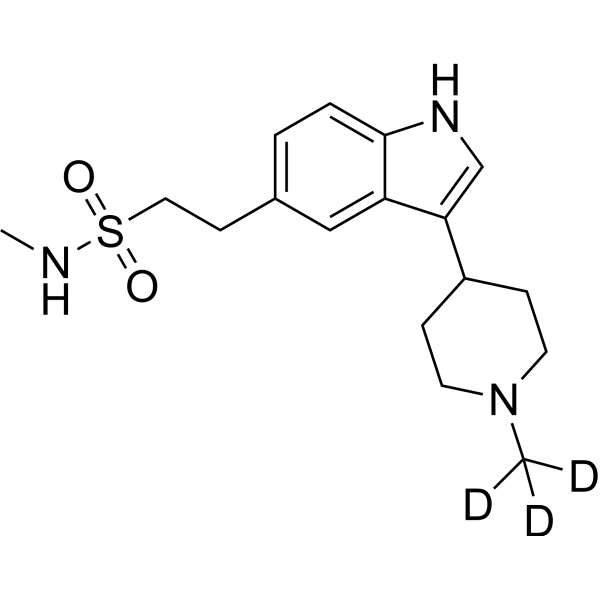
Naratriptan-d3 (GR-85548A-d3) is the deuterium labeled Naratriptan (HY-B0197). Naratriptan is a selective 5-HT1B/1D receptor agonist. Naratriptan is peripherally active and has good oral bioavailability, inducing cranial artery vasoconstriction by activating 5-HT1B/1D receptors (EC50=0.11 μM for dog basilar artery). Naratriptan also inhibits trigeminal nerve-mediated dural neurogenic plasma extravasation and reduces sterile inflammation. Naratriptan is mainly used in the research of acute migraine, targeting cranial vascular and neuroinflammatory mechanisms .
loading...
    loading...
Cat. No.: HY-P12352
TRP-PK1 is a polypeptide. TRP-PK1 can be derived from the fourth transmembrane segment of TRPV4. TRP-PK1 can insert into the phospholipid bilayer. TRP-PK1 self-assembles to form K +-permeable channels, mediates K + flux, hyperpolarizes the membrane potential of vascular smooth muscle, relaxes agonist-induced vasoconstriction, and lowers mean arterial pressure. TRP-PK1 enhances the tumor-targeting capability of cell membrane vesicles and displays Angiopep-2 (HY-P2341) on the surface of engineered vesicles. TRP-PK1 can be used for research on glioblastoma multiforme, head and neck cancer, and hypertension .
loading...
    loading...
Cat. No.: HY-W335976
CAS No.: 154323-46-3
Target:  

5-HT Receptor

Research Areas:  

Neurological Disease

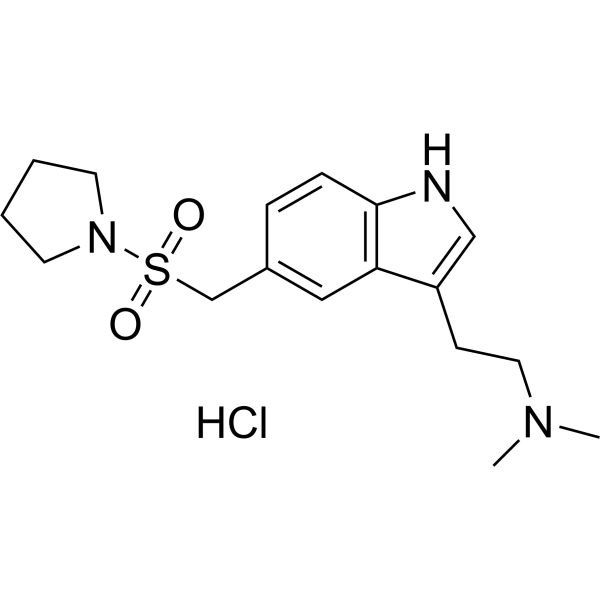
Almotriptan (PNU180638) hydrochloride is an orally active, highly selective agonist of the 5-HT1B/1D receptor (5-HT1B/1D receptor), with EC50 values of 1.6 nM and 3.1 nM, respectively. Almotriptan hydrochloride shows moderate affinity for the 5-HT1F receptor, and weak affinity for the 5-HT1A, 5-HT6 and 5-HT7 receptors. Almotriptan hydrochloride induces intracranial vasoconstriction, inhibits nociceptive neurotransmission in the trigeminocervical complex, and suppresses the release of vasoactive peptides from trigeminal nerve endings. Almotriptan hydrochloride can be used in research related to migraine.
loading...
    loading...
Cat. No.: HY-W414915R
CAS No.: 137863-17-3
Synonyms: CGP 48933 methyl ester (Standard)
Valsartan (CGP 48933) methyl ester (Standard) is the analytical standard of Valsartan methyl ester (HY-W414915). This product is intended for research and analytical applications. Valsartan methyl ester is the methyl ester derivative of Valsartan (HY-18204). Valsartan is a selective angiotensin II type 1 (AT1) receptor blocker (ARB) with potent antihypertensive and cardioprotective effects. Valsartan competitively binds to AT1 receptors, inhibiting the binding of angiotensin II to AT1 receptors, thereby blocking angiotensin II-mediated vasoconstriction, sodium retention, and myocardial hypertrophy signaling pathways. Valsartan reduces systolic blood pressure in L-NAME-induced hypertensive rats. Valsartan can be used for the study and treatment of arterial hypertension, hypertensive heart disease, and heart failure .
loading...
    loading...
Cat. No.: HY-18347AR
CAS No.: 168626-94-6
Synonyms: YM 087 (Standard)
Conivaptan hydrochloride (Standard) (YM 087 (Standard)) is the analytical standard of Conivaptan hydrochloride (HY-18347A). This product is intended for research and analytical applications. Conivaptan hydrochloride is an orally active dual vasopressin V1a/V2 receptor antagonist with Ki values of 0.48 nM and 3.04 nM for vasopressin V1a receptor and V2 receptor, respectively. Conivaptan hydrochloride competitively and reversibly blocks vasopressin-mediated antidiuresis, vasoconstriction, and cellular hypertrophy, while inhibiting CYP3A4. Conivaptan hydrochloride inhibits vasopressin-induced intracellular calcium, cAMP, and mitogen-activated kinase activation in vascular smooth muscle cells and cardiomyocytes. Conivaptan hydrochloride induces water diuresis while improving hemodynamics in heart failure models, reducing left ventricular end-diastolic pressure, vascular resistance, and organ weight. Conivaptan hydrochloride is used for research on hyponatremia and congestive heart failure .
loading...
    loading...
Cat. No.: HY-B0383
CAS No.: 181183-52-8
Synonyms: PNU180638
Target:  

5-HT Receptor

Research Areas:  

Neurological Disease

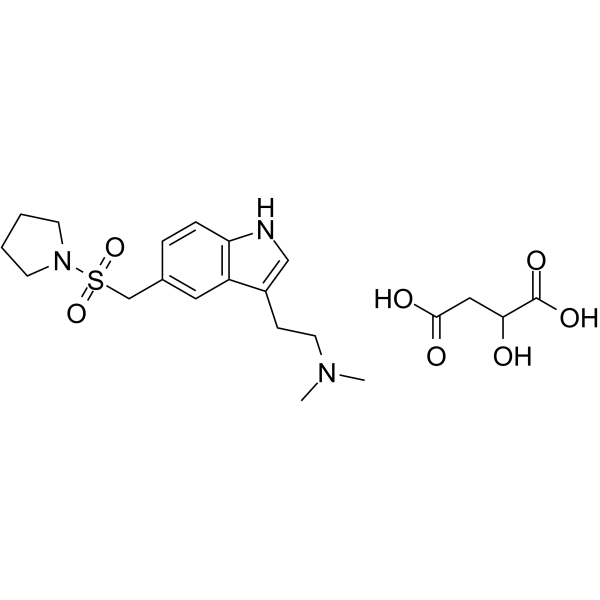
Almotriptan malate (PNU180638) is an orally active, highly selective agonist of the 5-HT1B/1D receptor (5-HT1B/1D receptor), with EC50 values of 1.6 nM and 3.1 nM, respectively. Almotriptan malate shows moderate affinity for the 5-HT1F receptor, and weak affinity for the 5-HT1A, 5-HT6 and 5-HT7 receptors. Almotriptan malate induces intracranial vasoconstriction, inhibits nociceptive neurotransmission in the trigeminocervical complex, and suppresses the release of vasoactive peptides from trigeminal nerve endings. Almotriptan malate can be used in research related to migraine .
loading...
    loading...
Cat. No.: HY-B0383A
CAS No.: 154323-57-6
Synonyms: PNU180638 free base
Target:  

5-HT Receptor

Research Areas:  

Neurological Disease

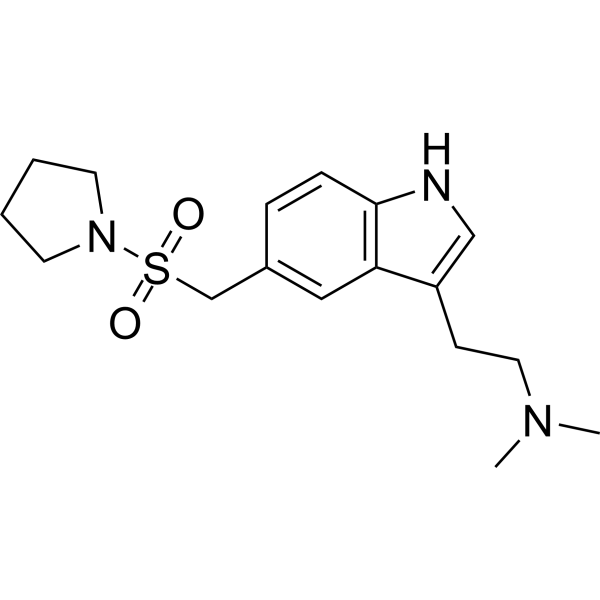
Almotriptan (PNU180638 free base) is an orally active, highly selective agonist of the 5-HT1B/1D receptor (5-HT1B/1D receptor), with EC50 values of 1.6 nM and 3.1 nM, respectively. Almotriptan shows moderate affinity for the 5-HT1F receptor, and weak affinity for the 5-HT1A, 5-HT6 and 5-HT7 receptors. Almotriptan induces intracranial vasoconstriction, inhibits nociceptive neurotransmission in the trigeminocervical complex, and suppresses the release of vasoactive peptides from trigeminal nerve endings. Almotriptan can be used in research related to migraine .
loading...
    loading...

