
134 Results for "

diffuse large B-cell lymphoma

" in MedChemExpress (MCE) Product Catalog:
Products (134)

134 Results for "diffuse large B-cell lymphoma" in MCE Product Catalog:

Cat. No.: HY-111101R
CAS No.: 2196204-23-4
Research Areas:  

Cancer

AZ1495 (Standard) is the analytical standard of AZ1495 (HY-111101). This product is intended for research and analytical applications. AZ1495, a weak base, is a potent orally active interleuKin-1 receptor associated Kinase 4 (IRAK4) inhibitor. AZ1495 has a favorable physicochemical and Kinase selectivity for IRAK4 and IRAK1 with IC50 values of 0.005 μM and 0.023 μM, respectively. AZ1495 has IRAK4 inhibition with a Kd value of 0.0007 μM. AZ1495 can be used for the research of diffuse large B-cell lymphoma (DLBCL) .
loading...
    loading...
Cat. No.: HY-182009
CAS No.: 3038316-36-5
DNMT-IN-6 is a DNA methyltransferase inhibitor with activity against DNMT1, DNMT3A, and DNMT3B. DNMT-IN-6 drives demethylation, and restores TMS1 tumor suppressor gene expression. DNMT-IN-6 induces apoptosis, causes G2/M phase arrest, disrupts mitochondrial integrity, and activates the intrinsic caspase cascade (3/7/9). DNMT-IN-6 inhibits tumor growth, and improves survival in xenograft models. DNMT-IN-6 can be used for the research of cancer, such as diffuse large B-cell lymphoma .
loading...
    loading...
Cat. No.: HY-150105
CAS No.: 2448172-22-1
Purity:  98.72%
Synonyms: BMF-219; Menin-MLL inhibitor 21
Icovamenib (BMF-219) is a selective, orally active, irreversible Menin inhibitor. Icovamenib forms a stable and irreversible covalent bond with Menin. Icovamenib promotes selective and controlled proliferation of beta cells and improvement of beta cell function in ex vivo human islet cultures. Icovamenib enhances glycemic control in animal diabetic models. Icovamenib induces a dose-dependent enhancement in insulin secretion potentiated by the GLP-1 RA. Icovamenib can be used for the study of multiple hematologic malignancies, solid tumors, and diabetes mellitus, such as diffuse large B-cell lymphoma (DLBCL), multiple myeloma (MM) and chronic lymphocytic leukemia and type 2 diabetes .
loading...
    loading...
Cat. No.: HY-168614
CAS No.: 2991817-99-1
Research Areas:  

Cancer

MGD-4 is an orally active cereblon-dependent molecular glue degrader with a phthalazinone scaffold. MGD-4 degrades the Ikaros family proteins IKZF1, IKZF2 and IKZF3 in a dose-dependent manner, with DC50 values of 67.2 nM, 918.2 nM and 95.8 nM, respectively. MGD-4 exhibits weak degradation activity against CK1α. MGD-4 inhibits the viability of multiple myeloma (MM) and acute myeloid leukemia (AML) cells and induces cell apoptosis. MGD-4 is used for the research of multiple myeloma, acute myeloid leukemia, diffuse large B-cell lymphoma and related hematological malignancies .
loading...
    loading...
Cat. No.: HY-173641
CAS No.: 3067681-22-2
Research Areas:  

Cancer

MNN-02-155 is a bivalent molecular glue with with dual binding to p300/CBP and BCL6. MNN-02-155 induces potent activation of the BCL6-target reporter gene and cell death. MNN-02-155 can be used for the study of diffuse large B cell lymphomas (DLBCLs) .
loading...
    loading...
Cat. No.: HY-P990033
CAS No.: 2543693-10-1
Synonyms: CC-95251; BMS-986351

Target:  

CD47

Research Areas:  

Cancer

Anzurstobart (CC-95251; BMS-986351) is a CD47/SIRPα inhibitor with human SIRPα Kd of 0.0541 nM and human SIRPα IC50 of 100 nM. Anzurstobart binds SIRPα at a CD47-overlapping site, blocks CD47-SIRPα interactions, inhibits CD47-SIRPα axis signaling, and binds across 6 prevalent human SIRPα haplotypes. Anzurstobart binds SIRPγ and inhibits CD47-SIRPγ interactions. Anzurstobart can be used for the research of non-Hodgkin's lymphoma, colorectal cancer, squamous cell carcinoma of the head and neck, diffuse large B-cell lymphoma, and advanced solid and hematologic malignancies .
loading...
    loading...
Cat. No.: HY-117622
CAS No.: 1388894-17-4
Target:  

IRAK

Research Areas:  

Inflammation/Immunology Cancer

ND-2110 is a selective IRAK4 inhibitor (Ki: 7.5 nM). ND-2110 binds to the ATP pocket of IRAK4. ND-2110 targets the subset of activated B cell-like (ABC) subtype of diffuse large B cell lymphoma (DLBCL) cell lines with MYD88 L265P mutations,. ND-2110 inhibits LPS-induced TNF production, alleviates collagen-induced arthritis, and blocks gout formation in mouse models .
loading...
    loading...
Cat. No.: HY-129179S
Synonyms: APG-2575-d8; Bcl-2/Bcl-xl inhibitor 1-d8
Target:  

Bcl-2 Family Apoptosis

Research Areas:  

Cancer

Lisaftoclax-d8 is the deuterated-labeled Lisaftoclax (HY-129179). Lisaftoclax is an orally active, selective BCL-2 inhibitor with a Ki of < 0.1 nM against human BCL-2. Lisaftoclax selectively binds to BCL-2, disrupts the BCL-2:BIM complex, and antagonizes the antiapoptotic function of BCL-2. Lisaftoclax induces BAX/BAK-dependent, caspase-mediated apoptosis, upregulates the pro-death proteins BIM and Noxa, and downregulates mitochondrial respiratory function and ATP production. Lisaftoclax can be used in the research of hematological malignancies including chronic lymphocytic leukemia, multiple myeloma, and diffuse large B-cell lymphoma .
loading...
    loading...
Cat. No.: HY-138834
CAS No.: 1042673-20-0
JH-I-25 is an orally active IRAK1 and IRAK4 inhibitor. JH-I-25 inhibits LPS-induced IRAK4 phosphorylation, IRAK1 degradation, MAPK activation, and the expression of proinflammatory cytokines TNF-α and IL-6 in lung tissues. JH-I-25 improves the survival rate of LPS-induced septic mice and serves as an IRAK4 recruiter in the design of proteolysis-targeting chimeric molecules. JH-I-25 can be used in research related to diffuse large B-cell lymphoma, Waldenström's macroglobulinemia, septic shock, rheumatoid arthritis, atherosclerosis, Alzheimer's disease, acute lung injury, sepsis, and psoriasis .
loading...
    loading...
Cat. No.: HY-168615
CAS No.: 2991818-13-2
Research Areas:  

Cancer

MGD-28 is an orally effective cereblon-dependent molecular glue degrader that potently degrades CK1α, IKZF1, IKZF2, and IKZF3, with respective DC50 values of 7.8, 3.8, 56.3, and 7.1 nM. MGD-28 also induces the degradation of multiple novel substrate proteins including ZFP91, DTWD1, ZNFX1, MBD1, and MBD3 via a CRBN/Cullin- and proteasome-dependent mechanism. MGD-28 induces cell apoptosis. MGD-28 is used in the research of multiple myeloma, acute myeloid leukemia, diffuse large B-cell lymphoma, and related malignancies .
loading...
    loading...
Cat. No.: HY-175502
CAS No.: 2991818-12-1
Research Areas:  

Cancer

MGD-22, a molecular glue, is an orally active IKZF1/2/3 degrader with DC50 values of 8.33 nM, 9.91 nM, and 5.74 nM, respectively. MGD-22 exhibits extremely potent anti-proliferative activity against diverse hematological cancer cells. MGD-22 induces apoptosis in cancer cells. MGD-22 demonstrates potent anti-tumor efficacy in mice bearing NCI-H929 xenografts or WSU-DLCL-2 xenografts. MGD-22 can be used for the study of hematological cancers, including multiple myeloma (MM), acute myeloid leukemia (AML), and diffuse large B-cell lymphoma (DLBCL) .
loading...
    loading...
Cat. No.: HY-176701
CAS No.: 3025838-18-7
Research Areas:  

Cancer

PRMT5-MTA-IN-4 (Compound 30) is a potent irreversible protein arginine methyltransferase 5 (PRMT5) inhibitor (IC50=8 nM). PRMT5-MTA-IN-4 blocks arginine methylation, inhibiting ribosomal RNA processing and cell cycle-related protein expression. PRMT5-MTA-IN-4 exhibits antiproliferative activity in multiple tumor cell lines (e.g., IC50=0.3 μM in DLD-1 cells). PRMT5-MTA-IN-4 is promising for research of hematological malignancies, such as acute myeloid leukemia, diffuse large B-cell lymphoma .
loading...
    loading...
Cat. No.: HY-168654
CAS No.: 3090685-34-7
Target:  

Wee1

Research Areas:  

Cancer

WEE1 degrader 1 (Compound 10) is a CRBN-dependent molecular glue degrader of WEE1 and casein kinase 1α (CK1α) with sub-2 nM DC50 values for both targets. WEE1 degrader 1 can be used for the research of acute lymphoblastic leukemia, acute monocytic leukemia, acute promyelocytic leukemia, colorectal adenocarcinoma, diffuse large b cell lymphoma .
loading...
    loading...
Cat. No.: HY-149924
CAS No.: 3033993-13-1
Purity:  95.87%
Target:  

PROTACs IAP Apoptosis

Research Areas:  

Cancer

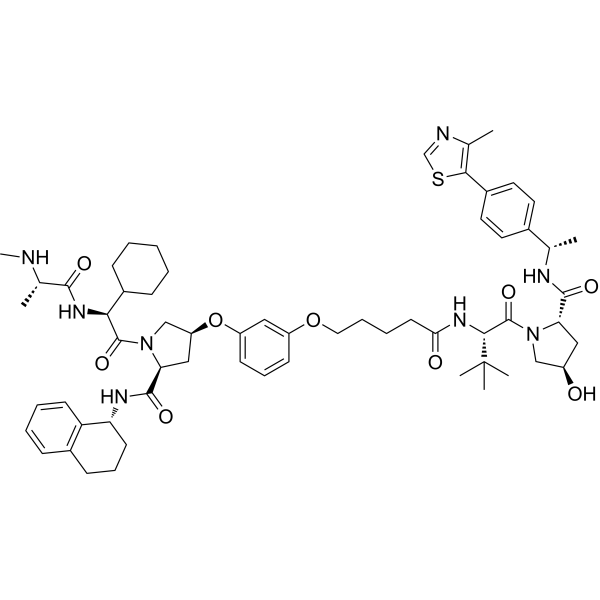
CST626 is a PROTAC degrader targeting IAP, with DC50 values of 0.7 nM, 2.4 nM and 6.2 nM against XIAP, cIAP1 and cIAP2, respectively. This compound recruits the VHL E3 ubiquitin ligase to form a heterotrimeric complex, thereby inducing ubiquitination and proteasomal degradation of the target proteins. CST626 also exhibits certain degrading activity against VHL30 and VHL19. CST626 inhibits the proliferation and induces apoptosis of various hematologic tumor cell lines, and its anti-tumor effect is further enhanced when used in combination with TNF-α. CST626 can be used in research related to multiple myeloma, acute myeloid leukemia and diffuse large B-cell lymphoma .
loading...
    loading...
Cat. No.: HY-156566
CAS No.: 2503036-46-0
Research Areas:  

Cancer

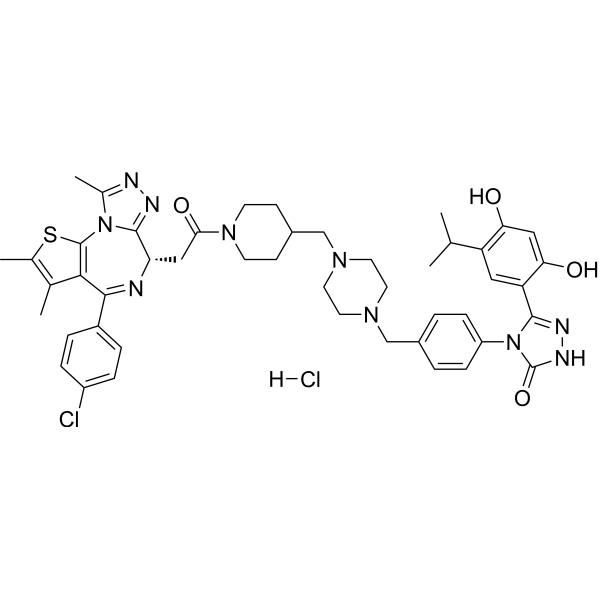
PROTAC BRD4 Degrader-21 is a BRD4-targeting PROTAC degrader with an IC50 value of 59 nM. PROTAC BRD4 Degrader-21 induces ubiquitination of BRD4, leading to its degradation via the proteasome. PROTAC BRD4 Degrader-21 binds to recombinant HSP90α protein with moderate affinity, having an IC50 of 100-1000 nM. PROTAC BRD4 Degrader-21 induces cancer cell death. PROTAC BRD4 Degrader-21 inhibits tumor growth in xenograft mouse models. PROTAC BRD4 Degrader-21 can be used for the research of acute myeloid leukemia, diffuse large B-cell lymphoma .
loading...
    loading...
Cat. No.: HY-179077
CAS No.: 2416130-49-7
Research Areas:  

Cancer

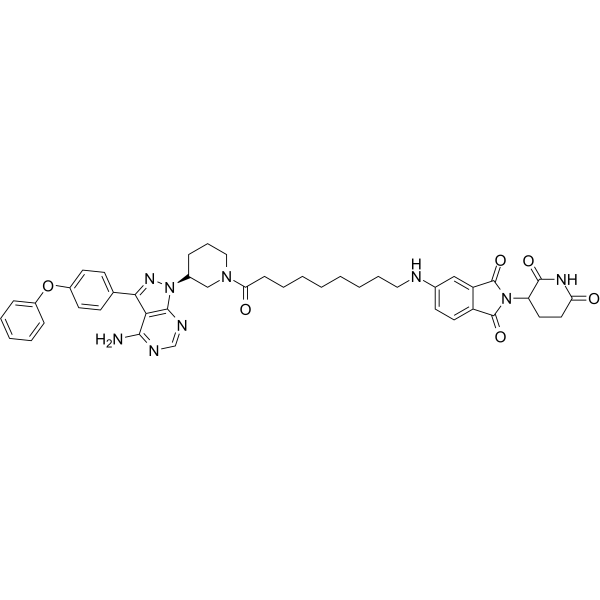
PROTAC BTK/IKZF1/3 Degrader-1 is an orally active PROTAC-IMiD bifunctional protein degrader that selectively degrades BTK, IKZF1 and IKZF3. PROTAC BTK/IKZF1/3 Degrader-1 recruits the CRBN E3 ubiquitin ligase to form a ternary complex, mediating ubiquitination and proteasome-dependent degradation of target proteins, with no obvious degrading effect on GSPT1. PROTAC BTK/IKZF1/3 Degrader-1 inhibits cancer cell proliferation, induces cancer cell apoptosis, and suppresses tumor growth. PROTAC BTK/IKZF1/3 Degrader-1 can be used for the research of diffuse large B-cell lymphoma .
loading...
    loading...
Cat. No.: HY-P11280A
Target:  

Melanocortin Receptor

Research Areas:  

Cancer

PRAME peptide (425-433) acetate is a proteasome-degraded peptide derived from the cancer-testis antigen PRAME (Preferentially Expressed Antigen in Melanoma). PRAME peptide (425-433) acetate is restricted by HLA-A*02:01 and can serve as a target for bispecific T cell engager therapy in the context of major histocompatibility complex I presentation. PRAME peptide (425-433) acetate shows application potential in various malignant tumors and is widely suitable for research related to solid tumors, melanoma, ovarian cancer, endometrial cancer, and lung cancer (including lung adenocarcinoma and lung squamous cell carcinoma). PRAME peptide (425-433) acetate can be used to explore disease of triple-negative breast cancer, diffuse large B-cell lymphoma, and head and neck squamous cell carcinoma .
loading...
    loading...
Cat. No.: HY-187629
CAS No.: 2202678-04-2
Research Areas:  

Cancer

HH2853 is an orally active EZH1/EZH2 inhibitor, with an IC50 of 9.26 nM for EZH1 and IC50 values ranging from 2.21 to 3.75 nM for both wild-type and mutant EZH2 . HH2853 simultaneously inhibits the methyltransferase activities of EZH1 and EZH2, blocks the compensatory pathway that arises following EZH2 inhibition, and reduces H3K27me3 levels. HH2853 upregulates the expression of c-Myc and TfR-1 to induce intracellular iron accumulation, and stabilizes GPX4 via HSPA5 to suppress ferroptosis. HH2853 combined with Erastin (HY-15763) synergistically inhibits EZH2 wild-type DLBCL cell proliferation. HH2853 alone shows weak activity against EZH2 wild-type DLBCL and is well tolerated. HH2853 is applicable for research related to diffuse large B-cell lymphoma, non-Hodgkin's lymphoma, epithelioid sarcoma, and follicular lymphoma .
loading...
    loading...
Cat. No.: HY-153803
CAS No.: 2864408-92-2
Purity:  98.99%
GBD-9 is a degrader based on the E3 ubiquitin ligase CRBN that targets BTK and the G1 to S phase transition protein GSPT1. GBD-9 has both PROTAC and molecular glue properties by inducing ubiquitination and proteasomal degradation of target proteins. GBD-9 can efficiently degrade wild-type and mutant BTK (such as C481S mutation) and GSPT1. GBD-9 significantly inhibits tumor cell proliferation by inducing G1 phase arrest in cancer cells, downregulating anti-apoptotic proteins (BCL-2, MCL-1) and activating Caspase-3 to induce apoptosis. GBD-9 is mainly used in the research of hematological tumors such as diffuse large B-cell lymphoma (DLBCL) and acute myeloid leukemia (AML) .
loading...
    loading...
Cat. No.: HY-157763
Research Areas:  

Cancer

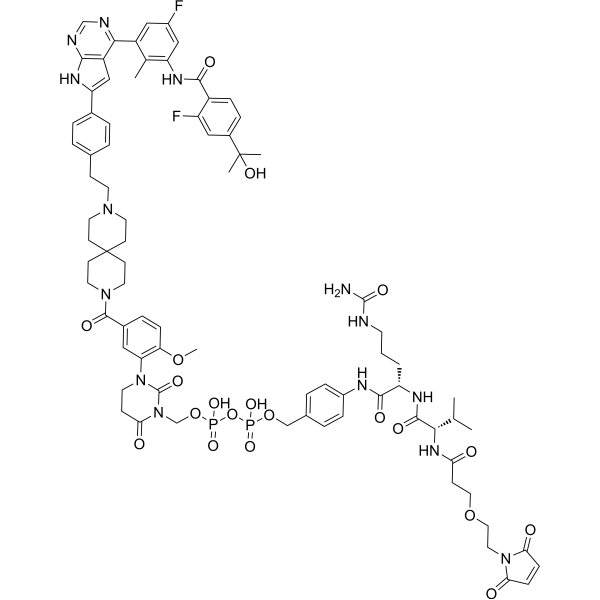
Mal-PEG1-Val-Cit-PABC-diphosphate-BTK degrader-1 is a cleavable linker-payload conjugate and cereblon-binding BTK bifunctional degrader. Mal-PEG1-Val-Cit-PABC-diphosphate-BTK degrader-1 induces BTK degradation and exerts cytotoxic effects when delivered via CD79b monoclonal antibody. Mal-PEG1-Val-Cit-PABC-diphosphate-BTK degrader-1, when formulated as a CD79b antibody-drug conjugate, achieves sustained in vivo BTK degradation in tumor-bearing mice with reduced systemic payload exposure. Mal-PEG1-Val-Cit-PABC-diphosphate-BTK degrader-1 can be used for the research of activated b-cell-like diffuse large b-cell lymphoma (ADC linker: (HY-130944); PROTAC: (HY-163295)) .
loading...
    loading...

