1362 Results for "

labor induction

" in MedChemExpress (MCE) Product Catalog:
Products (1362)

1362 Results for "labor induction" in MCE Product Catalog:

Cat. No.: HY-B1777AS
CAS No.: 1173022-85-9
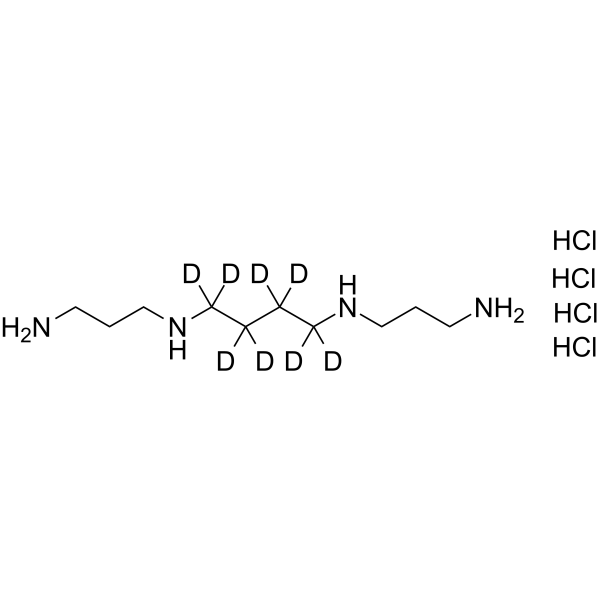
Spermine-d8 (tetrahydrochloride) is the deuterium labeled Spermine tetrahydrochloride. Spermine tetrahydrochloride is a polyamine nitric oxide donor that can provide nitric oxide to platelets and inhibit platelet activation to a certain extent concentration-dependently. Spermine tetrahydrochloride occurs in mammalian tissues, plants, bacteria, ribosomes and bacteriophage. Spermine tetrahydrochloride inhibits primary human embryo lung fibroblasts in vitro. Spermine is a natural antioxidant and anti-inflammatory agent. Spermine is known to inhibit some bacterial cultures, especially strains of Staphylococcus aureus. Spermine induces neurotoxicity in the striarum dose-dependently. Spermine can reversibly inhibits DNA synthetic response, mixed lymphocyte response and the induction of cytolytic lymphocyte response in primary cultures of murine spleen cells .
loading...
    loading...
Cat. No.: HY-W115785
CAS No.: 1332-07-6
Research Areas:  

Metabolic Disease

Zinc borate is a bioactive inorganic substance with properties including osteogenic induction, pro-angiogenesis, antioxidation, antimutagenesis and cytotoxicity. In the field of bone tissue engineering, Zinc borate is often incorporated into chitosan scaffolds. By releasing zinc ions and borate ions, Zinc borate induces the differentiation of human dental pulp stem cells into osteoblasts, upregulates the expression of bone-related genes and promotes calcium deposition. Zinc borate also promotes angiogenesis by upregulating key factors such as vascular endothelial growth factor. Zinc borate exhibits antioxidant capacity to scavenge free radicals, and can specifically reduce mutagenicity under specific conditions. Zinc borate reduces the survival rate of mouse fibroblasts, but it can still be used in studies related to bone tissue engineering .
loading...
    loading...
Cat. No.: HY-W334680
CAS No.: 103884-98-6
Research Areas:  

Others

2-Amino-9-((2R,3S,4R,5R)-3-fluoro-4-hydroxy-5-(hydroxymethyl)tetrahydrofuran-2-yl)-3,9-dihydro-6H-purin-6-one (9-β-D-[2'-Fluoro-2'-deoxy-arabinofuranosyl]-guanin) is a purine nucleoside analogue. Purine nucleoside analogs have broad antitumor activity targeting indolent lymphoid malignancies. Anticancer mechanisms in this process rely on inhibition of DNA synthesis, induction of apoptosis, etc .
loading...
    loading...
Cat. No.: HY-L037
2,489 compounds

Oxidative stress is an imbalance of free radicals and antioxidants in the body, which can lead to cell and tissue damage. Oxidative stress can be responsible for the induction of several diseases, both chronic and degenerative, as well as speeding up body aging process and cause acute pathologies. Antioxidants are a class of compounds able to counteract oxidative stress and mitigate its effects on individuals’ health, gained enormous attention from the biomedical research community. Antioxidants have long been substantial and amenable therapeutic arsenals for multifarious diseases such as AD and cancer.

MCE Antioxidant Compound Library contains 2,489 compounds that act as antioxidants for high throughput screening (HTS) and high content screening (HCS). This library is a useful tool for discovery new antioxidants and oxidative stress research.

Cat. No.: HY-P86669
Synonyms: Interleukin-4; IL4; IL 4; B cell growth factor 1; B cell IgG differentiation factor; B Cell Stimulatory Factor 1; BCGF 1; BCGF1; Binetrakin; BSF 1; BSF1; HCGF; Hodgkin’s Cell Growth Factor; IA Inducing Factor; IGG1 induction factor; Il4e12; Interleukin 4; Interleukin 4, isoform 1; Interleukin4; Lymphocyte stimulatory factor 1; Macrophage fusion factor; Mast cell growth factor 2; MCGF2; MFF; MGC79402; Pitrakinra; T cell growth factor 2; TCGF2; IL4_HUMAN; B-cell stimulatory factor 1; BSF-1.

Host:  

Rabbit

Application:  

WB, IHC-P, IHC-F, IF-Tissue

Reactivity:  

Human

loading...
    loading...
Cat. No.: HY-108398BR
CAS No.: 17046-59-2
11(Z),14(Z),17(Z)-Eicosatrienoic acid (Standard) is the analytical standard of 11(Z),14(Z),17(Z)-Eicosatrienoic acid (HY-108398B). This product is intended for research and analytical applications. 11 (Z),14 (Z),17 (Z)-Eicosatrienoic acid is an unsaturated fatty acid that affects mitochondrial genome maintenance. 11 (Z),14 (Z),17 (Z)-Eicosatrienoic acid fully incorporates into cell membrane phospholipids and supports the initial induction of cellular respiration, but fails to sustain the continuous replication and retention of mitochondrial genomes. 11 (Z),14 (Z),17 (Z)-Eicosatrienoic acid is applicable to research related to fatty acid acyl chain structure-dependent mitochondrial genome maintenance and mitochondrial biogenesis .
loading...
    loading...
Cat. No.: HY-152438
Research Areas:  

Others

6-Amino-3-ethynyl-4-methoxy-1-(β-D-ribofuranosyl)-1H-pyrazolo[3,4-d]pyrimidine is a purine nucleoside analogue. Purine nucleoside analogs have broad antitumor activity targeting indolent lymphoid malignancies. Anticancer mechanisms in this process rely on inhibition of DNA synthesis, induction of apoptosis, etc . 6-Amino-3-ethynyl-4-methoxy-1-(β-D-ribofuranosyl)-1H-pyrazolo[3,4-d]pyrimidine is a click chemistry reagent, it contains an Alkyne group and can undergo copper-catalyzed azide-alkyne cycloaddition (CuAAc) with molecules containing Azide groups.
loading...
    loading...
Cat. No.: HY-154146
CAS No.: 2072145-26-5
Research Areas:  

Cancer

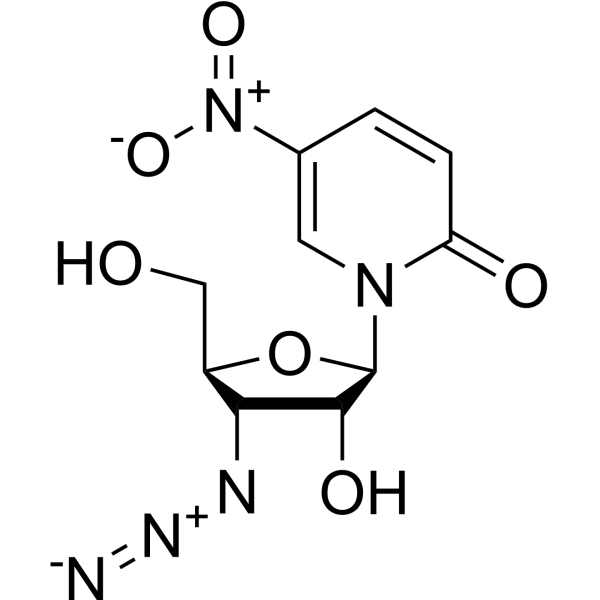
5-Nitro-1-(3-azido-3-deoxy-β-D-ribofuranosyl)-2(1H)-pyridinone is a purine nucleoside analog. Purine nucleoside analogs have broad antitumor activity targeting indolent lymphoid malignancies. Anticancer mechanisms in this process rely on inhibition of DNA synthesis, induction of apoptosis, etc . 5-Nitro-1-(3-azido-3-deoxy-β-D-ribofuranosyl)-2(1H)-pyridinone is a click chemistry reagent, it contains an Azide group and can undergo copper-catalyzed azide-alkyne cycloaddition reaction (CuAAc) with molecules containing Alkyne groups. It can also undergo strain-promoted alkyne-azide cycloaddition (SPAAC) reactions with molecules containing DBCO or BCN groups.
loading...
    loading...
Cat. No.: HY-154334
CAS No.: 256485-42-4
Research Areas:  

Cancer

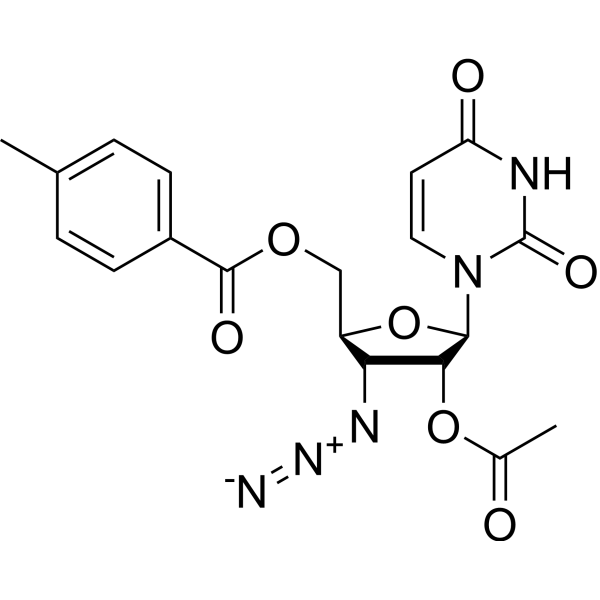
2’-O-Acetyl-3’-azido-5’-O-(4-methylbenzoyl)-3’-deoxyuridine is a purine nucleoside analog. Purine nucleoside analogs have broad antitumor activity targeting indolent lymphoid malignancies. Anticancer mechanisms in this process rely on inhibition of DNA synthesis, induction of apoptosis, etc . 2’-O-Acetyl-3’-azido-5’-O-(4-methylbenzoyl)-3’-deoxyuridine is a click chemistry reagent, it contains an Azide group and can undergo copper-catalyzed azide-alkyne cycloaddition reaction (CuAAc) with molecules containing Alkyne groups. It can also undergo strain-promoted alkyne-azide cycloaddition (SPAAC) reactions with molecules containing DBCO or BCN groups.
loading...
    loading...
Cat. No.: HY-154386
CAS No.: 2095417-42-6
Research Areas:  

Cancer

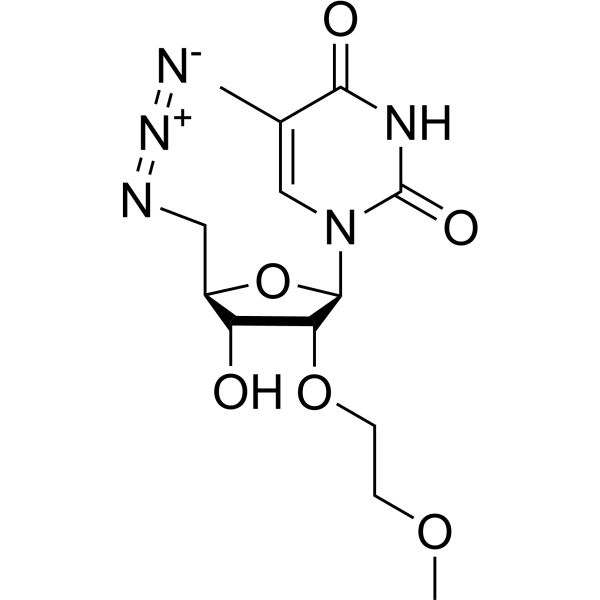
5’-Azido-5’-deoxy-2’-O-(2-methoxyethyl)-5-methyluridine is a purine nucleoside analog. Purine nucleoside analogs have broad antitumor activity targeting indolent lymphoid malignancies. Anticancer mechanisms in this process rely on inhibition of DNA synthesis, induction of apoptosis, etc . 5’-Azido-5’-deoxy-2’-O-(2-methoxyethyl)-5-methyluridine is a click chemistry reagent, it contains an Azide group and can undergo copper-catalyzed azide-alkyne cycloaddition reaction (CuAAc) with molecules containing Alkyne groups. It can also undergo strain-promoted alkyne-azide cycloaddition (SPAAC) reactions with molecules containing DBCO or BCN groups.
loading...
    loading...
Cat. No.: HY-154425
CAS No.: 2389988-75-2
Research Areas:  

Others

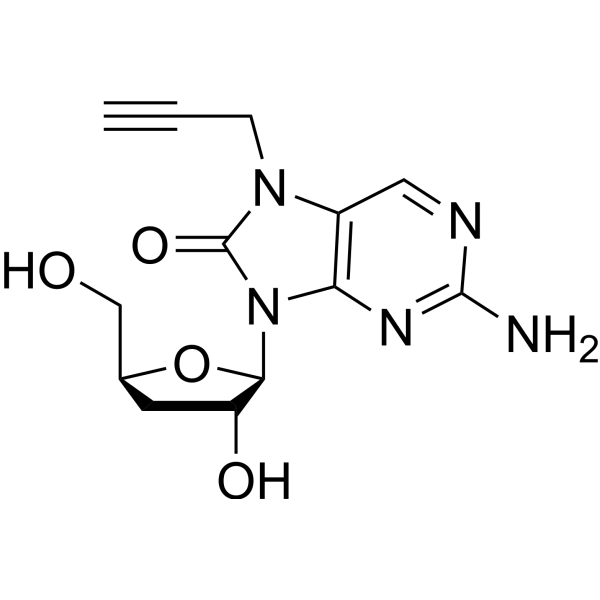
2-Amino-7-propargyl-7,8-dihydro-8-oxo-9-(beta-D-3-deoxy-ribofuranosyl)purine is a purine nucleoside analog. Purine nucleoside analogs have broad antitumor activity targeting indolent lymphoid malignancies. Anticancer mechanisms in this process rely on inhibition of DNA synthesis, induction of apoptosis, etc . 2-Amino-7-propargyl-7,8-dihydro-8-oxo-9-(beta-D-3-deoxy-ribofuranosyl)purine is a click chemistry reagent, it contains an Alkyne group and can undergo copper-catalyzed azide-alkyne cycloaddition (CuAAc) with molecules containing Azide groups.
loading...
    loading...
Cat. No.: HY-15763R
CAS No.: 571203-78-6
Erastin (Standard) is the analytical standard of Erastin (HY-15763). This product is intended for research and analytical applications. Erastin is a ferroptosis inducer. Erastin exhibits the mechanism of ferroptosis induction related to ROS and iron-dependent signaling. Erastin inhibits voltage-dependent anion channels (VDAC2/VDAC3) and accelerates oxidation, leading to the accumulation of endogenous reactive oxygen species. Erastin also disrupts mitochondrial permeability transition pore (mPTP) with anti-tumor activity. Furthermore, Erastin can block the uptake of cystine mediated by SLC7A11 and also spares UMRC6-EV and -C91A cells from disulfidptosis under glucose starvation .
loading...
    loading...
Cat. No.: HY-177477
CAS No.: 21056-79-1
2,5-Epidithia-3,6-dioxopiperazine (Formula 15) is a derivative of Epidithiodioxopiperazine (ETP). 2,5-Epidithia-3,6-dioxopiperazine improves intracellular penetration and restores the activity of 2-Cys-Prx (especially Peroxiredoxin II (PrxII)) of form simulation in cells. 2,5-Epidithia-3,6-dioxopiperazine inhibits PDGF-induced proliferation and migration in vascular smooth muscle cells while promoting these actions in endothelial cells with VEGF induction. 2,5-Epidithia-3,6-dioxopiperazine effectively inhibits the proliferation and migration and lung metastasis of melanoma cells. 2,5-Epidithia-3,6-dioxopiperazine can be used for vascular diseases such as hypertension, angina pectoris and myocardial infarction research .
loading...
    loading...
Cat. No.: HY-179498
ROCK2-IN-13 is a selective ROCK2 inhibitor. ROCK2-IN-13 reduces nuclear expression by disrupting the interaction of ROCK2 with transcriptional co activators p300> and PGC 1α, repressing oncogenic transcription. ROCK2-IN-13 activates FOXO1 driven PTEN expression, leading to suppression of the PI3K/Akt pathway, induction of G2/M cell cycle arrest, and promotion of apoptosis. ROCK2-IN-13 ablates the nuclear transcriptional function of ROCK2 that sustains oncogenic signaling and restores the tumor suppressive PTEN/FOXO1 axis. ROCK2-IN-13 can be used for prostate cancer reseach .
loading...
    loading...
Cat. No.: HY-180576
CAS No.: 2231746-53-3
Nurr1/RXR dual agonist 1 is a dual activator of Nurr1 (EC50 = 2.6 µM) and RXR with K s of 0.6 and 1.1 µM, respectively. Nurr1/RXR dual agonist 1 exclusively activates the heterodimer response element DR5 by selectively destabilizing the Nurr1 homodimer and stabilizing the Nurr1:RXR heterodimer. Nurr1/RXR dual agonist 1 enhances expression of a specific subset of neuroprotective Nurr1 target genes while avoiding induction of genes associated with potential off-target effects in neuronal cells. Nurr1/RXR dual agonist 1 can be used for neurodegenerative diseases research .
loading...
    loading...
Cat. No.: HY-B1777S
CAS No.: 93827-50-0
Synonyms: NSC 268508-15N2; Neuridine-15N2
Spermine- 15N2 (NSC 268508- 15N2) is the 15N-labeled Spermine (HY-B1777). Spermine is a natural antioxidant and anti-inflammatory agent. Spermine is known to inhibit some bacterial cultures, especially strains of Staphylococcus aureus. Spermine induces neurotoxicity in the striarum dose-dependently. Spermine can reversibly inhibits DNA synthetic response, mixed lymphocyte response and the induction of cytolytic lymphocyte response in primary cultures of murine spleen cells. Spermine tetrahydrochloride is a polyamine nitric oxide donor that can provide nitric oxide to platelets and inhibit platelet activation to a certain extent concentration-dependently. Spermine tetrahydrochloride occurs in mammalian tissues, plants, bacteria, ribosomes and bacteriophage. Spermine tetrahydrochloride inhibits primary human embryo lung fibroblasts in vitro .
loading...
    loading...
Cat. No.: HY-W753593
N4-Acetylcytidine- 13C5 is the 13C-labeled N4-Acetylcytidine (HY-W019670). N4-acetylcytidine (N4A) is an endogenous nucleoside metabolite from the degradation of tRNA. N4-Acetylcytidine is formed by N-acetyltransferase 10 and other enzymes. N4-acetylcytidine might sustain NLRP3 inflammasome activation via induction of HMGB1 expression and releasee. N4-Acetylcytidine modifies mRNA, tRNA and rRNA, affecting their stability, translation efficiency (such as enterovirus 71 RNA). N4-Acetylcytidine is used in the study of cancer, neuroinflammatory diseases, viral infections and obesity .
loading...
    loading...
Cat. No.: HY-120281
CAS No.: 2126038-25-1
Target:  

MEK PI3K Akt Apoptosis Caspase

Research Areas:  

Cancer

ST-168 is an orally active MEK/PI3K inhibitor with an IC50 of 182 nM against MEK1 and IC50 values ​​of 69.2, 41.7, 1482 and 2293 nM against PI3Kα, PI3Kδ, PI3Kβ and PI3Kγ respectively. ST-168 completely inhibits the phosphorylation of ERK1/2 and AKT and induces cancer cell death in a 3D tumor sphere model. ST-168 demonstrates significant antitumor effects in the A375 melanoma mouse model. ST-168 improves the ocular toxicity profile of MEK inhibitors, showing lower caspase activation levels, indicating reduced apoptosis induction. ST-168 can be used in melanoma research .
loading...
    loading...
Cat. No.: HY-121656
CAS No.: 56600-73-8
Target:  

17β-HSD

Research Areas:  

Cancer

AKR1C2/3-IN-2 is a potential AKR1C3 inhibitor with selective AKR1C3 activity. AKR1C2/3-IN-2 is able to block AKR1C3-mediated testosterone (T) production and PSA induction, affecting the endocrine activity of prostate cancer cells. AKR1C2/3-IN-2 shows selectivity over other AKR1C enzymes, indicating its potential application in inhibiting drug-resistant prostate cancer. AKR1C2/3-IN-2 has no inhibitory activity against COX isomerases, further emphasizing its specificity as a prostate cancer inhibitory compound .
loading...
    loading...
Cat. No.: HY-124421
CAS No.: 260443-89-8
Purity:  99.04%
Synonyms: NSC-703786
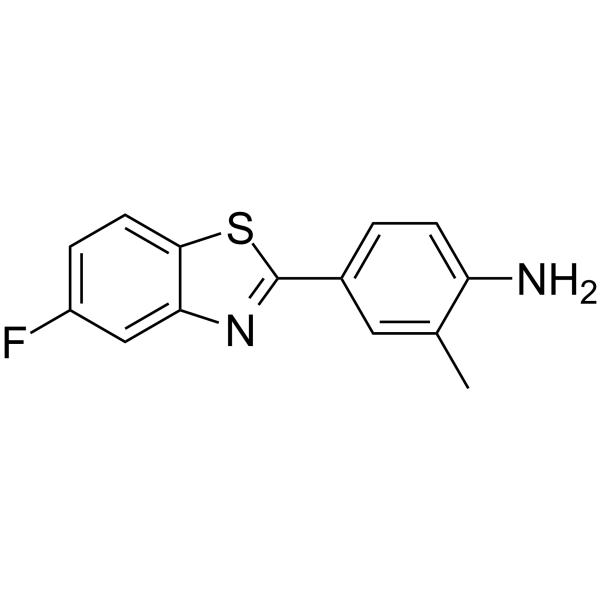
5F-203 (NSC-703786) is an aryl hydrocarbon receptor (AhR) agonist and the active moiety of the water-soluble benzothiazole prodrug Phortress (HY-103223). 5F-203 binds to cytosolic AhR and induces CYP1A1 and CYP1B1 expression. 5F-203 activates AhR signaling to induce DNA damage, cell cycle arrest, apoptosis, caspase-3/-7 activation, lysosomal membrane permeabilization, and Cathepsin B release. 5F-203 induces CYGB and pro-apoptotic protein expression and NAG-1 mRNA/protein induction through RNA stabilization. 5F-203 is used in research related to cancers such as triple-negative breast cancer and colorectal cancer .
loading...
    loading...