1460 Results for "

HINT1 polymerization

" in MedChemExpress (MCE) Product Catalog:
Products (1460)

1460 Results for "HINT1 polymerization" in MCE Product Catalog:

Cat. No.: HY-116282A
CAS No.: 9011-18-1
Synonyms: DSS (MW 4500-5500); DXS (MW 4500-5500)
Dextran sulfate sodium salt (DSS) (MW 4500-5500) is a polymer of dehydrated glucose with a molecular weight of approximately 4500-5500. Dextran sulfate sodium salt with different molecular weights exhibits different biological activities. Dextran sulfate sodium salt (MW 4500-5500) is an inhibitor of complement and coagulation pathways, and belongs to the glycosaminoglycans (GAG) family. Dextran sulfate sodium salt (MW 4500-5500) acts as an anticoagulant, antiviral, and anti-lipemic agent. Dextran sulfate sodium salt (MW 4500-5500) stops HIV-1 virus adsorption to host cells. Dextran sulfate sodium salt (MW 4500-5500) prevents NK cell-mediated cytotoxicity. Dextran sulfate sodium salt (MW 4500-5500) inhibits instant blood-mediated inflammatory reaction (IBMIR) [1] .
loading...
    loading...
Cat. No.: HY-116282W
CAS No.: 9011-18-1
Synonyms: DSS (MW 6500-10000); DXS (MW 6500-10000)
Dextran sulfate sodium salt (DSS) (MW 6500-10000) is a polymer of dehydrated glucose with a molecular weight of approximately 5000. Dextran sulfate sodium salt with different molecular weights exhibits different biological activities. Dextran sulfate sodium salt (MW 6500-10000) has antiviral activity against HIV-1 and HIV-2. Dextran sulfate sodium salt (MW 6500-10000) blocks the binding of virions to CD4 ⁺ T lymphocytes and inhibits syncytia formation. Dextran sulfate sodium salt (MW 6500-10000) also prevents experimental urolithiasis due to its cytoprotective actions. Moreover, because of its biocompatible and highly charged properties, Dextran sulfate sodium salt (MW 6500-10000) is a suitable choice for pharmaceutical systems [1] .
loading...
    loading...
Cat. No.: HY-119169
CAS No.: 84697-22-3
Synonyms: R 46846
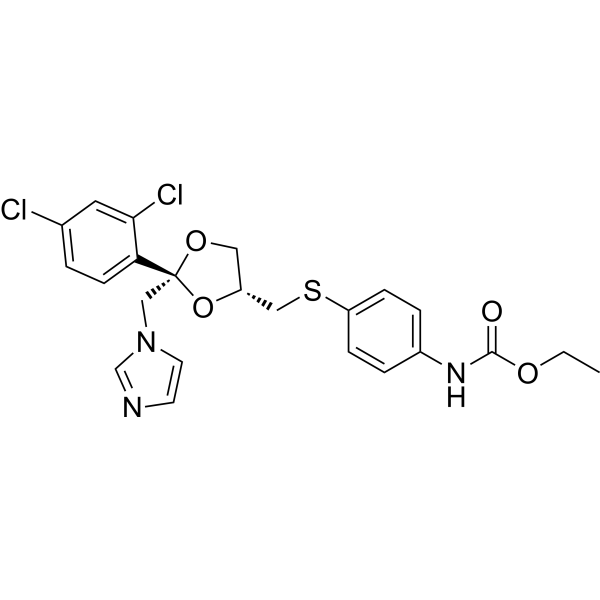
Tubulozole (R 46846) is an orally active inhibitor of tubulin polymerization with an ID50 of 0.34 μM. Tubulozole induces activation of the Chk1 kinase and phosphorylation of ERK1/2, which is required for microtubule formation. Tubulozole arrests Mitosis at the metaphase stage. Tubulozole causes cells to accumulate in the radiosensitive mitotic phase of the cell cycle. Tubulozole exerts anticancer activity against colon cancer. Tubulozole produces a radiosensitizing effect in mouse tumor models and enhances the tumor growth delay effect when combined with γ-ray irradiation. Tubulozole is used in studies related to colon cancer, fascioliasis, MO4 fibrosarcoma, and Lewis lung carcinoma [1] .
loading...
    loading...
Cat. No.: HY-119169A
CAS No.: 83086-73-1
Synonyms: R 46846 hydrochloride
Tubulozole hydrochloride (R 46846 hydrochloride) is an orally active inhibitor of tubulin polymerization with an ID50 of 0.34 μM. Tubulozole hydrochloride induces activation of the Chk1 kinase and phosphorylation of ERK1/2, which is required for microtubule formation. Tubulozole hydrochloride arrests Mitosis at the metaphase stage. Tubulozole hydrochloride causes cells to accumulate in the radiosensitive mitotic phase of the cell cycle. Tubulozole hydrochloride exerts anticancer activity against colon cancer. Tubulozole hydrochloride produces a radiosensitizing effect in mouse tumor models and enhances the tumor growth delay effect when combined with γ-ray irradiation. Tubulozole hydrochloride is used in studies related to colon cancer, fascioliasis, MO4 fibrosarcoma, and Lewis lung carcinoma [1] .
loading...
    loading...
Cat. No.: HY-126389
CAS No.: 1398-61-4
Chitin, from crab carapace (powder),biomedical research grade is a long-chain polymer of N-acetylglucosamine with β-(1-4) linkages. Chitin, from crab carapace (powder),biomedical research grade is found in the exoskeleton of crabs. Chitin, from crab carapace (powder),biomedical research grade inhibits the activation of NF-κB p65, alters the translocation of NF-κB p65 to the nucleus, and interacts with the cell wall of Candida species. Chitin, from crab carapace (powder),biomedical research grade exerts antifungal and anti-inflammatory effects. Chitin, from crab carapace (powder),biomedical research grade can be used in the research of gastric ulcer and candidiasis [1] .
loading...
    loading...
Cat. No.: HY-126389B
CAS No.: 1398-61-4
Chitin, from shrimp shells (chitinase substrate) serves as a substrate for chitinase. Chitin, from shrimp shells (chitinase substrate) is a long-chain polymer of N-acetylglucosamine with β-(1-4) linkages. Chitin, from shrimp shells (chitinase substrate) is found in the exoskeleton of crabs. Chitin, from shrimp shells (chitinase substrate) inhibits the activation of NF-κB p65, alters the translocation of NF-κB p65 to the nucleus, and interacts with the cell wall of Candida species. Chitin, from shrimp shells (chitinase substrate) exerts antifungal and anti-inflammatory effects. Chitin, from shrimp shells (chitinase substrate) can be used in the research of gastric ulcer and candidiasis [1] .
loading...
    loading...
Cat. No.: HY-154871
CAS No.: 2152-75-2
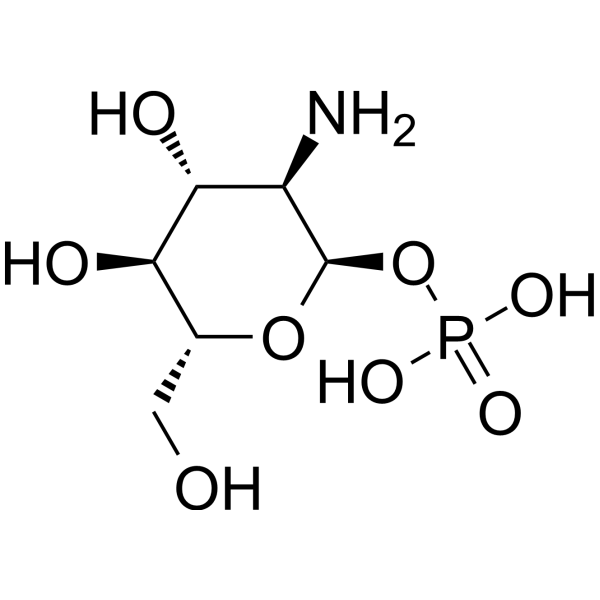
α-D-Glucosamine 1-phosphate is a glycosyl donor analog of Glc-1-P. α-D-Glucosamine 1-phosphate acts as a glycosyl donor to produce α(1→4)-linked glucosamine chains in the enzyme-catalyzed polymerization reaction mediated by thermostable α-glucan phosphorylase. α-D-Glucosamine 1-phosphate serves as a glycosyl donor analog to generate a pentasaccharide with a glucosamine residue at the non-reducing end in the maltotetraose glucosamination reaction catalyzed by potato α-glucan phosphorylase. α-D-Glucosamine 1-phosphate is used for the synthesis of amphiphilic block polysaccharides with pH-responsive assembly/disassembly properties [1].
loading...
    loading...
Cat. No.: HY-168714
Research Areas:  

Cancer

Microtubule inhibitor 12 (Compound 2k) is an inhibitor for microtubule polymerization with an IC50 of 22.23 μM. Microtubule inhibitor 12 arrests the cell cycle of B16-F10 at G2/M phase, induces apoptosis in B16-F10, and inhibits cell migration. Microtubule inhibitor 12 inhibits the proliferation of cancer cells B16-f10, A549, HepG2 and MCF-7, with IC50s of 0.098, 0.135, 0.109, and 0.259 μM, respectively. Microtubule inhibitor 12 exhibits antitumor efficacy in mouse model [1].
loading...
    loading...
Cat. No.: HY-173054
CAS No.: 3099249-36-9
Target:  

Bacterial

Research Areas:  

Infection

FtsZ-IN-12 (Compound 16e) is the inhibitor for filamentous temperature-sensitive mutant Z (FtsZ) that promotes the polymerization of FtsZ protein, inhibits its GTPase activity, thereby interfering with bacterial cell division process. FtsZ-IN-12 exhibits boardspectrum antibacterial activity that inhibits B. subtilis ATCC9372, B. pumilus CMCC63202, S. aureus ATCC25923, E. coli BW25113 and A. baumannii ATCC19606 with MIC of 0.062-1 μg/mL. FtsZ-IN-12 inhibits the formation of bacterial biofilms and exhibits a clearing effect on mature biofilms. FtsZ-IN-12 exhibits bactericidal activity without hemolytic toxicity to mammalian red blood cells (15 mg/kg) [1].
loading...
    loading...
Cat. No.: HY-175698
Ferroptosis inducer-9 is a ferroptosis inducer and colchicine site tubulin polymerization inhibitor. Ferroptosis inducer-9 inhibits MCF-7 cell growth with an IC50 of 14 nM and inhibits [ 3H]colchicine binding. Ferroptosis inducer-9 reduces expression of GPX4 and FTH, increases COX2 and ACSL4, lowers GSH, NADP+, and NADPH levels, increases LPO, MDA, and Fe(II) levels, and decreases SOD concentrations. Ferroptosis inducer-9 demonstrates significant anti-tumor efficacy in HCT116 CRC xenograft model. Ferroptosis inducer-9 can be used for the study of triple negative breast cancer (TNBC) and colorectal cancer (CRC) [1].
loading...
    loading...
Cat. No.: HY-184641
Aminated magnetic microspheres are superparamagnetic magnetic particles with amino functional groups modified on their surface, widely used in biomedical and molecular biology research. This 1μm aminated magnetic microsphere is composed of polystyrene and nano-iron oxide, exhibiting hydrophilicity and good biocompatibility. The aminated magnetic microspheres possess superparamagnetism, fast magnetic response, good monodispersity, ensuring reaction uniformity and detection consistency. The unique rough surface structure and polymer modification give the aminated magnetic microspheres a high amino density, allowing them to covalently couple with bioligands such as peptides, proteins, oligonucleotides, drug molecules, and glycoproteins through the action of special chemical reagents (such as glutaraldehyde). They serve as excellent coating materials and are important carrier tools in medical and biomolecular research.
loading...
    loading...
Cat. No.: HY-N0114AR
CAS No.: 518-18-3
(±)-Evodiamine Standard is the analytical standard of (±)-Evodiamine (HY-N0114A). This product is intended for research and analytical applications. (±)-Evodiamine is an orally active indoloquinazoline alkaloid composed of equal amounts of enantiomers, with (+)-Evodiamine exerting the primary biological functions. (±)-Evodiamine is a Top1 inhibitor and a TRPV1 receptor agonist. (±)-Evodiamine induces cell cycle arrest and apoptosis by inhibiting Top1 and disrupting Tubulin polymerization, suppresses oncogenic signaling pathways such as NF-κB and Akt, and specifically agonizes TRPV1 receptors to regulate neuropeptide release and energy metabolism. (±)-Evodiamine is used in research on traumatic brain injury, obesity, cancer, neuropathy, dry eye disease, and colitis [1] .
loading...
    loading...
Cat. No.: HY-P992382
IC 100 is a humanized IgG4κ monoclonal antibody targeting apoptosis-associated speck-like protein (ASC) with blood-brain barrier permeability. IC 100 specifically inhibits ASC after being endocytosed via its Fc segment, blocks ASC polymerization and inflammasome activation, suppresses IL-1β release, forms complexes with ASC and TRIM21, and evades TRIM21-mediated proteasomal degradation. IC 100 alleviates symptoms associated with autoimmune encephalomyelitis, reduces immune cell infiltration and microglial activation in the mouse EAE model. IC 100 is suitable for research on neuroinflammatory and inflammasome-related diseases such as multiple sclerosis. Isotype comparison: HY-P99003 [1] .
loading...
    loading...
Cat. No.: HY-101741
CAS No.: 256934-83-5
Synonyms: A-289099
Research Areas:  

Cancer

A-259745 is an orally active antimitotic agent that binds to the colchicine-binding site of tubulin. A-259745 exhibits potent in vitro cytotoxic activity against both multi-drug-resistant and non-multi-drug-resistant cancer cell lines, with ED50 values of 0.018 μM against HCT-15 and 0.028 μM against NCI-H460 cell lines. A-259745 inhibits tubulin polymerization, disrupts the dynamic equilibrium of the mitotic spindle, arrests dividing cells in metaphase, and subsequently induces apoptosis. A-259745 shows dose-dependent antitumor efficacy in murine tumor models. A-259745 can be used for the study of cancer [1].
loading...
    loading...
Cat. No.: HY-103078
CAS No.: 5496-35-5
Purity:  99.71%
Research Areas:  

Infection

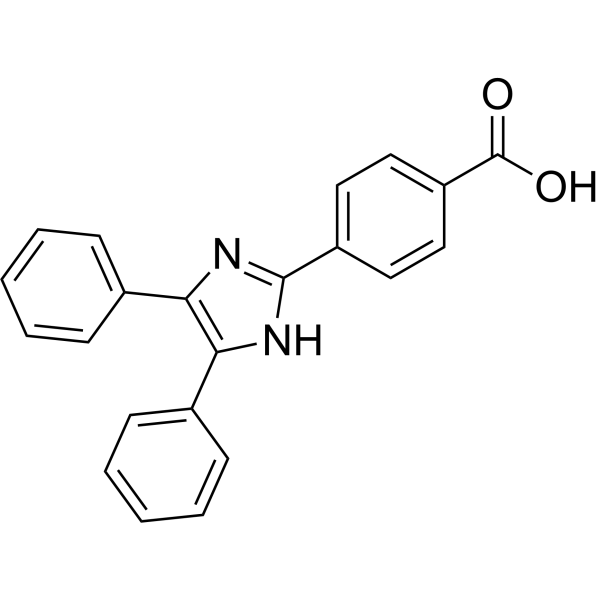
I-XW-053 is a specific anti-HIV-1 capsid inhibitor (IC50=164.2 μM). By binding to the CA NTD-NTD hexamerization interface and the R173 region of CTD (Kd=66.3 μM), I-XW-053 disrupts capsid function and reduces polymerization levels. I-XW-053 effectively blocks HIV-1 uncoating, inhibits reverse transcription and early replication, and exhibits broad-spectrum activity against primary HIV-1 isolates in peripheral blood mononuclear cells. I-XW-053 can be widely used in studies related to HIV-1 infection [1] .
loading...
    loading...
Cat. No.: HY-103078A
CAS No.: 1644644-89-2
Research Areas:  

Infection

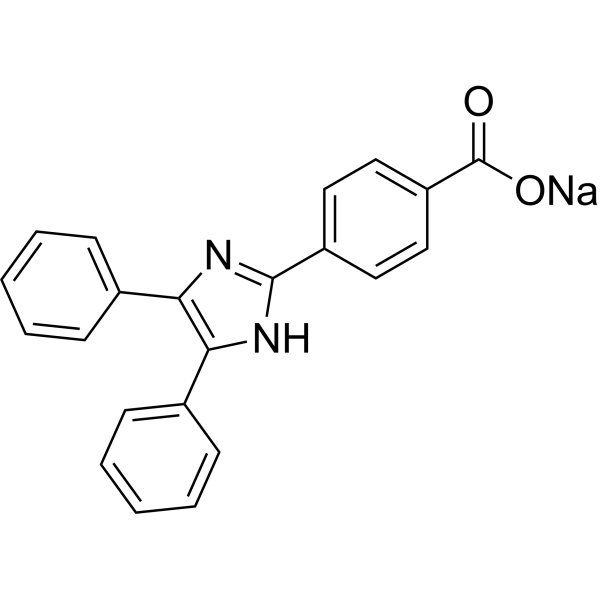
I-XW-053 sodium is a specific anti-HIV-1 capsid inhibitor (IC50=164.2 μM). By binding to the CA NTD-NTD hexamerization interface and the R173 region of CTD (Kd=66.3 μM), I-XW-053 sodium disrupts capsid function and reduces polymerization levels. I-XW-053 sodium effectively blocks HIV-1 uncoating, inhibits reverse transcription and early replication, and exhibits broad-spectrum activity against primary HIV-1 isolates in peripheral blood mononuclear cells. I-XW-053 sodium can be widely used in studies related to HIV-1 infection [1] .
loading...
    loading...
Cat. No.: HY-115364A
CAS No.: 83601-81-4
Synonyms: SKF 29044 hydrochloride
Research Areas:  

Infection Cancer

Parbendazole hydrochloride (SKF‑29044 hydrochloride) is an orally active benzimidazole carbamate compound with multiple biological activities. Parbendazole hydrochloride binds to free tubulin and inhibits microtubule polymerization; it also activates the JNK/c‑Jun signaling axis and upregulates the expression of the downstream axonal repulsion factor Sema3A. Parbendazole hydrochloride upregulates KAL-1 mRNA expression, reduces nerve growth factor levels, and promotes the terminal differentiation of normal human epidermal keratinocytes. Parbendazole hydrochloride induces apoptosis in differentiated acute myeloid leukemia monocytes and exerts antileukemic activity in a mouse xenograft model of acute myeloid leukemia. Parbendazole hydrochloride exhibits broad-spectrum anthelmintic activity against various animal nematodes. Parbendazole hydrochloride is used in research related to acute myeloid leukemia and parasitic infections [1] .
loading...
    loading...
Cat. No.: HY-124595
CAS No.: 1254363-89-7
MPT0B098 is a microtubule inhibitor with a Ki of 0.8 μM and an IC50 of 0.8 μM. MPT0B098 inhibits tubulin polymerization, blocks HuR nuclear-cytoplasmic translocation to decrease HIF-1α mRNA stability, suppresses HIF-1α, TGF-β/Smad, JAK2/STAT3 and FAK/actin cytoskeleton signaling pathways, upregulates SOCS3 to reinforce the inhibition of JAK2/STAT3 cascade, and induces apoptosis. MPT0B098 can be used for research on multiple malignancies including head and neck squamous cell carcinoma and human non-small cell lung cancer [1] .
loading...
    loading...
Cat. No.: HY-133240
CAS No.: 1109241-72-6
trans-AzoTAB is a photoresponsive potassium/sodium/calcium channel modulator and DNA-binding agent. trans-AzoTAB undergoes trans-cis isomerization driven by light, with variable polarity and DNA affinity. trans-AzoTAB also enhances voltage-gated potassium currents and inhibits sodium and calcium currents in cardiomyocytes, thereby reducing spontaneous electrical activity and excitation conduction velocity. In addition, trans-AzoTAB induces compaction and frozen conformation of λ-phage DNA, and non-sequence-dependently inhibits transcription and translation processes in the dark; its activity can be reversed and restored by visible light after activation with ultraviolet irradiation. trans-AzoTAB can serve as a probe for two-photon optical regulation of myocardial excitability, and is used to construct photoresponsive interfacial polymer structures [1] .
loading...
    loading...
Cat. No.: HY-134858
CAS No.: 2406205-61-4
Purity:  99.77%
Synonyms: A1AT modulator 1
Target:  

Serpin Ser/Thr Protease

Research Areas:  

Metabolic Disease

GSK716 (A1AT modulator 1) is an orally active Z α1-antitrypsin (Z-A1AT) inhibitor with a pIC50 of 8.3. GSK716 binds a cryptic Z α1-antitrypsin pocket, stabilizes monomeric folding intermediates, blocks polymerization, and increases monomer secretion. GSK716 acts on select sensitive α1-antitrypsin variants but fails to affect resistant variants. GSK716 can be used for the research of α1-antitrypsin deficiency and α1-antitrypsin deficiency-associated liver disease [1] .
loading...
    loading...

