169 Results for "

Traumatic Acid

" in MedChemExpress (MCE) Product Catalog:
Products (169)

169 Results for "Traumatic Acid" in MCE Product Catalog:

Cat. No.: HY-101228
CAS No.: 1407632-07-8
Research Areas:  

Neurological Disease

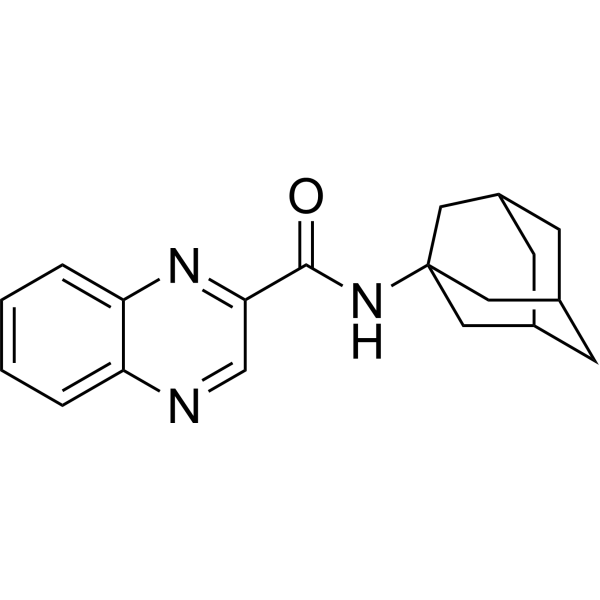
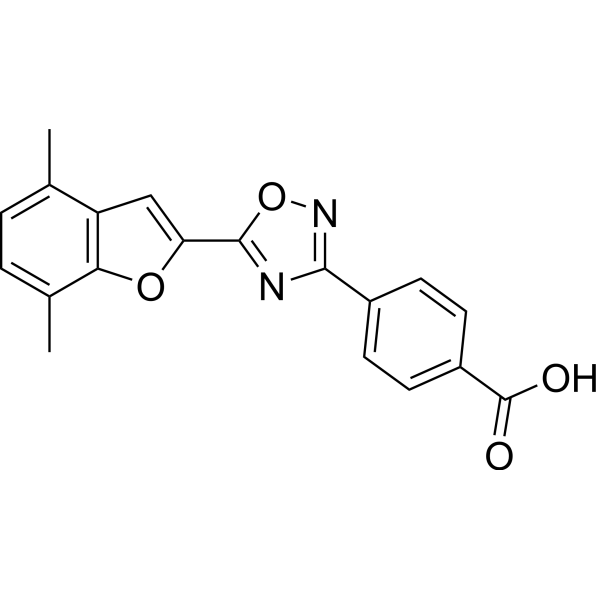
PSB-12054 is a P2X4 receptor antagonist with IC50 values of 0.19 μM, 2.10 μM and 1.77 μM against human, rat and mouse receptors, respectively, and exhibits selectivity over other human P2X receptor subtypes. PSB-12054 inhibits ATP-induced calcium influx, suppresses shear stress-induced transverse Ca 2+ wave generation, and elevates basal Ca 2+ levels in rat atrial myocytes. PSB-12054 binds to the 5-HT2B receptor. PSB-12054 can be used in research related to neuropathic pain, traumatic brain injury, cerebral ischemia and spinal cord injury .
loading...
    loading...
Cat. No.: HY-106000
CAS No.: 720691-69-0
Purity:  99.09%
Target:  

Histamine Receptor

Research Areas:  

Neurological Disease

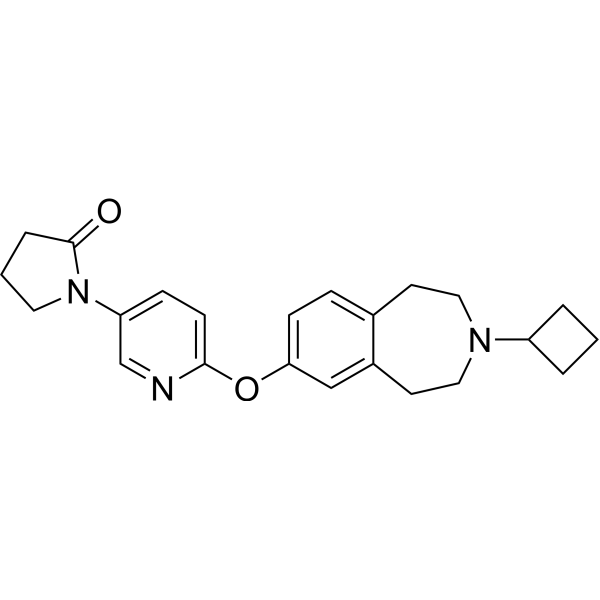
GSK239512 is a blood-brain barrier-permeable, orally active H3 receptor antagonist, with a human pKi ranging from <5.5 to 9.92 and a murine pKi ranging from 9.44 to 9.83. GSK239512 modulates cholinergic and monoaminergic neurotransmission, blocks the inhibitory feedback of H3 receptors, and increases the release of pro-cognitive neurotransmitters. GSK239512 induces oligodendrocyte precursor cell differentiation and restores myelin gene expression at the cellular level. GSK239512 reverses Scopolamine (HY-N0296)-induced memory deficits and improves recognition memory in animal models. GSK239512 can be used in research related to Alzheimer's disease, chronic traumatic encephalopathy, relapsing-remitting multiple sclerosis, and schizophrenia .
loading...
    loading...
Cat. No.: HY-122272A
CAS No.: 72471-80-8
Synonyms: BRL29060 acetate
Paroxetine (BRL29060) acetate is an orally active and selective serotonin reuptake inhibitor (SSRI) and apoptosis inducer with blood-brain barrier permeability. Paroxetine acetate inhibits nitric oxide synthase and CYP2D6, induces desensitization of 5-HT1A/1B/1D autoreceptors, downregulates 5-HT2 receptors, and promotes the production of inflammatory cytokines. Paroxetine acetate is a weak norepinephrine (NE) uptake inhibitor and possesses antitumor activity. Paroxetine acetate is widely used in research concerning depression, obsessive-compulsive disorder, panic disorder, social phobia, generalized anxiety disorder, post-traumatic stress disorder, premenstrual dysphoric disorder, hot flashes, and related conditions .
loading...
    loading...
Cat. No.: HY-17417R
CAS No.: 357-08-4
Research Areas:  

Neurological Disease

Naloxone (hydrochloride) (Standard) is the analytical standard of Naloxone (hydrochloride) (HY-17417). This product is intended for research and analytical applications. Naloxone hydrochloride is an orally active opioid receptor antagonist. Naloxone hydrochloride attenuates spinal cord stimulation‑associated anti‑hyperalgesic effects, antagonizes physiologic effects of endogenous opioid peptides linked to central nervous system injury sequelae, functions as a pressor agent to induce modest elevations in mean arterial blood pressure, exerts neuroprotective effects to improve post‑traumatic neurologic motor function, blocks opioid receptor‑mediated amnesic pathways, enhances memory consolidation, reverses Adrenocorticotropic hormone (ACTH) (HY-106373)‑ and epinephrine‑induced amnesia, and potentiates the memory‑facilitatory effects of ACTH and epinephrine .
loading...
    loading...
Cat. No.: HY-185985
CAS No.: 3113145-60-8
Target:  

Liposome

Research Areas:  

Neurological Disease

Am-Ka12K4 is a weakly positively charged peptide-based ionizable lipid. Am-Ka12K4 induces membrane disruption under endosomal pH conditions and possesses high lipid fusion capacity. Am-Ka12K4 forms tightly packed, stable lipid nanoparticles. Am-Ka12K4 mediates in vivo mRNA delivery, exhibits inherent liver tropism, and can be modified to adjust organ tropism, enabling selective mRNA delivery to the spleen, lung, or thymus. Am-Ka12K4 is applicable to research related to repetitive mild traumatic brain injury .
loading...
    loading...
Cat. No.: HY-B0773
CAS No.: 217797-14-3
Synonyms: BRL29060 mesylate
Paroxetine (BRL29060) mesylate is an orally active and selective serotonin reuptake inhibitor (SSRI) and apoptosis inducer with blood-brain barrier permeability. Paroxetine mesylate inhibits nitric oxide synthase and CYP2D6, induces desensitization of 5-HT1A/1B/1D autoreceptors, downregulates 5-HT2 receptors, and promotes the production of inflammatory cytokines. Paroxetine mesylate is a weak norepinephrine (NE) uptake inhibitor and possesses antitumor activity. Paroxetine mesylate is widely used in research concerning depression, obsessive-compulsive disorder, panic disorder, social phobia, generalized anxiety disorder, post-traumatic stress disorder, premenstrual dysphoric disorder, hot flashes, and related conditions .
loading...
    loading...
Cat. No.: HY-B1018AS
CAS No.: 1219798-40-9
Phenelzine-d5 sulfate is the deuterium labeled Phenelzine sulfate (HY-B1018A). Phenelzine sulfate, an antidepressant agent, is an irreversible and orally active monoamine oxidase (MAO-A and MAO-B) inhibitor. Phenelzine sulfate inhibits GABA transaminase and primary amine oxidase (PrAO), and sequester reactive aldehydes. Phenelzine sulfate also inhibits LSD1 (Ki: 5.6 μM) and suppresses oxidative stress and lipogenesis. Phenelzine sulfate elevates neurotransmitters (serotonin, norepinephrine, dopamine). Phenelzine sulfate is studied in neurological, metabolic and cancer diseases for depression and anxiety disorders, stroke, spinal cord injury, traumatic brain injury, multiple sclerosis, Parkinson’s disease, Alzheimer’s disease, inflammatory pain, obesity and prostate cancer .
loading...
    loading...
Cat. No.: HY-W008646R
CAS No.: 6779-87-9
NADH (disodium salt) (Standard) is the analytical standard of NADH (disodium salt). This product is intended for research and analytical applications. 7,8-Dihydro-L-biopterin is a NOS uncoupling inducer with blood-brain barrier permeability, and it is a reduced non-conjugated pteridine. 7,8-Dihydro-L-biopterin is the main metabolite of 4-amino-tetrahydro-L-biopterin, and it undergoes photooxidation to form biopterin. 7,8-Dihydro-L-biopterin promotes the conversion of nitric oxide synthase to a superoxide-producing form, thereby increasing oxidative stress levels in the renal outer medulla and inducing apoptosis. 7,8-Dihydro-L-biopterin is sensitive to the inhibitory effect of SOD, and it can be applied to research related to salt-sensitive hypertension, moderate to severe traumatic brain injury, and neurodegenerative diseases .
loading...
    loading...
Cat. No.: HY-11095
CAS No.: 226878-01-9
Purity:  98.83%
NPS 2390 is an allosteric antagonist of calcium-sensing receptor (CaSR) and mGluR1/5. NPS 2390 inhibits the PI3K/Akt/mTOR signaling pathway, reduces hypoxia-induced intracellular calcium elevation, decreases the expression of autophagy (autophagy) proteins, regulates the expression of phenotypic marker proteins, and inhibits the proliferation of pulmonary artery smooth muscle cells. NPS 2390 attenuates the endogenous apoptosis (apoptosis) pathway, increases the expression level of Bcl-2, downregulates the expression levels of Bax, cytochrome c and caspase-3, alleviates cerebral edema and improves neurological function in rat models. NPS 2390 can be used in studies related to hypoxic pulmonary hypertension, traumatic brain injury, stroke and pain .
loading...
    loading...
Cat. No.: HY-111573
CAS No.: 1952276-71-9
Purity:  98.93%
Synonyms: C286
KCL-286 (C286) is an orally active and brain-penetrant retinoic acid receptor (RAR) β2 agonist (EC50 = 1.9 nM). KCL-286 targets RARβ2 with good selectivity over RAR α (EC50 = 26 nM) and RAR γ (EC50 = 11 nM). KCL-286 activates RARβ2 in the injured neurons. KCL-286 induces axonal regeneration of both spinal and sensory nerves through the inhibitory environment of the CNS, modulates neuroinflammation and extracellular matrix molecules. KCL-286 can modulate the expression of CSPGs by neuronal secretion of decorin which promotes myelination and aids axonal growth. KCL-286 can be studied in research for area such as spinal cord injury and traumatic nerve injury .
loading...
    loading...
Cat. No.: HY-N6784
CAS No.: 11050-94-5
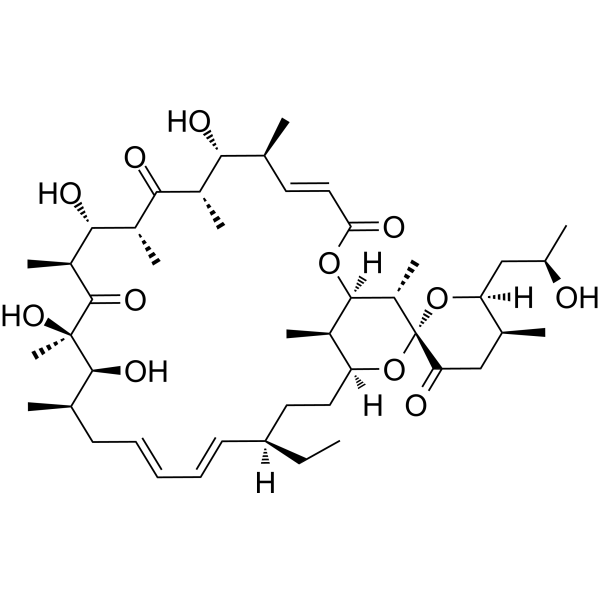
Oligomycin B is an antibiotic that acts as a non-selective inhibitor of ATP Synthase. Oligomycin B increases mitochondrial membrane potential. Oligomycin B induces apoptosis and necrosis. Oligomycin B impairs the motility of Plasmopara viticola zoospores and induces their lysis. Oligomycin B inhibits Magnaporthe oryzae (wheat blast fungus) and suppresses the development of wheat blast. Oligomycin B reduces hyphal growth and spore germination of Botrytis cinerea, and protects Arabidopsis thaliana against Botrytis cinerea infection. Oligomycin B exacerbates cytotoxic brain edema in rats with cerebral cortical contusion, increases intracranial pressure and brain water content, and aggravates mitochondrial damage in these rats. Oligomycin B is used in studies related to grape downy mildew, traumatic brain injury, wheat blast, and gray mold .
loading...
    loading...
Cat. No.: HY-111124
CAS No.: 923932-43-8
Synonyms: BRL29060-d2
Paroxetine-d2 (BRL29060-d2) is the deuterated-labeled Paroxetine (HY-122272). Paroxetine (BRL29060) is an orally active and selective serotonin reuptake inhibitor (SSRI) and apoptosis inducer with blood-brain barrier permeability. Paroxetine inhibits nitric oxide synthase and CYP2D6, induces desensitization of 5-HT1A/1B/1D autoreceptors, downregulates 5-HT2 receptors, and promotes the production of inflammatory cytokines. Paroxetine is a weak norepinephrine (NE) uptake inhibitor and possesses antitumor activity. Paroxetine is widely used in research concerning depression, obsessive-compulsive disorder, panic disorder, social phobia, generalized anxiety disorder, post-traumatic stress disorder, premenstrual dysphoric disorder, hot flashes, and related conditions .
loading...
    loading...
Cat. No.: HY-122272R
CAS No.: 61869-08-7
Synonyms: BRL29060 (Standard)
Paroxetine (BRL29060) (Standard) is the analytical standard of Paroxetine (HY-122272). This product is intended for research and analytical applications. Paroxetine (BRL29060) is an orally active and selective serotonin reuptake inhibitor (SSRI) and apoptosis inducer with blood-brain barrier permeability. Paroxetine inhibits nitric oxide synthase and CYP2D6, induces desensitization of 5-HT1A/1B/1D autoreceptors, downregulates 5-HT2 receptors, and promotes the production of inflammatory cytokines. Paroxetine is a weak norepinephrine (NE) uptake inhibitor and possesses antitumor activity. Paroxetine is widely used in research concerning depression, obsessive-compulsive disorder, panic disorder, social phobia, generalized anxiety disorder, post-traumatic stress disorder, premenstrual dysphoric disorder, hot flashes, and related conditions .
loading...
    loading...
Cat. No.: HY-122272S
CAS No.: 923932-45-0
Synonyms: BRL29060-d4
Paroxetine-d4 (BRL29060-d4) is the deuterated-labeled Paroxetine (HY-122272). Paroxetine (BRL29060) is an orally active and selective serotonin reuptake inhibitor (SSRI) and apoptosis inducer with blood-brain barrier permeability. Paroxetine inhibits nitric oxide synthase and CYP2D6, induces desensitization of 5-HT1A/1B/1D autoreceptors, downregulates 5-HT2 receptors, and promotes the production of inflammatory cytokines. Paroxetine is a weak norepinephrine (NE) uptake inhibitor and possesses antitumor activity. Paroxetine is widely used in research concerning depression, obsessive-compulsive disorder, panic disorder, social phobia, generalized anxiety disorder, post-traumatic stress disorder, premenstrual dysphoric disorder, hot flashes, and related conditions .
loading...
    loading...
Cat. No.: HY-188122
CAS No.: 113960-50-2
Meglumine cyclic adenylate is a cAMP analog. Meglumine cyclic adenylate promotes STAT3 phosphorylation at Ser727 and mitochondrial translocation. Meglumine cyclic adenylate inhibits cell apoptosis by reducing cytochrome c release and caspase-3 activation. Meglumine cyclic adenylate suppresses the expression of NF-κBp65, activates adenylate cyclase 3, and inhibits phosphodiesterase 4D. Meglumine cyclic adenylate enhances myocardial contractility, increases myocardial Ca 2+ influx, dilates peripheral blood vessels, improves hypotension and bradycardia, promotes spinal cord function recovery, and regulates fear extinction and anxiety-like behaviors. Meglumine cyclic adenylate can be used in research related to cerebral ischemia/reperfusion injury, systemic inflammatory response syndrome, acute T4 thoracic spinal cord injury, and post-traumatic stress disorder (PTSD) .
loading...
    loading...
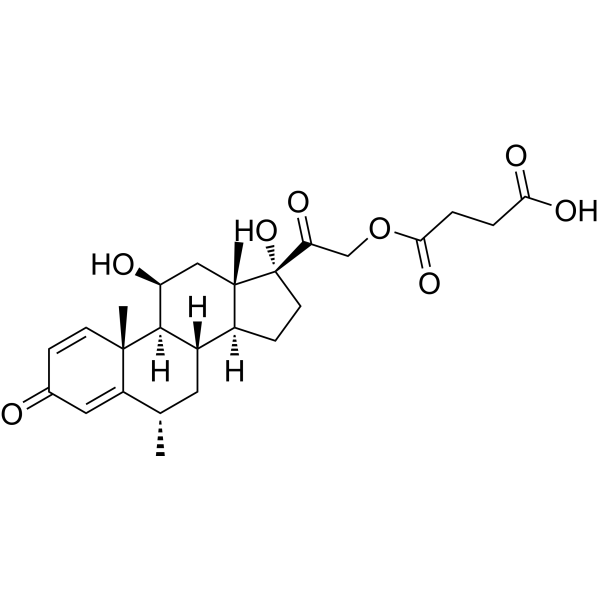
Cat. No.: HY-B1900R
CAS No.: 2921-57-5
Synonyms: Methylprednisolone hydrogen succinate (Standard)
Methylprednisolone succinate (Standard) is the analytical standard of Methylprednisolone succinate (HY-B1900). This product is intended for research and analytical applications. Methylprednisolone succinate (Methylprednisolone hydrogen succinate) is a prodrug of Methylprednisolone (HY-B0260) and glucocorticoid with immunosuppressant and anti-inflammatory activity. Methylprednisolone succinate binds cytosolic glucocorticoid receptors, translocates to nuclei, and modulates target gene transcription. Methylprednisolone succinate alters Bax, Bcl-2, occludin, and ZO-1 expression; attenuates TLR4/NF-κB signaling; suppresses proinflammatory cytokine production and immune cell activation. Methylprednisolone succinate can be used for the research of intracranial haemorrhage, rheumatoid arthritis, multiple sclerosis, preterminal cancer, inflammatory conditions, shock, immediate-type hypersensitivity, acute myocardial ischemia, hypoxic heart muscle damage, and traumatic spinal cord injury .
loading...
    loading...
Cat. No.: HY-111573R
CAS No.: 1952276-71-9
Synonyms: C286 (Standard)
KCL-286 (Standard) is the analytical standard of KCL-286 (HY-111573). This product is intended for research and analytical applications. KCL-286 (C286) is an orally active and brain-penetrant retinoic acid receptor (RAR) β2 agonist (EC50 = 1.9 nM). KCL-286 targets RARβ2 with good selectivity over RAR α (EC50 = 26 nM) and RAR γ (EC50 = 11 nM). KCL-286 activates RARβ2 in the injured neurons. KCL-286 induces axonal regeneration of both spinal and sensory nerves through the inhibitory environment of the CNS, modulates neuroinflammation and extracellular matrix molecules. KCL-286 can modulate the expression of CSPGs by neuronal secretion of decorin which promotes myelination and aids axonal growth. KCL-286 can be studied in research for area such as spinal cord injury and traumatic nerve injury .
loading...
    loading...
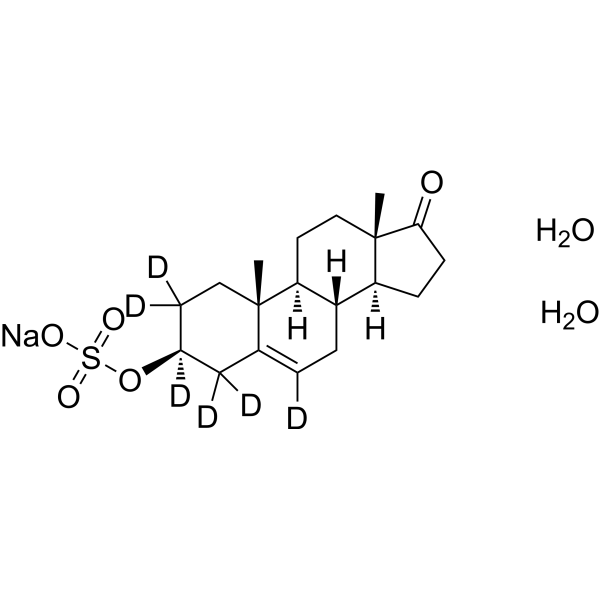
Cat. No.: HY-113416AS
Purity:  98.00%
Synonyms: DHEA sulfate-d6 sodium dihydrate; Prasterone sulfate-d6 sodium dihydrate
Dehydroepiandrosterone sulfate sodium dihydrate-d6 sodium dihydrate is the deuterium labeled Dehydroepiandrosterone sulfate sodium dihydrate. Dehydroepiandrosterone sulfate (DHEA sulfate; Prasterone sulfate) sodium dihydrate is a neurosteroid and the main secretion product of the adrenal gland. Dehydroepiandrosterone sulfate sodium dihydrate has both non-competitive antagonist activity of GABAA receptor and agonist activity of σ1 receptor. Dehydroepiandrosterone sulfate sodium dihydrate can partially penetrate the blood-brain barrier, inhibit GABAA receptor-mediated chloride influx, enhance NMDA receptor activity through σ1 receptors, exert anti-inflammatory, anti-glucocorticoid and antidepressant effects, and increase convulsive sensitivity. Dehydroepiandrosterone sulfate sodium dihydrate participates in neuroprotection, neurite growth regulation and catecholamine secretion regulation, and can be used in the study of depression, post-traumatic stress disorder (PTSD), Alzheimer's disease, etc. Dehydroepiandrosterone sulfate sodium dihydrate may also be a biomarker for cardiovascular disease mortality, and its concentration is independently and negatively correlated with mortality .
loading...
    loading...
Cat. No.: HY-122272S2
CAS No.: 1435728-63-4
Synonyms: BRL29060-d6-1
Paroxetine-d6-1 (BRL29060-d6-1) is the deuterated-labeled Paroxetine (HY-122272). Paroxetine (BRL29060) is an orally active and selective serotonin reuptake inhibitor (SSRI) and apoptosis inducer with blood-brain barrier permeability. Paroxetine inhibits nitric oxide synthase and CYP2D6, induces desensitization of 5-HT1A/1B/1D autoreceptors, downregulates 5-HT2 receptors, and promotes the production of inflammatory cytokines. Paroxetine is a weak norepinephrine (NE) uptake inhibitor and possesses antitumor activity. Paroxetine is widely used in research concerning depression, obsessive-compulsive disorder, panic disorder, social phobia, generalized anxiety disorder, post-traumatic stress disorder, premenstrual dysphoric disorder, hot flashes, and related conditions .
loading...
    loading...
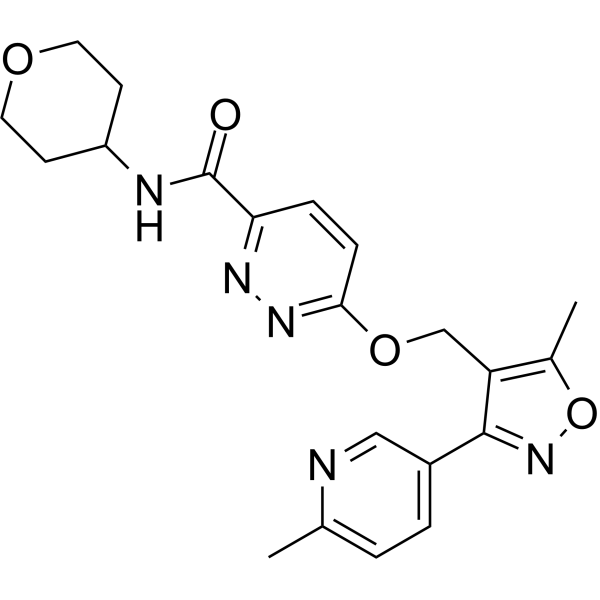
Cat. No.: HY-132806
CAS No.: 2230009-48-8
Purity:  99.93%
Synonyms: RG-7816; RO-7017773
Target:  

GABA Receptor

Research Areas:  

Neurological Disease

Alogabat is a positive allosteric modulator (PAM) and agonist (Ki <100 nM) of the GABAA α5 receptor, targeting the α5β3γ2 subunit with a Ki of 8.7 nM. Alogabat increases the expression level of α5β3γ2 in oocytes (1.97-fold). GABAA has been implicated in cognitive impairment associated with central nervous system (CNS) disorders, brain cancer (including brain tumors such as medulloblastoma), and can be used in the study of mild cognitive impairment (MCI), amnestic MCI (aMCI), age-associated memory impairment (AAMI), age-related cognitive decline (ARCD), dementia, Alzheimer's disease (AD), prodromal AD, post-traumatic stress disorder (PTSD), schizophrenia, bipolar disorder, amyotrophic lateral sclerosis (ALS), cognitive impairment associated with cancer treatment, mental retardation, Parkinson's disease (PD), autism spectrum disorder, fragile X, Rett syndrome, obsessive-compulsive behavior, and substance addiction .
loading...
    loading...

