1671 Results for "

Reactive

" in MedChemExpress (MCE) Product Catalog:
Products (1671)

1671 Results for "Reactive" in MCE Product Catalog:

Cat. No.: HY-N2332AR
CAS No.: 351344-10-0
Synonyms: MLA citrate (Standard)
Methyllycaconitine citrate (Standard) is the analytical standard of Methyllycaconitine citrate (HY-N2332A). This product is intended for research and analytical applications. Methyllycaconitine (MLA) citrate is a blood-brain barrier-permeable antagonist of α7 nicotinic acetylcholine receptor (α7nAChR) with an IC50 of 2 nM. Methyllycaconitine citrate inhibits Aβ25-35-induced autophagy by restoring the mTOR pathway, and prevents reactive oxygen species (ROS) production, microglial activation, reduced dopamine uptake, loss of dopaminergic terminals and catecholamine secretion. Methyllycaconitine citrate induces hippocampal glutamate efflux, enhances long-term potentiation, and improves memory acquisition. Methyllycaconitine citrate can be used in research related to Alzheimer's disease, cerebral palsy, ParKinson's disease and schizophrenia .
loading...
    loading...
Cat. No.: HY-N2515R
CAS No.: 494753-69-4
Ginsenoside Rk1 (Standard) is the analytical standard of Ginsenoside Rk1. This product is intended for research and analytical applications. Ginsenoside Rk1 is a unique component created by processing the ginseng plant (mainly Sung Ginseng, SG) at high temperatures . Ginsenoside Rk1 has anti-inflammatory effect, suppresses the activation of Jak2/Stat3 signaling pathway and NF-κB . Ginsenoside Rk1 has anti-tumor effect, antiplatelet aggregation activities, anti-insulin resistance, nephroprotective effect, antimicrobial effect, cognitive function enhancement, lipid accumulation reduction and prevents osteoporosis . Ginsenoside Rk1 induces cell apoptosis by triggering intracellular reactive oxygen species (ROS) generation and blocking PI3K/Akt pathway .
loading...
    loading...
Cat. No.: HY-N6929R
CAS No.: 565-63-9
Angelic acid (Standard)) is the analytical standard of Angelic acid (HY-N6929). This product is intended for research and analytical applications. Angelic acid is a ferroptosis inducer, targeting NRF2 degradation. Angelic acid binds to NRF2 protein and promotes NRF2 degradation via ubiquitination-proteasome pathway, relieves the inhibitory effect of NRF2 on oxidative stress and lipid peroxidation. Then, Angelic acid induces ferroptosis in tumor cells. Angelic acid can enhance the accumulation of intracellular reactive oxygen species (ROS), upregulate ferroptosis-related markers CHAC1 and PTGS2, and synergize with ferroptosis inducers to enhance anti-tumor effects. Angelic acid also has the activity of scavenging UVA-induced ROS in vitro, inhibiting skin fibroblast senescence and extracellular matrix degradation. Angelic Acid helps wound healing with sedative activity .
loading...
    loading...
Cat. No.: HY-P11909
Research Areas:  

Infection

3-WP is a linear 20-peptide with a C-terminal amidation modification. 3-WP acts on lipoteichoic acid (LTA) and disrupts cell wall permeability, induces intracellular reactive oxygen species (ROS) accumulation in a dose-dependent manner, and simultaneously inhibits respiratory chain dehydrogenase activity and intracellular ATP synthesis, thereby interfering with bacterial energy metabolism and exerting Bacterial antibacterial effects. The combination of 3-WP and Melittin (HY-P0233) exerts synergistic antibacterial effects against Gram-positive bacteria, reduces the required dosage of Melittin, and thus improves the cell selectivity of Melittin. 3-WP can serve as a peptide adjuvant for Melittin in food storage scenarios. 3-WP can be used in the research of foodborne diseases caused by methicillin-resistant Staphylococcus aureus .
loading...
    loading...
Cat. No.: HY-P99139
Anti-Mouse IL-1b Antibody (B122) is an anti-mouse IL-1b IgG monoclonal antibody. Anti-Mouse IL-1b Antibody (B122) enhances ferroptosis and increases levels of reactive oxygen species (ROS) combined with Sulfasalazine (SAS) (HY-14655). Anti-Mouse IL-1b Antibody (B122) can reduce monocyte infiltration and alleviate T cell exhaustion by blocking IL-1β signaling. Anti-Mouse IL-1b Antibody (B122) can be used for researches on cancer and cardiovascular conditions such as oral squamous cell carcinoma (OSCC), glioblastoma (GBM) and heart failure .
loading...
    loading...
Cat. No.: HY-W012382R
CAS No.: 537-55-3
N-Acetyl-L-tyrosine (Standard) is the analytical standard of N-Acetyl-L-tyrosine (HY-W012382). This product is intended for research and analytical applications. N-Acetyl-L-tyrosine is an orally active endogenous mitochondrial stress response regulator that can permeate the cell membrane by passive diffusion. N-Acetyl-L-tyrosine induces low-level reactive oxygen species (ROS) generation by transiently perturbing mitochondrial membrane potential, triggering reverse signaling to activate FoxO and Keap1 pathways. As a result, N-Acetyl-L-tyrosine enhances the expression of antioxidant enzyme genes, exerting anti-stress and cytoprotective effects. N-Acetyl-L-tyrosine can improve heat stress tolerance, inhibit tumor growth, and regulate energy metabolism. N-Acetyl-L-tyrosine can be used in the research of aging, metabolic diseases (such as diabetes), and cancer .
loading...
    loading...
Cat. No.: HY-W012382S
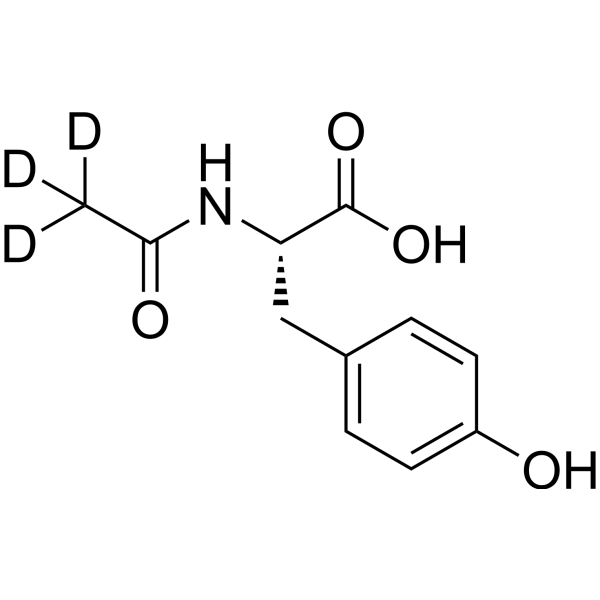
N-Acetyl-L-tyrosine-d3 is the deuterated form of N-Acetyl-L-tyrosine (HY-W012382). N-Acetyl-L-tyrosine is an orally active endogenous mitochondrial stress response regulator that can permeate the cell membrane by passive diffusion. N-Acetyl-L-tyrosine induces low-level reactive oxygen species (ROS) generation by transiently perturbing mitochondrial membrane potential, triggering reverse signaling to activate FoxO and Keap1 pathways. As a result, N-Acetyl-L-tyrosine enhances the expression of antioxidant enzyme genes, exerting anti-stress and cytoprotective effects. N-Acetyl-L-tyrosine can improve heat stress tolerance, inhibit tumor growth, and regulate energy metabolism. N-Acetyl-L-tyrosine can be used in the research of aging, metabolic diseases (such as diabetes), and cancer .
loading...
    loading...
Cat. No.: HY-W015229R
CAS No.: 830-96-6
Synonyms: Indole-3-propionic acid (Standard); 3-IPA (Standard)
3-Indolepropionic acid (Standard) is the analytical standard of 3-Indolepropionic acid. This product is intended for research and analytical applications. 3-Indolepropionic acid is shown to be a powerful antioxidant and has potential in the treatment for Alzheimer’s disease. In Vitro: 3-Indolepropionic acid is shown to be a powerful antioxidant and has potential in the treatment for Alzheimer’s disease . 3-Indolepropionic acid is a more potent scavenger of hydroxyl radicals than melatonin. Similar to melatonin but unlike other antioxidants, 3-Indolepropionic acid scavenges radicals without subsequently generating reactive and pro-oxidant intermediate compounds . It is also suggested that indolepropionic acid, a gut microbiota-produced metabolite, is a potential biomarker for the development of type 2 diabetes (T2D) that may mediate its protective effect by preservation of β-cell function .
loading...
    loading...
Cat. No.: HY-W015924R
CAS No.: 594-61-6
2-Hydroxyisobutyric acid (Standard) is the analytical standard of 2-Hydroxyisobutyric acid. This product is intended for research and analytical applications. 2-Hydroxyisobutyric acid (2-HIBA) is a selective modulator of the Insulin/IGF-1 pathway and the p38 MAPK pathway, which reduces reactive oxygen species (ROS) and fat accumulation in Caenorhabditis elegans. 2-Hydroxyisobutyric acid promotes β-oxidation and inhibits fatty acid synthesis by upregulating SKN-1/NRF2 and downregulating SREBP-1c transcription factors. 2-Hydroxyisobutyric acid has anti-aging and lipid-lowering effects, and can be used to study metabolic diseases such as obesity and diabetes. 2-Hydroxyisobutyric acid is also a renewable precursor of methacrylate through 2-HIB-CoA mutase-mediated biosynthesis[1][2].
loading...
    loading...
Cat. No.: HY-W039379
CAS No.: 7367-81-9
Synonyms: trans-2-Octenoic acid methyl ester
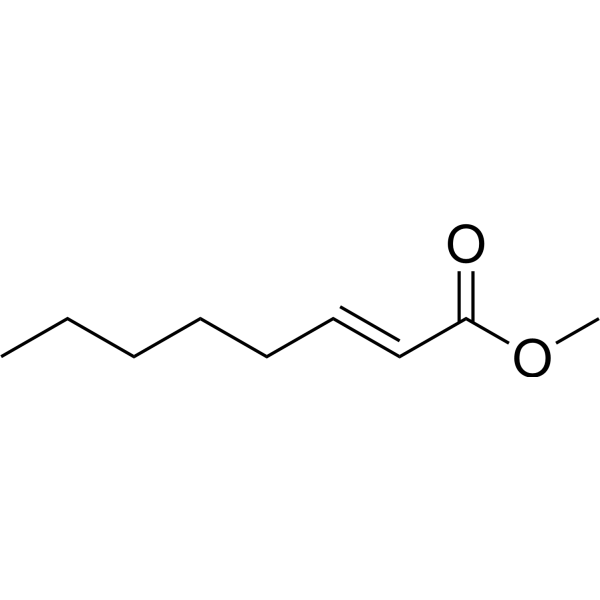
Methyl (E)-oct-2-enoate is commonly used as an ingredient in perfume, cologne, and food flavor in the perfume and fragrance industry. Its pleasant fragrance and low volatility make it a good choice for adding fruit to various products. A popular choice for incense, in addition to its application in the fragrance and fragrance industry, Methyl (E)-oct-2-enoate is also used as a raw material for the synthesis of other organic compounds, it can be oxidized to form methyl 3-oxobutyrate, Used in the production of pharmaceuticals and agrochemicals. Overall, Methyl (E)-oct-2-enoate is a versatile compound that is used in various industries for its pleasant aroma and reactivity, its fruity and floral notes in fragrances and essences Industry is highly sought after, and its ability to serve as a starting material for other compounds makes it useful in organic synthesis.
loading...
    loading...
Cat. No.: HY-W115721
CAS No.: 523-21-7
Synonyms: Sodium rhodizonate dibasic
Rhodizonic acid disodium (Sodium rhodizonate dibasic) is a transition metal-dependent pro-oxidant and lead detection agent that induces reactive oxygen species generation, DNA damage, and inhibits Aconitase activity. Rhodizonic acid disodium generates superoxide anion radicals in an iron (II)-dependent manner, leading to aconitase inactivation. Rhodizonic acid disodium also triggers hydroxyl radical-mediated DNA strand breaks and 8-OHdG formation via copper ion reduction. Rhodizonic acid disodium reacts with lead to form a scarlet precipitate, with the color intensity proportional to lead content, enabling qualitative or quantitative analysis of lead. Rhodizonic acid disodium can also be used for real-time visualization of the dynamic process of lead sequestration in the plant rhizosphere and evaluation of the effects of environmental factors such as soil type on the stability of lead-sequestering structures .
loading...
    loading...
Cat. No.: HY-W392912A
CAS No.: 2833-24-1
Synonyms: Methyl (2E)-4-oxopent-2-enoate
Research Areas:  

Others

Methyl trans-4-oxo-2-pentenoate (Methyl (2E)-4-oxopent-2-enoate) is a heterofunctionalized dienophile containing both ketone and ester functional groups. The enone structure within the Methyl trans-4-oxo-2-pentenoate molecule makes it a highly reactive Michael acceptor capable of regioselective conjugate addition, which is commonly used in reactions for constructing complex ring systems such as the Robinson annulation. Methyl trans-4-oxo-2-pentenoate can serve as a substrate in the synthesis of α-(alkylmethylene) butyrolactone derivatives. Methyl trans-4-oxo-2-pentenoate participates in asymmetric Diels-Alder reactions promoted by chiral palladium complexes .
loading...
    loading...
Cat. No.: HY-113298R
CAS No.: 498-23-7
Synonyms: Methylmaleic acid (Standard); Citraconate (Standard)
Citraconic acid (Methylmaleic acid) (Standard) is the analytical standard of Citraconic acid (HY-113298). This product is intended for research and analytical applications. Citraconic acid is an orally active inhibitor targeting the NLRP3 inflammasome and Keap1-Nrf2 pathway. Citraconic acid reduces reactive oxygen species (ROS) generation by inhibiting succinate dehydrogenase (SDH) activity. Citraconic acid also modifies the conformation of Keap1 protein, relieves its inhibition of Nrf2, promotes antioxidant gene expression, and inhibits NLRP3 activation and the release of pro-inflammatory factors such as IL-1β and IL-18. Citraconic acid has anti-inflammatory and antioxidant activities, can reduce oxidative stress and cell pyroptosis, improve tissue damage, and can be used for the research of inflammation-related diseases such as acute renal ischemia-reperfusion injury. Citraconic acid is an isomer of Itaconic acid (HY-Y052) .
loading...
    loading...
Cat. No.: HY-168739
CAS No.: 2413582-45-1
Topoisomerase I inhibitor 17 (Compound 7h) is a Topoisomerase I (Top1) inhibitor. Topoisomerase I inhibitor 17 reduces DDX5 and reverses the locking of Top1 activity by DDX5. Topoisomerase I inhibitor 17 induces Top1-mediated DNA damage and promotes reactive oxygen species (ROS) production. Topoisomerase I inhibitor 17 induces Apoptosis (reduces antiapoptotic proteins XIAP, Bcl-2, Survivin and up-regulates pro-apoptotic proteins Bax, γH2AX). Topoisomerase I inhibitor 17 also blocks the progression of the G2/M checkpoint and induces cell cycle arrest. Topoisomerase I inhibitor 17 significantly inhibits colony formation and cell migration in colorectal cancer cells. Topoisomerase I inhibitor 17 effectively reduces tumors in human PDX tumor mice .
loading...
    loading...
Cat. No.: HY-175834
CAS No.: 3113779-38-4
DNA/TOP2A-IN-1 is an inhibitor of DNA and TOP2A. DNA/TOP2A-IN-1 selectively binds to TOP2A, not TOP2B, and interacts with DNA and TOP2A to form a stable DM1-TOP2A-DNA ternary complex. DNA/TOP2A-IN-1 induces DNA damage, increases reactive oxygen species (ROS) and triggers apoptosis in triple-negative breast cancer (TNBC) cells. DNA/TOP2A-IN-1 disrupts microtubule distribution and induces cell cycle arrest. DNA/TOP2A-IN-1 shows strong antiproliferative activity and inhibits cell migration. DNA/TOP2A-IN-1 inhibits tumor growth and can be used for TNBC research .
loading...
    loading...
Cat. No.: HY-178163
Zharp1-163 is a dual inhibitor of ferroptosis and necroptosis. Zharp1-163 effectively blocks ferroptosis by reducing reactive oxygen species (ROS) levels and inhibits necroptosis by potently and selectively targeting RIPK1 kinase activity (KD = 240 nM; IC50 = 406.1 nM). Zharp1-163 inhibits the cellular activation of RIPK1, RIPK3 and MLKL in response to necroptotic stimulation. Zharp1-163 markedly attenuates TNF-α (HY-P1875)-induced systemic inflammatory syndrome, including the prevention of TNF-α-induced mortality and hypothermia in mice. Zharp1-163 significantly alleviates acute kidney injury associated with both necroptosis and ferroptosis in models induced by Cisplatin (HY-17394) and ischemia-reperfusion. Zharp1-163 can be used for the study of diseases associated with cell death pathways, such as kidney disease .
loading...
    loading...
Cat. No.: HY-184021
Target:  

CD38

Research Areas:  

Neurological Disease

A-8531 is an orally active CD38 inhibitor with IC50 values of 1.10 nM against human CD38, IC50 values of 2.93 nM against mouse CD38, and a human Ka of 0.32 nM. A-8531 exerts its inhibitory activity via its 4-pyridine reactive warhead interacting with the CD38 substrate NAD +, and binds stably to CD38 only in the presence of NAD +, with a binding KD of 0.32 nM as detected by SPR. A-8531 dose-dependently increases NAD + levels in mouse skin, lung and liver tissues, while simultaneously reducing the contents of NAM and ADPR in these tissues. A-8531 derivative A-3190 (HY-184206) has blood-brain barrier penetration. A-8531 can be used in studies related to neurodegenerative diseases .
loading...
    loading...
Cat. No.: HY-P11892
c10c-G1V3 is a BRAG2 binder with a Kd value of 7.37 μM. c10c-G1V3 binds to BRAG2, thereby disrupting its interaction with GluA2 and blocking GluA2 endocytosis and AMPAR subunit switching. c10c-G1V3 reduces glutamate-induced intracellular reactive oxygen species (ROS) accumulation and cell apoptosis (apoptosis). c10c-G1V3 decreases infarct volume in the transient middle cerebral artery occlusion model. c10c-G1V3 can be used in studies related to ischemic stroke .
loading...
    loading...
Cat. No.: HY-W015600R
CAS No.: 614-80-2
Synonyms: Orthocetamol (Standard)
2-Acetamidophenol (Standard) is the analytical standard of 2-Acetamidophenol. This product is intended for research and analytical applications. 2-Acetamidophenol (Orthocetamol) is a regulator that targets ferroptosis and glutathione metabolic pathways, is the ortho-regioisomer of Paracetamol (HY-66005). 2-Acetamidophenol has anti-atherosclerotic activity, and inhibiting total cholesterol (TC) and triglyceride (TG) in a zebrafish hyperlipidemia model with IC50s for 30 μM and 40 μM, respectively. 2-Acetamidophenol upregulates the expression of glutathione synthesis-related genes (such as GCLC, GCLM, GSS) and iron ion transport genes (such as FPN1, FTH), reduces the accumulation of intracellular reactive oxygen species (ROS) and ferrous ions (Fe 2+), and enhances the activity of glutathione peroxidase GPX4, thereby inhibiting macrophage phagocytosis of oxidized low-density lipoprotein (ox-LDL) and foam cell formation .
loading...
    loading...
Cat. No.: HY-W015600S
CAS No.: 122258-87-1
Synonyms: Orthocetamol-d3
2-Acetamidophenol-d3 (Orthocetamol-d3) is the deuterium labeled 2-Acetamidophenol (HY-W015600). 2-Acetamidophenol (Orthocetamol) is a regulator that targets ferroptosis and glutathione metabolic pathways, is the ortho-regioisomer of Paracetamol (HY-66005). 2-Acetamidophenol has anti-atherosclerotic activity, and inhibiting total cholesterol (TC) and triglyceride (TG) in a zebrafish hyperlipidemia model with IC50s for 30 μM and 40 μM, respectively. 2-Acetamidophenol upregulates the expression of glutathione synthesis-related genes (such as GCLC, GCLM, GSS) and iron ion transport genes (such as FPN1, FTH), reduces the accumulation of intracellular reactive oxygen species (ROS) and ferrous ions (Fe2+), and enhances the activity of glutathione peroxidase GPX4, thereby inhibiting macrophage phagocytosis of oxidized low-density lipoprotein (ox-LDL) and foam cell formation .
loading...
    loading...

