1671 Results for "

Reactive

" in MedChemExpress (MCE) Product Catalog:
Products (1671)

1671 Results for "Reactive" in MCE Product Catalog:

製品番号: HY-W674241A
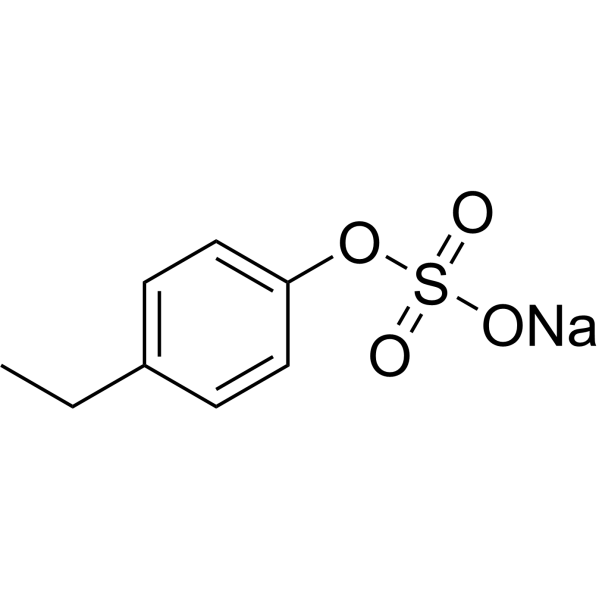
4-Ethylphenyl sulfate sodium is an orally active and brain-penetrant gut microbial metabolite. 4-Ethylphenyl sulfate sodium downregulates Bcl2 expression, upregulates Bax expression, and induces cancer cell apoptosis via the endogenous apoptotic pathway. 4-Ethylphenyl sulfate sodium induces G2/M cell cycle arrest and reactive oxygen species (ROS) production. 4-Ethylphenyl sulfate sodium impairs oligodendrocyte maturation, reduces oligodendrocyte-neuron interactions, decreases axonal myelination levels, and shifts the oligodendrocyte population toward immature precursor cells. 4-Ethylphenyl sulfate sodium alters brain region-specific neural activity and functional connectivity in mice, and correlates with anxiety-like behaviors in mice .
loading...
    loading...
製品番号: HY-W698249R
CAS 番号: 299-29-6
Ferrous gluconate (Standard) is the analytical standard of Ferrous gluconate. This product is intended for research and analytical applications. Ferrous gluconate is a highly water-soluble iron-containing agent with high bioavailability and bactericidal activity. As a non-heme iron, Ferrous gluconate is used for meat product fortification and improvement of iron deficiency anemia. Ferrous gluconate induces ferroptosis in E. coli through Fe 2+ infiltration, reactive oxygen species burst, lipid peroxidation and direct interaction with DNA. Ferrous gluconate also downregulates the SOS responsive transcriptional repressor LexA. In addition, Ferrous gluconate regulates multiple key pathways in E. coli such as fatty acid metabolism, iron-sulfur cluster assembly and pyruvate metabolism, and is applied in studies related to *E. coli* infection and iron deficiency anemia .
loading...
    loading...
製品番号: HY-W800701
CAS 番号: 2762752-63-4
BP Fluor 546 DBCO is an azide-reactive probe that can be used for imaging azide-tagged biomolecules via a copper-free click reaction. The DBCO moiety reacts with azides to form a stable triazole and does not require a Cu-catalyst or elevated temperatures. In applications where the presence of copper is a concern, BP Fluor 546 DBCO is an ideal alternative to copper-requiring fluorescent alkynes. BP Fluor 546 is a water-soluble, pH-insensitive (from pH 4-10), orange-fluorescent dye with absorption and emission maxima at 554 and 570 nm, respectively. It can be used with the 488 nm and 532 nm laser lines. BP Fluor 546 dye conjugates to a variety of antibodies, peptides, proteins, tracers, and amplification substrates, which are often used for generating stable signals in imaging and flow cytometry.
loading...
    loading...
製品番号: HY-100395
CAS 番号: 36098-33-6
純度:  99.94%
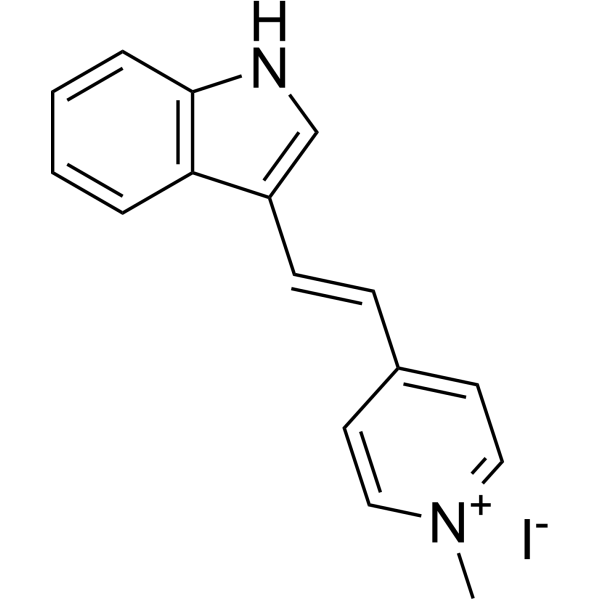
F16 is a mitochondrial permeability transition pore (PTP) modulator with an EC50 of 30 μM in mice. F16 promotes PTP opening, accumulates in cancer cell mitochondria, and induces mitochondrial depolarization, swelling, cristae disruption, outer membrane rupture, ATP depletion, reactive oxygen species (ROS) production, cytochrome c release and mitochondrial uncoupling. F16 induces cell cycle arrest at the G1 (occasionally G2) phase, reduces the phosphotyrosine content of Neu, as well as the levels of phosphorylated PKB/Akt and phosphorylated MAP kinase, downregulates the protein expression levels of Neu and PKB, triggers apoptosis in cells with moderate Bcl-2 expression, and induces necrosis in cells with overexpressed Bcl-2. F16 can be used in research related to breast cancer and gastric cancer .
loading...
    loading...
製品番号: HY-100607AR
CAS 番号: 144481-98-1
別名: ONO1101 hydrochloride (Standard)
Landiolol (ONO1101) hydrochloride (Standard) is the analytical standard of Landiolol hydrochloride (HY-100607A). This product is intended for research and analytical applications. Landiolol (ONO1101) hydrochloride is a highly selective, ultra-short-acting competitive inhibitor of β1 adrenergic receptors. Landiolol hydrochloride specifically blocks cardiac β1 receptors, reducing heart rate and myocardial oxygen consumption. Landiolol hydrochloride inhibits TNF-α-induced excessive mitochondrial oxygen consumption and reactive oxygen species production in a sepsis model, alleviating renal injury. Landiolol hydrochloride has little effect on cardiac ion channels (such as L-type calcium current and inward rectifier potassium current) and has a weak negative inotropic effect. Landiolol hydrochloride can be used for perioperative tachycardia control and protection studies of sepsis-related acute kidney injury .
loading...
    loading...
製品番号: HY-100607S
別名: ONO1101-d8
Landiolol-d8 (ONO1101-d8) is the deuterium labeled Landiolol (HY-100607). Landiolol (ONO1101) is a highly selective, ultra-short-acting competitive inhibitor of β1 adrenergic receptors. Landiolol specifically blocks cardiac β1 receptors, reducing heart rate and myocardial oxygen consumption. Landiolol inhibits TNF-α-induced excessive mitochondrial oxygen consumption and reactive oxygen species production in a sepsis model, alleviating renal injury. Landiolol has little effect on cardiac ion channels (such as L-type calcium current and inward rectifier potassium current) and has a weak negative inotropic effect. Landiolol can be used for perioperative tachycardia control and protection studies of sepsis-related acute kidney injury .
loading...
    loading...
製品番号: HY-105111
CAS 番号: 93426-60-9
P-536 is a ACE inhibitor that also inhibits herpes simplex virus HSV-1 thymidine kinase and Trypanosoma cruzi RNA polymerase. By inhibiting the renin-angiotensin system, downregulating the expression of AT1R and NOX4, and reducing oxidative stress (decreasing plasma hydrogen peroxide (H2O2) and 8-isoprostaglandin levels), P-536 effectively reduces systolic blood pressure and improves vascular reactivity. P-536 also inhibits the replication of DNA/RNA viruses such as HSV-1 by blocking nucleotide metabolism and nucleic acid synthesis, competitively inhibits RNA synthesis in Trypanosoma cruzi, and inhibits amastigote replication, thereby impeding its growth. P-536 is suitable for research on hypertension, insulin resistance, and Chagas disease .
loading...
    loading...
製品番号: HY-113225
CAS 番号: 86-01-1
別名: GTP
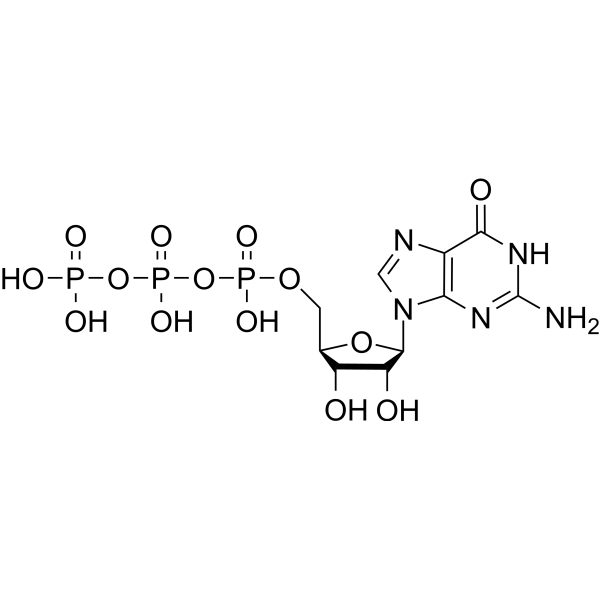
Guanosine triphosphate (GTP) is a critical nucleotide and regulator of cellular metabolism. Guanosine triphosphate promotes ribosomal DNA localization, pre-rRNA transcription and ribosome biogenesis by binding to RNA polymerase I and GPN proteins (GPN1/3). Guanosine triphosphate links MYC-dependent ribosome biogenesis to nucleotide sufficiency, acts as a metabolic gatekeeper supporting protein synthesis, DNA/RNA synthesis and cellular signal transduction, while also participating in the physiological activities of pancreatic β-cells and serving as an oxidative substrate for reactive oxygen species. In small cell lung cancer with high MYC expression, Guanosine triphosphate accumulates through the IMPDH-driven synthetic pathway, thereby affecting apoptosis and mitotic processes. Guanosine triphosphate is used in the research of small cell lung cancer, hepatoblastoma and cellular metabolism .
loading...
    loading...
製品番号: HY-136855
CAS 番号: 652968-37-1
純度:  95.00%
MitoPBN is a AMPK/SIRT3/PGC-1α axis modulator, reactive oxygen species scavenger and mitochondrial function enhancer. MitoPBN increases the phosphorylation level of AMPK, restores SIRT3 expression and reverses the down-regulation of PGC-1α, thereby promoting mitochondrial biogenesis. MitoPBN regulates glucose metabolism, reduces blood glucose by inhibiting hepatic gluconeogenesis and increasing hepatic glucose uptake, while scavenging mitochondrial superoxide anion/hydrogen peroxide, maintaining membrane potential and increasing ATP production. MitoPBN also reduces cell apoptosis, improves sperm motility, survival rate and membrane integrity, but may induce reductive stress in cryopreserved sperm at high concentrations. MitoPBN is widely applicable to research related to diabetes and type 2 diabetes .
loading...
    loading...
製品番号: HY-156249
CAS 番号: 1466546-45-1
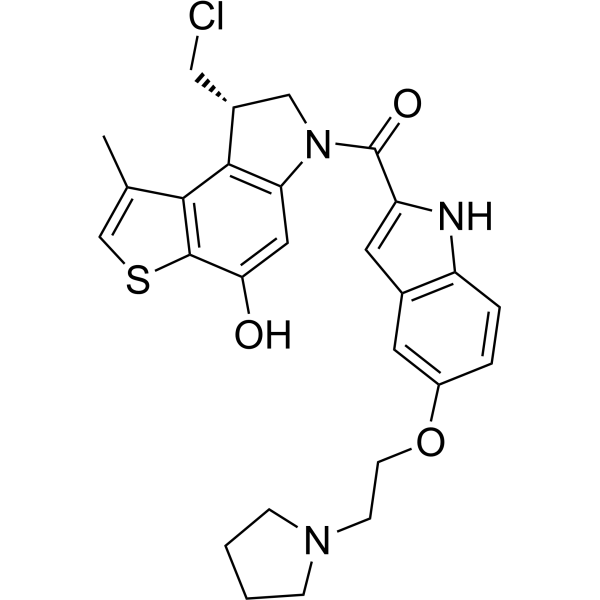
NMS-P528 is a DNA minor groove alkylating agent and ADC payload. NMS-P528 undergoes intramolecular cyclization to form reactive electrophilic derivatives, which in turn induce DNA damage, cell cycle arrest, and Apoptosis. NMS-P528 shows no significant anti-tumor activity as a free payload in a HER2-negative Raji lymphoma mouse xenograft model. NMS-P528 serves as the cytotoxic payload for the antibody-drug conjugate EV20/NMS-P945. NMS-P528 can be used in research related to breast cancer, gastric cancer, colon adenocarcinoma, Burkitt's lymphoma, neuroblastoma, pancreatic cancer, prostate cancer, head and neck cancer, ovarian cancer, and melanoma .
loading...
    loading...
製品番号: HY-15763R
CAS 番号: 571203-78-6
Erastin (Standard) is the analytical standard of Erastin (HY-15763). This product is intended for research and analytical applications. Erastin is a ferroptosis inducer. Erastin exhibits the mechanism of ferroptosis induction related to ROS and iron-dependent signaling. Erastin inhibits voltage-dependent anion channels (VDAC2/VDAC3) and accelerates oxidation, leading to the accumulation of endogenous reactive oxygen species. Erastin also disrupts mitochondrial permeability transition pore (mPTP) with anti-tumor activity. Furthermore, Erastin can block the uptake of cystine mediated by SLC7A11 and also spares UMRC6-EV and -C91A cells from disulfidptosis under glucose starvation .
loading...
    loading...
製品番号: HY-159510
VEGFR-2-IN-51 (compound 19) is an orally active dual-target inhibitor of VEGFR-2 (IC50=15.33 μM) and tubulin (IC50=0.76 μM) with anti-tumor activity. VEGFR-2-IN-51 induces tumor cell apoptosis by reducing mitochondrial membrane potential and increasing reactive oxygen species (ROS) levels. VEGFR-2-IN-51 exerts anti-angiogenic effects by blocking the VEGFR-2/PI3K/AKT signaling pathway. In addition, VEGFR-2-IN-51 has significant anti-proliferative activity against the gastric cancer cell line MGC-803 (IC50=0.005 μM) .
loading...
    loading...
製品番号: HY-174399
AChE/BChE-IN-27 is a blood-brain barrier-permeable mixed inhibitor (Pe = 4.12) of AChE and BChE, with IC50 values of 3.72 μM and 9.65 μM, respectively. AChE/BChE-IN-27 has potent antioxidant activity with an IC50 value of 6.32 μM in the DPPH (HY-112053) assay and also exhibits potent in vitro antioxidant activity. AChE/BChE-IN-27 exhibits metal chelating properties. AChE/BChE-IN-27 has neuroprotective potential against oxidative stress. AChE/BChE-IN-27 significantly reduces intracellular reactive oxygen species (ROS). In in vivo experiments, AChE/BChE-IN-27 effectively restored AChE and BChE levels, improved cognition, and can be used for Alzheimer's disease (AD) .
loading...
    loading...
製品番号: HY-176724
ZnPc-O3-JQ1 is a photoactivatable BRD4-targeting degrader and photosensitizer, composed of monosubstituted amino zinc phthalocyanine (ZnPc), the BRD4 ligand JQ1, and a PEG linker. Upon activation by light, ZnPc-O3-JQ1 generates reactive oxygen species (ROS) and induces BRD4 degradation in an E3 ubiquitin ligase-independent manner. BRD4 degradation further reduces HIF-1α and GCL levels and restricts the SLC7A11/GSH-related antioxidant response, thereby enhancing photodynamic therapy-associated oxidative stress. ZnPc-O3-JQ1 can be used in research related to bladder cancer .
loading...
    loading...
製品番号: HY-179386
PARP1/EZH2-IN-1 is a selective PARP1 and EZH2 dual inhibitor. PARP1/EZH2-IN-1 has IC50s of 28 nM, 414 nM and 74 nM for PARP1, PARP2 and EZH2, respectively. PARP1/EZH2-IN-1 inhibits the proliferation and migration of TNBC cells (triple-negative breast Cancer cells). PARP1/EZH2-IN-1 induces PANoptosis (Apoptosis, Pyroptosis and Necroptosis), increases the level of reactive oxygen species (ROS), and activates related inflammatory pathways. PARP1/EZH2-IN-1 can be used in triple-negative breast cancer research .
loading...
    loading...
製品番号: HY-180292
CAS 番号: 2882998-56-1
Tubulin/VEGFR-2-IN-2 is an orally active tubulin and VEGFR-2 inhibitor with IC50s of 3.27 and 0.09 μM, respectively. Tubulin/VEGFR-2-IN-2 exerts the antitumor effects through multifaceted pathways, including enhancing reactive oxygen species (ROS) generation, disrupting mitochondrial membrane potential, inducing apoptosis, and arresting the cell cycle. Tubulin/VEGFR-2-IN-2 demonstrates anti-angiogenic properties by significantly impairing endothelial cell migration, invasion, and tube formation in vitro. Tubulin/VEGFR-2-IN-2 suppresses angiogenesis, tumor growth, and metastasis in vivo. Tubulin/VEGFR-2-IN-2 can be used for non-small lung cancer, breast cancer, gastric cancer and lymphoma .
loading...
    loading...
製品番号: HY-186151
CAS 番号: 1372406-51-3
Target:  

MDM-2/p53 Apoptosis

研究分野:  

Cancer

UCI-LC0019 is a mutant p53 reactivator. UCI-LC0019 binds to mutant p53, induces wild-type-like conformational change, restores sequence-specific DNA binding activity, activates p53-dependent transcription programs, and does not act via thiol reactivity or glutathione depletion. UCI-LC0019 inhibits proliferation and induces apoptosis in cancer cells harboring mutant p53, with no significant effect on p53 null or wild-type p53 tumors cells. UCI-LC0019 exhibits anti-tumor activity in xenograft mouse models carrying p53R175H mutant tumors. UCI-LC0019 can be used for the research of cancer, such as ovarian cancer .
loading...
    loading...
製品番号: HY-D2763
CAS 番号: 890928-51-5
BP Fluor 532 maleimide is a photostable, bright yellow-fluorescent dye with pH insensitive emission from pH 4 to pH 10. The excitation of BP Fluor 532 is ideally suited for the frequency-doubled Nd:YAG laser line. BP Fluor 532 dye can be conjugated to a variety of antibodies, peptides, proteins, tracers, and amplification substrates, and is often used for the generation of stable signals in imaging and flow cytometry. Maleimide is the most popular sulfhydryl-reactive group for conjugating the dye to a thiol group on a protein, oligonucleotide thiophosphate, or low molecular weight ligand. The maleimide group specifically and efficiently reacts with reduced thiols (sulfhydryl groups, –SH) at pH 6.5 to 7.5 to form a stable thioether bond. The resulting conjugates exhibit brighter fluorescence and greater photostability than the conjugates of many other spectrally similar fluorophores.
loading...
    loading...
製品番号: HY-D2773
CAS 番号: 219729-26-7
5-Carboxyrhodamine 110 NHS Ester is the nonsulfonated analog of the BP Fluor 488 dye. The amine-reactive 5(6)-Carboxyrhodamine 110 NHS Ester can be used to create bright and photostable green-fluorescent bioconjugates with excitation/emission maxima ~502/527 nm. For many applications, the dye is preferred over 5-(6)-carboxyfluorescein NHS ester or FITC because of its exceptional photostability and fluorescence insensitivity to pH (4-9). Although the mixed isomers of Carboxyrhodamine 110 NHS Ester preferred, routinely used fluorescent dye for labeling proteins, peptides and nucleotides, purification of peptide and nucleotides labeled with 5(6) isomers might be troublesome due to significant signal broadening in HPLC purification. Peptides and nucleotides labeled with a single isomer usually give better resolution in HPLC purification that is often required in the conjugation processes.
loading...
    loading...
製品番号: HY-N0859R
CAS 番号: 69363-14-0
別名: Schizanhenol (Standard); Gomisin-K3 (Standard)
Schisanhenol (Standard) (Schizanhenol (Standard)) is the analytical standard of Schisanhenol (HY-N0859). This product is intended for research and analytical applications. Schisanhenol, a lignan, is an orally active antioxidant. Schisanhenol reduces AChE activity, increases SIRT1 and PGC-1α expression, and decreases phosphorylated Tau (Ser 396) levels. Schisanhenol increases SOD and glutathione peroxidase activity, decreases malondialdehyde (MDA) content, and inhibits UGT2B7 activitY. Schisanhenol attenuates ox-LDL-induced apoptosis, intracellular reactive oxygen species generation, and cytotoxicity in endothelial cells. Schisanhenol inhibits LDL oxidation, brain mitochondrial and membrane peroxidative damage, and brain mitochondrial swelling and disintegration. Schisanhenol can be used for the research of Alzheimer’s disease, atherosclerosis, brain ischemia, and age-related brain deterioration.
loading...
    loading...

